Playable Books
Cecil Forsyth · section 9 of 39
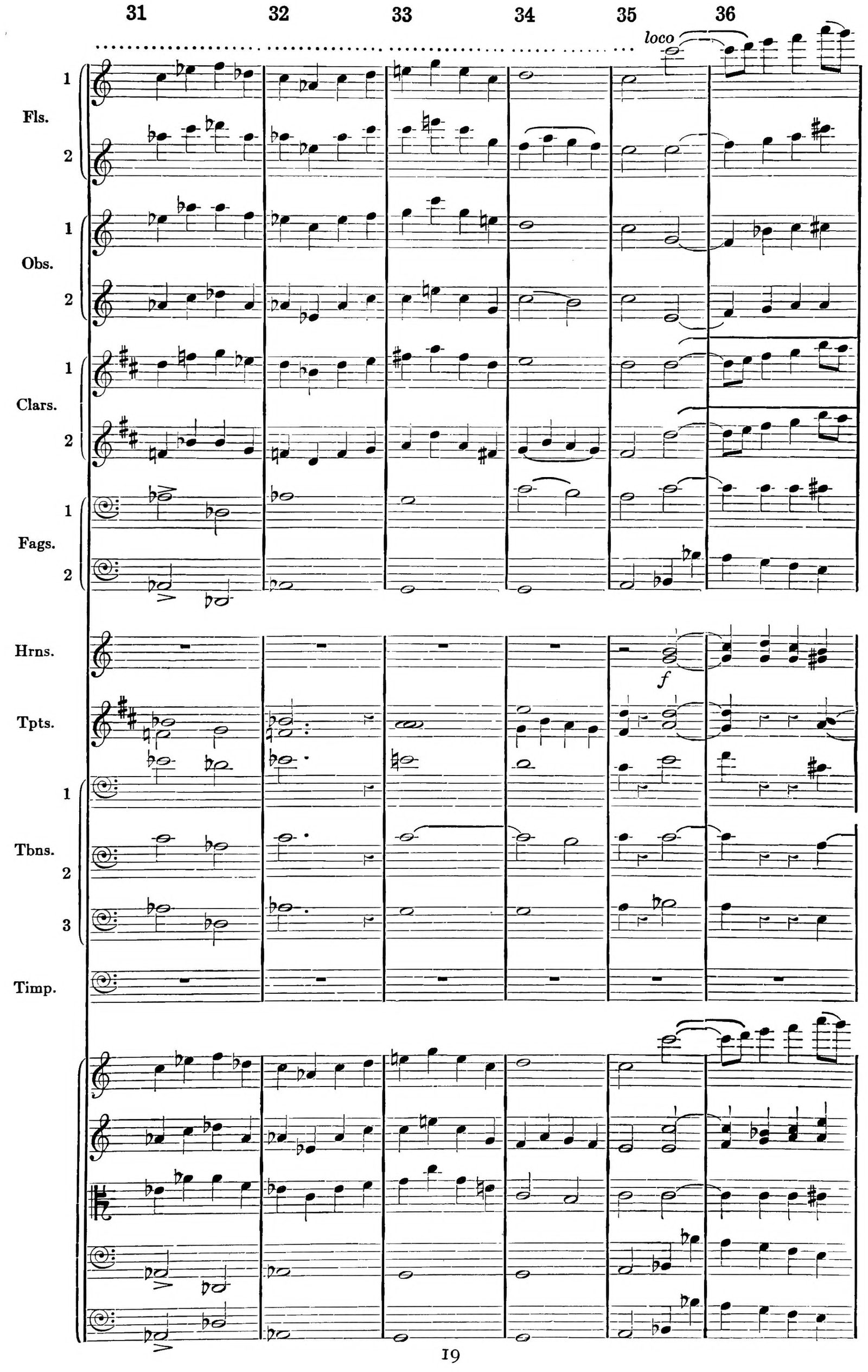
[Bars 31–36]
Read and hear this section in the playable edition →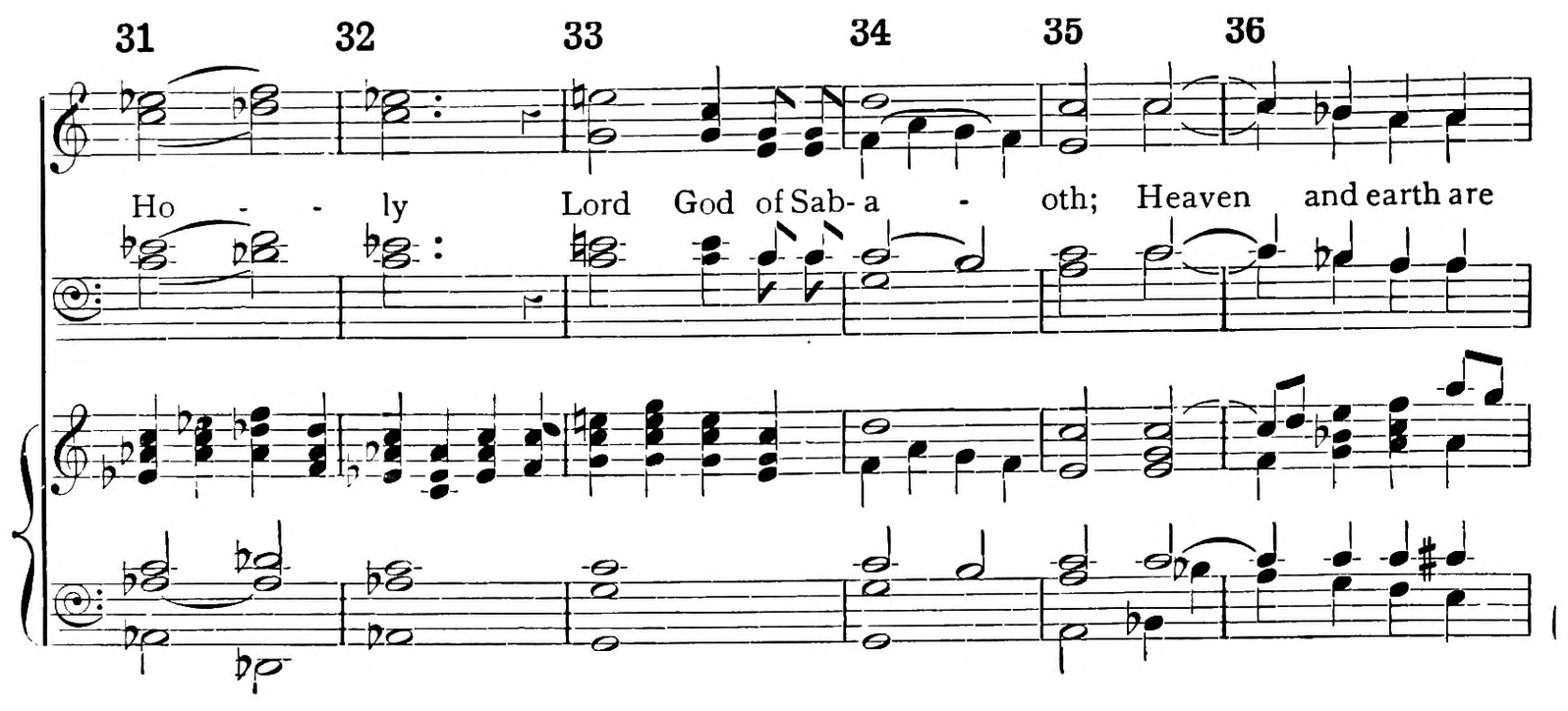
This way of looking at things is a matter of routine. Suppose we are relying on the strings alone to define the composer's intentions. That will not prevent us writing additional notes for two or three light wood-wind instruments according as circumstances demand. Similarly with the brass. If they are all playing, we must be sure first to transliterate the composer's actual chords for the heavy instruments (trumpets, trombones, and tuba). Then we can add the four horns. The latter will not be heard so well, and we shall be wise if we confine our efforts to keeping them to solid four-part chords in their middle register. A moment later they may be brought forward prominently for purposes of definition; and then we should, of course, plot-out their parts first.
All this is not so much a matter of counting the actual number of notes that are added to a given chord, as of tonal balance between the various instruments. For instance, in the example given above we appear to have added almost nothing in bars 7, 8, 9, and to have added four complete octave-doublings in bar 10. This is our wood-wind re-entry, as prearranged. But yet, with the chorus and brass going full-tilt, the wood-wind will add only a slight weight—less than the weakest “mixture” on the organ. And this is so, even though we have written three of the eight instruments outside the upper limits of the printed organ-part.
We now come to the three “Holy's,” bar 27 and onwards. Here we have something of a problem. We had better go back to our printed copy and take a bird's-eye view of what is coming. The three “Holy's,” bars 27 to 41, are marked “ff Gt.” But they are succeeded by a passage, bar 42 onwards, regularly built-up of a two-bar phrase “mf Sw.,” followed by a phrase again marked “ff Gt.” And the last of these loud phrases crescendos through bars 57, 58, 59 to another ff. In tabular form the composer's complete scheme is this:
(a) Holy ff Gt. (a) Holy ff Gt. (a) Holy ff Gt.
(b) The Apostles mf Sw. (c) Praise Thee ff Gt. (b) The Prophets mf Sw. (c) Praise Thee ff Gt. (b) The Martyrs mf Sw. (c) Praise Thee ff Gt. (c) The Church ff cresc. to (d) The Father ff
(e) Decresc. at bar 67 to new phrase in next bar