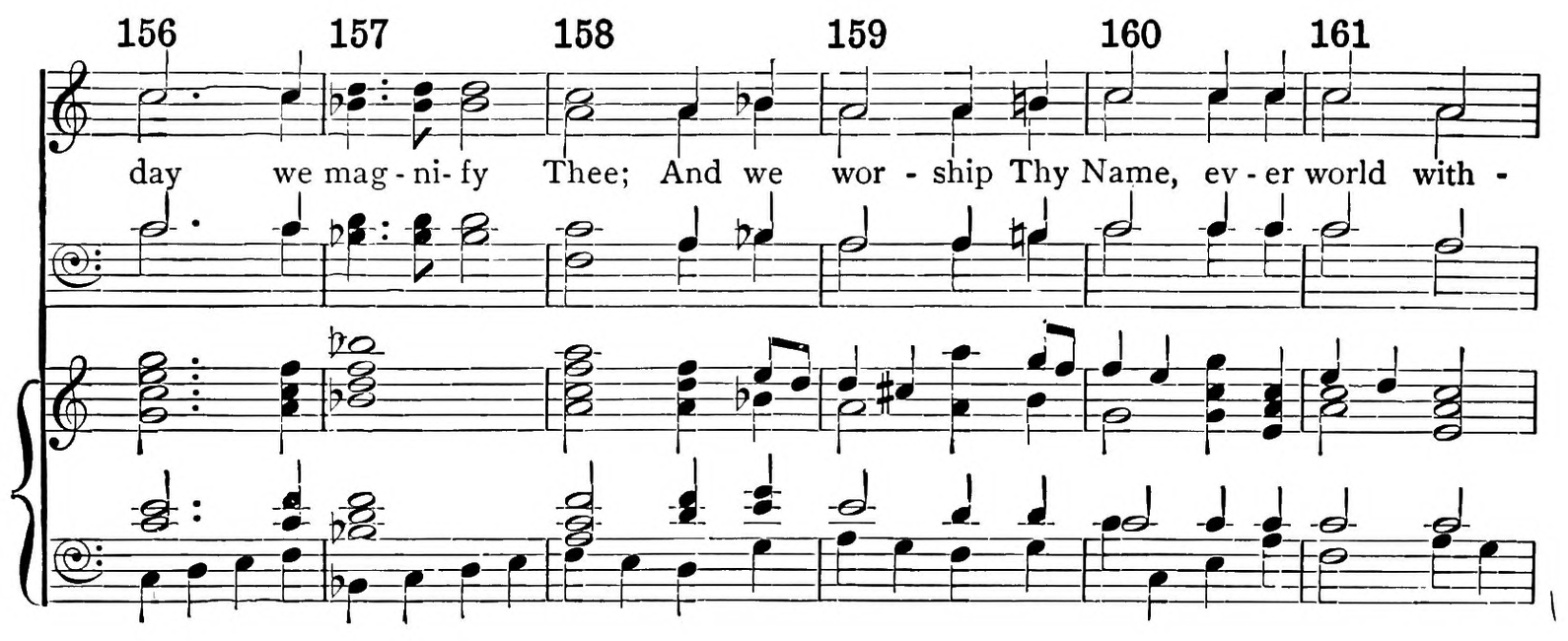
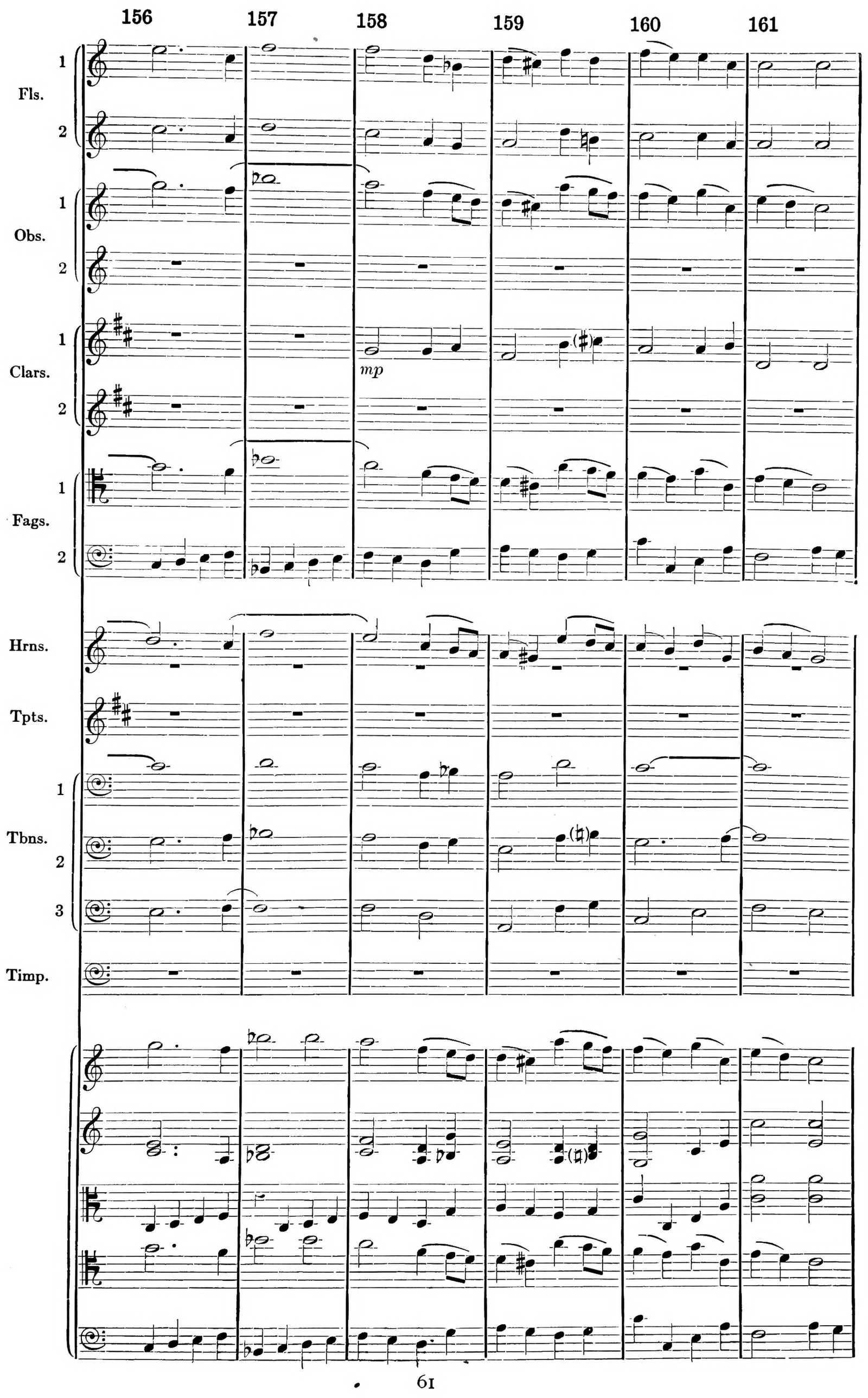
The trombone tenuto is also satisfactory in itself. But it cannot be marked any higher than p; otherwise the tune would be swamped. Well, why not leave it p? We intend to do so; but if the reader will turn to the organ-copy, he will see that bars 155 to 164 are practically one big choral unison, apparently intended to be sung ff or f from beginning to end. Had the choral parts been in harmony throughout, our three trombones p might have been enough to steady and enrich the choral mass. But with one part continually brought forward so prominently, they certainly are not enough. We are compelled to use our violas and second bassoon (little enough I may say) to help our marching basses. The result is that, in order to get the necessary harmonic support here, we have to appropriate whatever other instruments we can lay hands on—second violins, flutes, a clarinet, etc.— always obsessed by the fear that our tune may be blotted out. This kind of rather muddled scoring is inevitable in our circumstances. To make the passage sound really clear and distinguished from the vocal-instrumental point of view we should require at least the following forces—
Tune: Upper octave, first and second violins, two oboes, and one clarinet; lower octave, violas, cellos, cor anglais, and one clarinet. Harmony: Four horns and three trombones Bass: Upper octave, two bassoons, and bass-clarinet; lower octave, basses, and double-bassoon.
 Playable Books