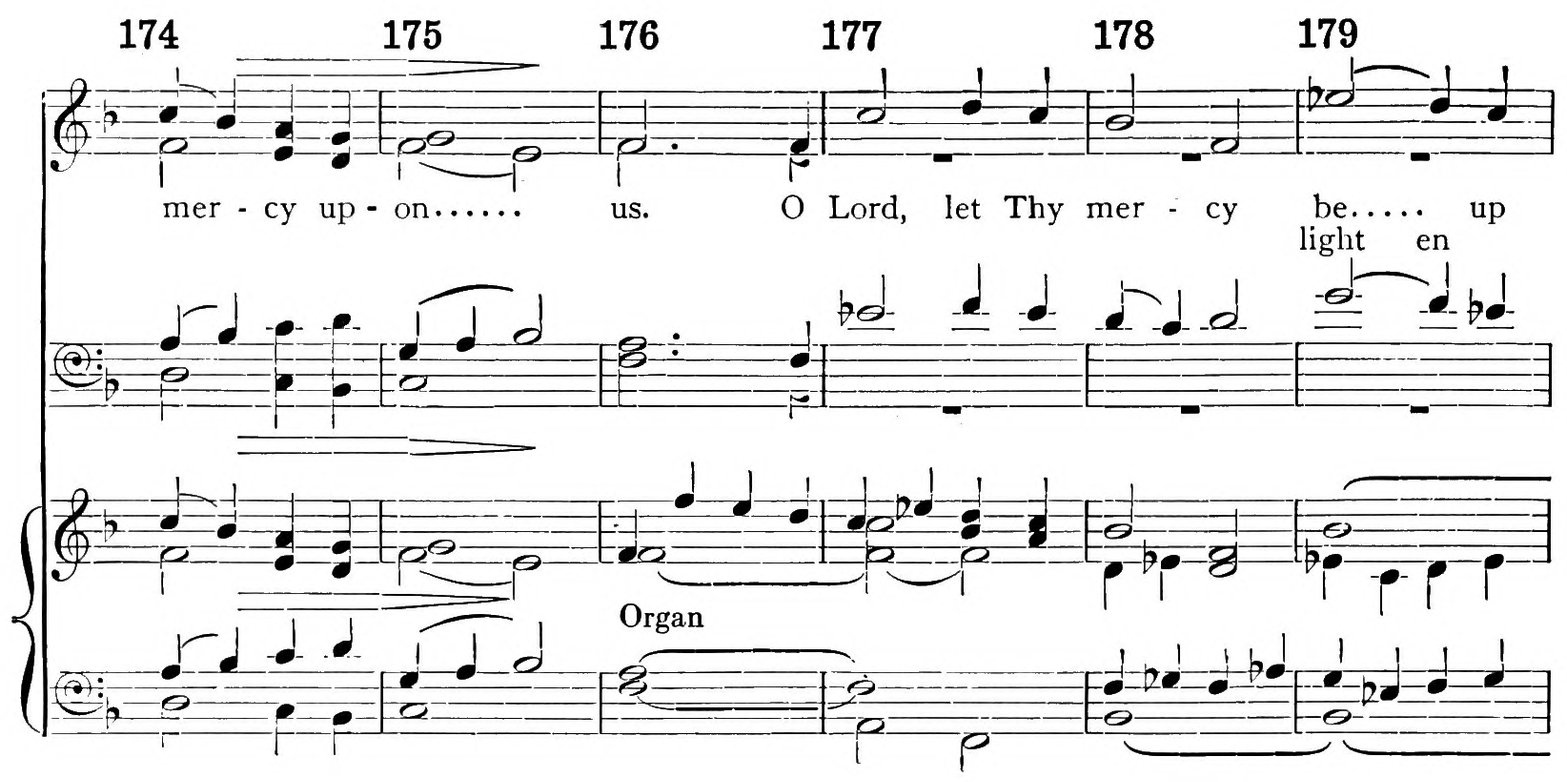
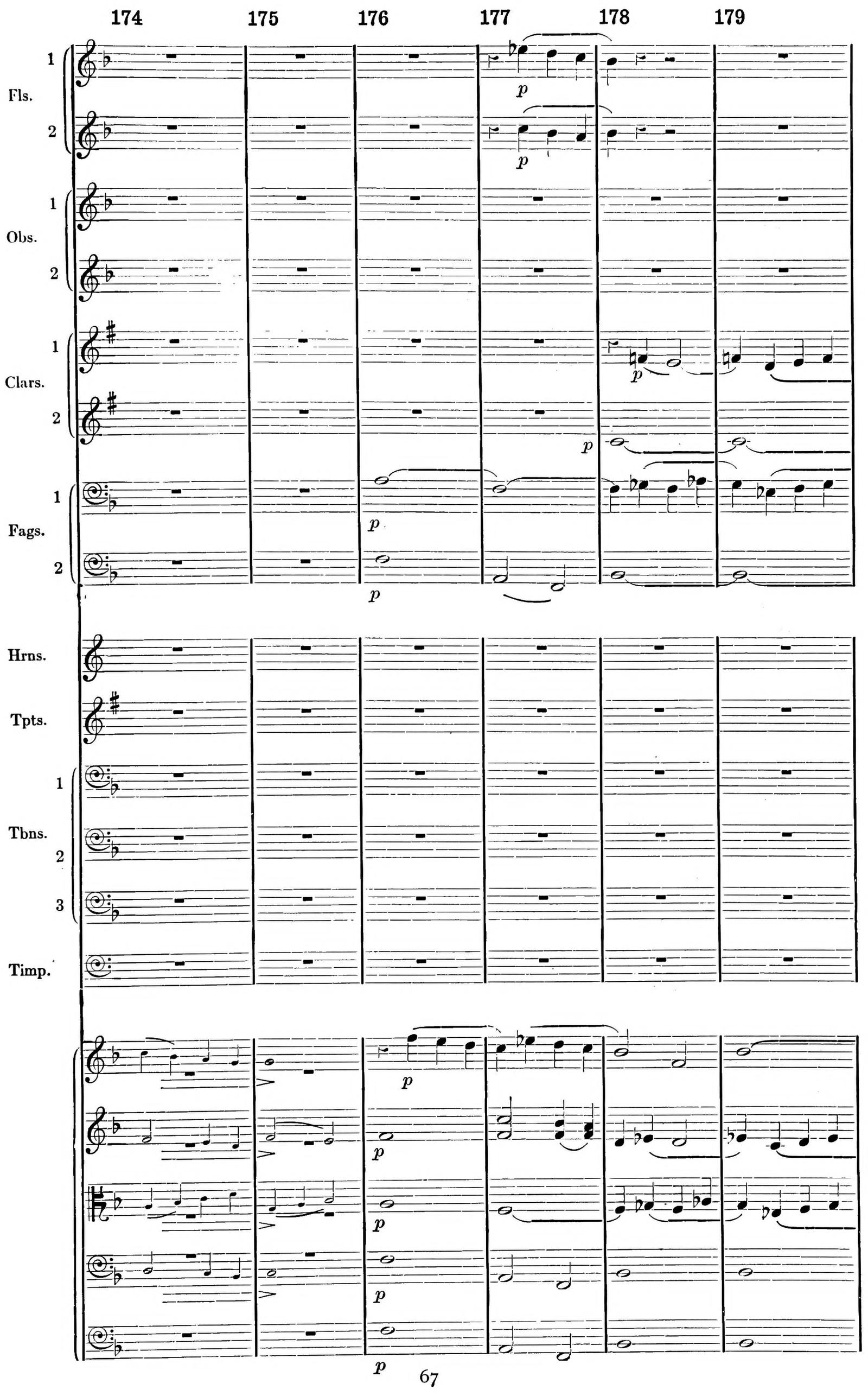
This page is almost a “blank” as far as musical interest goes. In view of what I have said above, with regard to the “placing” of the wood-wind, I should therefore like to suggest an exercise, which, if it is to have any value, must be carried out slowly and conscientiously. Turn the pages of this score from beginning to end, looking only at the “placing” of the wood-wind parts. Note particularly those places where the first flute is merely an octave-reduplication of clarinet or oboe. Note also what the second flute is doing in these cases. Make a list of the few places where a third wood-wind instrument intervenes between these two octaves. In the “placing” of the chords underneath the suboctave tune, note precisely what arrangement and variation have been employed as between the oboes and the clarinets. Note the places where the bassoons are so far removed from the rest of the wood-wind as to be negligible as far as this investigation goes; note also the places where they are brought up into close harmonic contact with the other wood-wind instruments. Examine carefully bars 182 to 185.
After this has been done, and a good general idea of the wood-wind scheme has been obtained, look through the score again with an eye on the brass staves, remembering that they represent much more powerful sounds; and that they, not the wood-wind, will generally define both the melody and the harmony. Use this as an explanation to yourself of, for instance, the first oboe and first trumpet notes in bar 12, the second flute part almost throughout, etc.
The re-entry of the orchestra at bar 176 is managed very simply by means of strings and bassoons, with a little touch of colour for the flutes, answered lower down by the clarinets.
 Playable Books