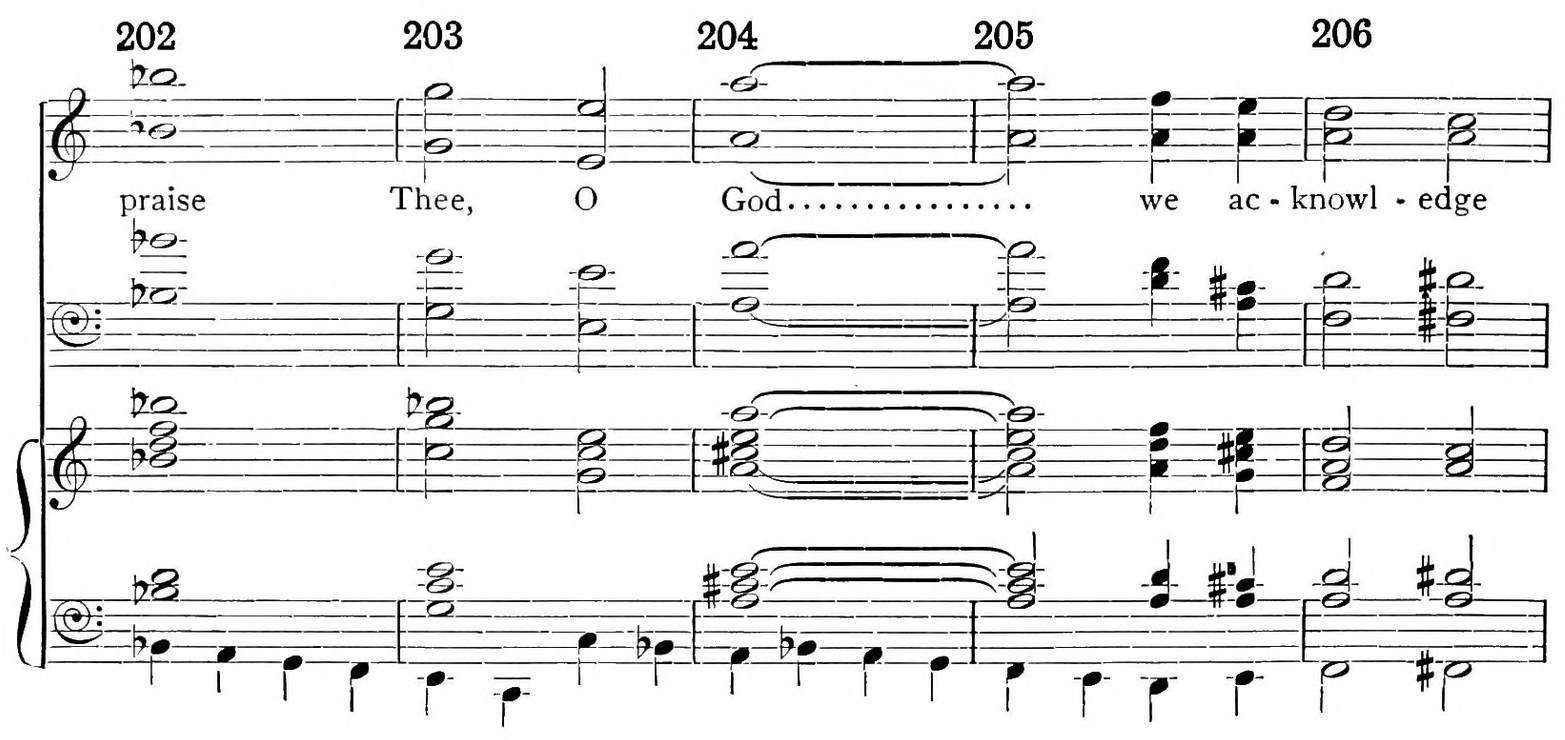
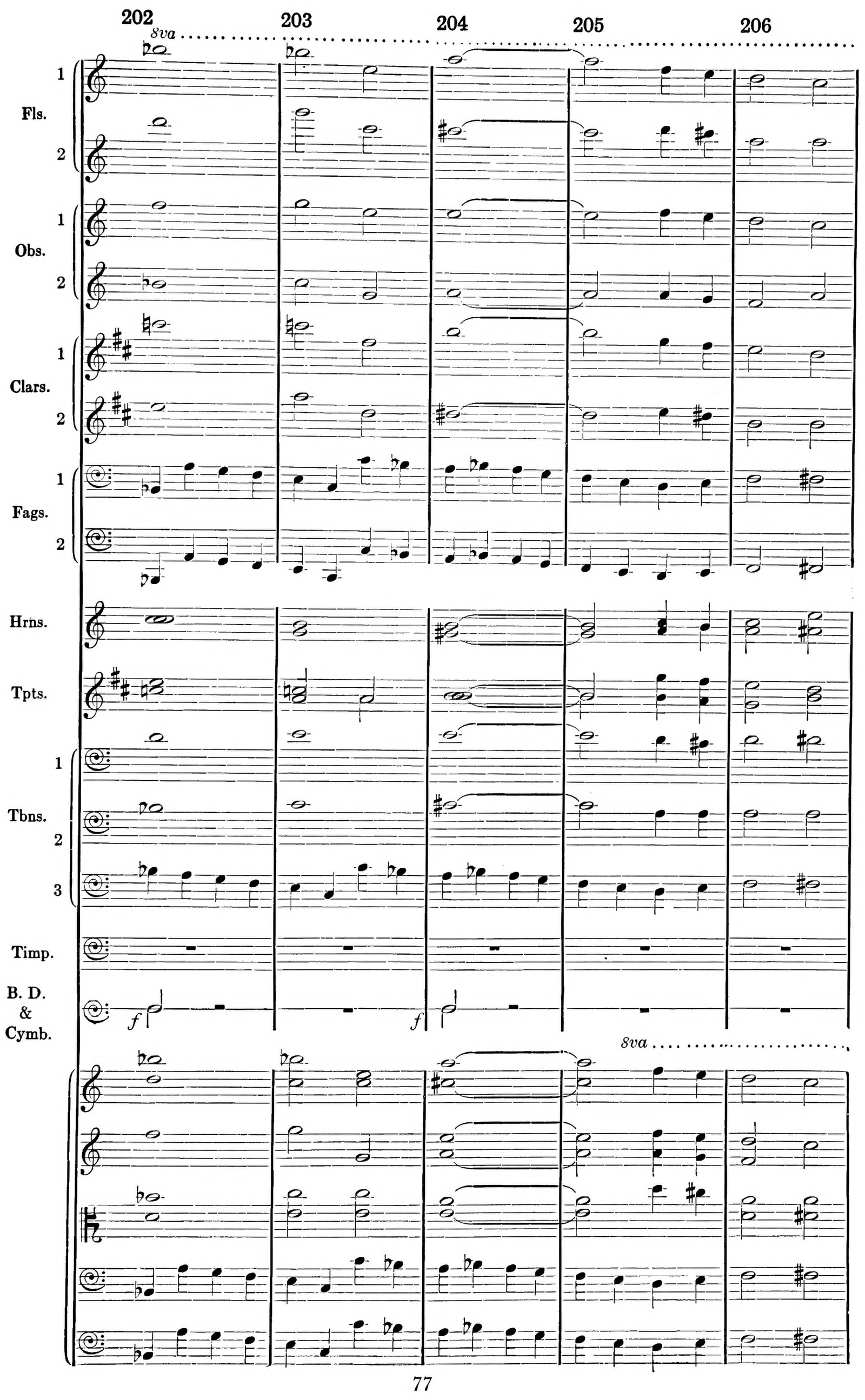
These preliminary considerations practically exhaust the topic of the orchestration. When they are once decided, the rest is almost a stereotype. Bars 197 to 199 are nearly the same as bars 2 to 4, except that they are “capped” in bar 200 with a f stroke on bassdrum and cymbals, and that the cellos have a little A-string passage—unheard of course— as compensation in advance for their dull work to come. The place where the bass skips upwards in bar 202 is chosen arbitrarily. One's object is to suit the compass of the various instruments and to avoid as far as possible the toneless cavernous depths of the orchestra The second bassoon had to jump when he reached his low B-flat. The cellos might have continued right down, as in the pedal-part. But if the basses had marched down with them, they would have been compelled to skip upwards on the second beat of bar 203. This would have given them a rather stupid repetition of the upper C on the second and third beats. Moreover the composer's octave-skip in this bar is a good one, and we wished to have all our comparatively small bass-force in position to make it. Before leaving this subject we may note that the introduced skip at bar 202 is intentionally blurred to the ear by being written one beat earlier in the trombone than in the bassoons and strings. At bar 207 the small notes in the organ-part obviously represent a sort of “trumpet effect.” We transliterate it accordingly; though, with chorus and orchestra going full-blast, these particular few notes cannot be distinguished so easily when transferred from organ to orchestra. The bottom notes of the first trumpet in these bars (207 to 209) are helped out by the second trumpet and the horns.
 Playable Books