 Playable Books
Cecil Forsyth · section 29 of 60
No. 25. "The Tubas."
Read and hear this section in the playable edition →

The word Tuba has been used loosely to include at any rate two distinct types of Valve-Brass, and it has now acquired so general and vague a meaning that it may be said to refer, not to any existing instrument, but to any bass-part playable by a Valve-Brass instrument Composers' minds have been confused, partly by Wagner's unfortunate misnomer Tuben for a family of instruments only one of which is a true Tuba, and partly by a number of inaccurate descriptions in which the distinetion between the whole-tube and the half-tube groups of Valve-Brass has been overlooked. In addition the part has sometimes been mistaken for the whole. Thus, if we speak of "The Tuba (or Euphonium)," it is as if we were to say "The Man (or Nigger)." The composer should, however, understand that the types of instrument vaguely included in the word Tuba have quite definite and distinct characteristics of bore, mouthpiece, length of air-column, and method of attack. It is only his varying demands on the instrument in the way of pitch and execution that has resulted in our present rather unsatisfactory makeshift, the Orchestral Tuba-in-F.
Before proceeding with this subject the student should re-reac carefully what was said above (page 86) with regard to the whole. tube and half-tube Valve-Brass.
The orchestral godfather of all this group of instruments was Richard Wagner. His original and successtul intention was to introduce a new tone-colour into the orchestra akin to but different from that of the Horns. The new instruments were to be, and actually were, Moduled Horns. In particular they were to be strong enough to support and contrast with the Trombones and Trumpets and were to have an even compass of about four octaves:
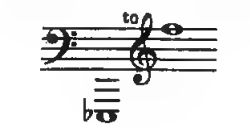
His idea was simply to write eight Horn-parts and so arrange the parts for his new instruments that four of his Horn-players could be turned over at any time to play them.
The instruments were to have a bore slightly larger than that of the Horns, but much less than that of the true Tubas. There were to be four pistons, of which three only were to be necessary for compass- The 4th piston was to be used in order to secure truth of purposes. intonation in the bottom octave. It was to be a sort of "compensating" piston.
The instruments were to be arranged in two pairs, a small highpitched pair and a large low-pitched pair.
The small pair was to be built in bo, and was to have a compass,
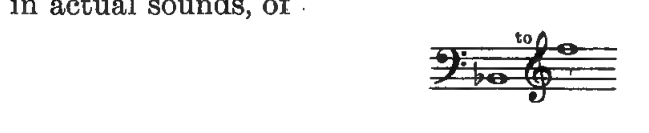
(about that of the Viola or the Br-alto Horn).
The large pair was to be built in i, and was to have a compass,
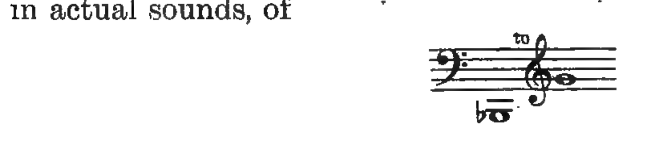
(about that of the Cello or Bassoon).
None of the above is a true Tuba. They are all Modified Horns, slender half-tube instruments much like the ordinary French Horn. This is exactly what Wagner intended. However, he called them Tenor-Tuben and Bass-Tuben.
instrument played with a big cup-mouthpiece and capable ot producing its fundamental tone with ease. It was originally built in C, and its part in the Ring demands a compass downwards to the
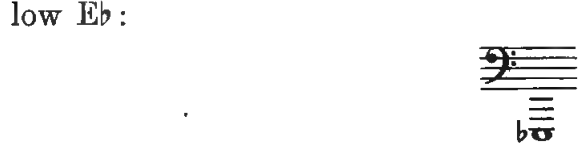
Wagner called this instrument the Kontrabass-Tuba.
This group, then, of the so-called " Wagner Tubas" was made up of two distinct types of instrument, a quartet of two high and two low Modified Horns and one true Tuba. For economy oi space, and in order to distinguish the five instruments in the mind of the student, 1 shall refer to them as
(Wagner's "Tenor-Tuben") Al and A2,
(Wagner's "Bass-Tuben"). B1 and B2,
(Wagner's "Kontrabass-Tuba").
Now, in practice the same thing happened with regard to Al, A2 and
BI, B2 as happened with regard to the Bass-Trumpet.! Wagner's intentions with regard to their shape, mechanism, and players were found to be capable of improvement. These intentions were therefore departed from. On the other hand, his intentions with regard to their pitch and quality could not be ignored.
Al, A2 and BI, B2 have therefore been altered. In outward appearance—a small matter-they are no longer the same. Their bells have been turned vertically upwards. They have been drilled, so to speak, into the semblance ot military smartness. More important, the French Horn is no longer used as the strict model for their «build' Instead of that, a modified type of Saxhorn or Saxotromba has been adopted. They still remain half-tube instruments with a conical bore like that of the Horns, not cylindrical like that of the Trumpets and Trombones. The tunnel-shaped mouth-piece, somewhat larger that that of the Horns, is still employed, and the instruments themselve have been, in most countries, taken away from the Horn-players and handed over either to military Saxhorn-players or to Trombonists.?
In this country there are at any rate three sets of these instruments (Al, A2 and BI, B2). They are all fundamentally of the same pattern, though one set in its desperate anxiety to show the right military swagger has pranked itself up in musically non-effective brass cuirasses.
The tone-quality and attack of these instruments is quite different from that of the true Tuba family. The tone is less "bullocky," quieter, and more " other-worldish." There is less impact in the attack, and the player, owing to the size and shape of the mouthpiece, is unable to force the tone. The Wagner parts are not difficult for the instruments, but the instruments themselves need continual caretul hip-control in order to secure a beautitul and steadytone.
A few words must be interpolated for the benefit of those who wish to read Wagner's Full Scores. In the Ring he adopted two distinct methods of notation. The simplest way of showing what they were and what was the difference between them will be to boil Wagner's principles down and condense them into the space of a single note- The student will then be able to refer to this note if at any time, he is in doubt as to Wagner's meaning.
First Notation.
Gitter time wang, ist Dens Rhad wished 1, 42 the fi, it Some of a four-part unison on the note
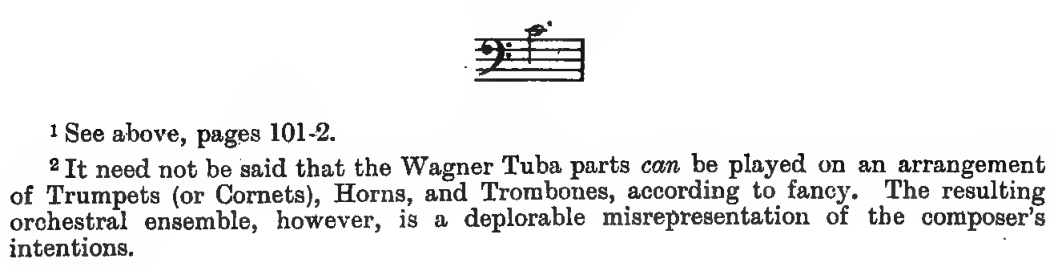
in the key of Db, he would have written
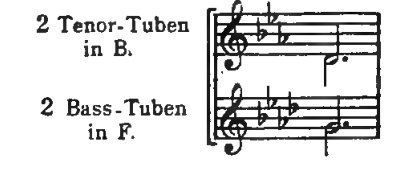
(Transposition as for 2 French-Horns in Bb-alto and 2 French-
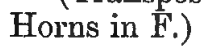
Second Notation.
In Die Walküre, Siegfried, and the whole of Götterdämmerung except the first Scene, if he had wished Al, A2 and BI, B2 to sound a four-part unison on the note
2 Tenor- Tuben in Es.
in the key of Do, he

(Transposition as for 2 French-Horns in Eb and 2 French-Horns in Bb-Basso. Note, however, that when the Composer uses the bass-clef for the two Bass-Tuben he adopts the old Natural-Horn practice of writing the notes an octave too low, so that the actual sounds are then only one whole tone below the written notes.)
In a foot-note prefixed to Due Walküre Wagner gives "ease of Score-reading" as his reason for adopting the "Second Notation", He also directs that in the copying of the parts the keys adopted should be those suitable to the nature of the instruments: that is to say the parts for Al and A2 should be copied as for transposing instruments in Bb and the parts for BI and B2 as for transposing instruments in F. An unholy muddle.
Now, for what players actually do. In this country at any rate Al and A2 copy out their parts as for the military Bo-Baritone in the treble clef, a major ninth above the actual sound.' If they want to

B1 and B2 copy out their parts at their actual concert-pitch in the bass-clef throughout.
For playing purposes then the unison
1.2. for the four instruments in the key "Tubas"" of Do, would be written thus,

1 The same transposition as that of the B', Bass-Clarinet when written in the treble.
Finally, we must mention that for Z Wagner always writes in the bass-clef at its proper pitch, and this is the way it is always read. No alteration is made.
ruments 41, 42, 11, B2. Aese out thou he hey look military, instruments Al are really only civilians. They have always (even in Germany!) remained outside the soldier-caste. The Tuba, however, owing to its ponderous tone at once "caught on" all over Europe. It received mentary very ances development of the instrument or door in a word, every natior
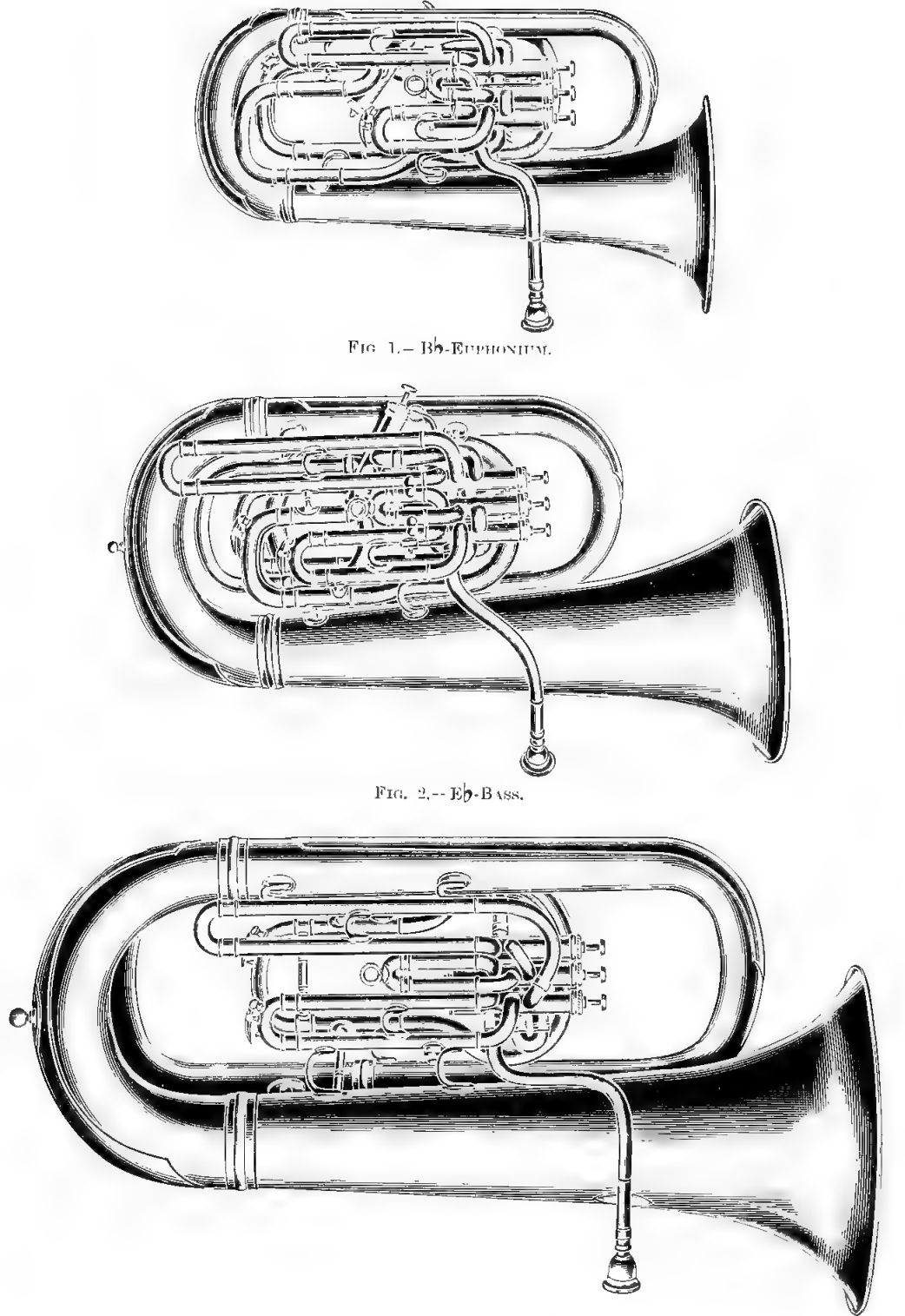
p'' it is on a modification of one or other of these military Tubas that Wagner's deepest Tuba-part (Z) and other modern orchestral Tubaparts are played. However, it is quite impossible to describe in detail one tenth of all these developments. We must then content ourselves with naming the three Tubas which are commonly used wherever the British flag floats. . This is fortunately a simple matter. For the sake ot associating these Tubas in the mind of the student with Wagner's Z, I shall number them in order of pitch W, 4, and Y.
All written for in the bass-clef as non transposing instruments.
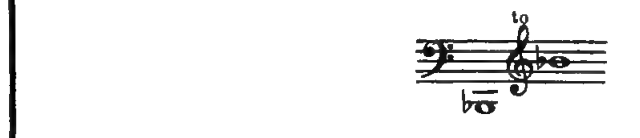
W. The Euphonium. Built in Bb. Cup-mouthpiece. A 4-valve Tuba with a chromatic compass from
X. The Eb-Bass. Built in Eb a perfect fifth below W. Cupmouthpiece. A 4-valve Tuba with a chromatic compass
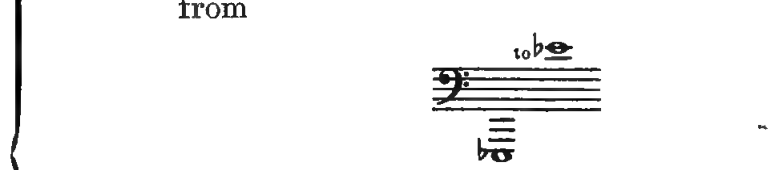
Y. The BBb-Bass. Built in Bb a perfect fourth below X. Cupmouthpiece. At present only a 3-valve Tuba with a
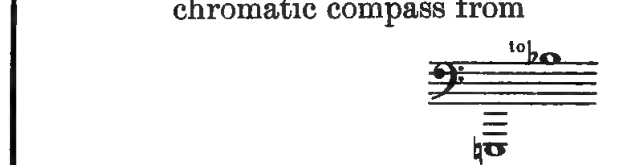
plus its possible but very difficult fundamental note
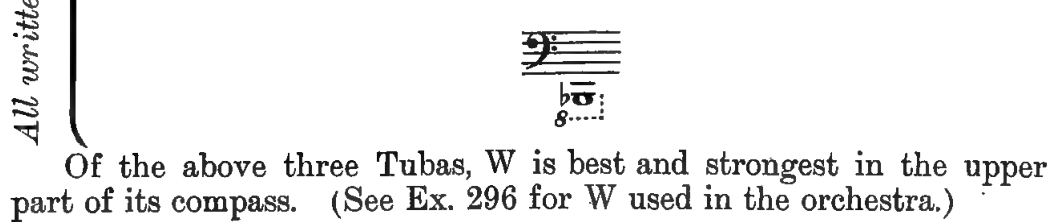
X is better than I in the middle part. I is, however, not so good as y in its bottom octave (to to WD, though it can actually take the deep Es which Y—a deeper-pitched instrument-cannot, owing to the absence of a fourth valve.
X and Y are often called by the generic name of Bombardons, and, when curled into cireular shape for convenience on the march, Helicons.'
All three Tubas W, X, and Y are illustrated on Plate V. In the two smaller instruments the 4th valve is to be seen on . the side farthest from the mouthpiece. In the Euphonium (Fig. 1) only the lower end of the piston-passage and the little circular finger-plate can be seen: the shape and placing of the valve, however, can be readily made out in the Eb-Bass (Fig. 2). It must be added that, for the sake ot lightness on the march, the s-valve Luphonium is otten preterred in the army. In that case the student will understand without further explanation that its downward compass is robbed of all the semitones between its fundamental deep Bb and the Eh an augmented fourth above. For orchestral purposes this is, of course, an inferior instrument. The BBo-Bass (Fig. 3) has no 4th valve at all. In every case valves 1, 2, 3, and 4 run in that order from the mouthpiece.?
Unfortunately for the playing of ordinary concert-room «Tubaparts" in this country, composers as a rule have to be satisfied with a makeshift. This is an instrument derived from the Military Eb-Tuba (X), but built—mainly for reasons of key-convenience to the player— one whole tone higher in F.
This Bass-Tuba in F is not the same as Bl and B2, either in bore, build, mouthpiece, method of attack, tone-colour, or compass. It is a true Tuba furnished with four valves, by means of which the player can fill in the eleven semitones below the second note of his Harmonic
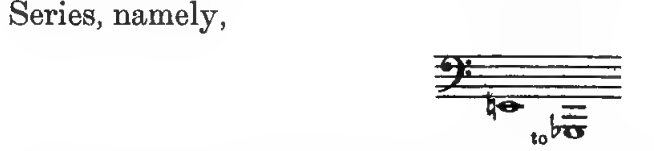
He can then take off all his valves, and, with a clear bore, produce his
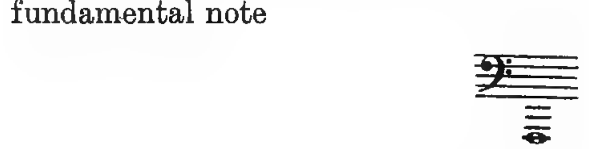
Below this there are some tew notes which can be got by means of a very loose lip, but their quality is, as a rule, miserable and their intonation unsatisfactory. Still they are played. plaint that " the Tuba" gets weakest just in the very place where it should be strongest only means that, for purposes of his general convenience, the player is not using the right instrument. For instance, in the following quotation from Elgar's Cockagne Overture, the last
1 For a brief description of the mechanism of X see page 87. = For details of the valve-transpositions see page 87.
Fic. 3. -BBb-BAss.
By kind parmission of Mossrs, Buosey & Co.
Facing p. 130.
three semitones downwards are really not true notes at all when played by a four-valved Tuba-in-F. On a five-valved instrument they could, of course, be produced in a much better quality. It need not be said that in all Tuba parts the actual sounds required are written, and the bass-clef and true key-signature of the piece are employed.
Example 88

The upward compass depends on the player to a great extent. It may be taken roughly as being
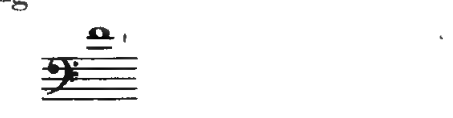
It is, however, just this fact that our orchestral players are continually called upon by composers to play Euphonium (W) and Deep Bass Tuba parts (X and I) within the limits of a single work that causes the player to adopt an unsatistactory midway instrument
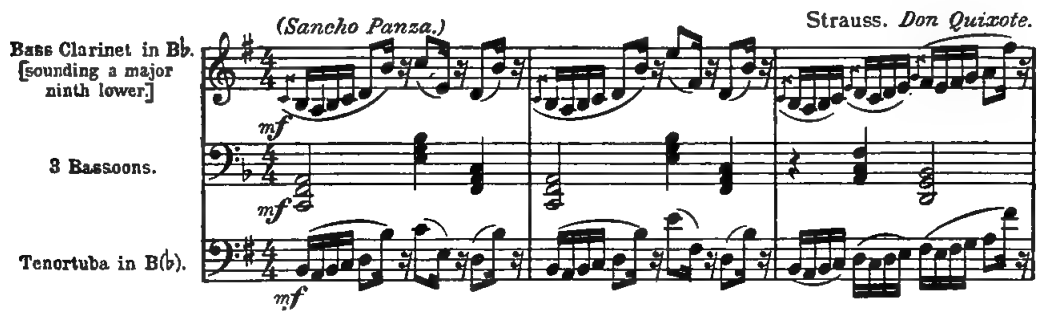
It would be far better if he were free to adopt either a five-valve big-bore modification of X, or, better still, a four-valve modification of Y, the finest of all military instruments.! The extra weight involved in the addition of the fourth valve" would not matter much for concert performances where the player is seated. If this plan were adopted, and expense were no consideration, the higher Tuba parts could be played on W. With regard to the latter parts, this has actually been Lute when works have been performed in which there is a «Tenor- Witness the Don Quixote Variations of Strauss, in which the Tenor-Tuba solos have been played with admirable and characteristic results on the ordinary Buphonium (W). Here is his first unmuted "solo" entry as written in the Full Score:
Example 89
1 This would practically be a Contrabass-Saxhorn in Bo. See page 164.
« One of our most artistic Tuba-players, Mr. Barlow, plays on a large-bore five-valved Tuba-in-F. In his very original system the tve valves represent additional tube-lengths of t, $, 1, 2, and 2% tones. His results are extraordinarily hine.
The part would be played on Was follows:

All Tuba-shakes are made with the pistons. It is therefore wise to write only those shakes which require the movement of a single piston. With the ordinary valve-system of added tube-lengths, as used in this country, these practicable shakes are as follows:
Whole-tone shakes on

and half-tone shakes on
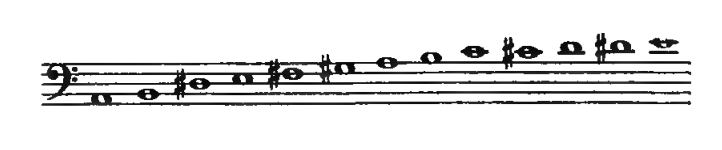
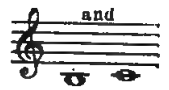
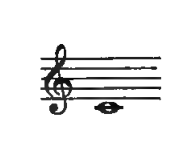
Of course with the Independent System of cutting-off tube-lengths the proviso is merely that both notes can be blown trom their two fundamentals as the same No. in the Harmonic Series. In practice this means that any shake whatever can be taken in the middle and upper registers. The only exceptions are the three cases where the lower note of the shake is Harmonic No. 2, while the upper is Harmonic No. 3. These would be, in the continental notation for the Saxhorn-family,' the two whole-tone shakes on
and the half-tone shake on
It need scarcely be said that shakes are seldom found in

the orchestral ensemble. The Tuba-shake in the Meistersinger Overture:

Example 90

is supported by a shake in the same octave played by the two Bassoons and the Cellos, while the Double-Basses perform the shake an octave lower. The round oily quality of the Tuba-shake, when well made, is by no means unpleasing.
The orchestral results that follow from the association of a single Tuba with the rest of the Brass are not wholly satisfactory in the concert-room. The instrument needs space and the harmony of its own kin. With such harmony it can support and contrast admirably with the rest of the orchestra. Left to itself, its heavy blurting tone, in which there is something elemental, even brutish, is liable to destroy the most cunningly contrived schemes of tone-colour. It is i true that in the pp it can well sustain the mf and the f of Horns and Wood-Wind, and in the f can take on its shoulder the whole load of the orchestra. Again, in a very large orchestra, it can, when not played above mp or at the most mf, reinforce without blurring the tone of the Double-Basses. But generally speaking, one may say that as a soloist combining with such harmonic groups as the Trombones and Trumpets-and this is its principal occupation-it is often unsatisfactory.
Composers, however, so continually use the Tuba as a mere means of noise that this is not to be wondered at. If they would only listen to the beautiful pp legato and the pizzicato-like staccato which the conductor of a first-class military band exacts from his Brass Basses they would not be so much inclined to misuse the instrument.
As an example of the p use of the Tuba the student may be referred to the sombre opening of Wagner's Faust Overture. The pianissimo ending of Ischaikowsky's Pathetic Symphony (Ist movement) is another case in point. In four-part Trombone chords of this sort it is practically an orchestral routine to give the lowest part to the Tuba. But it is a fair example of what was said above; the results are not quite satisfactory. The fact is that the Tuba is constitutionally compelled to "give himself airs." When sitting at table with the gentlemen of the Trombone family he appears to be something of a stra gor who ayo boug a "bile above the dyspeia level of the In this special instance the three Trombones, not unbearably so, but just sufficient to make one feel that the combination is not ideal.
For this reason it is often better, especially in p chords, to associate a Trumpet with the three Trombones, or, if the Trumpettone is not desired, to space the three Trombones carefully and introduce a Horn in the middle of the harmony.
Example 91
Ischaikowsky, Pathetic Symphony.
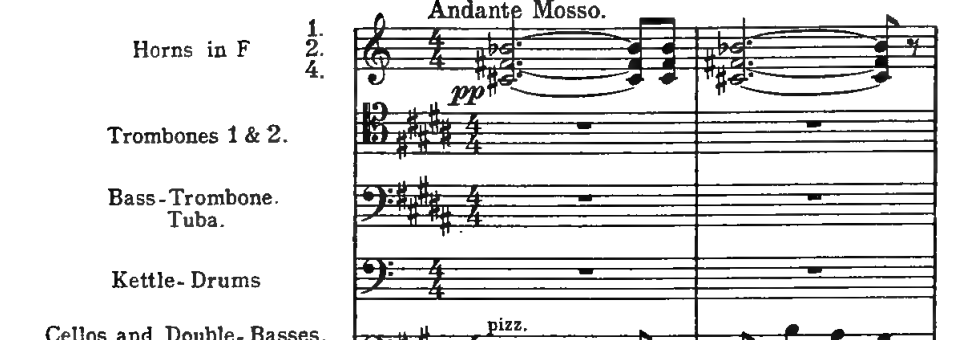
of which the lover sound at
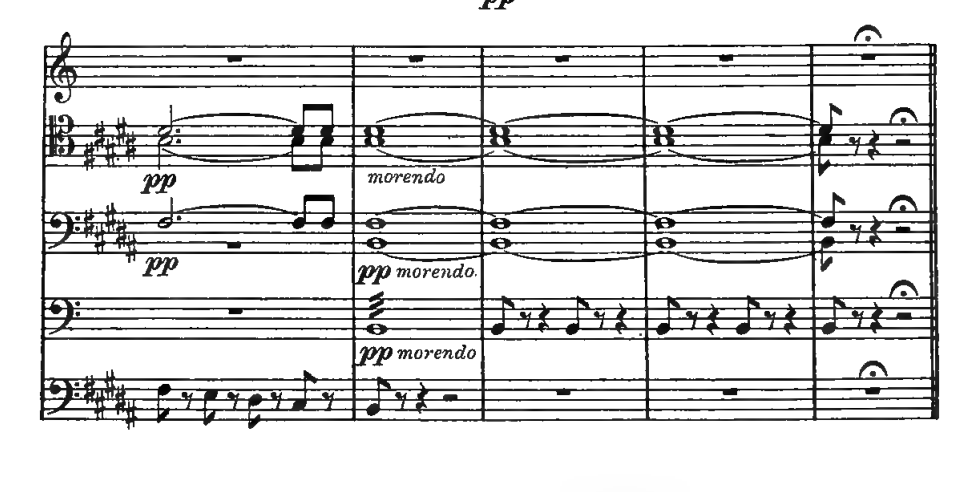
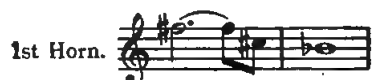
The 4th Horn part ot the above example is, in the full Score, written on a separate stave with the 3rd Horn. The Bo of the lst Horn is of course merely for Af. It is difficult to see why it should be written Bo, as it is approached thus:
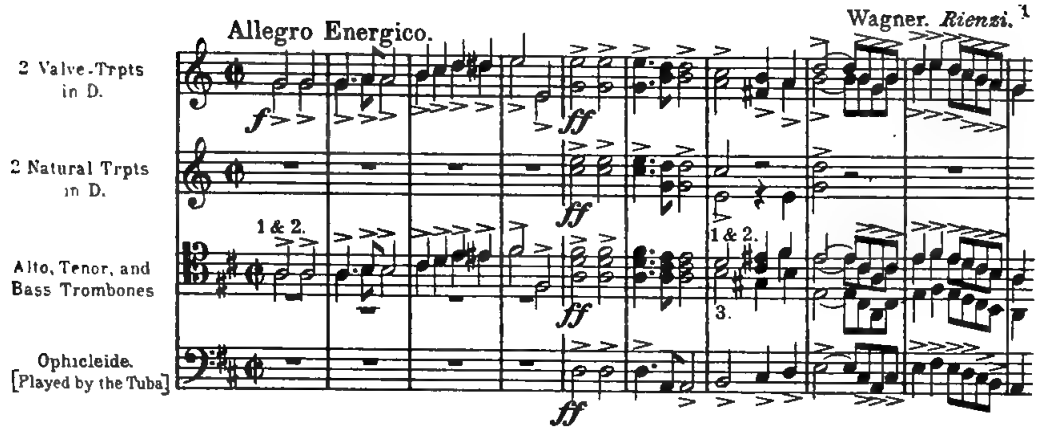
In the ff the Tuba is continually used to support the harmonic mass either of the whole orchestra or of the Brass alone. A good instance of the latter is to be found in the Overture to Rienzi. The Tuba, of course, plays the obsolete Ophicleide part. Notice the absence of the Horns from the score. The tone of the Brass is rather more "knife-edged" when they are omitted. This is, however, only possible in an orchestral Brass-tutti when one has plenty of other Brass instruments. For Brass chords need "spreading" if they are to be effective. notice also that the bass-part is not do old throughout, as is usual
Example 92
The majestic theme used by Wagner in Parsifal furnishes an example of the use of the Tuba and Bass-Trombone in octaves as a bass to the Horns, Trumpets, and Trombones. In this example the Full Score has two separate staves for the Tenor Trombone parts. They are here condensed into one. It may be mentioned in passing that purely Brass passages are uncommon in orchestral music. climax passages that sound to the ear as mainly of Brass almost invariably contain high Wood-Wind parts. This adds enormously to the brilliance of the Brass chords by emphasizing their overtones:
Example 93
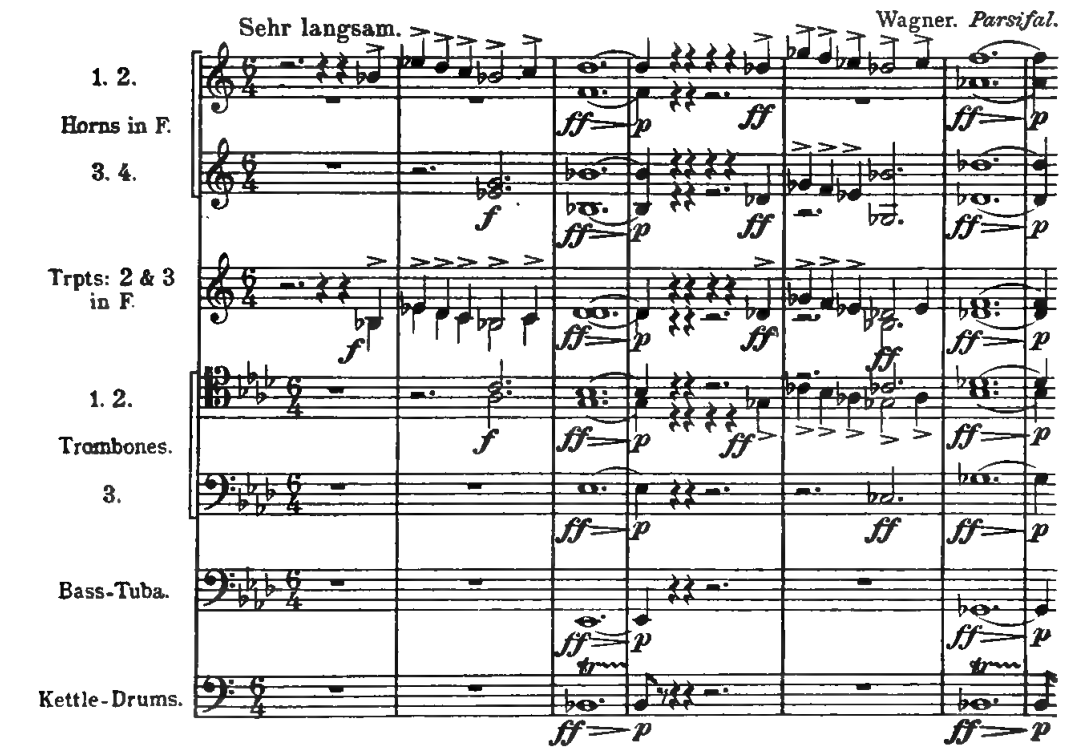
1 The Oboes, Clarinets, Bassoons, and 2 Horns enter on the Sth bar of this Example in order to support the unison of the heavy Brass.
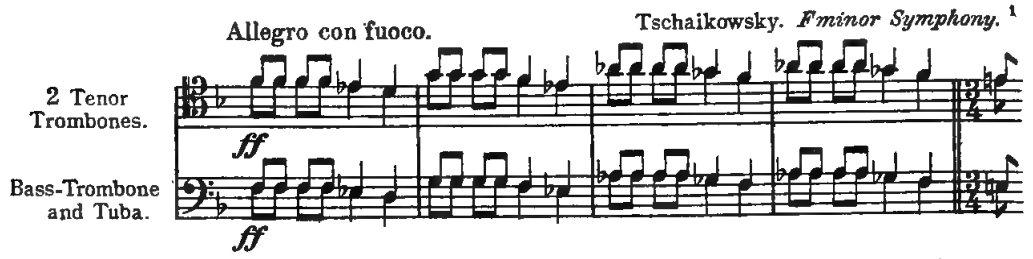
As an example of the Tuba when playing its Spenserian rôle of the Blatant Beast, the student should look at the end of the last movement of Tschaikowsky's F minor Symphony where, after building up his theme in tenths for eight bars on the Trombones and Tuba, he then comes to these octaves:
Example 94
Reasons of space prevent anything more than a general reterence to Strauss's use of the instrument. His Tuba parts exhibit a plasticity of treatment quite in advance of anything else in musical literature. The student must examine his Scores at first hand.
A really satistactory mute has not yet been tound tor the tuba l'he one in use is a huge pear-shaped stopper like an exaggerater Cornet-mute. Its effect is not ideal either from the point of view of tone-stifling or of intonation. At the Opera, in a work of Stravinsky, the Tuba has been seen to swallow the Harp-cover in default of any better sustenance. There is an extraordinary passage for two muted Tubas in the Introduction to Strauss's Don Quixote variations. The two instruments play a weird passage in octaves while three muted Trumpets are busy above them with one of the principal themes of the work. An Oboe, unconscious of the trouble that he 1s making, nolas a low Ff throughout. The Score also contains parts for Double- Bassoon, muted Violins, and muted Double-Basses. These, however, add nothing essential to the very mucl condensed extract given below:
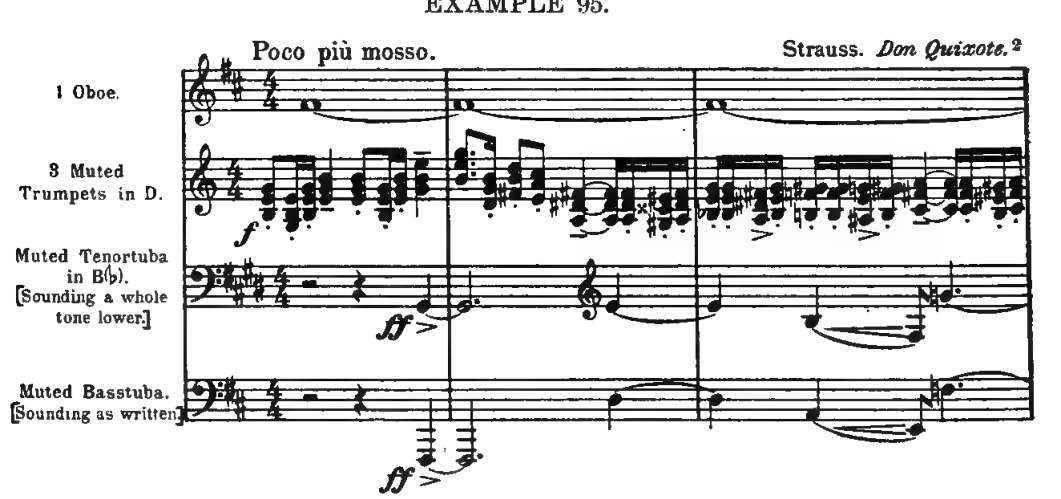
1 The Trombone and Tuba parts alone are quoted from the tutti. " In the Full Score the 3rd Trumpet occupies a separate stave.
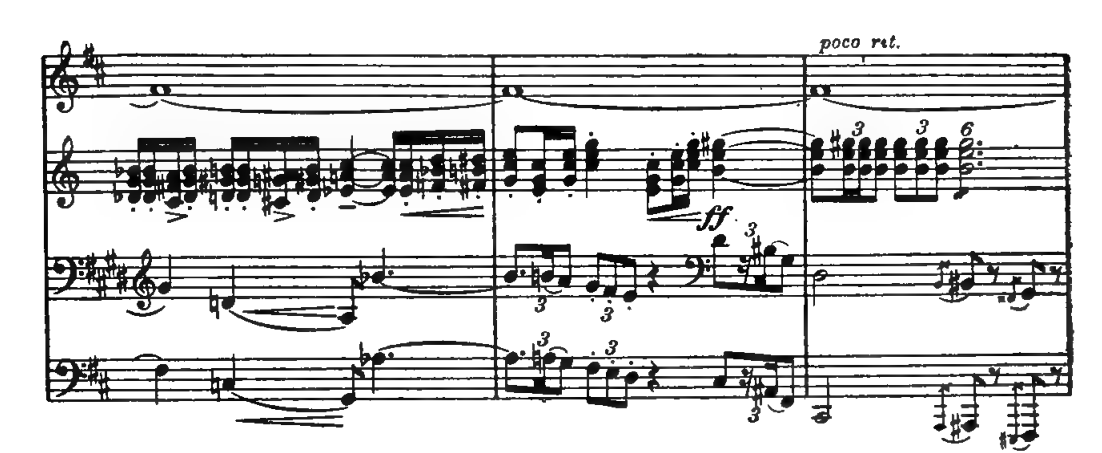
The Tuba is not often asked to perform feats of technical dexterity, have a rate in the concy trod certainty of tebe ique, bed plat is almost of. oris in an instrumento ste controle over hot aeover their toneproduction. à wide bore, is a matter of considerable difficulty. It calls for a strong physique, continua practice and experiment, ana a nice artistic judgment.