 Playable Books
Cecil Forsyth · section 33 of 60
No. 29. Obsolete Brass-Wind
Read and hear this section in the playable edition →We have already seen that, in one important class of musical instrument, the tone was produced by means of a cup-mouthpiece and the scale by means of the opening and closing of holes bored laterally in the pipe or tube. This tamily and its technical methods are now obsolete. In its day, however, it had considerable importance, and some of its members are still to be met in old Scores. The Zinke has already been sufficiently described: its bass, the Serpent, will be dealt with under Obsolete Wood-Wind. Both these instruments were of wood. There remain the four Brass instruments, the Reyed-Bugle, its bass the Ophicleide and the two transition-instruments between the Serpent and the Ophicleide, namely the Russian Bassoon and the Bass- (or Keyed) Horn? Of these by far the most important is the Ophicleide. However, as they are all merely variants of the original type, a few sentences will be devoted to a brief description of that type.
The Keyed-Bugle.
In all the instruments of the keyed-Bugle tamily the opening of the holes acted in the same manner as the modern Independent
1 Pages 70-2.
2 The student must note that the separation of the Serpent from the instrument group under discussion is merely for convenience of reference. All these instruments, whether made of wood or of brass, belong technically and scientifically to the same family.
Cylinder System, that is to say it cut off successive lengths of tube The various tube-lengths were in an ascending series. There was, however, a peculiarity here. The key nearest the bell was normally open, not shut like the other keys. In
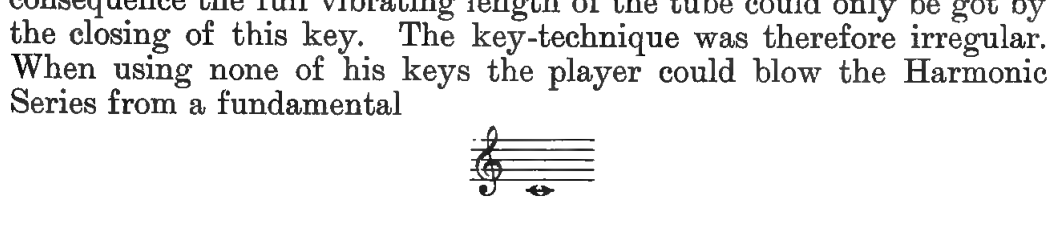
Depressing the first key he had access to the full length of tube with

Bringing the second key into action he could blow the Harmonic

and so on regularly upwards to the seventh key. The irregularity lay in a reversal of the open-position and the first-key position, and this irregularity was characteristic of the whole Bugle-Ophicleide family. The Harmonic Series used was as follows:
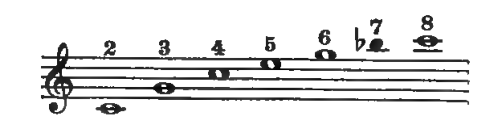
and theoretically the player could blow this Harmonic Series from the seven fundamentals
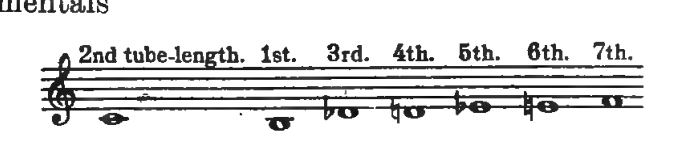
3rd. 4th. 5th. 6th. 7th.
To to to to or
As a matter of practice, however, any note above

was an impossibility. The instrument was normally built in Bb, occasionally in A, and still more rarely in the high (sopranino) key of Ep.! The written chromatic compass of the Keyed-Bugle-in-Bb was

' Meyerbeer has used both the "A" and the "Bb" instruments in Robert le Diable.
p. i tradio student eyed Bugle it he will he founo dificuty it naking out the first key lying open nearest the bell and the six other keys all closed and placed in an ascending series nearer the mouthpiece The Keyed-Bugles and Ophicleides spoke with extreme and possessed a power of legato-playing unknown to our modern Brass Instruments. Against this must be set the fact that they were big in banging of Bit a he fred ength piece sed by. shockingly defective in intonation. So long as they were employing
cessive opening of the holes nearer the mouthpiece so the intonation became more and more imperfect. In fact it was as a partial remedy to this defect that the system of an open Ist-key was introduced. This failing was fatal to the instrument. The early valve-Cornet was by no means a miracle of correct intonation; but compared with the Keyed-Bugle it must have seemed a blessing indeed.'
The Bass-Ophicleide.?
The Bass-Ophicleide was the bass of the Keyed-Bugle. The two instruments were pitehed an octave apart. It was of big bore and

piece was used. The key-technique of the Uphicleide was similar to that of the Keyed-Bugle but, owing to the number of keys, the former instrument had a compass of an octave more than the latter. The Ophicleide was built in two keys, C and Bb, with a compass, in C, from
→ fe and, in Bs, from 3y fire.

said above with regard to the Keyed-Bugle's easy speech and capacity for legato-playing applies to the Ophicleide. In intonation, however, the latter instrument was decidedly superior.
Till about the middle of last century it held its place as the chief bass-instrument in all military bands. The parts assigned to it in the orchestra were what we should now call "Tuba-parts. In France it was employed by nearly every composer from Spontini to Meyerbeer. Wagner wrote a part for it in krenz; Berlioz, in the Amen Chorus of his f'aust, uses two; while Mendelssohn has a well known "clown's" passage for it in the Midsummer Night's Dream Overture.
" No wonder Mr. Pickwick objected to Mr. Bob Sawyer's classical imitation of the Keyed-Bugle on the top of the coach between Bristol and London.
2 That is Keyed-Serpent, from two Greek words ophis and kleis, meaning respectively "serpent" and "key.
PLATE VIl.
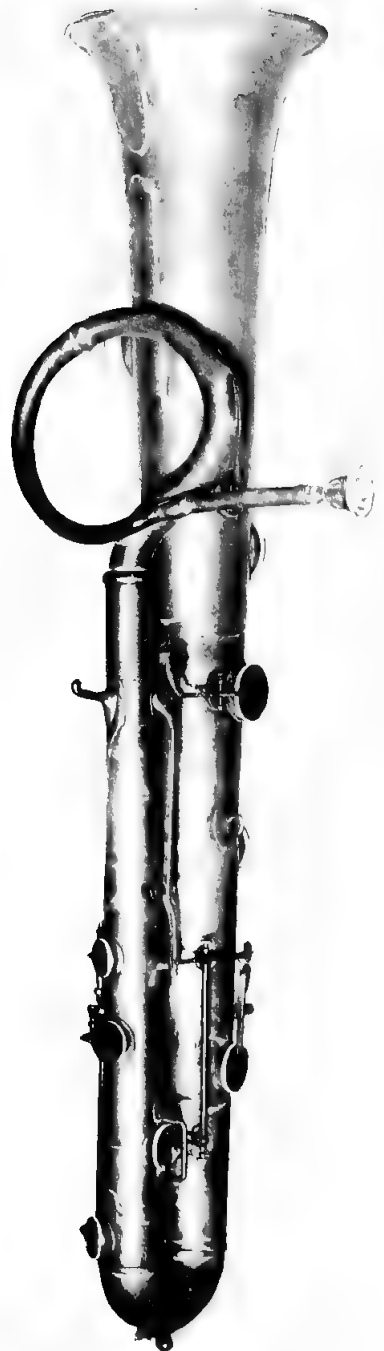
BAs OPHICLAIR.
By kind pernission of Messrs. Buosey i Co.
Facing p. l7t.
The general adoption of the milder-toned Tuba in Germany about 1850 led to the gradual disuse of the "bellowing" Ophicleide. It has, however, lingered on in France, where it still figures as a sort of musical hobgoblin in instrument-makers' catalogues. The parts for the instrument are now invariably played on the Tuba. The Midsummer Night's Dream passage, however, completely loses its point when so played. The composer's intentions would probably be much more nearly realized if it could be well blown-out on the Double-Bassoon. But reasons i compass Iorbid this. The Ophicleide parts in Berlioz's Faust are 1xas of special effect. Trombones, but here again there seenus to be some
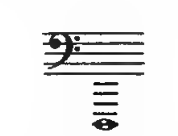
Alto-Ophicleides in Eb and F are mentioned by Berlioz as being used in the "Harmonies" of his day.' He even describes a Double- Bass-Ophicleide in Eb with a compass down to
The shape of the Bass-Ophicleide-familiar to all in the hands of the elderly angel on the cover of Punch-is shown on Plate VII. The instrument from which the photograph was taken has evidently seen good service, for it has been patched in two or three places. Just visible inside the "O"-curve is the Ist or "open-key." As we have already explained, the other keys lie close over the holes till they are called into action by the depression of the finger-pieces. Their position can be clearly seen in the illustration. The white line under each circular plate is a pad, not an air-space.
The Bass-Horn and the Russian Bassoon.
Very few words need be devoted to either of these instruments. They were both experimental or transitional types which soon lost ground when opposed by the more pertect Uphicleide. Both instruments were made of brass, and employed the principle of laterallybored holes and a cup-mouthpiece. In both cases the name 1s somewhat misleading. The only resemblance between the Bass-Horn and the ordinary orchestral Hand-Horn of its time lay in the tact that both were conical in bore. The instrument was also known as the Keyed-Horn; in German, Klappenhorn or Kenthorn. The latter name was adapted from our own expression Royal Kent Bugle, a title

no connection whatever, technical or historical, with the Bassoon.
The Bass-Horn was a conical instrument of big bore terminating in a wide bell that pointed upwards like that of the Ophicleide. The two halves of the tube were bent back upon each other and clumsily
1 See Obsolete Wood-Wind, p. 286, for a description of the serpent.
joined in a metal "butt" something like that of a modern Bassoon. The narrowest end of the tube—-that is to say, the end that carried the mouthpiece-was often fantastically curved into an elaborate swanneck shape in order to reduce the total height of the instrument. As a rule the player merely used his fingers to open and elose the holes in the metal tube. … In addition, however, an "open-key" was provided as in the Uphicleide and the Keyed-Bugle. The intonation was imperfect, and the tone-quality may be judged trom the tact that when the Ophicleide came in the Bass-Horn went out.
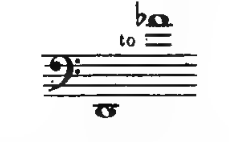
The Russian Bassoon was an instrument of similar character. fact, the desa of tits auster and disablic to provide the bas-norn, it Like the Bass-Horn, it was scientifically a first-cousin of the Ophicleide, or, to use Berlioz's expression, as translated, "a low instrument of the serpent' kind." He gives it a compass of
After a short account of its imperfections he makes the ominous remark that "its two best notes are D and Eb." No tear has been shed over the disappearance of the Fagotto à la Russe.
1 The compasses of all the Ophicleides may be found on page 9.