 Playable Books
Johann Joseph Fux · section 8 of 32
Second species in three voices
Read and hear this section in the playable edition →Second lesson
On placing minims against a semibreve in three voices
Here we must recall and observe the precepts given for this species in two voices, and what we said concerning the harmonic triad in semibreve against semibreve in three voices. There is this relaxation, however: in this species of three-voice composition, for the sake of the harmonic triad, a minim moving by the leap of a third can sometimes make two fifths permissible. For example:
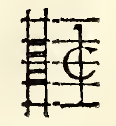
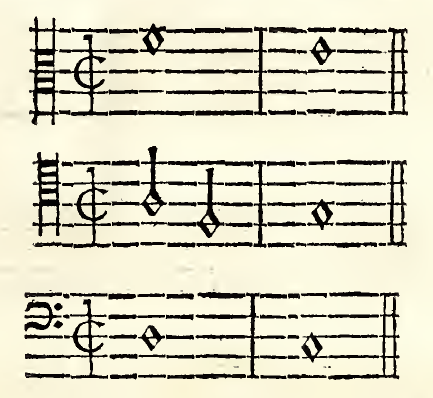
This case, forbidden in two voices, is tolerated in three voices for the sake of the harmonic triad, as I said. I present three examples as a model, so that making the others may be easier for you.
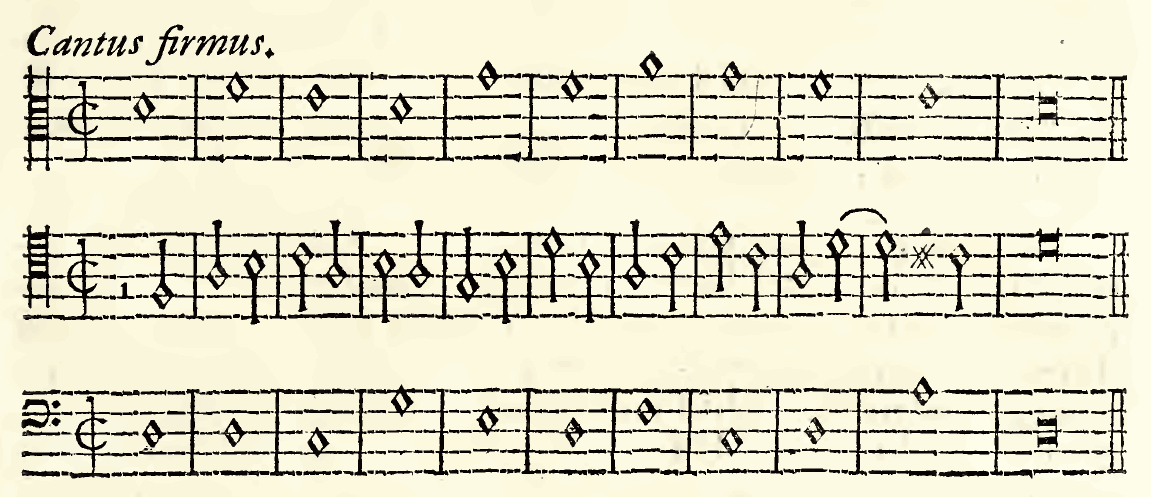
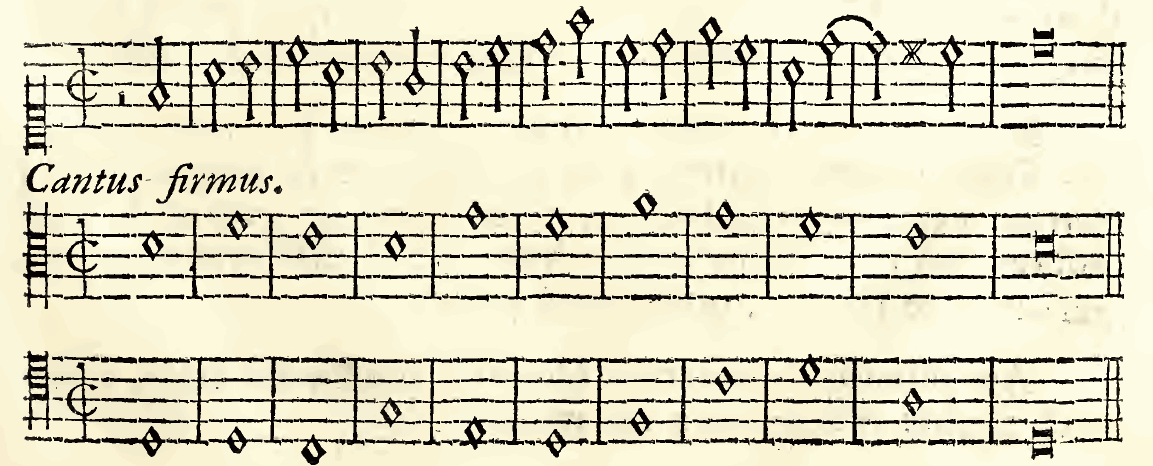
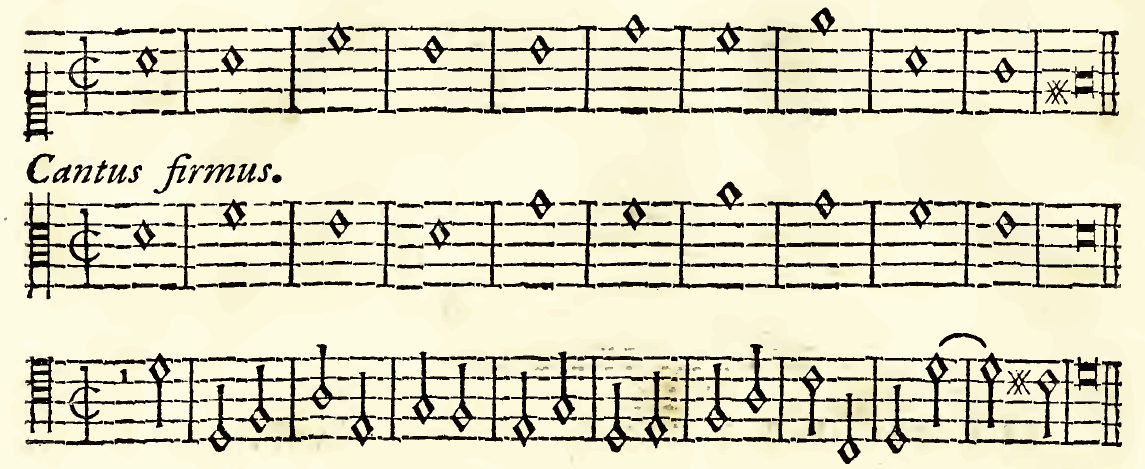
Joseph. I remember that you said above, when you gave the precepts for this species in two voices, that two minims should never be placed on one and the same staff line, and that consequently a ligature has no place here. Yet in the final cadence of each of these three examples I see not only a ligature, but also that the final note of the last example ends with a major third, which I remember was no less forbidden.
Aloysius. You remember correctly. But since scarcely any rule is without an exception, I think it should be understood as applying where there is an opportunity to do so. This can always occur in two voices, but not equally in three, as can be seen quite clearly in the preceding examples: if two untied minims were placed at the position of the ligature, there would necessarily be either a faulty unison or an octave devoid of harmony. Necessity excuses the major third placed at the final note of the third example, because there is no room there for a fifth in the soprano part; if a fifth were placed there, two fifths would arise immediately following one another.
From these examples it is clear that minims must be placed in one of the parts throughout the course of the cantus firmus, while the other two parts have only semibreves, so that the minims always agree properly with the two semibreves, otherwise taking account of the motions and rules as far as possible.
Come now, please construct examples for the remaining tenors, observing the threefold change of position I have shown.
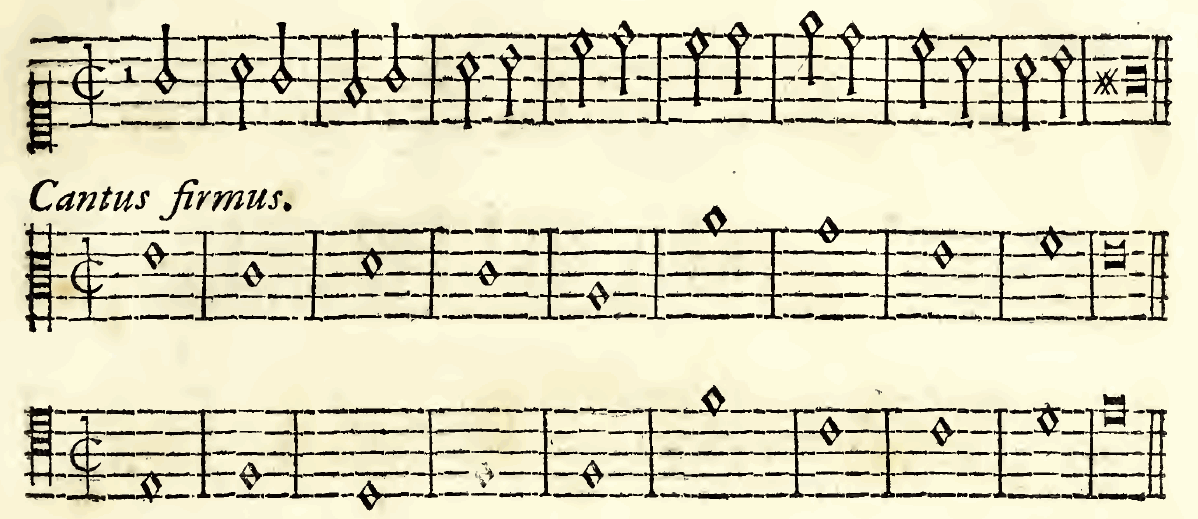
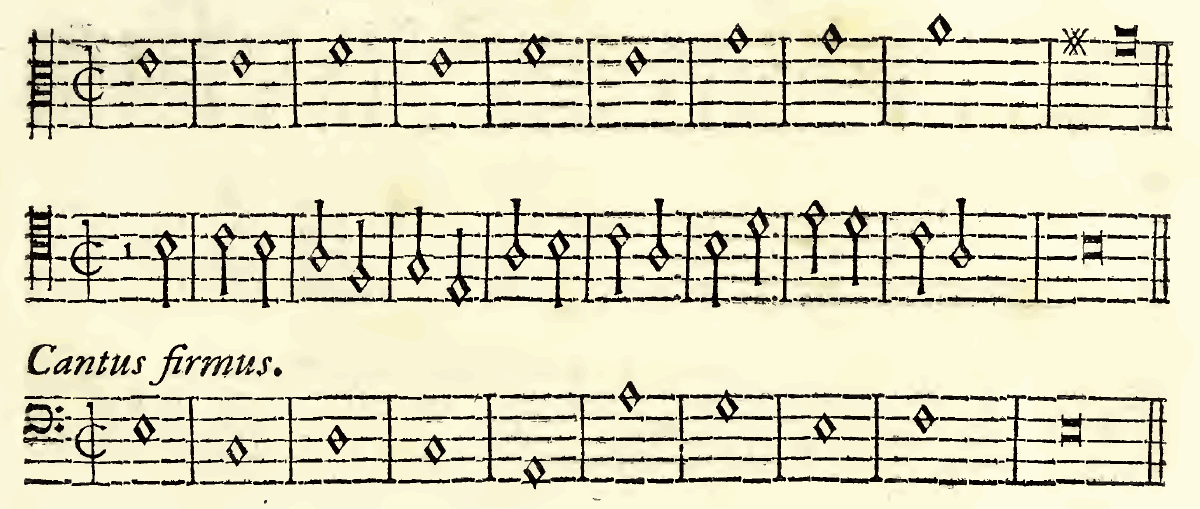
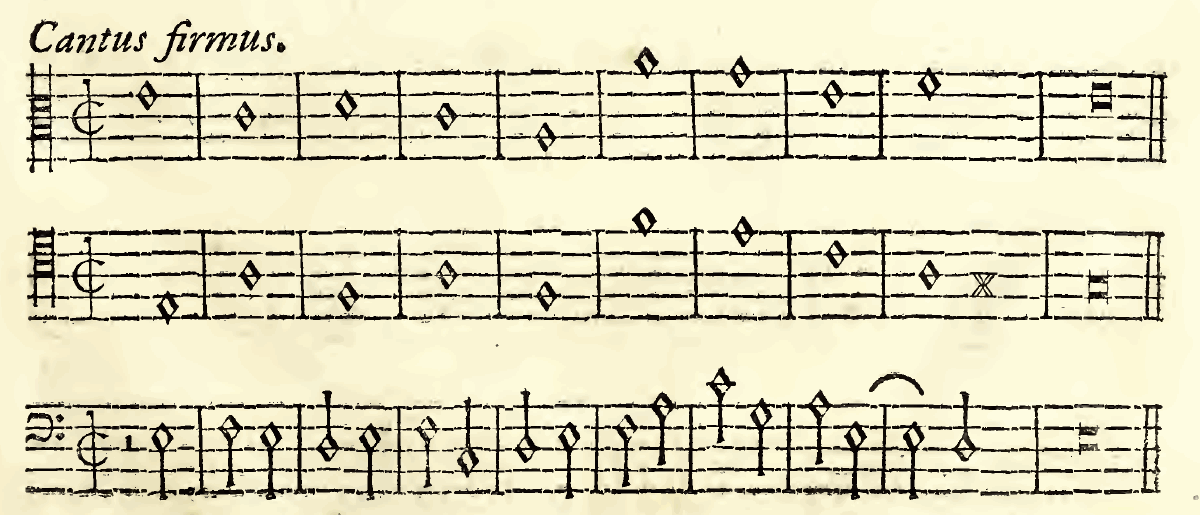
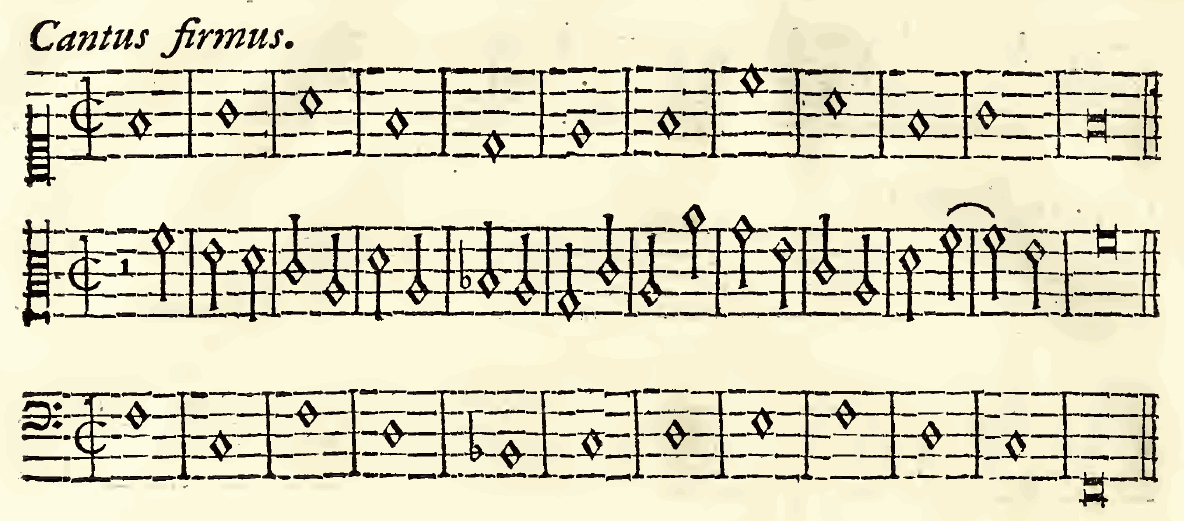
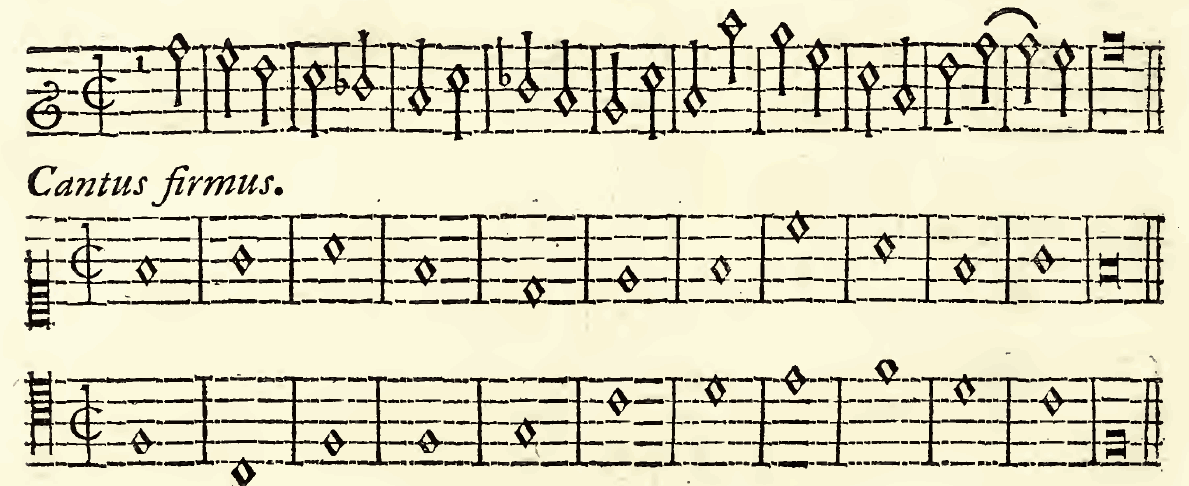
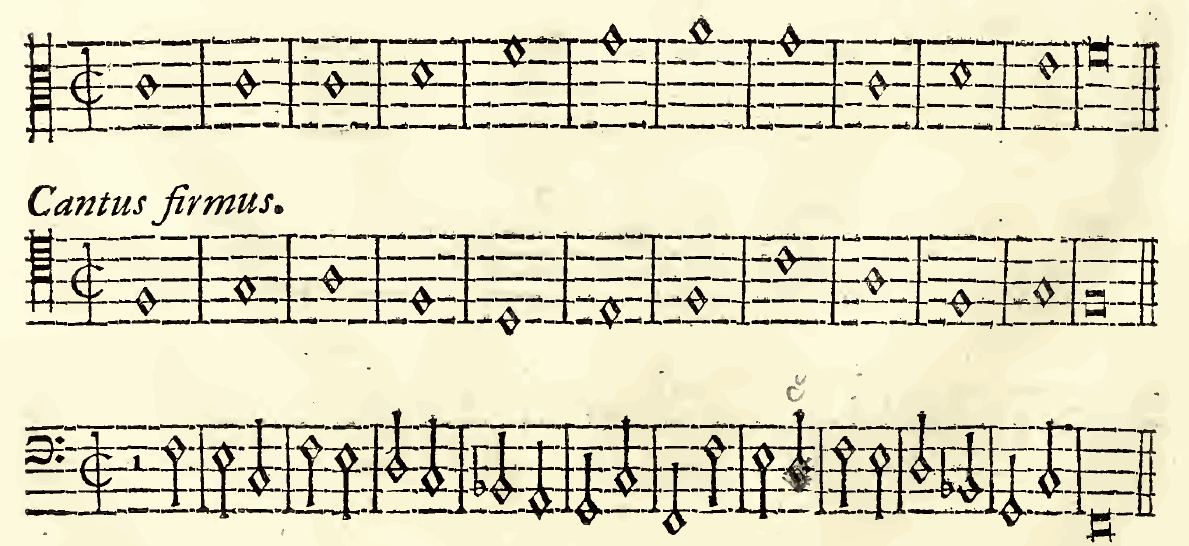
Aloysius. Let these examples suffice for the present; I leave the remaining three modes for you to pursue in the same manner in private study.
Joseph. I find this study full of difficulty, so much so that at times progression from one measure to another seems almost impossible to me.
Aloysius. I admit that working out these species is not so easy. In them, the two minims must agree properly with the semibreves placed in the other two parts, with all that must be observed duly observed. This is difficult and scarcely possible unless, before deciding to write, I have already conceived in my mind one or two following measures, as I have often said. But words can scarcely express the usefulness and ease in writing that this exercise brings to students. Those well practiced in it, once the strict constraint of the cantus firmus is removed, will joyfully discover that, as though released from bonds, they can produce freer compositions almost at play.