 Playable Books
Johann Joseph Fux · section 9 of 32
Third species in three voices
Read and hear this section in the playable edition →Third lesson
Since in this composition for three voices we propose the same order of proceeding that we used in giving the lessons for two voices, it is evident that this lesson concerns a composition consisting of four semiminims placed against a semibreve. There is this distinguishing observation, however: just as in two-voice composition the semiminims must agree with the semibreve of only one other part, so in this three-voice composition they must agree with the semibreves of two parts. In other respects, not only what was said about the species in the lesson for two voices, but also the precepts given thus far for the species in three voices, must be observed.
Joseph. Is there nothing else to observe here?
Aloysius. Nothing, except that, as in all species of counterpoint, here too the greatest attention must be given to the notes that fall on the thesis.
Joseph. I shall therefore try whether I can work out this species without an example set before me.
Aloysius. Very well. But take care that if with the first semiminim of the arsis you cannot form the harmonic triad, you endeavor to do so with the second or third.
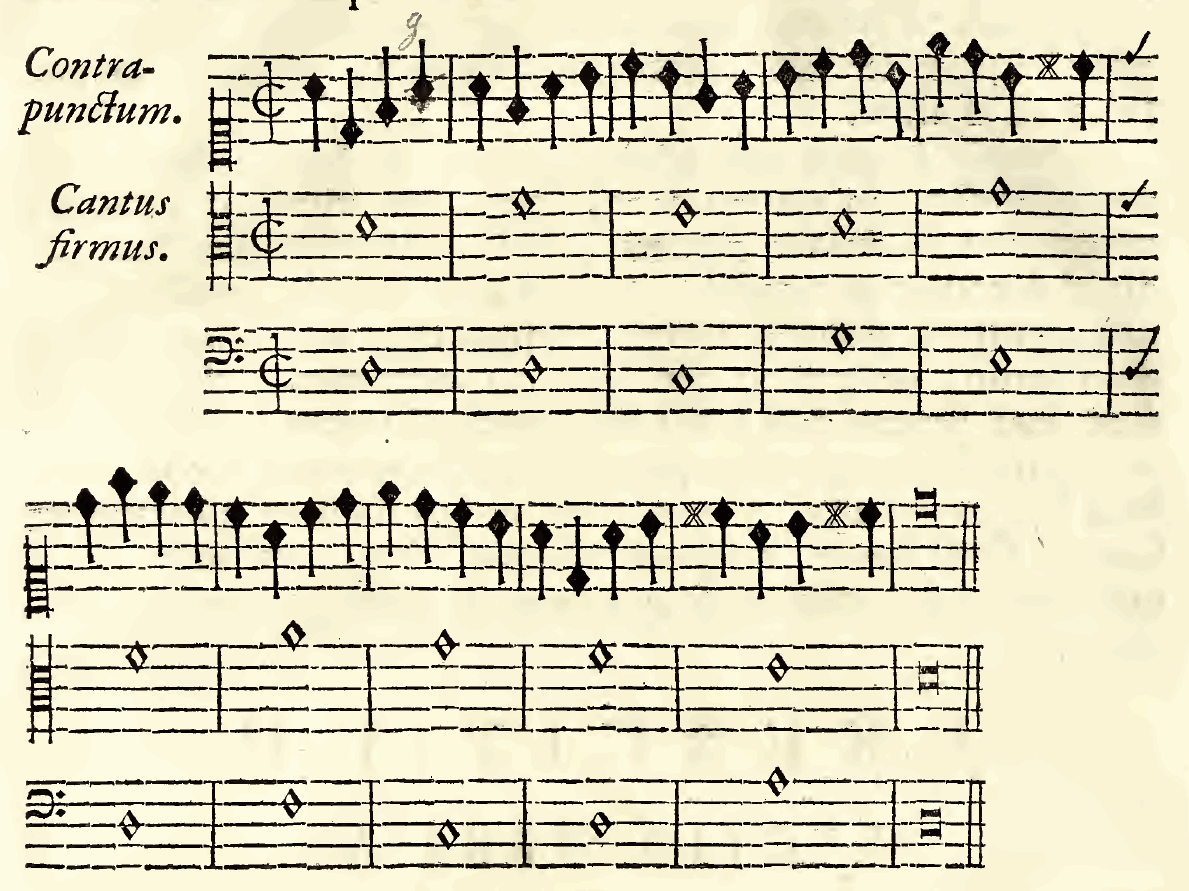
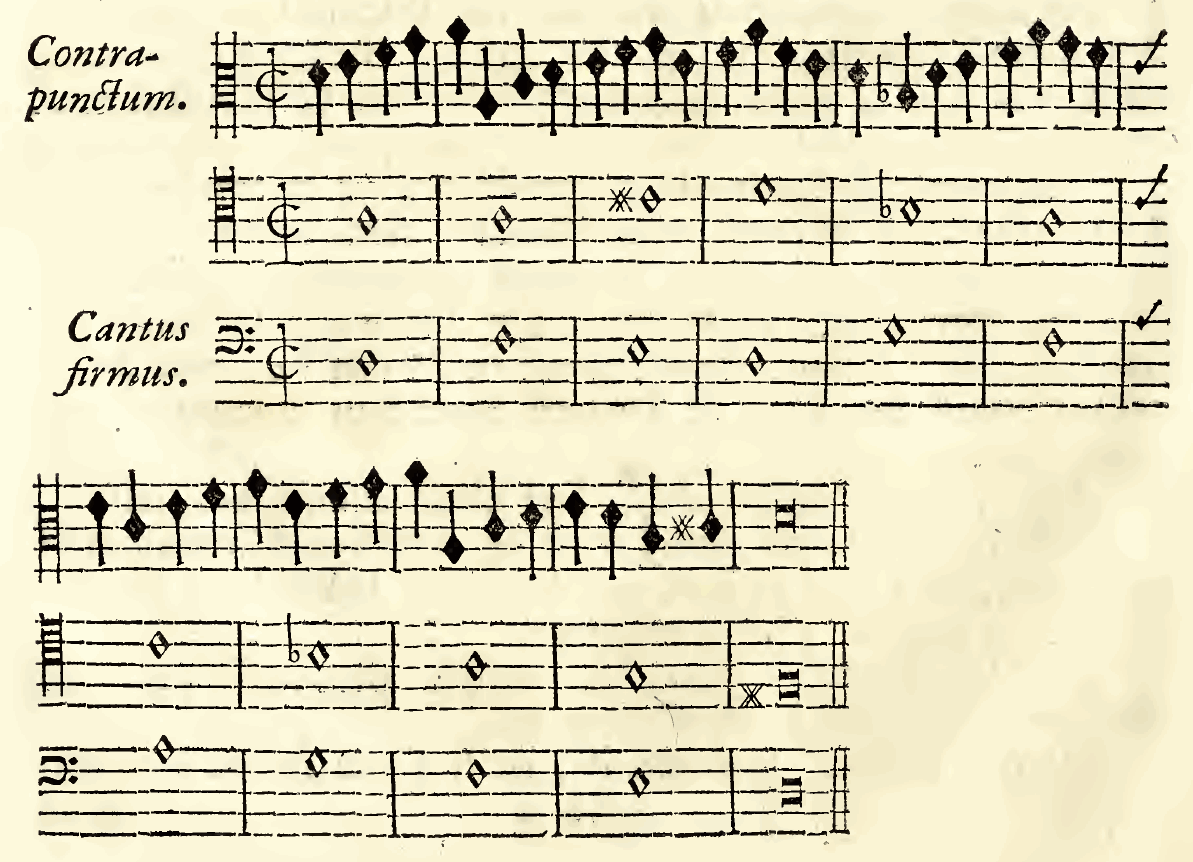
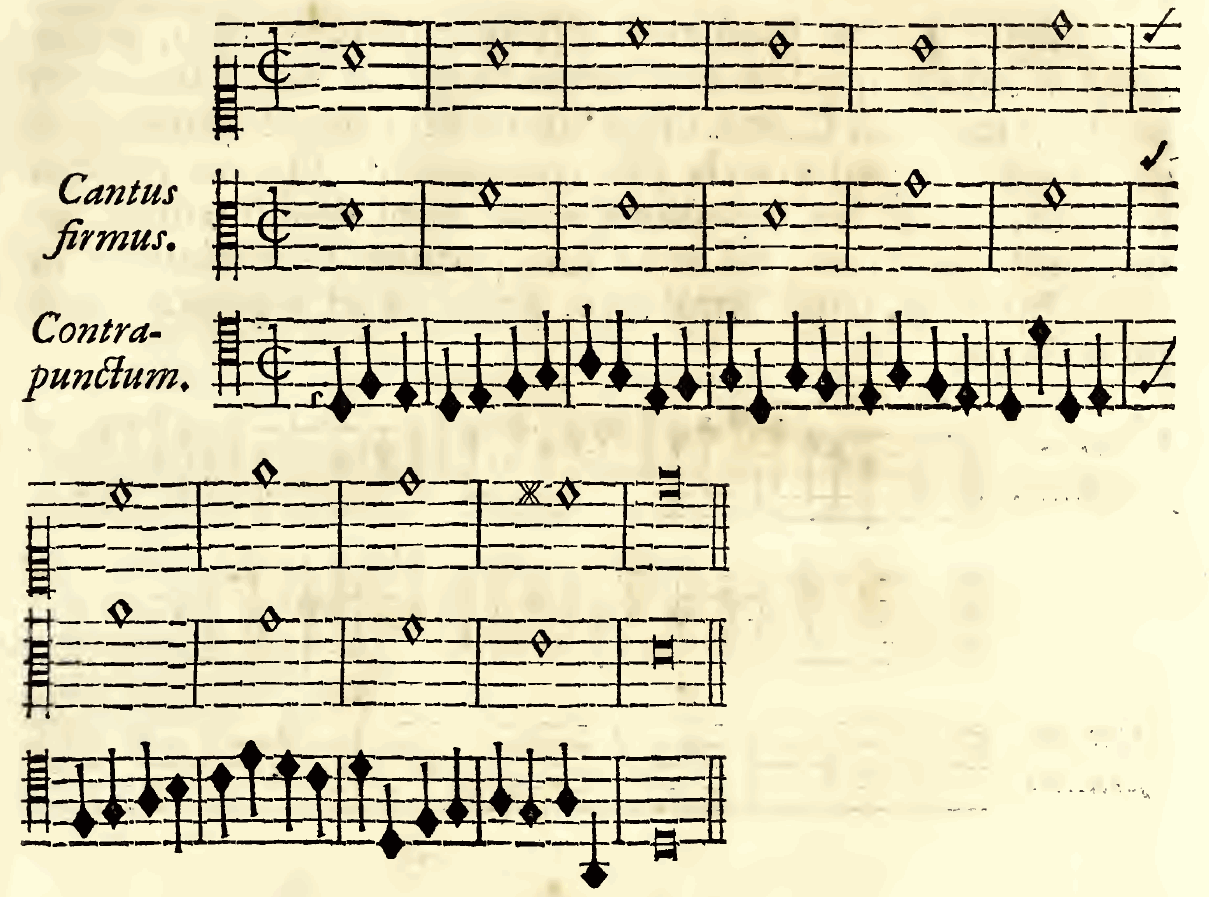
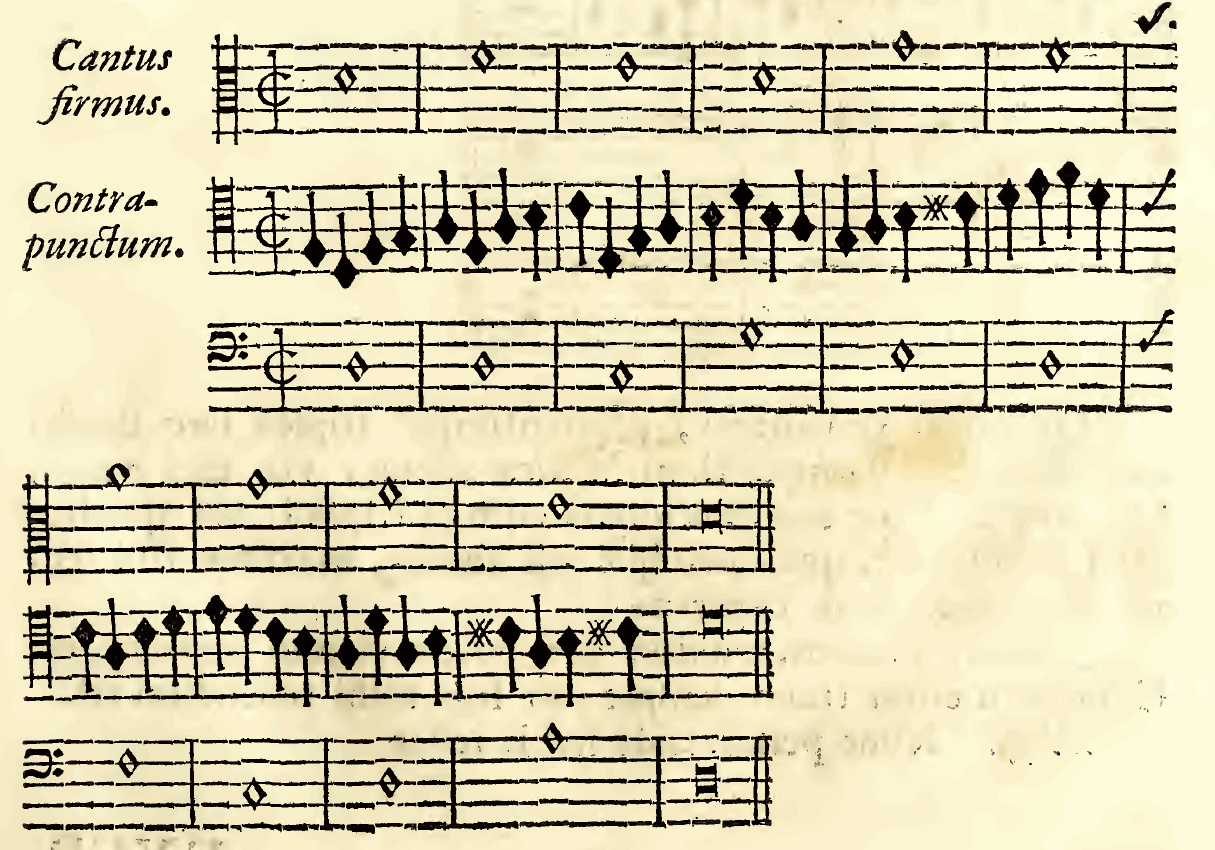
Aloysius. From these examples, which are by no means badly made, I understand that you have already acquired a considerable degree of knowledge. I therefore recommend that you complete the examples of the other modes and cantus firmi in private study at home. When these are finished, if you wish, the cantus firmi of all six modes may be taken up again and worked through, with semiminims placed in one part, minims in another, and semibreves in the third, according to the following example.
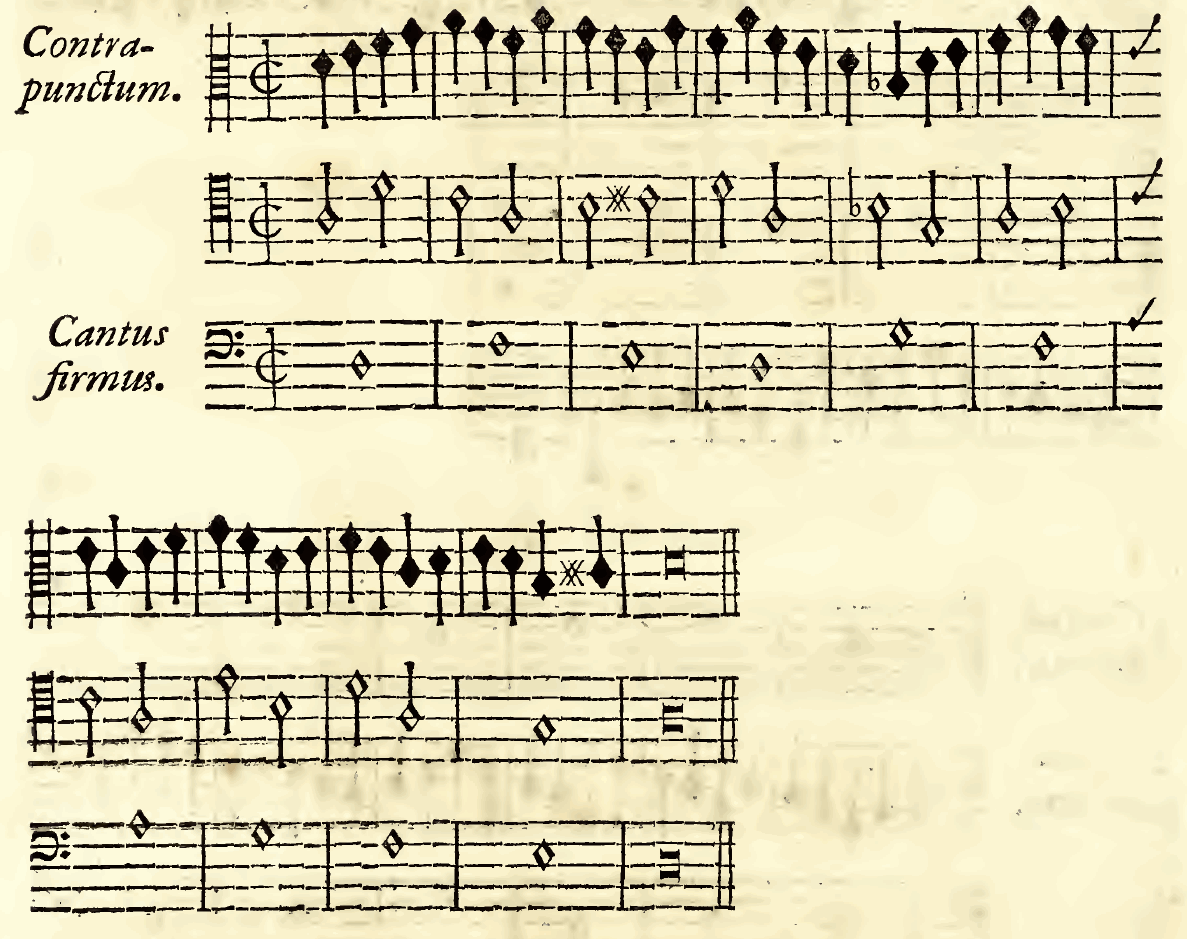
It can scarcely be said how much ornament and excellence this threefold distinction of note forms brings to musical composition. I would therefore very much wish you to devote the greatest care to this exercise, with the threefold or fourfold change of position that we have used thus far.
Joseph. I shall do so with the greatest exertion of which I am capable, for I must always hold your advice as a law.
Aloysius. It now remains for us to work through