 Playable Books
Johann Joseph Fux · section 12 of 32
Four-part counterpoint: first species
Read and hear this section in the playable edition →

First lesson
On four-voice composition, or composition for four parts
It has already been said above that the complete constitution of the harmonic triad is contained in three-voice composition, or composition for three parts. Hence it is clear that there is no place for an added fourth part except through the doubling of some consonance already placed in the three-voice composition, apart from certain cases involving dissonances, which will be demonstrated elsewhere. Although there is the greatest difference between unison and octave in interval and position, there is none at all in their common naming: a unison is just as customarily called, for example, C as an octave is, and the octave is regarded as a repeated unison.
Thus the arrangement in four voices will consist chiefly of a third, fifth, and octave. Where an octave cannot be obtained because of faulty progressions—as happens quite often—a third should more frequently be doubled in its place, and a sixth more rarely. Otherwise, the rules of progression and motion prescribed in Book One should be observed as far as possible, considering not only the relation of the parts to the foundation, but also their relation to one another. I said “as far as possible” because sometimes necessity, the melodic line, imitation, or the strictness of the subject will require that a hidden succession of fifths or octaves be tolerated.
Meanwhile, the less one happens to depart from the common rules, the more perfect the resulting four-voice composition will be.
Joseph. I seem to discern your explanation through a mist. Therefore, to understand the matter more clearly, I need an example or two.
Aloysius. The mist in your mind will easily be dispelled by the following example.
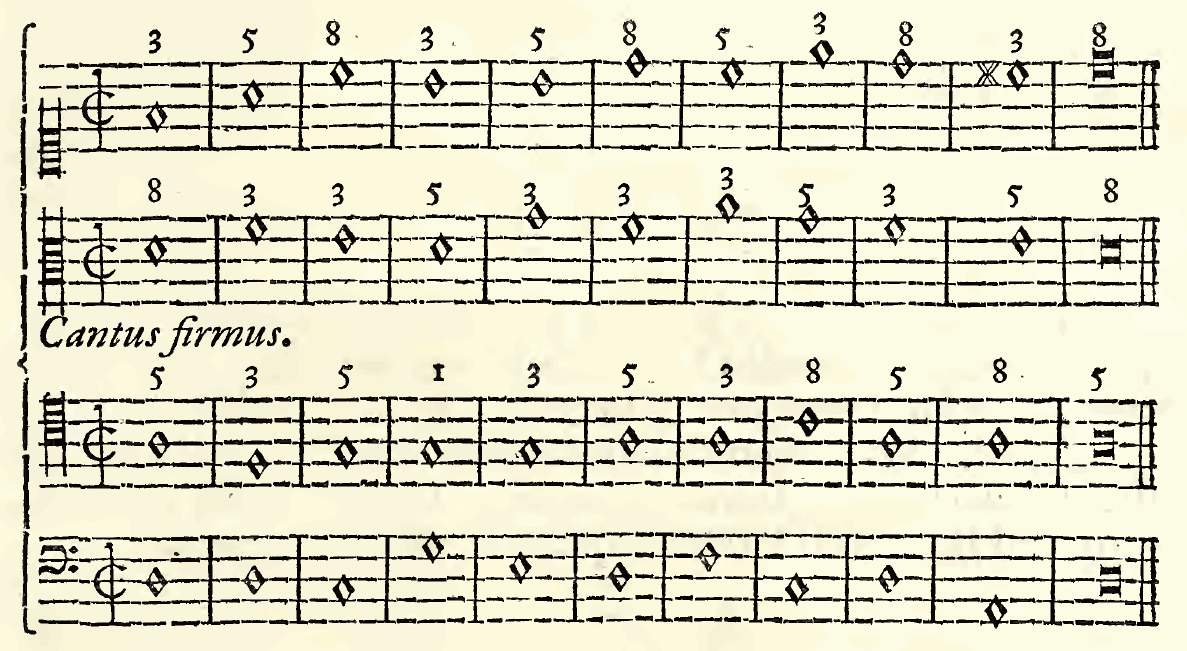
Do not be surprised that consonances, or compound intervals, have been marked with simple numbers, contrary to the practice used thus far. I thought this should be done for no other purpose than to make the doubling of consonances more clearly visible. Follow this model by imitation, then, and if any doubt remains, state it; if none remains, take up this same cantus firmus and work through it with the usual change of position, placing it successively in each part.
Joseph. Does it matter which consonance is assigned to each part?
Aloysius. It matters very greatly, as I think you have already learned from the exercises and explanations concerning three voices. For besides the fact that, where possible, each consonance claims its proper place in the natural order, it is most important to consider whether, from the arrangement of the first measure so disposed, a correct progression can be made to the second, third, or even fourth measure. If not, the structure of the first measure must be changed, and the consonances so placed that convenient and correct progression to the following measures becomes possible.
Joseph. But what is that proper place you mentioned which the consonances claim for themselves?
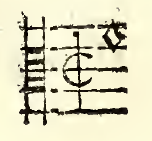
Aloysius. It is the order produced by a harmonic division of the octave. It is clear that this division first generates the fifth, and that a further division of the fifth produces the third. This order must be kept in placing consonances, unless another consideration, namely progression to the following measures, prevents it, as very frequently happens. I append an example showing the natural order of the consonances:
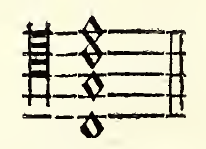
You see the fifth placed first, generated from the division of the octave; second, the octave existing in itself; third, the third, or tenth, produced by the division of the fifth.
Joseph. According to the arrangement of our present-day keyboard, it seems that the third should be placed first and before the fifth, and consequently that the four-voice arrangement should be placed in the following order.
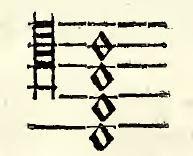
Aloysius. It does seem so, but in fact it is not so. For, besides the fact that the judgment of order must be drawn from the division, not from the disposition of the keyboard, a third placed in a low position close to the foundational part produces a confused and clouded sound. Moreover, the greater the terms, or numbers, constituting an interval, the higher the sound of that interval will be; hence it also claims a higher position. Now the constituent terms of the fifth are 2 and 3, which together by addition give 5. The terms of the third are 4 and 5, which together make 9. It is therefore clear on natural grounds that the fifth should be placed in the lower position and the third in the higher.
Proceed now, if no doubt remains, to the remaining studies in this and the other modes, scrutinizing the confines of every measure and comparing each part with every other, lest anything contrary to the rules slip in. Great care is needed to accomplish this. Note that not only must the parts agree properly with the bass, or foundational part, but the middle parts must also agree with one another according to the rules.
Joseph. From the preceding example in four voices I found that a fourth sometimes occurs between the middle parts. You stated that it is a dissonance and affirmed that it is forbidden in composition consisting only of semibreves. I could not pass over this without a scruple.
Aloysius. Quite right. But remember that the nature of consonances and dissonances must be measured in relation to the foundational part, whatever may result between the middle parts, provided that other absurdities, such as a succession of two fifths or octaves, are avoided. Furthermore, note that the more closely the parts are drawn together, the more perfect the resulting harmony, according to the saying: united strength is stronger. If anything difficult confronts you, as it inevitably must, consider that one must climb through hardships to excellence, and that athletes do not enter the Olympic games without an opponent; tireless study, perseverance, and the shield of patience are needed in the contest.
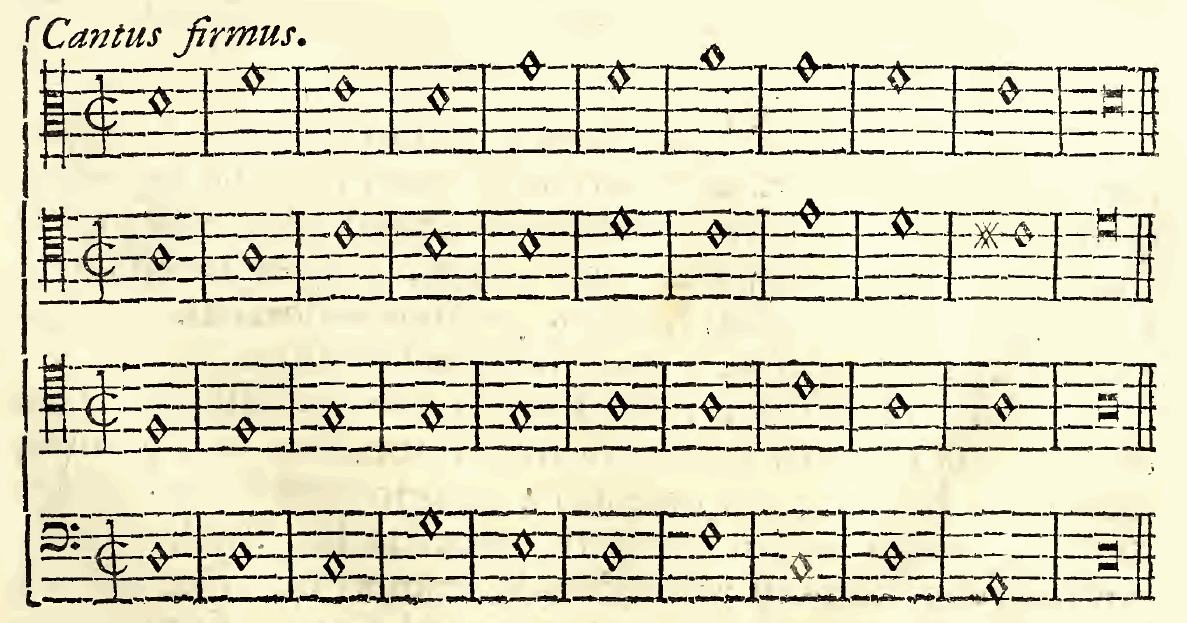
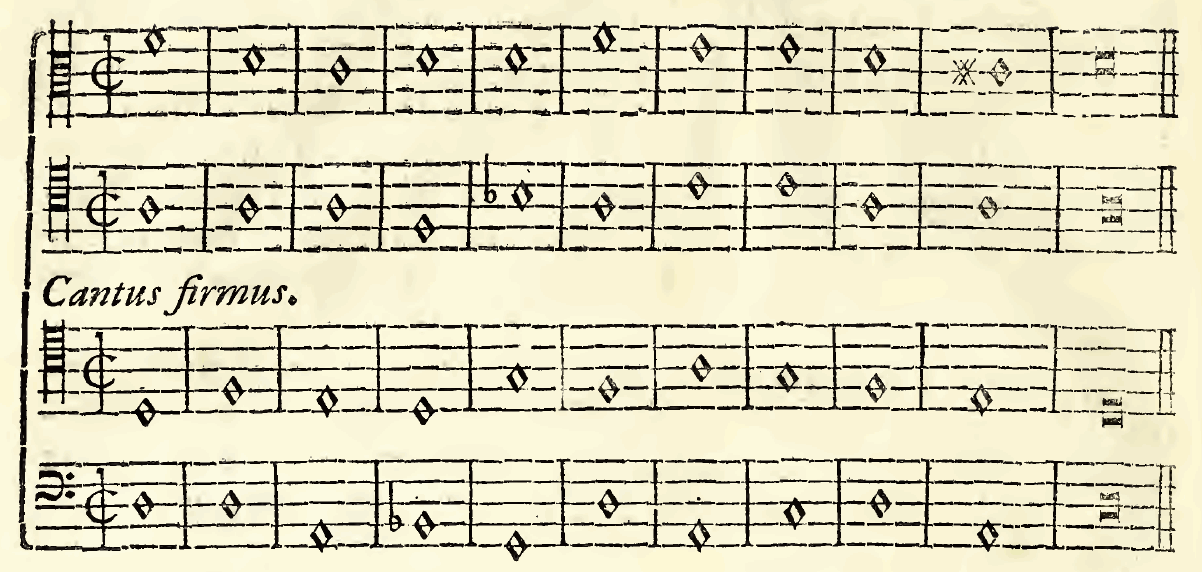
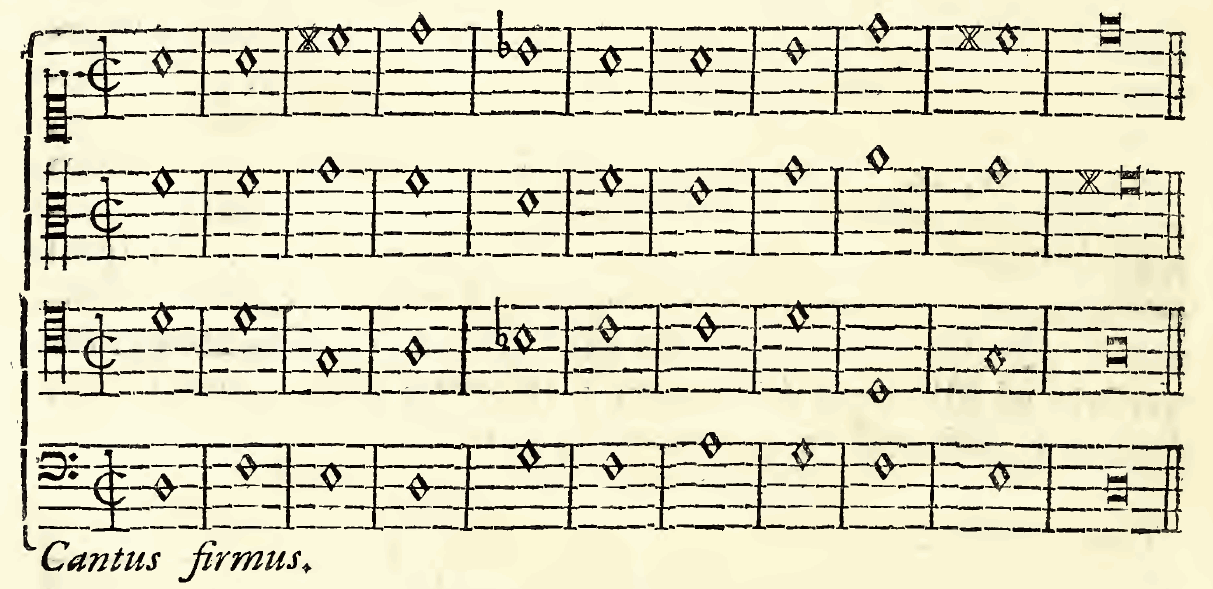
Joseph. Not without hesitation, in the first two examples I brought the tenor part so close to the bass, contrary to your admonition, that it often forms thirds in the low register. I did this because I could find no other way, owing to the requirement to place the cantus firmus in all four parts. I therefore submit them to your judgment and correction.
Aloysius. It is true that, given the constraint of the cantus firmus, those examples, devised only for the sake of exercise, could not have been made otherwise. Matters will be different when invention depends upon your own choice. But with the passage of time you will discover with wonder how useful these exercises are to students. Examples in two more modes remain to be completed with the usual fourfold change in the position of the cantus firmus. Continue.
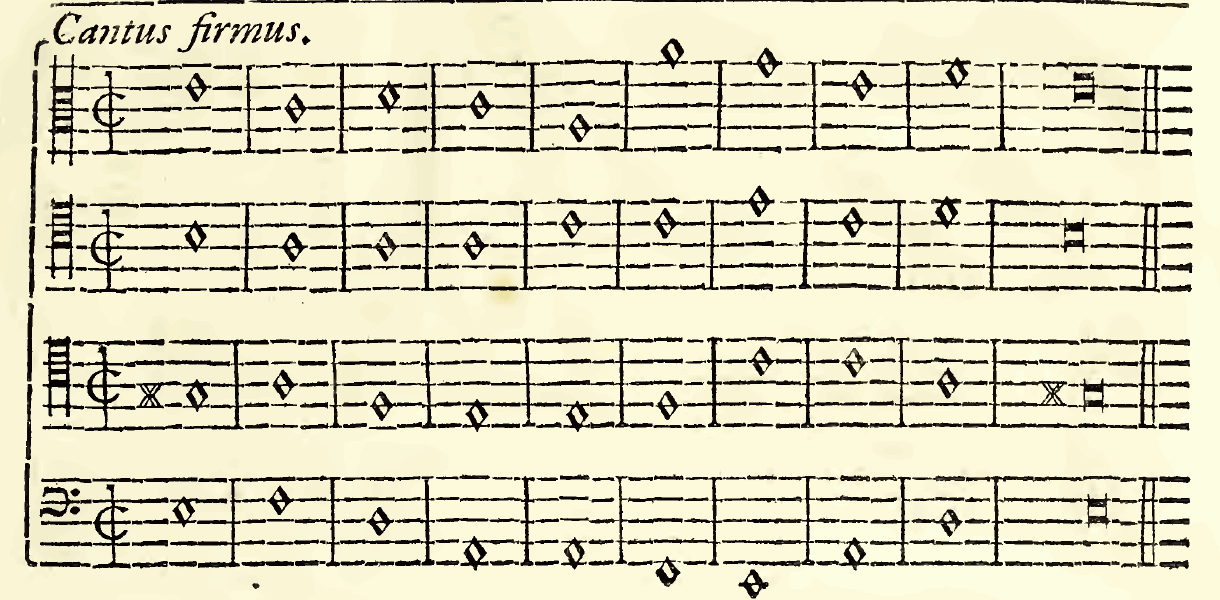
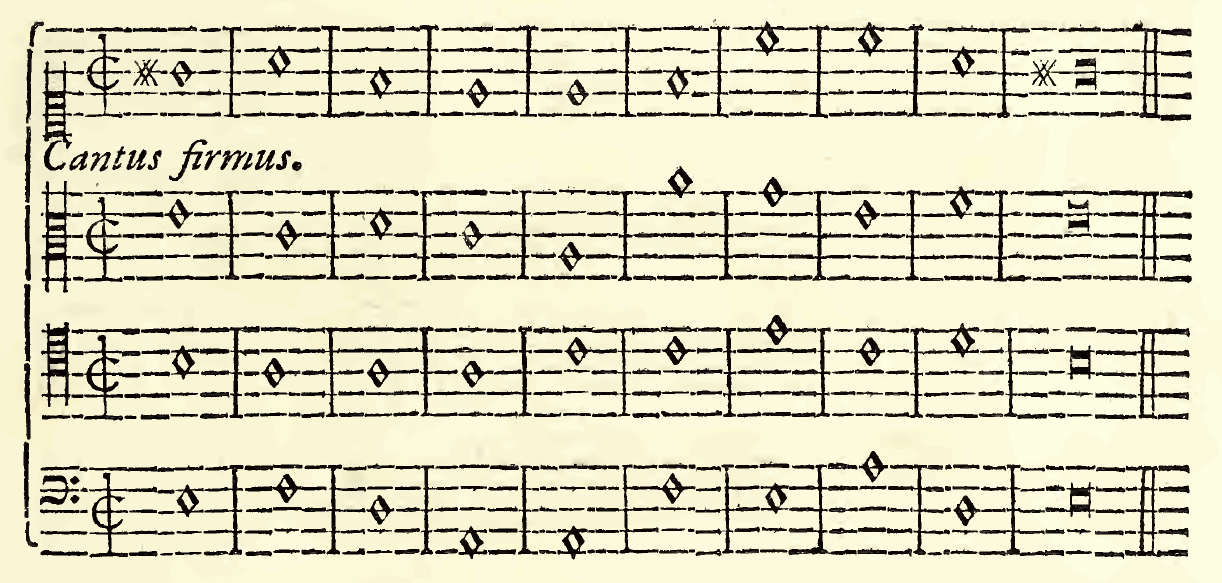
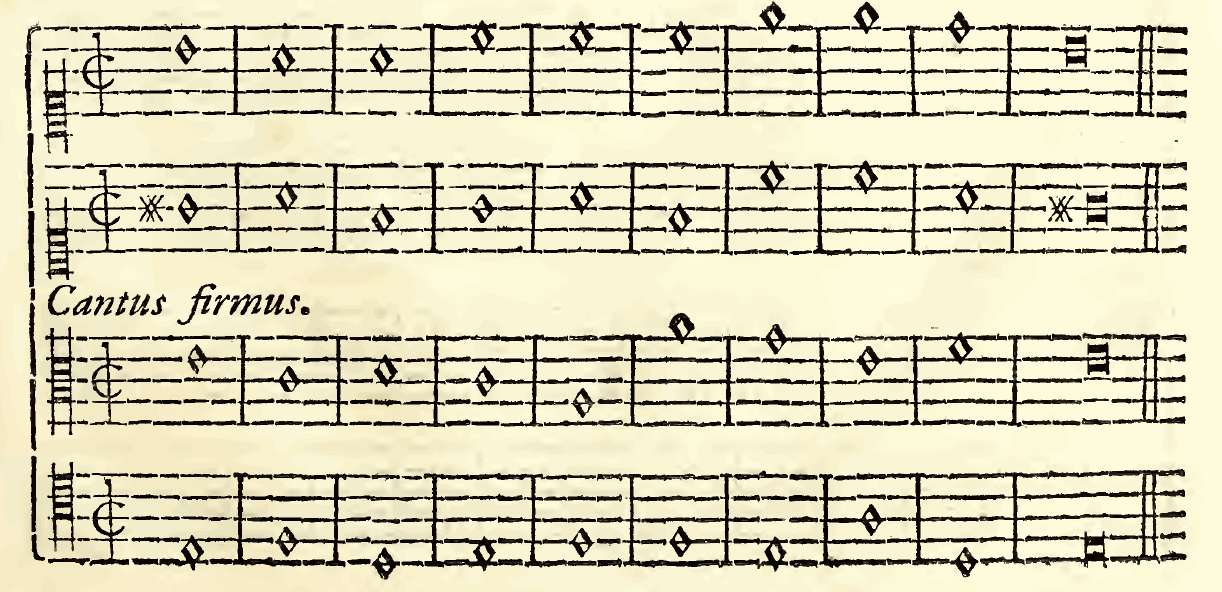
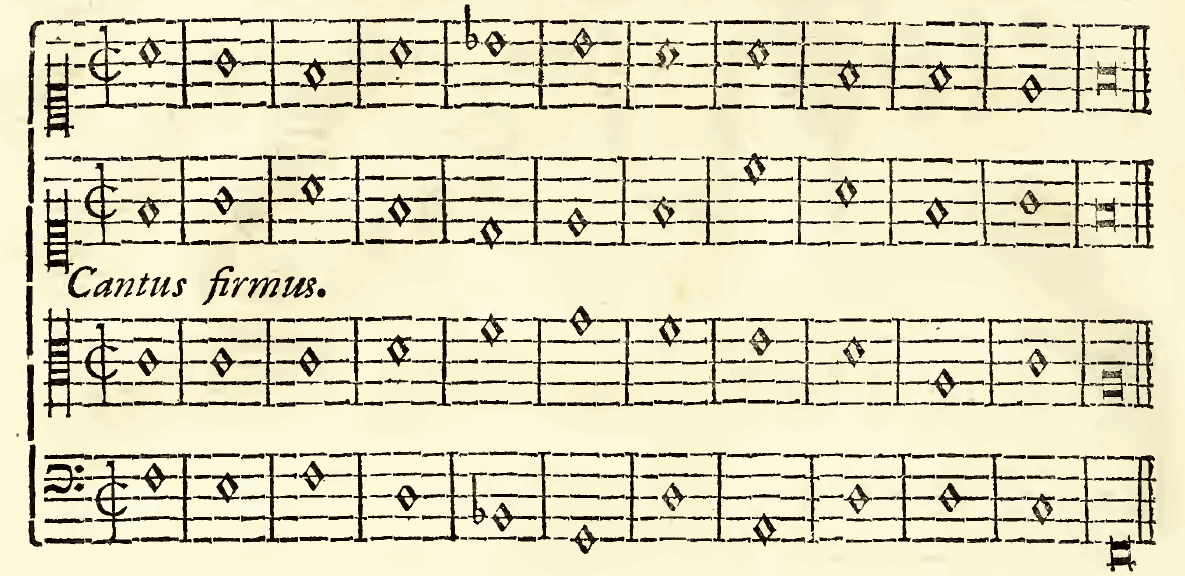
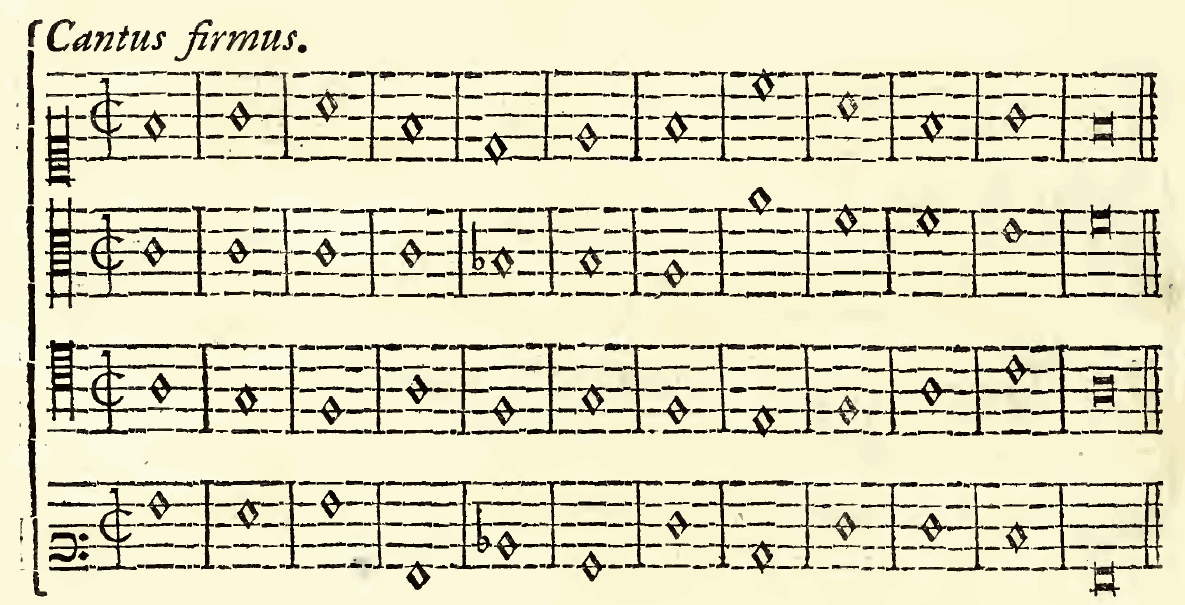
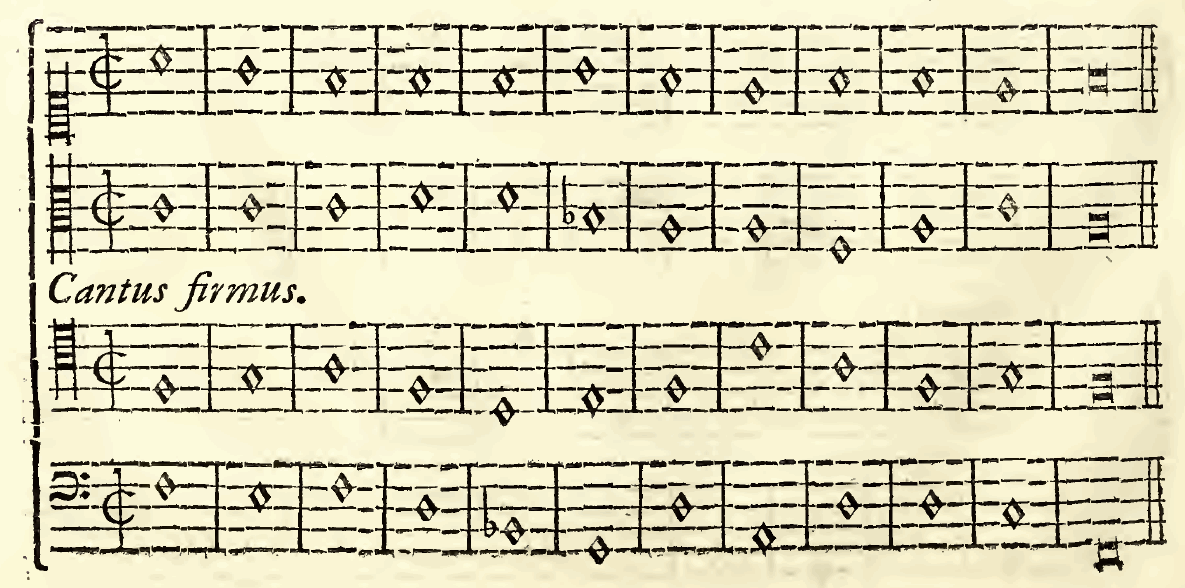
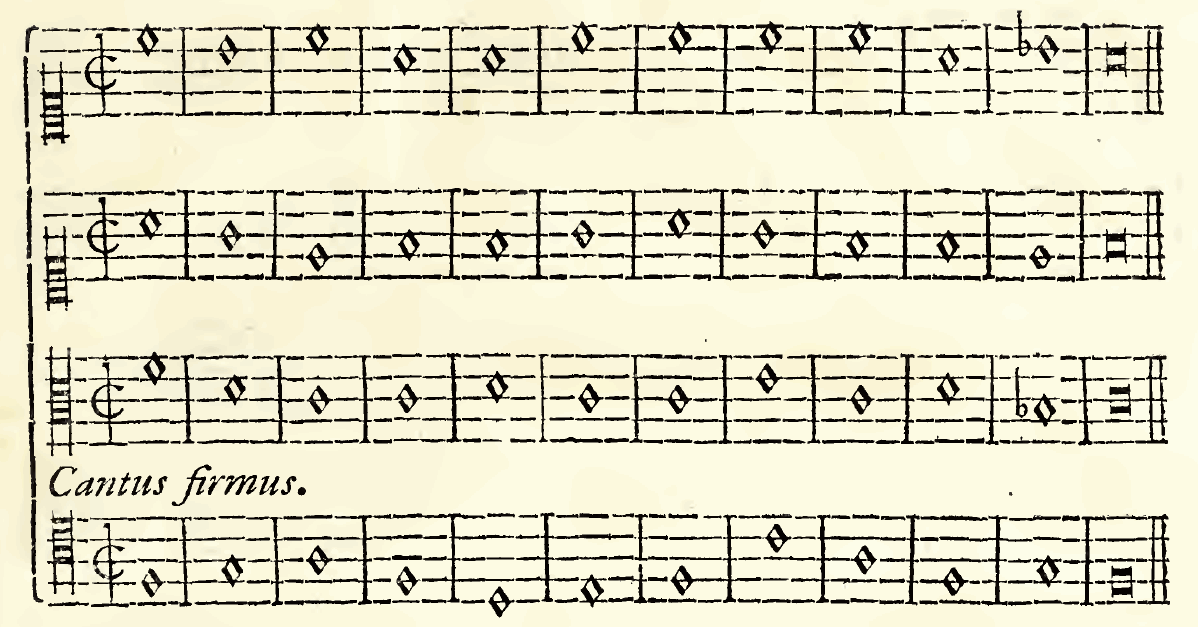
These examples are tolerably well made. Nor does the constraint of the unchangeable cantus firmus permit such a composition to be worked out exactly according to the strict rules of motion and the other rules, as can easily be done in free composition. Examples in the remaining three modes must be completed in the same manner, with the cantus firmus in each of the four positions.