 Playable Books
Johann Joseph Fux · section 14 of 32
Third species in four voices
Read and hear this section in the playable edition →Third lesson
On semiminims against a semibreve
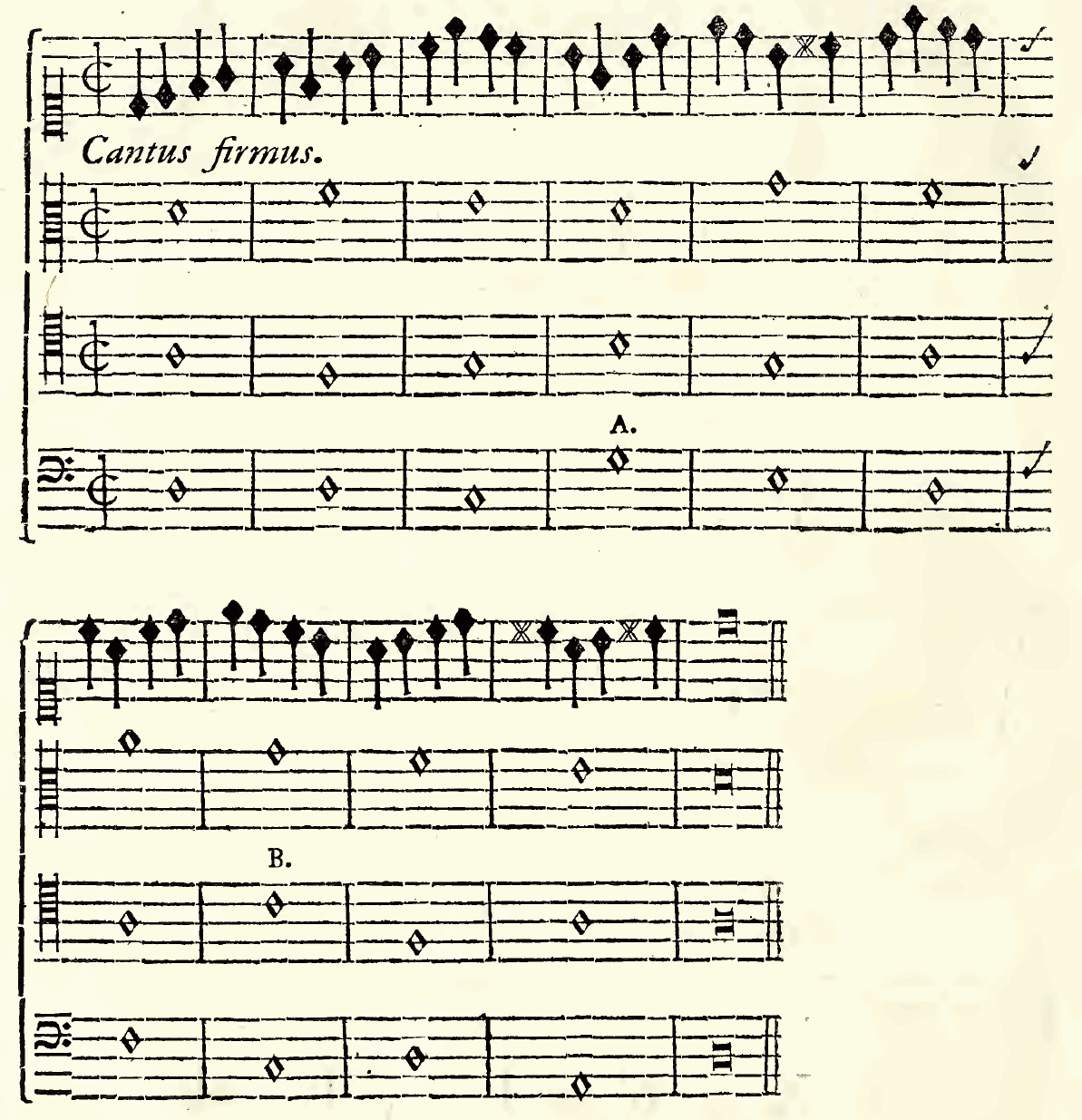
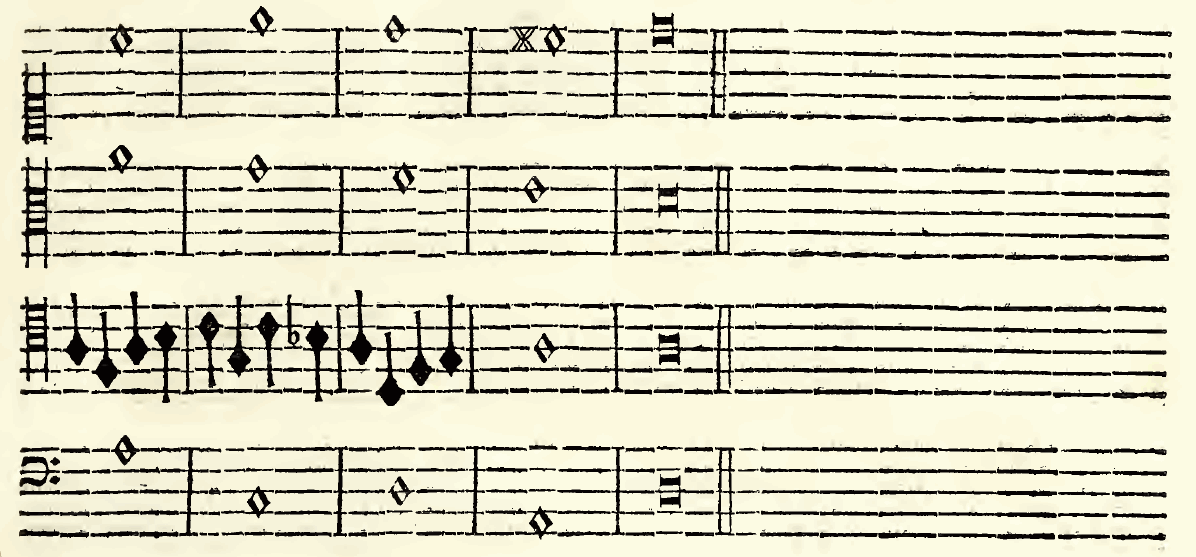
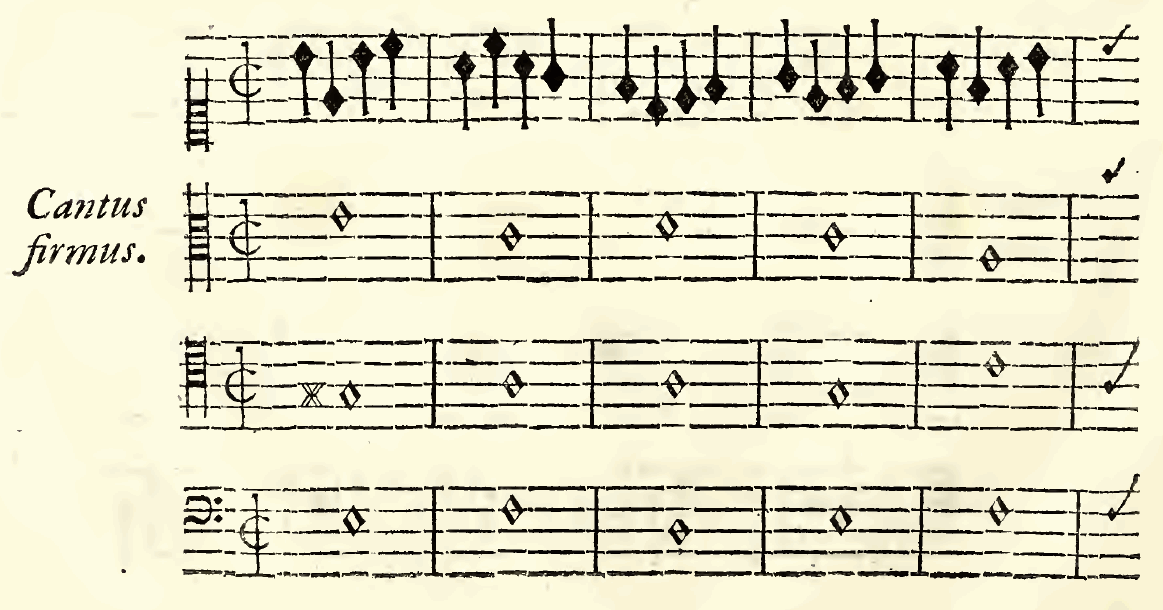
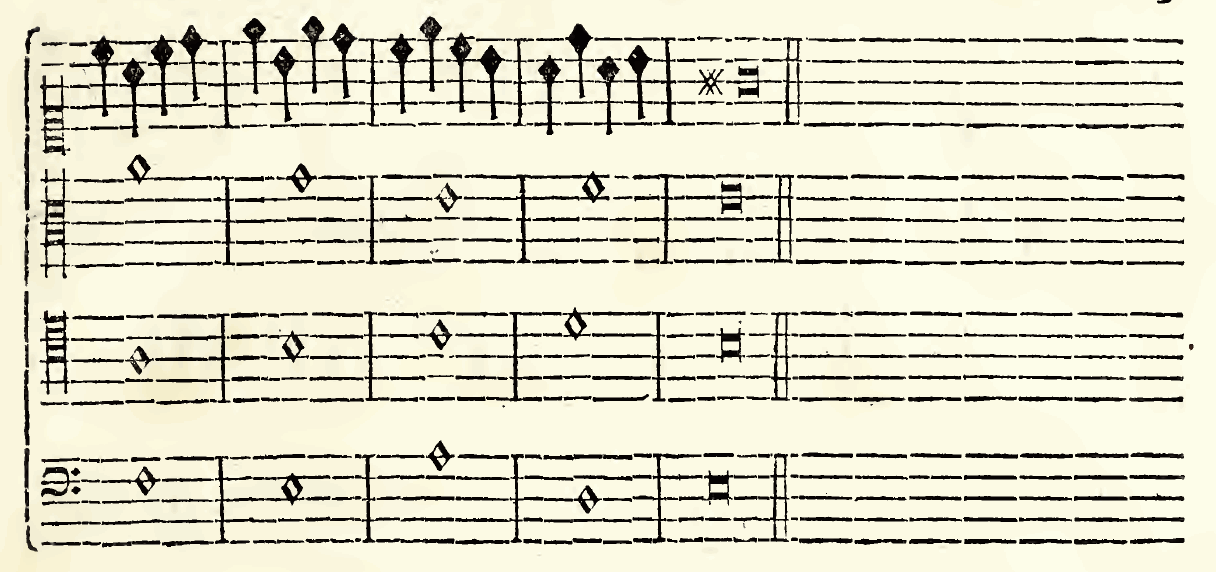
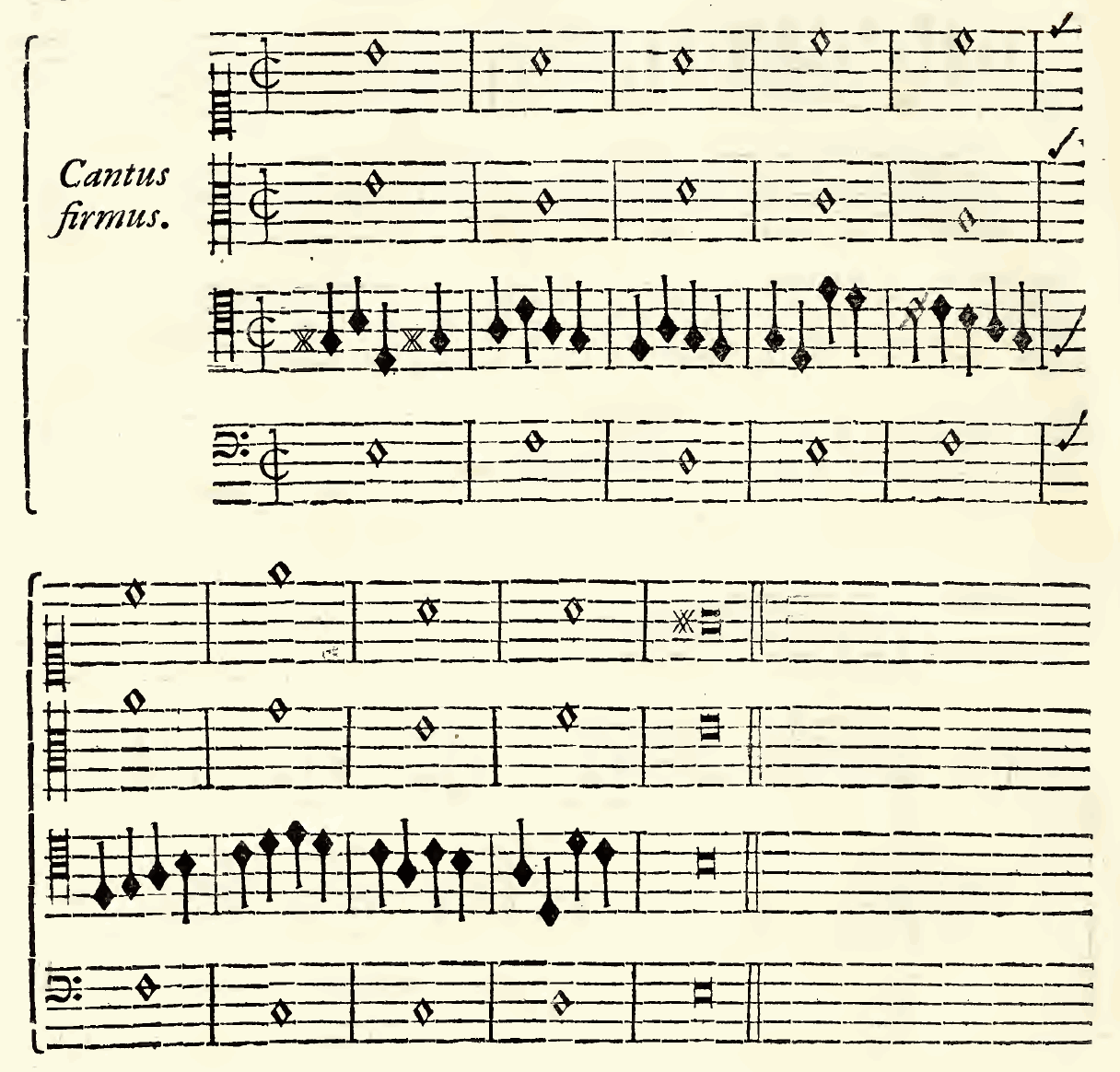
The requirements of this species are to be sought in what has been said about it in composition for two and three parts, so that nothing needs to be added here except the difference in concordance. For just as in two voices the concordance must be arranged with one semibreve, and in three voices with two, so in this four-voice composition four semiminims must be made to agree with three semibreves according to the rules of harmony already known to you. Examples will make the matter clearer.
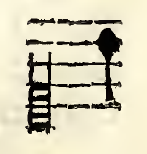
Joseph. Why, Master, if I may ask, did you double the third in the fourth measure? For it seems that, by placing a unison instead of one of the thirds in the tenor part, it could have been done in the following way.
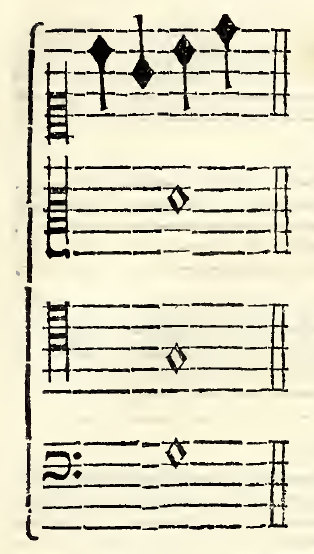
Aloysius. I answer that it certainly could have been done so. But, besides the fact that placing a unison on the thesis takes away considerably from the fullness of the composition, the third, or tenth, in the soprano part, being in motion, would be incomplete because it would not be heard continuously. What does the second sign of doubt, B, indicate?
Joseph. That progression between the alto and tenor seems faulty, because it proceeds from a perfect consonance to a perfect consonance by similar motion.
Aloysius. I say that, owing to the requirement of semibreves, that progression cannot be made otherwise and must therefore be tolerated. It would be easily corrected if the tenor semibreve could be divided in the following way.
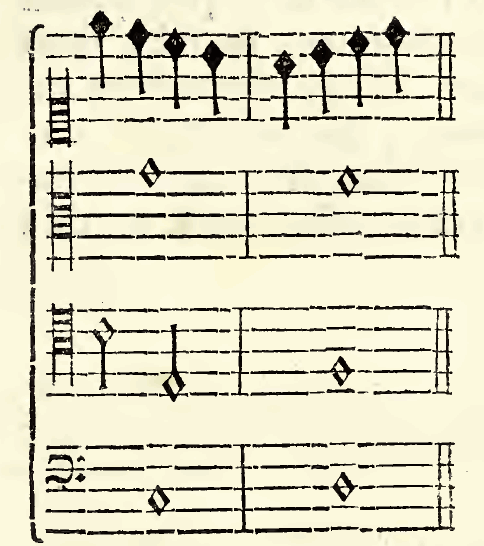
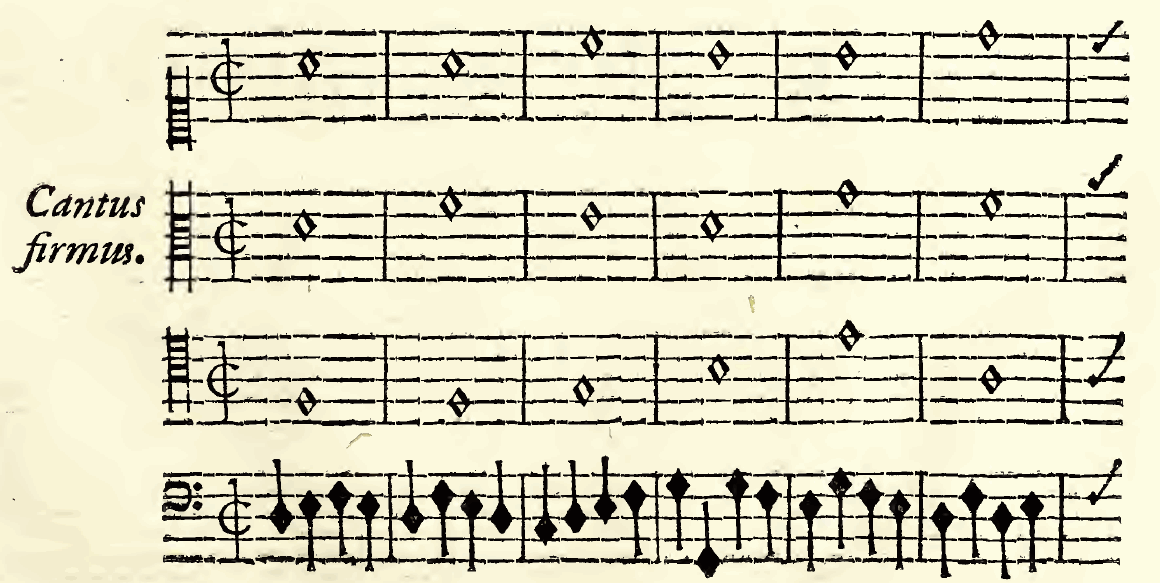
I wish this to be understood also of the examples of the preceding species, in which many things are found that would have to be rejected as faulty without the requirement of semibreves. Now proceed to the remaining examples, varying the placement of the cantus firmus.
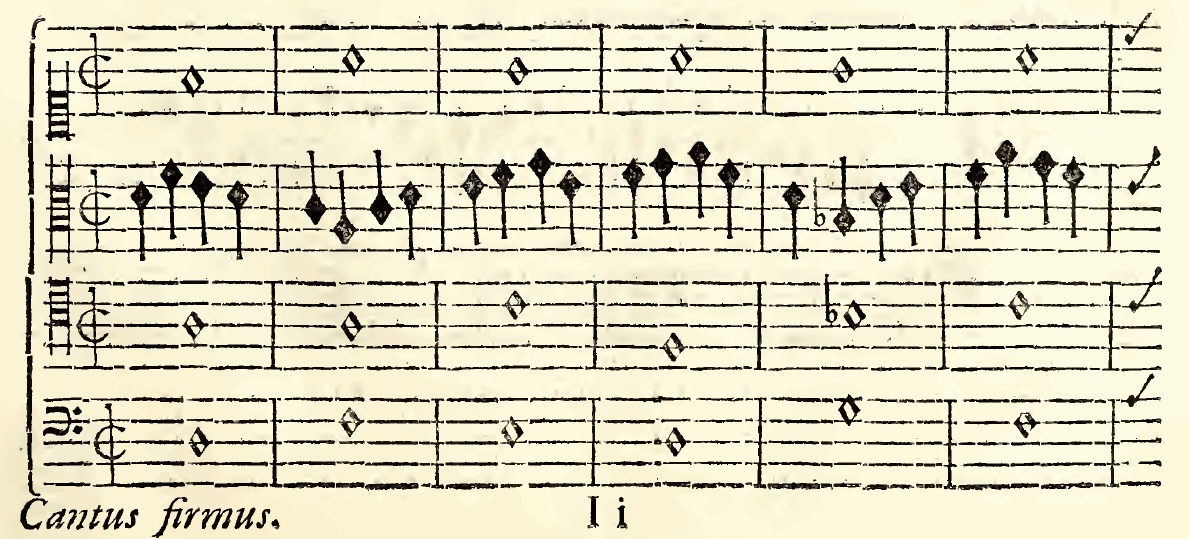
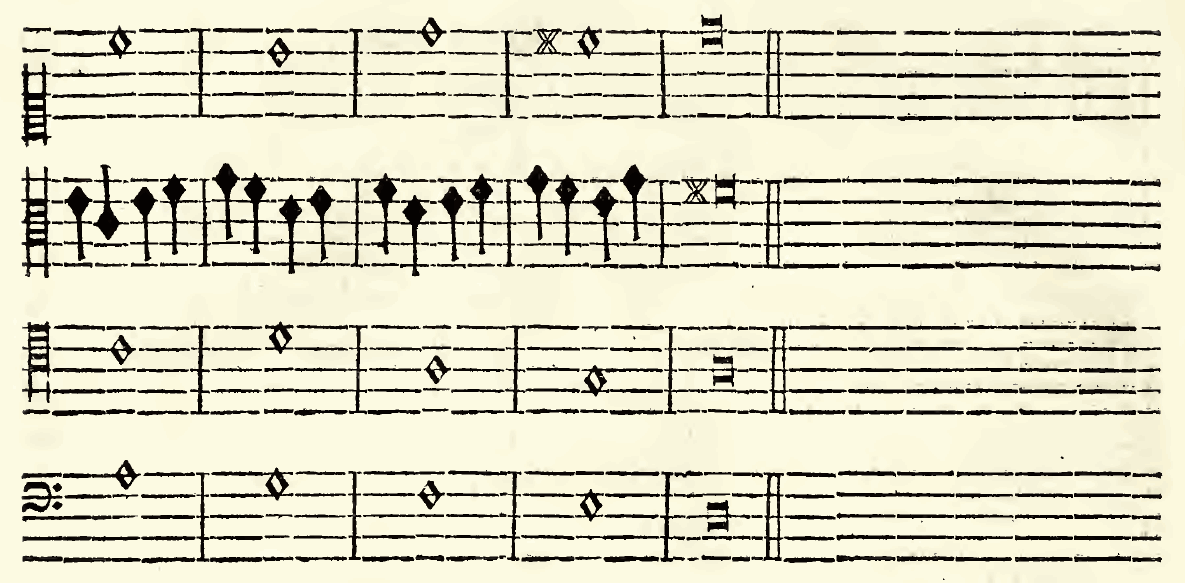
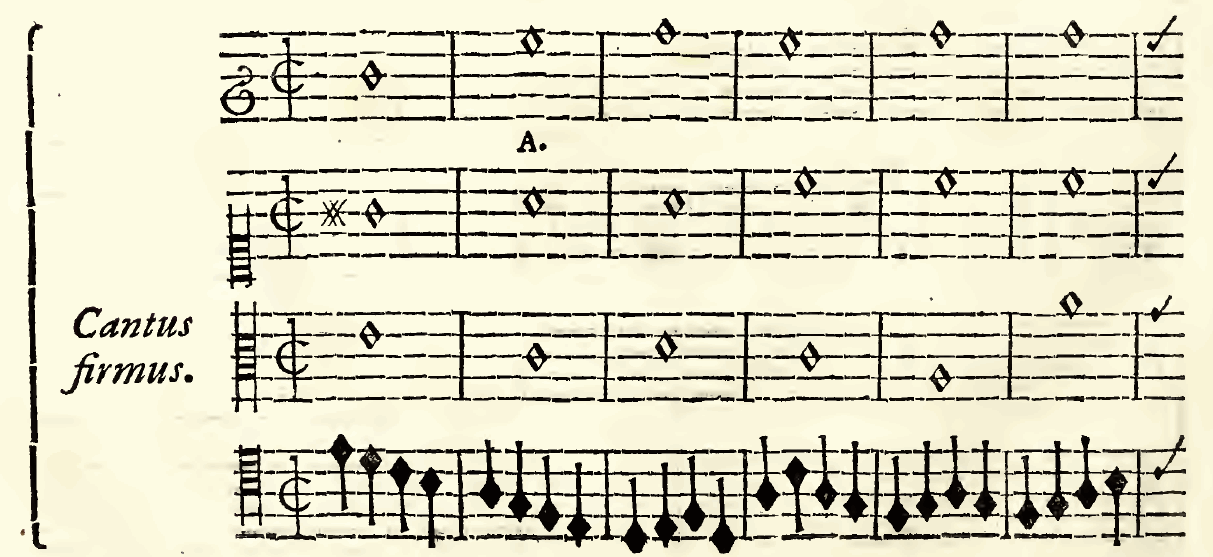
Aloysius. Joseph, in this example you have given an excellent demonstration of your progress. It shows that nothing said throughout all the lessons has slipped from your memory. For, having placed the first semiminim so as to provide complete harmony, you moved here and there with the remaining three and entered the following measure by a smooth path, duly observing the other precepts of harmony and the species. This happens when the thesis, or beginning of each measure, is supplied with complete harmony, that is, a third and fifth. Continue.
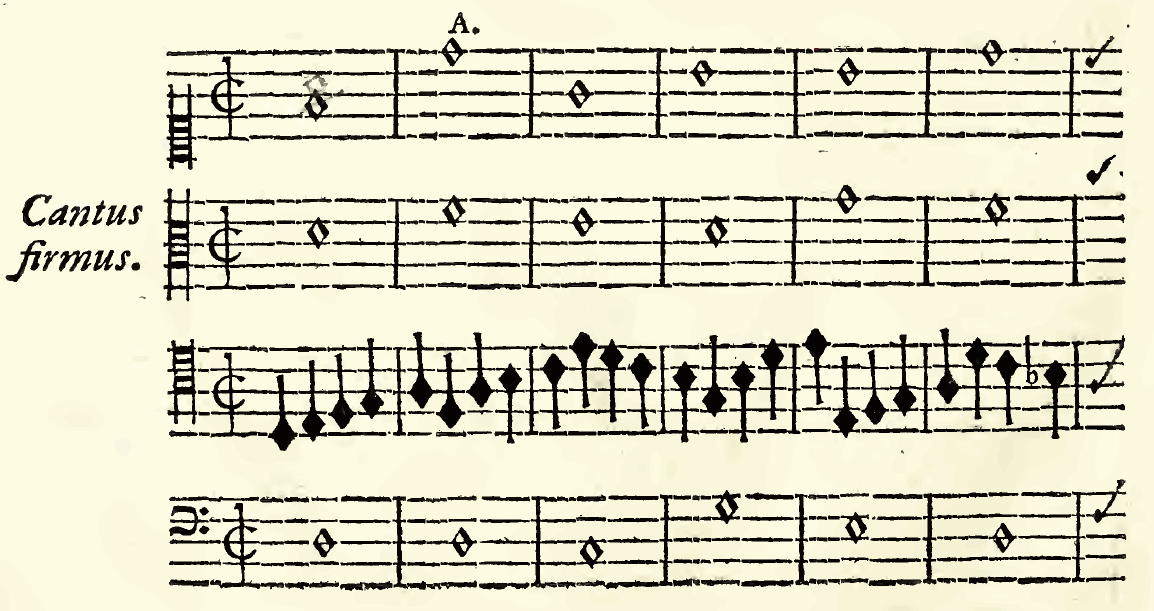
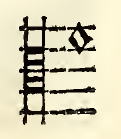
Aloysius. What does the letter A placed in the second measure of the soprano mean?
Joseph. That progression from a perfect consonance to a perfect consonance by similar motion, that is, from a fifth to an octave, raises some scruple in me, all the more because it occurs in the outer parts.
Aloysius. I said a little earlier, and repeat again, that similar progressions must sometimes be excused because of the requirement of semibreves, since they cannot always be avoided even in free composition. They will nevertheless be more tolerable in the middle parts than in the outer parts, as you correctly observed.
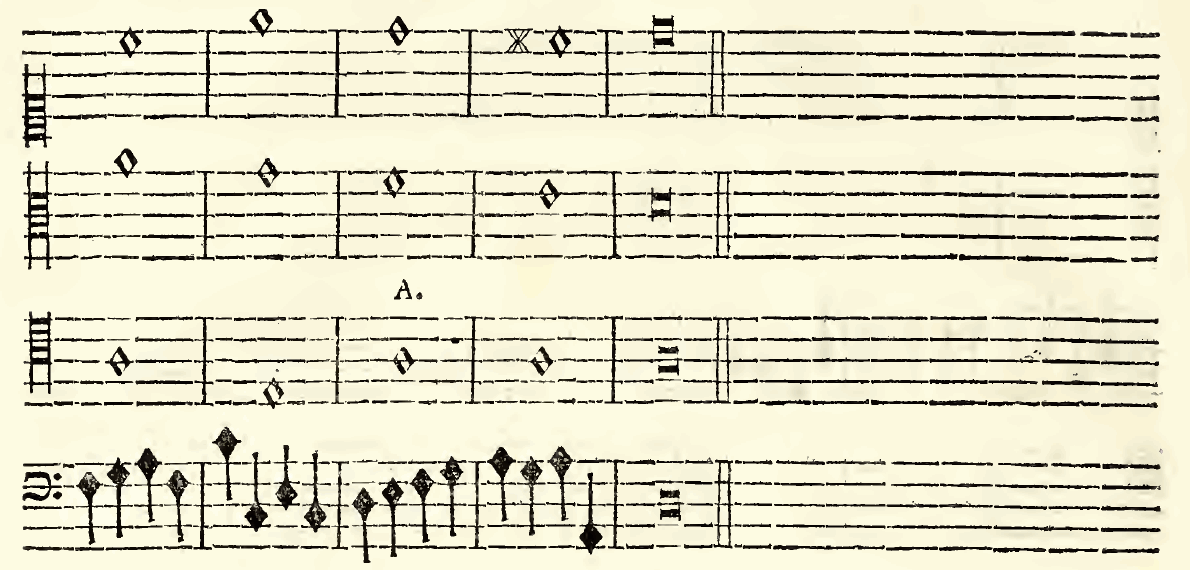
Joseph. The letter A placed in the tenor part indicates a departure from the common rule for the same reason stated before, because the passage is made from an imperfect consonance to a perfect one, namely from a third to a fifth by similar motion. I therefore think that it too can be tolerated because of the same necessity.
Aloysius. You judge correctly. For it is clear that, given the strictness of this species, it could not have been done better, and that this defect is harder to perceive because it occurs in a middle part. Now complete the other mode, E, la, mi, in the same manner in my presence; because it lacks a fifth, it is the most difficult of all to work out. I entrust the others to your study at home.
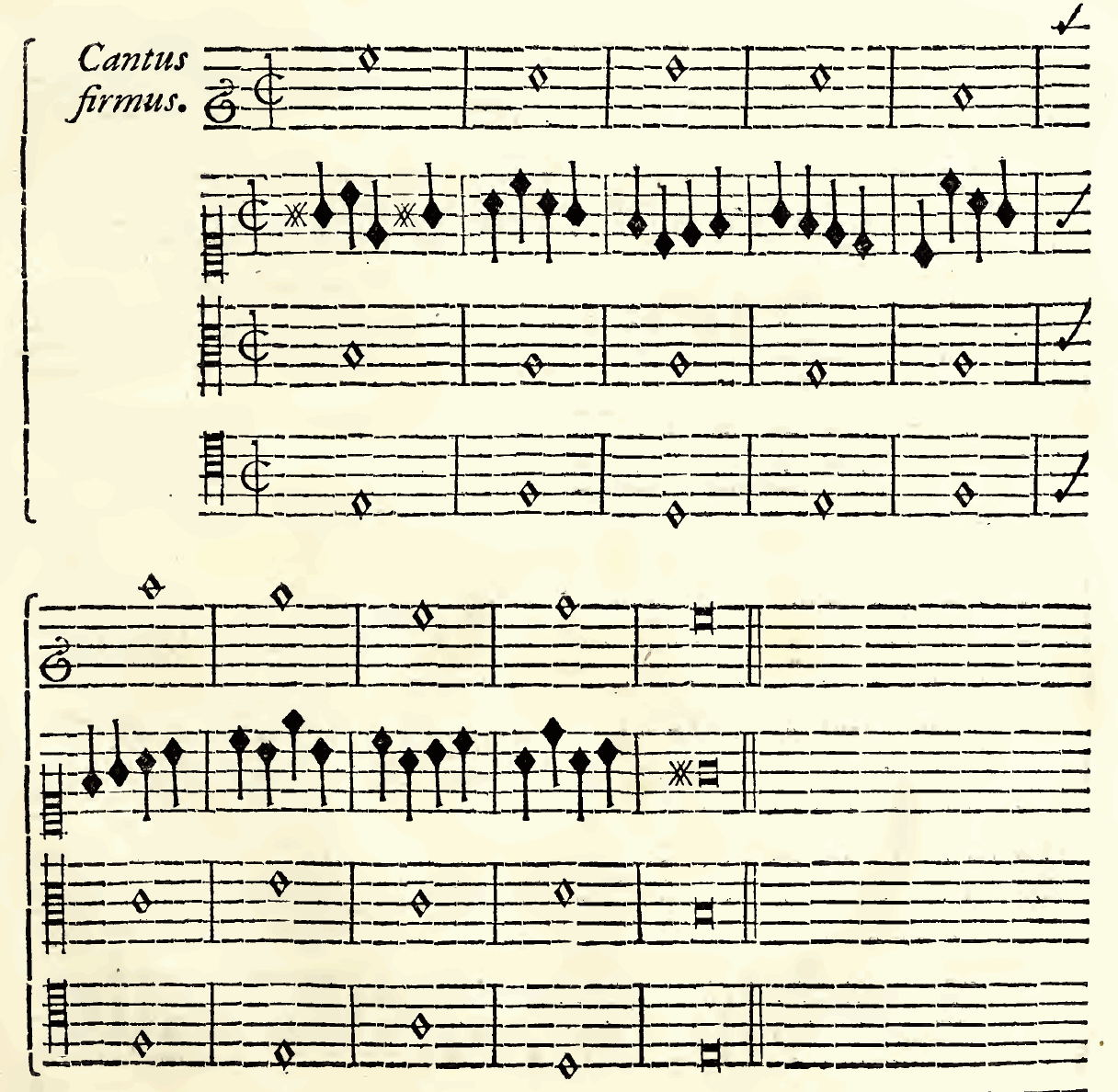
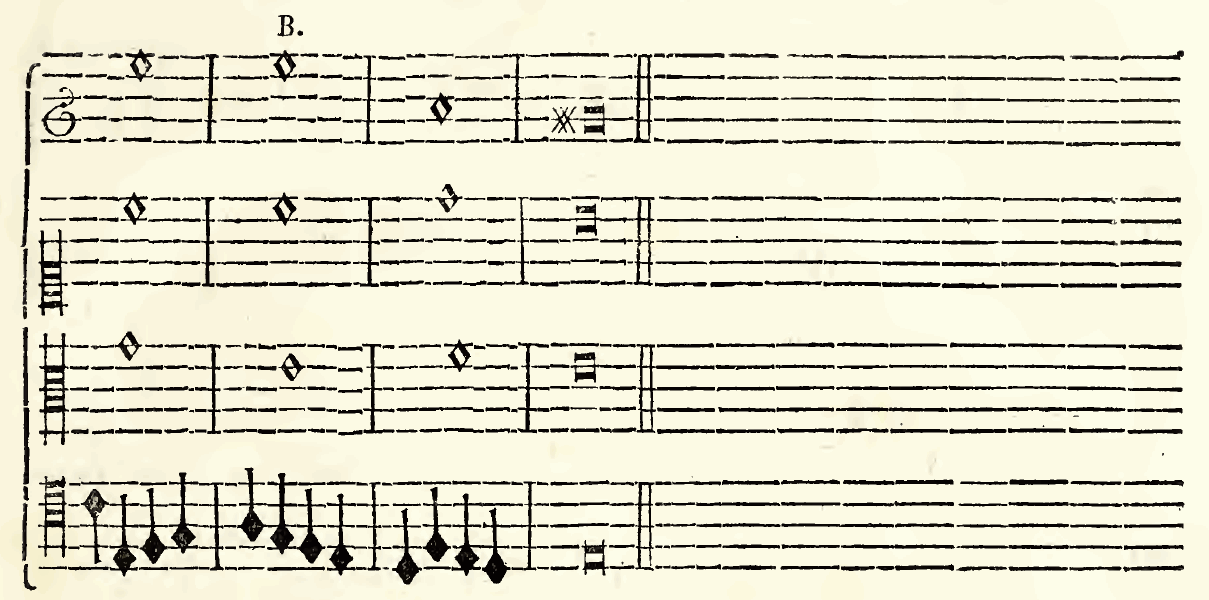
Joseph. Between the soprano and violin parts, from the first note to the second, there is a progression from a third to a fifth contrary to the common rule. For the reasons already given I did not wish to correct it, nor could I find a way.
Aloysius. I have very often stressed that here many things must be conceded to necessity which should otherwise be avoided in free composition. Likewise that passage at B from an octave to a fifth by similar motion in relation to the lowest part is not to be marked as faulty, because of the difficulty of this species. Now, leaving the remaining modes to be completed at home, let us proceed to another species.