 Playable Books
Johann Joseph Fux · section 27 of 32
On various fugue subjects
Read and hear this section in the playable edition →Not long ago mention was made of irregular fugues or subjects. I wish this irregularity to be understood in relation to subjects whose following part answers the beginning part correctly without the aid of a sharp or flat, as in subjects adapted to the diatonic genus. Otherwise, apart from the strictness of the diatonic genus, subjects of the kind we are discussing here can nevertheless have their own regularity if they are constructed according to the mode. It is now your task, Joseph, to propose various subjects of your own invention, different from those we have used thus far.
Joseph. I shall do so without selection, as they come to mind.
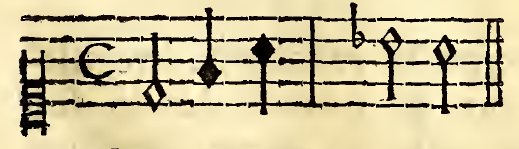
Aloysius. In what manner will you form the answering part?
Joseph. In my slight judgment, I think it can be done in two ways. One is to have the final note of the answering part end suitably to the mode; the other is to follow the solmization. For example:

Aloysius. Both ways are legitimate, though on different grounds. The first because its final note falls correctly on a pitch of the mode; the second because its final note takes account of solmization.
Joseph. Which seems preferable to you?
Aloysius. The second way of answering is not to be disdained for two reasons. First, it gives greater consideration to the melodic line; second, it does not depart so far from the course of the subject. Make it a firm principle to refrain, as far as possible, from breaking off a subject unless a weighty reason requires it, for consideration of the melody takes precedence over that of the mode. A deficiency in the mode can easily be made up by melodic writing in the other part and by holding a note belonging to the mode above the note lying outside its pitches. For example:
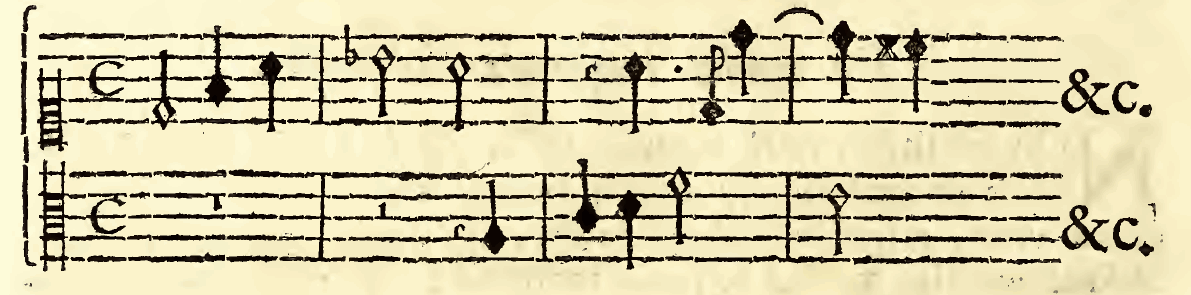
Let the same judgment apply to the following subject. For example:
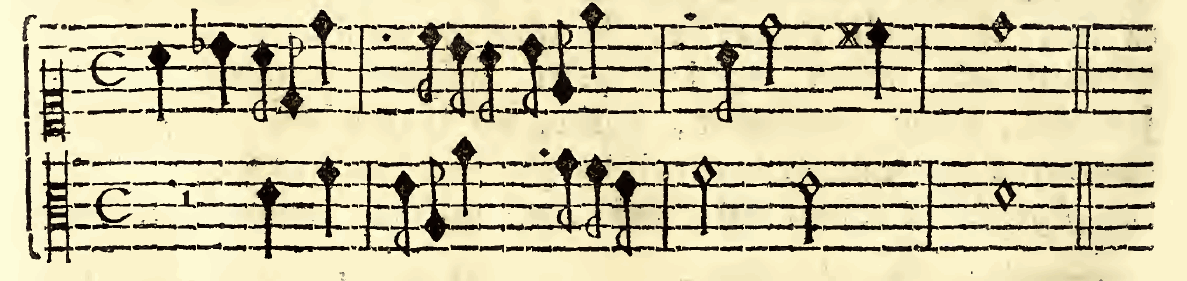
These two subjects may be called regular or irregular in different respects. They are irregular because they are not placed in their own proper mode, and therefore the semitone occurring in the upper part in both cases had to be produced with the aid of a flat. They may be called regular in relation to the mixed genus, which is most widely used today.

Joseph. What do you mean when you say that the subjects are not placed in their proper mode?
Aloysius. If I show you a mode in which that semitone can be obtained without a flat, will that not be clear evidence that the subjects belong there?
Joseph. Indeed it seems so to me. But what is that mode?
Aloysius. Mode A. For example:
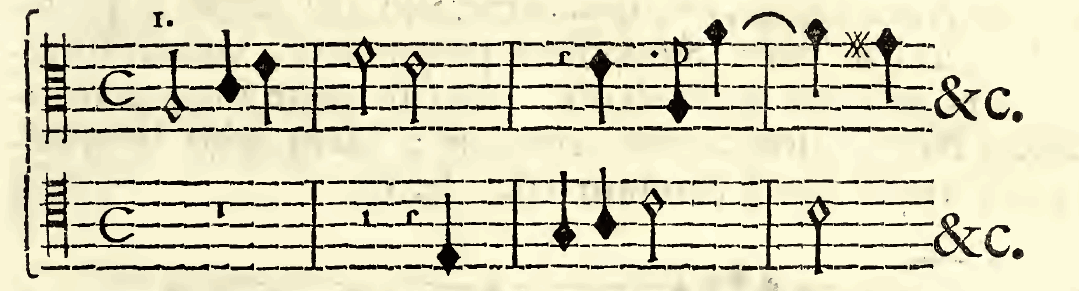
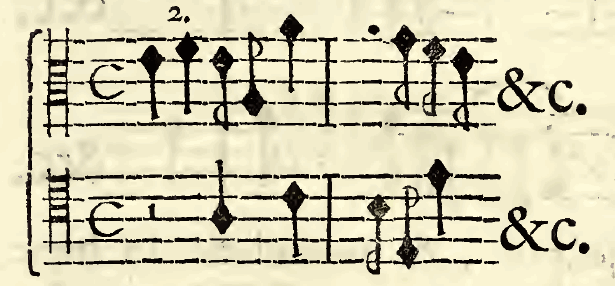
Joseph. This is certainly worth observing.
Aloysius. But a flat placed at the beginning, outside the melody, will indicate a mode transposed a fourth upward. In that case the subjects must nevertheless be called regular and suited to their mode. For example:

But at the present time, when the mixed genus has become strongly established, these subtleties, although necessary for a true understanding of the modes, are not greatly attended to. Proceed now to propose other subjects.
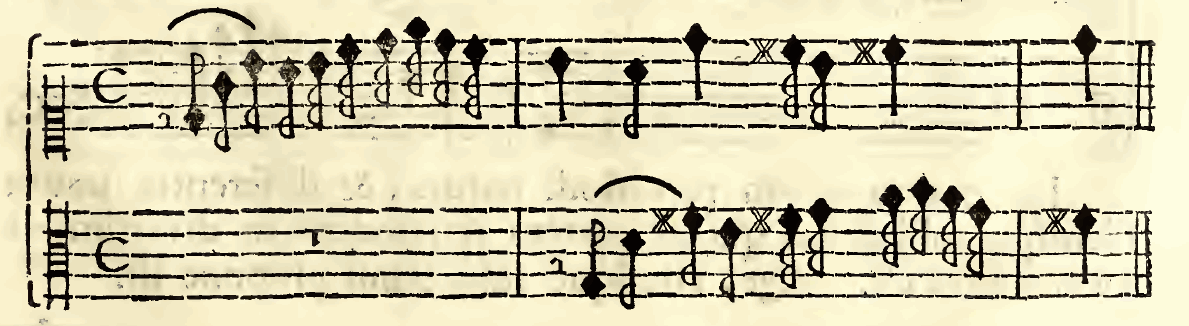
Joseph. Seeing the sign of an error placed at the third note, I recognize that I hesitated in answering not without reason. What is the cause of the error?
Aloysius. The interval between the first and third notes of the subject, which consists of a seventh; for the intervening note is not strong enough to cover the impropriety of that leap. In subjects of this kind, where a leap of a fourth occurs between the first and second notes, great attention must therefore be given to the third note, so that it is the same interval from the first note in the answering part as in the part proposing the subject. Now, in the beginning part a leap of a sixth is found between those notes; the same interval must therefore be given to the answering part. For example:
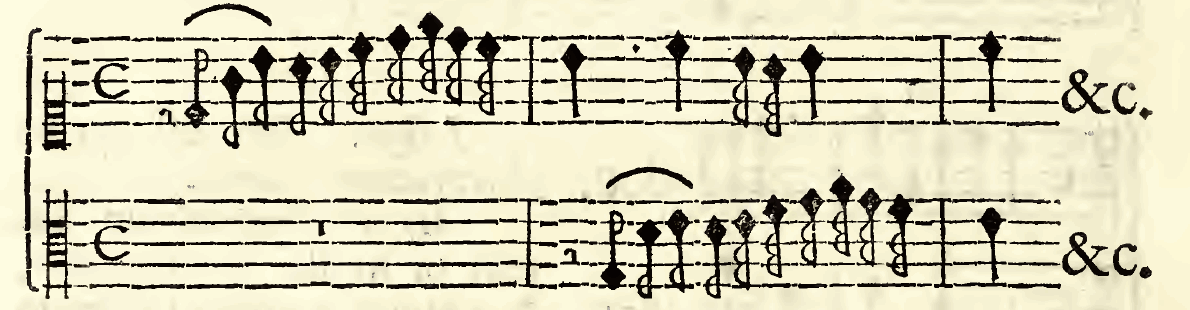
Joseph. In this manner both the subject and the melodic course seem to go beyond the bounds of the mode.
Aloysius. Not at all. Since the subject in the proposing part does not end on the octave of the mode, how could the answering part end on the fifth of that same mode? Moreover, are not all the intervals of the subject and melodic course naturally contained within the octave of the mode? But if, by placing a sharp at the outset, it is changed into a transposed mode, the answer must be arranged somewhat differently. For example:
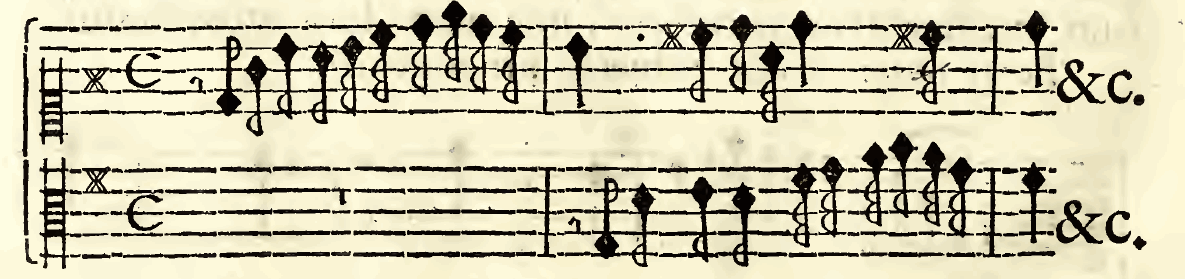
Thus, according to the nature and difference of the mode, one and the same subject must sometimes be formed differently in its answering part. Come, please propose another subject.
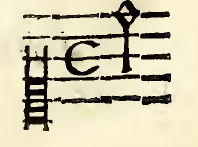
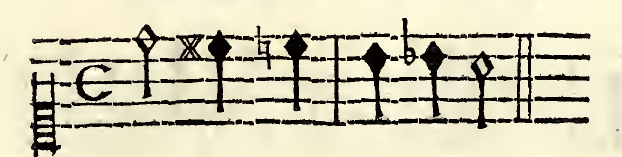
Joseph. I have spent much time seeking an answer to this subject, and have not found one.
Aloysius. This subject can be answered in two ways: the first with regard to the mode, the second to solmization. For one wishing to be bound to the mode, the subject must be reduced from the chromatic to the diatonic genus in the following way:
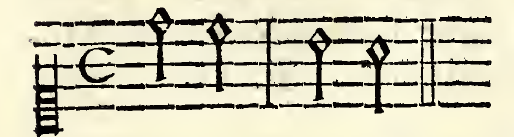
In that case the answer presents itself of its own accord. For example:
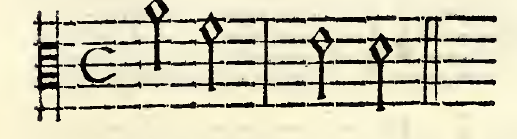
Turned into the chromatic genus, the answer will be as follows:
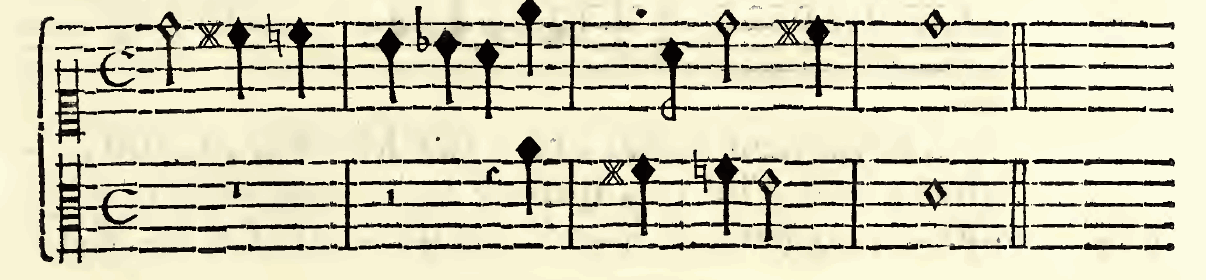
Joseph. Could the subject not have been preserved whole in the answer, with all its semitones retained? For example:
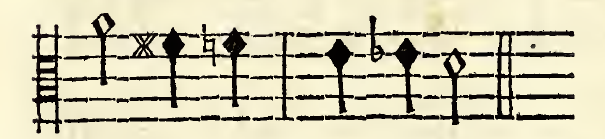
Aloysius. By no means, because E-flat is too foreign and not at all suited to mode D. It would be different if the subject were constructed in this way:
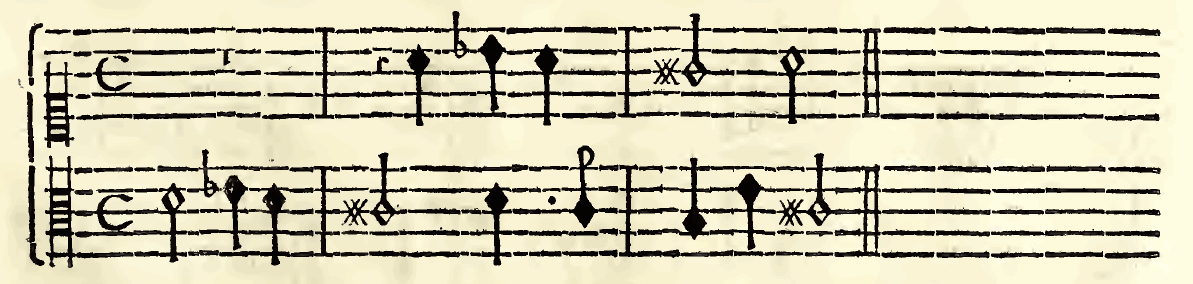
Here E-flat is inserted into the subject substantially. The second manner of answering, with regard to solmization, is as follows. For example:
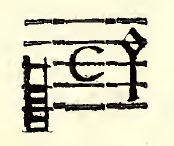
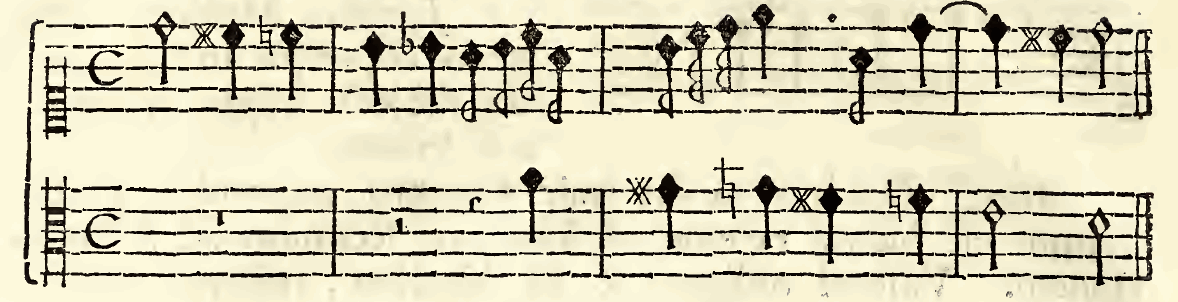
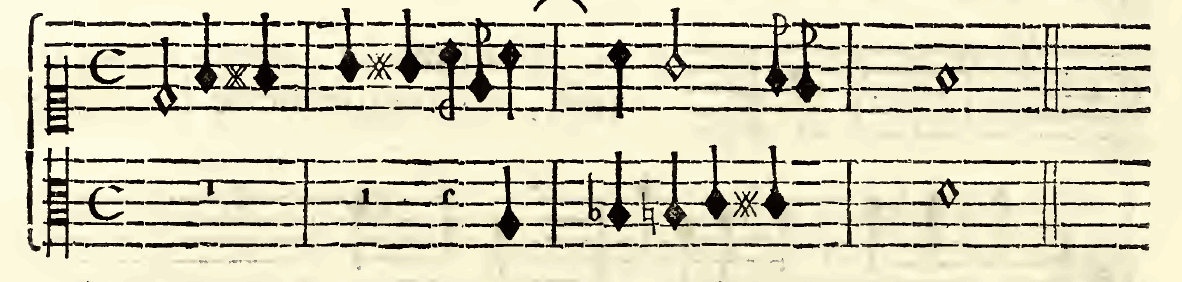
This manner, since it breaks the subject less, should in my opinion be preferred to the first. Almost the same subject, taken upward in the answering part, agrees correctly throughout with both the mode and the semitones. For example:
Joseph. With your permission, Master, I shall now propose one or two themes for string instruments, which have a broader field in which to range, and try whether I can construct the answering part. For example:
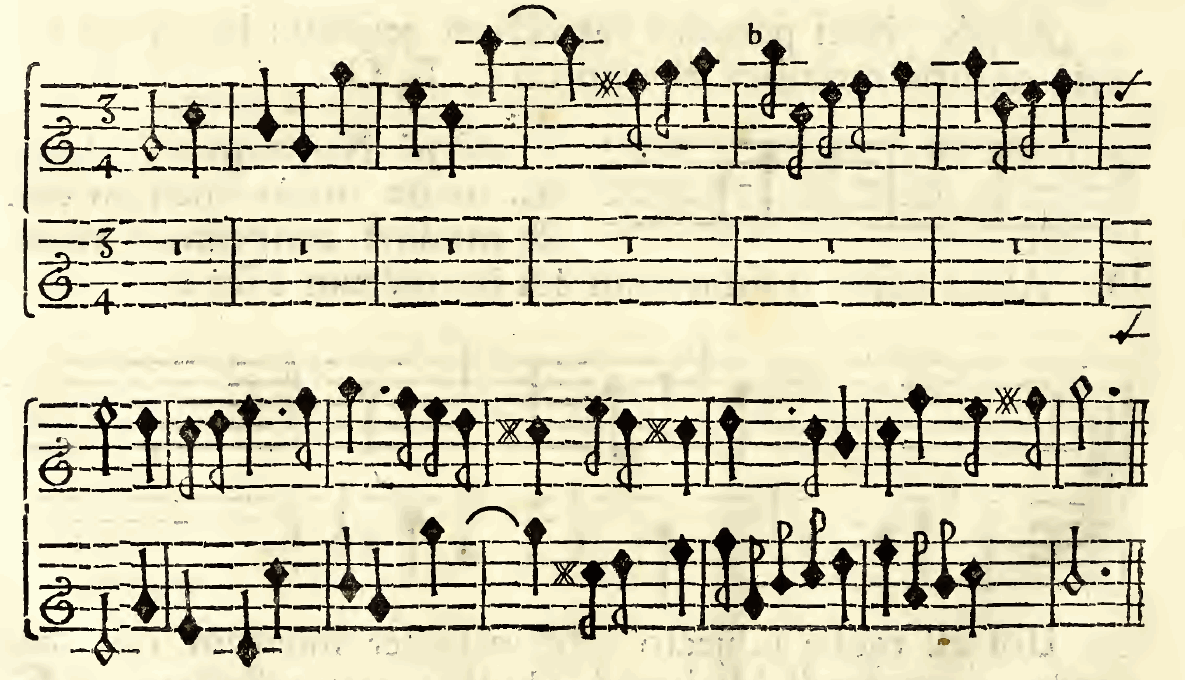
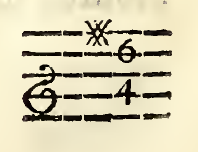
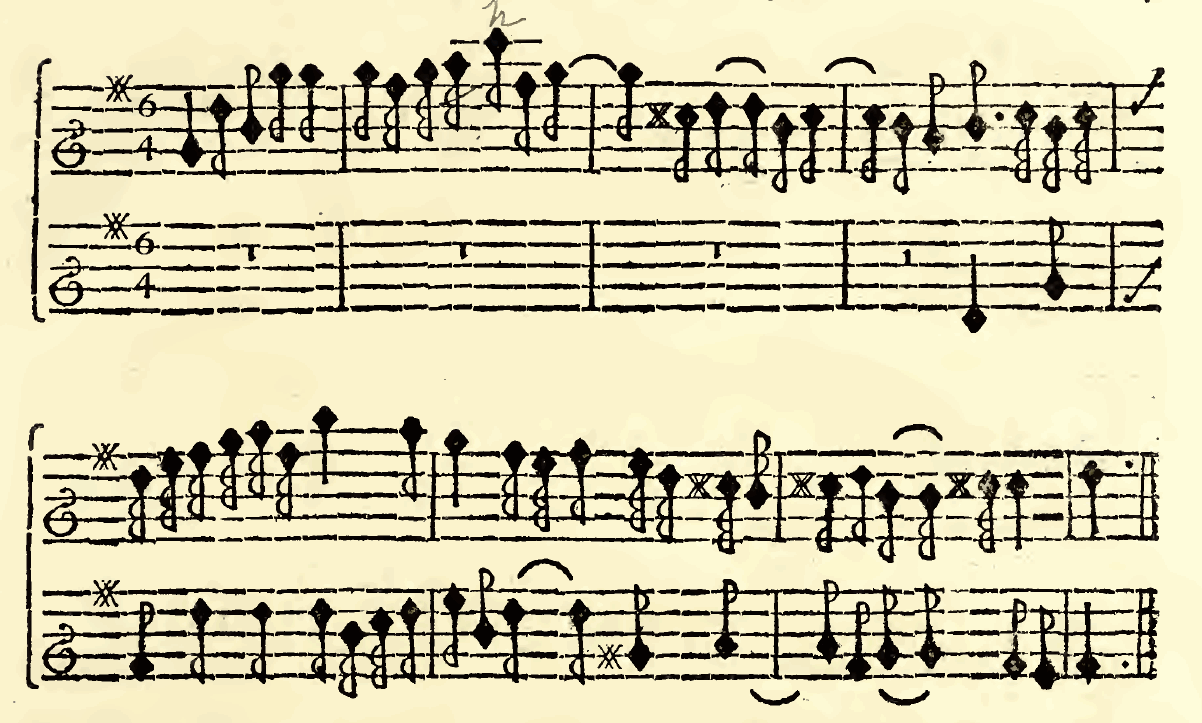
Aloysius. These subjects are suited to the lack of restraint of the present day. But beware, Joseph, of using such subjects, extended to such immense length and breadth, in four-voice composition; for with subjects so extravagant and abstruse it is scarcely possible to prevent one part from obstructing another. Meanwhile, as far as the subject permits, the answer is quite suitably arranged, because in some places, according to the nature of the mode, you assigned the answering part a leap of a fourth instead of the fifth in the first part, and a leap of a third instead of the progression of a second. Thus I trust that, attending to what has been said thus far, you will not greatly hesitate in finding answers to subjects of any kind. Much nevertheless depends on the choice of subjects, for not all subjects without distinction can be developed equally well; this must be weighed with judgment before choosing.
Not long ago you were told, Joseph, that, having now left the arduous training ground of the lessons, you are free to use time and proportion of every kind. The matter now requires that I demonstrate how notes differing in form and value become equal in value under a different measure of the beat.
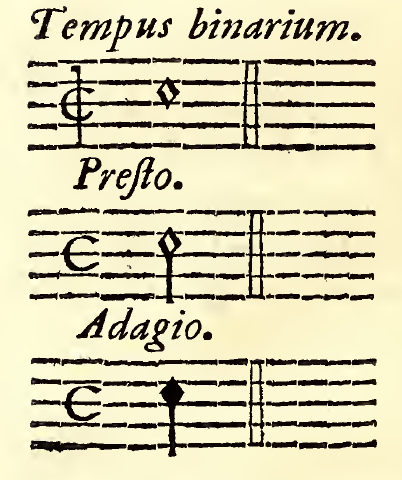
These three notes, differing in form, have the same value because of the different measure of the beat, as the examples make clear. For example:
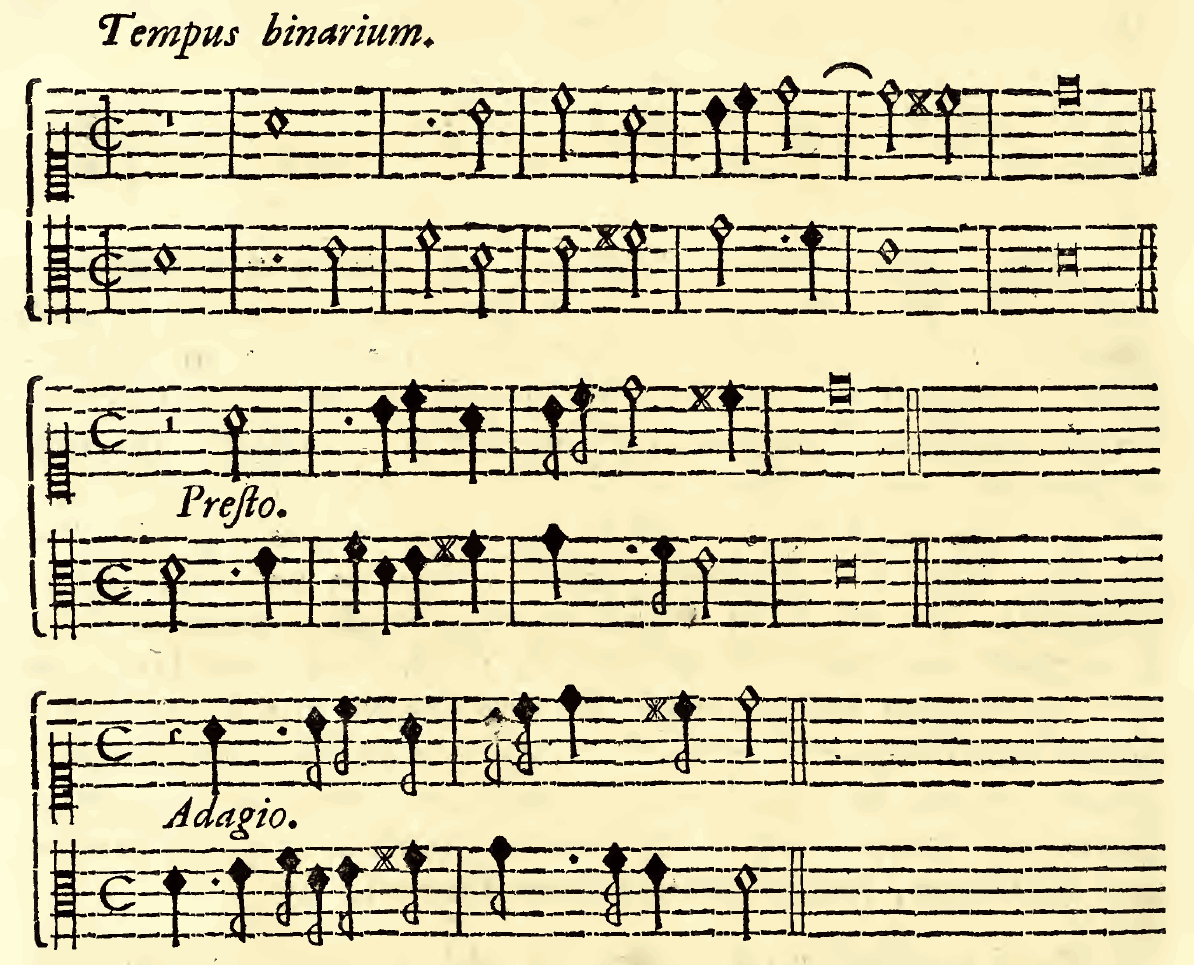
Joseph. I see very clearly this equality of value among unequal note forms; but to what use do you bring it?
Aloysius. So that you may understand where, and in which quarter of the measure, ligatures of dissonances are to be used. I say, then, that in duple time marked with a stroke through the sign, for example cut time, ligatures consisting of dissonances must be used only on the thesis, or beginning of the measure, apart from this case.

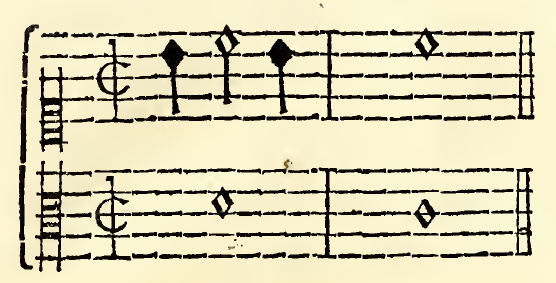
In time indicated by the word Presto: in the first and third quarters of the measure. In Adagio time: in every quarter. Let us examine examples.
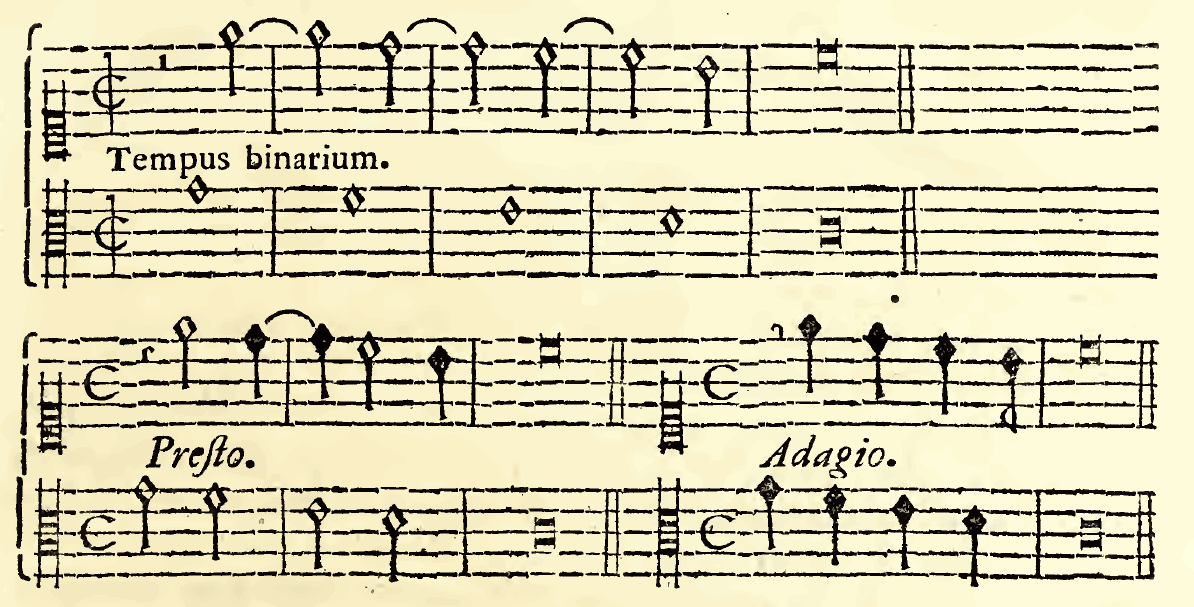
Care must be taken not to sing ligatures arranged according to the last example in a more rapid measure; if that were done, they would never produce the hoped-for effect.
Since I think nothing has been omitted, but that you have been taught everything by whose means thoughts, ideas, and conceptions formed in the mind can be committed to paper according to the rules of the art, it remains to speak of selection, by which, in embracing one idea rather than another, we gain the praise of good taste.