 Playable Books
Johann Joseph Fux · section 30 of 32
On a cappella style
Read and hear this section in the playable edition →It is established that in the earliest times the divine offices were sung by voices alone. Then organs were introduced, and with the passage of time instruments of almost every kind were employed, as present practice still clearly demonstrates. Thus in our age two methods of this a cappella style prevail: voices alone, without organ or other instruments; and voices with organ and other instruments. The first still holds in very many cathedral churches, and at the imperial court during Lent, through the singular piety and observance of divine worship of our most august monarch. In this kind of composition, therefore, first and above all one must refrain from the mixed genus and from transposed modes too full of sharps or flats, adopting only the pure diatonic genus. Otherwise, as I have already said elsewhere, the music would never produce the desired effect.
Joseph. For what reason are the mixed genus and transposed modes forbidden?
Aloysius. I think the reason, unless I am mistaken, was also given in the same place in Book One: namely, that intonation will be very difficult for voices aided by no support from other instruments. In this kind of composition great effort must be devoted both to ease and to a natural manner of singing. Therefore subjects must also be natural and easy, yet neither barren nor commonplace. If the brevity of the text and the need to extend the composition require frequent repetition of words, as in Kyrie, Amen, and so forth, care must be taken to compensate fully for the resulting weariness either by a fertile variety of melodic writing or by introducing new subjects. Examples by others should be examined to assist in this. Since you, Joseph, laid the foundations of composition under my guidance and auspices, and I therefore trust that my works will be more familiar to you, I shall set before you as an example the Kyrie from my Mass called Vicissitudinis. You may then gradually proceed to examine the loftier monuments of distinguished men. The undisputed prince of this style is Aloysius of Palestrina, that light of music, whom I again and again commend for your imitation if you are intent on more than ordinary progress.
Kyrie from the Mass Vicissitudinis
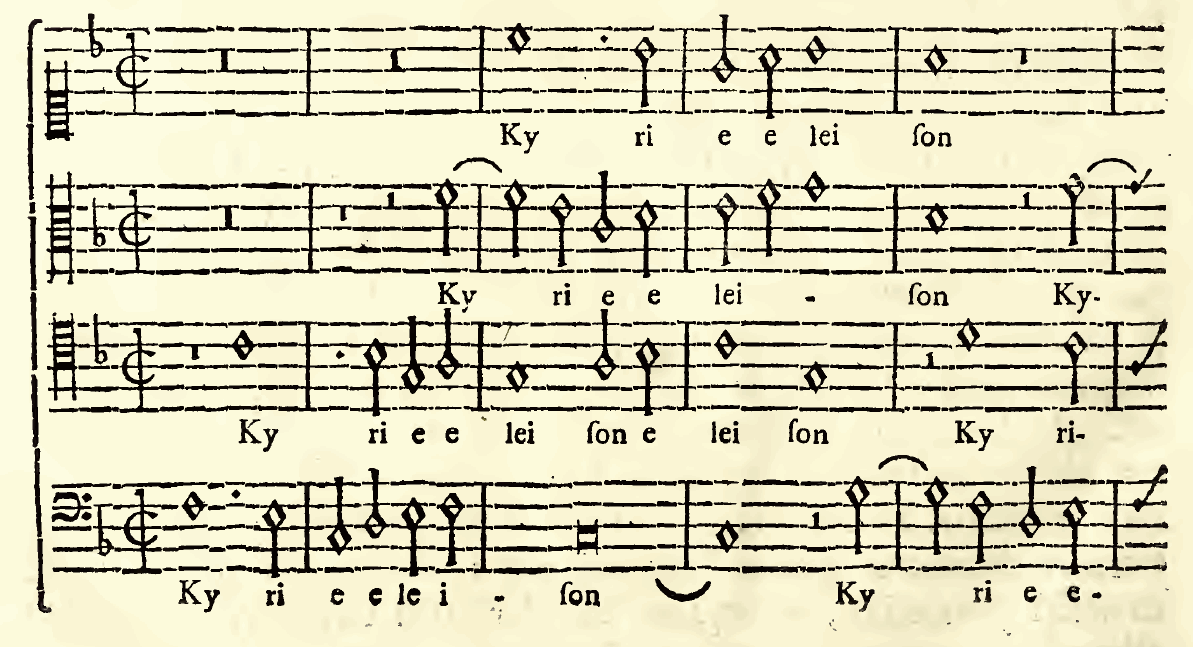
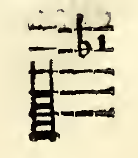
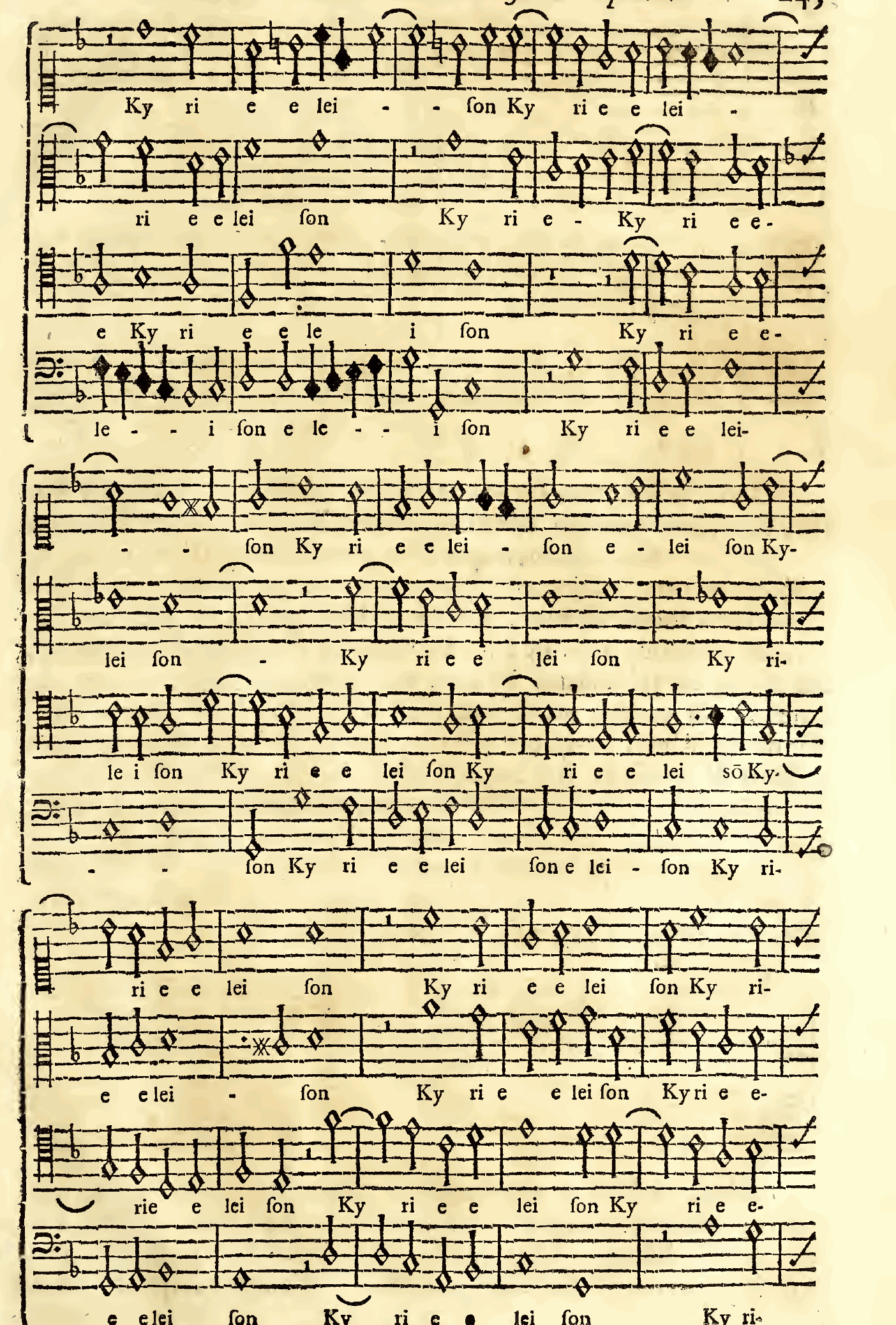
Lord, have mercy.
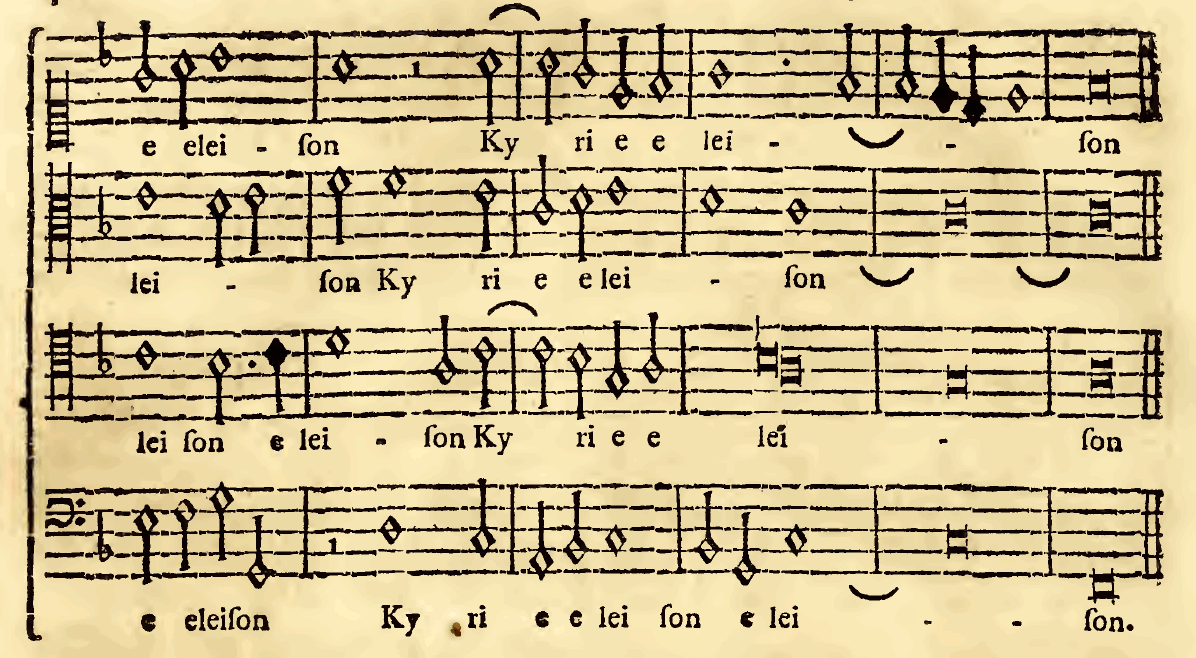
Observe this texture of harmony, Joseph, and if you find anything doubtful or beyond your understanding, ask for clarification.
Joseph. I see and admire the chaining of the parts as they draw the subject into such close overlap. In almost every measure the subject is found now in one part, now in two, with an easy and natural melodic line and fullness of harmony, so aptly that the subject itself almost takes the place of melodic continuation. If my ability to execute were equal to my ability to understand, I could, without vanity in my own judgment, take pride in the progress made thus far. At first the last note marked NB in the soprano part of the seventh measure raised a scruple in me, because a leap proceeds from a seventh there.
But I now recall having encountered a similar case in the lessons: namely, that diminution was omitted there for the sake of the integrity of the subject, in the following manner.
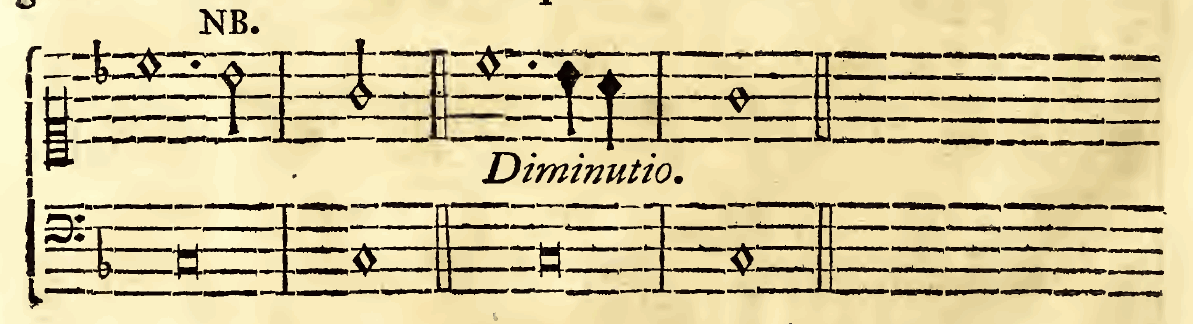
Aloysius. I admire your attentiveness and judgment, with which you have set out everything worth observing in this composition. I bid you be of good cheer. One who possesses understanding of things comes very close to the ability to execute them. Time, which ripens and brings all things to completion, and never-interrupted practice will supply what remains. You admired the chaining of parts entering with the subject in almost every measure. But you must know that not every subject without distinction can be developed in this way. If one intends to bind the parts so closely, the subject must be tested before selection, or altered, or another chosen. Do not overlook, moreover, the union of the parts in this composition as they remain within the bounds of the staff, which adds the greatest force of harmony to the composition. A cappella composition must be arranged after this or a similar model where the brevity of the text requires it, as in Kyrie and Amen. A longer text, such as Gloria or Credo, requires another method of composition, in which a new subject must be fitted to every new period. The subject must be expressive and suited not only to the music but also, as I have said elsewhere, to the meaning and feeling of the text.
Joseph. What if a subject otherwise suited to both the music and the text cannot conveniently be introduced?
Aloysius. It can, if it is properly arranged. First, some rest must precede the part that is to introduce a new subject. Meanwhile the other parts will direct their melodic course so that the new subject conceived in your mind has an opportunity to enter either during that continuation, at a cadence, or, more rarely, after a cadence has been made. Since presenting an entire Mass here would be too lengthy, I shall set an offertory before your eyes. Its manner of composition, apart from Kyrie and Amen, largely corresponds to the rest of the Mass text. From this composition you can learn the art of fitting a subject to the text and introducing it at the right moment.
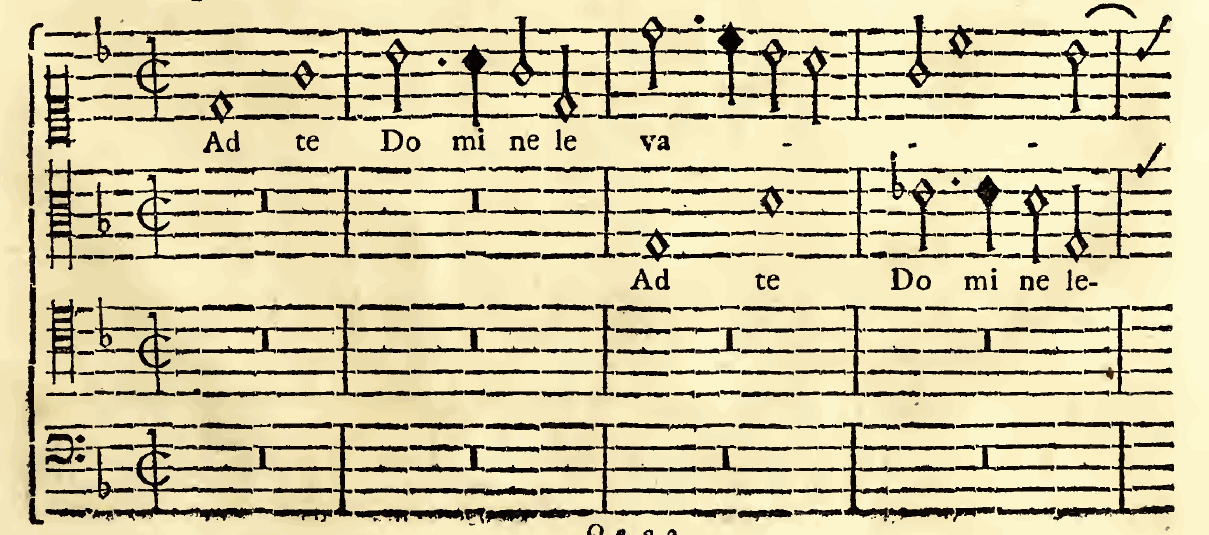
To you, Lord, I have lifted up my soul.
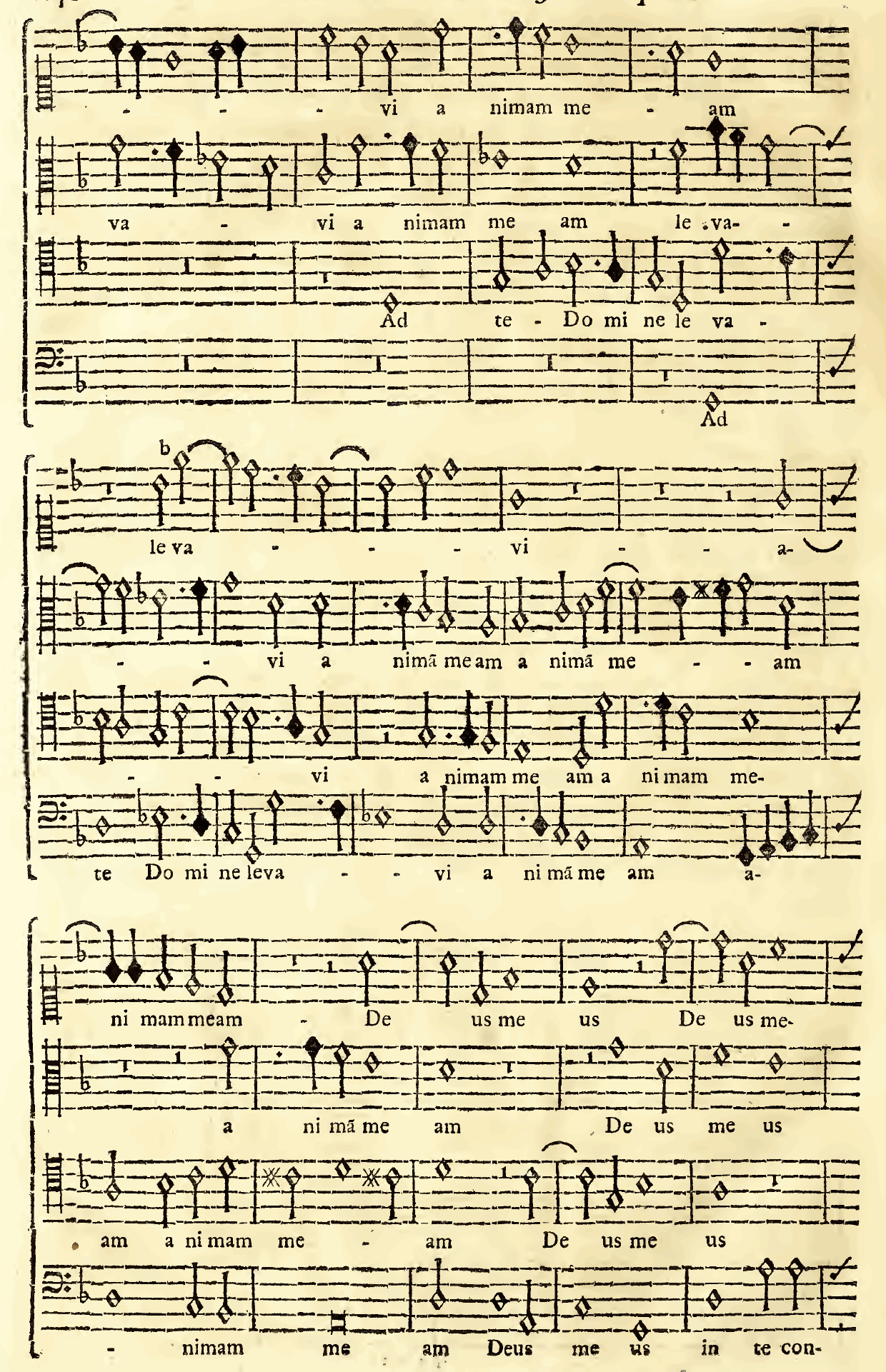
My God, in you I trust.
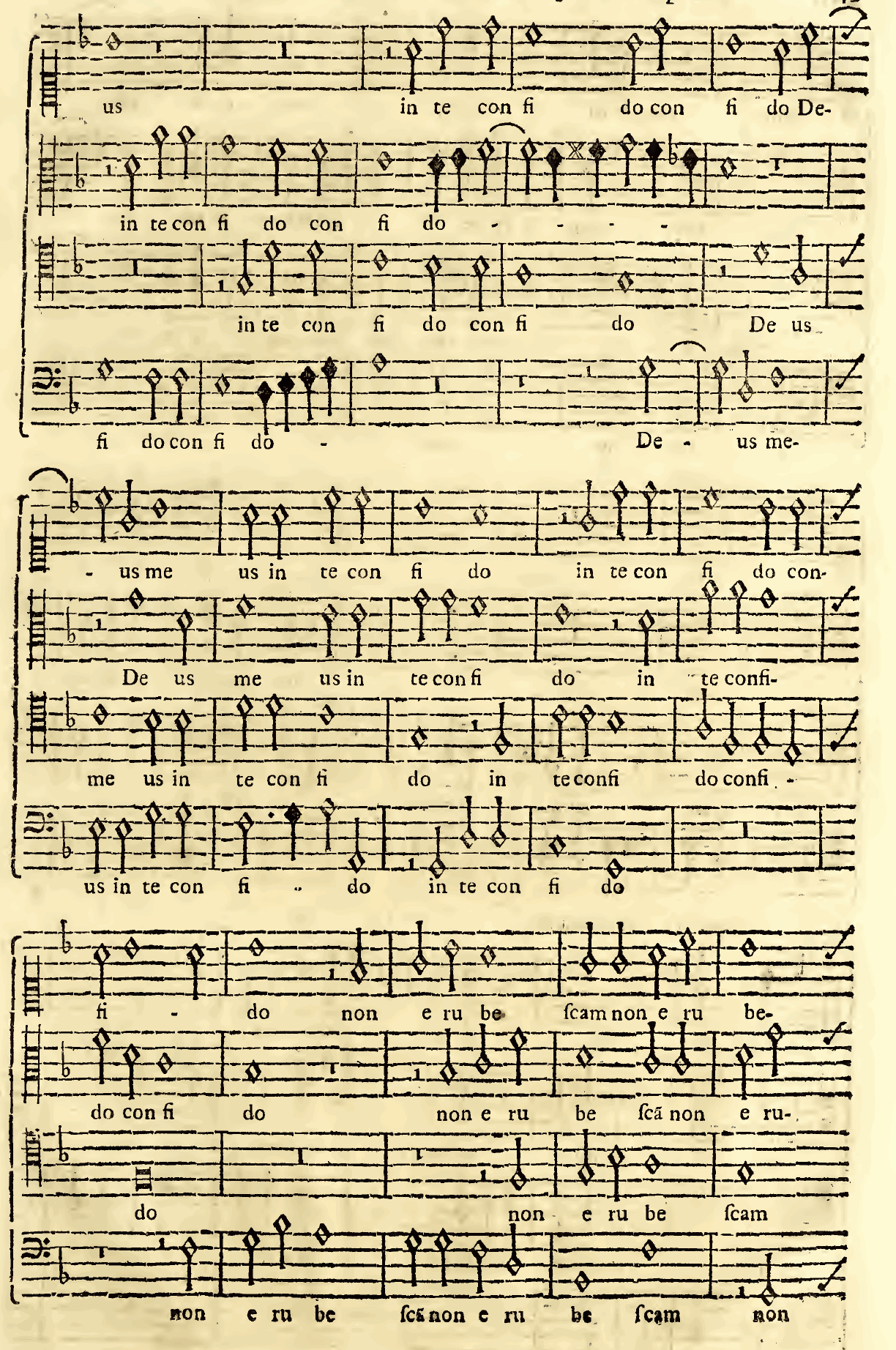
Let me not be put to shame.
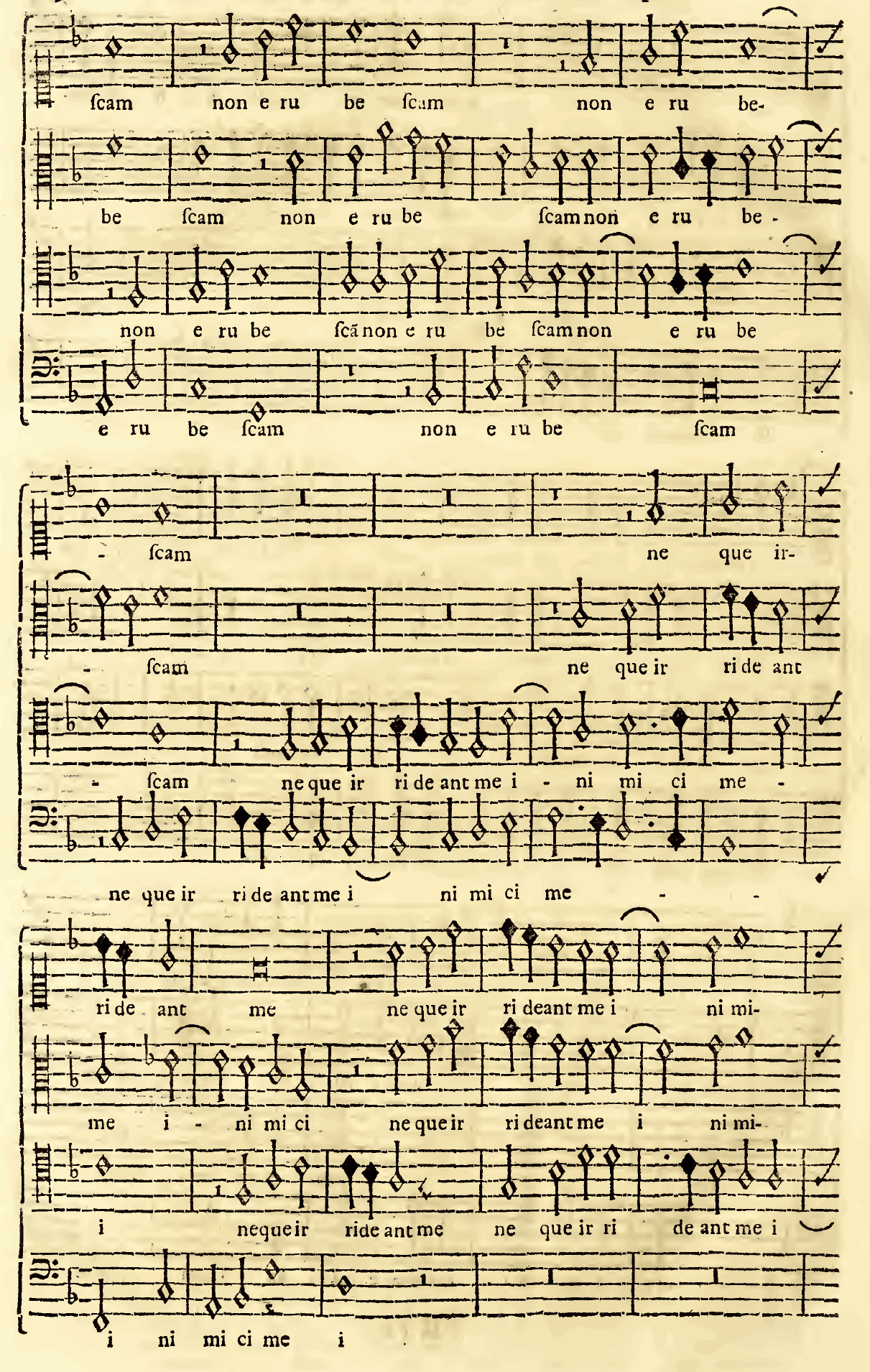
Nor let my enemies mock me.
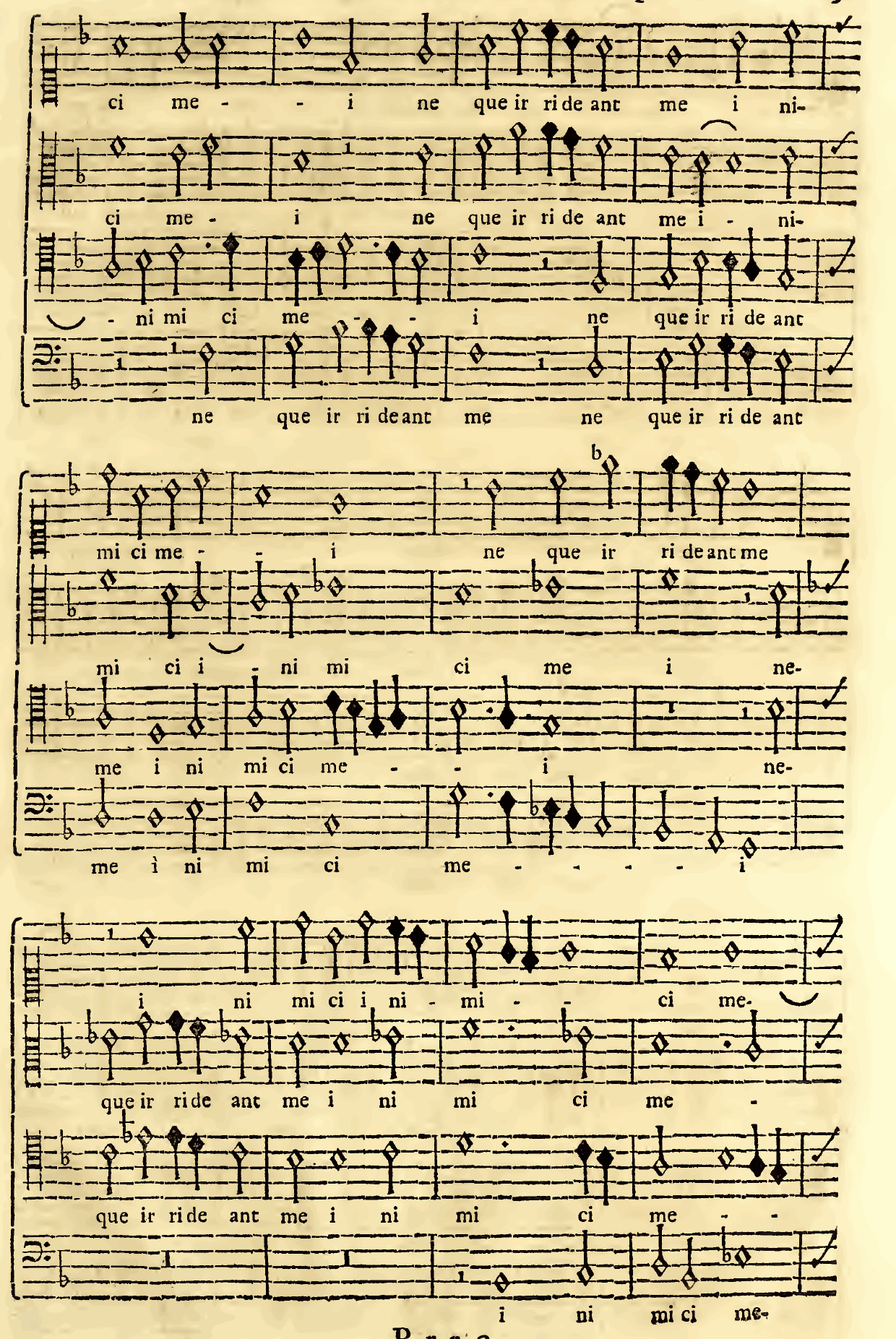
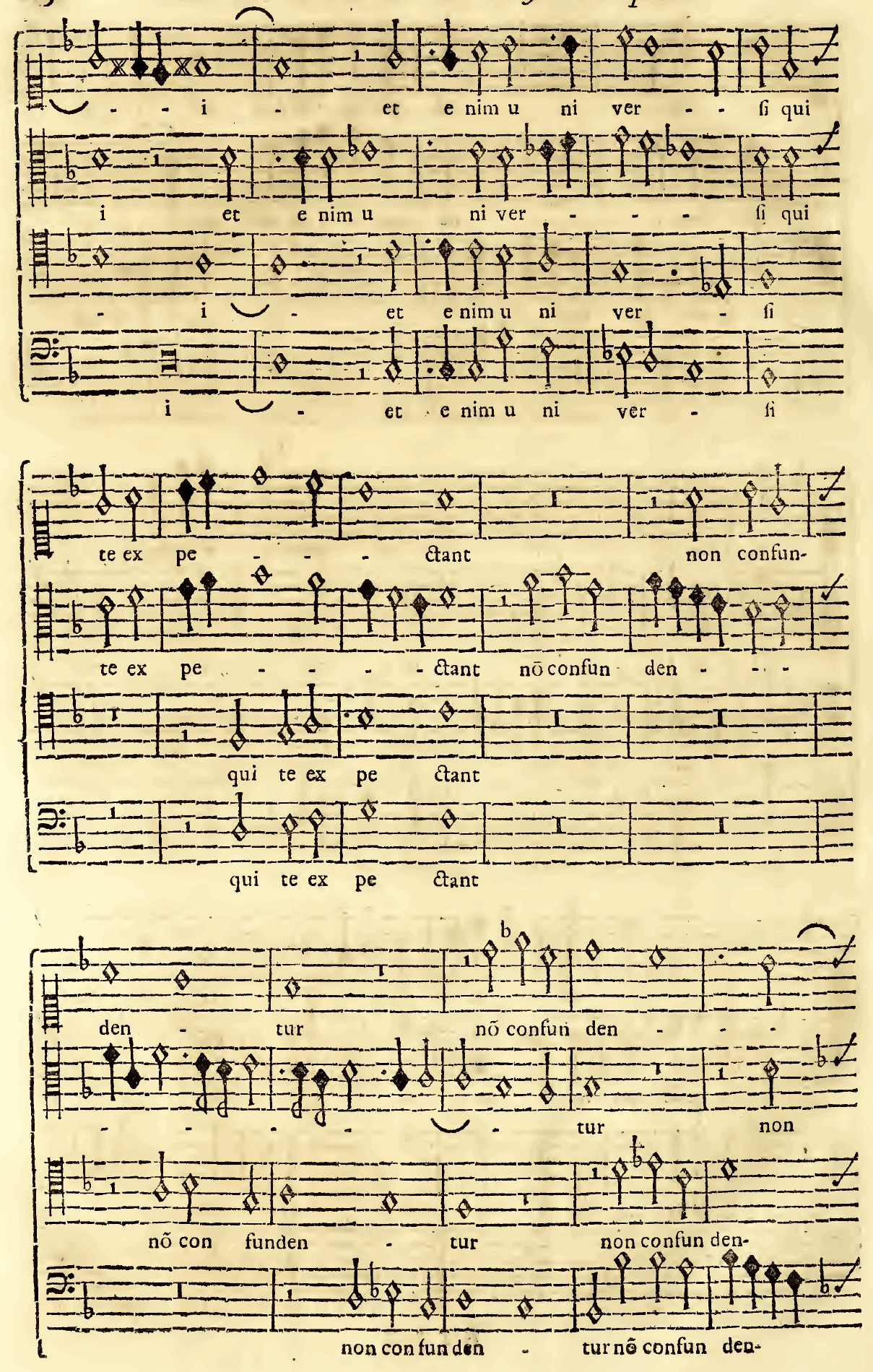
For all who wait for you shall not be put to shame.
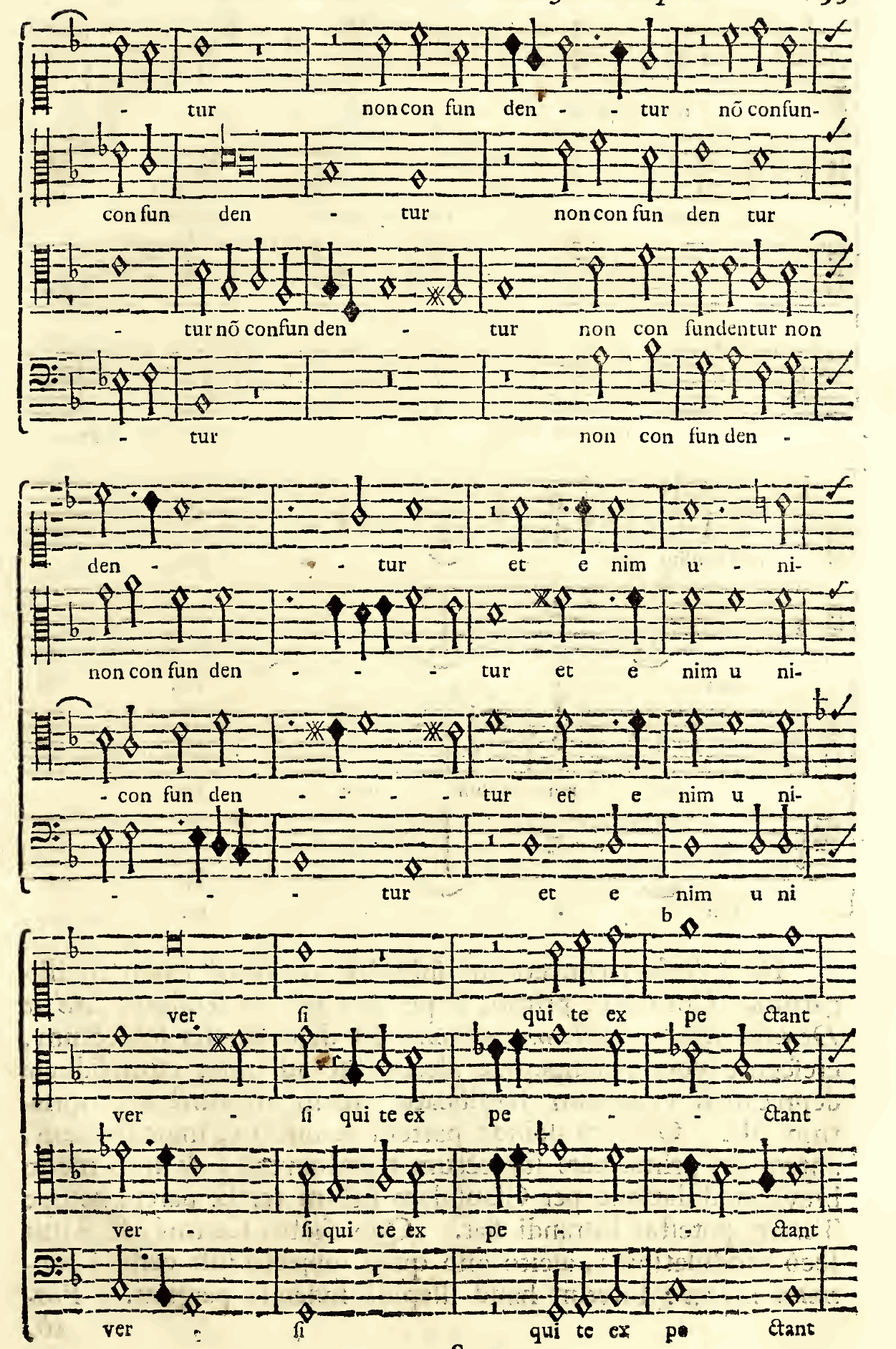
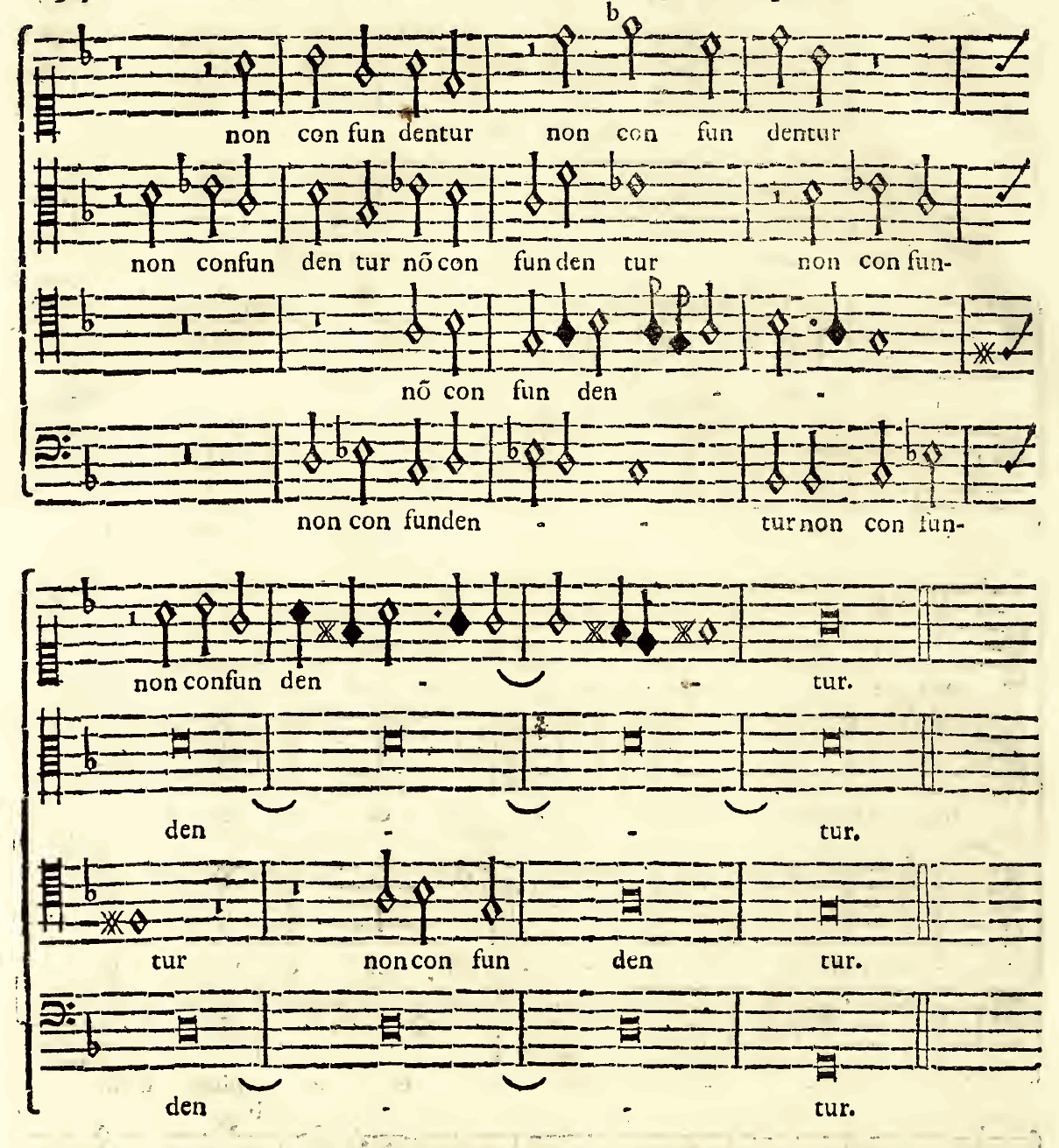
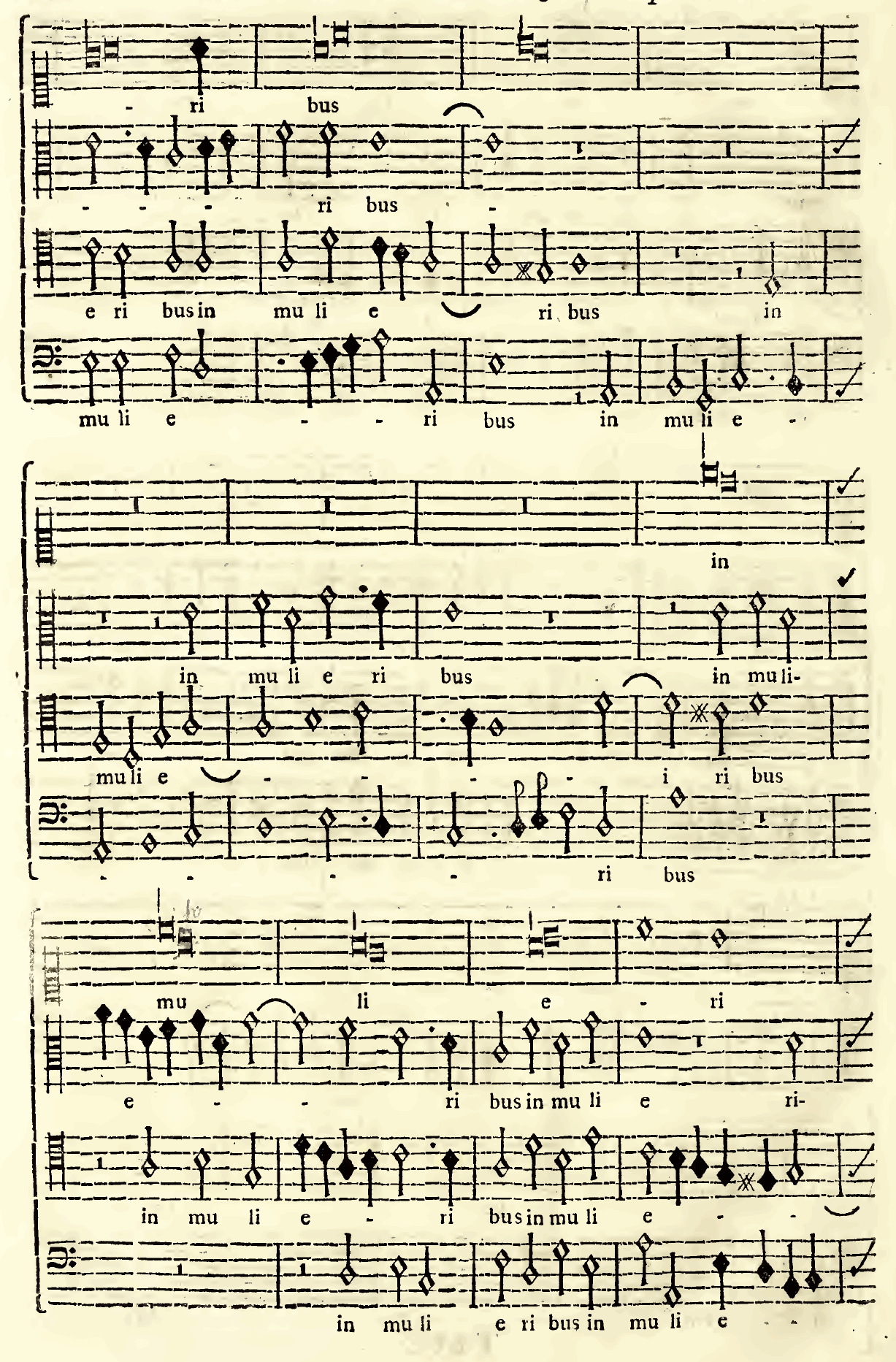
Here, Joseph, is a composition bound together by continuously linked subjects. First consider and penetrate the sense of the text: “To you, Lord, I have lifted up my soul.” You will find the subject, with the voice rising and continually ascending like someone praying with confidence, most closely suited to the meaning of the words. Observe next the second part entering before the first has finished the subject, and how a brief melodic continuation through a deceptive cadence gives the third part, namely the tenor, an opportunity to enter. After this, the soprano and alto, instead of melodic continuation, take up what is almost another subject under the words “my soul,” and meanwhile proceed with no little grace. Furthermore, so that the melodic continuation with needless repetition of words would not be drawn out too long, the alto, after a half-rest, imitates the subject under the word “levavi”; the soprano also takes up this imitation a little later after a rest. Then, after some continuation, the parts form a cadence on D with what is almost a subject under the words “animam meam.” There the soprano, after a rest, introduces a new subject with a new period of the text. The expressive force of this subject under the words “Deus meus” seems well worth considering. Observe also how the parts bring forth this subject in every measure in such close succession that it seems almost drawn from one another’s mouths, until the bass proposes another subject, well suited to the meaning of the text, with the words “in te confido.” Taken up by the other parts and then mixed with the preceding subject, “Deus meus,” it is carried as far as the cadence on B fa.
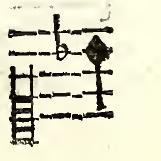
Joseph. I see here a progression that I never encountered throughout the course of the lessons: namely, from a fifth to a fifth, although by contrary motion. For example:
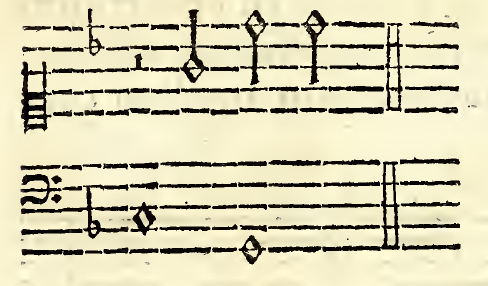
Aloysius. You have observed correctly. Although the rule does not forbid that progression, because two perfect consonances of the same species bring little variety, it should not be used without weighty necessity, especially in four voices. Here the need to introduce the subject, which could not otherwise have been done, excuses the progression. Very often some slight license must by no means be denied to closely interwoven subjects. This is clearly seen in the following subject, where a leap of a fourth instead of a third, or a leap of a third instead of a step, is frequently used for the reason just given: all for the sake of introducing the subject earlier. Consider next the subject entering in the bass beneath the aforementioned cadence with the following period, “non erubescam,” repeated by the other parts in close alternation and carried as far as the cadence on F. There the bass again introduces a new subject with the period “neque irrideant me inimici mei,” by no means unsuited to the sense of the words, which is then continued at length with the parts closely joined.
Joseph. In the development of the former subject, I noticed a case where two fifths immediately following one another seem to occur in this way:
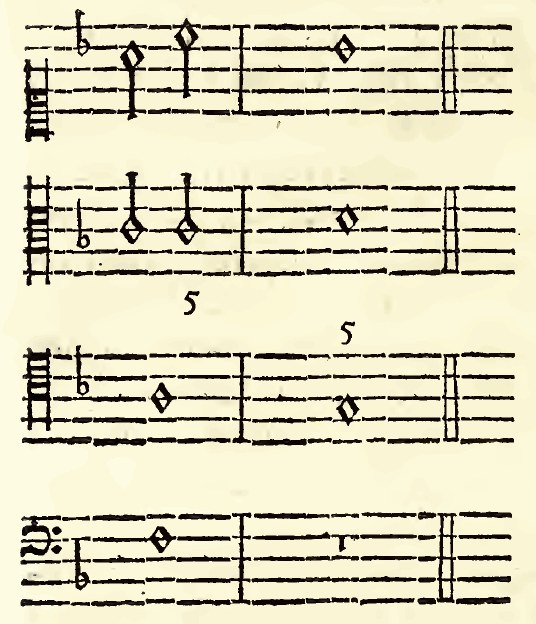
Here the tenor seems to take the place of the bass.
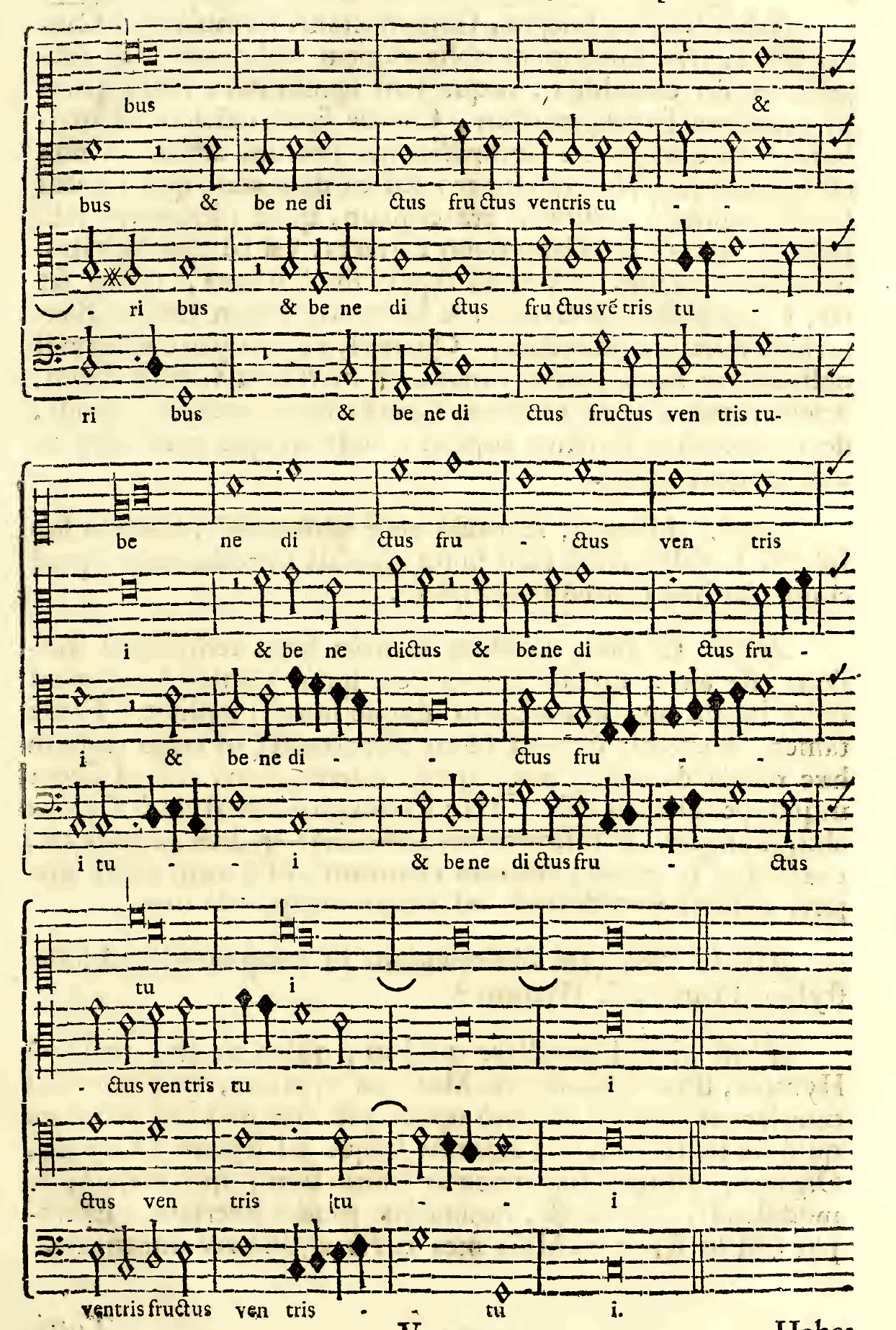
Aloysius. Some authors judge so. But the quieter tenor voice easily shows the ear that the second fifth it forms arises not from the preceding fifth but from a third. Nor is this a matter of such importance that the development of the subject should suffer or be conducted less gracefully because of it. From what has been said thus far you will easily examine the rest of the composition, and you will also observe that words which signify nothing by themselves must never be repeated. It remains for me to show you a composition in this style with the obligation of a cantus firmus and the application of a text, from which you will see how subjects are to be introduced.
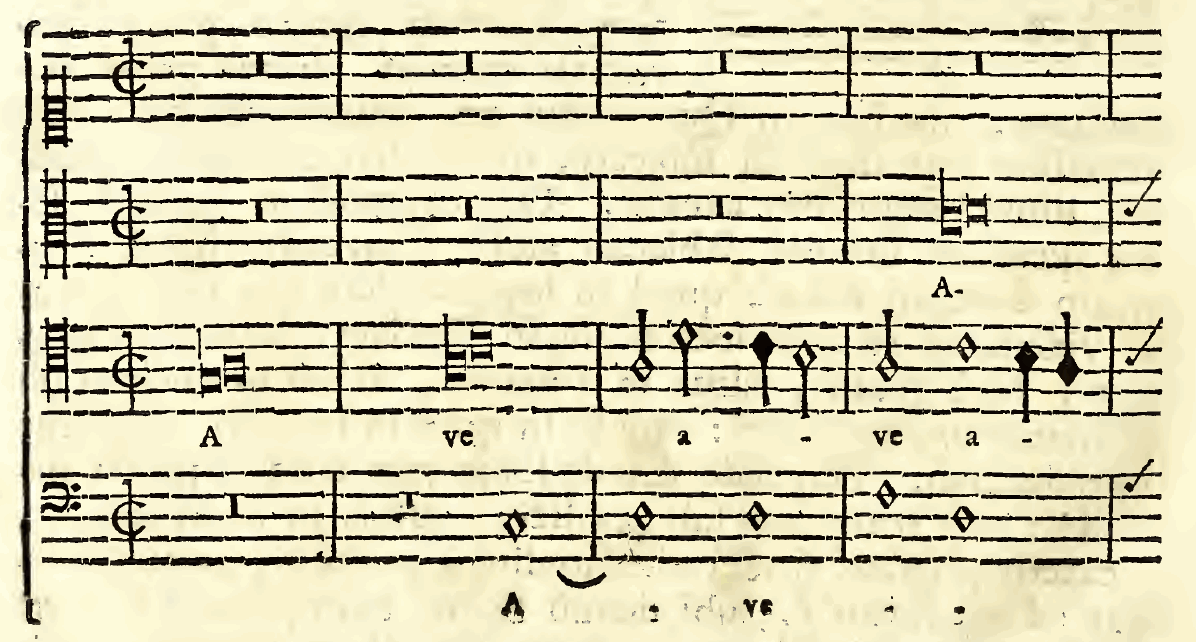
Hail Mary, full of grace.
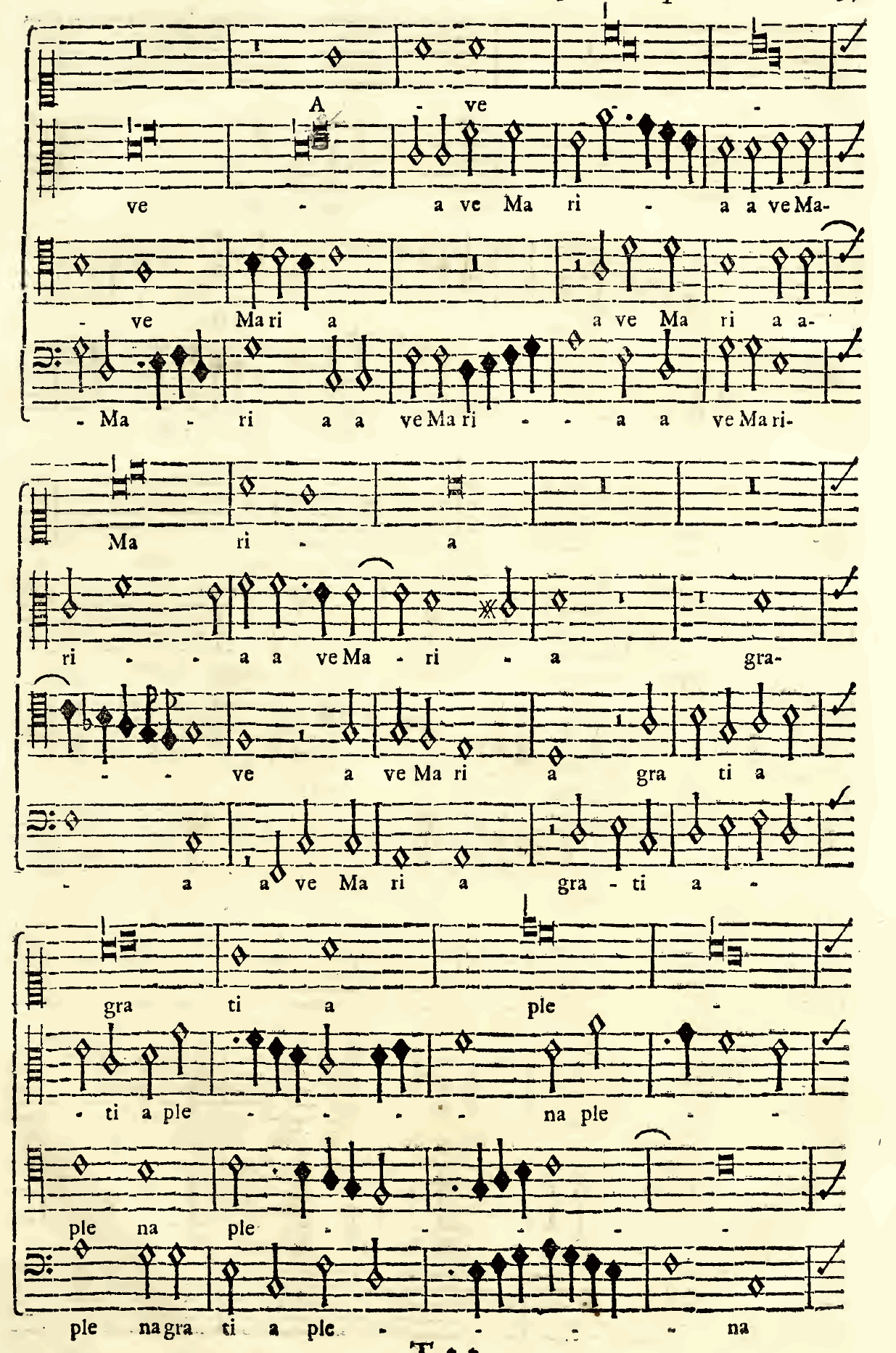
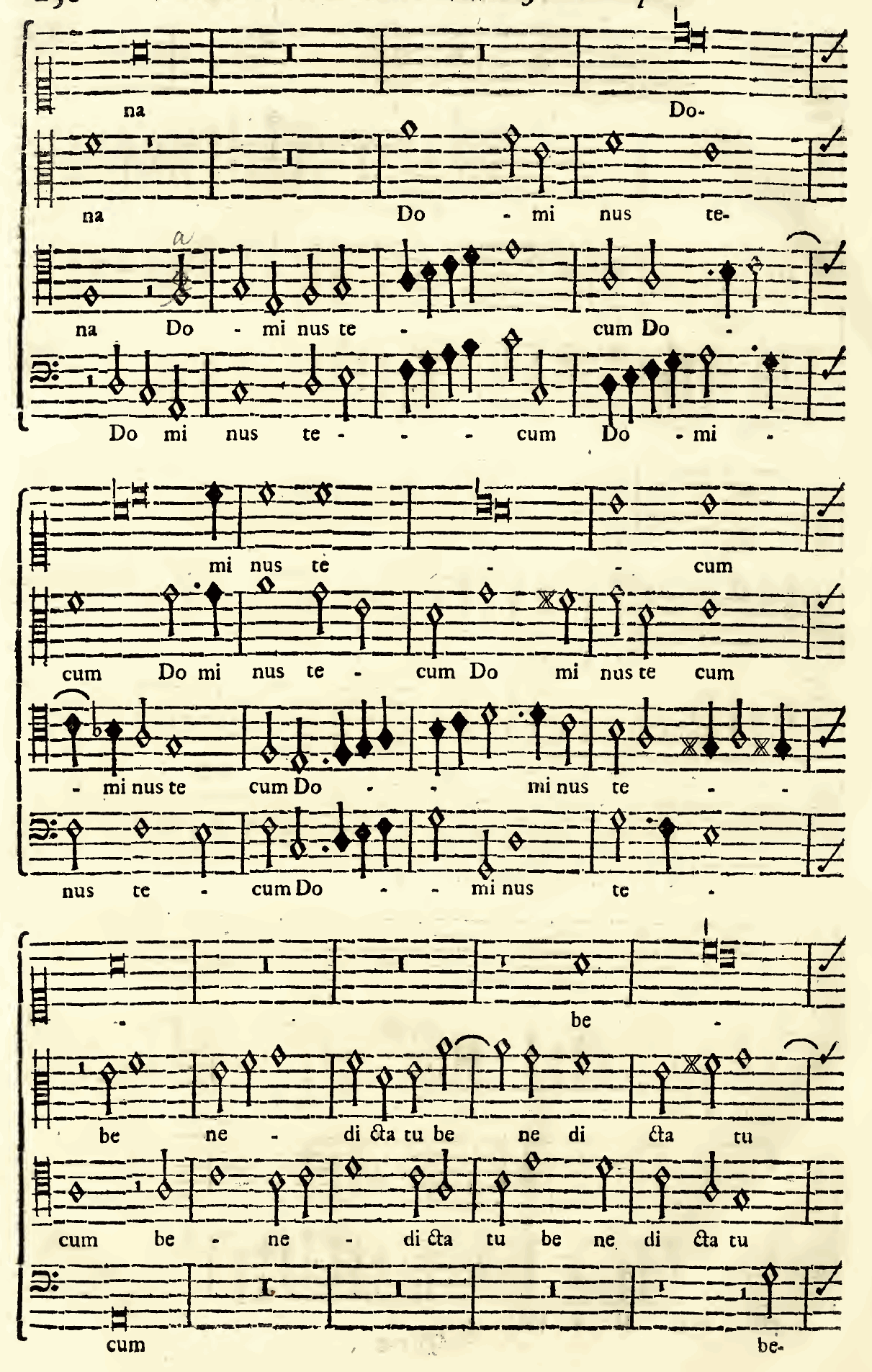
The Lord is with you.
Blessed are you among women.
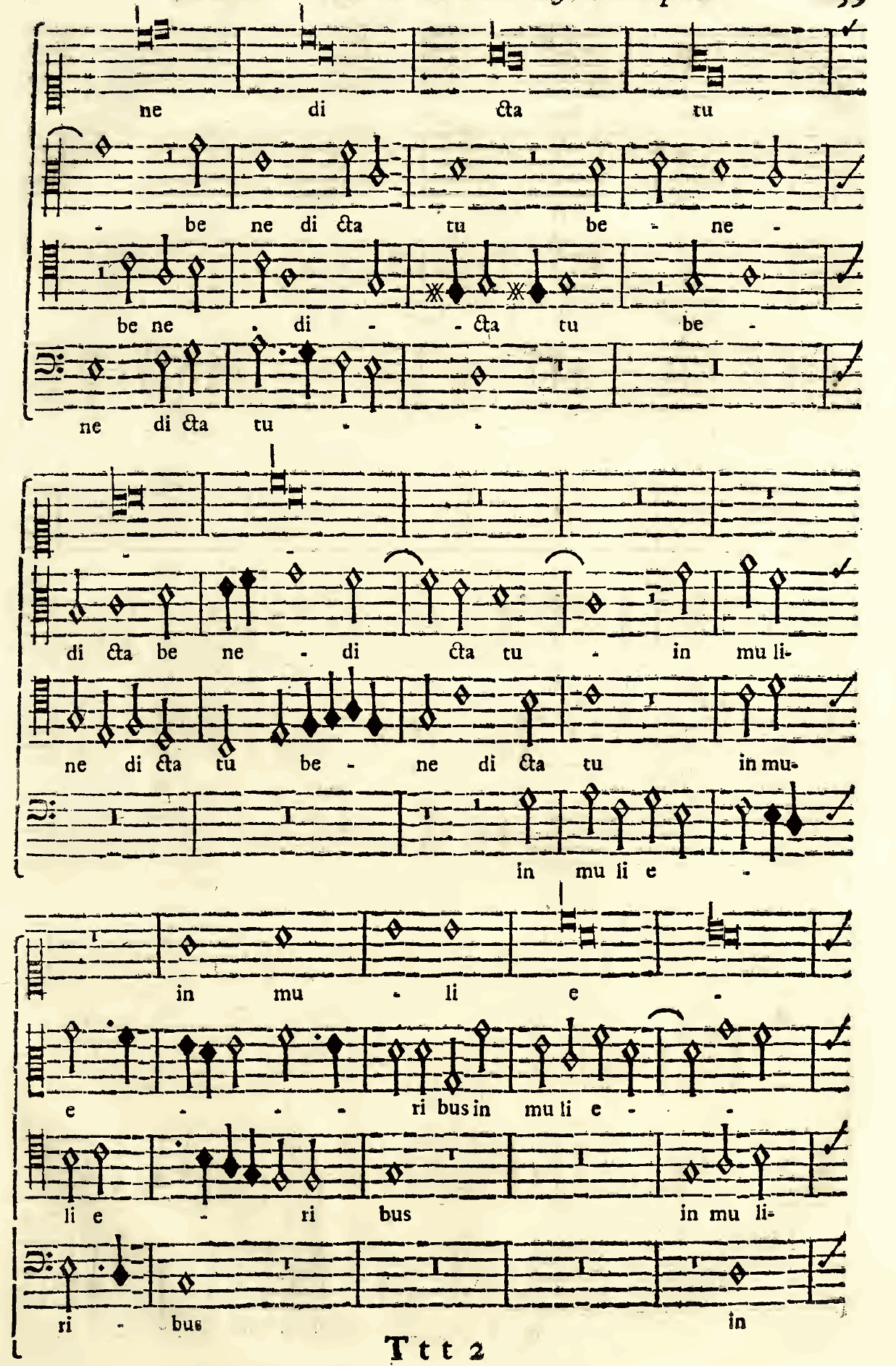
And blessed is the fruit of your womb.
You now have, Joseph, a model of composition worked out under the obligation of a cantus firmus, or Gregorian chant. If the subjects are less singable and not as expressive as in the preceding examples, attribute this to the restriction of the cantus firmus. In this kind of composition one is not free to choose just any subjects, but only those that can be joined to the chant. Moreover, the subjects are generally drawn from the Gregorian chant itself or formed in imitation of it. Attribute the words, perhaps repeated more often than is sufficient, to the course and brevity of the chant, which must nevertheless last throughout the entire offertory. Although on the one hand obligations of this kind take no little ornament from a composition, on the other I cannot say what sweetness and breath of devotion the sound of the cantus firmus adds, immediately drawing listeners to attention.
Joseph. I remember that a little earlier you advised introducing subjects during the cadence itself, and only rarely after the cadence has ended; yet I see the contrary in this composition.
Aloysius. I say that this departure too must be attributed to the restriction of the cantus firmus, since subjects drawn from the source of Gregorian chant itself cannot be woven in everywhere at will. You will nevertheless easily observe that the perpetual motion for whose sake this rule was given is not interrupted at all, but carried through to the end. Let these examples of a cappella style without organ or instruments suffice. After examining and carefully weighing them, one must take up for study works of greater artifice by other distinguished authors.
Joseph. But what must be observed in composing psalms and hymns in this style?
Aloysius. Nothing particular, except to apply to them—especially to hymns, since they are in verse—music with something of the character of a song. It is therefore not worthwhile to give a separate treatment of them. Let us proceed, then, to a cappella style furnished with organ and other instruments, which enjoys greater freedom of melodic writing, singing, and movement. Let the Kyrie from my Mass called in Fletu solatium serve as an example.
All together, somewhat lively
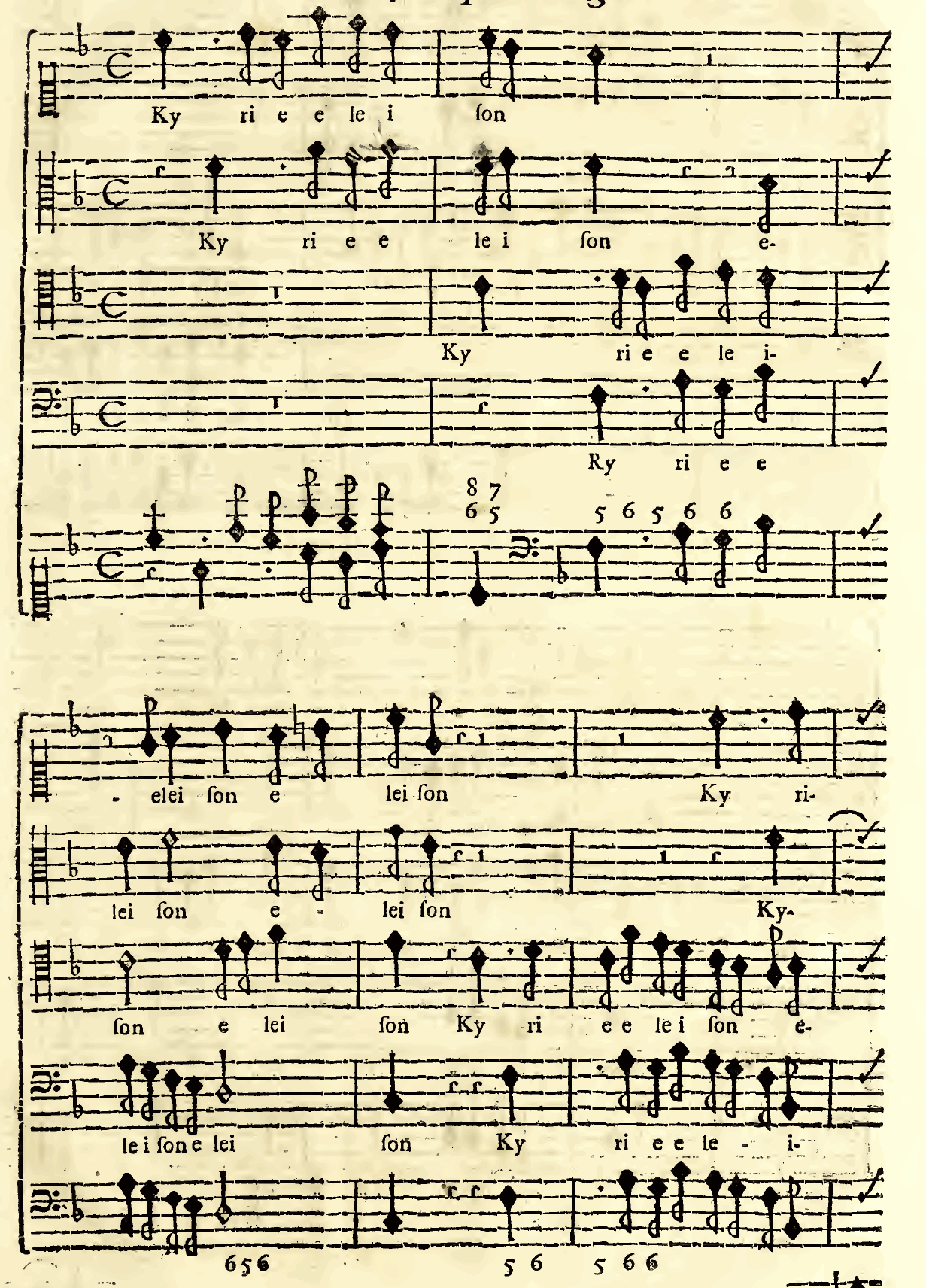
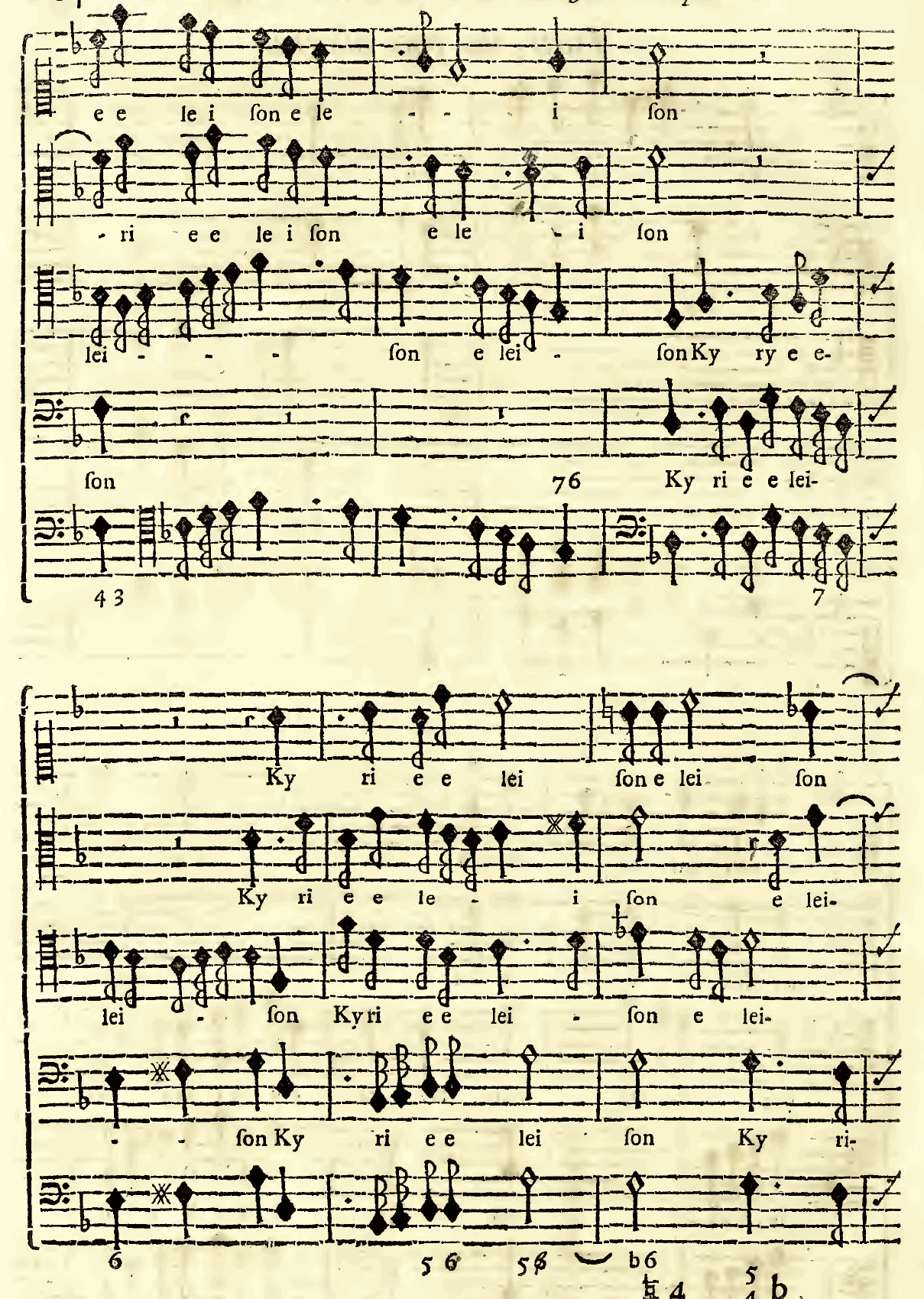
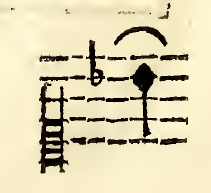
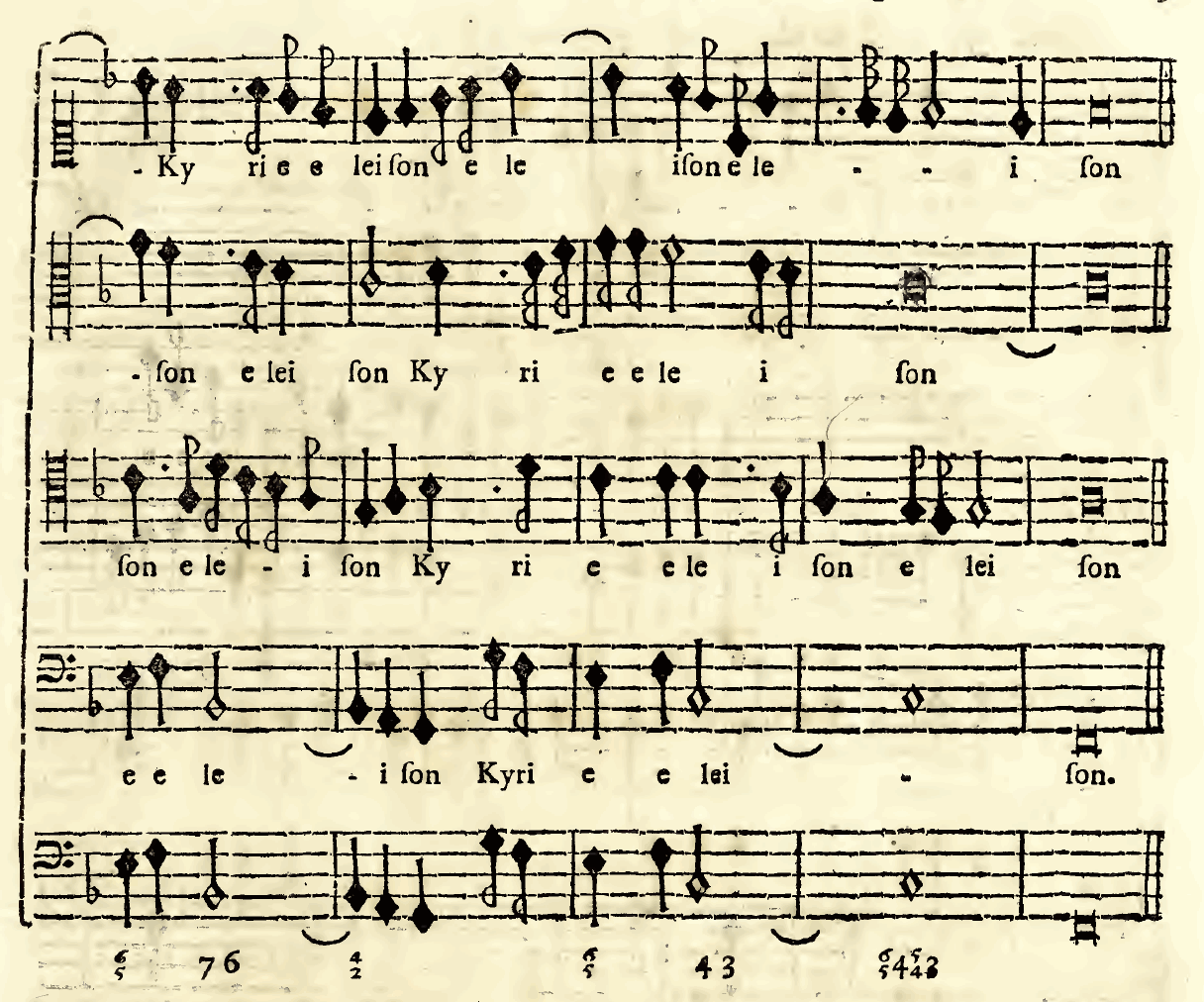
Consider above all, Joseph, the natural and graceful melodic manner of the parts: although closely united, none obstructs another. Observe also the melodic course, which is not commonplace and moves naturally into related modes, and the parts resting at suitable times so that the composition is not overfilled with superfluous and useless entanglement. See how, while all these things are observed, nothing is taken away from the fullness of harmony. Since this style can also be used in three-voice composition—which I have often used successfully—I shall also set out here as an example the Christe of this Mass for three voices.
For three voices. All together
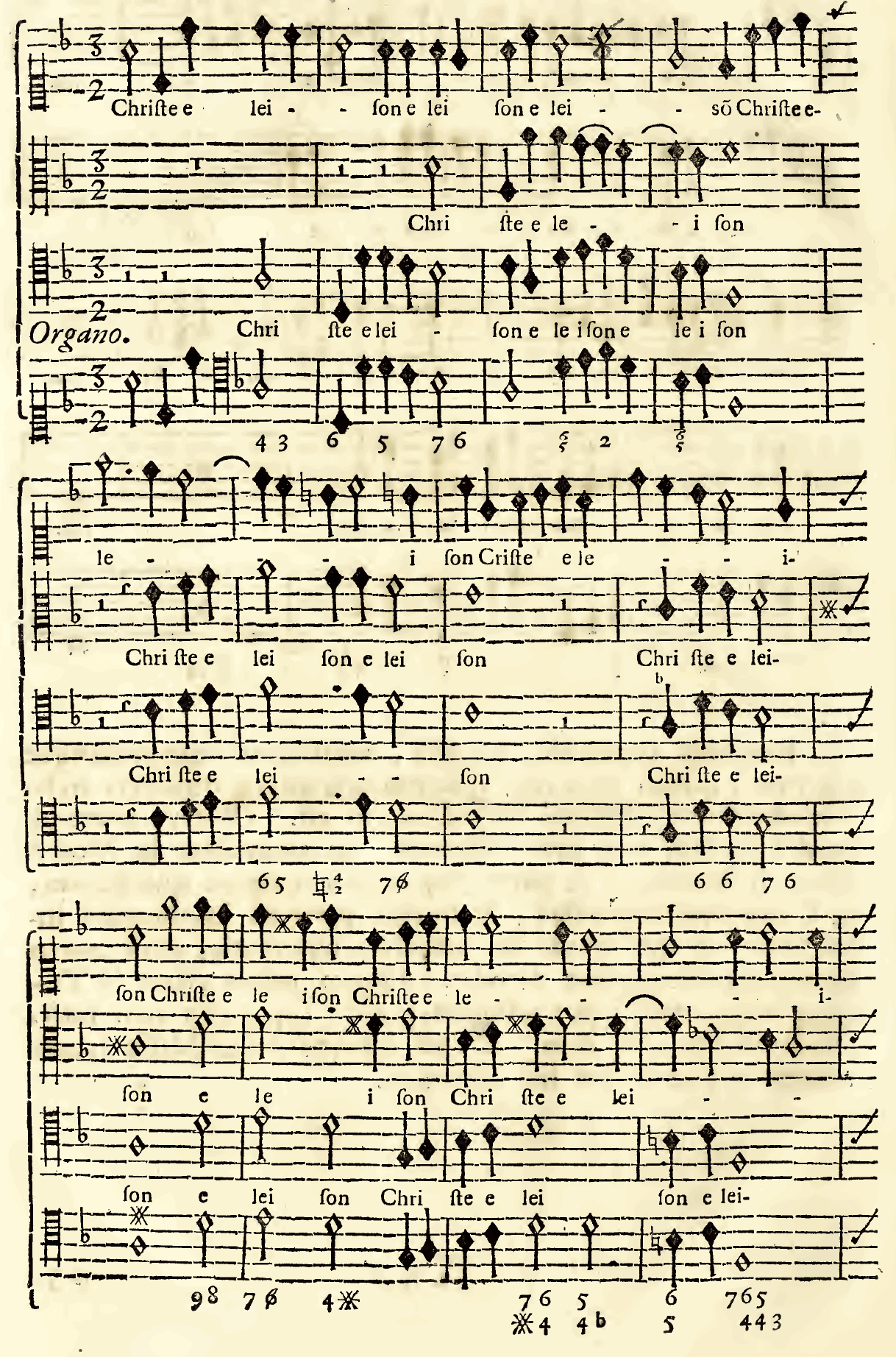
Christ, have mercy.
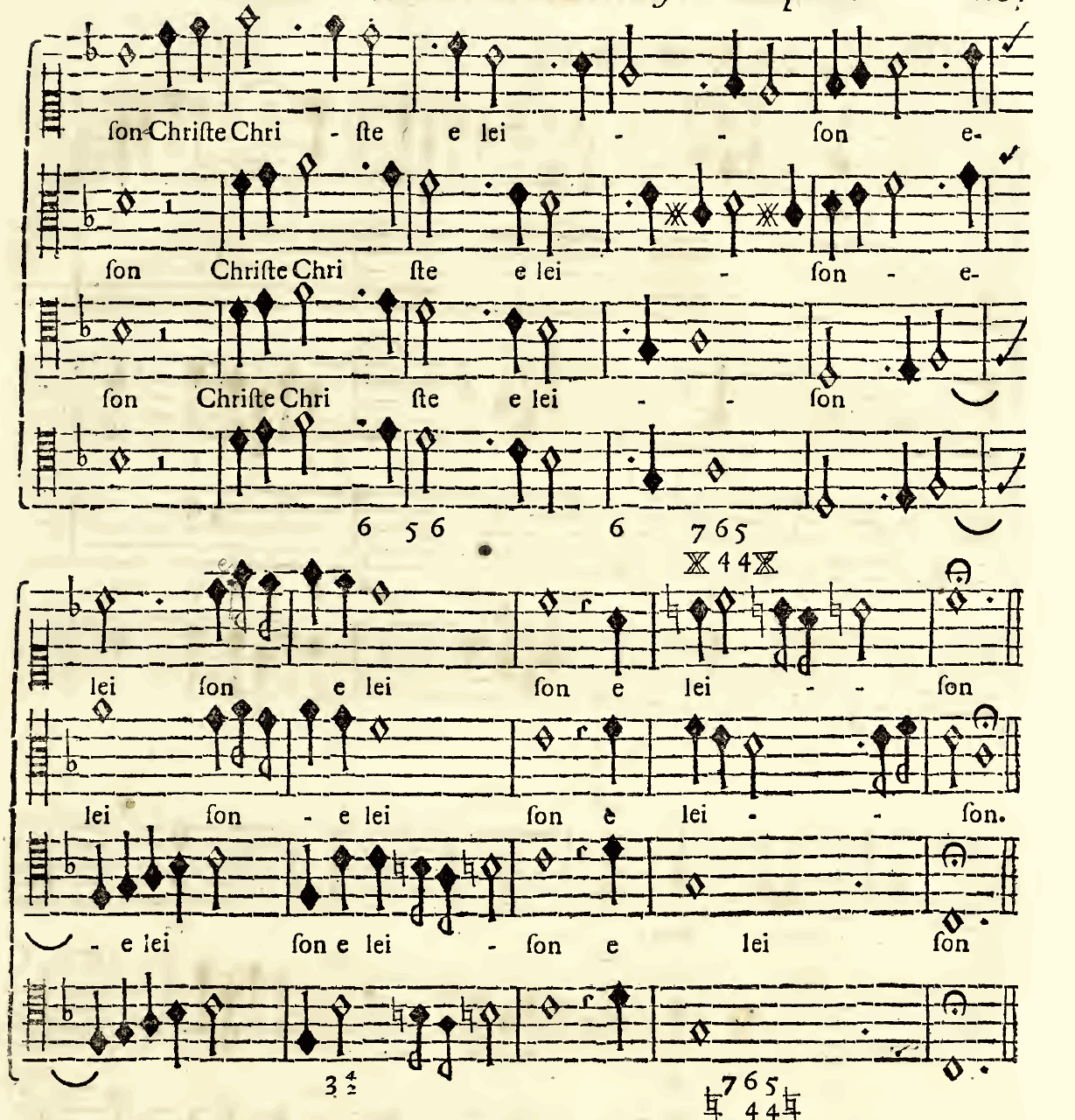
This three-voice composition in the freer a cappella style was made more for the sake of melodic writing and imitation than under the obligation of any one subject, except at the beginning. After a cadence and a little rest, a new idea is continually introduced and taken up imitatively by the other parts, offering a melody not unpleasing to the ear. It is all the more perceptible because the parts generally follow one another by oblique motion. Care must nevertheless be taken not to sing a composition in this proportion at too rapid a measure. Since this style comes very close to the preceding unaccompanied a cappella style in ecclesiastical gravity and is more commonly used in modern times, it will not be out of place to present one further example for your consideration: the Amen from my Mass Credo in unum Deum.
All together, moderately fast
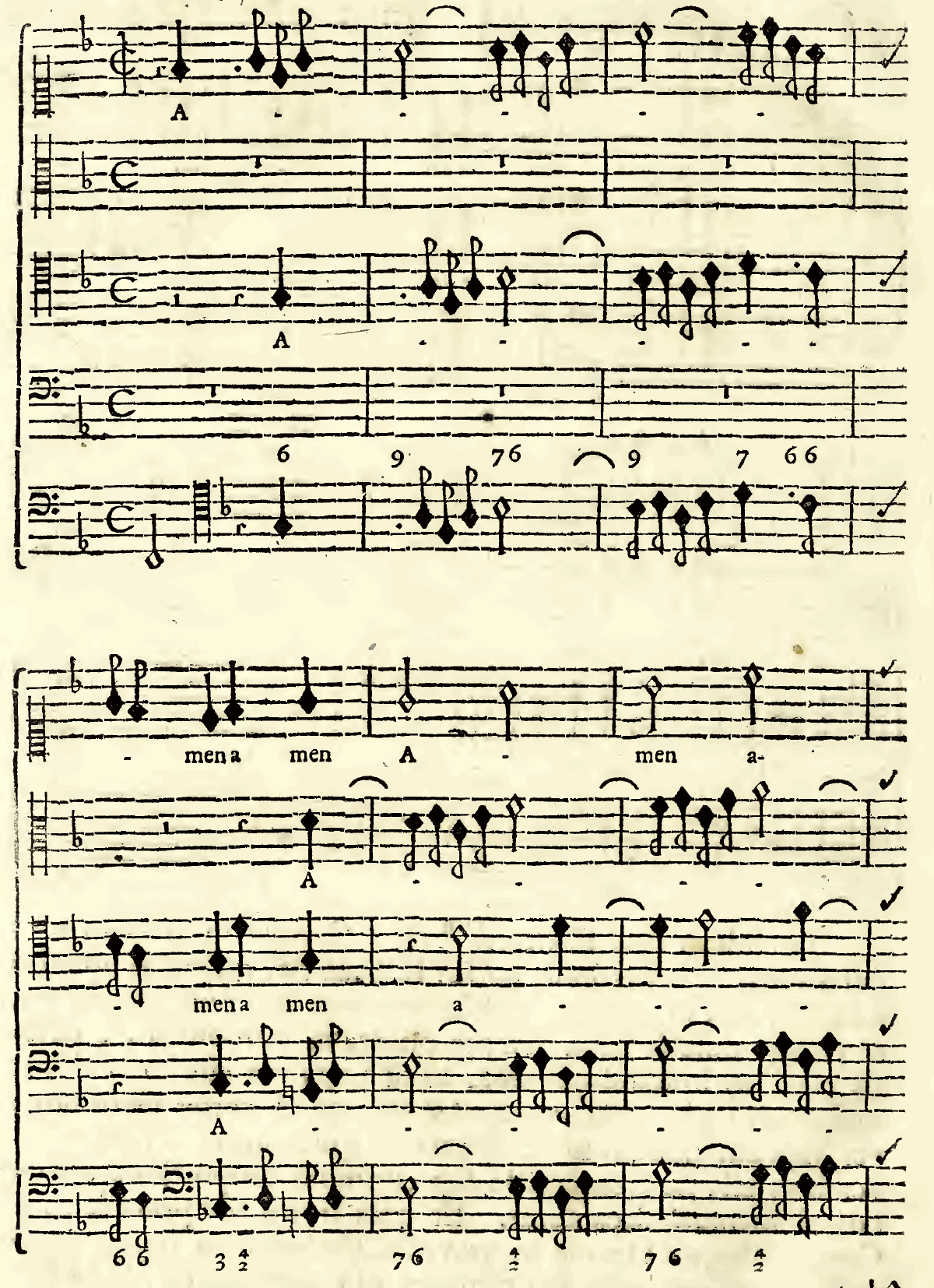
Amen.
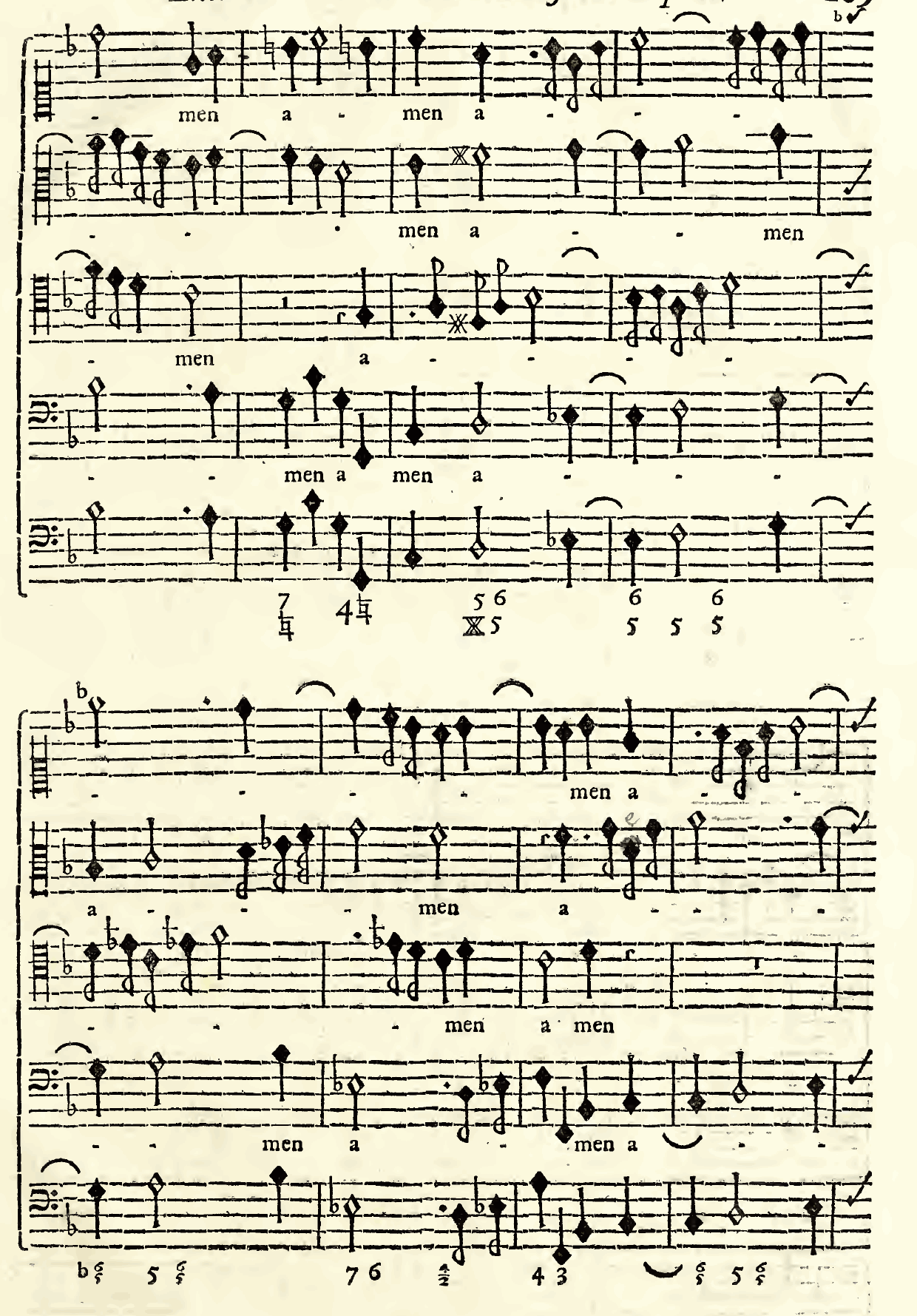
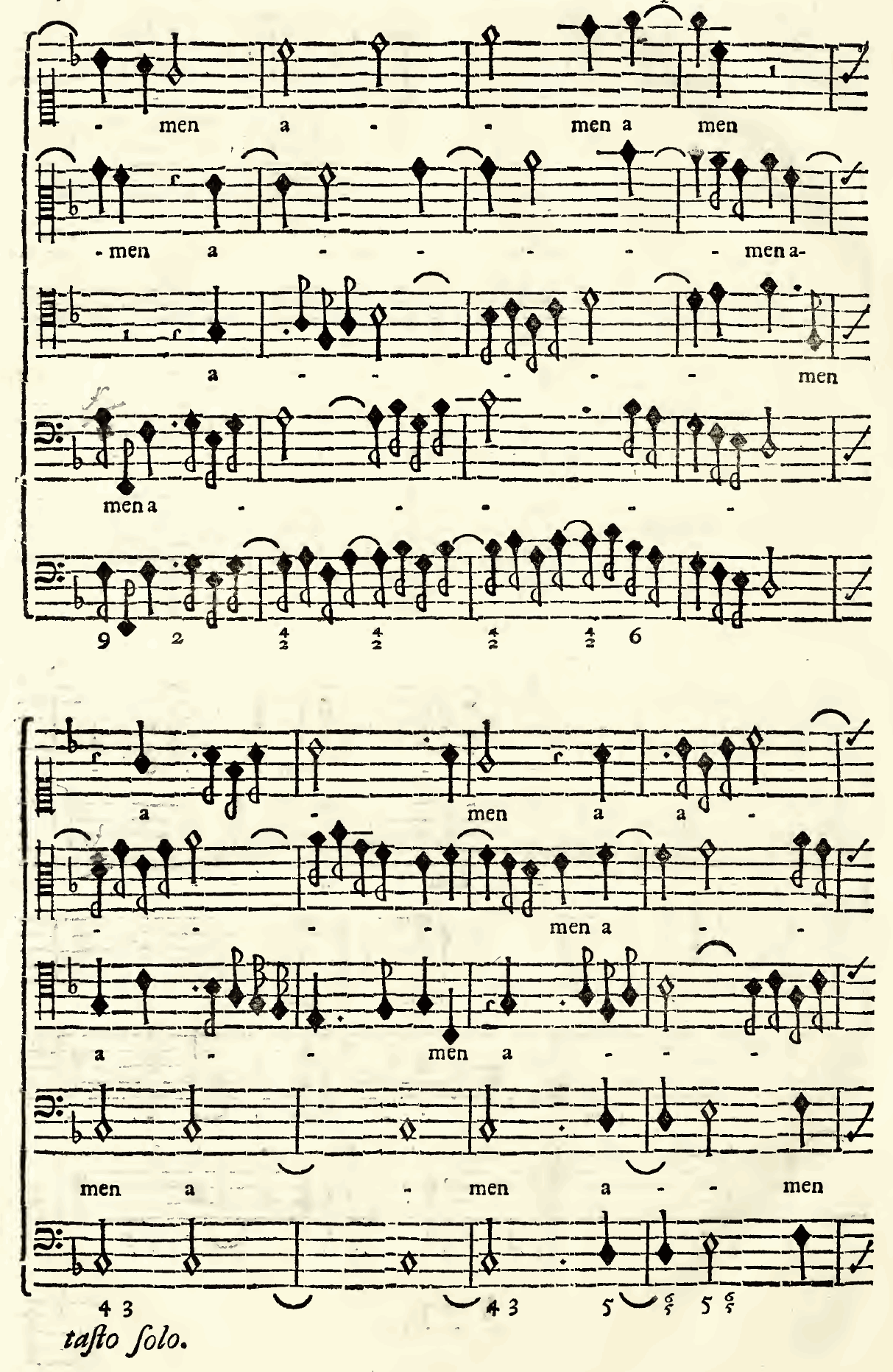
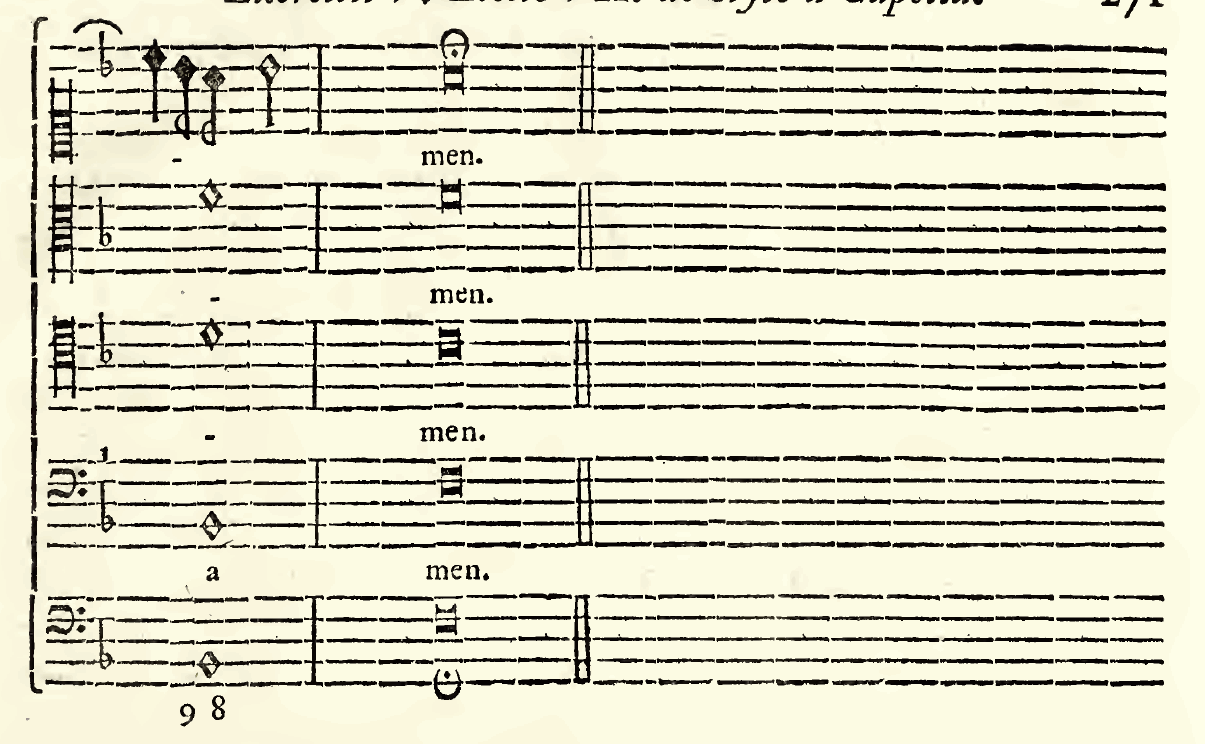
Consider, Joseph, the progress of the parts bound together with the subject, a correct disposition of concordances, and an unbroken chain of dissonances; and the melodic course, which, though natural and easy, is by no means ordinary. Consider also the joining of the parts, which contains the greatest force of harmony, and the motion carried to the end without interruption.
Joseph. I perceive and admire everything you mention, but the dissonances in this composition seem to resolve upward, contrary to your prohibition.
Aloysius. What you touch upon here, Joseph, was also raised against me by an excellent musician concerning this Amen. He did not observe that the note in question, the fusa ascending after the dissonance, is a figure of variation, added for the sake of motion and a better melodic line. Look at the substance.
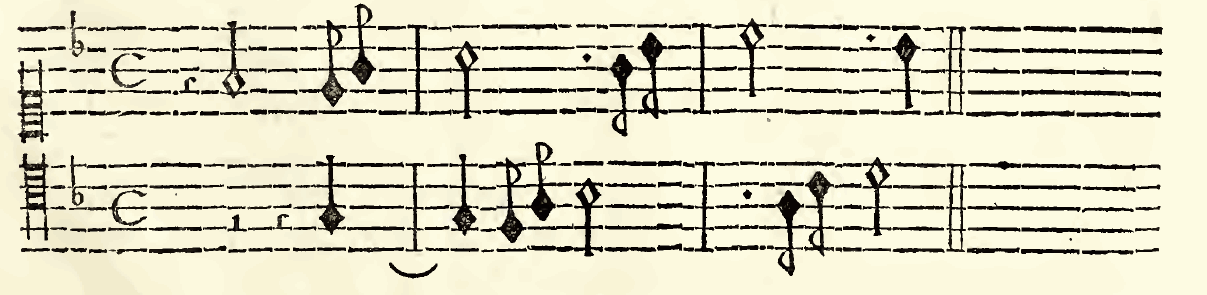
Joseph. I am annoyed with myself for overlooking so clear a matter. Henceforth I shall therefore take greater care to recognize figures of variation before deciding my judgment.
With your permission, Master, I shall put forward one further doubt.
Aloysius. Speak.
Joseph. I remember that you forbade the doubling of sharps used as accidentals. Yet in the ninth measure of this Amen I see the sharp placed in the alto doubled in the tenor. For example:
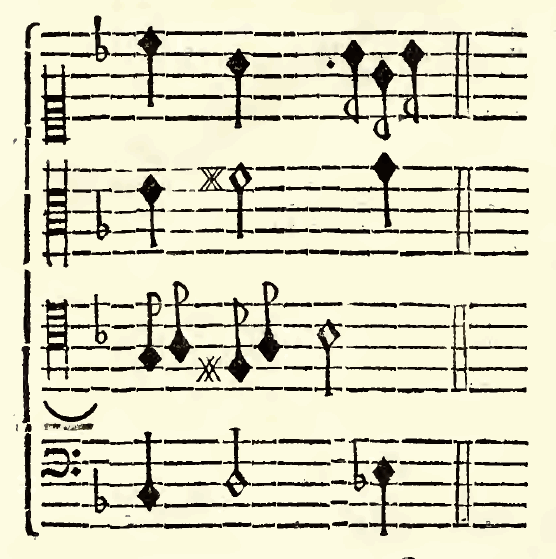
Aloysius. I certainly did. For a sharp, possessing great force and some harshness in itself, when doubled overpowers the other parts and destroys the balance of harmony. The prohibition therefore holds where the doubled sharp lasts a long time. But that tenor note marked with a sharp is of so short a value that the inconvenience which would otherwise result from a longer duration is not important enough to interrupt the graceful ordering of the texture required by both the melodic course and the subject.
Joseph. Since instruments also cooperate in this style, what should be done with them? I know that trombones customarily sound in unison with the alto and tenor, but what should be assigned to the strings?
Aloysius. I affirm that in this a cappella style both the first and second violin parts should proceed in unison with the soprano.
Joseph. Yet I often hear and see the strings playing something else in compositions.
Aloysius. That is so. But what do they do? Disproportionate, ungraceful leaps with no singable character, so that, wandering improperly up and down, they confuse rather than enhance the harmony they were introduced to support. For if the four-voice composition is complete according to the precepts of the art, no room can remain for a fifth part to introduce a subject. Understand the same of three-voice composition. Everything else amounts to a very bad melodic manner.
Joseph. What if the first violin part sounded at the octave with the alto, as is customary with many?
Aloysius. If the doubling of the voices with an added trombone is so great as to have the power to conceal the succession of octaves, it can be tolerated. If, because of the small number of voices, the octaves are heard, they certainly savor of a rustic manner. I therefore think you should adopt the safer course of joining both violin parts to the soprano. As for the other portions of the Mass, offertories, psalms, hymns, and so forth, the music must be directed according to the variety of the text, as said before, but with greater freedom to range widely than in the style without organ.
Joseph. What must a composer observe when furnishing a composition with several subjects?
Aloysius. As regards the music, it has been demonstrated above that this must be done with the aid of double counterpoint. Besides the subjects needing to be distinct in note value, suited to the text, and expressive, care must be taken not to combine periods with contrary meanings, for example “Crucifixus” and “Resurrexit”—“was crucified” and “rose again.” This would produce entanglement and confusion of meaning, which must be avoided with very attentive judgment. Now let us proceed to discuss