 Playable Books
Johann Joseph Fux · section 32 of 32
On recitative style
Read and hear this section in the playable edition →Recitative style is nothing other than speech expressed in musical phrases, or an oratorical delivery. Just as a declaimer varies the voice according to the kind of speech, now intensifying it, now relaxing it, now raising it, now lowering it, striving to impart the character of the feeling conceived in the mind, so the composer must do according to the variety of the text. In recitative close to everyday speech, the music should be arranged with a somewhat restrained voice. In contention a sharp voice, sometimes like shouting, is used, with frequent changes in the bass. To a text breathing dignity should be applied music full of gravity, with infrequent changes of bass. This is especially suited to ecclesiastical style, in which it is not rarely used with instruments. For example:
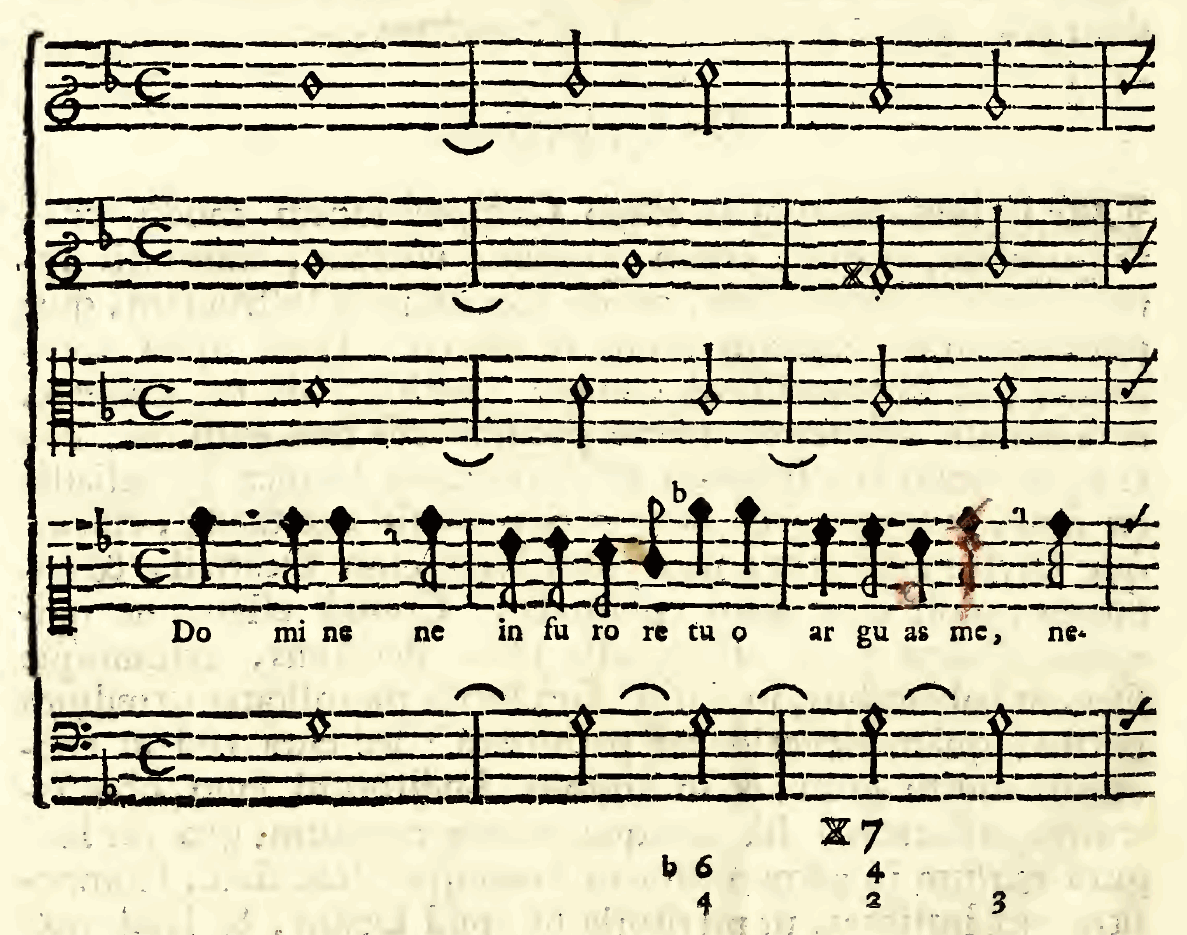
Lord, do not rebuke me in your wrath, nor chastise me in your anger. Have mercy on me, Lord, for I am weak. Heal me, Lord, for my bones are troubled.
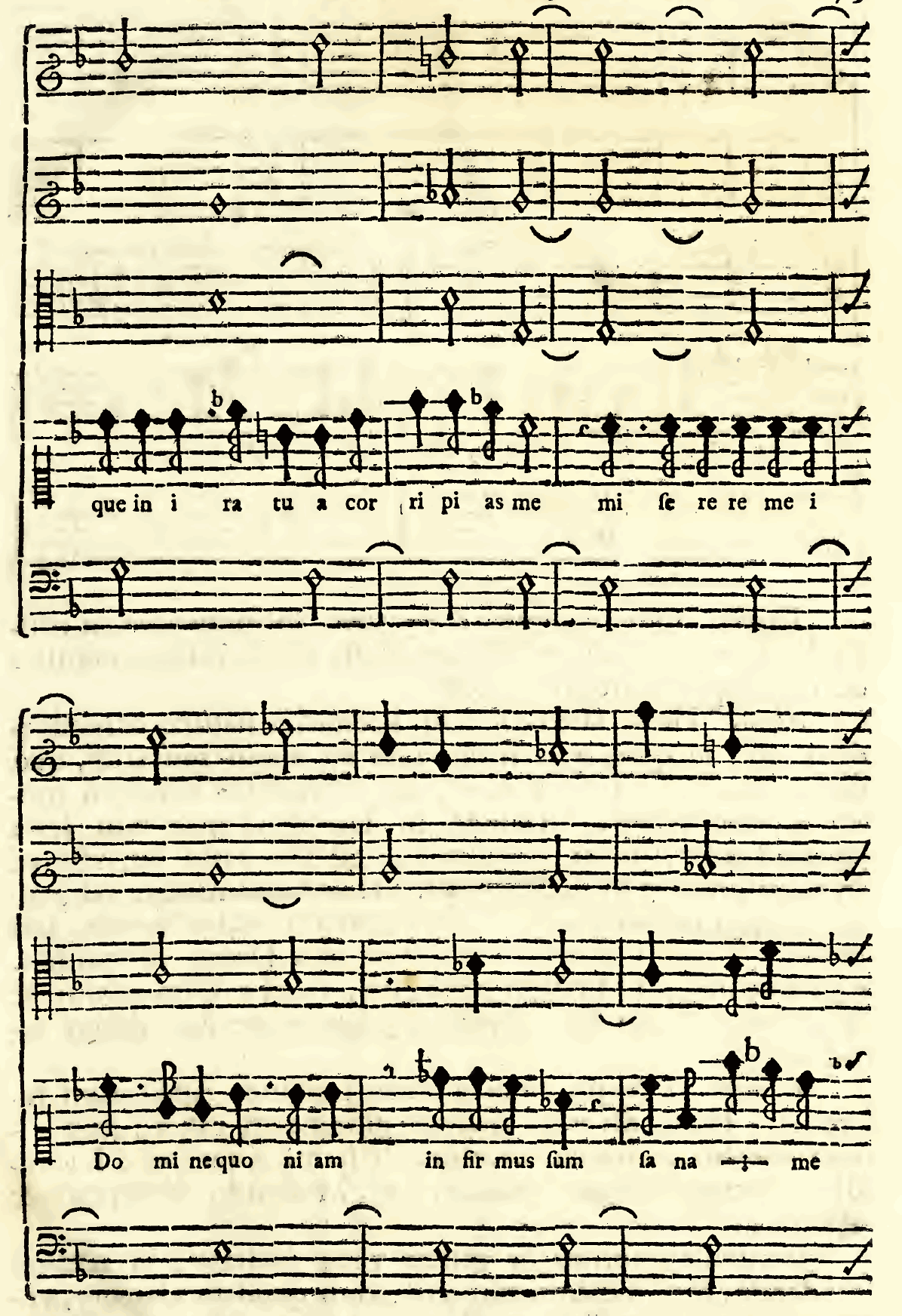
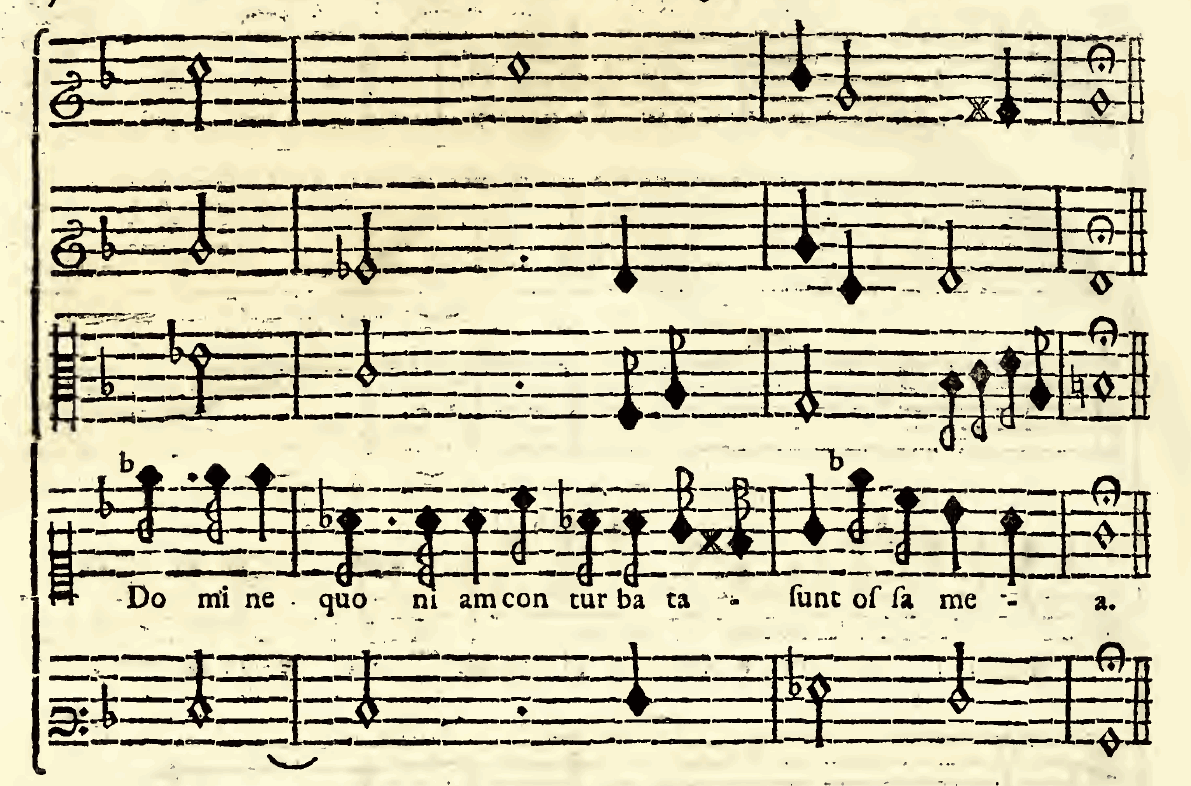
Joseph. What do I see? It appears that the instruments’ concordance, especially in cases involving dissonances, departs entirely from the rules of counterpoint.
Aloysius. I say that this departure must be conceded to the nature of recitative, in which, because the bass does not move in the manner by which dissonances are usually resolved, treatment in the customary way cannot occur. Moreover, in this style less attention is given to exact concordance than to the expression of feelings, for whose sake it was introduced. Recitative may be arranged more or less in this way, or somewhat differently according to the text, when we pour out our feeling toward God in supplicating speech. As for secular music, namely chamber and theatrical music, reason teaches that, because its aim is different, it must also be handled differently.
Secular music is therefore arranged to refresh listeners’ minds and draw them into different feelings. The feelings to be expressed in recitative are generally these: anger, compassion, fear, force, distress, pleasure, and love.
Anger is expressed by an excited manner of voice tending upward and, if more vehement, with a kind of outcry expressed in an abrupt voice. This is achieved with smaller note forms almost always ascending into the high register and frequent changes in the bass. In this matter it is very important to consider the station of the angry character. If it is a king, he will by no means fall into womanly shouting, but, preserving the dignity of majesty, will manifest his indignation with royal gravity. The same consideration must be given in all other feelings as well.
Compassion requires a plaintive voice, sometimes interrupted, which seems to be expressed by longer note forms, often dissonant, while the bass remains in the same place for a longer span of time.
Fear calls for a lowered, hesitant voice.
Force is presented through a vehement and intense voice, strengthened by a certain gravity.
Pleasure uses a flowing manner of voice, yet gentle and relaxed.
The feeling of love is expressed by a pleasing, tender, and affectionate voice. Since other feelings also not rarely accompany love, great consideration must be given to them as well.
Furthermore, the following divisions of speech must be carefully observed: comma, colon, semicolon, full stop, question mark, exclamation mark, and parenthesis. Almost each must be assigned its own particular ending.
If a comma calls for an ending, it will be made in the following way. For example:
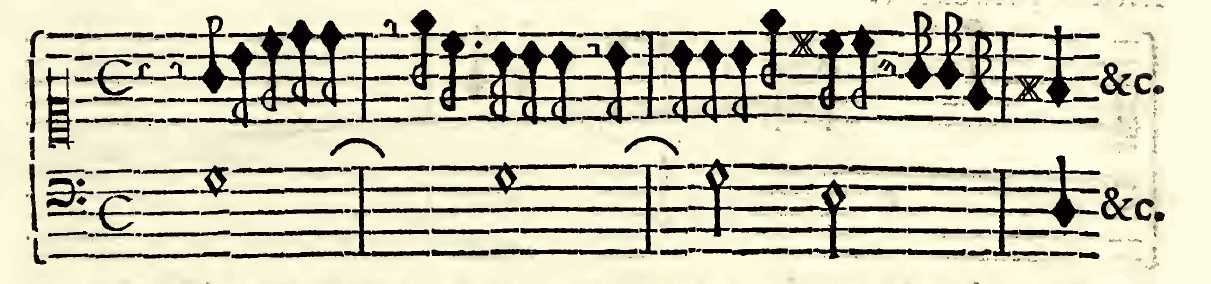
A semicolon is marked with almost the same music. A comma is very often passed over without a break, as when the sense of the text requires delivery with a certain haste.
A colon generally ends in the following way.
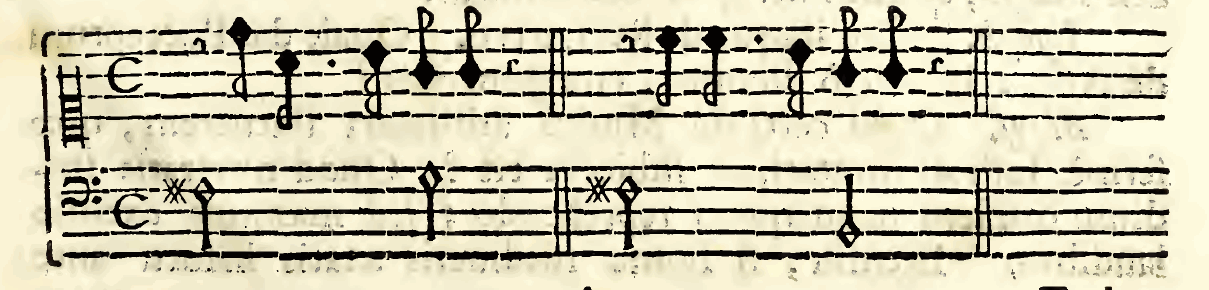
A full stop is marked in the same way if the period and sentence have ended but speech nevertheless continues on the same matter. If an entirely different discourse is introduced, however, a formal cadence must be used, though generally an abbreviated one. For example:
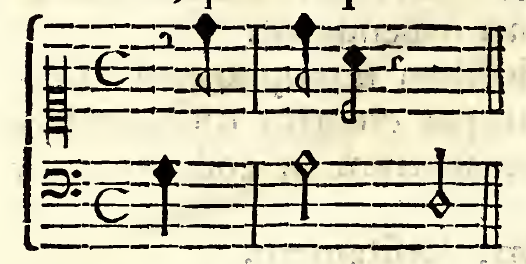
But if the discourse is to end, it must be arranged in the following way.
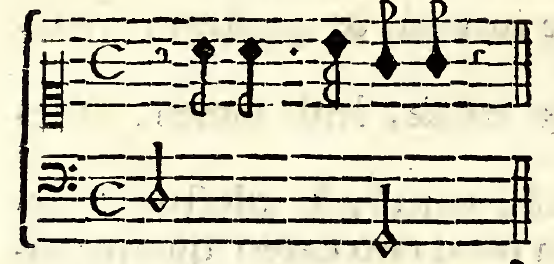
A question mark is also expressed variously according to the differing sense of the discourse. For example:
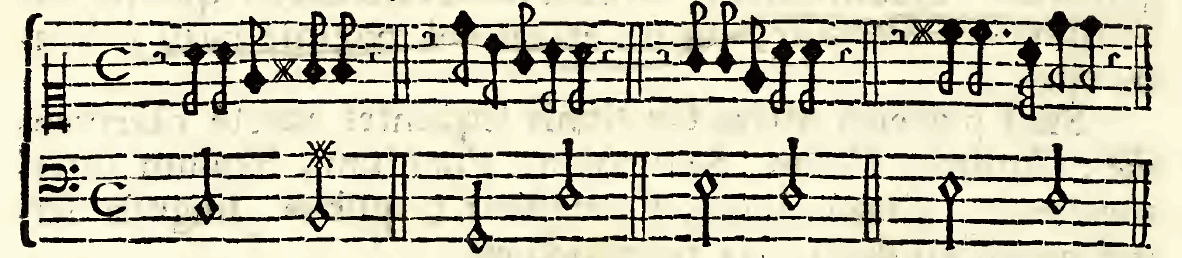
A mark of wonder, or exclamation, is generally indicated in the following way.
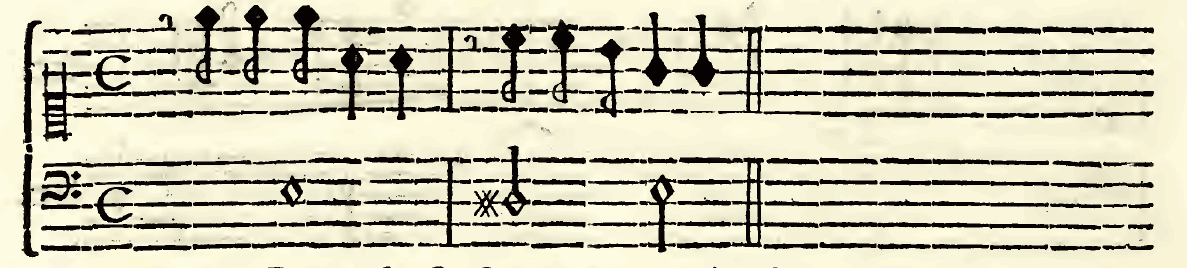
A period separated by parentheses, in which speech is generally imagined to be directed only to the audience so that the other actors do not perceive it, must be delivered in a quieter voice. But all these things are learned more through judgment, practice, and examination of works by approved authors than through precepts.
Joseph. So much, then, for recitative. What advice do you give for composing arias, as we commonly call them?
Aloysius. What fixed rule could I establish for freely invented music, which is subject to change almost every five years? I by no means censure this pursuit of novelty, but extol it with the highest praises. For if a middle-aged man walked about today in clothing customary fifty or sixty years ago, he would certainly expose himself to the danger of ridicule. Music too must thus be adapted to its time. Yet I have never seen or heard of a tailor, however devoted to novelty, who attached the sleeves of a tunic to the thigh or knees; nor has an architect ever been found so foolish as to place a building’s foundation on its roof. Yet we frequently see and hear the like in music, not without pain to those who understand and disgrace to the art: the precepts of nature and art are overturned, the foundation thrust from its proper place and driven upward, the other parts lowered, with no regard for the foundation. Therefore, Joseph, in due time you will devote all your strength to novelty and invention, but never overthrow the rules of the art, which imitates and perfects nature and does not destroy it.
When these things, Joseph, have been made habitual and easy through diligent practice, I hope that nothing will be lacking for you to acquire the reputation of an excellent composer.
Joseph. It seems to me, revered Master, that you are about to bring the work to an end?
Aloysius. Indeed. Do you not observe the numbness and weariness that are the usual forewarnings of my approaching illness, namely gout? You know also that I am now so weakened both by years and by almost unceasing illness that, if the disease attacked me with its customary severity and held me for six months as it usually does, no groundless fear would enter my mind that this time I might not struggle through it. Therefore, so that this little work may not lack an ending in addition to its other imperfections, I bring it to an end here.
Joseph. Then will you teach nothing about composition for a greater number of voices?
Aloysius. I certainly intended to include a treatise on composition for a greater number of voices in this very work. But interrupted by ill health, as you see, and now confined to bed, I shall fulfill this later by publishing a separate treatise, if God, supremely good and great, sees fit to prolong my life and grant me strength. By its aid you will be able to learn what remains to be known without the living voice of a master. Meanwhile, I would have you be persuaded that whoever can produce a complete four-voice composition already has the path laid open to composition for more parts, for as the number of voices increases, something of the strictness of the rules is relaxed. Farewell, and pray to God for me.