C. H. Kitson · section 9 of 10
Chapter VII. Counterpoint in Triple Time Read and hear this section in the playable edition →
(1) Second Species
The following are additional points to those discussed under Chapter II.
(a) The Nota Cambiata idiom can be used between the first minims of consecutive bars.
Fig. 343 · Play this example in the reader ▶ (b) A change of harmony in the bar is always allowable:
Fig. 344 · Play this example in the reader ▶ (c) Avoid a complete bar of Arpeggio, as a rule:
Fig. 345 · Play this example in the reader ▶ (d) Avoid a succession of bars with an auxiliary note on the second minim:
Fig. 346 · Play this example in the reader ▶ Third Species
(a) The time is of course 3/2.
Fig. 347 · Play this example in the reader ▶ (b) Avoid auxiliary discords on the accents.
(c) Examination candidates are sometimes asked to write six notes to one in 6/4 time.
This can only be regarded as two bars of Second Species in Triple time with the semibreve C. F. tied each two bars. Thus:
Fig. 348 · Play this example in the reader ▶ should be thought of as being:
Fig. 349 · Play this example in the reader ▶ The first and fourth crotchets of the bar should be concords.
Fourth Species
It has been pointed out that in Triple Time in sixteenth-century technique no suspended discord ever occurred on the first beat of the bar. It occurred on the second minim and resolved on the third minim. It cannot therefore be used against a dotted semibreve C. F. Here is a case where a departure may be made from sixteenth-century methods, at any rate for practical purposes. In this chapter, therefore, a suspended discord may occur on the first minim of the bar, and it will resolve either on the second or third minim:
Fig. 350 · Play this example in the reader ▶ When the first minim of the bar is a syncopated concord, the second minim may be unessential.
Fifth Species
(a) Quavers are not used.
(b) If either the second or third minim of the bar be preceded by crotchets, it should be tied to the next note:
Fig. 351 · Play this example in the reader ▶ (1) Undesirable in two parts, owing to the halt on the third minim.
For the same reason the rhythm
Fig. 352 · Play this example in the reader ▶ should be rarely employed in two parts.
Examples
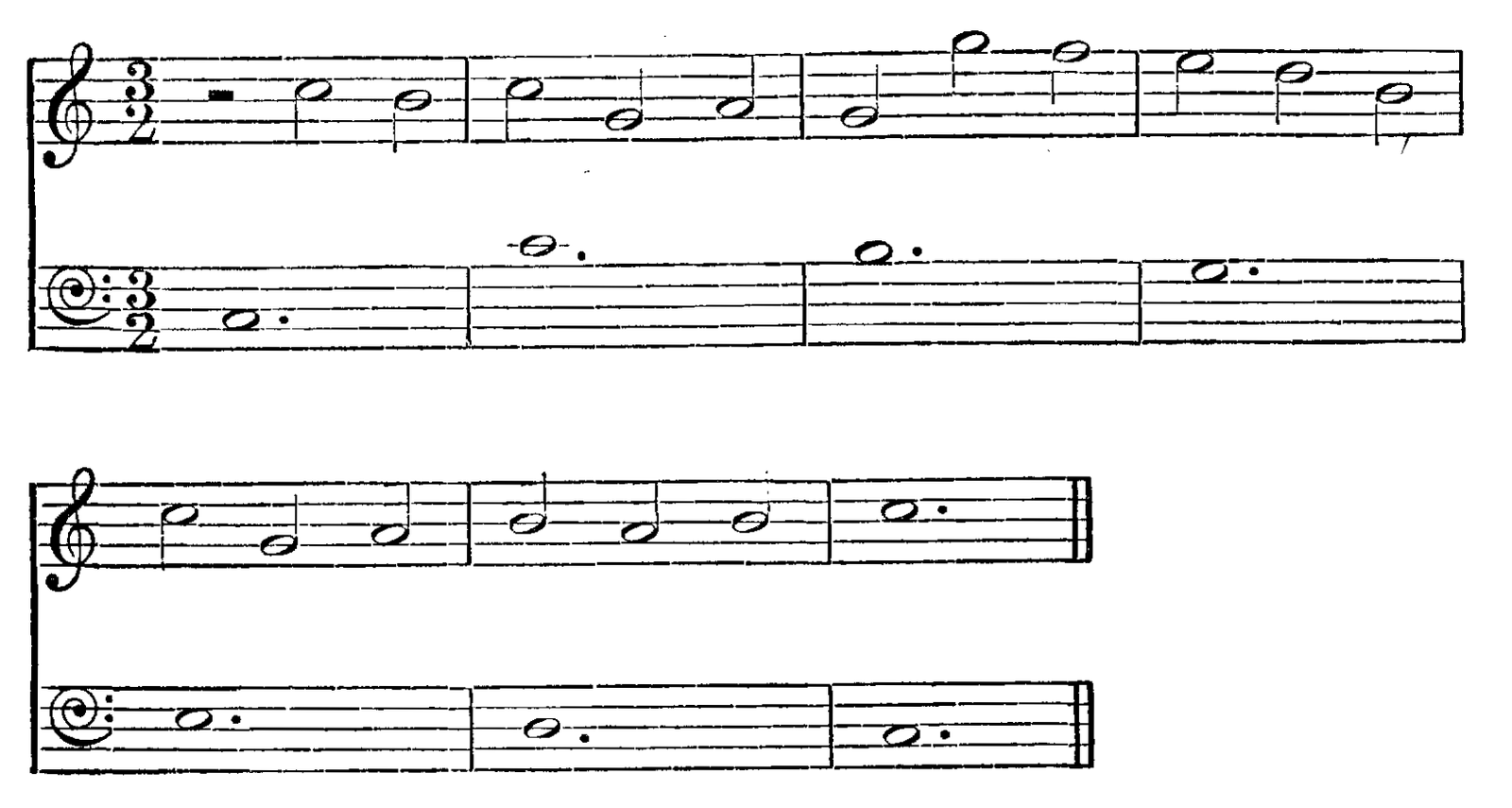
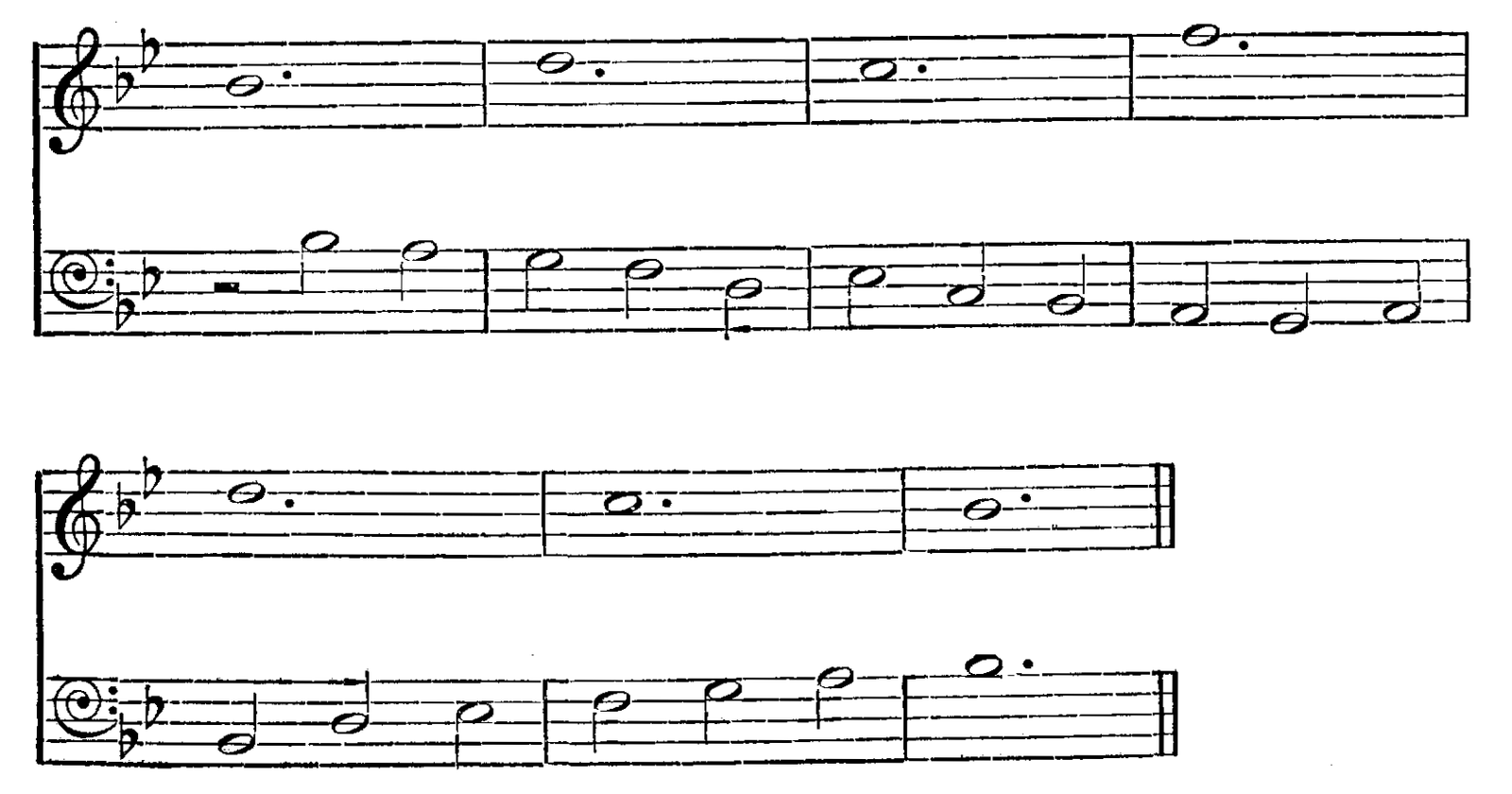
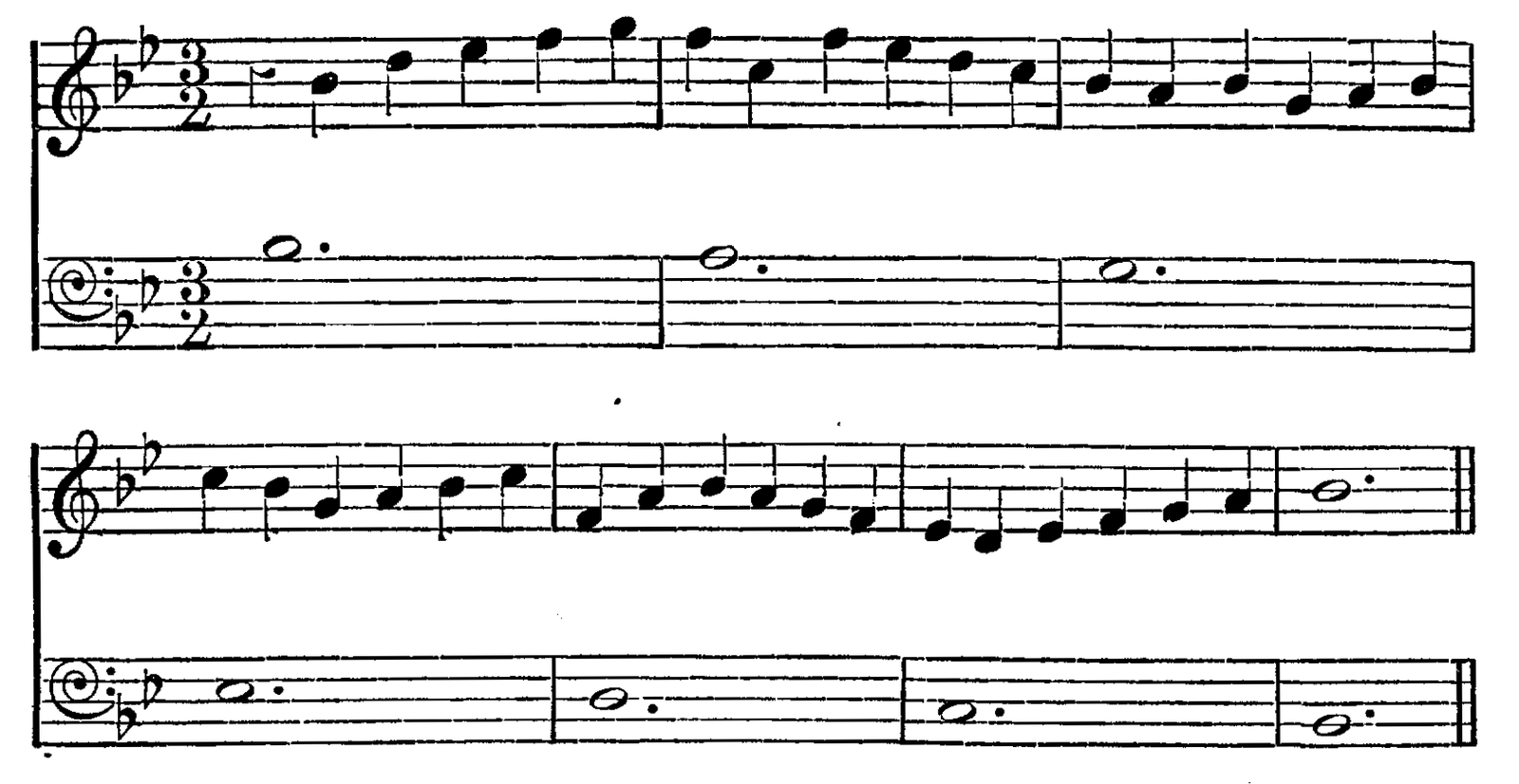
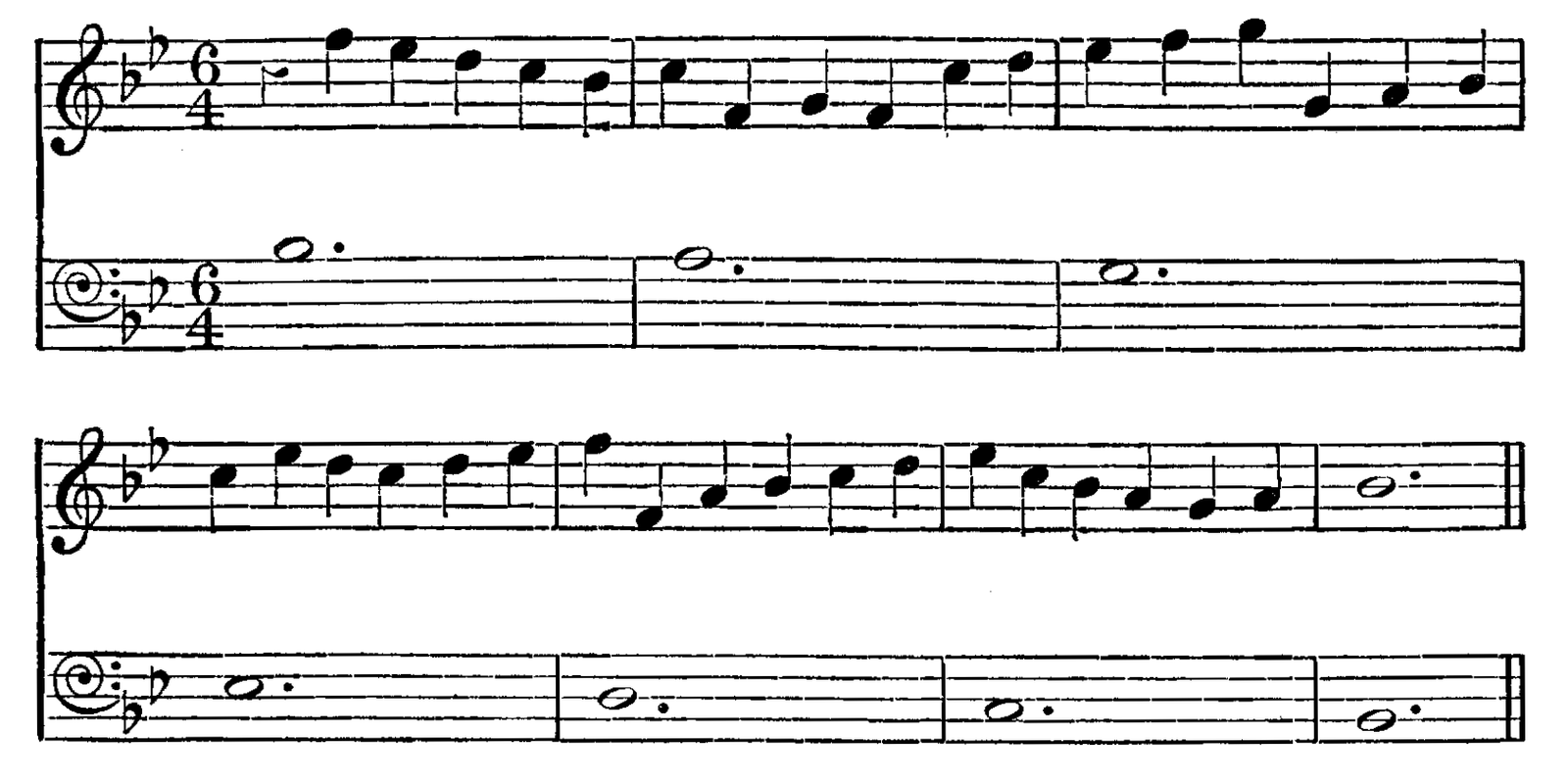
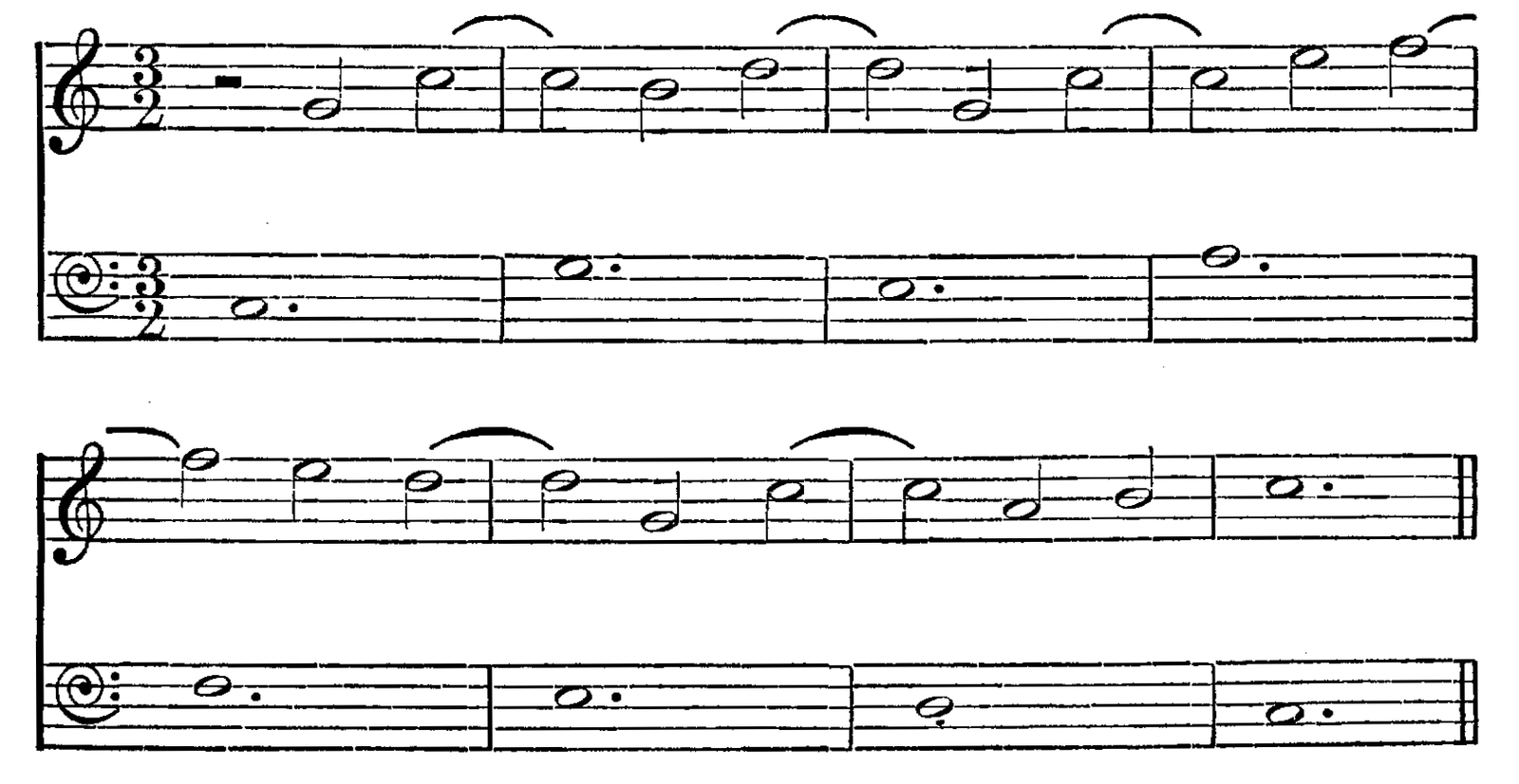
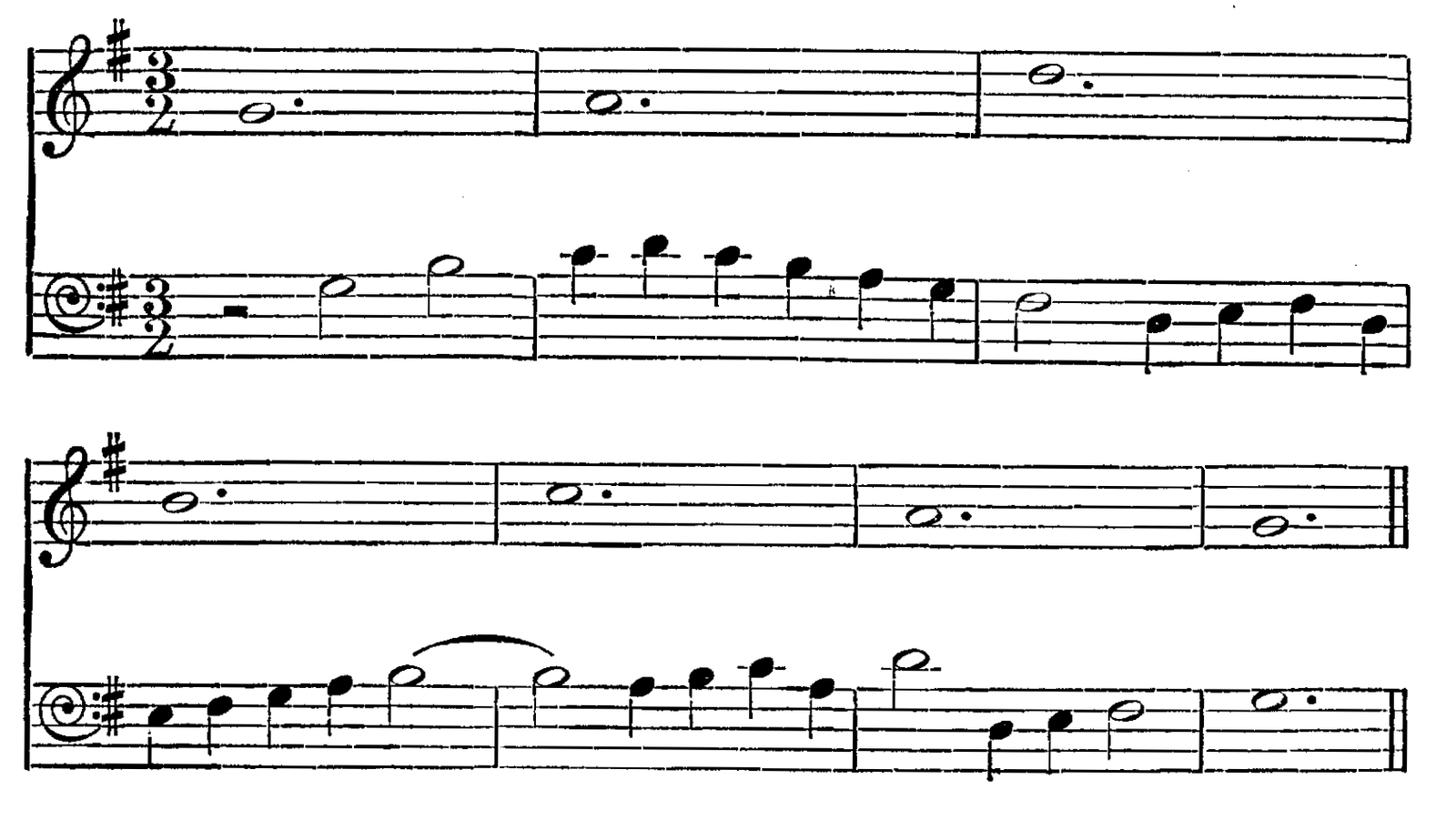
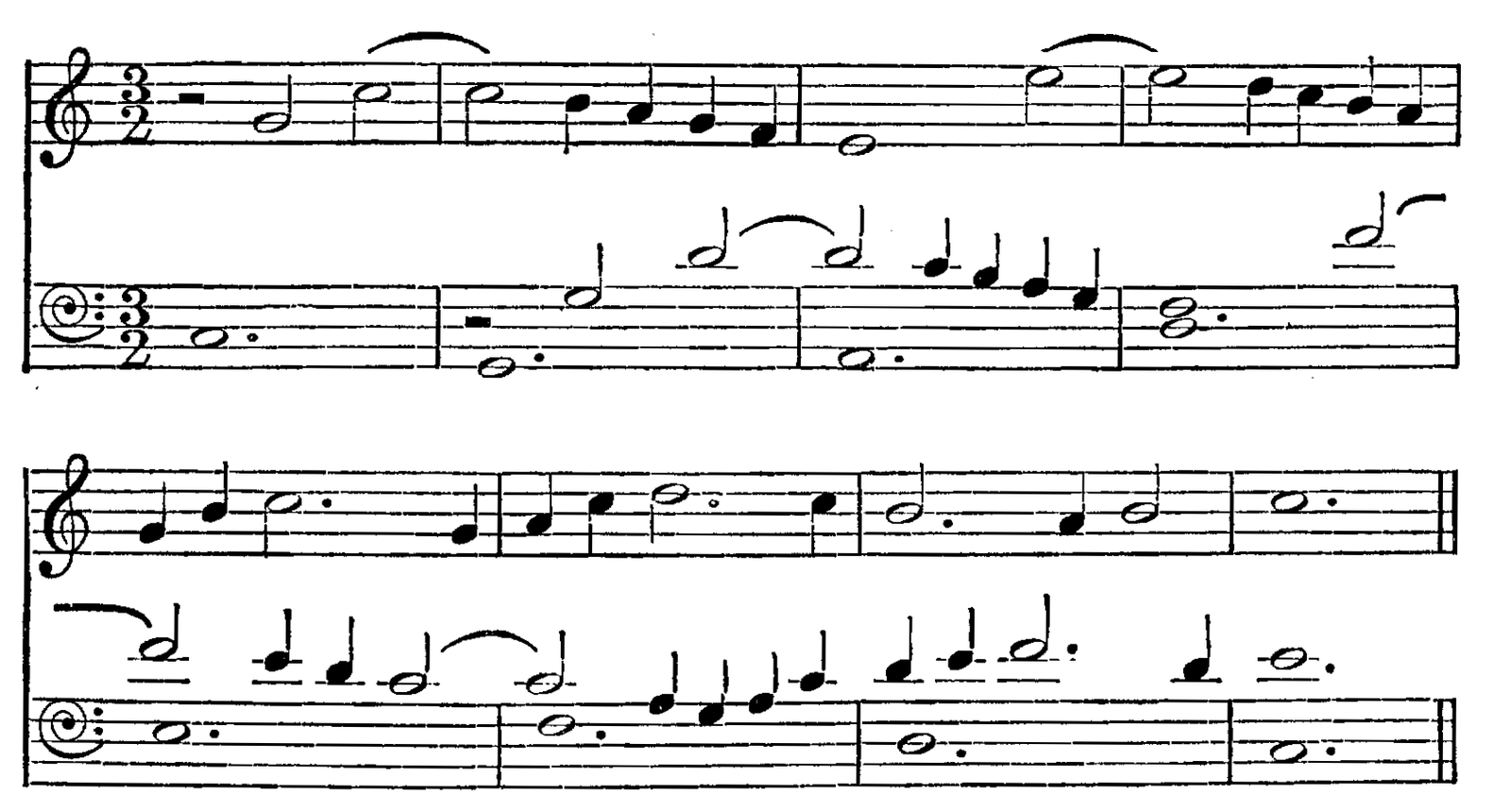
Fig. 353 · Play this example in the reader ▶ Fig. 354 · Play this example in the reader ▶ Fig. 355 · Play this example in the reader ▶ Fig. 356 · Play this example in the reader ▶ Fig. 357 · Play this example in the reader ▶ Fig. 358 · Play this example in the reader ▶ Fig. 359 · Play this example in the reader ▶ Any of the Canti Fermi set in the previous chapters may be employed for exercises in Triple time.
← Chapter VI. Two Parts in Fifth Species against the Canto Fermo All sections Chapter VIII. Applied Technique → More Playable Books Prout, Analysis of J. S. Bach’s Forty-Eight Fugues Follow Prout through all 48 fugues of the Well-Tempered Clavier, every example playable. Fux, Gradus ad Parnassum Learn how independent voices work together, one species at a time. Goetschius, Exercises in Elementary Counterpoint Build independent melodies through graded exercises, with 471 recorded examples. Goetschius, Counterpoint Applied Study imitation, canon, and fugue with 393 recorded examples. Rameau, Treatise on Harmony Explore the foundations of harmony, composition, and accompaniment. Rimsky-Korsakov, Practical Manual of Harmony The classic harmony course, newly translated from the 1910 French edition, with all 640 examples playable. Tchaikovsky, Guide to the Practical Study of Harmony Tchaikovsky’s Moscow Conservatory harmony course, with playable examples. Fenaroli, Partimenti Six books of partimenti, with playable basses, contrapuntal exercises, and bilingual rules. Reger, Supplement to the Theory of Modulation Explore Reger’s modulation method with 100 analyses and 102 playable examples. Cutter, Harmonic Analysis Learn to name every chord and non-harmonic tone in real music, from Bach to Wagner, with the passages playable. Schoenberg, Theory of Harmony Read all 22 chapters, with the original German beside a new English translation. Rimsky-Korsakov, Principles of Orchestration Discover instrumental colors through scores and orchestral recordings. Forsyth, Orchestration A witty, thorough guide to every orchestral instrument, with the original pages. Forsyth, Choral Orchestration A whole Te Deum orchestrated bar by bar, with Forsyth’s reasons, the full score and the vocal score playable. Berlioz, Treatise on Instrumentation Berlioz’s treatise on the orchestra, revised by Richard Strauss, with the original pages. McKay, Creative Orchestration Ranges, transpositions, texture and balance, taught through projects, with the supplied examples played by orchestral samples. Sanganeria, Arrival Build jazz lines that land, with 30 original playable examples. Bona, Complete Method for Rhythmical Articulation Practice rhythm through 120 graded studies, with playable notation and original scans. ← All Playable Books  Playable Books