Playable Books
Ebenezer Prout · section 11 of 50
Fugue 9 · Book I, No. 9 · BWV 854
Read and hear this section in the playable edition →E Major (Three Voices).
Exposition
The subject is announced in the alto
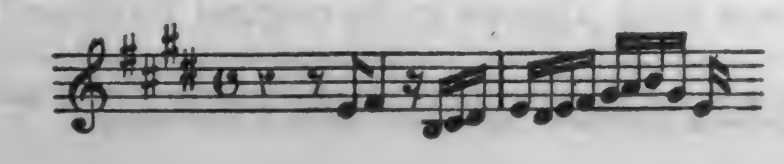
The answer, in the treble, is real, and slightly overlaps the close of the subject, but not so materially as to produce a " close fugue,' a term used to denote those fugues in which the first exposition is in stretto. There is a countersubject, commencing immediately after the close of the subject and reaching to the fifth semiquaver of bar 3; but it does not accompany every subsequent entry (see bars 16, 19, 20), and even where present is sometimes incomplete. The bass introduces the subject at the end of bar 3.
Counter-Exposition
A counter-exposition follows in bars 6 to 10; the order of the voices is now treble, alto, bass, and as the strict rule is followed, of giving the answer to a voice which before had the subject, and vice versa, there are here two entries of the answer.
Middle Section
The middle section begins with a short episode (bars 11 to 12, first beat), based on material from the end of the subject and the countersubject, and contains a rhythmically irregular entry of the subject * in the treble at the second beat of bar 12, in C sharp minor, a regular one in the alto (bar 16) in the same key, and further episodes founded on similar material to that of the first.
Final Section
The return to the original key is made at bar 19; a complete group is given, namely:—subject in bass, answer (altered) in treble (bar 20), subject in alto (bar 21). The episode which follows (bars 22 to 25) is interesting as containing, for its two upper parts, the inversion of the upper parts of bars 13 to 16, but with a new counterpoint in the bass. In bar 25, in the treble, the subject once more appears in its original form, and in bar 28 the actual cadential formula is pressed into the service for a partial entry of the answer.
*Some editors have had the impudence to amend (!) Bach by making this and another irregular entry at bar 20 comform to the original rhythm of the subject.
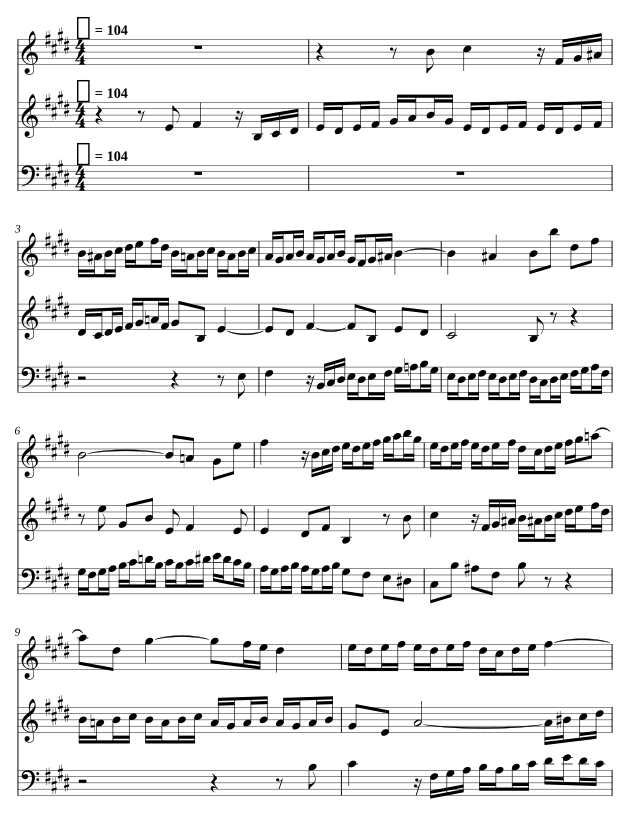
Complete fugue: Bach, Well-Tempered Clavier, Book 1, No. 9, BWV 854. The reference score and piano recording below contain the entire fugue; the smaller engravings above reproduce Prout’s selected examples.