Playable Books
Ebenezer Prout · section 15 of 50
Fugue 13 · Book I, No. 13 · BWV 858
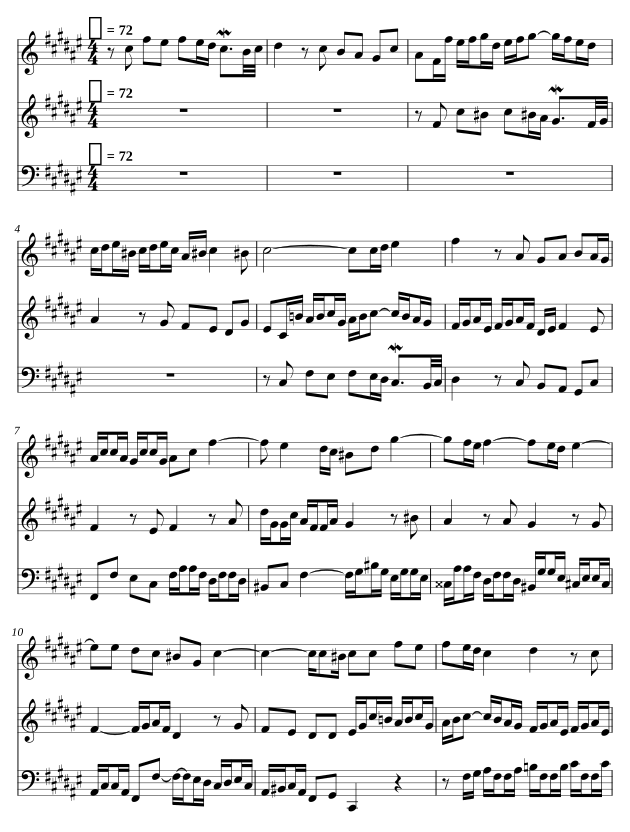
Read and hear this section in the playable edition →F Sharp Major (Three Voices).
This fugue is simple in form, and similar in its construction to Nos. 7 and 9.
Exposition
The subject is of exactly two bars' length:—

It is given out in the treble and, beginning on the dominant, takes a tonal answer (alto, bar 3 to bar 5, first quaver). The countersubject commences with the second note of the answer. After the exposition it is always modified at its beginning and end (bars 15 to 16, 31 to 33) or is quite fragmentary (bar 20, second and third beats) or absent (bars 28 to 30). There is a redundant entry of the subject in bar 11, allowing of the inversion of subject and countersubject
We find in this fugue for the first time an episode (bars 7 to 11) formed of new material, not developed out of subject, countersubject or codetta. It is, however, not only made the foundation of the other episodes (bars 13 to 15, 17 to 20, 22 to 28), but also furnishes, by inverse movement, the figure which forms a new bass to the subject and countersubject in bar 12, and the treble to the entries in bars 20 and 28.
Middle Section
The entry of the subject in C sharp at bar 15 claims careful attention. A part of the countersubject (bar 15, third beat, to bar 16, third beat) is inverted in double counterpoint in the twelfth instead of the octave; a new counterpoint is added in the treble. The other appearances of the subject are in the relative minor (bar 20, bass) and the subdominant (bar 28, alto) and call for no special comment.
Final Section
In the final entry (bars 31 to 33) the same combination is used as in bars 15 to 17, but transposed into the tonic key and with the two upper voices inverted.
Complete fugue: Bach, Well-Tempered Clavier, Book 1, No. 13, BWV 858. The reference score and piano recording below contain the entire fugue; the smaller engravings above reproduce Prout’s selected examples.