Playable Books
Ebenezer Prout · section 16 of 50
Fugue 14 · Book I, No. 14 · BWV 859
Read and hear this section in the playable edition →F Sharp Minor (Four Voices).
Exposition
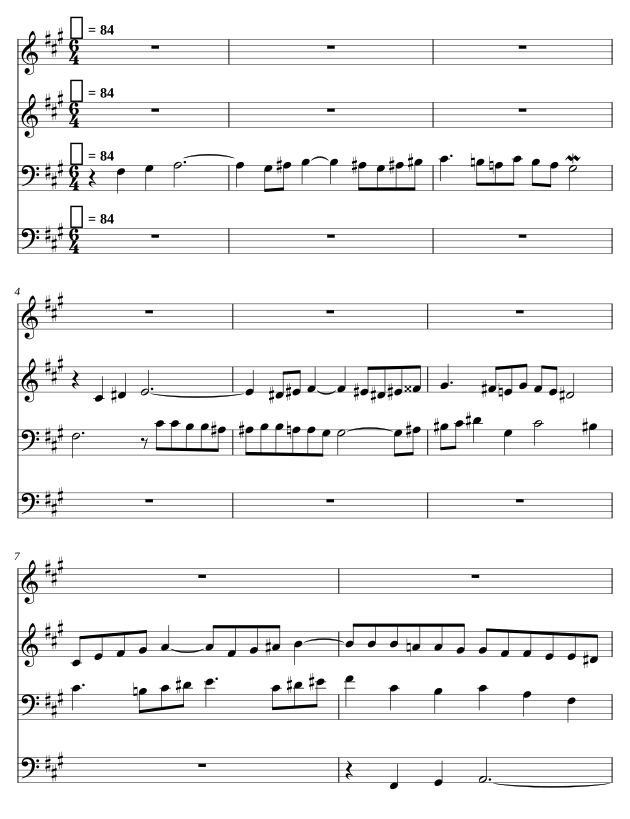
The subject is announced in the tenor:—

The answer is real (bars 4 to 7, alto), and there is a regular countersubject. A codetta of one bar succeeds, developed from bar 2 of the subject, and the subject enters in the bass in bar 8. Then follows a longer codetta, which is an elaboration of the previous short one. The remaining voice (treble) is given the subject instead of the answer (compare Fugue 12).
Middle Section
The episodes (bars 18 to 20, 23 to 25, 35 to 37) are short, and comparatively unimportant. The first is founded partly on the codetta and partly (from bar 19) on the countersubject; the third entirely on the counter subject.
In bar 20 the subject is introduced in the alto by inverse movement, commencing in B minor and modulating into F sharp minor. The countersubject is absent, though a free adaptation of its opening figure is employed as a counterpoint to the later part of the subject (from the end of bar 21). The next entry is in the direct form, in the treble (bar 25); it is somewhat disguised at its commencement by the substitution of „
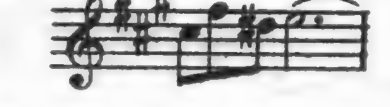
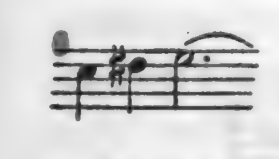
but is otherwise regular, and is accompanied by the countersubject in the alto.
Final Section
At bar 28 a return is made to the original key, and it is possible to regard the entry in bar 29 as the beginning of the final section of the fugue, in which case the closing appearance of the subject (bars 37 to 40, mostly on a dominant pedal) could be described as coda. The normal tripartite structure is not clear in this fugue, the keys being little varied. At bar 32 the bass responds with the subject by inverse movement, with new counterpoints, the countersubject being absent. Against the final entry (coda) the countersubject is incomplete, but is partly doubled in sixths; and its characteristic figure is introduced again as the tenor of the cadential chords.
Complete fugue: Bach, Well-Tempered Clavier, Book 1, No. 14, BWV 859. The reference score and piano recording below contain the entire fugue; the smaller engravings above reproduce Prout’s selected examples.