Playable Books
Ebenezer Prout · section 19 of 50
Fugue 17 · Book I, No. 17 · BWV 862
Read and hear this section in the playable edition →A Flat Major (Four Voices).
Exposition
The subject of this fugue,
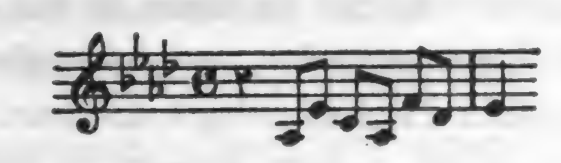
like that of No. 6, closes on the dominant without modulating; hence the answer, of necessity, terminates with the supertonic; but the earlier E flat, being approached by leap from the tonic, is capable of being answered by the tonic, and Bach has consequently chosen a tonal answer, the second note being changed.
After the entry of subject in the tenor and answer in the bass there is a relatively long codetta of two bars, and then the other two voices enter regularly—subject in treble, answer in alto. There is no regular countersubject, but the counterpoint in bar 2 furnishes much of the material for later development. The codetta is founded partly upon this, and partly upon the subject.
There are five episodes. The first (bars 7 to 10) is founded on the counterpoint of bar 2. The second (bars 11 to 13) is made from bar 3, with the addition of a third voice in triple counterpoint. The third (bars 14 to 17) is an inversion of the second, the outer parts of bars 11 and 12 being here inverted in the twelfth. Episode 4 (bars 19 to 21) is a new inversion of the triple counterpoint of episode 2. The last episode (bars 25 to 27) is a sequential treatment in the tenor of the semiquaver figure of bars 2 and 3, with sequential counterpoints added in treble and alto.
The entries of the subject and answer present no very striking features. In bar 10 there is a redundant entry of subject in tenor in the original key of A flat, and consequently to be regarded as the close of the exposition.
Middle Section
After the first episode the subject appears (bar 13) in the alto in F minor; at bar 17 in the tenor in B flat minor, answered by the alto. In bar 21 there is the only approach to stretto which the fugue contains, two incomplete entries of the answer being introduced at half a bar's distance. In bars 23 and 24 an altered form of the subject appears in alto and treble, the leap of a minor 7th being substituted for a 6th.
Final Section
The final group (bars 27 to 31) is irregular in key, only the bass and alto being in the tonic key, and the alto (answer) in one of the modified forms, ending on the tonic; the tenor modulates into C minor, and the treble into D flat. The coda begins in bar 31, and contains one isolated entry of the subject, in bars 33 to 34.
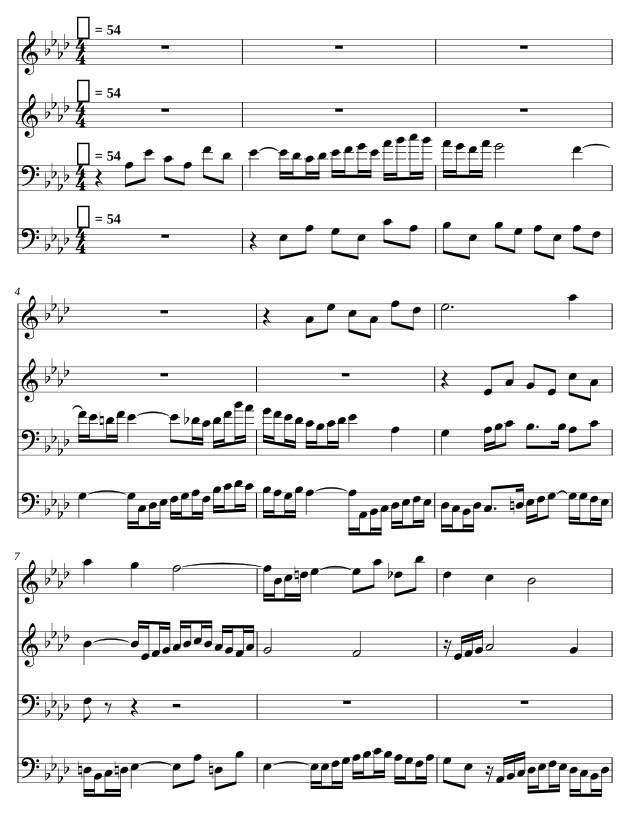
Complete fugue: Bach, Well-Tempered Clavier, Book 1, No. 17, BWV 862. The reference score and piano recording below contain the entire fugue; the smaller engravings above reproduce Prout’s selected examples.