Playable Books
Ebenezer Prout · section 24 of 50
Fugue 22 · Book I, No. 22 · BWV 867
Read and hear this section in the playable edition →B Flat Minor (Five Voices.)
Exposition
The subject, announced in the first treble—
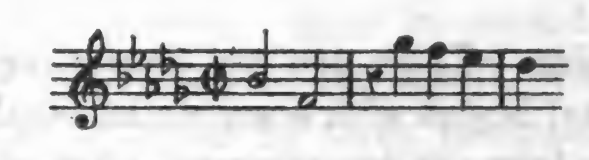
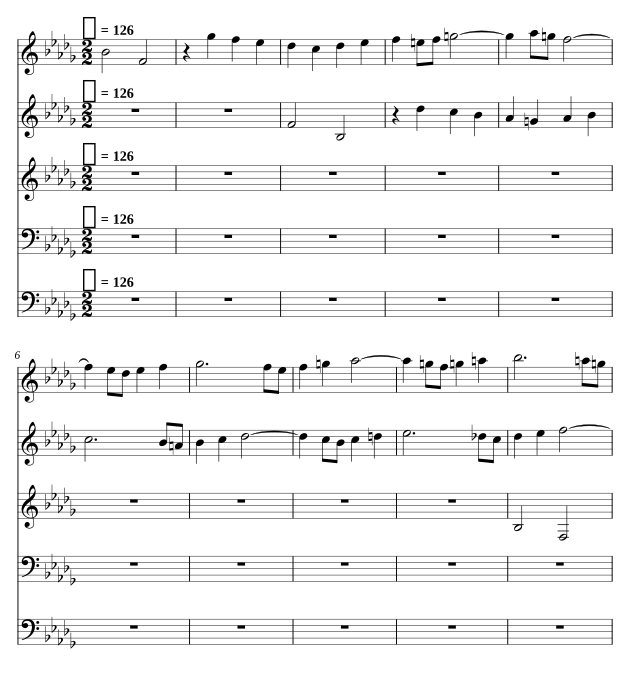
vacillates between the employment of the major and of the minor third of the tonic for its last note, even in the exposition (see bars 14 and 17). The answer is tonal. There is no regular countersubject. A long codetta precedes the entry of the third voice, which is the alto; and three notes of codetta separate the entries of the last two voices, tenor and bass. Subject and answer alternate in the normal way.
Middle Section
The middle section commences with an episode of eight bars (bars 17 to 24), founded mainly on the last four notes of the subject, direct and by inverse movement, and modulating into the key of the relative major. A group of entries, somewhat irregular as regards the intervals of entry, succeeds (bars 25 to 39), each voice taking subject or answer once, namely, subject in first treble, answer in second treble, subject in tenor, subject in bass, answer in alto; the last two are separated by a few bars of codetta. The second episode (bars 39 to 45) engages only the three lowest voices. It is developed from nearly the same material as the first episode. The next entries are two appearances of the answer in the original key (tenor and bass), followed immediately by a fine stretto, in which the first treble leads, the second treble and alto follow at a minim's distance, the bass (varied) and the tenor at a bar's distance, and then (bars 55 to 57) the second treble and alto give answer and subject simultaneously. The third episode (bars 57 to 67) is in four-part harmony, and is derived, even more exclusively than the other two, from the last four notes of the subject.
Final Section
The final section commences at bar 67, with a re-entry of the first treble, and a very regular, close stretto ensues, the voices following one another in descending order, always at one minim's distance, and alternately with subject and answer. Both appearances of the answer are altered in their last note, otherwise we should have a stretto maestrale. The coda contains two abortive entries of the answer, in bars 73 and 74.
The fugue is a masterly specimen of five-part writing, though less elaborate in structure than No. 4.
Complete fugue: Bach, Well-Tempered Clavier, Book 1, No. 22, BWV 867. The reference score and piano recording below contain the entire fugue; the smaller engravings above reproduce Prout’s selected examples.