Playable Books
Ebenezer Prout · section 28 of 50
Fugue 26 · Book II, No. 2 · BWV 871
Read and hear this section in the playable edition →C Minor (Four Voices).
An exceptionally fine fugue. An unusual feature is that, though it is in four parts, the fourth voice does not enter until bar 19. But it is most noteworthy for its two splendid stretti.
Exposition
The subject—
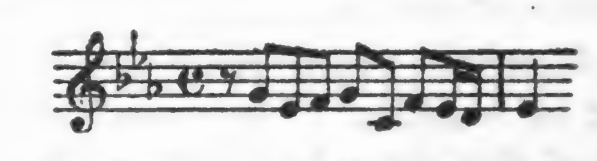
commencing on the dominant, takes a tonal answer. The alto leads, the treble follows; and the tenor, giving the subject in bars 4, 5, completes the exposition.
Counter-Exposition
To this succeeds, after two bars of episode, a regular counter-exposition, though again only in three parts, and with a redundant entry in the tenor at bar 11, transiently in F minor. The answer in the tenor (bar 7) and the alto (bar 10) substitutes the major third of the dominant for the minor, and the subject in the treble (bar 8) slightly varies the rhythm. A codetta leads to a cadence in G minor, closing the first section of the fugue.
Middle and Final Sections
These are not clearly differentiated, as there is scarcely any modulation away from the two principal keys. It would be possible to regard either the first entry of the bass (bar 19) or the beginning of the second stretto (bar 23) as marking the commencement of a "final section"; but the latter is more in the character of a coda.
The first stretto commences at bar 14, the subject in the treble being immediately imitated in the alto by augmentation, and in the next bar answered by inverse movement in the tenor. From the 16th bar the subject and answer appear at distances of half a bar in the three upper parts, and at bar 19 the fourth voice (the bass) makes its appearance with fine effect, giving the subject by augmentation. The inverted and the original forms of the answer follow immediately in the same voice, bars 21 to 23. In bar 23 begins the second, and closer stretto. Here the alto and treble take the subject and answer at one crotchet's distance, and again—reversing their order of entry—successive appearances of the subject, commencing respectively on tonic and dominant; two beats later the tenor introduces the subject, and two beats later again the bass brings it in, inverted and somewhat modified.
The entire fugue is one of the most perfect in the series.
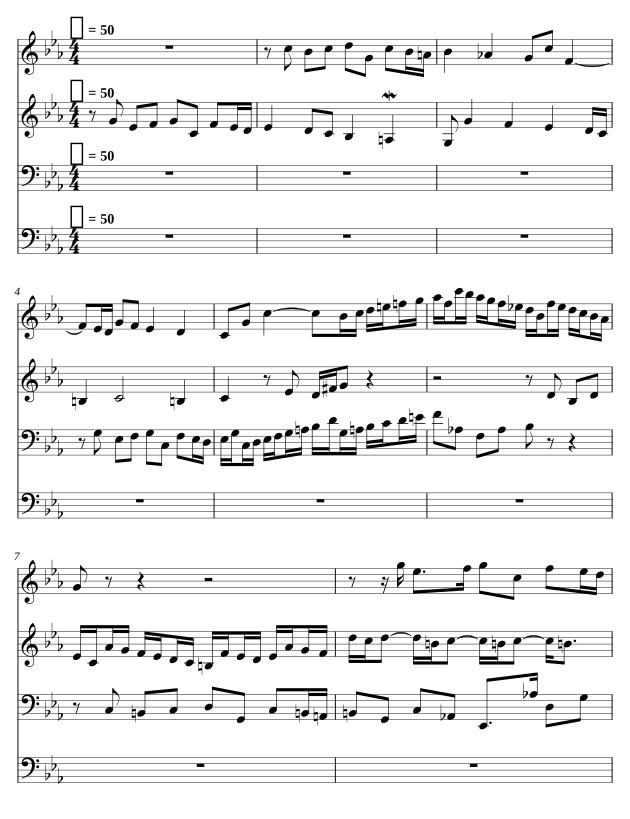
Complete fugue: Bach, Well-Tempered Clavier, Book 2, No. 2, BWV 871. The reference score and piano recording below contain the entire fugue; the smaller engravings above reproduce Prout’s selected examples.