Playable Books
Ebenezer Prout · section 31 of 50
Fugue 29 · Book II, No. 5 · BWV 874
Read and hear this section in the playable edition →D Major (Four Voices).
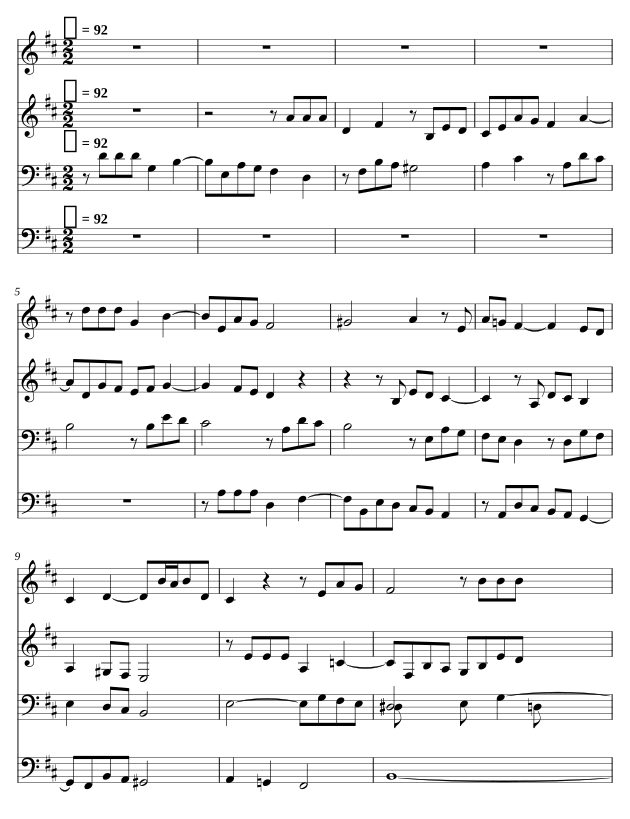
A fugue remarkable for compactness, the whole of the episodes being formed from the last four notes of the subject.
Exposition
The subject is given out by the tenor:—
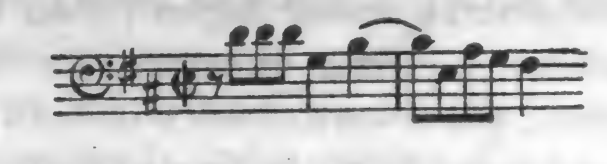
The answer is real, and is in the alto. A codetta of one bar—the closing four notes of the subject treated imitatively—leads to the subject in the treble (bar 5) answered by the bass in stretto, (bar 6). There is no regular countersubject; the counterpoints are framed on the four notes already twice alluded to, and exemplify double counterpoint in the tenth (compare bar 3 with bar 6, etc.). The first episode (bars 7 to 10) is in imitation, mostly at one crotchet's distance, and does not effect a modulation, but rather serves as an appendix to the exposition.
Middle Section
In bars 10 to 13 are two entries (alto and treble), in E minor and B minor respectively, and in bars 14 to 16 the same two voices constitute a two-part stretto in the original key. The second episode (bars 16 to 21) leads to a second stretto (bars 21 to 24), in B minor and F sharp minor, for tenor, treble and alto, at one bar's distance; the answer in the bass (bar 25), which completes this group, is not in stretto. Another three-part stretto follows (bars 27 to 29), the bass, treble and alto (the latter incomplete) giving the subject at distances of one beat, and in the interval of the octave. The third episode (bars 29 to 33) is similar to the first, but somewhat extended. This leads to another three-part stretto, again at one beat's distance, but in ascending sixths, and with the subject complete in each voice. Episode 4 (bars 35 to 40) has much in common with the others, and in modulating back to the key of D, leads to the final section.
Final Section
An isolated entry of the subject (bars 40, 41) is succeeded by the last and fullest stretto. First the answer in the bass, slightly modified, is imitated at one bar's distance by a partial entry in the tenor, a second higher; then half a bar later the treble introduces a stretto maestrale, for all the voices, descending by thirds, and always at one crotchet's distance. The coda (bars 47 to 50) is similarly constructed to the episodes. * Altogether a marvellous little fugue.
Complete fugue: Bach, Well-Tempered Clavier, Book 2, No. 5, BWV 874. The reference score and piano recording below contain the entire fugue; the smaller engravings above reproduce Prout’s selected examples.