Playable Books
Ebenezer Prout · section 33 of 50
Fugue 31 · Book II, No. 7 · BWV 876
Read and hear this section in the playable edition →E Flat Major (Four Voices).
A noteworthy feature of this fugue is the very small amount of modulation which it contains. Excepting at bar 53, where the key is A flat, the subject and answer are never introduced in any other keys than the tonic or dominant. It is, however, not difficult to divide into sections, the only peculiarity being in their relative proportions.
Exposition
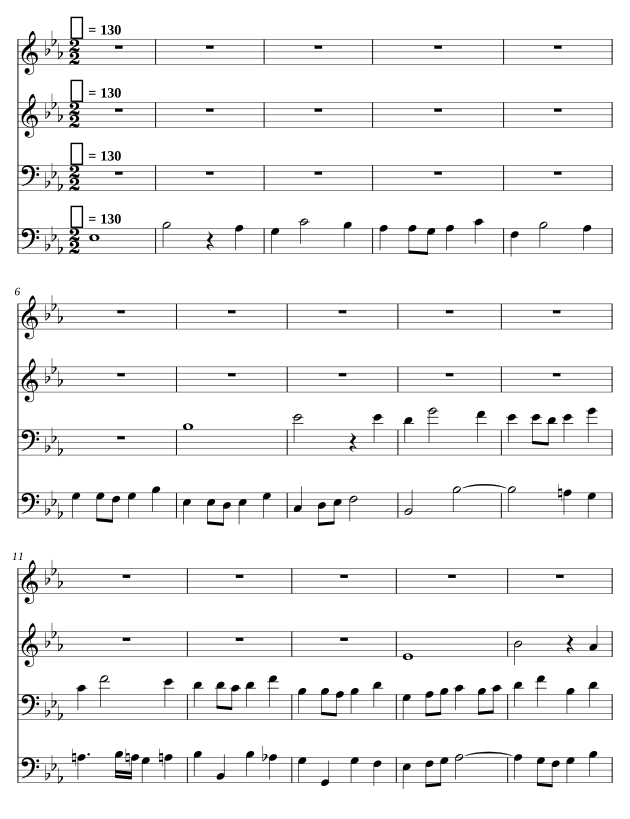
The subject is announced in the bass:—

The answer (tenor, bars 7 to 13) is tonal, both the dominant and the subdominant in bar 2 demanding the tonic to answer them. There is no regular countersubject, though a partial one, first heard from bar 9, second half, to bar 12, recurs in the exposition (bars 16 to 19, 23 to 26). After a few notes of codetta (bar 13) the alto and treble enter with subject and answer quite regularly, except that there is here another brief codetta (bar 20) which was not found in the first entries.
Counter-Exposition
A counter-exposition commences at bar 30, the answer leading in the tenor; the bass follows with the subject, in stretto at one bar's distance, and in bars 37 to 43 the alto and treble give the same stretto inverted, with added counterpoints below.
Middle Section
The first, and only episode is a rather long one (bars 44 to 53), mostly a canon at the fifth for treble and alto, with a counterpoint of free sequential pattern for the bass. It leads to the sole "middle entry" in bar 53—the subject in the subdominant key, with its first note altered and shortened.
Final Section
The return to the key of E flat follows immediately (bar 59), and the final entries again employ the stretto at a bar's distance, now given to the treble and bass. The added parts are similar to those in bars 37 to 44, but not actually in quadruple counterpoint. The coda (bars 66 to 70) contains no feature of special note.
Complete fugue: Bach, Well-Tempered Clavier, Book 2, No. 7, BWV 876. The reference score and piano recording below contain the entire fugue; the smaller engravings above reproduce Prout’s selected examples.