Playable Books
Ebenezer Prout · section 36 of 50
Fugue 34 · Book II, No. 10 · BWV 879
Read and hear this section in the playable edition →E Minor (Three Voices).
Exposition
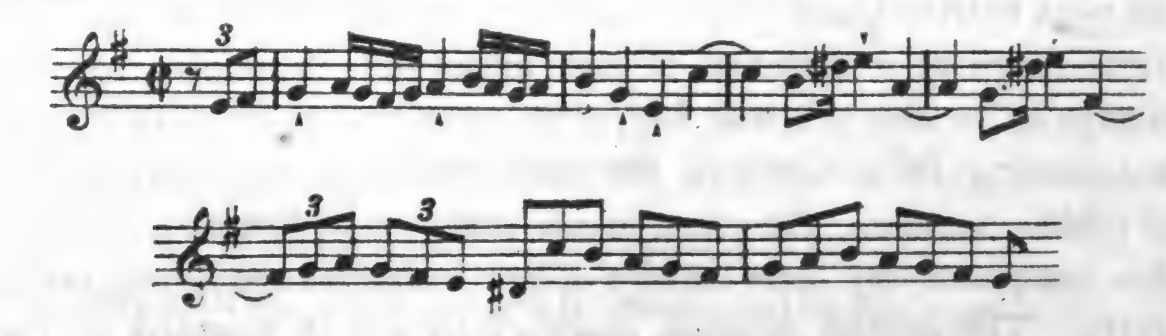
The subject—the longest of the forty-eight— is given out by the treble:—
The answer, in the alto, is real, and is accompanied through a part of its length (bars 9 to 11) by a regular countersubject, mostly in minims. The entry of the subject in the bass (bars 12 to 18), with the countersubject in the alto (bars 15 to 17), concludes the exposition.
Middle Section
All the episodes are formed from bars 5, 6 of the subject. In the first (bars 18 to 23) the last bar of the subject is treated sequentially in the bass (bars 18 to 20) accompanied by passages of free imitation; and from bar 20 the scale passage of bar 18 is inverted in the treble, accompanied by new counterpoint which was partly suggested by that of bar 7. In the second episode (bars 35 to 41) the scale passage in imitation is used in all the voices. In the third (bars 55 to 59) the last part of the subject is treated sequentially, first in the treble, then in the alto (bar 58), with new counterpoint for the other parts. The fourth episode (bars 65 to 71) presents a free treatment of the same material. The fugue contains no stretto. The middle entries are the following: subject in G, in the treble (bars 23 to 29), with countersubject in the alto; answer in D, in the alto (bars 29 to 35) with countersubject in the treble; and three more or less isolated entries in the three principal minor keys (by ascending fourths)—bar 41, bass, B minor (the dominant), bar 49, alto, E minor (tonic), bar 59, treble, A minor (subdominant). That the return to the original keys does not here mark the commencement of the final section, is shown by the succeeding entry in a different key, A minor.
Final Section
The final section, therefore, begins at bar 71, with the entry of the subject in the bass in E minor. This is here the only appearance of the subject, bars 78 to 86 forming a coda, which is based largely on an ornamented dominant pedal.
The countersubject accompanies every entry of the subject in this fugue. The student will readily discover it where its position has not been indicated in the present analysis.
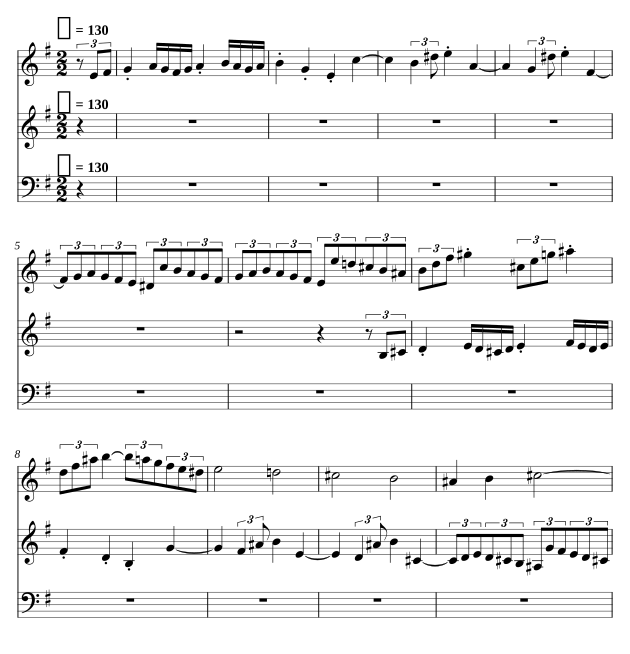
Complete fugue: Bach, Well-Tempered Clavier, Book 2, No. 10, BWV 879. The reference score and piano recording below contain the entire fugue; the smaller engravings above reproduce Prout’s selected examples.