 Playable Books
Jean-Philippe Rameau · section 100 of 109
CHAPTER XIII. Chords by supposition
Read and hear this section in the playable edition →There are only two chords by supposition: the ninth and the eleventh. From these come the augmented-fifth and augmented-seventh chords. Their difference lies solely in the third of the seventh chord from which they derive, that third being minor in one case and major in the other.
These chords contain five distinct sounds in their construction.
ARTICLE I · On the ninth
The interval of the ninth is the same as that of the third [the printed wording; the supplement corrects “third” to “second”], but its chord is different. It is accompanied by the third, fifth and seventh: thus 1. 3. 5. 7. 9. It is figured simply with a 9.
This chord is easy to find on the keyboard. Simply hold the preceding chord and add the third of the bass note over which the ninth is figured. Or, if a note of the preceding chord forms a fourth with the note upon which the ninth is to sound, slide the finger holding that fourth onto the third, changing nothing else. The chord will not then always contain all the sounds of which it is composed, but this need not matter. If the bass rises diatonically after a seventh chord to bear the ninth chord, the fingers follow the same course as in the seventh chords of Chapter VIII, as shown here between F and B.
Example
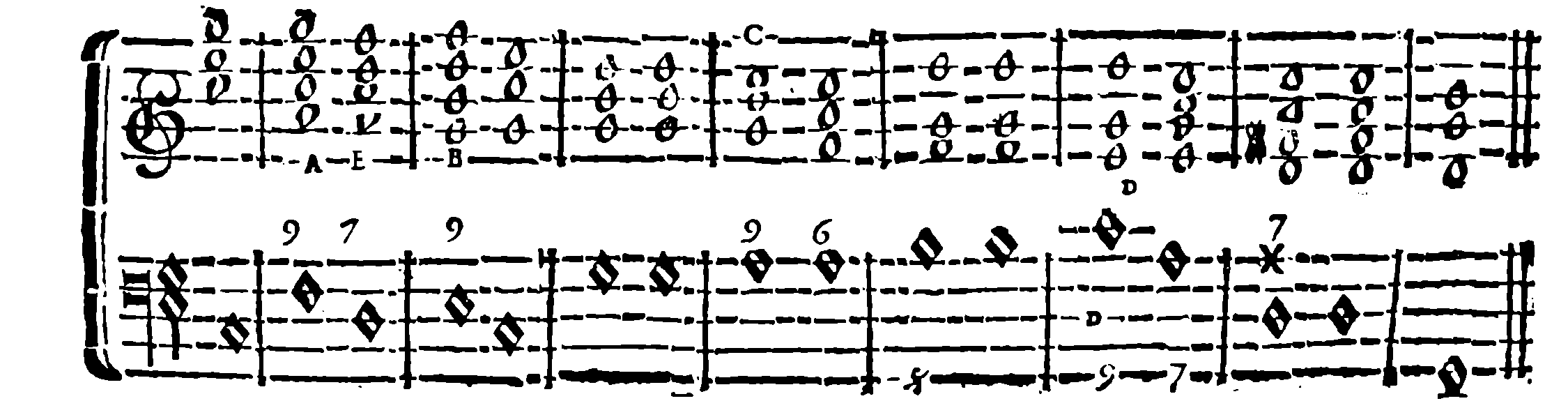
(A) The third added to the preceding chord. (B) Notice that two fingers descend here from (A), following the rule of sevenths. This shows that after such a ninth chord, the right hand ordinarily follows the course prescribed by that rule.
(C) The finger of the preceding chord that slides from the fourth to the third while the others remain.
(D) The same.
ARTICLE II · On the augmented-fifth chord
This chord is constructed like the ninth chord, except that its fifth is augmented. It is figured 5♯. It occurs only on the mediant of minor keys and is often used to interrupt the cadence.
ARTICLE III · On the augmented-seventh chord
This chord is accompanied by the fifth, ninth and eleventh: thus 1. 5. 7. 9. 11. It is figured 7♯ and occurs only on the tonic note.
ARTICLE IV · On the eleventh chord, called the fourth
This chord is constructed like the 7♯ chord, except that its seventh is ordinary rather than augmented. It is usually figured 4, ⁴₉, or ⁹₄. When marked simply 4, it is the chord used in all the closing cadences of each octave. When a 9 is added, it differs by containing five sounds, although for the hand's convenience we often hold only three with the right hand, making four together with the bass.
This last chord is easy to find on the keyboard, since it uses the same notes or keys as the preceding chord.
Turn the page to see the example.
Example
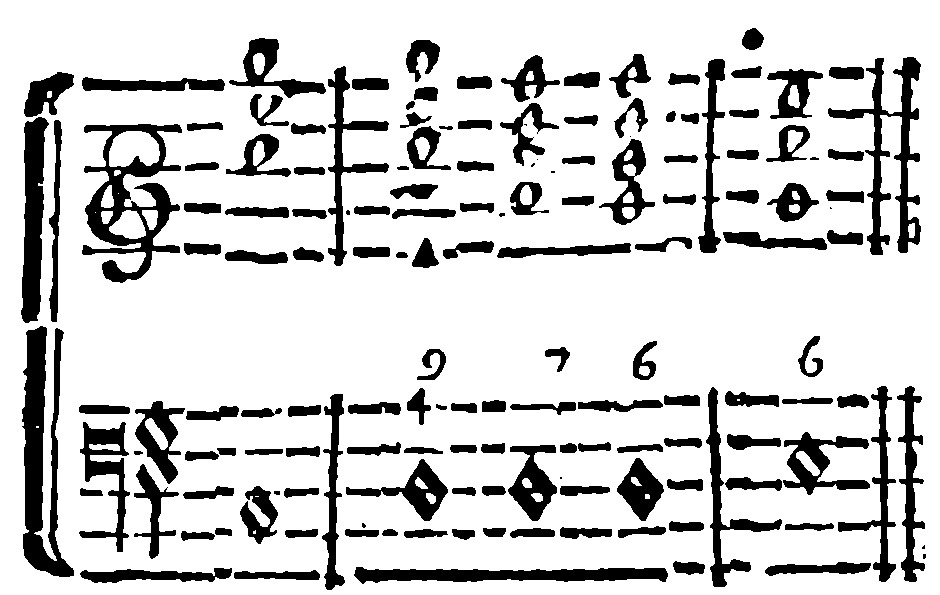
Cue sign (A) indicates the sound that should be added to this ⁹₄ chord.
This chord is also sometimes accompanied by the fifth and second when the bass then descends diatonically. It is then the same under the fingers as the diminished-fifth or great-sixth chord that must follow on the note to which the bass descends.
Example
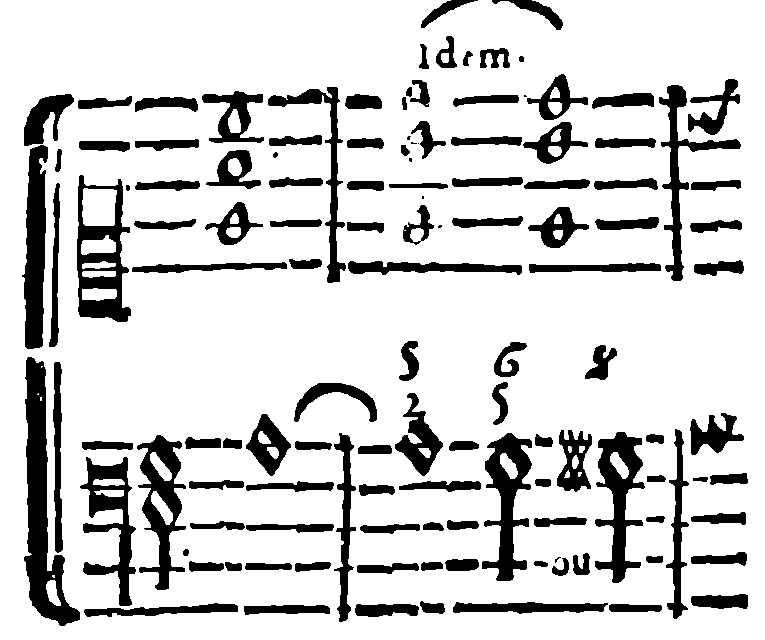
This chord ought to be figured ²₄, but is ordinarily figured ⁵₂.
See Book III, Chapters XXIX, XXX, XXXI and XXXII, concerning the chords in this chapter.