 Playable Books
Jean-Philippe Rameau · section 31 of 109
Chapter seventeen
Read and hear this section in the playable edition →On license
First article
The origin of license
Our conclusions must always come from the same principle: the fundamental-bass progression already explained. We suppose this progression consonant here. Though unrestricted with consonant chords, it is restricted with dissonant chords, even though a new interval—the dissonance—extends its resources. Dissonance arises from the perfect chord to which it was added and cannot exist without it. Likewise, the perfect chord arises from its lowest sound, the foundation of both chord and added dissonance. In the most natural harmony, when sounding and resolving dissonance, the fundamental bass always proceeds toward that lower sound, as though needing its support against the dissonance’s harshness. If the principle is lost in dissonance, the bass seeks it more attentively in its progression, descending a third or fifth. Even then the dissonance resolves pleasantly only through the fifth, harmony’s first interval, since the octave counts only as repetition. Once the bass descends a seventh or rises a second, license begins to appear, although consonance may prepare and resolve the dissonance. This confirms our claim, since descending a seventh still brings the bass toward its principle. Yet the seventh owes its origin more to taste than nature: it does not arise in the most natural operations as a component of the harmonic body, as the perfect chord’s intervals do. License therefore comes from it alone. Those who attribute license only to taste are more excusable than those who, ignoring reason and experience, reject every license they cannot comprehend. License first becomes perceptible in the fundamental bass’s descending seventh or ascending second, which forms the interrupted cadence. The interruption somewhat offends the ear: just when the desired conclusion seems about to arrive through a perfect cadence, the ear is surprised. This surprise comes only from departing from nature, and such departure requires license. Furthermore, if descending thirds, fifths, and even sevenths naturally allow prepared and resolved dissonance, the inverted forms of these progressions, allowing unprepared dissonance, must also be attributed to license. In short, every departure from the natural principle—in these progressions, in supposition or borrowing of the fundamental sound, or in altering either fundamental chord—is license. Yet confining harmony to its most natural forms would limit it too narrowly. Refusing its full properties would deny its rights; rejecting what its principle offers would mean abandoning reason and our senses. That principle lies solely in the thirds, fifths, and sevenths forming fundamental chords and fundamental-bass progression. Every license we propose comes from this source.
For some time musicians have ceased trying to satisfy reason. Our great masters seek only to please, disregarding scrupulous critics who enslave themselves to one author and confine all reason and experience to following him. Such critics accept the interrupted cadence but reject chord progressions produced by its inversion. Here they fail to recognize inversion, though they observe it in sixth, second, tritone, and diminished-fifth chords. Zarlin accepts the ninth chord but forgets the augmented fifth, without which neither ninth nor seventh chords can exist on the mediant of minor keys. He accepts tritone and diminished-fifth chords but overlooks their foundation, unable otherwise to imagine a seventh chord containing such dissonances. Discussing another seventh chord, he loses sight of its small- and great-sixth inversions, although second, tritone, and diminished-fifth chords are equally inversions of the seventh. Great-sixth and diminished-fifth chords differ only through the major or minor third accompanying the seventh chord’s lowest sound. Judge whether these principles are sound and whether critics relying on them deserve attention. Asked for reasons, they cite rules’ authority. Asked to listen to music apparently breaking those rules, so as to discover their mistaken interpretation or possible exceptions, they become deaf. Such is the spirit of the faction raised against every accomplished musician of this century. However charming you find the music, they declare it worthless.
We are fortunate to face only such scholars in defending people of good taste. Reason is the true means of convincing them. We do not merely say that the best masters have used all the licenses proposed in this chapter, and that experience therefore authorizes them. We add proof from an indisputable principle whose simplicity makes its truth clearer. There is no need to repeat chapters VI and VII on interrupted and irregular cadences, XIII on leaving dissonance unprepared, or X and XII on supposition and borrowing.
Second article
Licenses drawn from the interrupted cadence
Besides the licenses created by inverting the interrupted cadence, there is a certain succession of sixths attributed only to good taste. Zarlin* expressly forbids it, saying its consecutive fourths produce much the same effect as consecutive fifths when the chords are inverted, as his example shows. Under our rules, however, these sixths come from the interrupted cadence and our freedom, explained in chapter XIII, to leave dissonance unprepared when the fundamental bass rises a third, fifth, or seventh.
Example
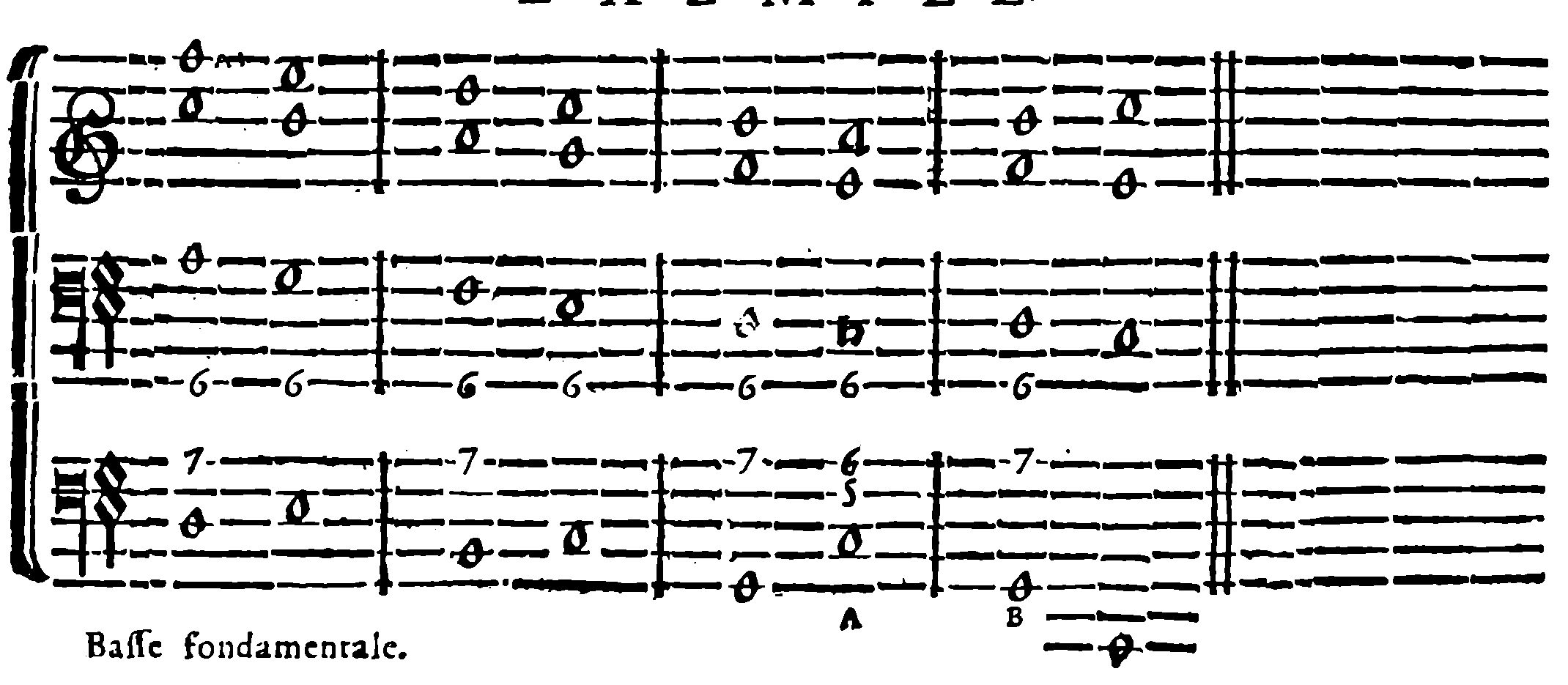
Each measure shows an interrupted cadence except the penultimate, which shows a perfect cadence avoided by the sixth added at A. That sixth prepares an irregular cadence, itself avoided by the seventh added at B, which prepares the perfect cadence completed by the last note.
* Terza parte, chapter 61, folios 291 and 292.
Inverting the two upper parts, placing the higher below, would produce as many fifths as there are fourths. But successive fifths lose so much of their dullness in inversion that we must not attribute to the fourth what belongs only to fifth and octave.
Third article
How one dissonance may resolve through another
We have not stopped at finding that dissonance likes consonant preparation and resolution. We also found it may sound unprepared; now we must ask whether it can resolve contrary to the general rule. Fundamental chords and bass progression consist solely of thirds, fifths, and sevenths, so these intervals must themselves be considered fundamental. They and their inversions can occur in ascending or descending bass movement. We need only examine which such movements admit seventh chords to judge whether one dissonance may resolve through another.
Rules come from the principle, not the principle from rules, still less from the opinion of an author whose reputation may overawe us. Scientific obscurity comes only from inadequate penetration and judgment. The best authors proposed third and fifth as principles but always forgot the seventh, though it is first of its kind. If the fifth comes from harmonic division of the octave, and the third from harmonic division of the fifth, does not the seventh likewise come from harmonic division of the major third, taking inversion into account? It also arises naturally by adding two fourths or a third to a fifth, and is the source of all dissonances. Either regard it as fundamental or exclude all dissonances from harmony. Neglect of inversion’s precision and power has hidden the sole means of discovering harmony’s secrets. Examine its exactness throughout harmony: in numbers, divisions and multiplications, string lengths taken rightward or leftward, the resulting intervals and progressions, and chords made from them with their different progressions. One can no longer deny that inversion is the key to harmony’s vast and infinite variety.
Most musicians use license as though it meant fault; Mr. de Brossard accordingly does not mention it in his dictionary. But music, unlike other sciences reduced to practice, can make everything clear. Elsewhere the licenses forming a subject’s ornament cannot be brought under precise rules. Here everything appears within one principle: license is merely an evident inversion of what first becomes known. Perfect and seventh chords are the first consonant and dissonant chords presented to us; thirds, fifths, and sevenths or seconds are the first fundamental bass progressions, being our first known intervals. If reason finds nothing beyond these two chords and three intervals that does not derive from them, admit that everything must be founded upon them.
Returning from this digression, intended to persuade prejudiced minds, first notice that dissonance resolves not through the sweetest consonance but through the third, an imperfect consonance. The seventh naturally comes from adding a third to a fifth; its natural movement is diatonically downward; the only fundamental chords are perfect and seventh; and the fundamental bass moves only by the thirds, fifths, and sevenths composing them. We should then readily accept two successive fundamental chords meeting all these conditions except that one seventh resolves through another. To make this license less surprising, we emphasize that the seventh already resolves onto an imperfect consonance and is formed from it in every way: the second generated by dividing the major third is simply an inverted seventh. Experience proves the ear can tolerate this small defect in favor of the principle preserved in other respects.
Before the example, note that although ascending thirds and fifths are more perfect than the ascending seventh upon which this license rests, they offer no corresponding way to resolve the dissonance. In fundamental chords, the dissonance cannot follow its natural movement through those first two bass progressions.
Example of a seventh resolved by another seventh.
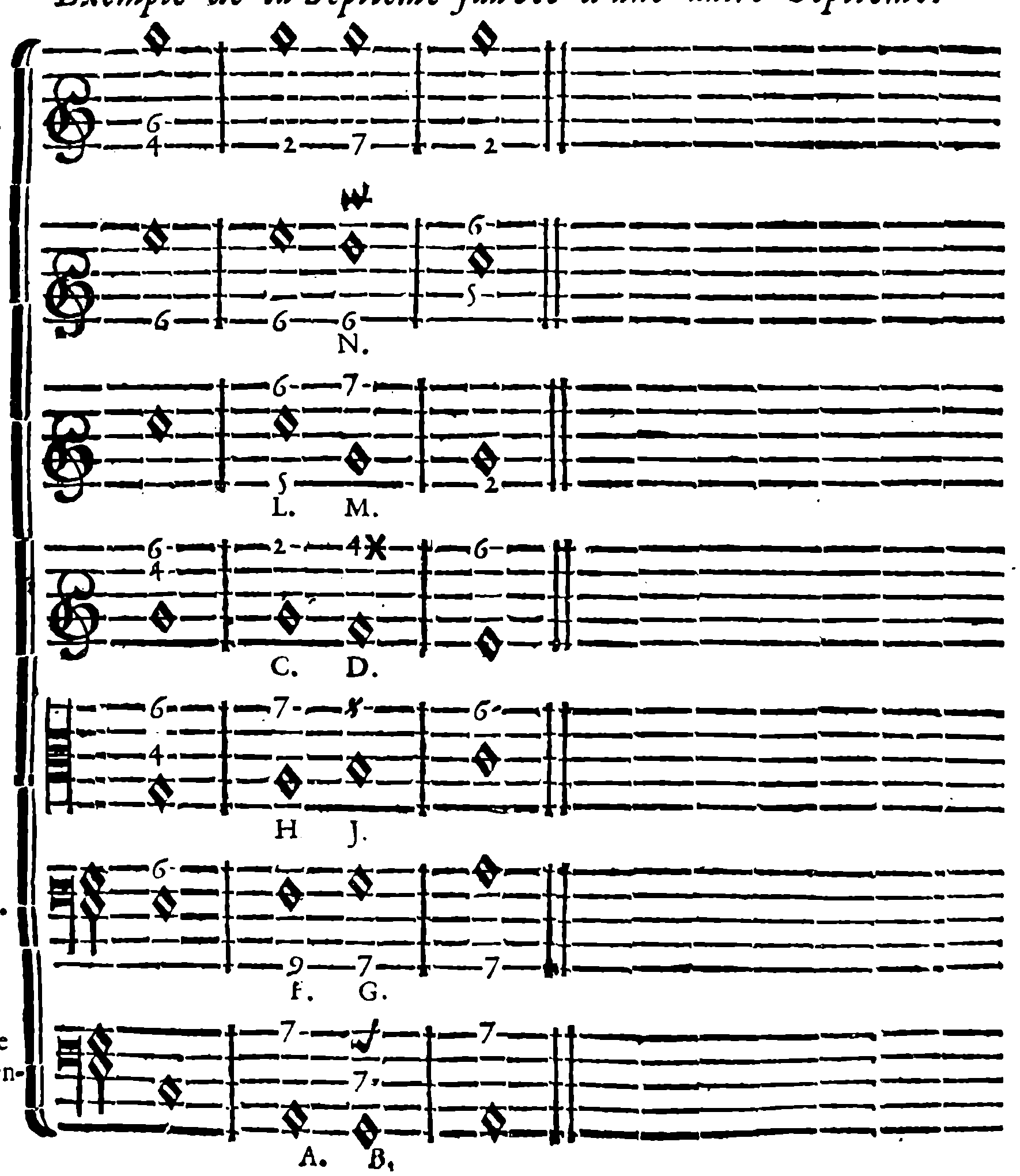
Any of these parts may serve as bass, provided the continuo is never placed above the fundamental bass: its chord by supposition requires the lowest sound to remain below the fundamental. Furthermore, the added part cannot sound with these two basses, and neither bass may be placed above the other parts.
Notes C and D each make a seventh against the fundamental bass, which descends diatonically or rises a seventh at A and B. One dissonance therefore resolves through another.
The most pleasing successions from this fundamental harmony are the ninth resolved by the seventh between C D and F G; the seventh resolved by the diminished fifth between C D and H I; and the second resolved by the tritone between H I and C D, placing C D above H I.
Brossard’s dictionary* and Masson contain examples of a seventh resolving to a diminished fifth. Masson also resolves the tritone to the fifth of the same note. Adding our fundamental bass A B to his example D, etc., would yield harmony like this, except that its major dissonance occurs in the first seventh chord rather than the second, with other circumstances he need not have anticipated because he was not considering fundamental bass.
In our example, move N to the guide-note pitch whenever the fundamental bass is used.
Between L and M is the fundamental bass of an irregular cadence avoided by a seventh added at M. This invites some reflections.
1. The irregular cadence is original in itself, provided we understand each fundamental-bass note to carry a perfect chord. The sixth added to the first chord is only an extra sound tolerated by taste. The resulting chord is not fundamental and cannot enjoy the same privileges as perfect or seventh chords, although it is an inversion of the latter. Anything founded upon those original chords may be turned in every way. Once extra sounds alter them, however, those sounds may no longer change position, though they do not weaken the original chords, which retain their natural capacity for inversion. The added sixth in an irregular cadence does not dissonate against the bass. Never invert it so that its dissonance with the fifth becomes a dissonance against the bass. Only the small-sixth inversion is available, leaving the dissonance between upper parts. Reducing this chord to its original seventh chord would make the seventh chord, not the perfect chord alone, the principle. That is impossible here, since a seventh cannot resolve when the bass rises a fifth. A cadence implies a melody ending in some fashion; it is perceptible only through consonant bass progression beneath fundamental chords, whose perfection we alter here by a tasteful license. Distinguish fundamental chords from their derivatives carefully so their properties are not confused.
* De Brossard, page 131, article 5, note A. Masson, page 115. [Page 98.]
2. If adding dissonance to the final perfect chord avoids a cadence, and the result has a principle in fundamental chords and fundamental-bass progressions, that principle is the true one. There is no longer a cadence, because the added dissonance interrupts the conclusion. The preceding example’s fundamental bass demonstrates this: its fundamental chords may be inverted at the composer’s will and may also employ supposition.
There is more: the added part’s harmonic succession seems still more offensive because its second resolves against the natural rule. Yet one cannot accept the rest without accepting this; fundamental bass governs us. Its license is the same as the irregular cadence’s upward resolution to a third. Remember the true origins of these different progressions, however, and do not confuse the principle with the irregular cadence’s license.
Our reasons are weak beside the experience supporting us. The works of this century’s finest masters provide further testimony.
The continuous licenses in the last example are undoubtedly somewhat harsh. Use them very rarely and with all an accomplished musician’s judgment. Indeed, a proof of their perfection is the great difficulty of accompanying them correctly without fault. Composers will therefore benefit from our instructions for accompaniment here, since these also prescribe the true chords required by natural harmony.
Fourth article
The seventh may also resolve to the octave
The seventh, first of all dissonances, differs from the others in admitting not only preparation but resolution by every consonance except the fourth, the fifth’s inversion. The fourth can resolve only the second, in an inversion of harmony where the seventh resolves to the fifth.
Third, fifth, and octave prepare the seventh; only the third should resolve it in natural fundamental harmony. Yet the interrupted cadence’s charming variety obliges us to resolve it to a fifth as well. These two resolutions occur when the bass descends a fifth or seventh. Since descending a third is more perfect than descending a seventh, we must investigate whether another consonance can resolve the seventh over that third-descent. The octave can indeed do so, although a kind of consecutive octaves appears. Before refuting that false idea—these octaves are hidden or implied—we shall prove this new resolution.
All musicians agree that a ninth may resolve to a third when the bass descends a third. The seventh belonging to the ninth chord can therefore resolve only to the octave in that case.
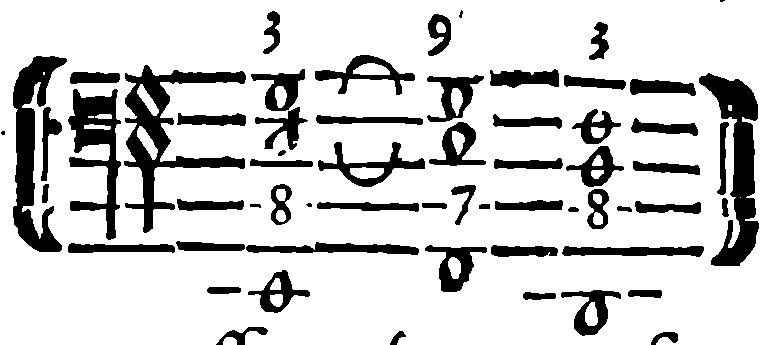
Refer this chord succession to its source: the ninth is merely a seventh, and the seventh merely a fifth, whose progression agrees with what was just shown. We specifically observed that a ninth chord comes only from adding a bass sound that supposes the fundamental immediately above it.
Example
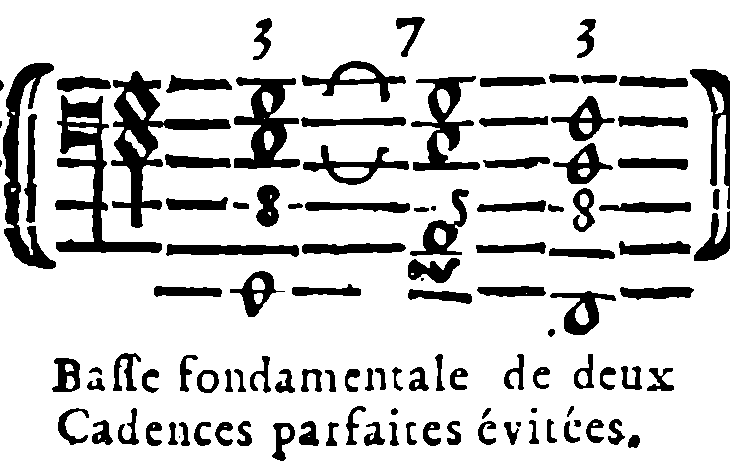
The guide marks the extra sound of the ninth chord; the fundamental above it is represented by an ordinary note.
Had the ninth chord been considered as a whole in fixing its progression, either ninth-to-third resolution would have been forbidden or seventh-to-octave resolution allowed, since one cannot occur without the other. Had its origin also been considered, both preceding progressions would have to be admitted as the most natural. Thus either the seventh may resolve to the octave or the ninth chord must be rejected.
The seventh can also resolve to the octave in inverted harmony.
Example
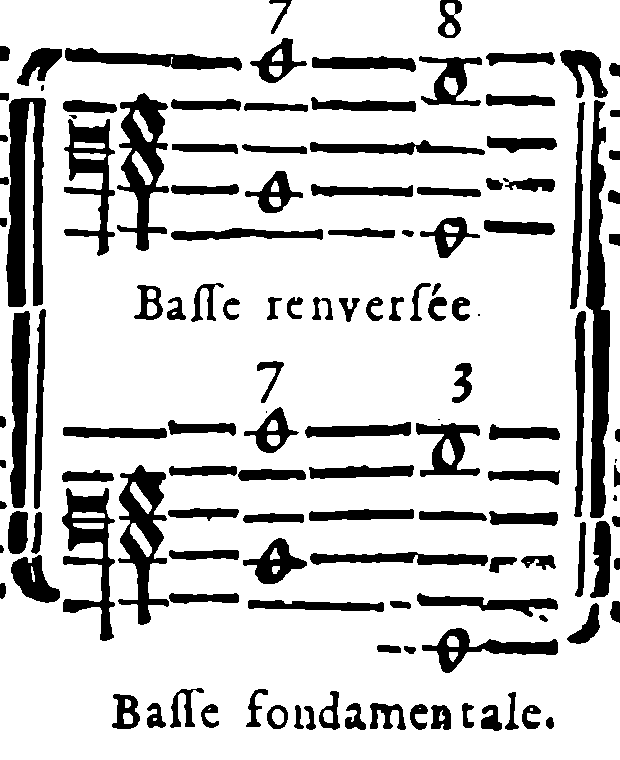
Returning to hidden octaves or fifths: their prohibition, like every rule, was founded on fundamental harmony. Inadequate explanation has left doubts that should be removed.
Hidden octaves and fifths were forbidden only to prevent extravagant part movements, especially with dissonance. With consonance, contrary motion easily avoids the fault. Yet these passages occur constantly in perfect and irregular cadences: hidden octaves in one, hidden fifths in the other. Fill the bass’s leap with intervening diatonic degrees and the two octaves or fifths become actual. The rule is therefore false in these cases. It applies only when these cadences are inverted, where the bass’s movement would indeed be unsuitable for the upper part while the bass takes the upper part’s movement. But we already required upper parts to move diatonically whenever possible, especially when a fourth occurs, as it would in this inversion:
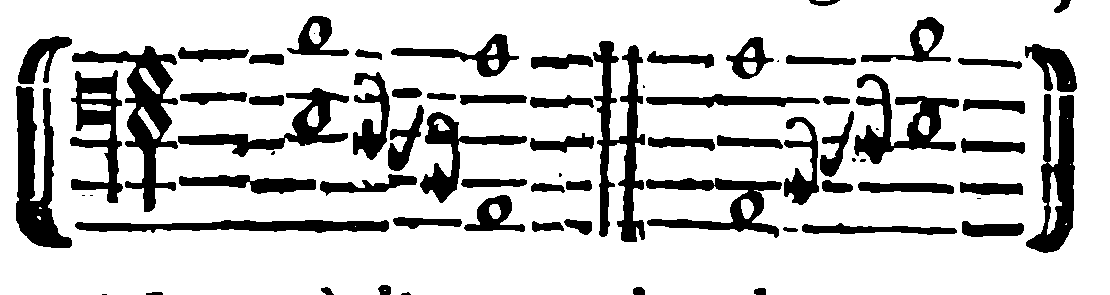
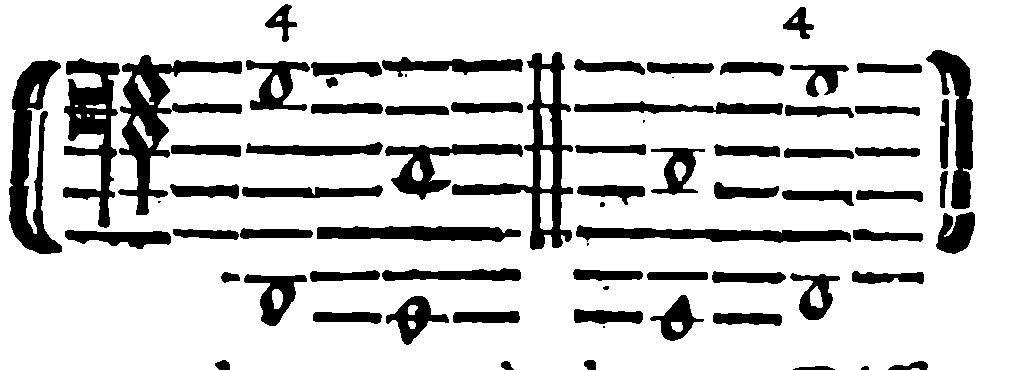
Thus here too we can dispense with that rule.
With dissonances, we cannot fail if each follows its natural progression while its accompanying consonances move to whatever consonances we choose, provided the key’s movement is respected and the substance of the resolution chord unchanged. A seventh resolving to an octave therefore does not create hidden octaves. The octave accompanying the seventh—or implied if absent—stays still or moves elsewhere. Once it has sounded, a second octave could arise only from its own movement, not from another interval’s. Example.
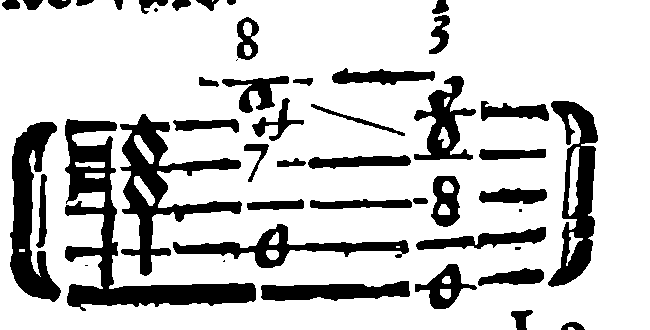
This yields countless other ways of resolving dissonance, to be discussed in Book III.
The foundation implied in every chord must always guide us, whether in moving major or minor thirds and sixths naturally or in avoiding consecutive octaves and fifths. We often think we see fifths or octaves that we do not hear. Masson* and others allow sixth-to-fifth movement as shown, though two fifths appear if the diatonic step passing from F to D is considered. But the example’s fundamental bass must be D–G, an avoided perfect cadence; seen thus, the imaginary fifths disappear. A skilled composer reasons: these are hidden fifths, but this sound supposes another, under which they vanish; therefore the passage is good, although such supposition should occur only between principal beats. Music permits frequent, even successful, abuse of its infinite freedom to vary. When reason agrees with the ear, however, every possible variety may be admitted without offending music’s highest perfection. Octaves or fifths seen on paper are not always heard as such when the foundation remains fully regular.
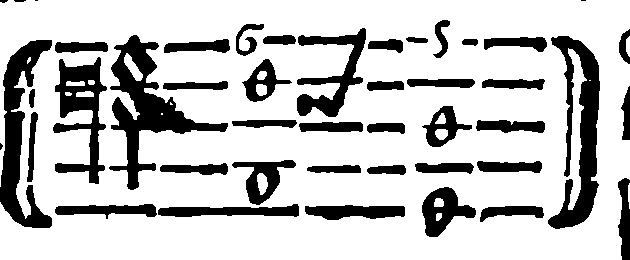
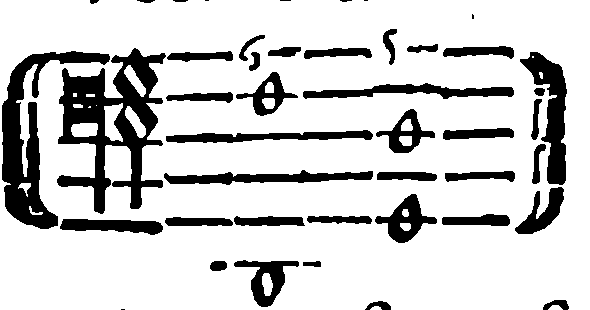
This subject deserved some extended discussion to correct those who cling to the bare meaning of terms without understanding their force.
Although we maintain that all these consonances can resolve the seventh, remember that natural fundamental harmony resolves it only to the third. Its resolution to a fifth in the interrupted cadence, or to another seventh in the inversion of that cadence’s ordinary bass movement, comes solely from the license introduced by adding a seventh to the perfect chord, giving the fundamental bass a new progression. Likewise, seventh-to-octave resolution follows only from supposition or inversion: naturally it still resolves to the third, as our examples show.
* Masson, page 104.
Fifth article
The seventh may be accompanied by the sixth
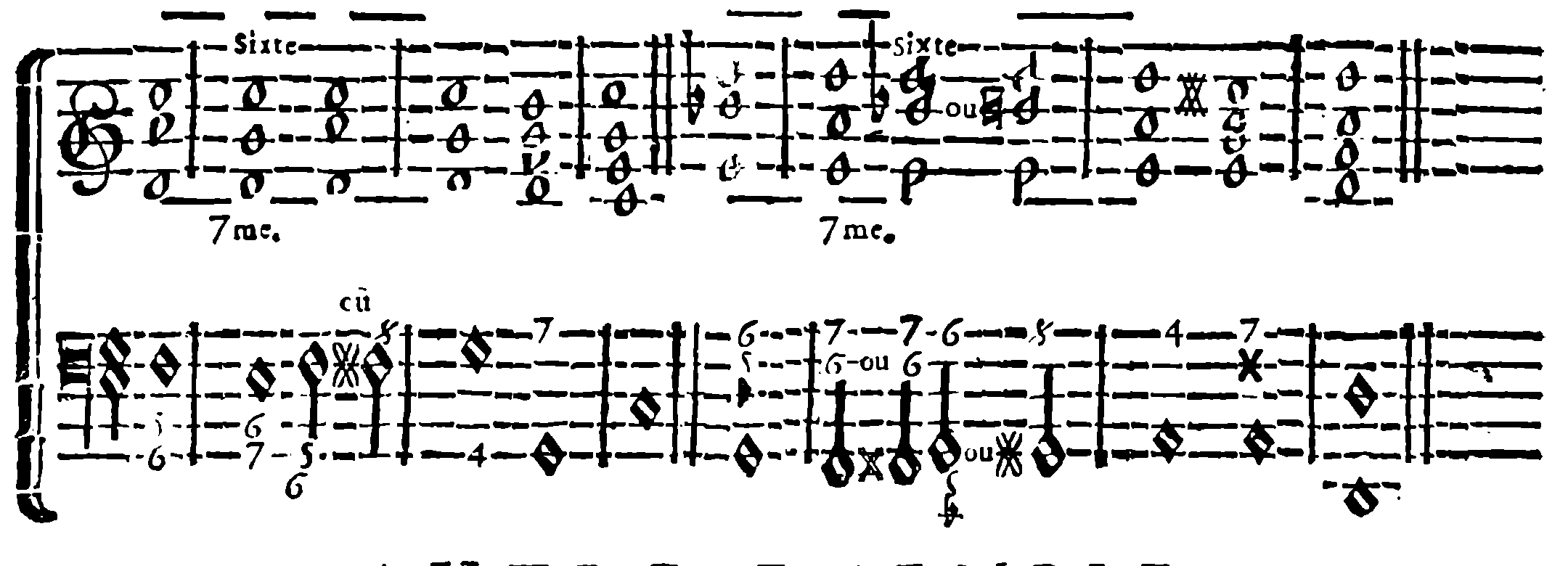
Sometimes the seventh is accompanied by the sixth, admittedly forming a very harsh chord. It is bearable only because it occurs in passing and its disagreeable sounds remain stationary, belonging to the chords before and after. The bass sound is also admitted only through supposition.
Example
Another example
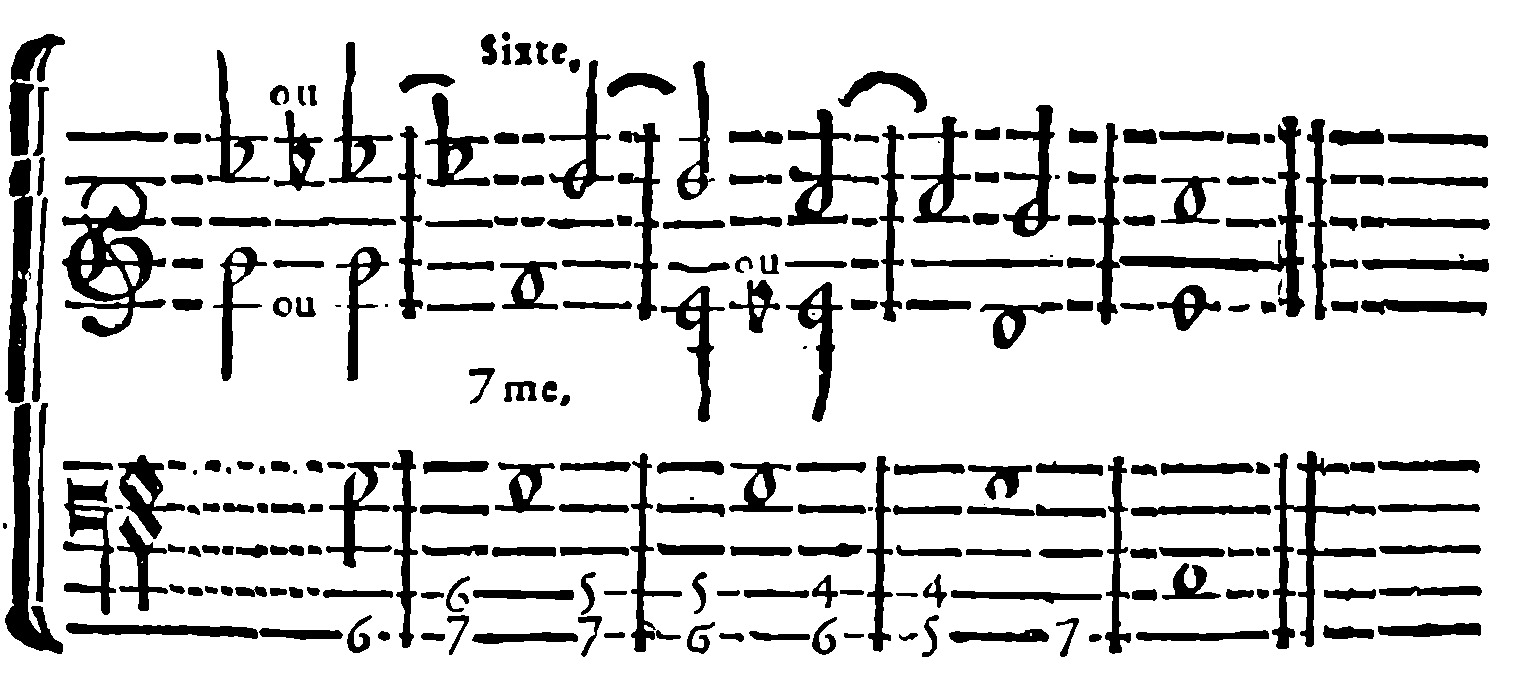
This is called a pedal point.
Notice that a sustained sound partly escapes our attention when several others move above it according to the most natural rules. This occurs here, in the added part of the preceding article’s example, and in the musette and hurdy-gurdy music heard in France and elsewhere, described here as “coliers” [word uncertain]. We illustrate them in the chromatic rules of Book III and the pedal-point rules of Book IV.
This would be the place to discuss chromatic writing, dissonances for melodic expression or by supposition, and false relations. But the next book’s rules are so simple and intelligible that we may leave them aside for now.
Sixth article
Occasions when dissonance seems to be prepared by another dissonance
Although placed among licenses, this article will show something entirely consistent with natural harmony, in which we maintain that dissonance must be prepared by consonance absolutely and without exception. Experience seems to contradict this, and most musicians draw false conclusions. We have therefore placed the article where they expect to find it.
Brossard says on page 131 that a syncopated dissonance is often followed by a diminished fifth, which is often followed by a syncopated fourth, the diminished fifth serving as a sort of preparation. This satisfies only those who know it already. It misleads the ignorant without correcting those who take literally the rule requiring consonant preparation and resolution and therefore hear any apparent exception as a fault. Things seeming contrary to general rules must either be explained or not proposed. Had this author confined himself to his title instead of entering into rules and practice, we would be wrong to cite him here. But elsewhere he gives rules contradicting this teaching, so we must state our view to clear up the doubts he creates.
Article III treated dissonance resolved by a diminished fifth. As for the syncopated fourth apparently prepared by a diminished fifth, both belong to one fundamental chord. The second dissonance is therefore simply the first. While a dissonant note remains still and the part serving as bass passes through other notes of its chord, only the interval between the dissonance and that part changes, not the substance. Against the fundamental bass it remains the same dissonance. Adding that bass to Brossard’s example will prove this.
Example
Mr. de Brossard, page 131, at the ninth measure.
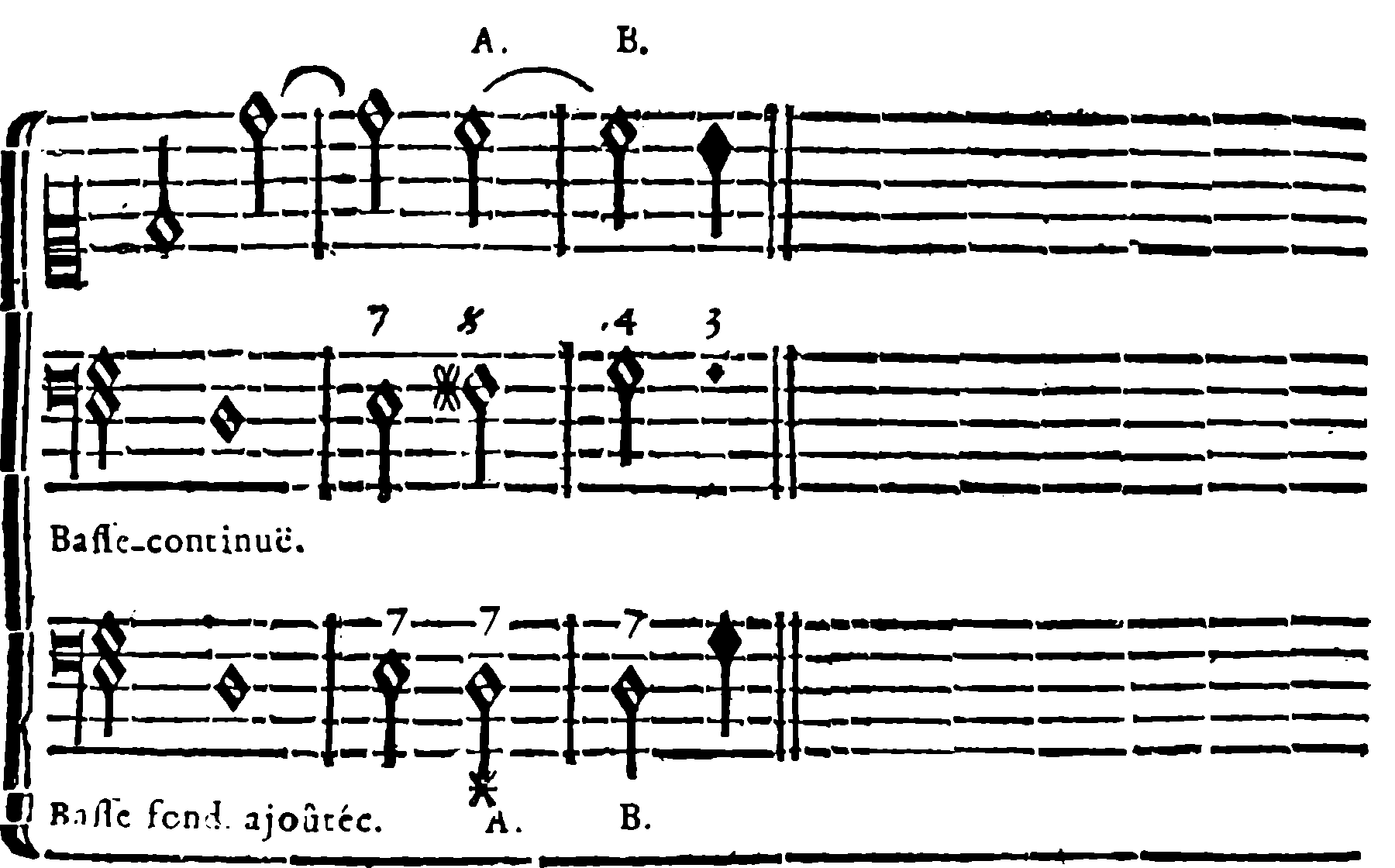
Another example
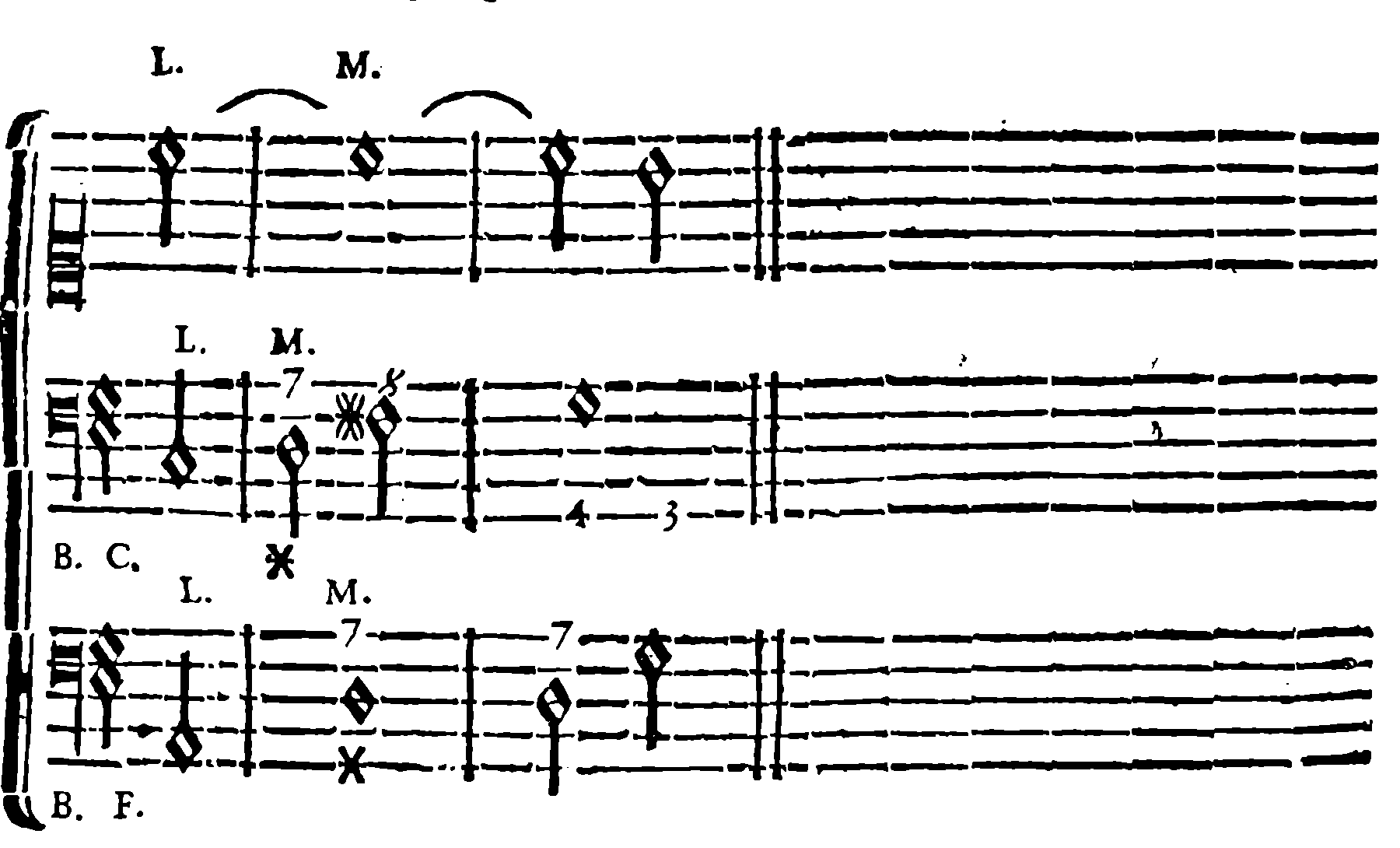
Between A and B the seventh is preceded by the same seventh. Moreover, seventh M is prepared by a consonance at L and then becomes diminished fifth and eleventh relative to the continuo bass. Against the fundamental bass it remains the same seventh and chord. We need not repeat that the extra sound of the eleventh, called fourth, must lie below the fundamental bass and be removed for the proof. Do not imagine, then, that one dissonance prepares another. The succession contains fundamentally only one dissonance, and when prepared it is indeed prepared by consonance. Moving a bass part among the notes of one chord has no bearing on a rule concerning two different chords.
Commentators on the first rules failed only because they could not reconcile reason and experience, confusing the principle with its derivatives. Here the principle retains equal force throughout. To prove natural harmony and license, we needed only perfect and seventh chords and their constituent intervals to form fundamental-bass progression. That bass guides natural harmony through descending thirds, fifths, and, if desired, sevenths. Inverted progressions, together with supposition and borrowing, guide all practicable licenses.