 Playable Books
Jean-Philippe Rameau · section 40 of 109
Chapter twenty-six
Read and hear this section in the playable edition →On the number of measures in each air and its particular movement
The numbers indicating how many beats fill a measure also indicate how many measures should compose an air intended for dancing. This applies especially to two and four, the principal numbers: the cadence is always felt at the fourth measure, often at the second, and rarely at the third.
Such airs are ordinarily divided into two sections. The most perfect have sections of four, eight, twelve, or sixteen measures; rarely five or six, and still less often three. Four multiplied by any other number is certainly the most perfect number here. Numbers 7, 9, 11, 13, 14, 15, 17, and so forth produce no good effect.
Here is a list of the movements natural to each air.



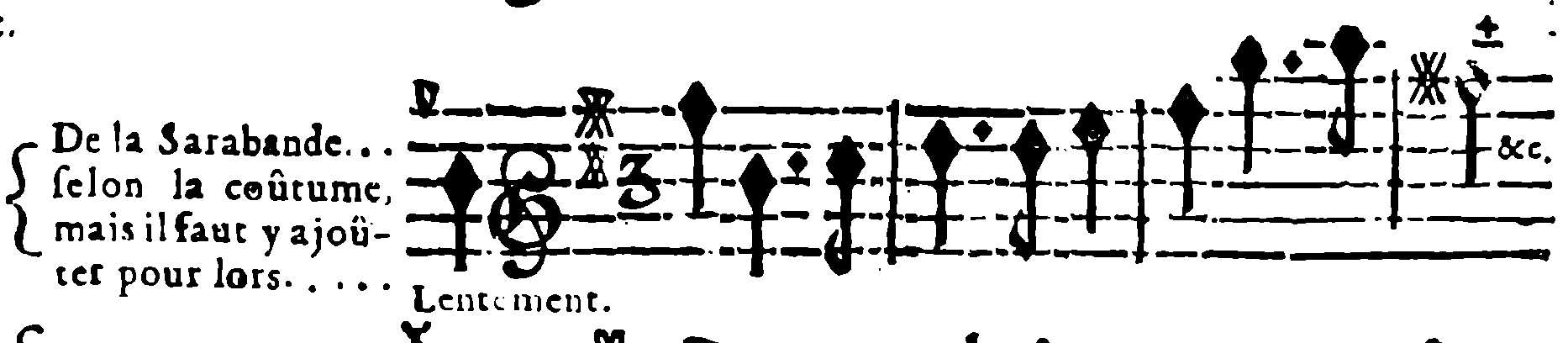







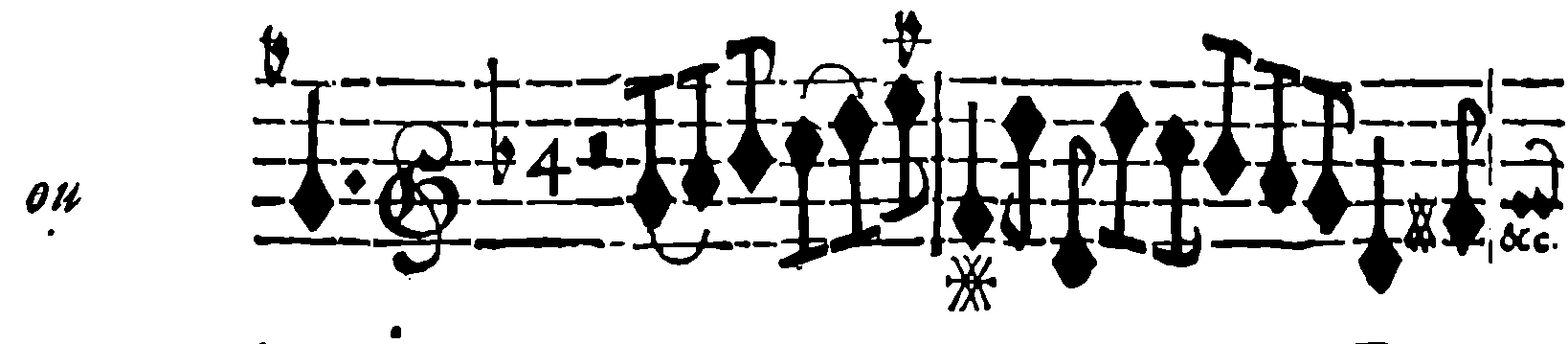




Rigaudons and bourrées are ordinarily marked with the same movement as the gavotte. The French gigue is also often marked with the loure’s movement, as in the gigue in the Prologue to the opera Roland. These observations should therefore be applied less to music already written than to music yet to be written.
Very slow airs can be marked with half notes for each beat in a four-beat measure, and whole notes in a two- or three-beat measure.
Every character and every passion has its own movement, but this depends more on taste than on rules.