 Playable Books
Jean-Philippe Rameau · section 44 of 109
Book III
Read and hear this section in the playable edition →Principles of composition
Chapter one
Introduction to practical music
The scale
There are only seven diatonic sounds,* that is, seven successive degrees in the natural voice. Music therefore has only the seven notes C, D, E, F, G, A, B, called the scale. To extend their number, begin again with the first after the last and continue in this prescribed order. These repeated notes, which merely replicate one another, are called octaves.
Add the first note’s octave at the scale’s end to become accustomed to recognizing it: C D E F G A B C. Remember to know this progression downward as well as upward: C B A G F E D C.
To begin and end this scale on a note other than C—good practice, though contrary to the diatonic order—simply add the other notes’ octaves as we added C’s. Beginning on G gives G A B C D E F G ascending and G F E D C B A G descending; likewise for the others.
Intervals
Not only must one recite the scale ascending and descending, beginning on different notes; one must also observe the numerical distance between notes. For the moment this observation is made only upward.
* See the glossary.
These distances form every musical interval. The intervals take their names from arithmetic numbers and are called:

Numbers have been placed above the interval names because henceforth we shall use only the numbers to indicate them. Remember clearly that 2 means second, 3 third, 4 fourth, and so on to 8, the octave.
To find an interval, choose a note as origin or first degree. Count from it to another note; the number of notes counted names the interval between the first and last. From C, D is second, E third, F fourth, G fifth, and so forth. From D, E is second, B sixth, C seventh. Practice taking every note as the first degree until you can immediately say that E is A’s fifth, B is E’s fifth, D is G’s fifth, and so forth. The following scale can help.
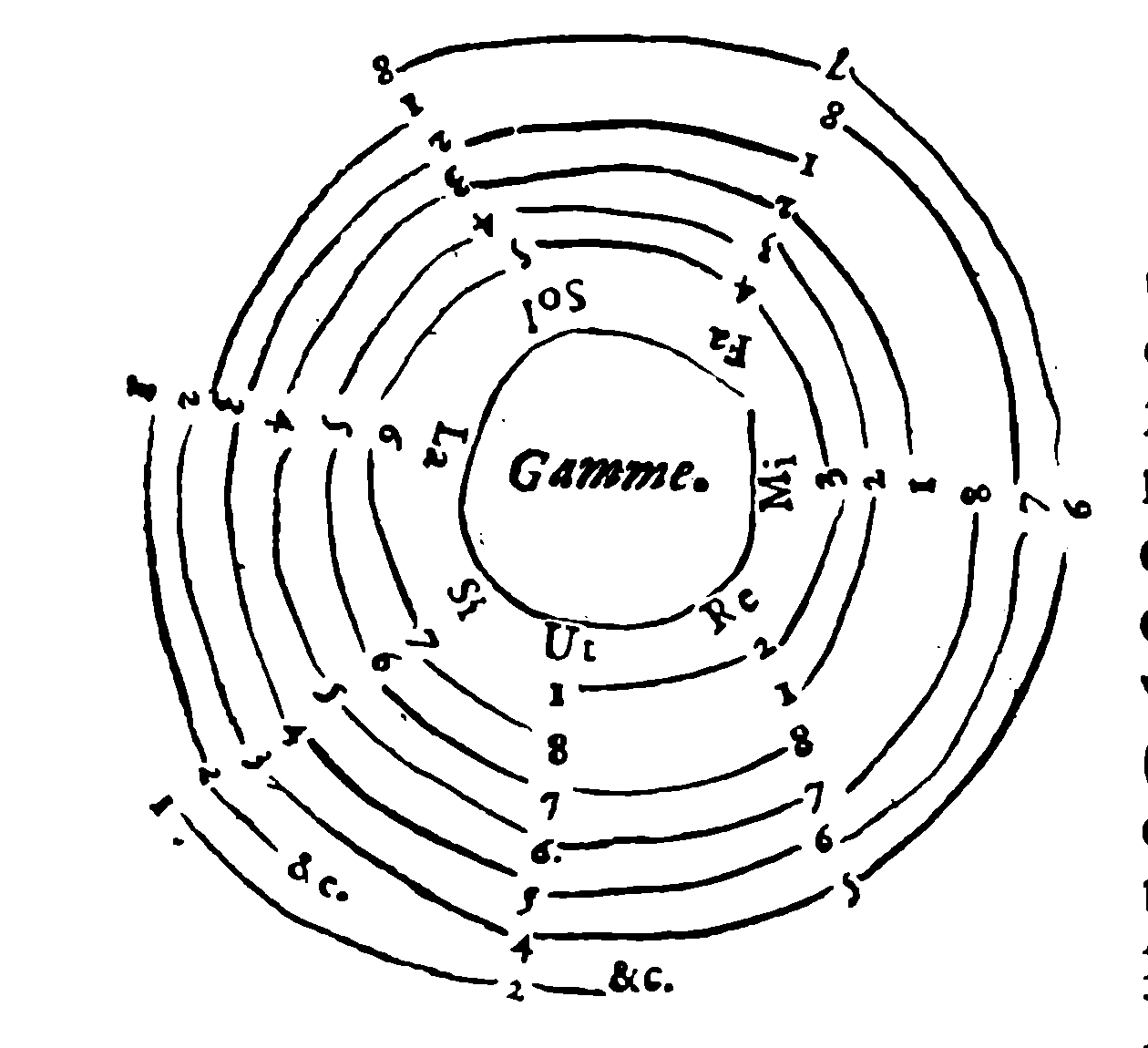
Taking C as first degree, follow the line from 1 to 2 beneath D, to 3 beneath E, and around to 8, C’s octave. The octave merely repeats the note and therefore has the same name. Taking D instead, its 1 leads to 2 beneath E, 3 beneath F, and so on. Each number gives the interval between the note above it and the note bearing 1. The small connecting lines lead through 2, 3, 4, and so forth, forming a complete circle from 1 to 8.
Whenever we simply say third, fourth, and so forth, take the interval upward in the scale from the proposed first degree, which is always assumed to be the lowest note.
Practice finding downward intervals no less thoroughly. A fourth below C is G, just as a fourth above G is C. This is easy to understand and can be very useful.
Inversion of intervals
The two notes of an octave, essentially the same note, bound all intervals because every scale note lies within the octave. Regarding the two Cs beginning and ending the scale as one note, another note compared with each should not give two different intervals. Yet the first C lies below the compared note and the second above it. This reveals a difference requiring explanation.
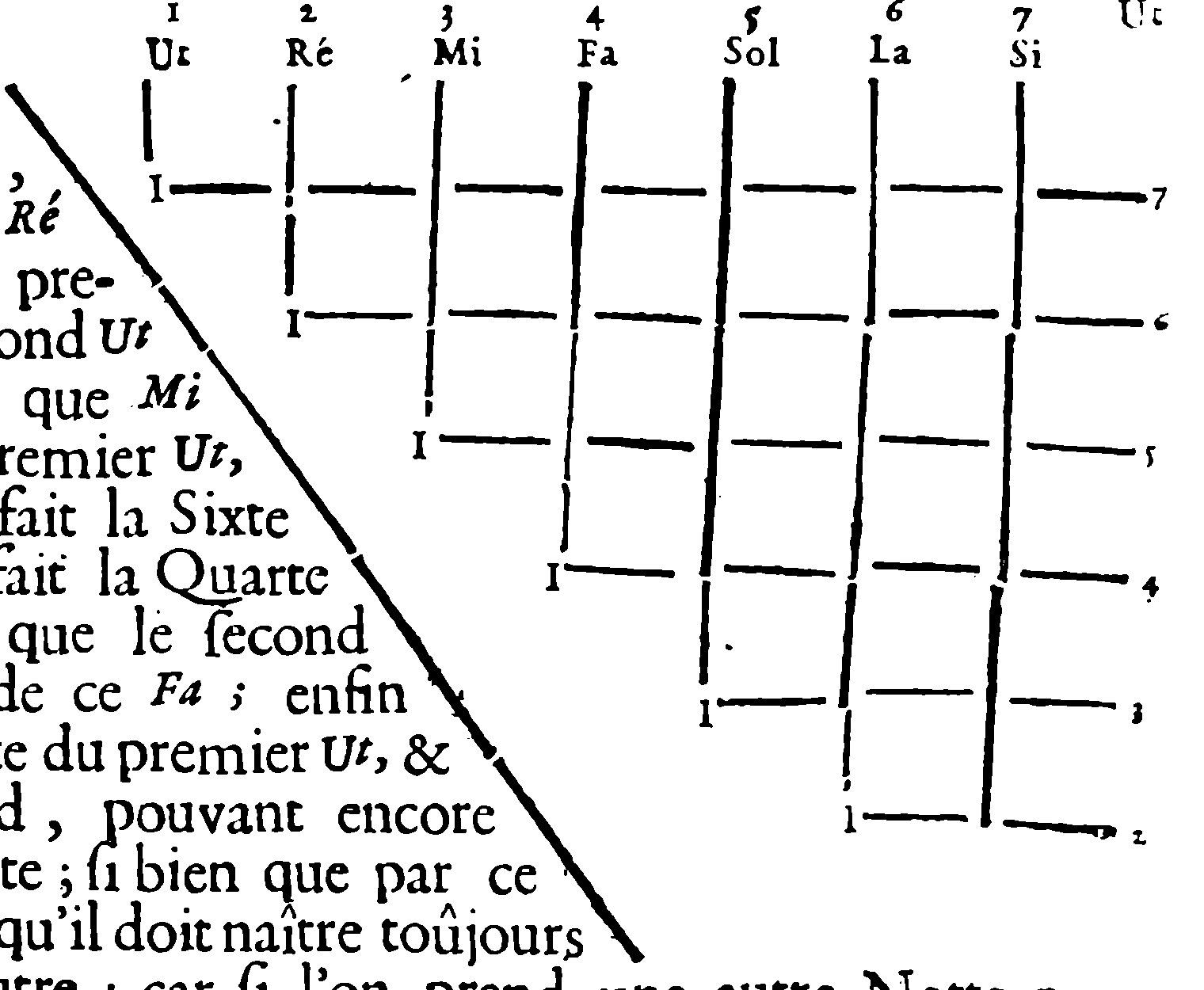
Viewed this way, D is a second above the first C, while the second C is a seventh above D. E is a third above the first C; the second C a sixth above E. F is a fourth above the first C; the second C a fifth above F. Finally, G is a fifth from the first C and a fourth from the second, as we may also put it. One interval must thus arise from another. Put any other note at both ends of the scale and the same observations apply: the second above the first note always becomes a seventh in relation to its octave, and so forth.
For clarity, always imagine the octave as inseparable from the first degree. After comparing a note with that first degree, compare it with the octave. Two intervals result: the first called fundamental or principal, the second inverted. Comparing C with E and then E with C simply reverses the comparison. Numerically, since 8 and 1 represent the same note, compare 1 to 3, then 3 to 8.
Only three intervals are fundamental and therefore need remembering: third, fifth, seventh. Arrange them as shown. Every first note corresponds to 1; its third, fifth, and seventh correspond to their interval numbers. Once these are known from any of the seven starting notes, add that starting note’s octave: third becomes sixth, fifth fourth, seventh second. These last three—sixth, fourth, second—are inversions of the first three fundamentals.
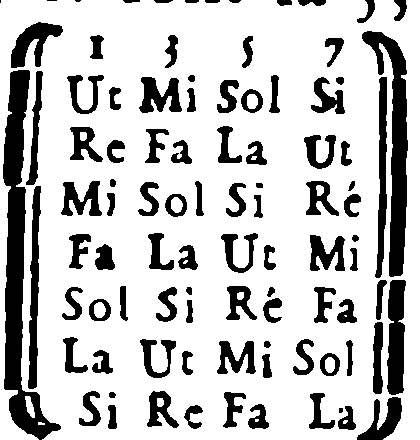
Do not pass lightly over this topic. The more your own experience convinces you of its truth, the easier everything else will become.
The staff: the lines on which notes are placed
The note names we know are represented by different signs indicating duration. They are placed on and between five horizontal lines to distinguish their degrees.
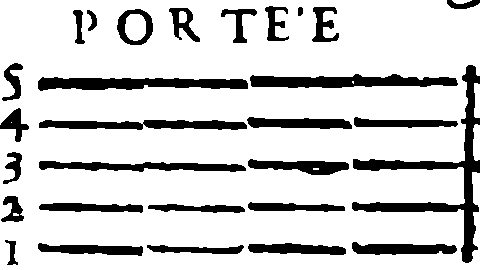
The five lines together form the staff. Each individual line is called a line or rule; the interval between them a space. The lowest line is first, and consequently the highest fifth.
Clefs
Music has three clefs. Here are their signs and the note name each designates.
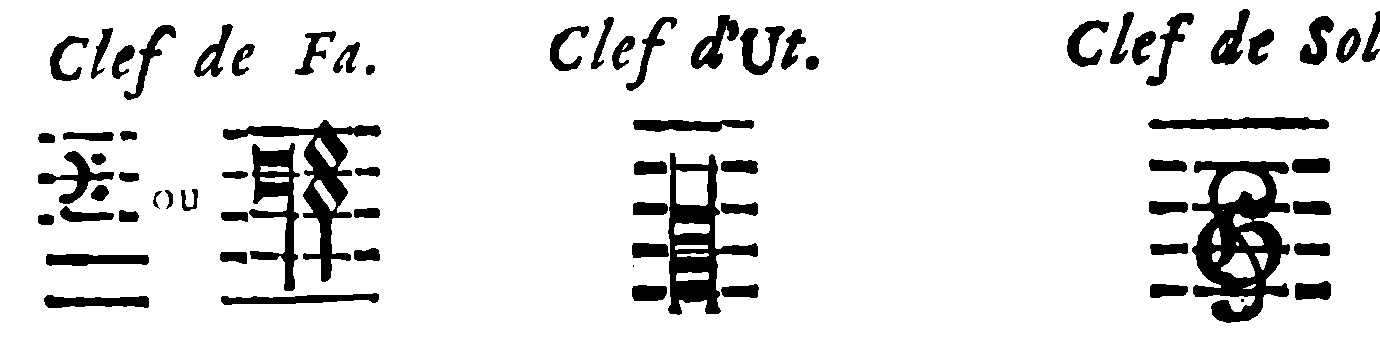
A clef is understood to lie on the line passing through it, which takes its name. Only one clef is placed at a time at the beginning of a staff, but another may replace it wherever desired, provided it lies on a line. The latest clef always names the line passing through it.
The F clef, lowest of all, is ordinarily placed on the fourth or third line.
The C designated by the C clef lies a fifth above the F designated by the F clef. C clef may be placed on any line except the fifth.
The G clef’s G lies another fifth above the C clef’s C. It is ordinarily placed on the first or second line.
Since a clef names its line, a note on that line has the same name. We may apply the clef’s name equally to line or note. Until note shapes are discussed, we shall use O-shaped notes, some crossed by lines and others in spaces. Count in scale order from the clef-named note. Moving from first to fifth line ascends; from fifth to first descends. Spaces bear note names just as lines do. With these observations one cannot go wrong. Examine the following example.
Example
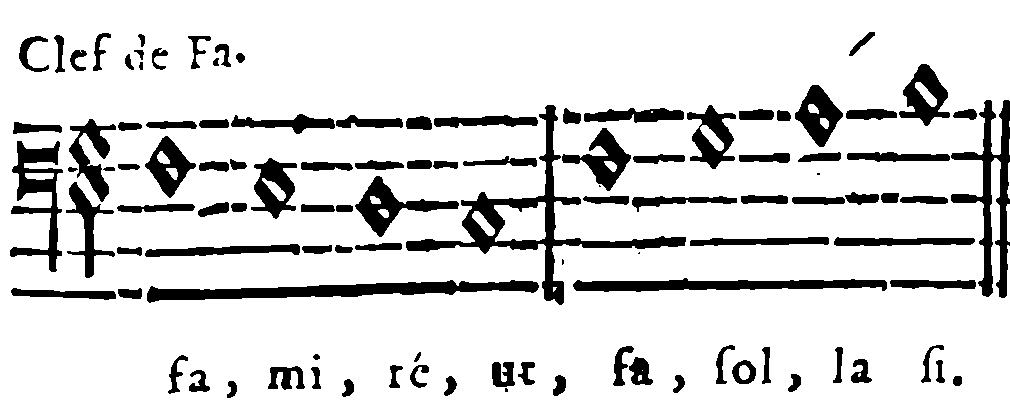
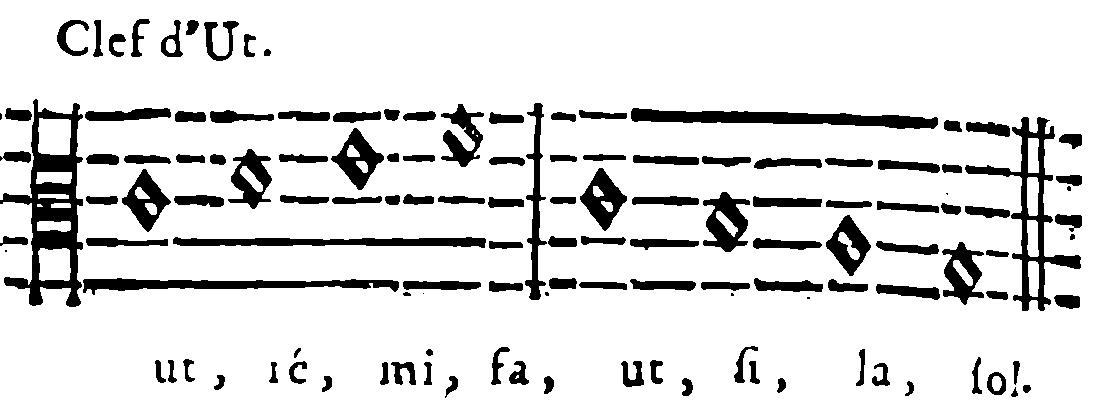
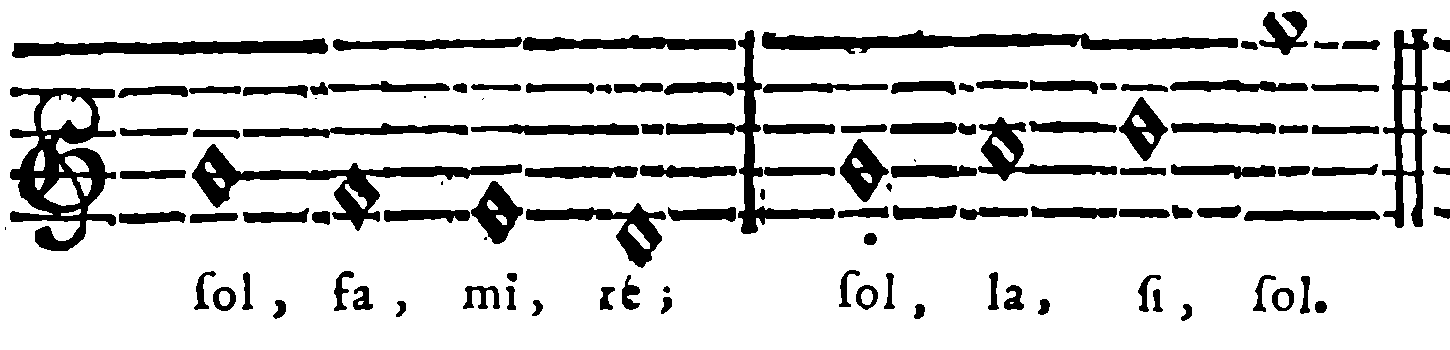
The first note need not be on the clef line; it can lie on any line or space. Count from the clef to find its name. One must instantly recognize any note’s name so such a small matter does not distract from composing. Choose a clef on a suitable line and memorize all line and space names relative to it. With F clef on the fourth line, immediately know that the third line is D, second B, first G, fifth A; the space above the clef is G and below it E, and so forth. Lines and spaces take the names of notes placed there.
Example

Once these names are thoroughly known, place the same clef elsewhere and make the same observations. Do likewise with the other clefs.
Additional lines may be placed above or below the ordinary five, following the same order.
Parts
Harmony unites different sounds that agree together. Since voices or instruments produce those sounds, each voice or instrument is called a part. Each part also has its particular name, not always stated but recognizable from the clef’s kind or position.
Examples
4 vocal parts.
First upper vocal part.
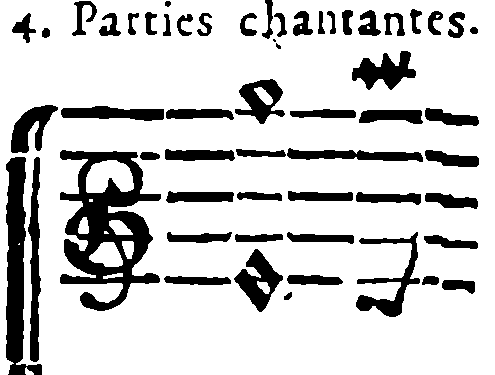
Second upper vocal part.
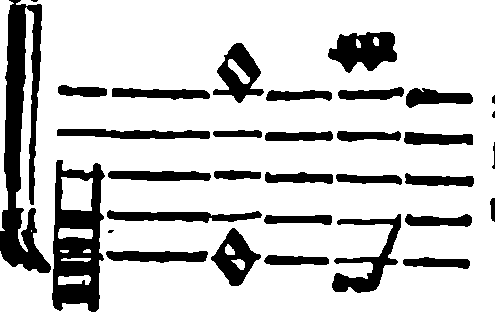
Haute-contre—the highest male voice.
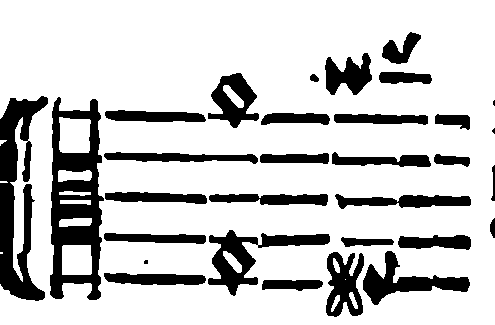
Haute-taille—a middle part approaching the preceding one.
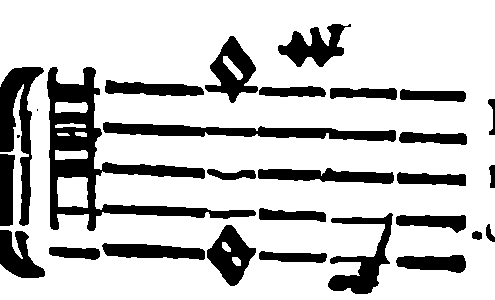
Basse-taille or concordant—a middle part between the preceding and following ones.
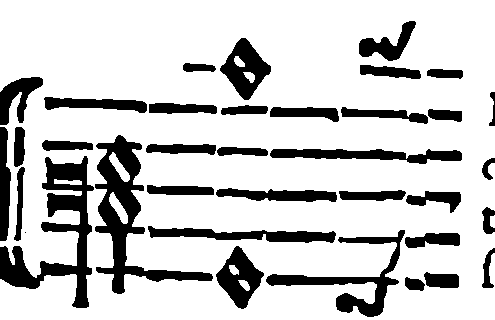
Basse-contre—the deepest, that is, lowest male voice.
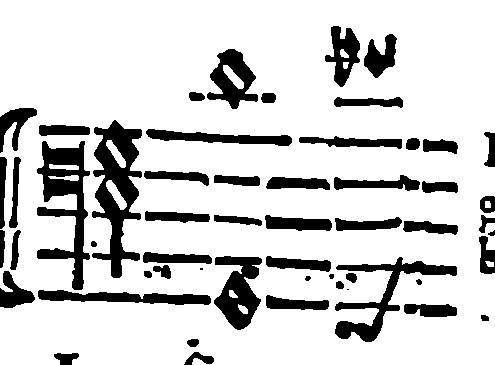
The first two parts suit only female voices: the higher voices sing the first upper part and the lower ones the second.
Instrumental parts.
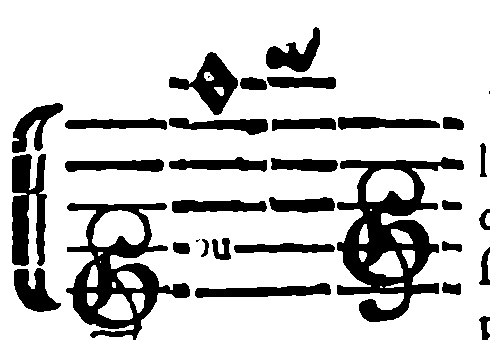
Upper violin, viol, flute, oboe, trumpet, etc. The first clef is ordinarily used for the last three instruments.
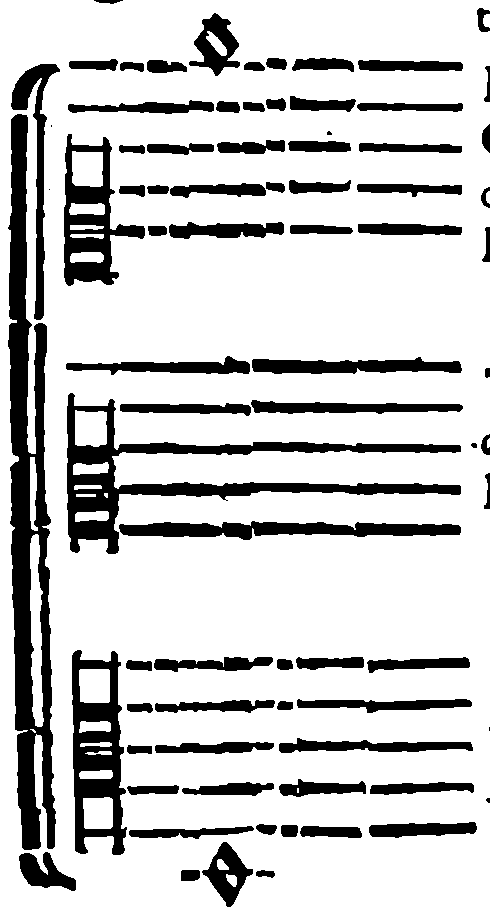
Haute-contre de violon. Taille de violon. Quinte de violon. These three instruments have the same tuning and therefore the same range. Its highest sound is marked by a note in the first part, and its lowest in the third.
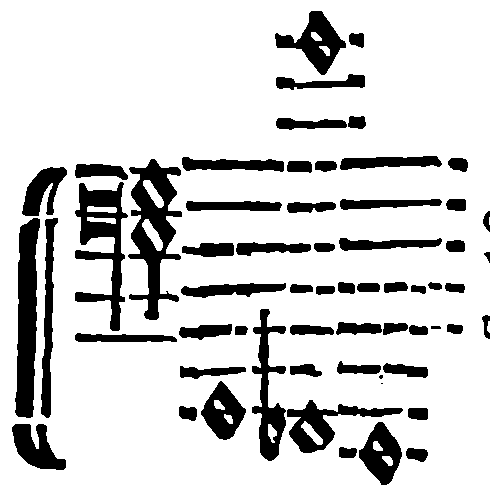
Organ, harpsichord, theorbo, bassoon, bass violin, bass viol, bass flute, etc.
The first six parts, intended for voices, have limited ranges precisely marked by notes. Each may move through all intervals between the two notes shown with its clef. Guides beside these notes permit occasional extension to the indicated point, but rarely. The composer should judiciously keep voices near the middle of their range, since its extremes almost always force them.
Every instrument has a different range. The violin, for example, is limited below to an octave beneath its clef, but is virtually unlimited above. Nevertheless, without personal experience of the instrument one should not exceed the printed note or guide. Notes mark the ordinary bass range, but only the bass viol can reach the lowest sound. We omit the other instruments’ ranges. Since every kind of music can generally be played on violin, one can dispense with the others; composers can learn what they need about them simply from people who play them.
Unison
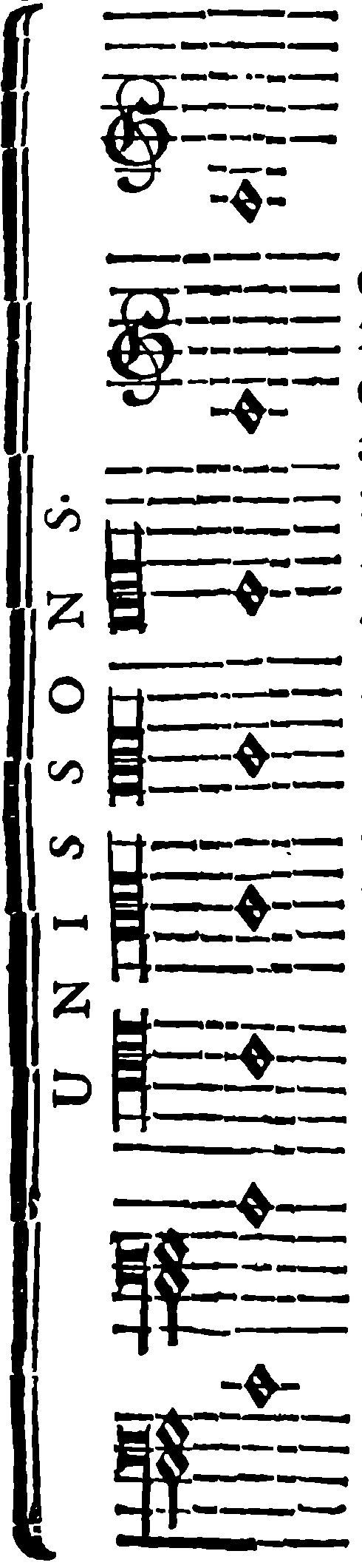
Two notes on the same degree are called unisons—as if one note were repeated several times. To know where each part’s notes must lie so that higher parts stay above lower ones, we shall place one note in each part at the position where all are in unison.
Parts differ through differences of sound, not through their number. All these parts can therefore be said to represent only one. This is why unison is forbidden in composition. Beginners may nevertheless use it instead of the octave until they can do better.
Meter
One can scarcely give a simpler composition of meter than through our natural movements, which remain equal when repeated, as walking shows, provided their natural character is not altered.
Meter contains several beats. Each walking step may be taken as one beat. Just as walking can be faster or slower, meter can move faster or slower.
Measures are separated by perpendicular lines called bars. Each measure contains only two, three, or four beats, ordinarily marked by hand or foot movement. The first is felt by striking or lowering the hand, the last by raising it, and the intervening beats by moving it right or left.
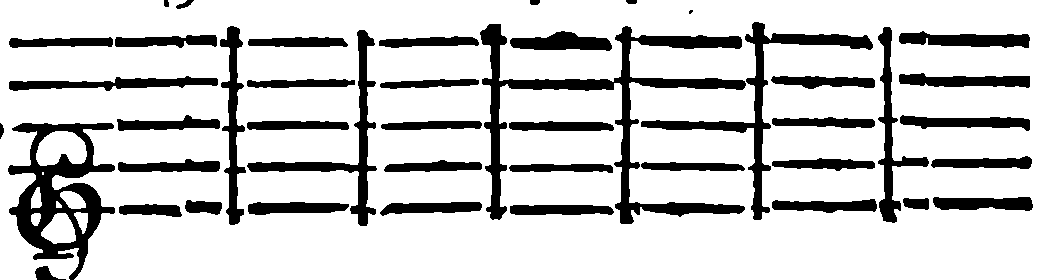
The first beat is called good or principal, the others bad; in four-beat meter, however, first and third are equally good.
Numbers should indicate beats per measure: 2 for two beats, 3 for three, 4 for four. Yet these signs seem to have been rejected for their very simplicity in favor of completely ambiguous ones.
C marks four-beat meter.
A slashed C marks two-beat meter, etc.
Our art is already abstract enough without adding new obscurities. Since written music is full of ambiguous signs, knowing their properties is useful for judging it, but not for learning. We therefore believe we can omit their discussion; many authors treat them abundantly. See Book II, chapter XXIII. Anyone who can use two-beat meter readily learns the other movements, which depend only on aptitude and taste.
The meter sign always comes immediately after the clef, unless sharps or flats accompany the clef, as explained elsewhere; those signs come before the meter. If the movement changes within an air, place the new sign at the beginning of the measure where the change occurs.
The shapes, names, and values of notes and rests
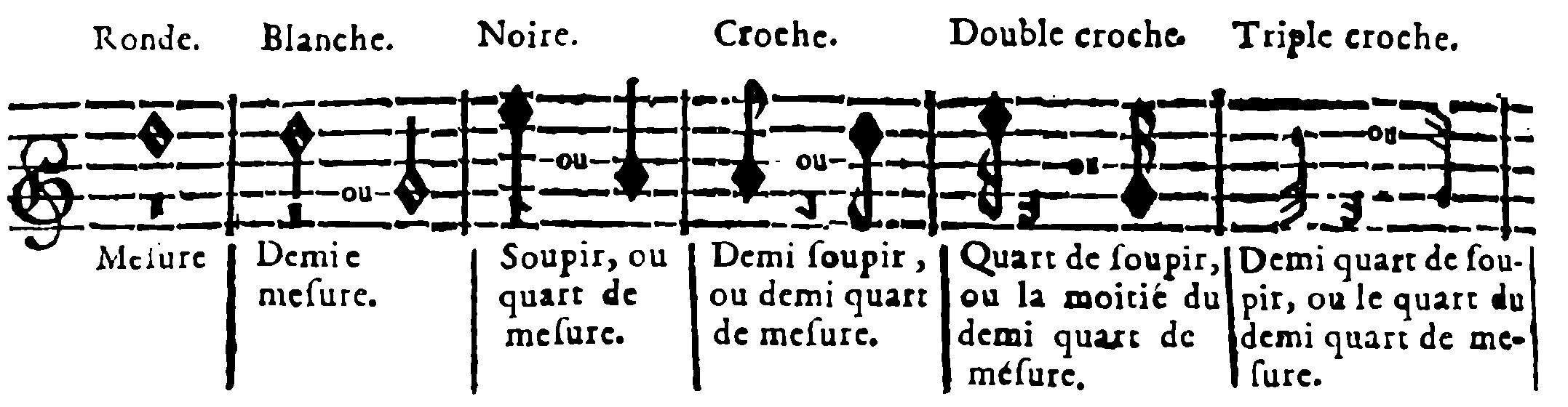
Whole note—one measure. Half note—half a measure. Quarter note—quarter rest, or quarter of a measure. Eighth note—eighth rest, or half a quarter-measure. Sixteenth note—sixteenth rest, or half of half a quarter-measure. Thirty-second note—thirty-second rest, or a quarter of half a quarter-measure.
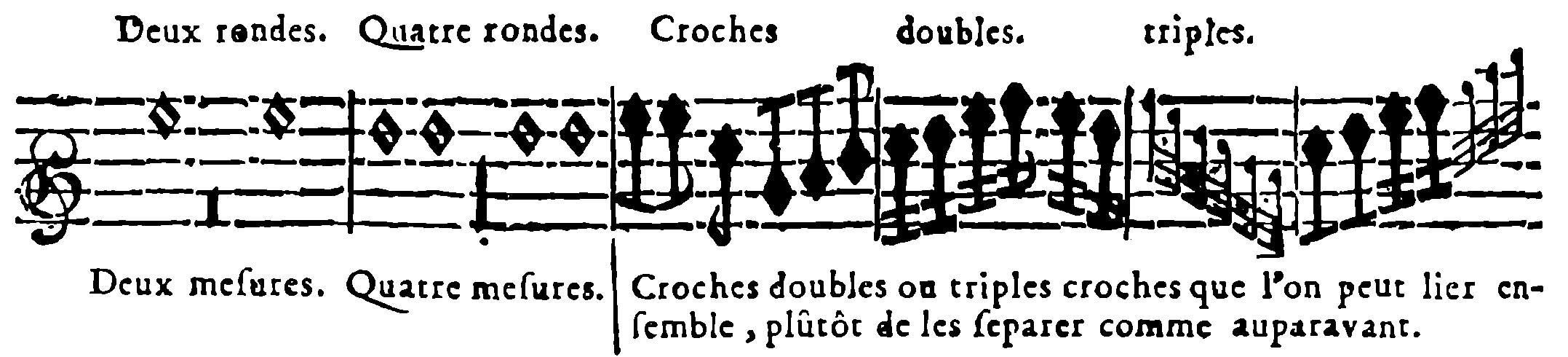
Two whole notes. Four whole notes. Eighths, sixteenths, thirty-seconds. Two measures. Four measures. Eighth, sixteenth, or thirty-second notes may be beamed together instead of separated as before.
Half notes may be beamed like eighth notes; their value is then reduced by half.
The different note shapes have different names written above them. The names below show that a whole note equals twice a half note, a half twice a quarter, a quarter twice an eighth, and so forth. Conversely, a thirty-second is half a sixteenth, a sixteenth half an eighth, and so on backward. Thus two halves, four quarters, eight eighths, sixteen sixteenths, or thirty-two thirty-seconds may replace a whole note, just as a whole can replace any collection of notes totaling its value. A measure may contain any notes and mix different values, provided the full value of each beat is completed.
The signs below the notes, with names beneath them, are generally called rests. They indicate a part’s repose or silence. To stop a part for several beats, or delay its beginning by an eighth or quarter of a beat, half a measure, a measure, or any number of beats or measures desired, use these rests instead of notes.
Barlines separate measures, and the meter sign tells how many beats each contains. Fill each measure with enough notes or rests to account for that count. Although a whole note generally equals a measure and a half note half a measure, either may instead equal one beat, with the other notes proportionally adjusted. A whole always equals two halves, four quarters, eight eighths, and so forth. Rests indicate silence corresponding to their note values. Whole-measure rests are independent, however, and serve in two-, three-, or four-beat measures regardless of the notes making each beat, with the exception of the whole note. A two-beat measure can therefore contain two wholes, two halves, two quarters, or even two eighths, assuming each note equals a beat. A single beat can also contain two, three, four, six, or eight equal notes, or any mixture of values equaling the chosen beat. The more notes per beat, the smaller their values must be. Thus the whole note cannot be worth less than one beat, and the others follow proportionally.
Example
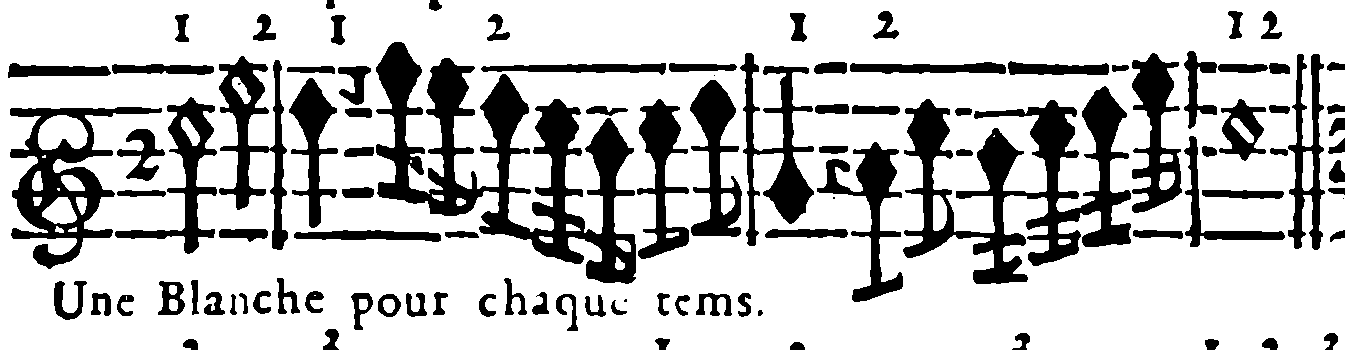
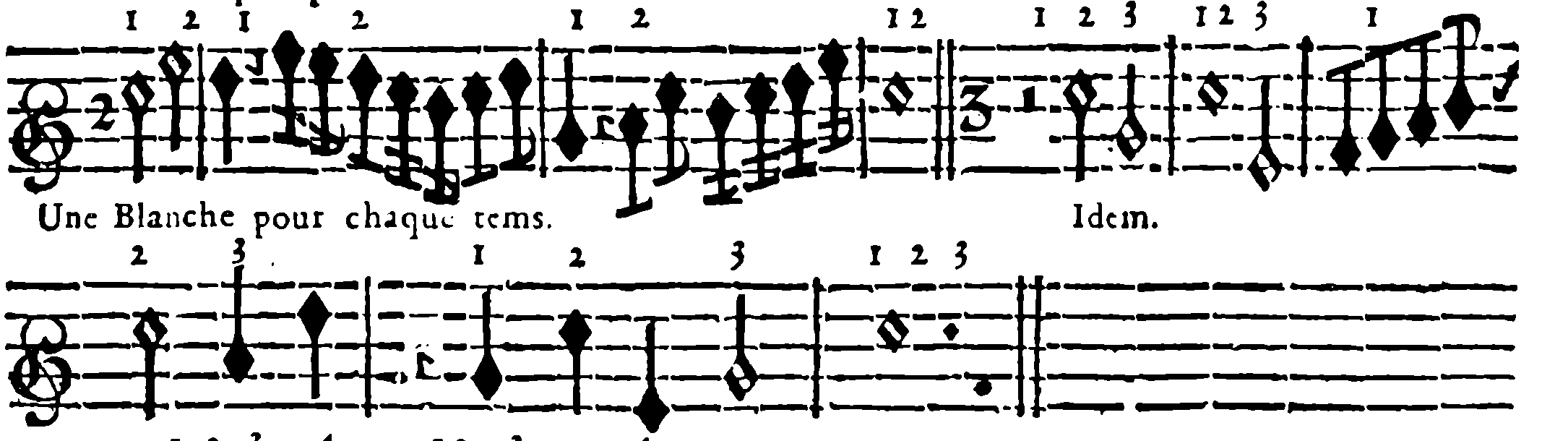

One whole note or two half notes for each beat.

Quarter or eighth notes may replace half notes; in three-beat meter sixteenths may also be used. All this distinguishes slower and faster movement, as Book II, chapter XXIII explains.
The numbers above the notes mark beats: 1 first, 2 second, 3 third, 4 fourth. They show the freedom to replace a beat note with any rests or other notes totaling that beat’s value. One may likewise begin and continue with notes other than the chosen beat unit, provided their total contains the beat’s value.
The dot and the tie
A dot to a note’s right increases its value by half. This equals following the note with another on the same degree worth half as much. But a second note would require a fresh articulation, so a dot is used instead; alternatively, join the two notes with a semicircle whose ends meet them.
Example

Dotted notes equal in value to the two tied notes below them.

Tied notes articulated as one.
Whole tone, semitone, sharp, natural, flat, major, minor, augmented, and diminished
The smallest interval introduced at the chapter’s beginning, the second, divides into whole tone and semitone, or half tone. Semitones occur between E and F and between B and C. Every other adjacent scale pair forming a second has a whole tone.
Although the semitone—the smallest interval needed in practice—does not occur between every scale pair, signs attached to notes can raise or lower them by a semitone and produce it elsewhere. The same means can produce a whole tone between E and F or B and C.
These signs are called sharp, natural, and flat.
Sharp is written ♯, natural ♮, and flat ♭. Each sign must be placed to the left of the note, as in the following example.
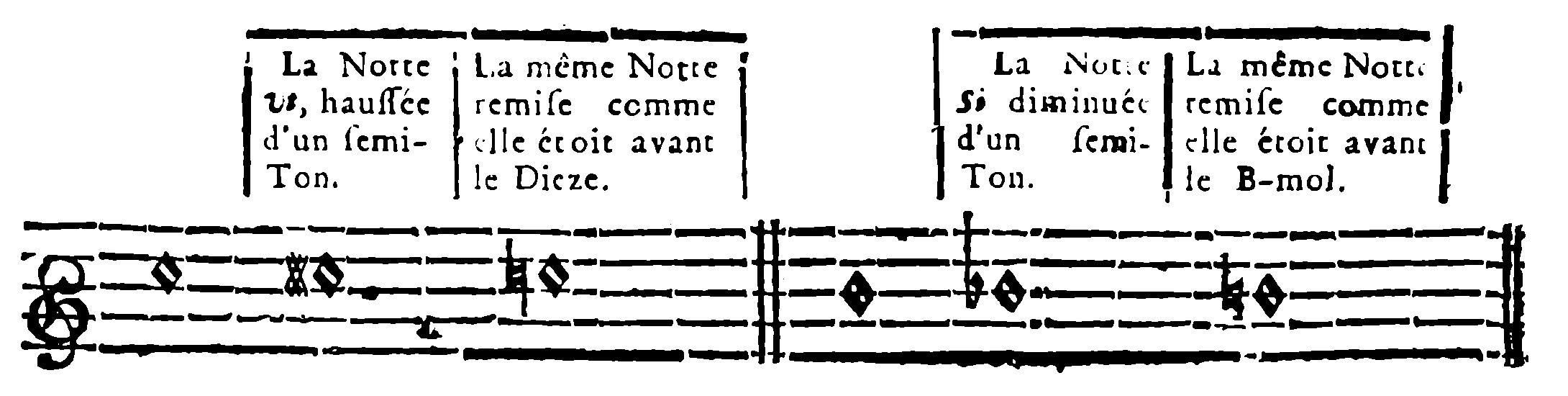
A sharp raises its following note a semitone; a flat lowers it by the same amount. The natural, sometimes given the sharp’s function, can also remove a sharp or flat previously applied to the same note, restoring its natural position.
These signs do not change note names. For learners’ ease in singing, however, every sharpened note is called “si” and every flattened note “fa,” because diatonic movement after them follows the pattern of “si” and “fa” in the scale. Here these are singing syllables rather than fixed pitches. Since understanding is more necessary to composers than singing practice, they need concern themselves here only with intervals and their alteration by a semitone through ♯, ♮, or ♭.
Example
Another example

The sharp on F at A raises it a semitone, making E–F equal to D–E: both are whole tones. F to G is consequently only a semitone. Thus D E F♯ G follow the same order as G A B C in the scale, with B marked D. The flat on B at C lowers it a semitone, making C to B♭ a whole tone and B♭ to A a semitone. These descending notes C B♭ A G follow the same order as G F E D. Naturals on the second F at B and second B at D restore their natural order.
Intervals showing the whole-tone/semitone difference without changing their names are distinguished as major and minor, or augmented and diminished. C–E is a major third because it contains a semitone more than D–F, which is minor. E–C is a minor sixth because it contains a semitone less than F–D. Likewise for other same-named intervals differing by a semitone; augmented and diminished may also distinguish them. Further explanation will follow.
Sharps and flats almost always reveal the major/minor or augmented/diminished distinction. In a two-note interval, a sharp on the lower note at F ordinarily makes it minor; on the upper note at G, major. Conversely, a flat on the lower note at H makes it major; on the upper at J, minor. Augmented corresponds to major and diminished to minor.
Example
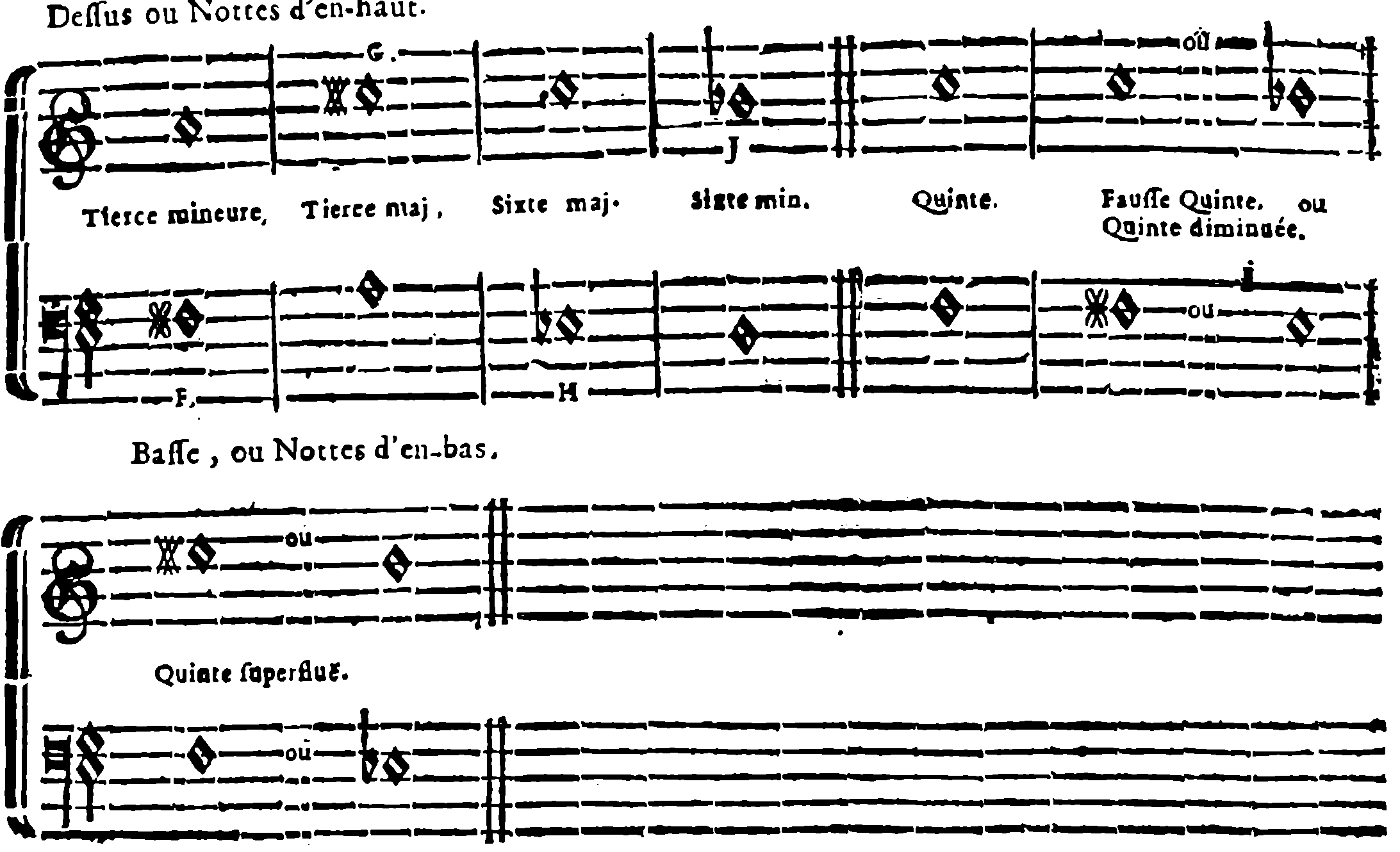
Compare each upper note with the bass note opposite it to find the major or minor intervals specified in the example.
A sharp, natural, or flat written above or below a bass note does not alter that note at all. It indicates only major or minor intervals, to be discussed in their proper place.
Compound intervals
Just as the octave repeats the chosen first degree, notes above that octave repeat those within it. A note’s name therefore suffices to determine the interval, regardless of whether it is doubled, tripled, or more. Counting from C below the F clef to G above the G clef gives nineteen degrees. But once G is known as C’s fifth, no counting is needed: it suffices that G is above C. The same applies elsewhere. Greater or smaller separation matters only for keeping each part above the bass and within its natural range, already shown for that purpose.
Example
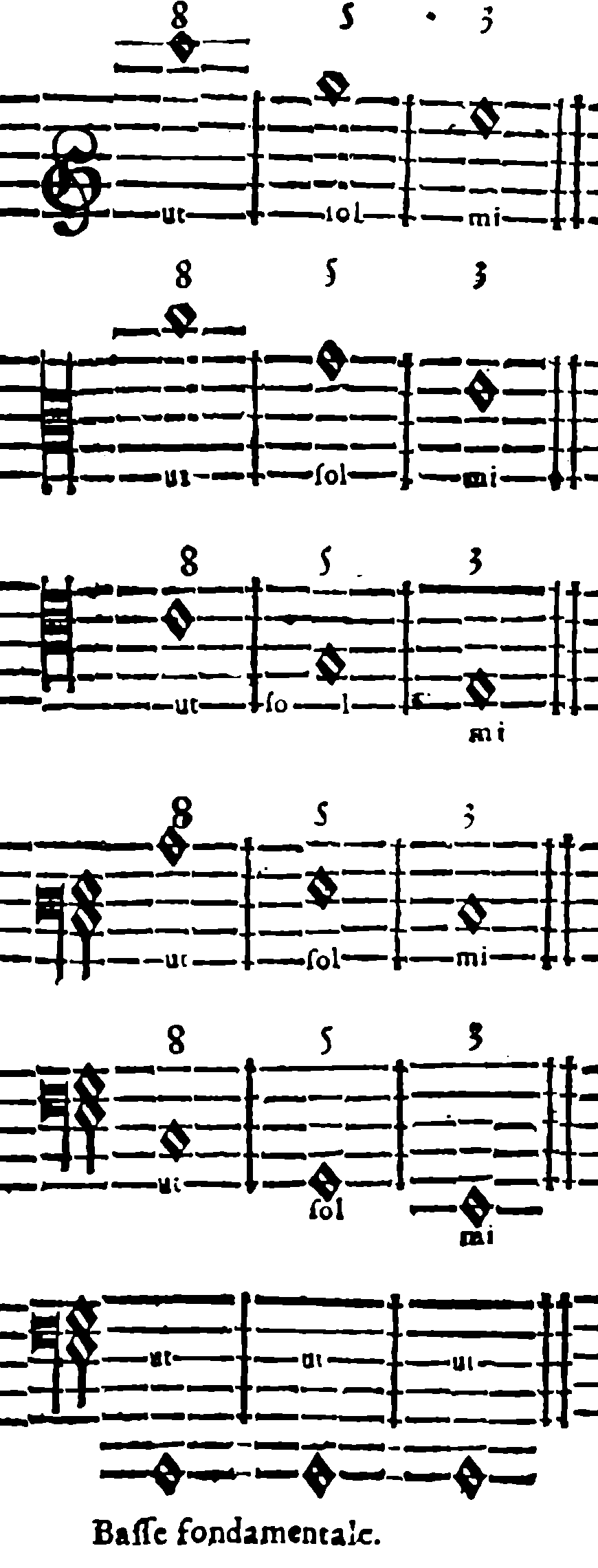
The other parts are ordinarily compared with the lowest, forming all intervals. Here we have simple, doubled, tripled, and quadrupled octaves, fifths, and thirds, which might be called fifteenths, twenty-seconds, and so forth. For now it suffices that the octave is C, fifth G, and third E; the rest may be considered unnecessary.