 Playable Books
Jean-Philippe Rameau · section 48 of 109
Chapter five
Read and hear this section in the playable edition →Some rules to observe
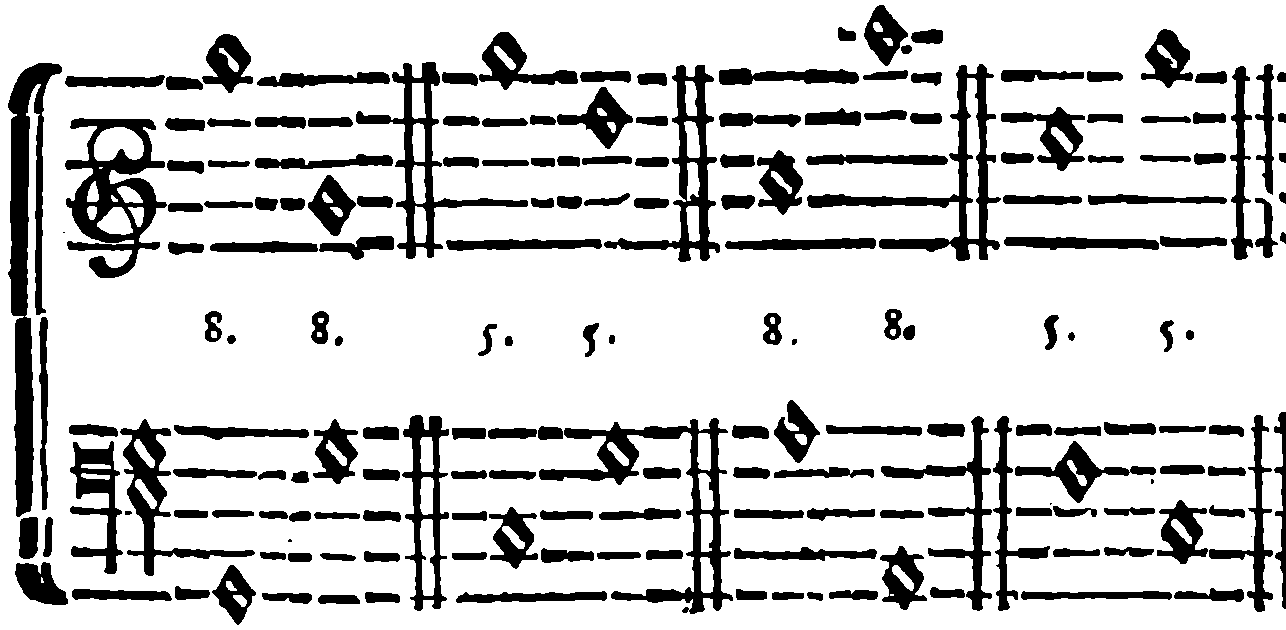
1. Never make two successive octaves or two successive fifths. This is easily recognized in the sequence of figures: the same part must never contain two octaves, 8 8, or two fifths, 5 5. As we can observe, this fault can now be avoided without requiring special attention. Both successions may nevertheless be used in four-part pieces, provided the movement of the two parts making the octaves or fifths is reversed—that is, if one rises, the other must descend.
Examples of two octaves and two fifths in contrary motion
2. Avoid making a part rise from the minor third to the octave. This could not be noticed in the preceding examples, since major and minor had not yet been discussed. But the dissonance we shall now consider will make us observe this rule without yet needing to pay special attention to it.