 Playable Books
Jean-Philippe Rameau · section 49 of 109
Chapter six
Read and hear this section in the playable edition →On the seventh chord
First article
Having gained sufficient knowledge of the consonant intervals forming the perfect chord and the bass’s progression, we must now examine their relations. Set aside the octave, which may be regarded as a repetition of the bass represented by 1. The perfect chord contains three different sounds, with equal distances from first to second and second to third: in 1 3 5, a third from 1 to 3 and another from 3 to 5. To obtain the seventh chord, add another sound in the same proportion: 1 3 5 7, with another third from 5 to 7. The resulting chord differs from the perfect chord only in its added seventh.
Because this added interval is dissonant, the chord containing it is also called dissonant. We can add the octave, as with the perfect chord, either to compose in five parts or to facilitate the upper parts’ diatonic movement. The octave often replaces the fifth, and either choice is immaterial: simply let the parts follow their natural, always diatonic course, whether octave or fifth occurs in the seventh chord. The third, however, can scarcely be omitted.
For now, this seventh chord may be used only on bass notes approached and followed by an ascending fourth or descending fifth.
Its dissonant interval, the seventh, must be prepared and resolved by a consonant interval. The note forming the seventh against the bass must therefore be preceded and followed by a third. The preparing third must lie on the same degree or staff line as the following seventh; the resolving third must always be reached by descending diatonically from that seventh.
Ensure that the first seventh is heard on a measure’s first beat, and consequently prepared on the preceding measure’s second beat. By first seventh we mean one not immediately preceded by another. Once a seventh has been formed over a bass note approached by an ascending fourth or descending fifth, the bass must continue by such intervals until the tonic, at present C. Give each note a seventh chord except C and F. C is excluded because the tonic can exist as tonic only with the perfect chord. F is excluded because B is forbidden in the bass, and a seventh chord on F would oblige it to rise a fourth or fall a fifth to B. E must also be excluded: within the prescribed bass progression, its seventh chord would require a preceding B. Thus for now seventh chords can occur only on A, D, and G.
Example
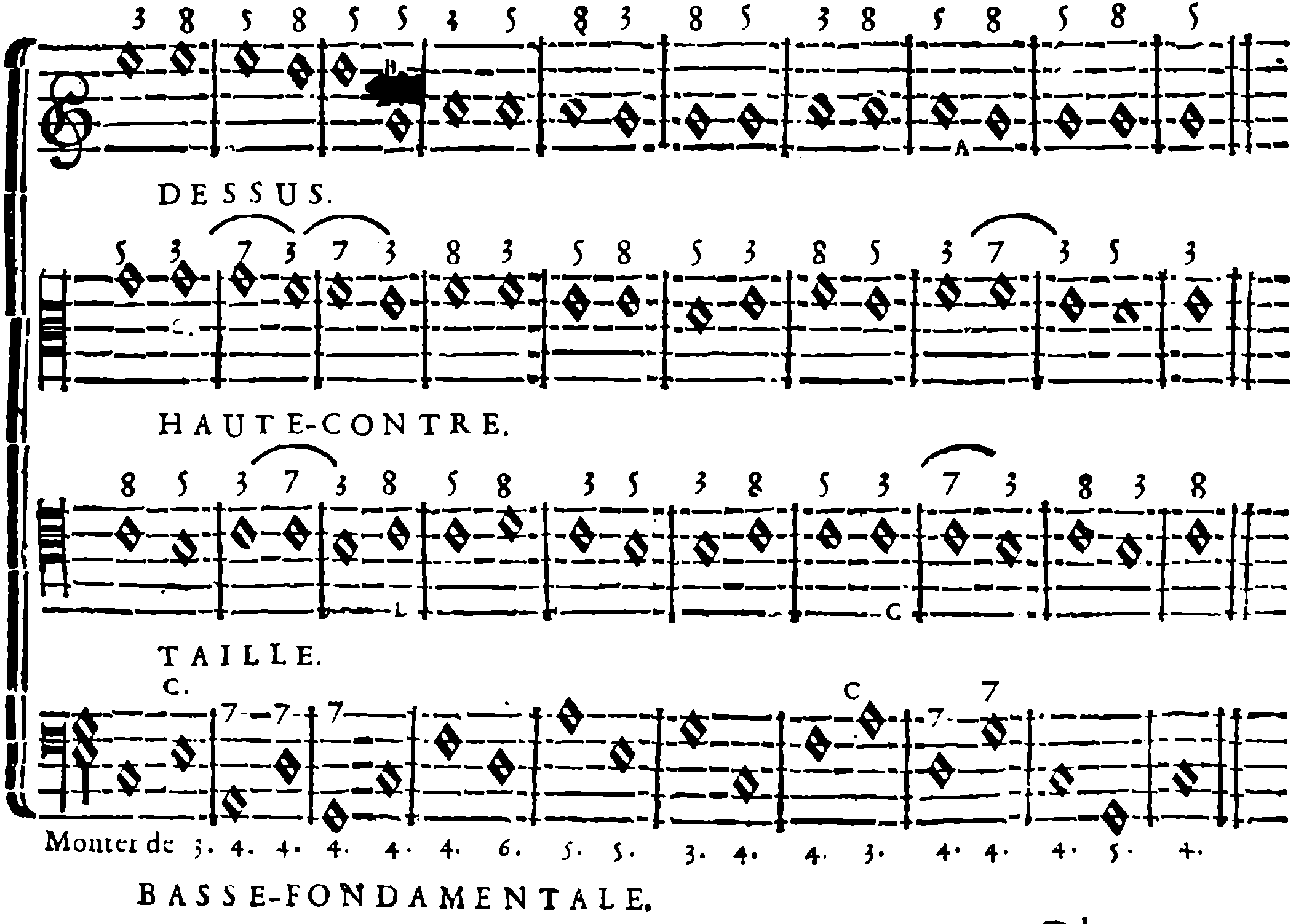
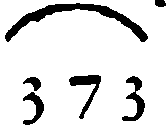
In the upper parts, the seventh always appears between two thirds: 3 7 3. The first seventh is always prepared on the second beat, or by the second note of a measure, at C.
The obligation to resolve the seventh downward to the third disturbs the other part’s progression. As we said, that part should rise from fifth to third when the bass rises a fourth. But it may also descend to the octave, and must do so when the seventh is present, since the seventh must descend to the third. Since we cannot change the seventh’s movement, we must change the fifth’s, at A. This follows our earlier explanation that the octave sometimes replaces the fifth in a seventh chord to preserve diatonic upper-part movement. Chapter IV also stated that when two parts meet on one note, change the part able to form another of the chord’s three intervals by rising or falling.
The part that made the fifth may also make another fifth, provided it and the bass move in contrary directions there, as the preceding chapter explained. This can make the chord more complete, restore parts to their natural ranges, or improve the melody. Guide B shows the octave avoided here because another part already has it at L. Nevertheless, this depends on the composer’s taste when melody rather than harmony leads him.
Second article
The seventh, the first and, so to speak, the source of all dissonances, can be prepared and resolved by every consonance. Since its other resolutions derive from the preceding one, we shall not discuss them yet. We merely add that the fifth and octave may also prepare it. The bass must descend a third for preparation by the fifth, and rise diatonically for preparation by the octave. When the bass rises diatonically, all upper parts descend except the part making the seventh. That part remains on the same degree, as preparation requires, then descends to the third.
The sixth may also prepare the seventh, but it is not yet time to discuss this: we are treating only fundamental harmony, composed, as shown, of bass, third, fifth, and seventh—1 3 5 7.
Notice that the bass progression prescribed in the first article can change only for the first seventh. Only that seventh can therefore be prepared by an octave or fifth. After it, every seventh will occur between two thirds. However prepared, it will always resolve to the third.
Example
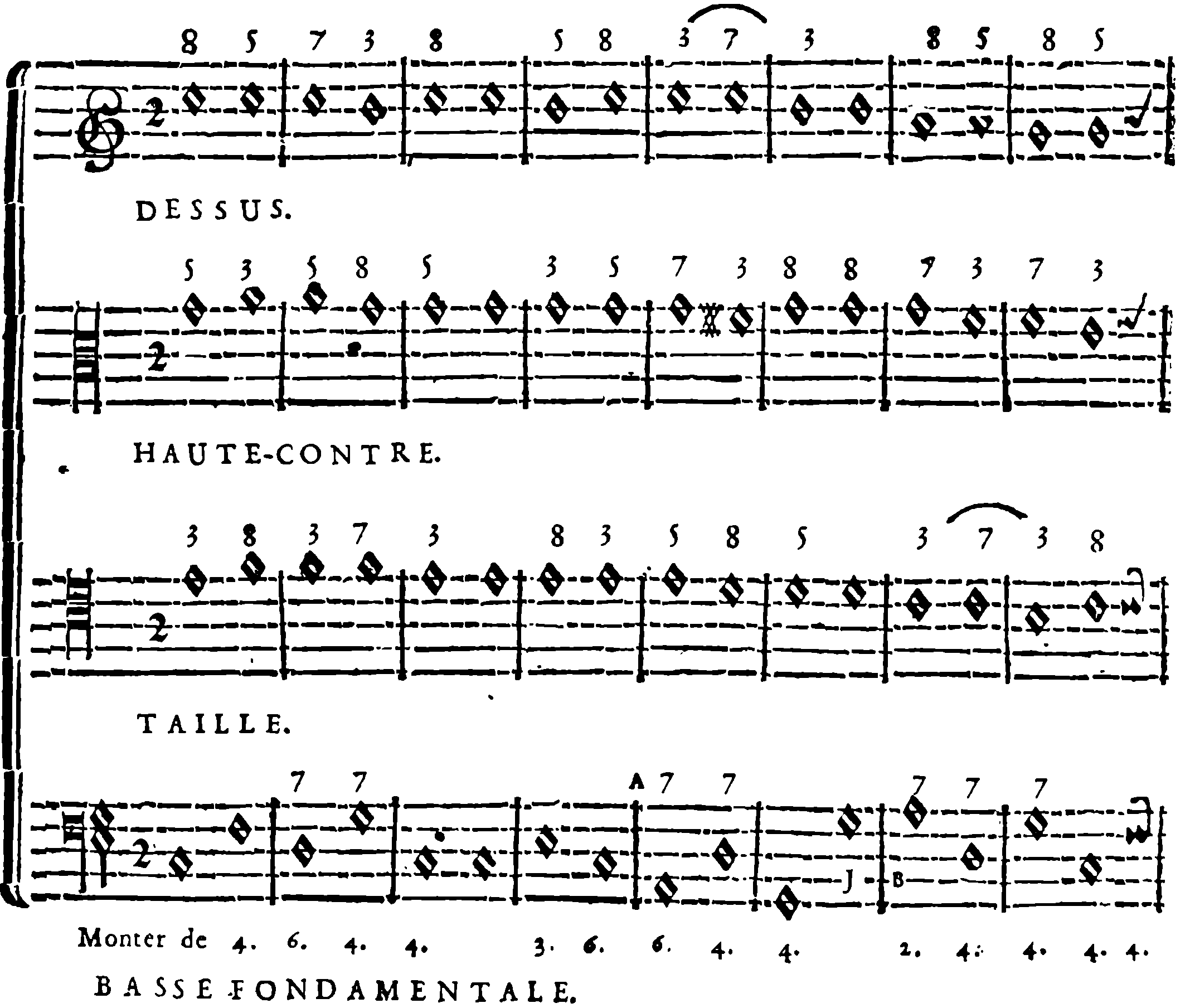
Turn the page for the continuation of this example.
Continuation of the preceding example
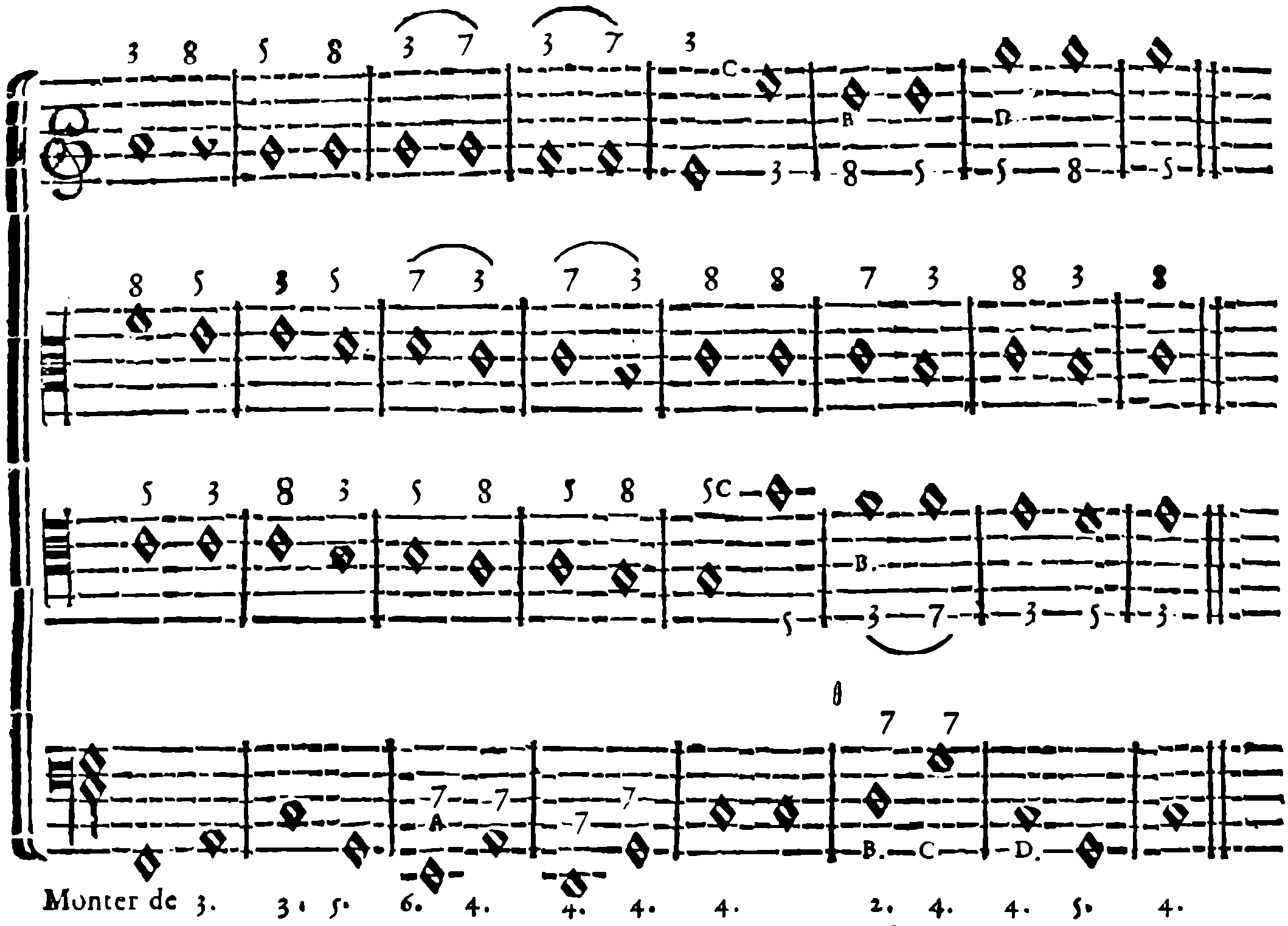
We can now place sevenths on E, A, D, and G, because the bass may descend a third to prepare the seventh by a fifth, or ascend a second to prepare it by an octave. At C two parts rise an octave together. This may restore their natural ranges, provided they do not form consecutive fifths or octaves with one another. What we said about a part in relation to the bass also applies to any two parts considered separately. We did not mention this because their present arrangement makes special attention unnecessary.
If two parts may rise an octave, a single part may certainly do so, as the bass does at J instead of remaining on the same degree. An upper part may not do this where it prepares a dissonance; there it must remain on the same degree.
Do not yet attend to the sharp placed on F. Beginners need not use sharps or flats until they know more.
If the bass exceeds its range and the tenor lies above the haute-contre, this is because we did not wish to disturb the upper parts’ diatonic order, to which we must chiefly submit here.
Everything still to be said depends on these first principles. The more thoroughly they are mastered, the easier the rest will be to understand.