 Playable Books
Jean-Philippe Rameau · section 60 of 109
Chapter seventeen
Read and hear this section in the playable edition →Different related bass progressions that leave the harmony of the upper parts unchanged
Since the tonic, its mediant, and its dominant can each carry a chord composed of the same sounds, remember that wherever the natural bass progression leads to their principal note, the tonic, either of the other two may be substituted for it. Likewise, if the progression leads to the mediant, the tonic may replace it. For the same reason, the dominant may be replaced by its third, fifth, or seventh when it is to bear a seventh chord, or by its third or fifth when it is to bear only a perfect chord.
See the following example.
Example
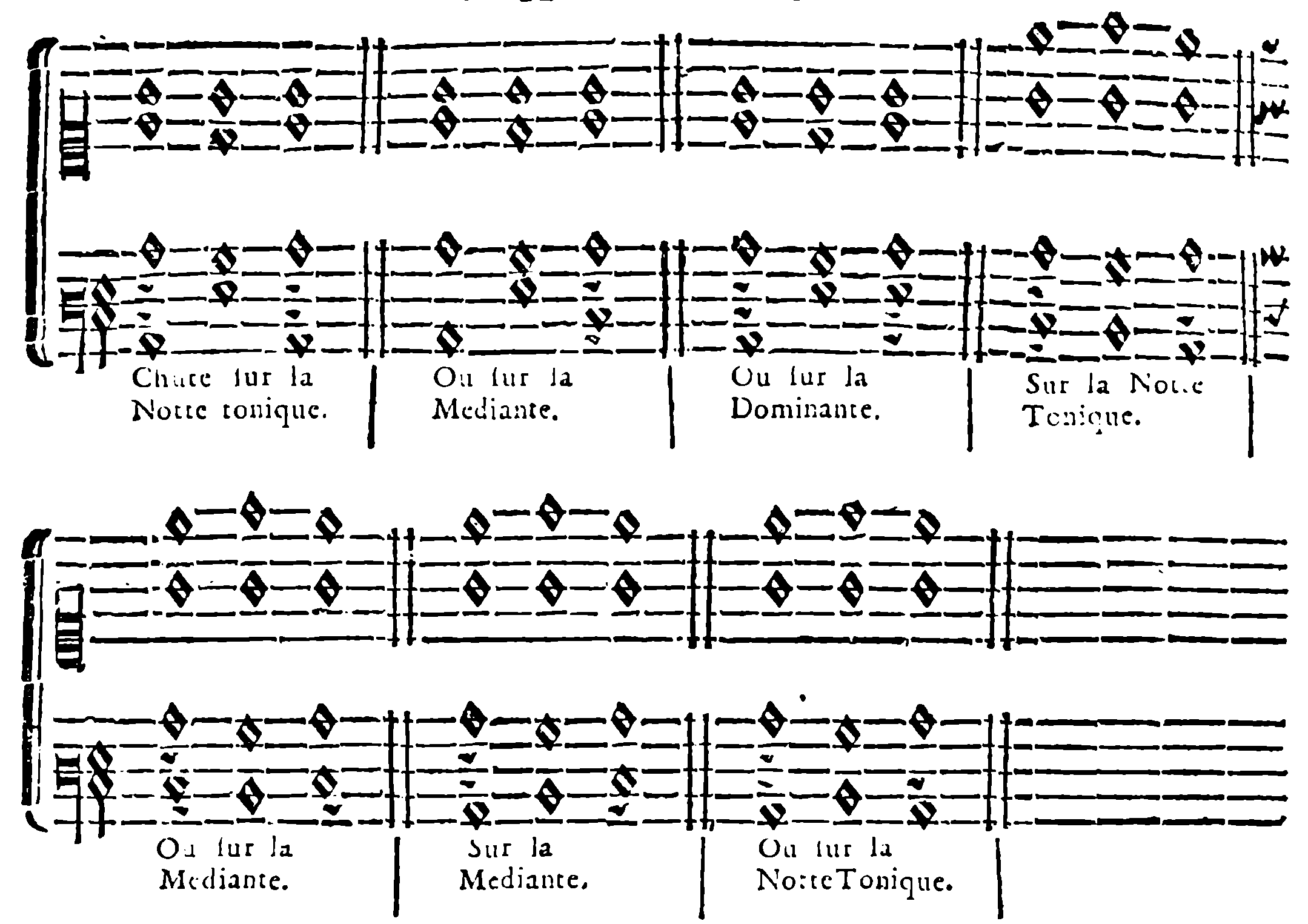
The last four arrivals and the following four are unsuitable for the dominant, because it would then be taken for a tonic.
Example
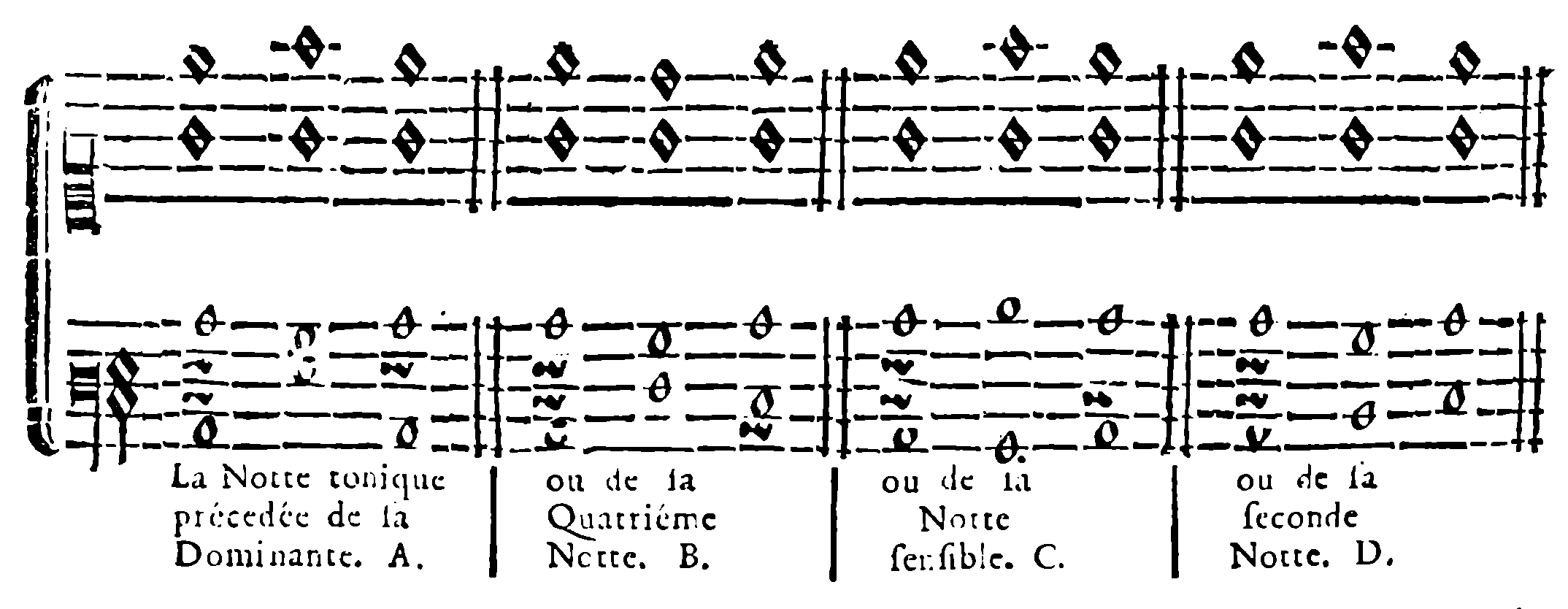
Although our examples begin with the tonic, they could equally begin with the mediant or dominant. See the guide notes.
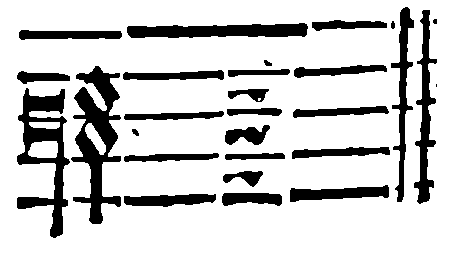
We do not mean the beginning of a piece, where the tonic must always come first. This rule can be broken in connection with fugues and so forth, but we have not yet reached that subject.
When the second note immediately precedes the tonic dominant, it then acts as its dominant and must carry a seventh chord. Its third and fifth may therefore replace it, but rarely its seventh, since that is the tonic, which, as such and for our present purposes, may appear only with the perfect chord.
See the Supplement
Example
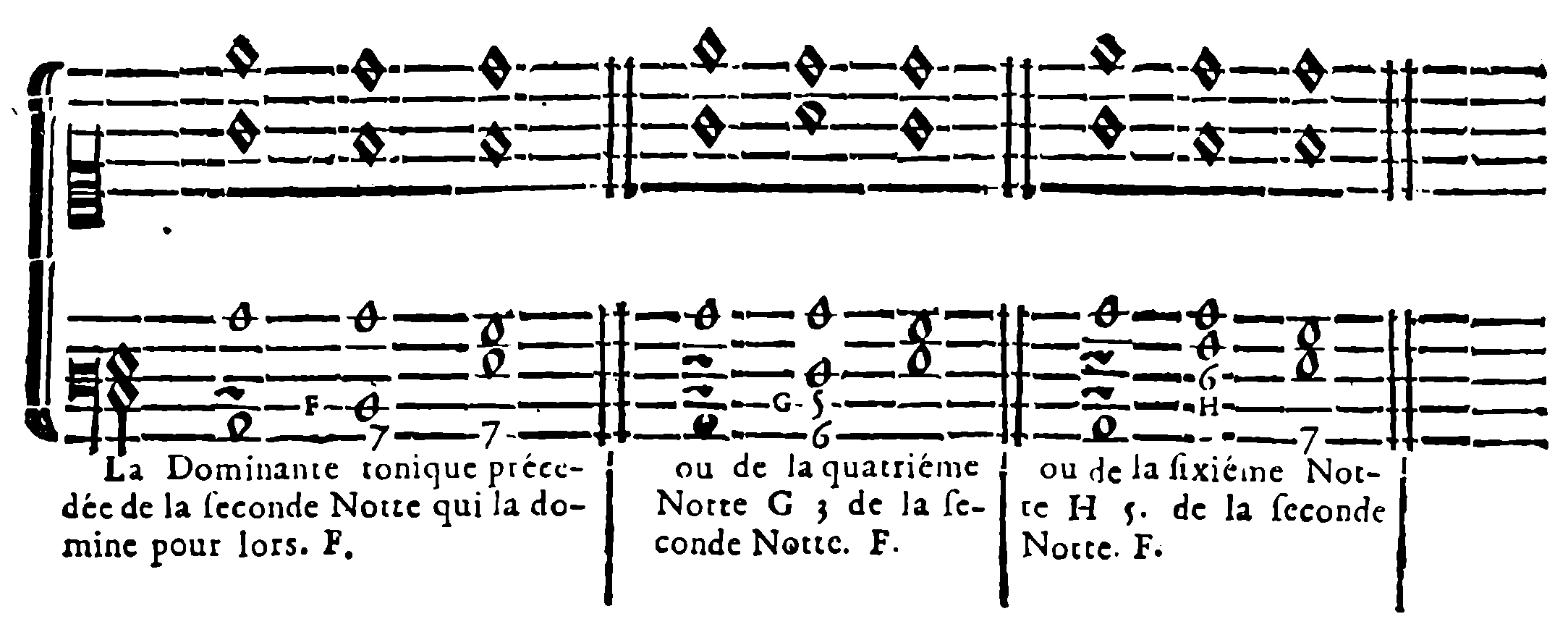
All these notes may now replace one another, provided the harmonic succession is not altered. To understand that succession, simply refer it to its foundation.
See the following example.
Example
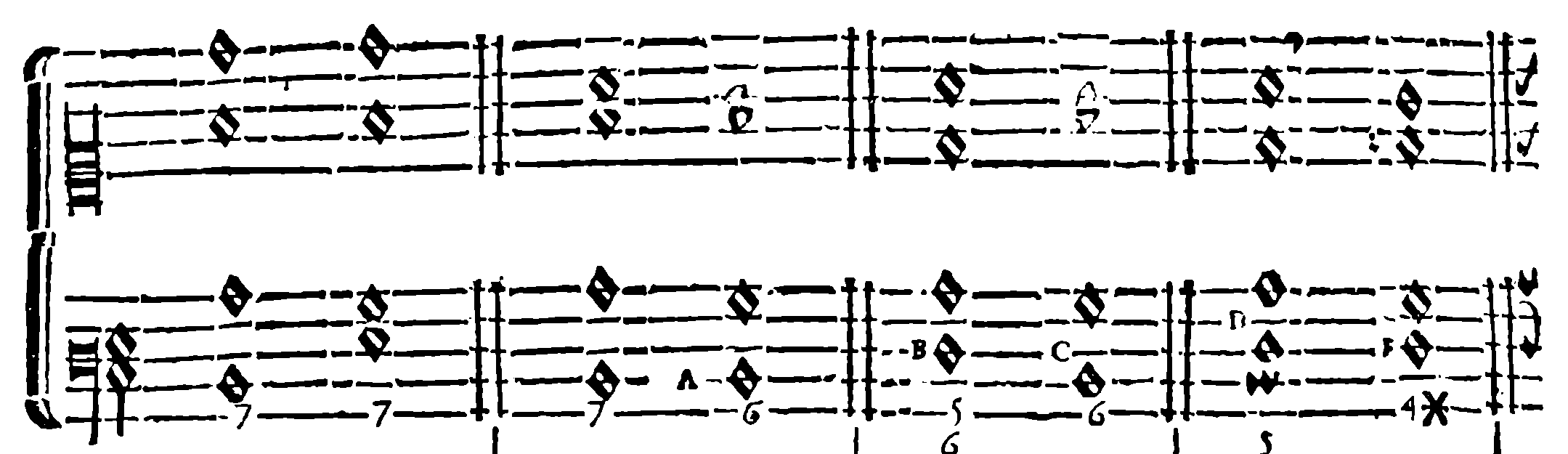
The second note, here acting as dominant of the tonic dominant and serving as fundamental bass for the others.
Second note A, taking the place of the tonic dominant.
Fourth note B, replacing the second note, while second note C takes the place of the tonic dominant.
Fourth note D, replacing the second note, and at F the tonic dominant.
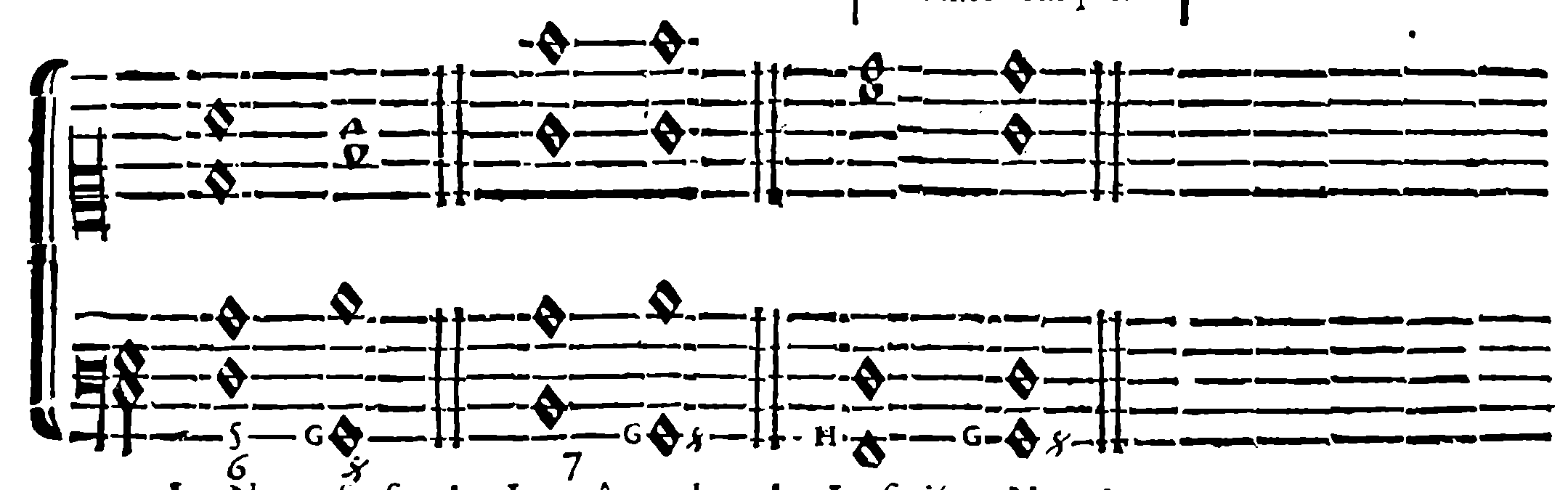
Leading note G, which after the fourth note takes the place of the tonic dominant.
The same thing in a different progression.
Sixth note H, replacing the second note when the latter acts as dominant of the tonic dominant; that tonic dominant is again represented by its 3♯, leading note G.
The sixth–fourth chord often suits the dominant better than the perfect chord in a diatonic progression, especially when the dominant falls on a weak beat of the measure.
In these few words, together with what has been said from the beginning of this book, we have all the different bass progressions usable in the most natural harmony. As for certain other dissonances not yet discussed, their progression is restricted on every side. Once everything explained thus far is thoroughly mastered, their use will therefore be easy to understand.