 Playable Books
Jean-Philippe Rameau · section 62 of 109
Chapter nineteen
Read and hear this section in the playable edition →On occasions when dissonances cannot be prepared
If, instead of making the fundamental bass descend by a third, fifth, or seventh, we made it ascend by the same intervals, we should find that the seventh could no longer be prepared. Yet we feel almost compelled to sound that seventh in such progressions. The diatonic progression of the octave in Chapter XI bears witness to this when we go from the tonic to the dominant and return immediately from the latter to the tonic (see Book Two, Chapter XIII). All masters agree on this, and the ear is not offended by it.
If the bass rises a third and immediately descends a fifth, the seventh sounded above the note reached by that ascent likewise cannot be prepared.
Example
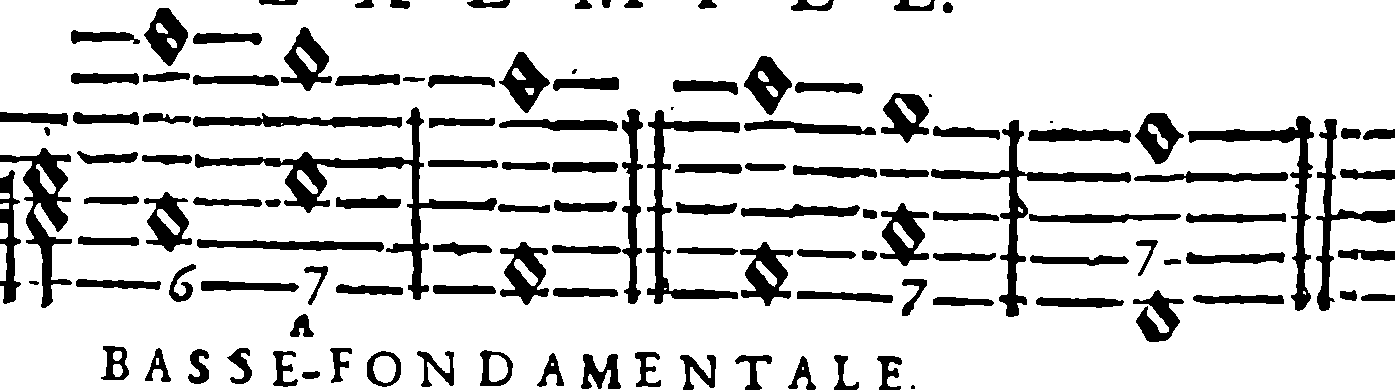
Example A represents a progression ascending a fifth, since it begins with the mediant, which represents the tonic. Example B, however, proves that the seventh cannot be prepared when the fundamental bass rises a third: the note forming the seventh with the second bass note cannot form a consonance with the first.
We could give the second note of Example B a major third, thereby changing key. This is very often done, especially in inverted harmony, as we see here.
Example
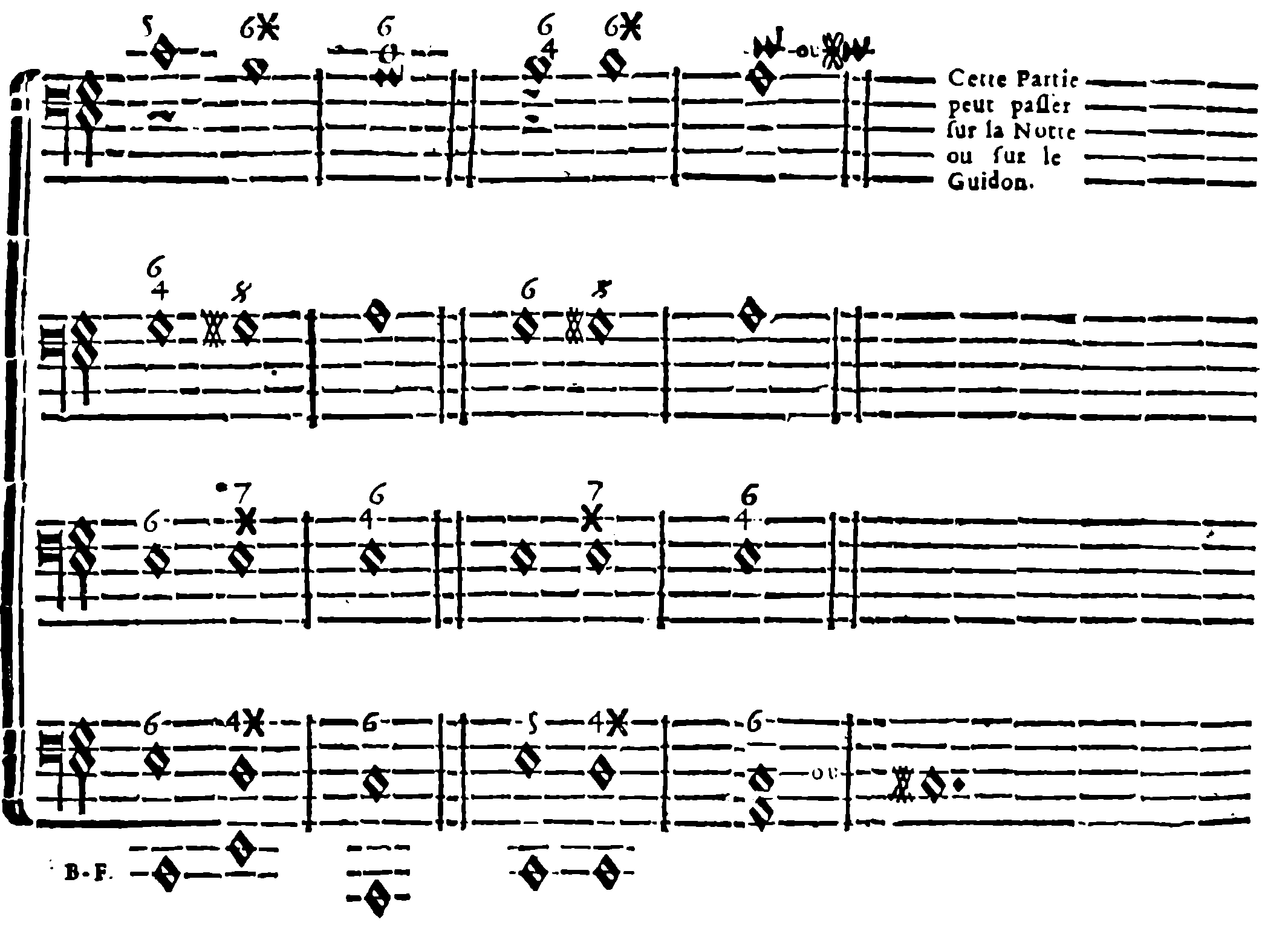
Each part may reciprocally serve as upper part or bass. We see here how the diminished fifth, tritone, and seventh may be left unprepared.
For an ascending seventh or descending second, in which the seventh cannot be prepared, see what we say in Book Two, Chapter XIII.
Observe that a dissonance may be unprepared only after a consonant chord. After a dissonant chord it absolutely must be prepared, according to the preceding rules.
Take care that we do not mean to include the leading note among these various prepared or unprepared dissonances. We are concerned here only with minor dissonances; the major dissonance arising from the leading note has no part in these latest rules. Indeed, it is for the sake of that major dissonance that the minor one often sounds without preparation—for example, when the fundamental bass rises a third or fifth and then descends a fifth. The perfect cadence formed by this final descending progression cannot occur unless the leading note has been heard in the chord of the first note of the descending fifth. We have valuable consequences to draw from this, but shall discuss them only after explaining how to pass from one key to another.