 Playable Books
Jean-Philippe Rameau · section 72 of 109
Chapter twenty-nine
Read and hear this section in the playable edition →On the Augmented-Fifth Chord
We still have to discuss certain chords introduced by license. Beginning with the augmented-fifth chord, we shall say that it can occur only on the mediant of minor keys.
Strictly speaking, this is merely the seventh chord of a tonic dominant, beneath which a fifth sound is added at the distance of a third.
Example
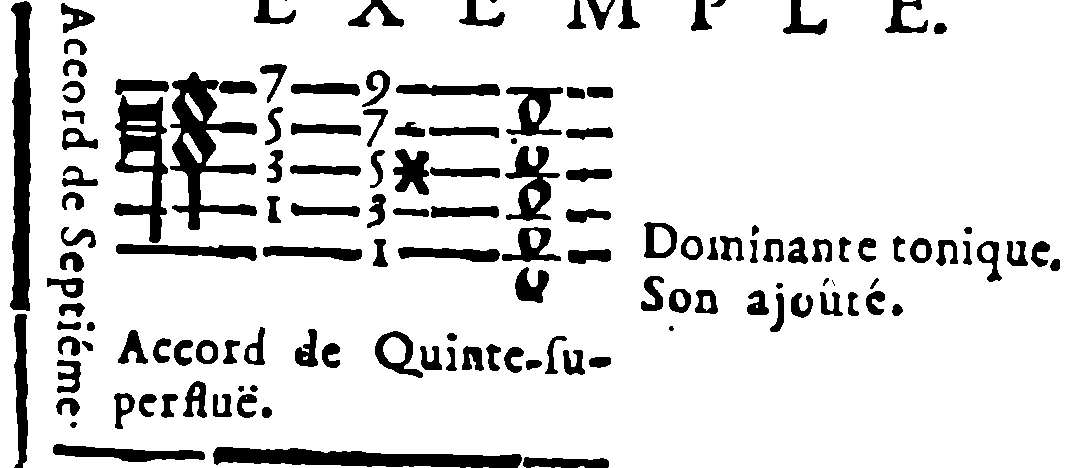
The foundation of this chord must be sought not in the added sound but in the chord formed on the tonic dominant. In this way our first rules remain valid. This seventh chord, founded on the tonic dominant, will always follow its ordinary progression: the major dissonance will ascend and the minor descend, everything resolving onto the tonic’s perfect chord. Meanwhile, the added sound will itself become part of that perfect chord or descend to the tonic note.
Example
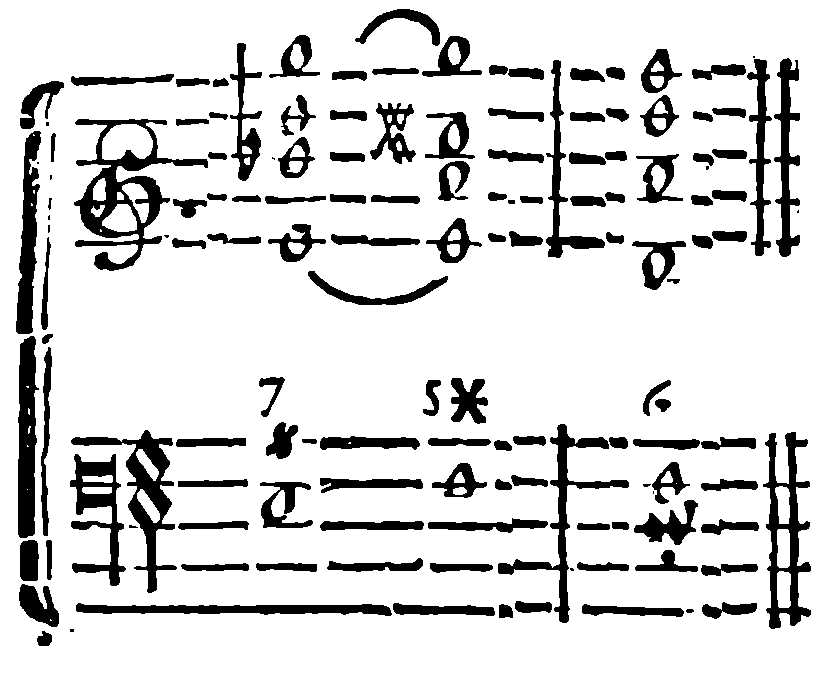
This chord must be prepared by the seventh chord on the note that is dominant to the tonic dominant. We see that the second note, which here acts as a dominant, rises only a semitone instead of a fourth to that tonic dominant. Meanwhile, the other parts sound only the seventh chord of the tonic dominant, which then resolves as we have always said it must.
This chord sometimes serves to interrupt a cadence by making the tonic dominant ascend a semitone to the added sound. That sound changes from sixth note to mediant, because the key changes through the new leading note that forms the augmented fifth.
Example
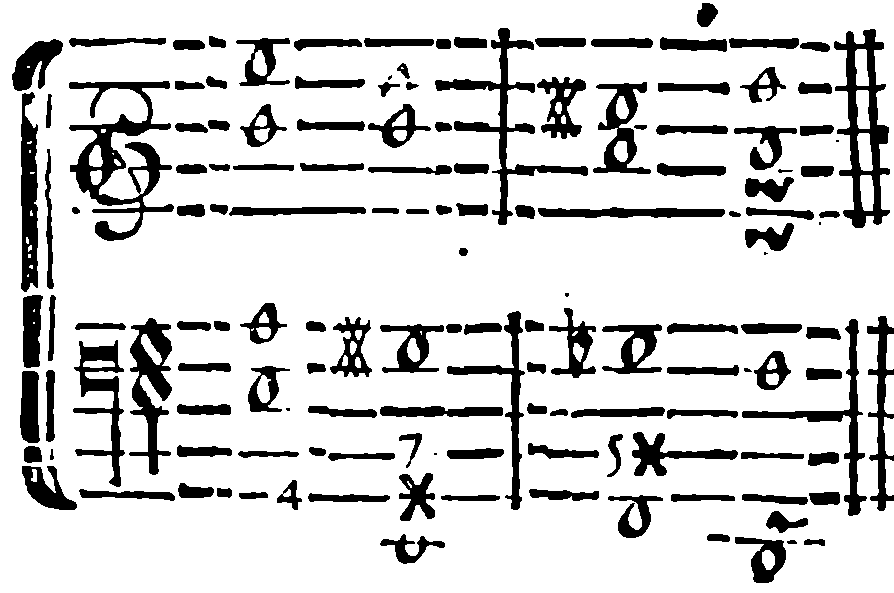
When composing in only four parts, one may place the notes marked by cue signs in the upper part in place of one of their corresponding notes in the other parts.
This chord can also be prepared by the chord from which it is derived.
Example
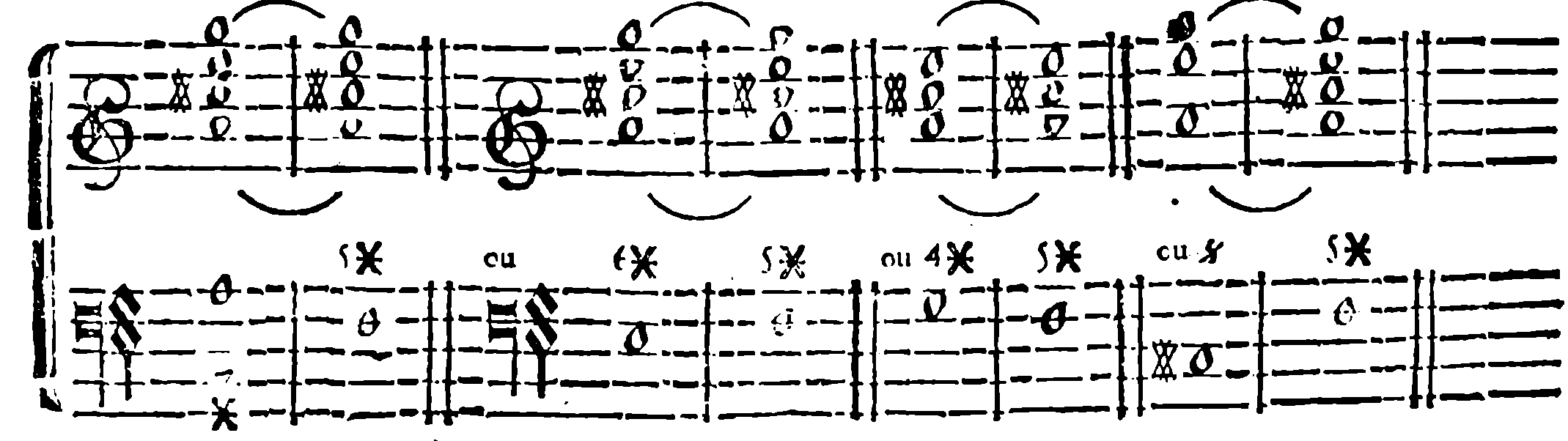
Others sometimes prepare it with the fifth of the same note, with the minor sixth of the note a semitone below, or with chords derived from the seventh chord on the note a semitone below. But this is somewhat bold.