 Playable Books
Jean-Philippe Rameau · section 74 of 109
Chapter thirty-one
Read and hear this section in the playable edition →On the Eleventh Chord, Called the Fourth
The eleventh chord consists of five sounds, thus: [D, A, C, E, G: 1. 5. 7. 9. 11.]. We see that the added sound lies a fifth below the foundation of the seventh chord:
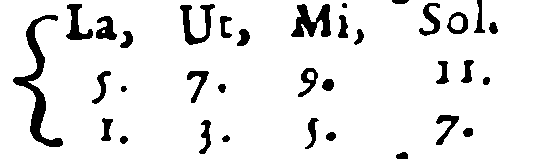
This chord is little used because it is extremely harsh, containing three minor dissonances, as the numbers 7, 9, and 11 show. Its use is nevertheless easy, since the three consonances of the preceding chord prepare these three dissonances by remaining on the same degree. But all three must not resolve at once: being minor and required to descend, they would make two consecutive fifths unavoidable between the parts. One must therefore resolve the harshest first, the eleventh and ninth, and then resolve the seventh.
Example
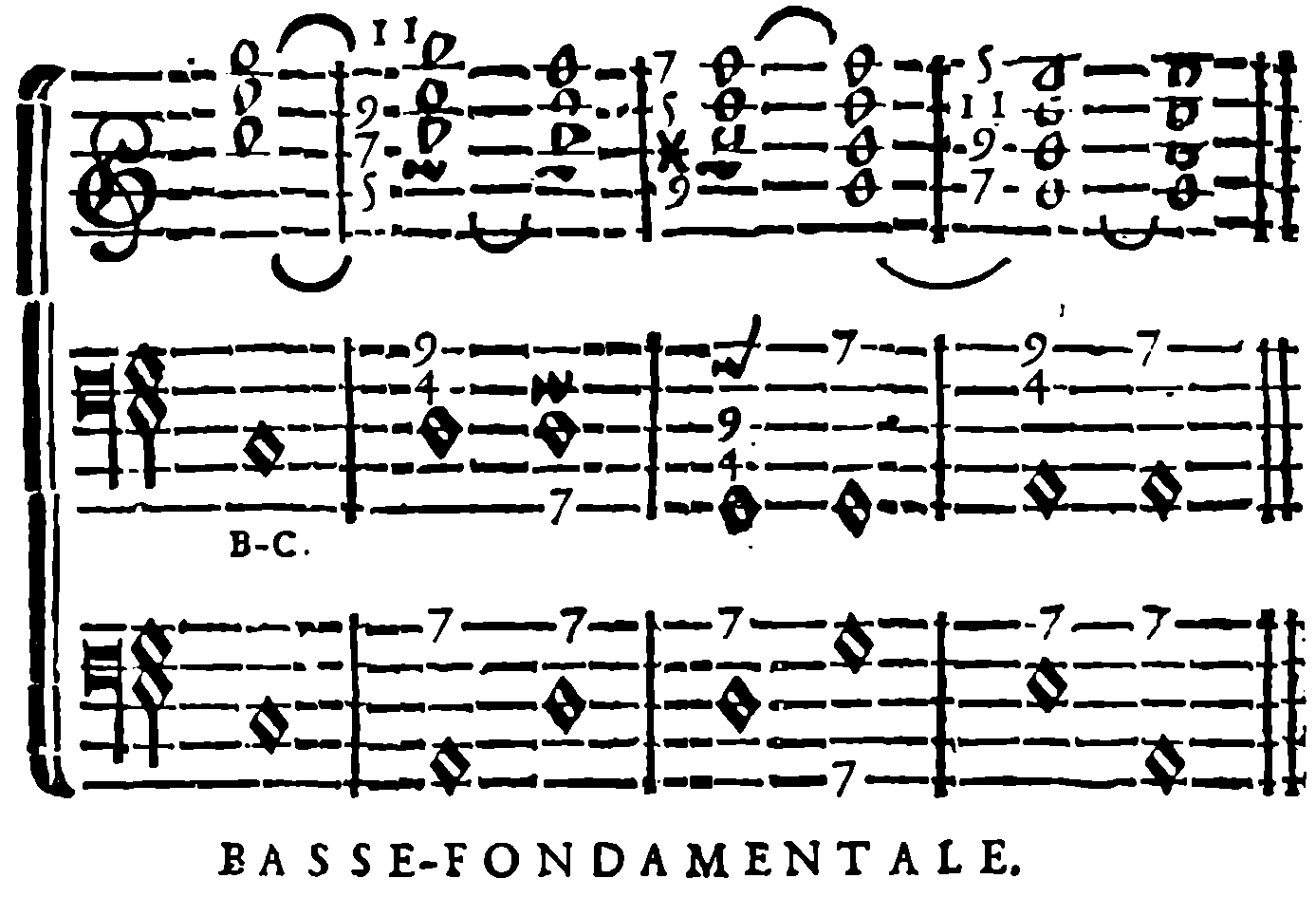
We see that the continuo bass progresses as it does with the ninth, as regards preparing the ninth and eleventh. But in resolving the eleventh, it is always advisable to leave the bass on the same degree so that the seventh chord may then be heard. The bass may nevertheless ascend a third, as its cue sign shows; one would then hear the great-sixth chord derived from the seventh chord on the note that remains on the same degree.
The cue signs in the upper part show the fifth sounds that do not always complete this eleventh chord, especially in four-part composition. One may sound this fifth sound in place of one of the others, provided it is not dissonant, or, if dissonant, is at least prepared.
We are speaking here of the true eleventh chord in its complete construction. Its great harshness, however, forces us to remove most of its sounds, in accordance with the chord discussed in Chapter XV, which for this reason may be called heteroclite. This alteration makes it much more tolerable. Thus it is rarely used in its full extent, although, when aptly employed, it sometimes provides pleasing suspensions of harmony and melody.
Example
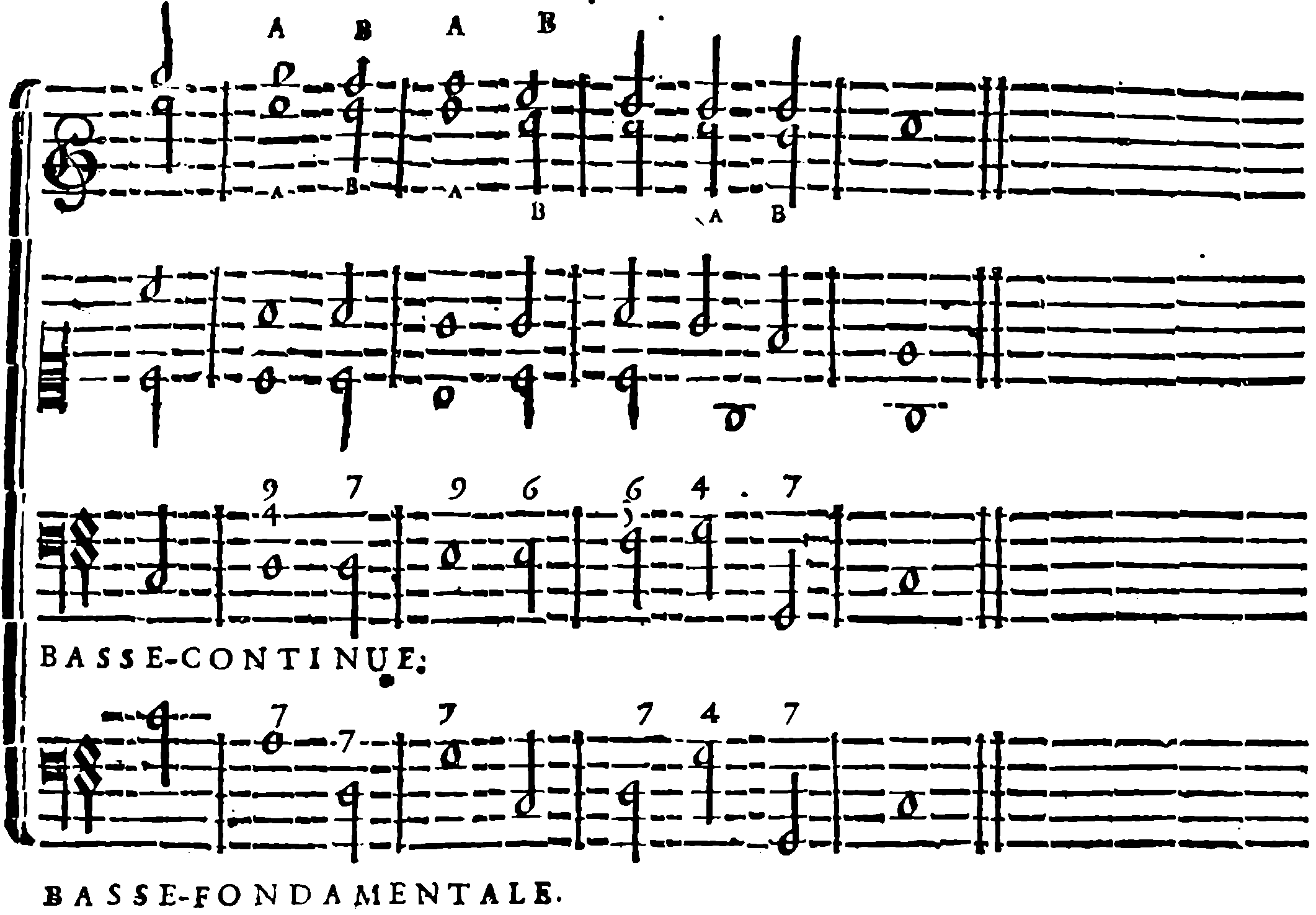
Following customary practice, we figure this chord simply with 4 when it is heteroclite; when all its sounds are present, we add 9, thus [4/9] or [9/4]. The heteroclite chord is also sometimes accompanied by the seventh, and is then figured [7/4] or [4/7].
Chords by supposition certainly serve only to delay the sounds that should naturally be heard. What is observable between A and B, where the sounds at A suspend those at B that should naturally sound, will be found wherever these chords occur, by comparing them with the continuo bass rather than the fundamental bass, which always represents perfect harmony.