 Playable Books
Jean-Philippe Rameau · section 75 of 109
Chapter thirty-two
Read and hear this section in the playable edition →On the Augmented-Seventh Chord
The augmented-seventh chord differs from the eleventh chord only in the third of the fundamental sound, which is major here instead of minor.
Example
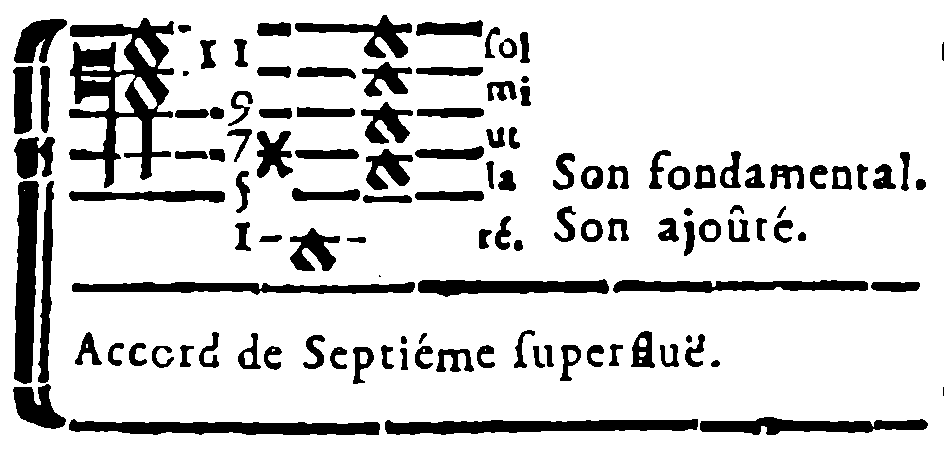
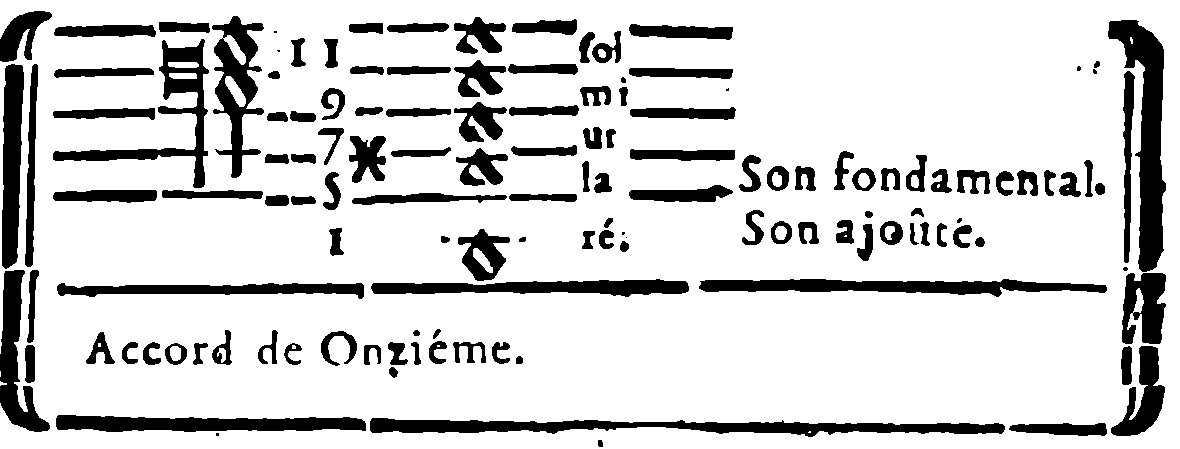
[Manuscript note: see the Supplement.]
This chord, which occurs only on the tonic note, must be preceded and followed by the perfect chord on that same tonic.
Example
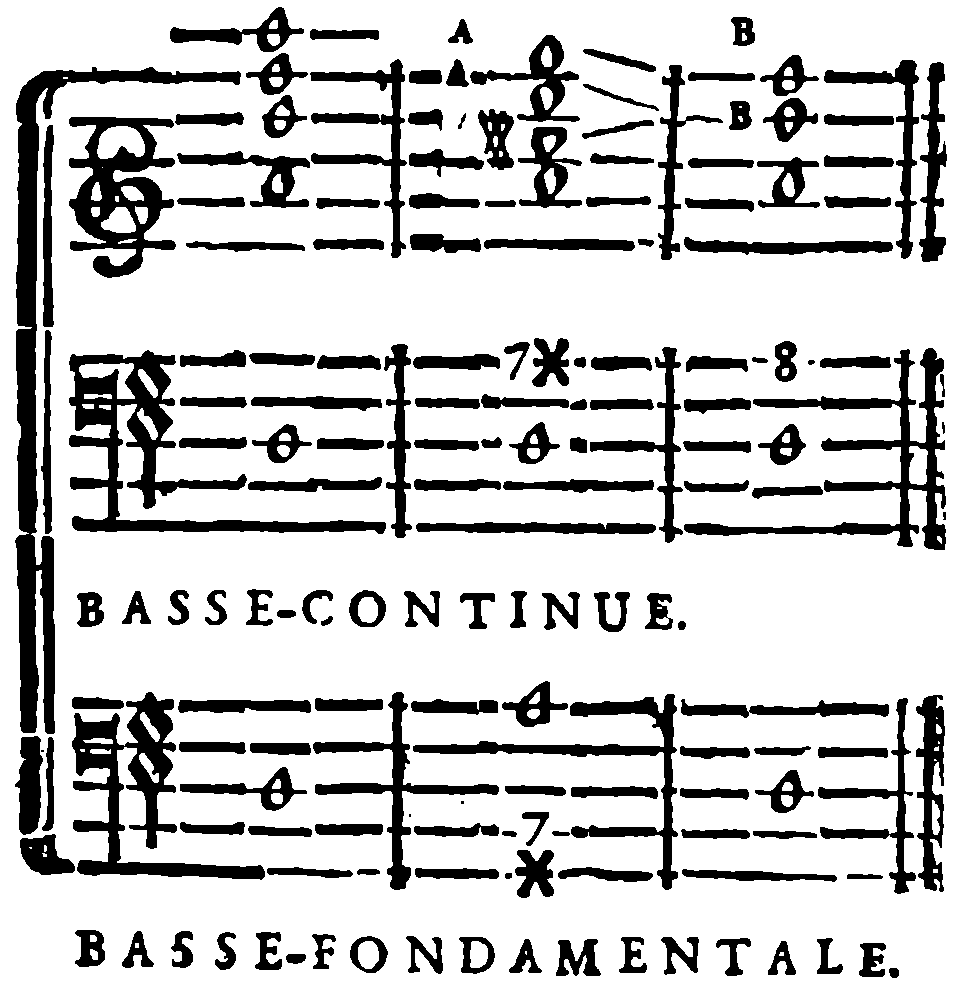
The sounds at A suspend those at B, and these marks [diagonal lines] indicate the natural progression of the sounds at A.
The sound forming the augmented seventh is often omitted from this chord when the bass descends a whole tone or semitone.
Example
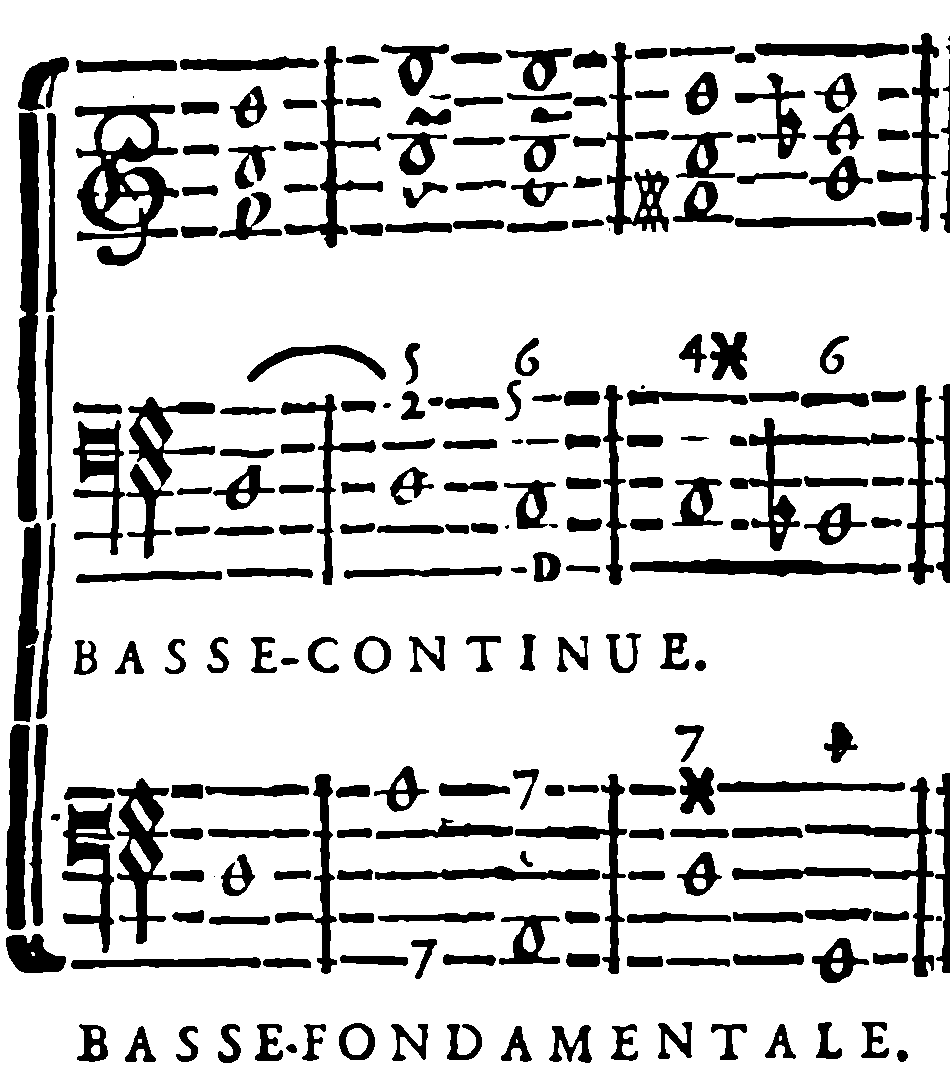
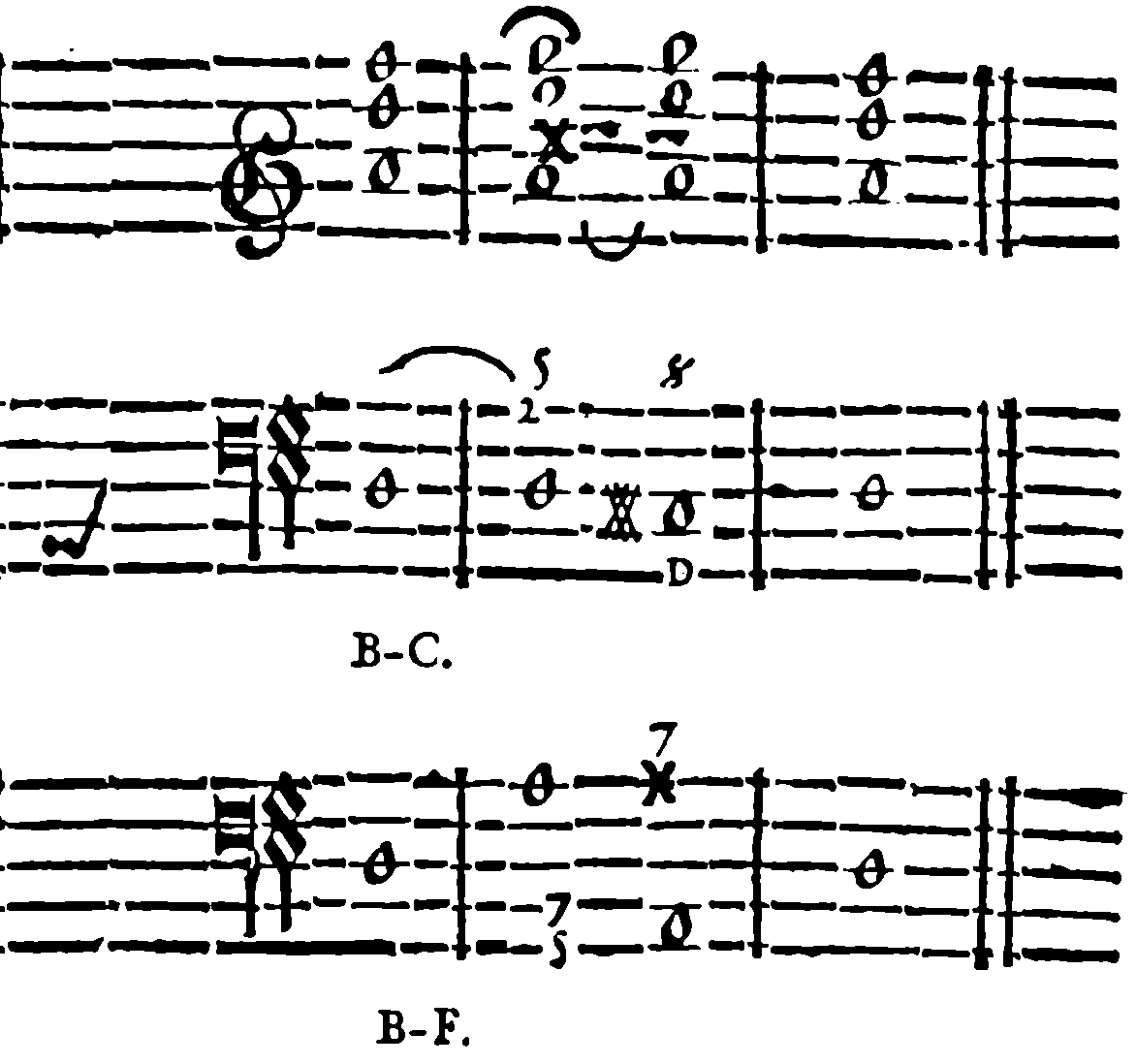
This chord is figured with 2 because it is prepared like the second chord. But since the fifth and fourth occur together in it, that fourth can only be regarded as a dissonance by supposition. Indeed, this chord represents the eleventh or augmented-seventh chord with the sound omitted that appears immediately afterward in the bass at D, because that sound does not welcome its octave equivalent.