 Playable Books
Jean-Philippe Rameau · section 94 of 109
Chapter VII
Read and hear this section in the playable edition →The order to follow in the succession of chords found within the octave of each key
First imagine that every note bearing the perfect chord is the tonic; that in each key only the tonic and its dominant have this privilege; and that even when this dominant bears the seventh chord, it may still be taken as a tonic. This makes it easier to recognize the chords that should precede the tonic or its dominant, for they are almost always the same.
1°. If the tonic must be preceded by a seventh chord when the bass rises a fourth or falls a fifth—which amounts to the same thing—its dominant must likewise be preceded by that chord in the same progression.
Example
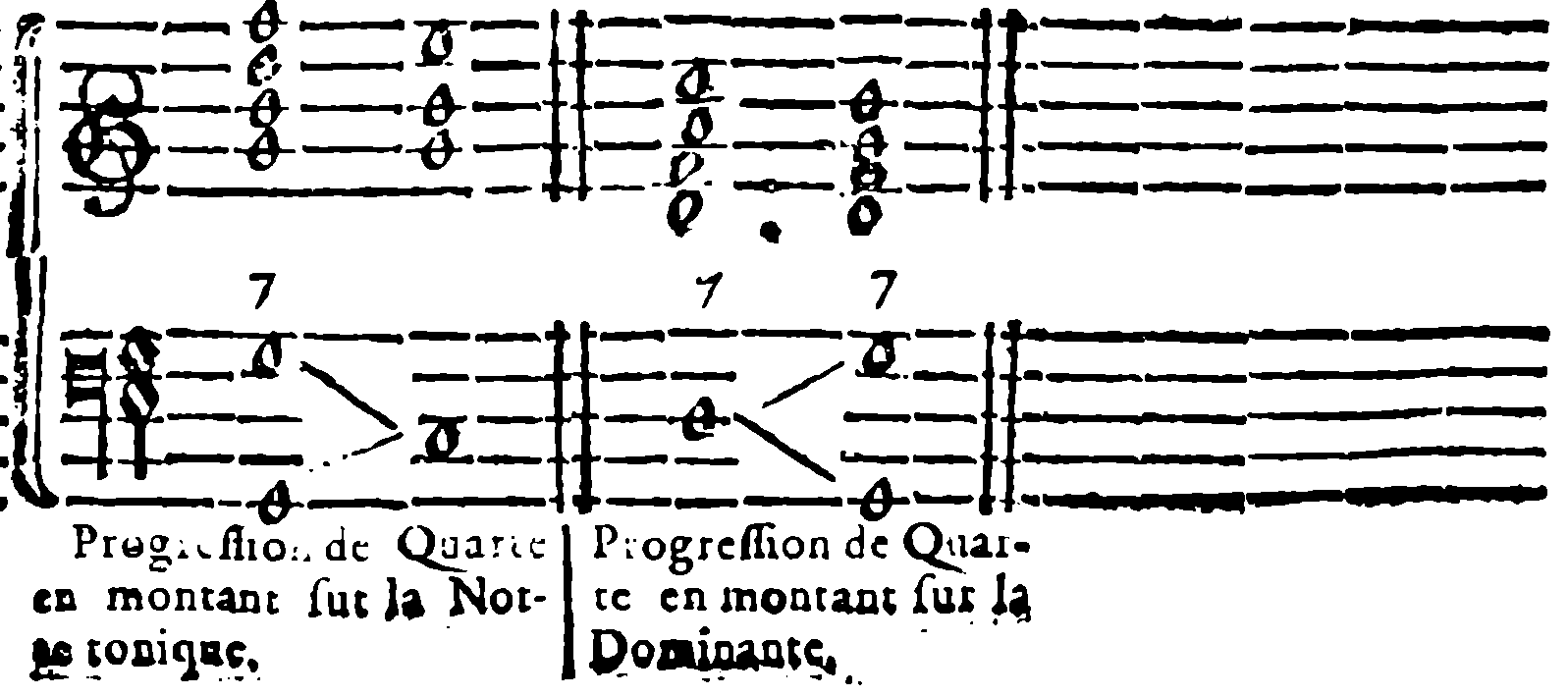
2°. If the tonic must be preceded by the small-sixth chord when the bass descends diatonically to it, and by the diminished-fifth chord when the bass similarly ascends to it, the dominant will likewise be preceded in the same progression.
Example
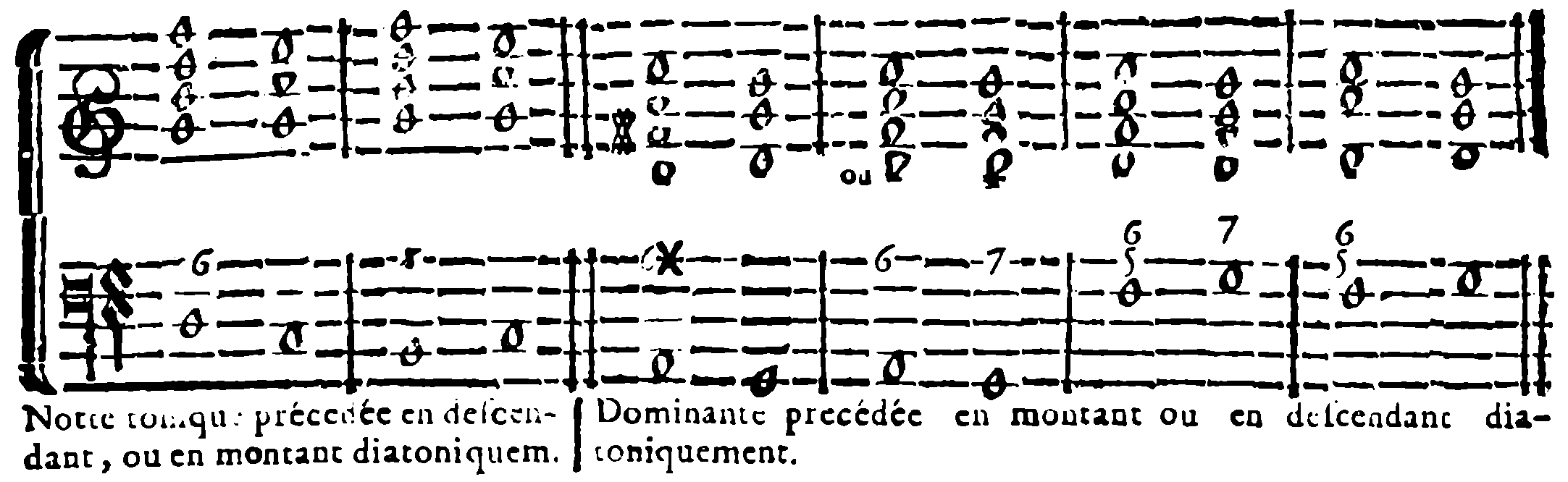
You have just seen that when the dominant bears the perfect chord, a ♯ is added to the sixth preceding it. The resulting small-sixth chord is thus composed like the one that preceded the tonic in the same progression. At that moment one can distinguish this dominant from the tonic only by what follows. But if a seventh is to be played on the dominant, that should identify it immediately.
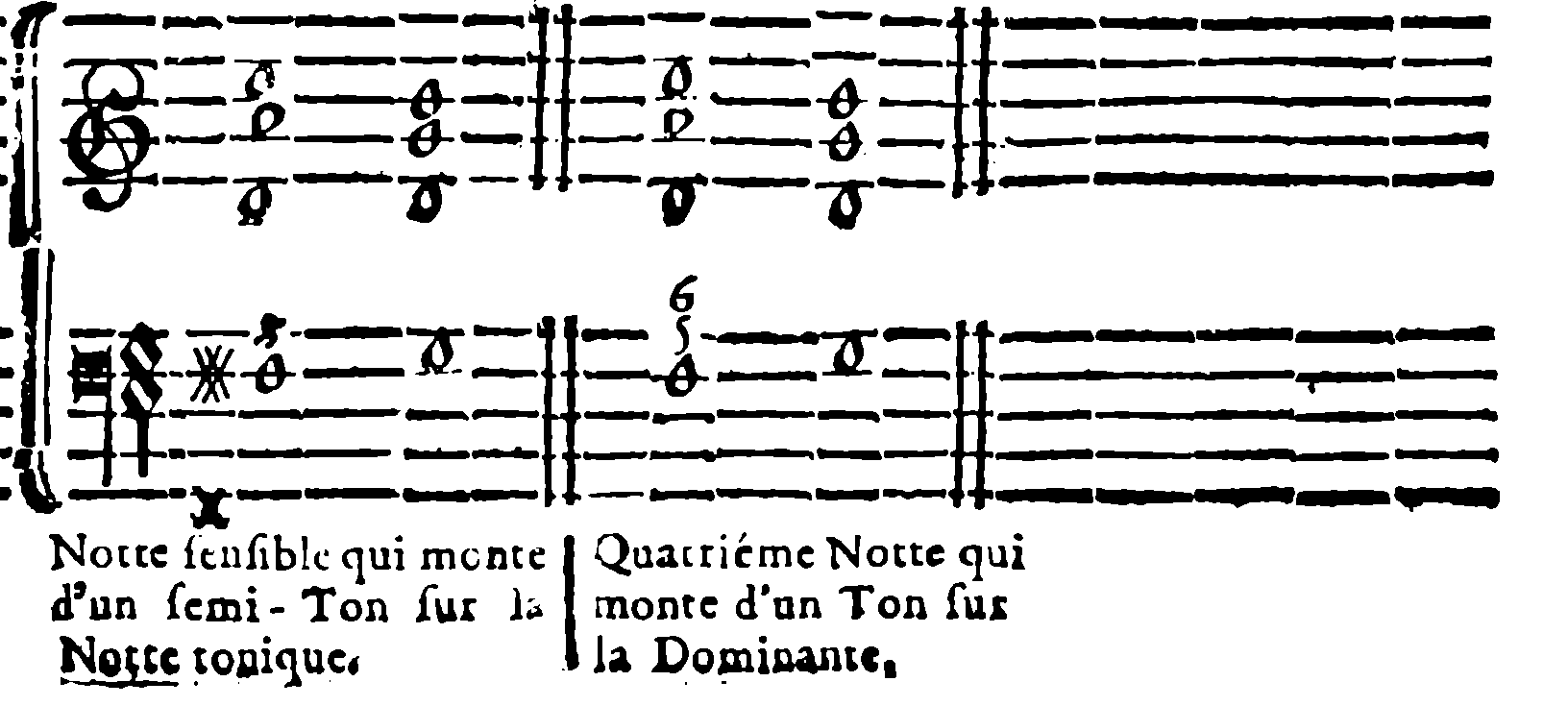
As for the tonic and dominant approached diatonically from a diminished-fifth chord, you will find this difference: the diminished-fifth chord precedes the tonic, whereas the great-sixth chord precedes the dominant. These two chords differ only in the bass, which rises a semitone to the tonic and a whole tone to the dominant. Otherwise the chords are arranged alike, as the example shows. This should help distinguish a leading note from a fourth degree, and a tonic from its dominant.
Example
Observe also that the seventh, small-sixth, great-sixth and diminished-fifth chords that have preceded the tonic and its dominant, according to the bass’s different progressions, differ only in appearance: they all derive from the seventh chord. Therefore any note preceding another by rising a fourth or falling a fifth must bear a seventh chord. If the progression from the first note to the next is diatonic, it must bear a chord derived from the seventh chord, provided the arrival note bears the perfect chord or seventh chord. The figures show this, for beginners should never accompany without figures.
Example
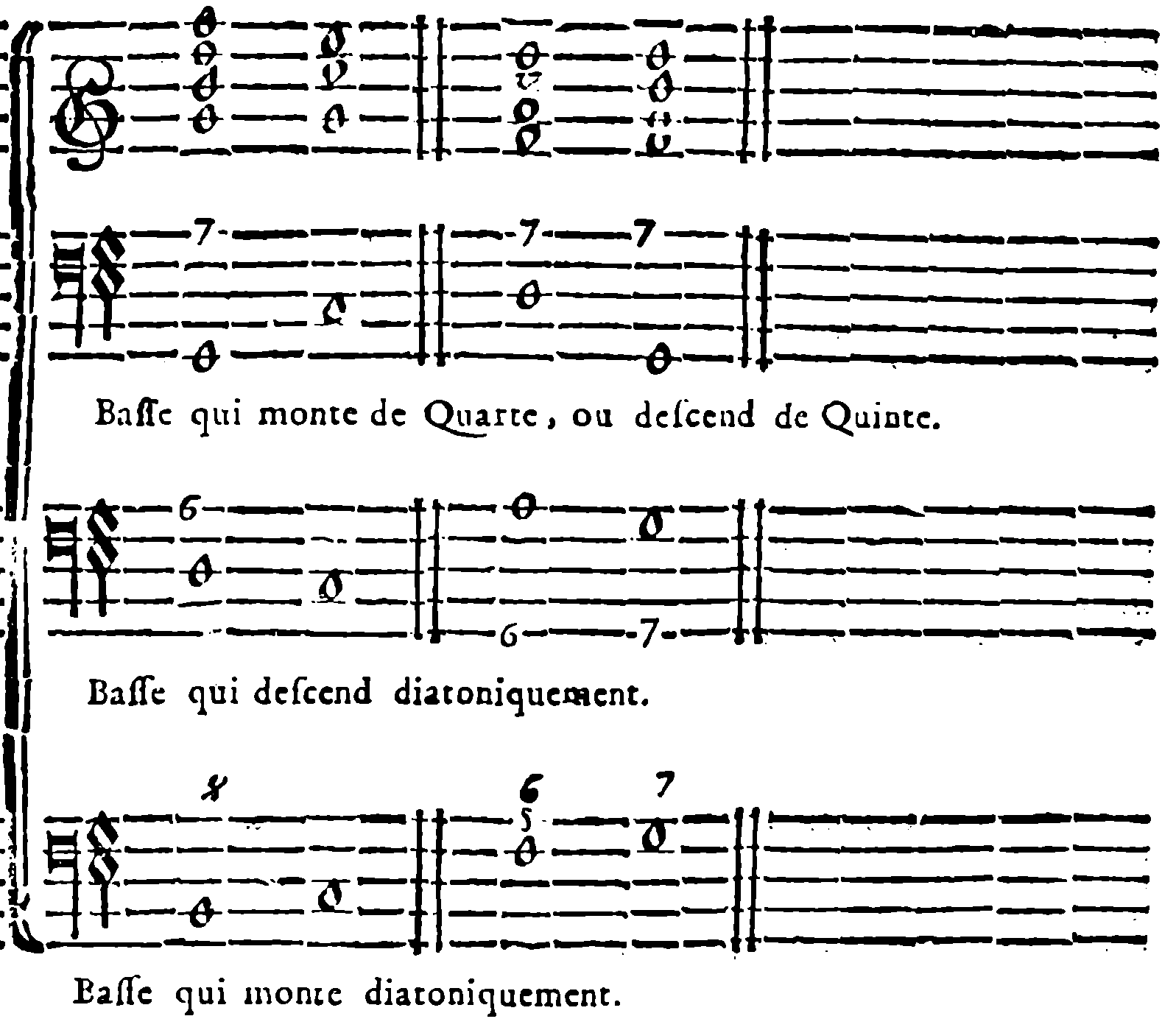
The same chords serve each bass here. The diminished-fifth, small-sixth and great-sixth chords consist of the same notes as the seventh chord on the note that rose a fourth. These chords receive different names only because of the different bass progressions; fundamentally they all come from the same chord.
Any major–minor difference that may occur in the chords, as between the diminished fifth and great sixth, and so forth, is recognized either from the bass progression or from the modulation, which requires us to use only certain notes or keys in a given key. If the key changes, sharps or flats attached to the figures indicate it.
These observations imply that, since a note lends its perfect or seventh chord only to its third, fifth or seventh, the sixth and sixth–fourth chords derived from the perfect chord must be preceded by the same chord that naturally precedes that perfect chord. This was visible in the preceding octaves, where the mediant requires the same preceding chord as the perfect chord.
Example
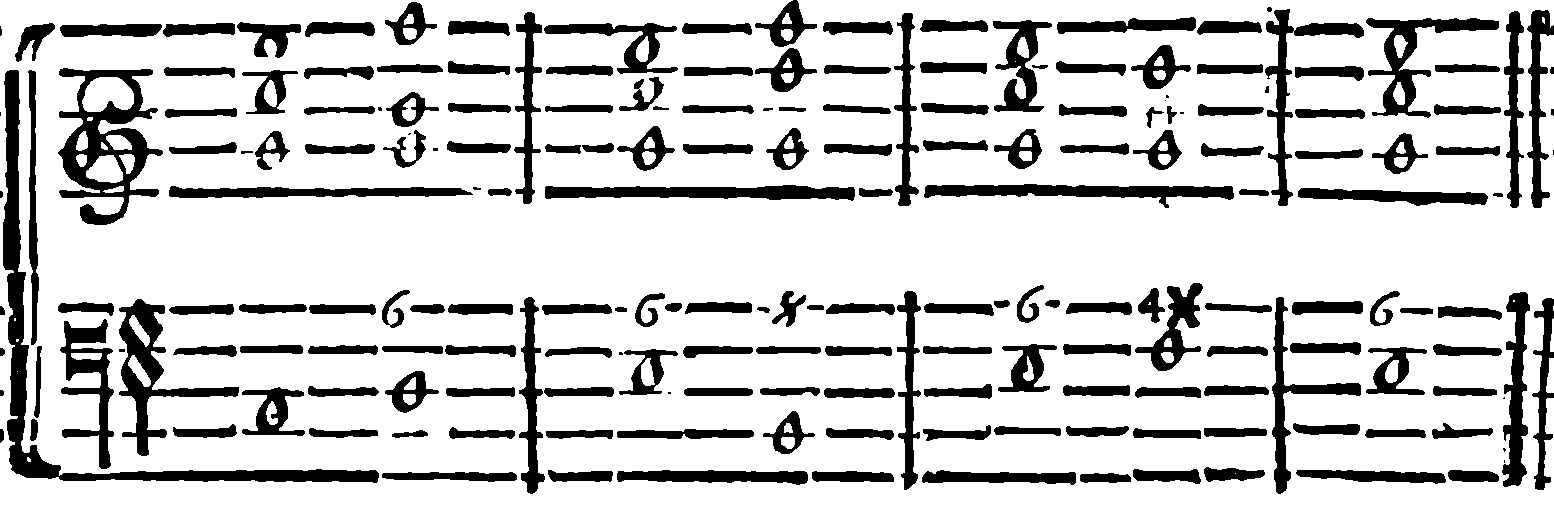
Moving from a consonant chord to another consonant chord or to a dissonant chord is not difficult to perform and deserves less attention than moving from one dissonant chord to another. This latter progression chiefly and most frequently occurs in the seventh-chord progression shown in the next-to-last example. Here are the different chord successions that may be derived from it.
See the following example.
Example
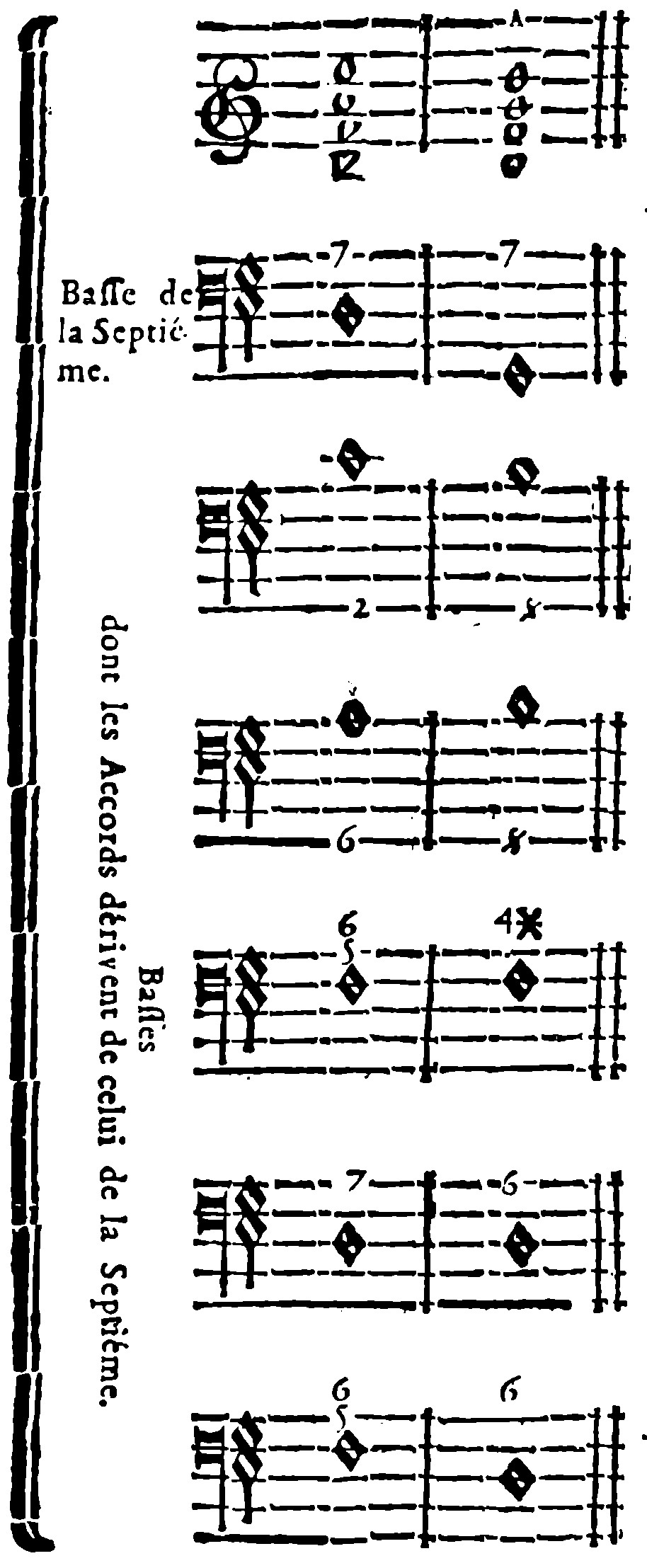
These chords serve each bass. One may even retain all four notes they contain, except the leading note marked A, which must be removed when it occurs in the bass. Alternatively, simply remove from each chord the octave of the note played in whichever of the five lower basses is used, until a fuller rule on this subject is given.
If the perfect or seventh chord of one note must precede the chord of another, then the latter note’s chord must follow the former’s. Knowing one thus leads to knowing the other. Keep these progressions in mind in both directions, for the original chords as well as their derivatives.
To be fully convinced, consult the preceding octaves. The chords leading upward from the mediant to the dominant are the same as those leading from the sixth degree to the tonic. Likewise, those leading downward from the seventh degree to the dominant are the same as those leading from the mediant to the tonic. And the mediant is everywhere approached like the tonic. The details that follow will make this clear.