Pyotr Ilyich Tchaikovsky · раздел 14 из 36
Глава XII. Нонаккорд Читать и слушать этот раздел в воспроизводимой версии →
Машинный перевод английской версии. Черновик; носитель русского языка ещё не проверял перевод.
§ 34. Как в мажоре, так и в миноре на 5-й ступени находится пятиголосный аккорд; он называется нонаккордом по интервалу ноны, образуемому нижним и верхним голосами.
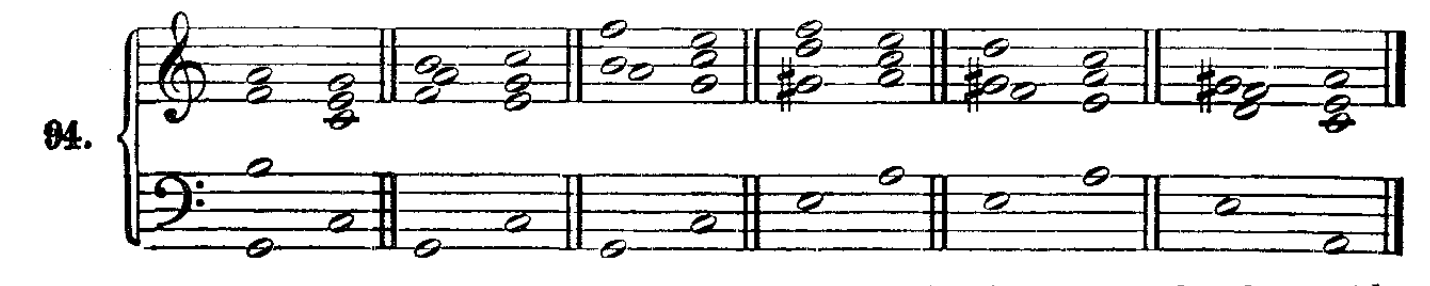
Этот дважды диссонантный аккорд в мажоре содержит большую нону и потому называется большим нонаккордом. В миноре он содержит малую нону и называется малым нонаккордом. Нонаккорд разрешается в тоническое трезвучие; уже рассмотренные в доминантовом аккорде звуки ведутся по-прежнему, а нона, как и септима, идёт на одну ступень вниз.
В четырёхголосном изложении квинта опускается.
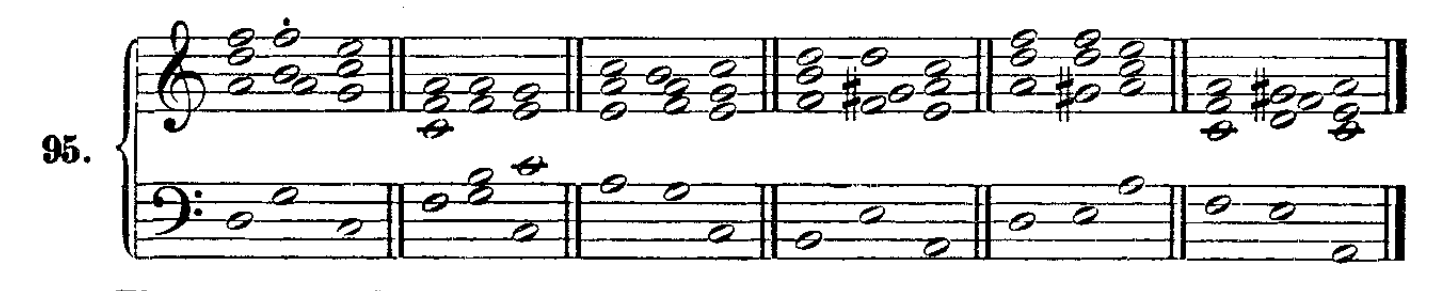
Рис. 98 · Воспроизвести пример в книге ▶ § 35. Нонаккорд как сильно диссонантный аккорд должен быть приготовлен: нона должна входить в предыдущий аккорд и удерживаться в том же голосе. Приготовляющими аккордами могут служить трезвучия 2-й, 4-й и 6-й ступеней.
Рис. 99 · Воспроизвести пример в книге ▶ Тоническое трезвучие также может служить приготовляющим аккордом, если появляется в том же положении, что и при разрешении нонаккорда.
§ 36. Обращения нонаккорда не употребляются.
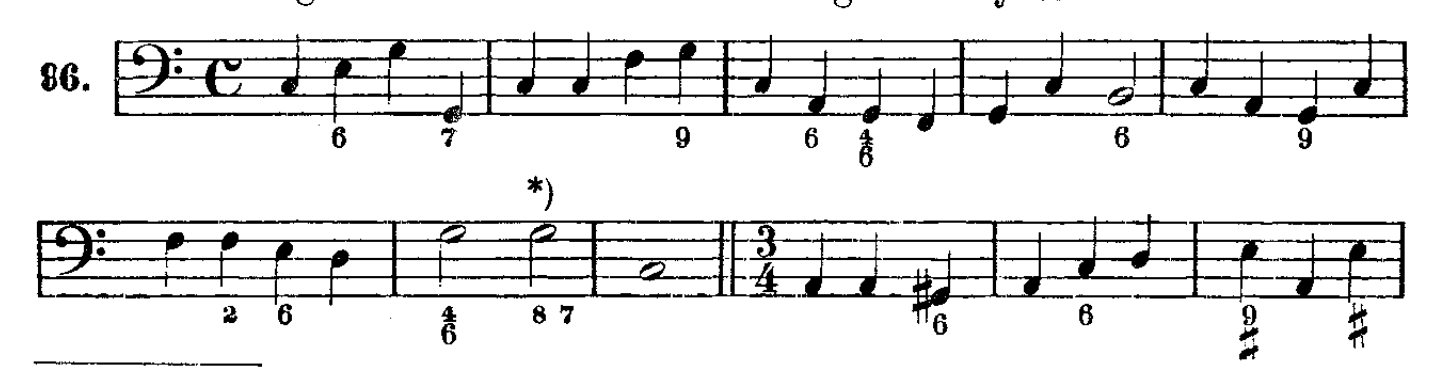
Примечание. В цифрованном басу этот аккорд обозначается цифрой 9.
Рис. 100 · Воспроизвести пример в книге ▶ *) Цифры 8 7 означают, что в доминантовом трезвучии октаву следует перевести в септиму, вследствие чего образуется доминантовый аккорд.
← Глава XI. Свободное голосоведение Все разделы Глава XIII. Малый и уменьшённый септаккорды → Другие Playable Books Fenaroli, Partimenti Six books of partimenti, with playable basses, contrapuntal exercises, and bilingual rules. Fux, Gradus ad Parnassum Learn how independent voices work together, one species at a time. Goetschius, Exercises in Elementary Counterpoint Build independent melodies through graded exercises, with 471 recorded examples. Goetschius, Counterpoint Applied Study imitation, canon, and fugue with 393 recorded examples. Kitson, Counterpoint for Beginners Strict counterpoint in two and three parts, species by species, with every example playable. Prout, Analysis of J. S. Bach’s Forty-Eight Fugues Follow Prout through all 48 fugues of the Well-Tempered Clavier, every example playable. Rameau, Treatise on Harmony Explore the foundations of harmony, composition, and accompaniment. Rimsky-Korsakov, Practical Manual of Harmony The classic harmony course, newly translated from the 1910 French edition, with all 640 examples playable. Reger, Supplement to the Theory of Modulation Explore Reger’s modulation method with 100 analyses and 102 playable examples. Cutter, Harmonic Analysis Learn to name every chord and non-harmonic tone in real music, from Bach to Wagner, with the passages playable. Schoenberg, Theory of Harmony Read all 22 chapters, with the original German beside a new English translation. Rimsky-Korsakov, Principles of Orchestration Discover instrumental colors through scores and orchestral recordings. Forsyth, Orchestration A witty, thorough guide to every orchestral instrument, with the original pages. Forsyth, Choral Orchestration A whole Te Deum orchestrated bar by bar, with Forsyth’s reasons, the full score and the vocal score playable. Berlioz, Treatise on Instrumentation Berlioz’s treatise on the orchestra, revised by Richard Strauss, with the original pages. McKay, Creative Orchestration Ranges, transpositions, texture and balance, taught through projects, with the supplied examples played by orchestral samples. Sanganeria, Arrival Build jazz lines that land, with 30 original playable examples. Bona, Complete Method for Rhythmical Articulation Practice rhythm through 120 graded studies, with playable notation and original scans. Hanon, The Virtuoso-Pianist Practise all 60 exercises with playable notation, original scans and supplied Mutopia playback. Mathews, Standard Graded Course of Studies, Grade I A first year of piano: 136 short pieces by many composers, every one playable, with Mathews’s teaching notes. ← Все Playable Books  Playable Books