Hector Berlioz · section 50 sur 67
Le Tam-tam Lisez et écoutez cette section dans l’édition jouable →
Lecture française composite : passages originaux de Berlioz rétablis lorsque leur contenu concorde avec l’anglais ; ailleurs, nouvelle traduction automatique de l’édition anglaise Berlioz/Strauss de 1948. Brouillon, sans relecture par un locuteur natif. Provenance et ambiguïtés : fr-sources.html.
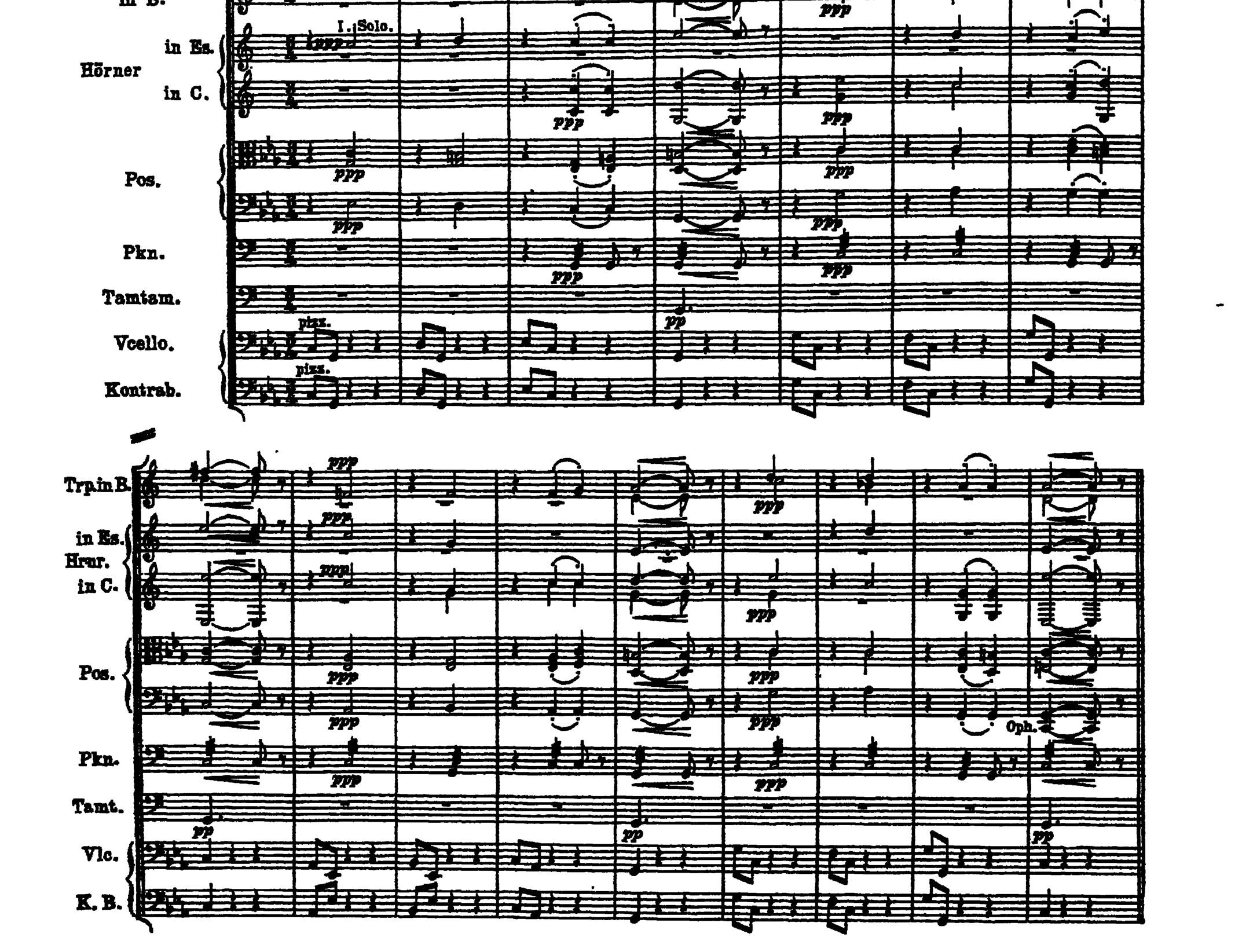
Le gong ou tam-tam ne s’emploie que dans les compositions funèbres ou dans les scènes dramatiques d’une horreur extrême. Son son puissant et vibrant, uni à de lourds accords des basses, trompettes et trombones,
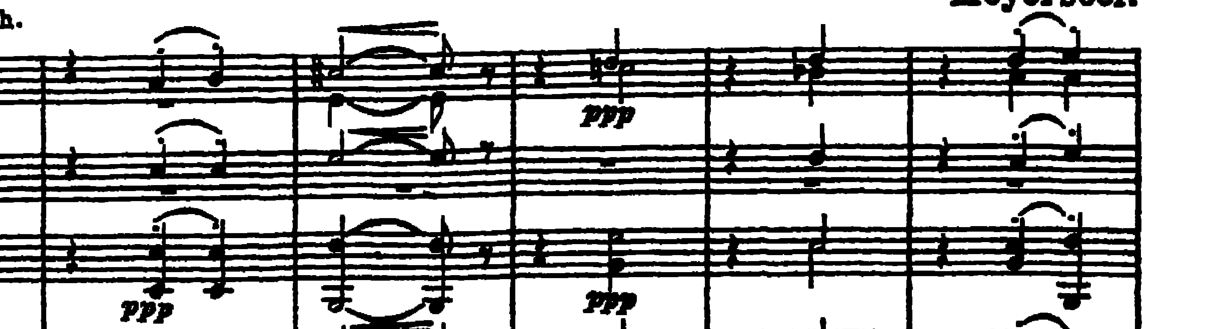
produit un effet véritablement terrible. Les coups lugubres pianissimo d’un tam-tam jouant presque seul ne sont pas moins effrayants. Meyerbeer l’a prouvé dans la magnifique scène de « Robert le Diable », « La Résurrection des nonnes » (Exemple 149).
149. ROBERT LE DIABLE, ACTE II
Fig. 905 · Le voir dans le lecteur Fig. 906 · Le voir dans le lecteur ← Les Cymbales Toutes les sections Le Tambour de basque → Autres Playable Books McKay, Creative Orchestration Ranges, transpositions, texture and balance, taught through projects, with the supplied examples played by orchestral samples. Fux, Gradus ad Parnassum Learn how independent voices work together, one species at a time. Goetschius, Exercises in Elementary Counterpoint Build independent melodies through graded exercises, with 471 recorded examples. Goetschius, Counterpoint Applied Study imitation, canon, and fugue with 393 recorded examples. Kitson, Counterpoint for Beginners Strict counterpoint in two and three parts, species by species, with every example playable. Prout, Analysis of J. S. Bach’s Forty-Eight Fugues Follow Prout through all 48 fugues of the Well-Tempered Clavier, every example playable. Rameau, Treatise on Harmony Explore the foundations of harmony, composition, and accompaniment. Rimsky-Korsakov, Practical Manual of Harmony The classic harmony course, newly translated from the 1910 French edition, with all 640 examples playable. Tchaikovsky, Guide to the Practical Study of Harmony Tchaikovsky’s Moscow Conservatory harmony course, with playable examples. Fenaroli, Partimenti Six books of partimenti, with playable basses, contrapuntal exercises, and bilingual rules. Reger, Supplement to the Theory of Modulation Explore Reger’s modulation method with 100 analyses and 102 playable examples. Cutter, Harmonic Analysis Learn to name every chord and non-harmonic tone in real music, from Bach to Wagner, with the passages playable. Schoenberg, Theory of Harmony Read all 22 chapters, with the original German beside a new English translation. Rimsky-Korsakov, Principles of Orchestration Discover instrumental colors through scores and orchestral recordings. Forsyth, Orchestration A witty, thorough guide to every orchestral instrument, with the original pages. Forsyth, Choral Orchestration A whole Te Deum orchestrated bar by bar, with Forsyth’s reasons, the full score and the vocal score playable. Sanganeria, Arrival Build jazz lines that land, with 30 original playable examples. Bona, Complete Method for Rhythmical Articulation Practice rhythm through 120 graded studies, with playable notation and original scans. Hanon, The Virtuoso-Pianist Practise all 60 exercises with playable notation, original scans and supplied Mutopia playback. Mathews, Standard Graded Course of Studies, Grade I A first year of piano: 136 short pieces by many composers, every one playable, with Mathews’s teaching notes. Goetschius, Lessons in Music Form Hear how figures become phrases, periods, rondos and sonata forms, with the printed examples beside their playable notation. ← Tous les Playable Books  Playable Books