Playable Books
Hector Berlioz · section 5 of 67
The Viola
Read and hear this section in the playable edition →

The four strings of the viola are tuned in fifths, like those of the violin, but a fifth lower:
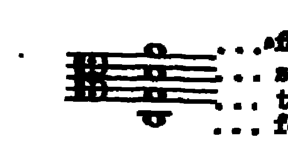
. « ofirst string

It is written in the alto-clef (C-clef on the third line); the G-clef is used for its highest notes.
All that has been said im the preceding chapter about trills, bowing, chords, arpeggios, harmonics etc., applies equally to the viola, which can simply be considered a violin tuned a fifth lower.
Of all the instruments in the orchestra it is the viola whose excellent qualities have been unappreciated for the longest time. It is just as agile as the violin. Its low stri have a characteristic, husky timbre while its high rfotes are distinguished by their mournfully passionate sound. The general character of its tones is one of profound melancholy and is notably different from that of the other string instruments. Nevertheless, it has long been neglected—or used, senselessly and ineffectually, for doubling the basses in the higher octave. The unjust treatment of this noble instrument has been due to several causes. In the first place, the masters of the 18th century, rarely writing four real voices, y did not know what to do with the viola. Whenever they could not give it a few notes to fill up the harmony, they did not hesitate to write the odious col basso—often so carelessly that the resulting octaves conflicted either with the harmony or with the melody or with both.
Furthermore, it was unfortunately impossible at that time to write any important passage for the viola requiring the most ordinary skill for its execution. Violists were always selected from the weaker violinists. If a musician was unable to fill creditably the post of a violinist, he was relegated to the violas. Thus, violists eventually could play neither the violin nor the viola. I must admit that even in our own time this prejudice against the viola has not disappeared completely. Even in our best orchestras we still find viola players who are no more proficient on that instrument
on the violin. But the harm caused by tolerating them is being recognized more and more; and little by little the viola will be entrusted only to skilled hands, just as the other instruments. Its timbre attracts and captivates one’s attention so vividly that it is not necessary for an orchestra to have as many violas as second violins. The expressive powers of its timbre are so marked that, on the very rare occasions afforded by the old masters for its display, it never fails to
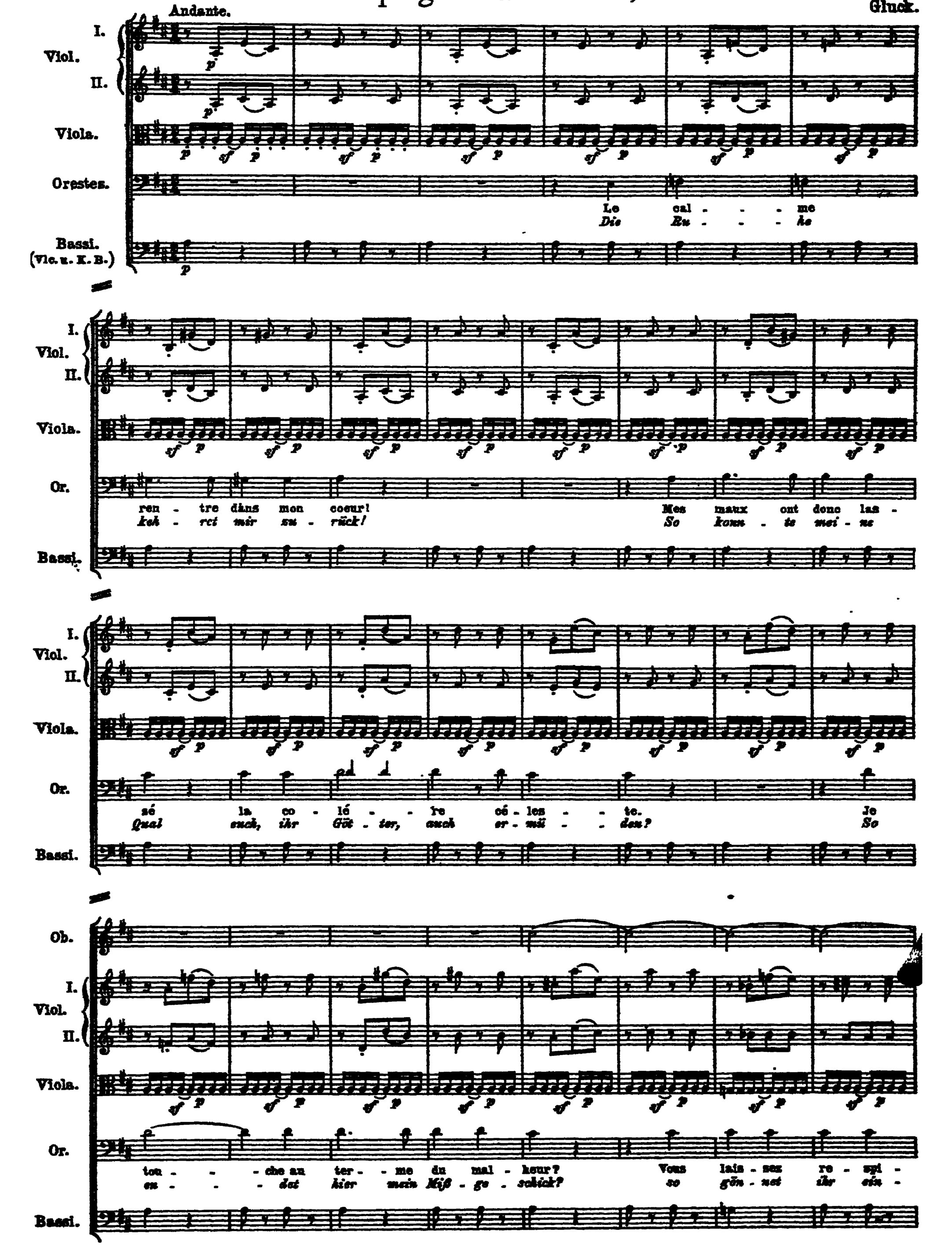
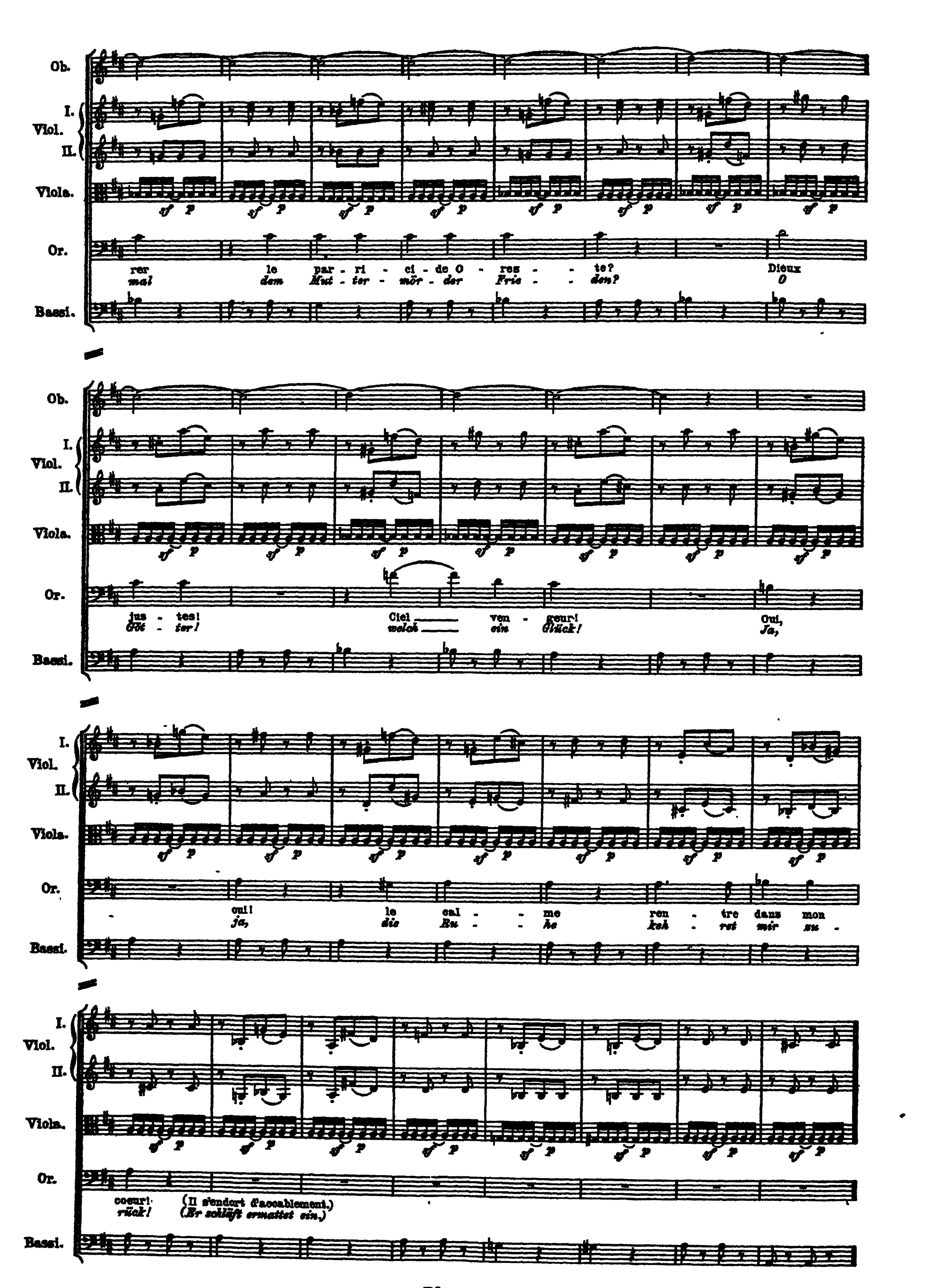
It is the timbre of the viola which creates the deep impression in the famous scene in “Iphigénie en Tauride” where Orestes, exhausted, panting, by remorse, falls asleep with the words: “Calni comes back to my heart”—while the orchestra, in somber excitement, utters sobs and convulsive sighs which are accompanied throughout by the terrible, persevering murmur of the violas. This incomparable piece of inspiration contains not a single note, either.in the singer’s part or in the instruments, without its own sublime intention; yet, the fascination which it exercises over the listeners, the awe which causes their eyes to dilate and fill with tears, are mainly attributable to the viola part and, particularly, to the timbre of its third string, to ‘its syncopated rhythm and to the strange effect of the unison between its syncopated A and the A of the basses, whose different rnythm abruptly cuts through the syncope. (Example 21.)
No. 21. Iphigénie en Tauride, Act Il
on - - et ater = matn MGB - ge. sclick? so gan - net the = etm ~
One of the first to discover the demonic possibilities of the viola was Meyerbeer. In his “Robert le Diable” he employed it ingeniously for the expression of pious awe and painful remorse.
In the Overture to “Iphigénie en Aulide” Gluck used the violas as the sole basis of the harmony, in this case not on account of its timbre but to accompany the melody of the violins as softly as possible; this makes the entrance of the basses in forte, after a long rest, much more formidable. Sacchini also gave the lower part to the violas alone in Oepidus’ aria,
intending to prepare a similar outburst; on the contrary, the instrumentation gives here a pleasant freshness and calm to the melody it accompanies. Melodies on the high strings of the viola achieve miracles in scenes of a religious or ancient character. Cf. Wolfram’s “Blick ich umher’ (“Tannhaeuser”, second act) and Lohengrin’s Narration (“Lohengrin”, third act)—divided violas in high position unisono with the violins; also the violas sounding like a distant organ, before Walther’s Prize Song (“‘Meistersinger”, third act). (Examples
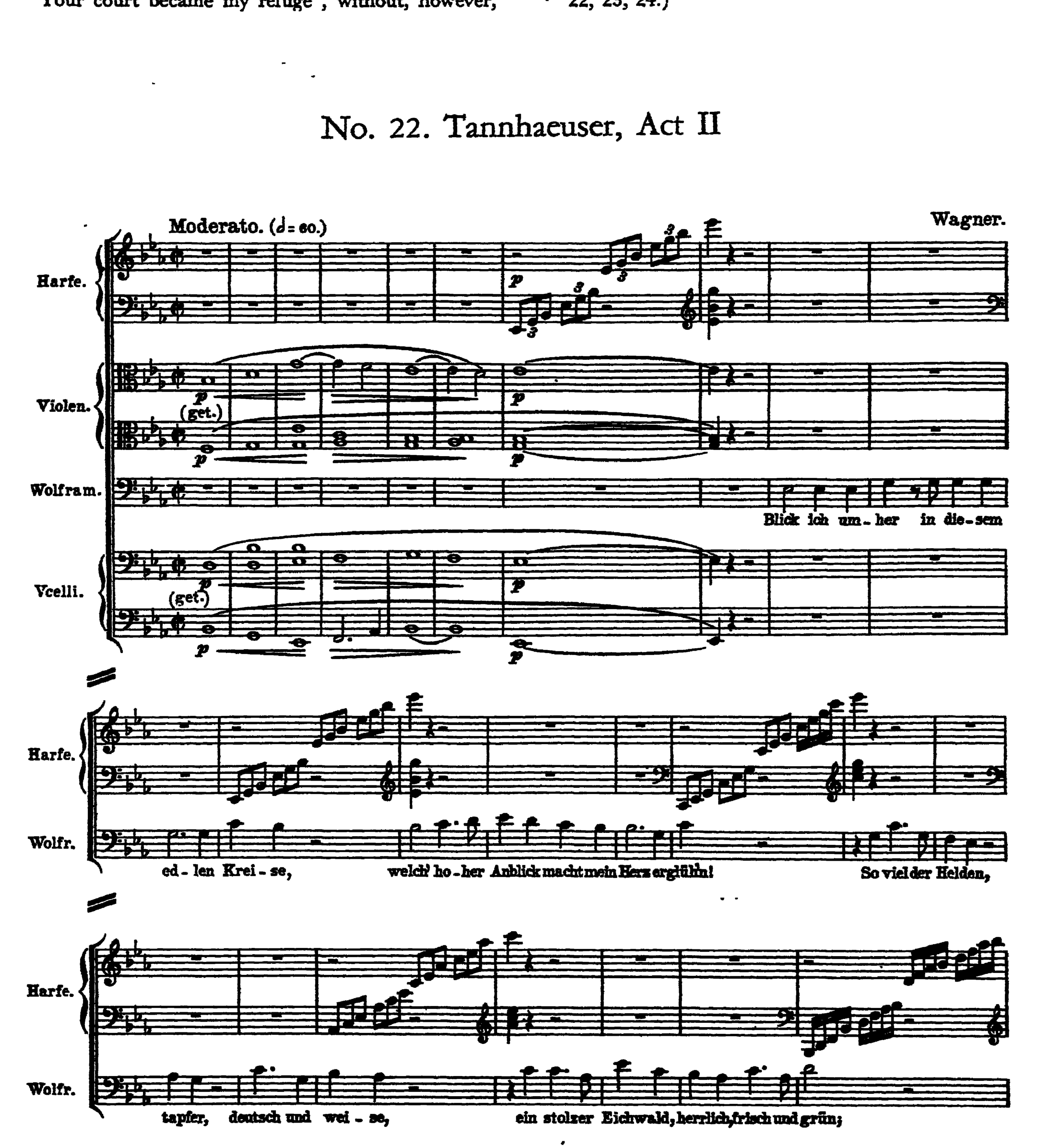
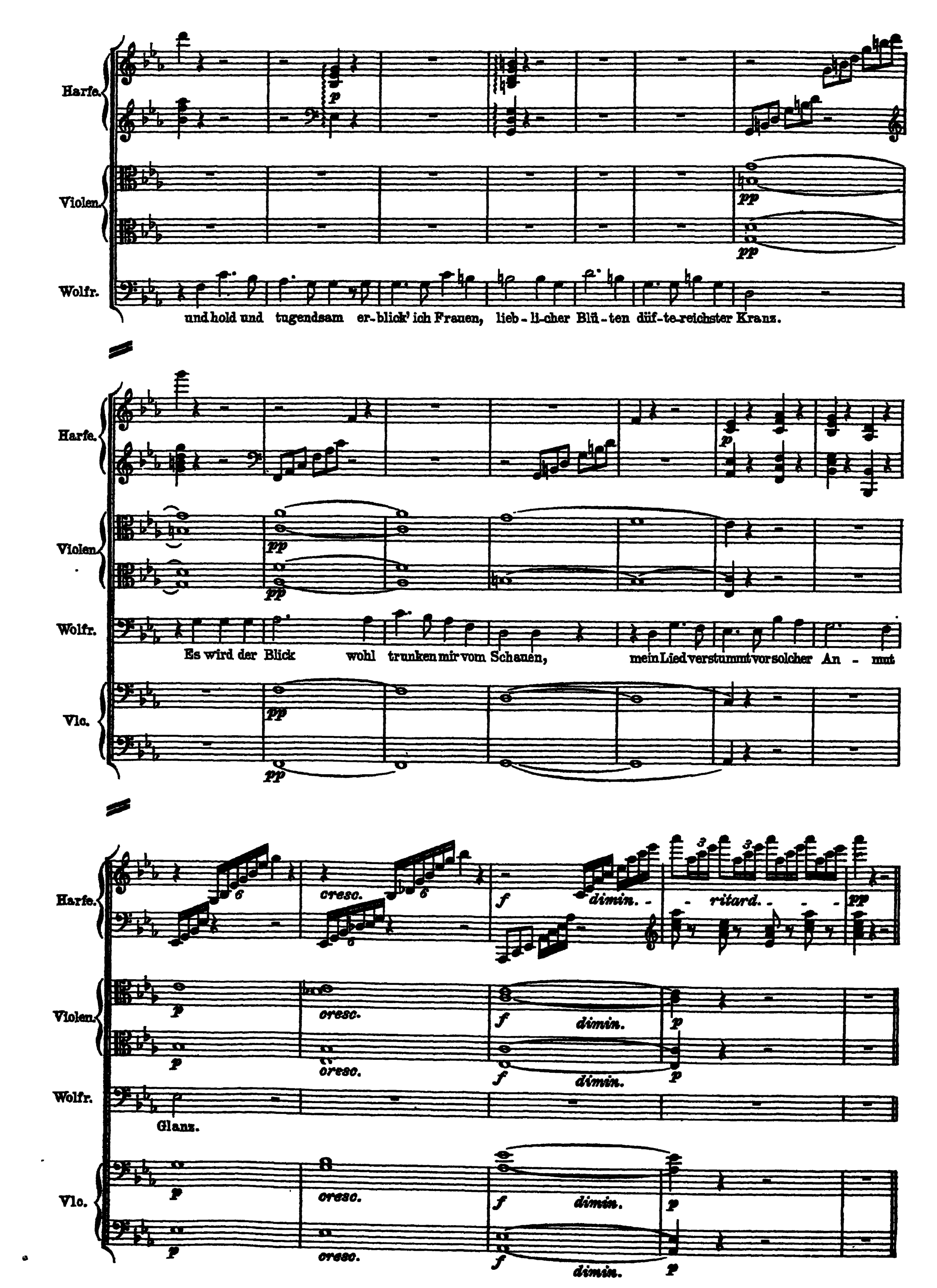
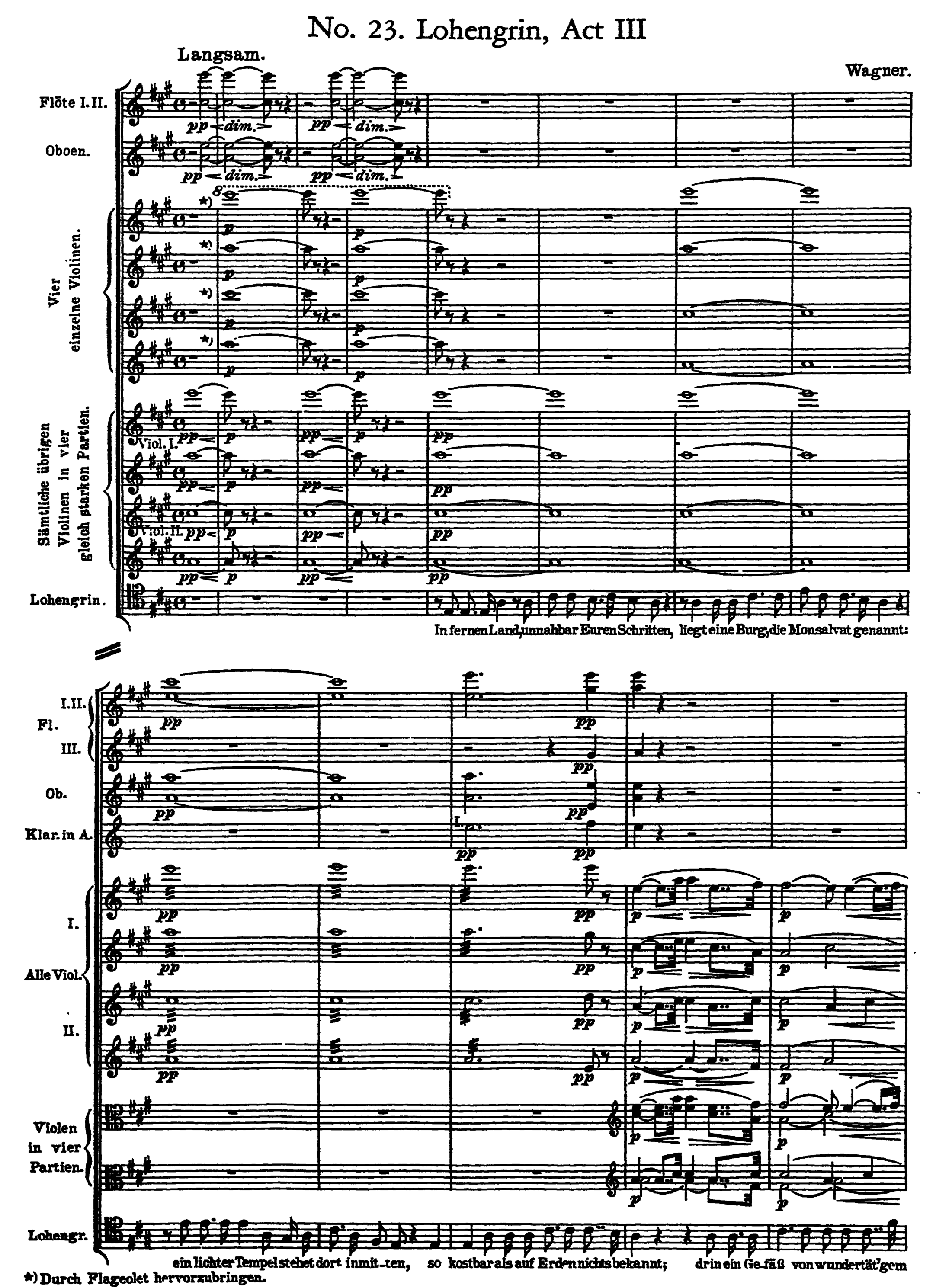
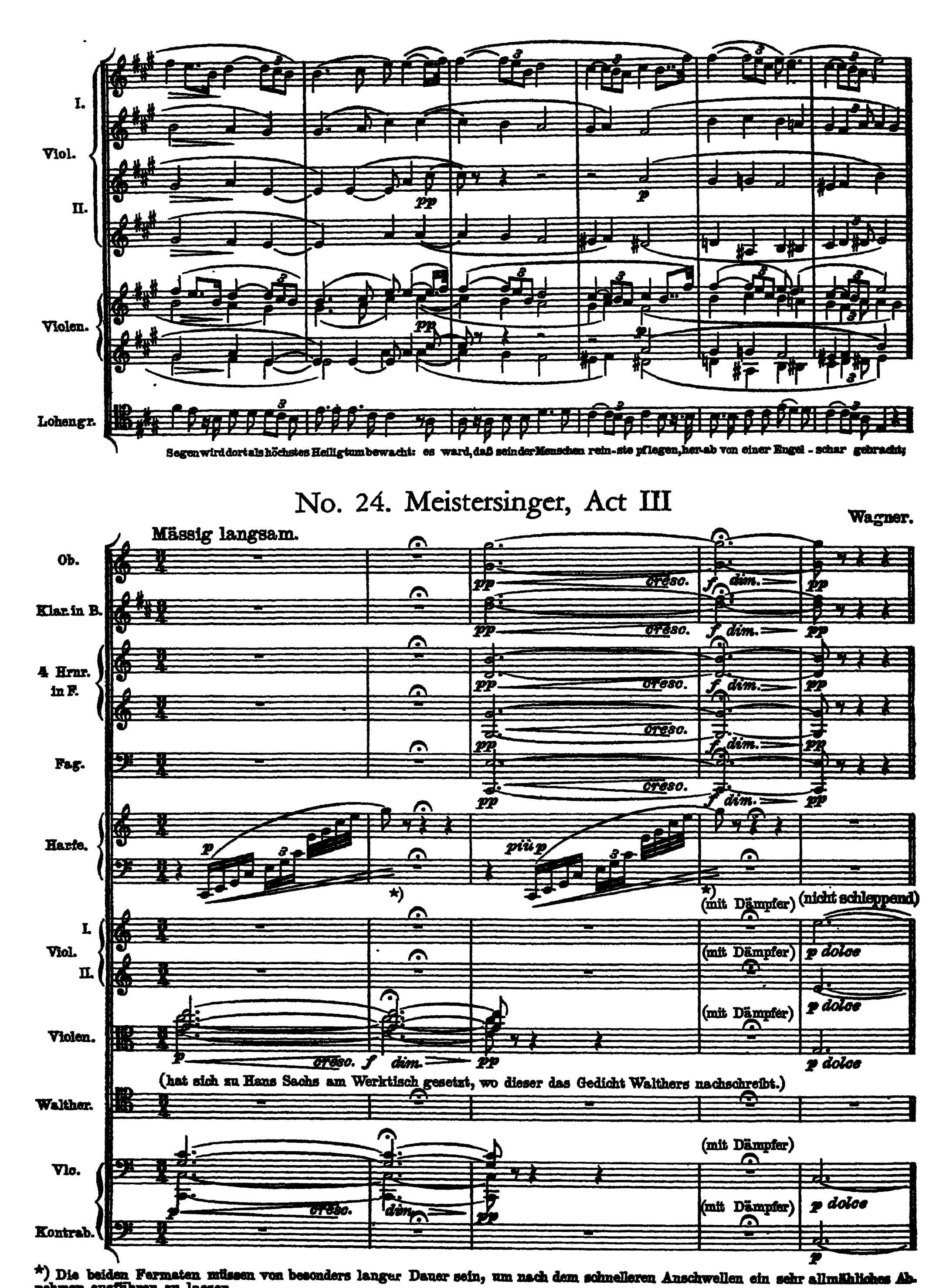
_ Spontini was the first to conceive the idea of assigning the melody in part to the violas in his wonderfu] prayer in “La Vestale”. Méhul, allured by the sympathy between the tone of the violas and the dreamy character of Ossianic poetry, used them exclusively, without any violins, in his opera “Uthal”. According to the critics of the time, this caused an unbearable monotony detrimental to the success of
the work. It was this work which caused Grétry to exclaim: “I would give a Louis d’or for an E-string?” In fact, the viola timbre—so beautiful when judiciously employed and skillfully contrasted with that
of the violins and other instruments—is bound to
become tiresome; it is too unvaried for any other
: In a scene of profound sadness (after Bruennhilde’s words, ““Weh, mein ‘Waelsung” in the second act of “Walkuere”) the violas, on the higher octave of the bass clarinets, express Wotan’s dejection; an interesting contrast to this is the cow-
ardly-gay dancing figure of the violas in the first act of “Siegfried” when Mime answers the menacing Wotan. (Examples 25, 26.)
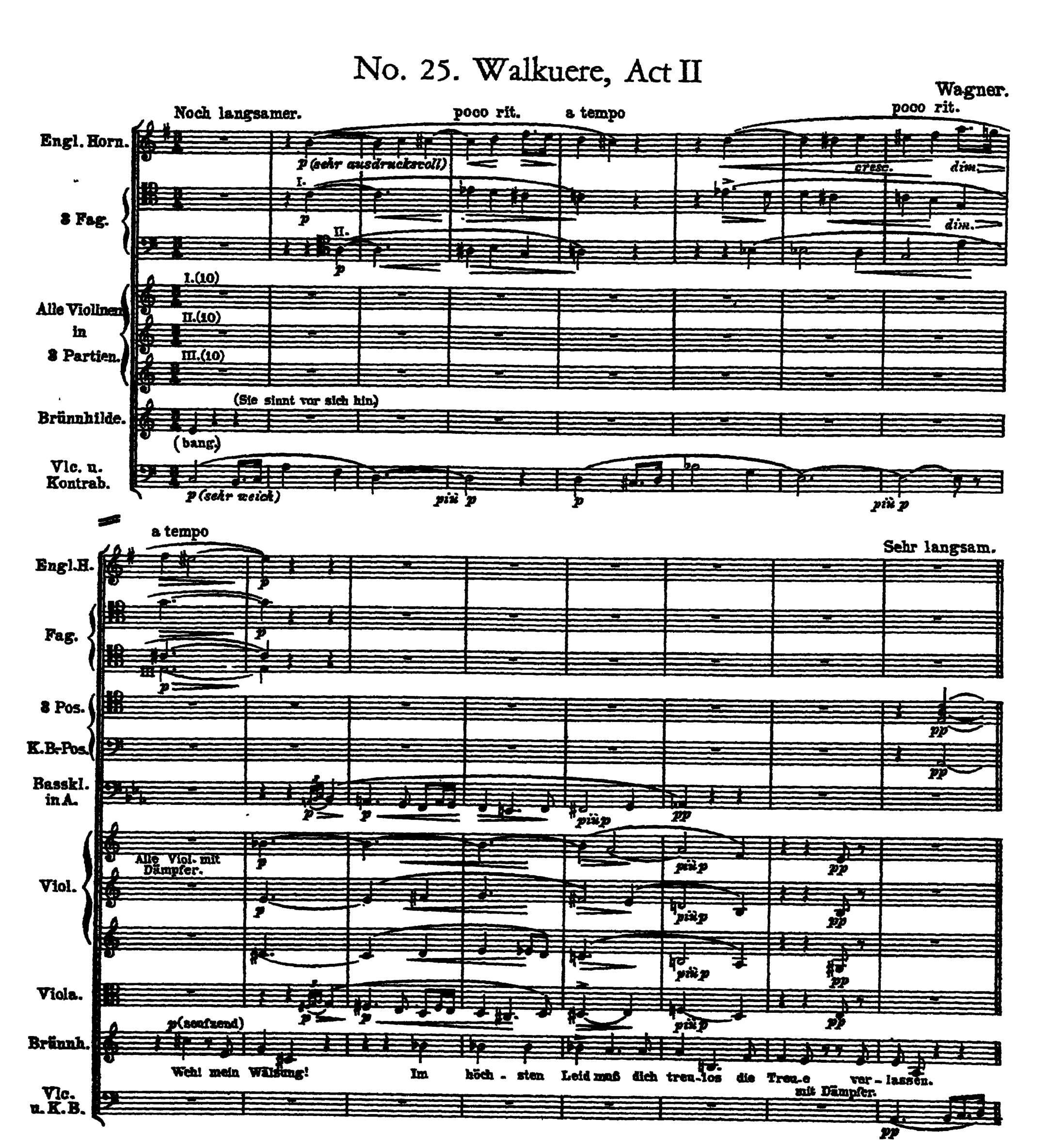
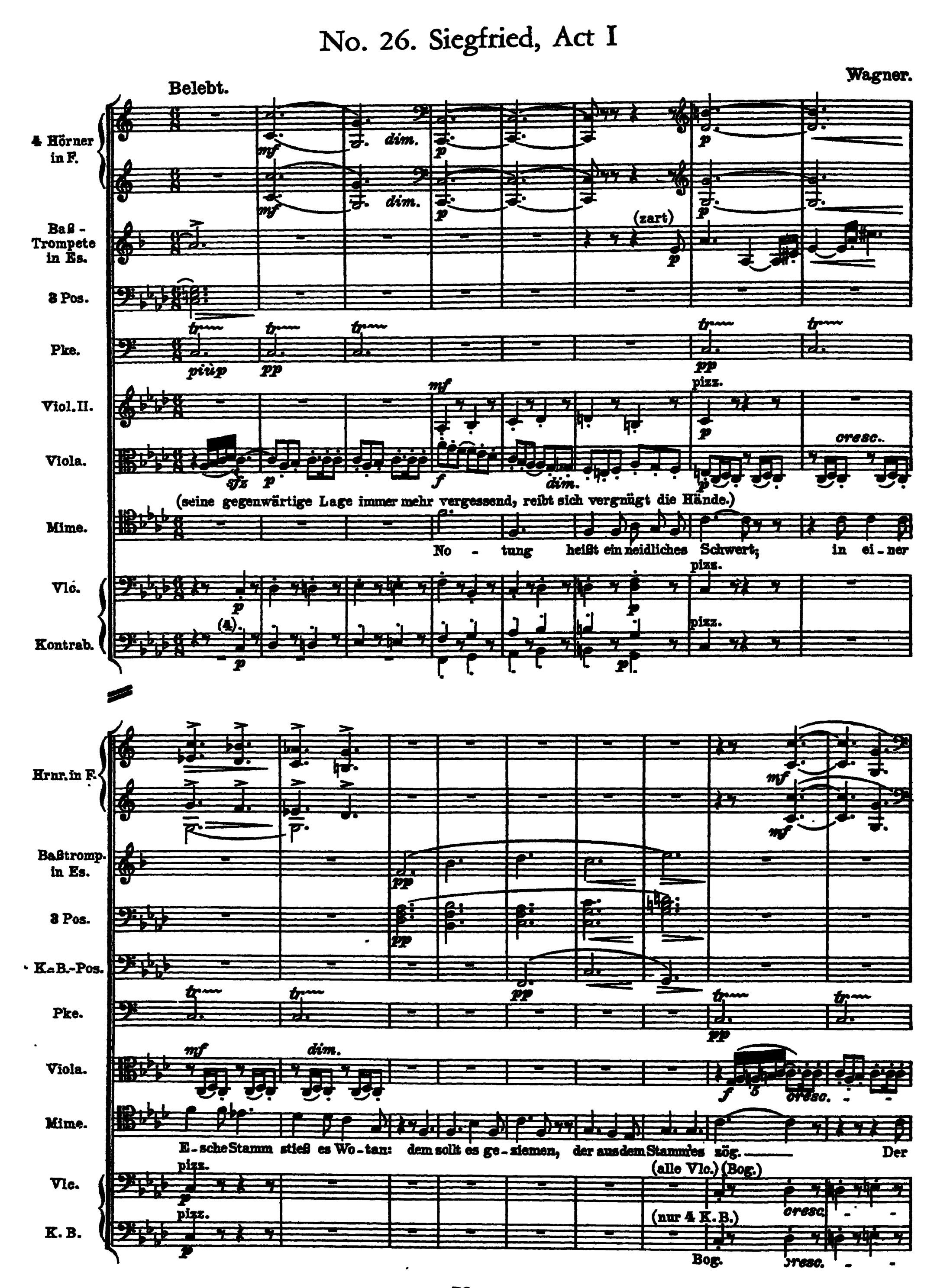
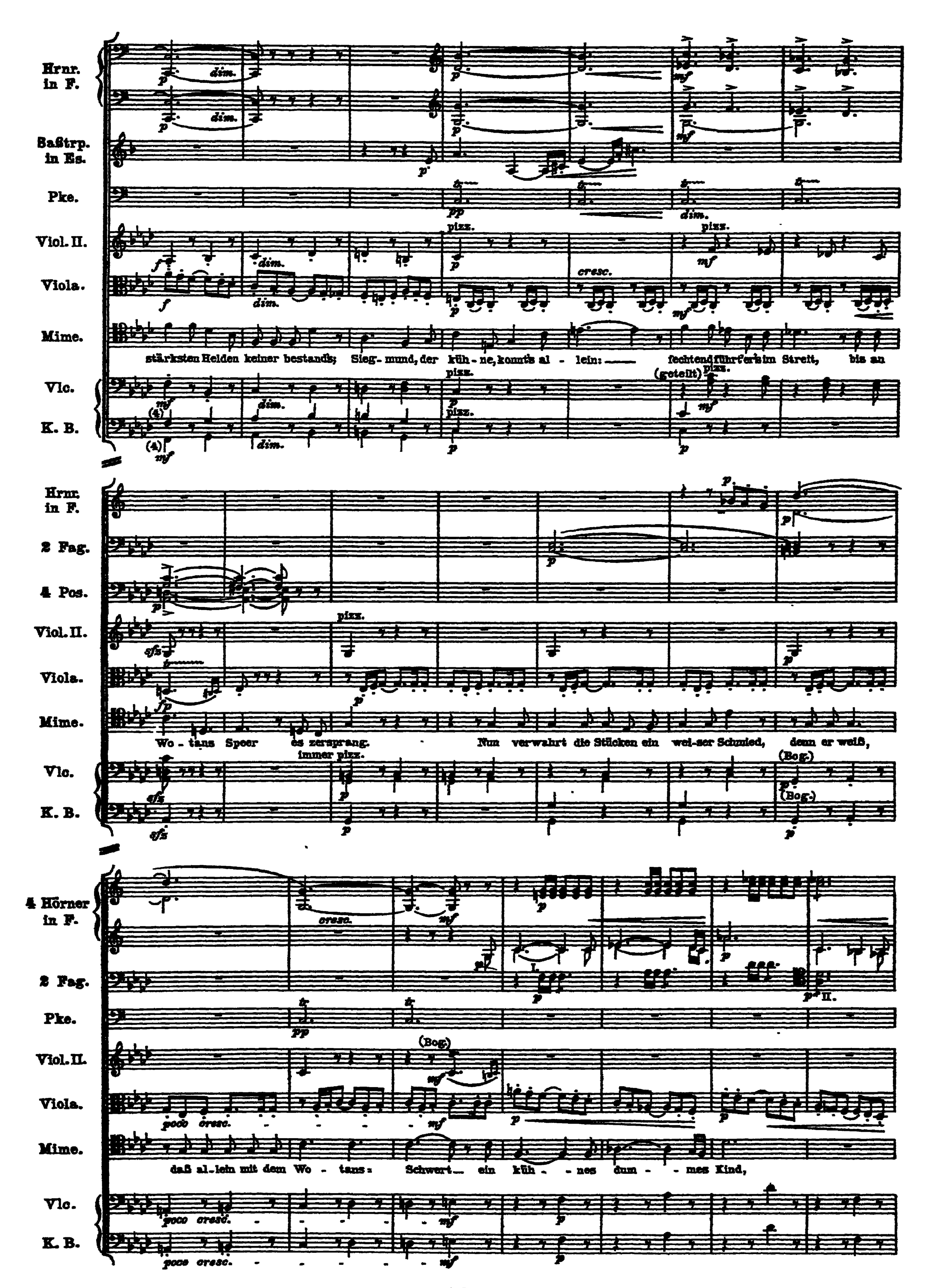
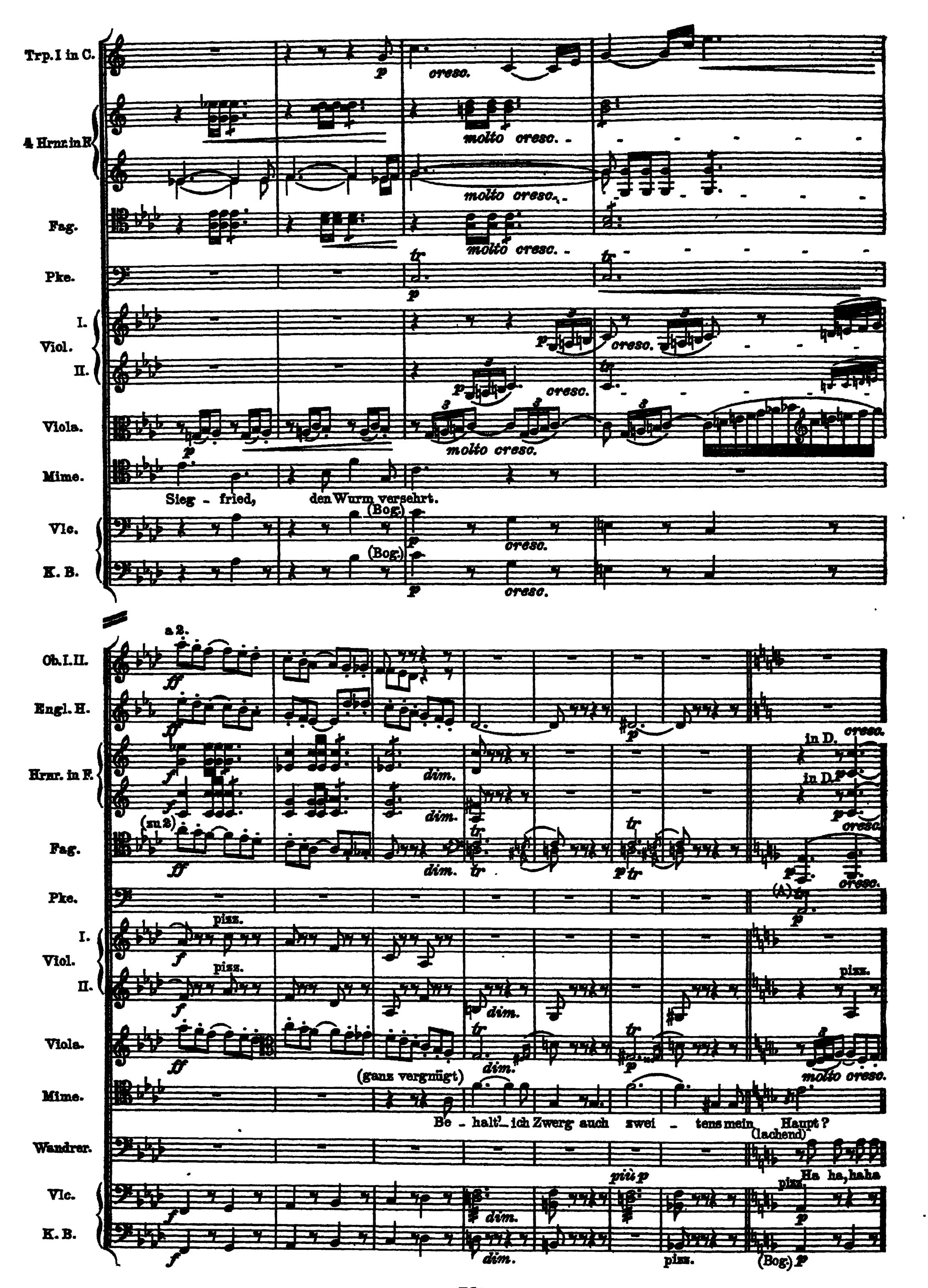
The beautiful sound of the violas in the last Here I should like to quote the ecstatic solo viola movement of Beethoven’s Ninth Symphony (with which tells of the miracle of the love potion (““Tris- “Ihr stuerzt nieder, Millionen”) and the comically tan”, first act); and the strange entrance of the gruesome solo viola in Aennchen’s aria (“Frei- violas in “Fidelis” (with “wie ein Schatten schuetz”, second act) are quoted in Gevaert’s work; schwebt” )—(fades like a shadow) where the interthe solemn introduction to the quartet in “Fidelio” val of a third calls forth the picture of the lan- I presume to be generally known and admired. guishing Florestan. (Examples 27, 28.)
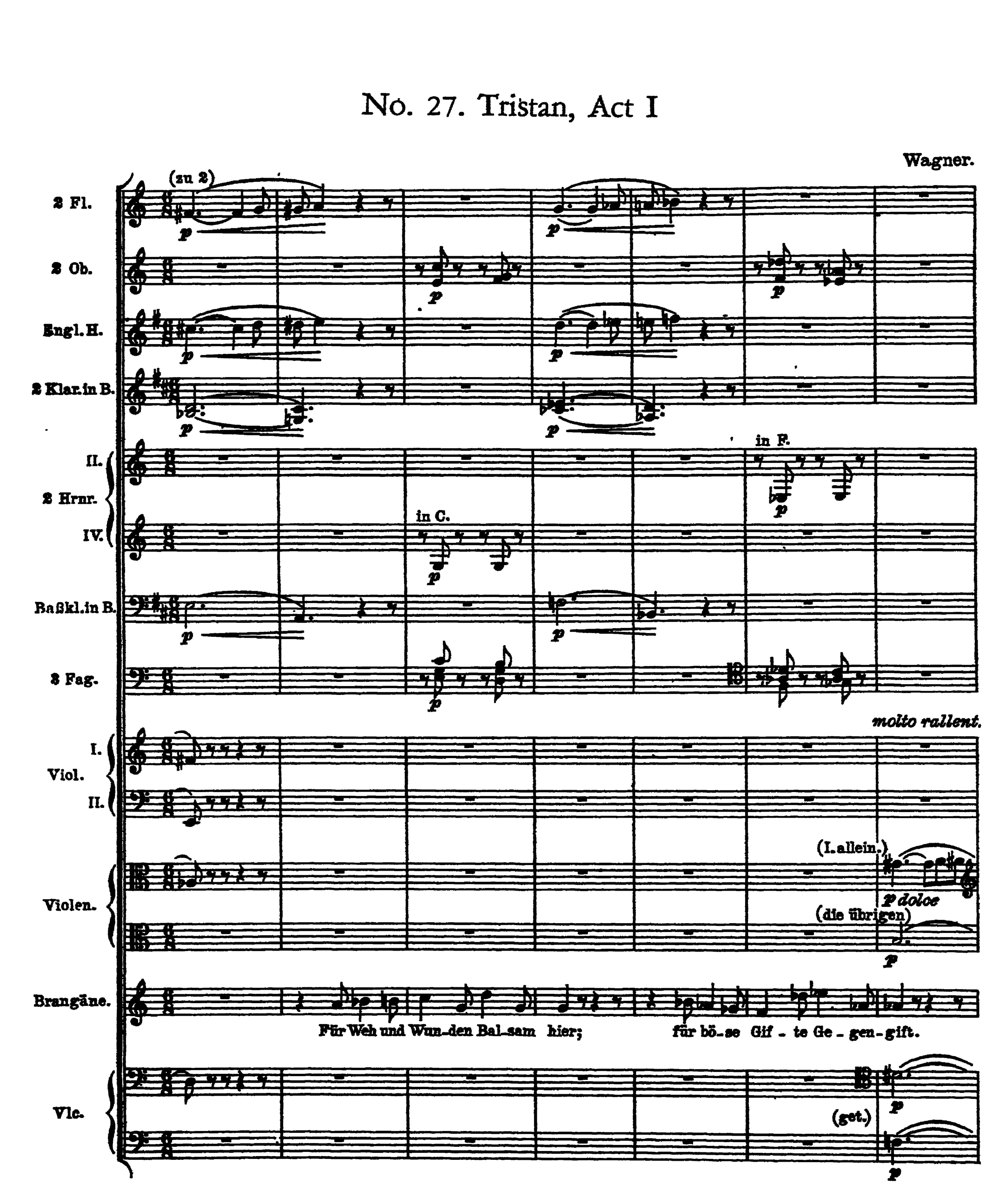
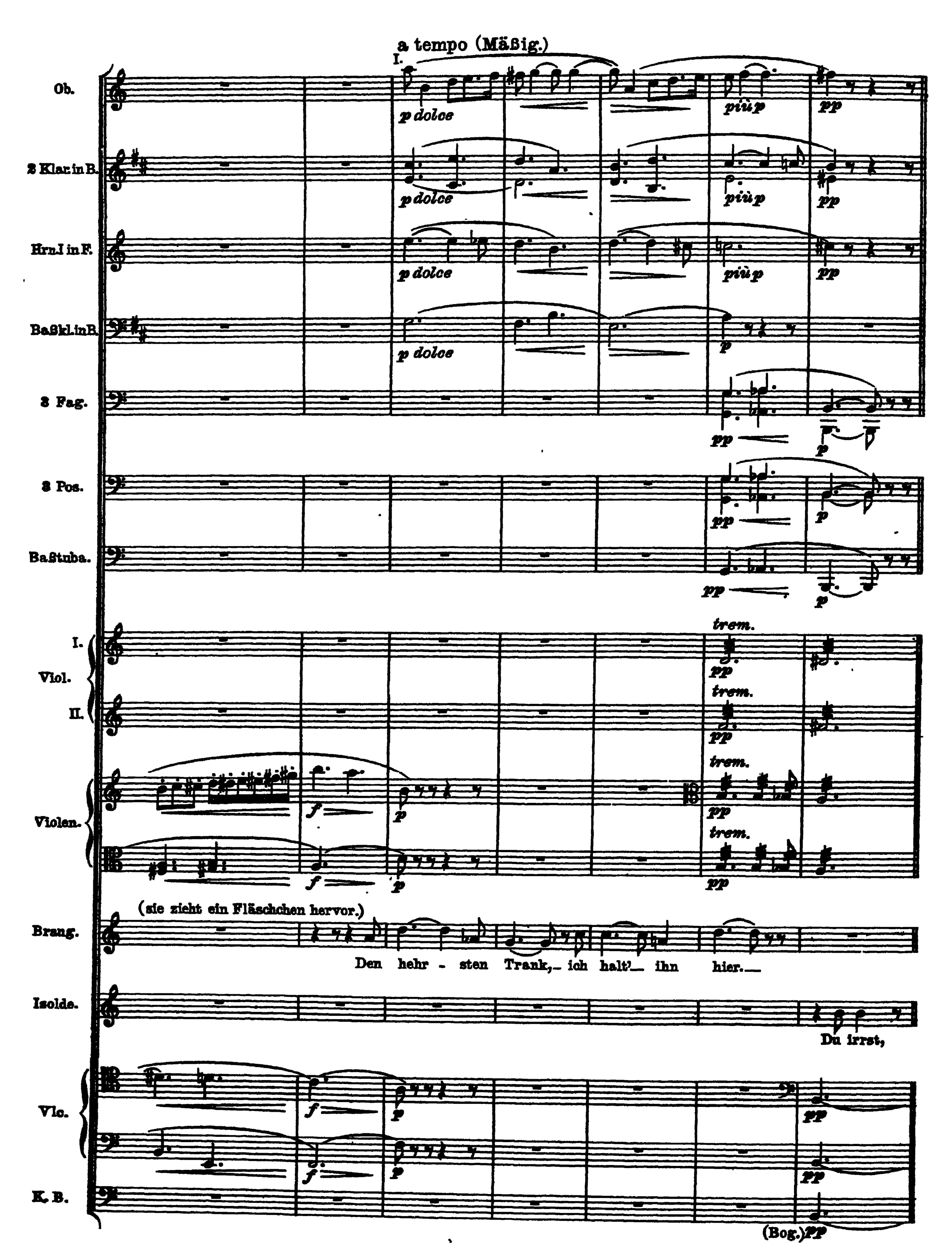
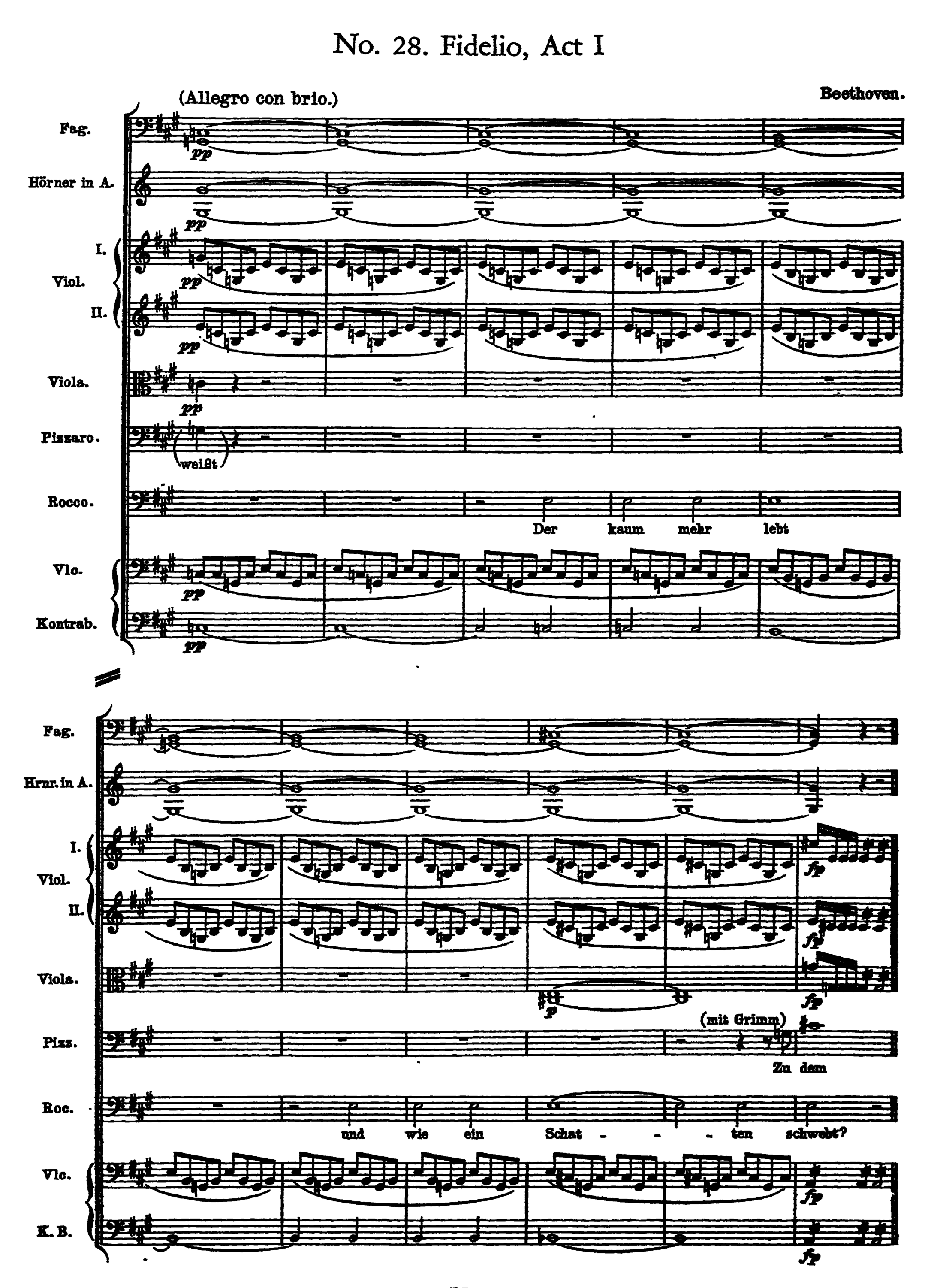
At present the violas are frequently divided into first and second violas. In orchestras like that of the Paris Opera, where they are sufficiently numerous, this procedure is not disadvantageous. But in other orchestras which have scarcely four or five violas such a division can only be detrimental, since the weak viola group is in any case in constant danger of being overpowered by the other instruments. In this connection it must also be remarked that most of the violas currently used in our French orchestras are not of requisite proportions; neither in size nor in, tonal volume are they real violas. They are more like violins strung with viola strings. Conductors should absolutely prohibit the use of these mongrel instruments. Their weak sound deprives the orchestra of one of its most interesting tone elements and robs it of sonority, especially on its deep tones.
Professor Hermann Ritter constructed
a “Viola alta” which has a fifth string
above the four strings of the ordinary viola.
Because of its larger size the instrument has a con-
siderably greater volume of tone; besides, it has
the additional high tones, very advantageous for
No. 29. Symphony in C minor, 2nd movement
modern orchestral works.
Unfortunately, up to now it has been used only to a very limited extent, mainly because it requires considerable physical power. Especially viola players with short arms or fingers may hesitate to give up the more comfortable ordinary viola.
Two other new instruments which try to extend
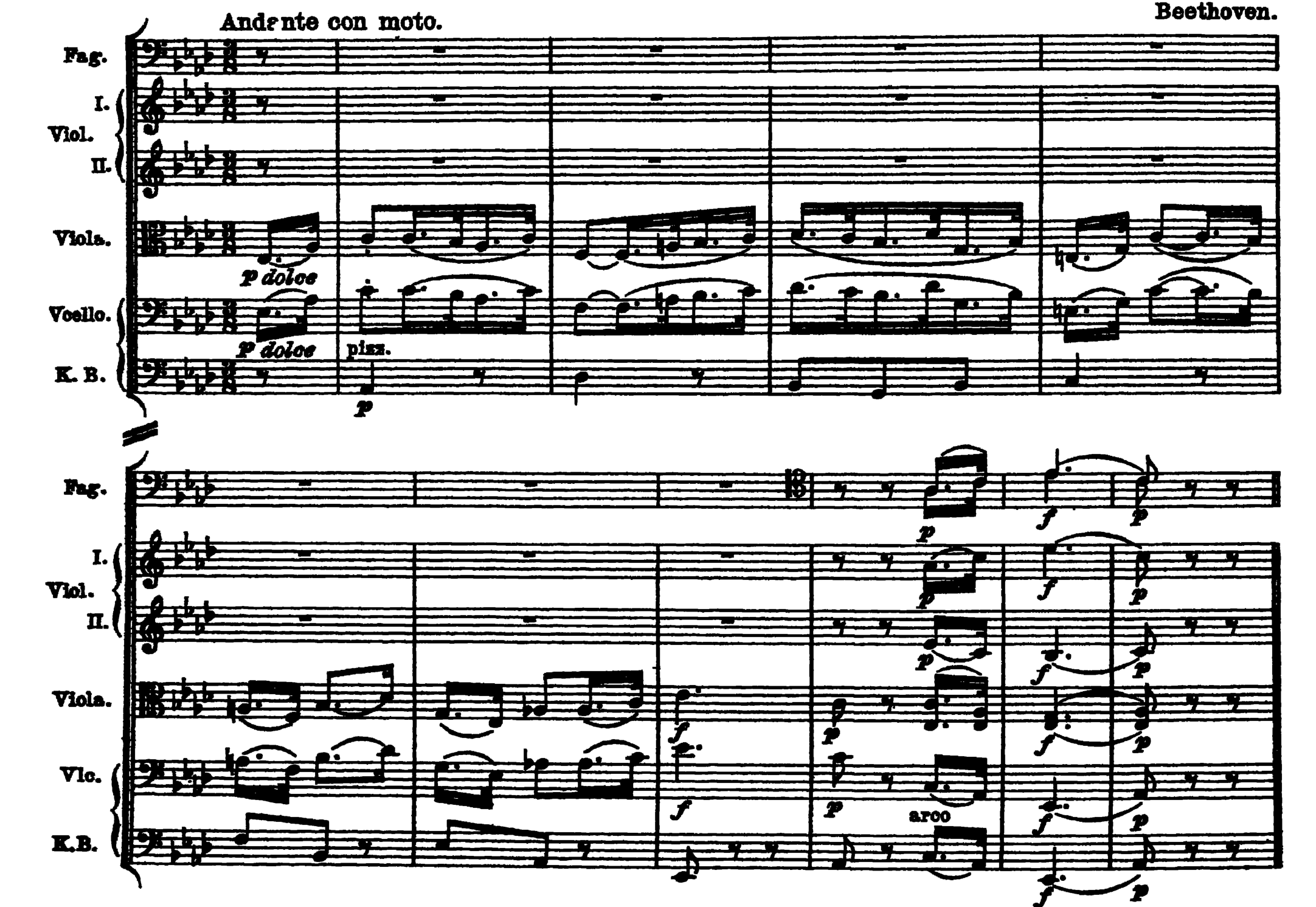
the lower range of the viola and violoncello should be mentioned here: the Violotta and Cellone, constructed by Stelzner. Their practical achievements are still too unimportant to make it worth-while to introduce them into the orchestra. The fact that they are tuned differently, ie. have lower strings than the violas and violoncellos, makes their use for existing tasks illusory; otherwise, new parts would have to be composed for them. When the violoncellos have the melody, it is sometimes excellent to double them in unison in the violas; their tone thereby gains in roundness and clarity without losing its preponderance. The theme of the Andante in Beethoven’s C-minor Symphony offers an example of this. (Example 29.)