Playable Books
Hector Berlioz · section 11 of 67
The Guitar
Read and hear this section in the playable edition →
_ The guitar is an instrument suitable for accompanying the voice and for taking part in instrumental compositions of intimate character; it is equally appropriate for solo performance of more or less complicated compositions in several voices, which Possess true charm when performed by real virtuosos.
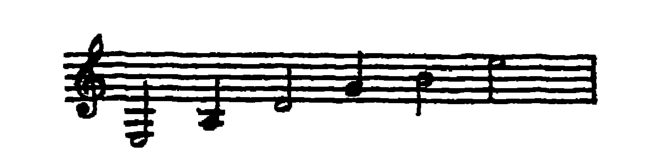
Tt has six strings, tuned in fourths and thirds as
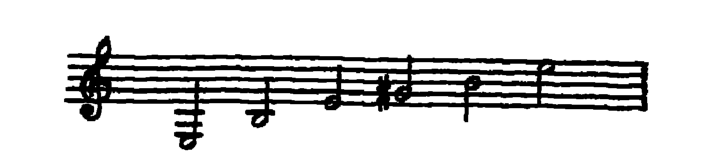
Sometimes it is tuned in the following manner, especially for pieces in the key of E:
The three lower strings are made of silk covered with silver wire; the other three of catgut. The guitar is a transposing instrument with a range of three octaves and a fifth, written in the G-clef, an octave higher than the actual sound:
Including the chromatic intervals
Major and minor trills can be played throughout the range of this scale.
It is almost impossible to write well for the guitar without being able to play the instrument. However, the majority of composers who employ it do not possess an accurate knowledge of it. They write things of excessive difficulty, weak sonority and small effect for the instrument. We shall at least try to indicate here how simple accompaniments should be written for it.
In the usual position of the right hand the little finger rests on the body of the instrument; the thumb is used for plucking the three lower strings:
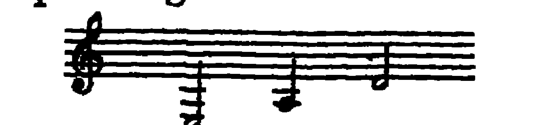
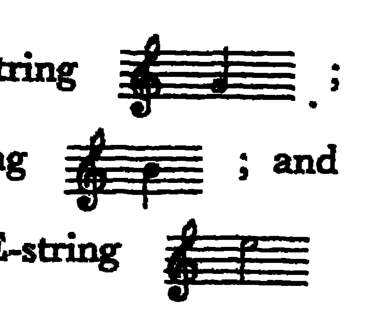
the forefinger plays on the G-string == : the middle finger, on the B-string = 3 and
the third finger, on the high E-string =
Consequently, for chords of more than four notes the thumb has to slide across one or two of the lower strings while the other three fingers strike the three high strings directly. In chords of four notes each finger strikes only its own string; the fingers change strings only to play chords in Jow positions, for in-
Since the guitar is mainly a harmonic instrument, it is important to become familiar with the chords and hence also the ios which it can execute. We start with the easiest—those which can be played without the barrage, a procedure whereby the forefinger of the left hand is placed across the neck of the instrument over two, three or four strings, and thus serves as an artificial fret. (The fret is the little ledge across the neck, on which the strings rest and which limits their vibrating length.)


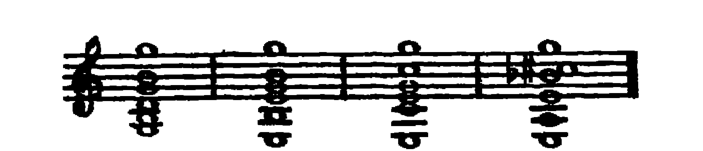
The flat keys are incomparably more difficult than the preceding; all of them require the barrage. The following chords are the easiest:


In all chords one must avoid using the first and third strings without the second because the thumb would be forced to skip over the second string to go from the first to the third. It is impossible to play the following chords:

But if the second string is added, they become easy:
Dominant seventh chords should not be written in the usual position of three thirds one above the other,

They are next to impossible. The following, though
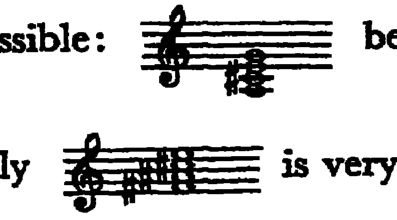
difficult, is possible: _ because G is an open string; only = is very easy and sonor-
ous on account of the open E-string. The following three chords are easy and link to-
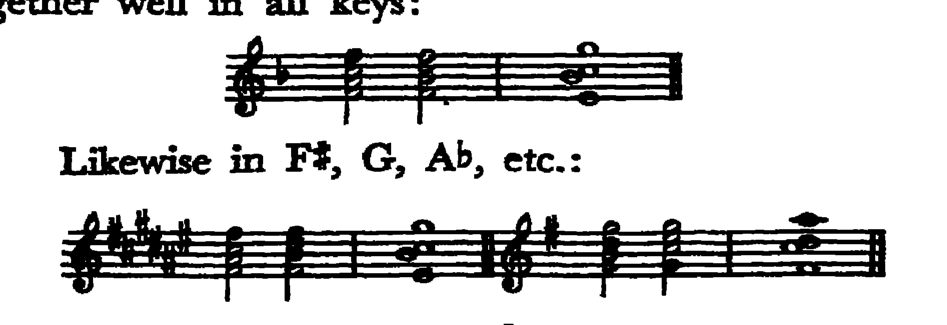

Of course, these chords may sometimes have more’
than four notes, namely in keys which permit the addition of a low open string, as in A, E, G, F—in short, wherever one of these three notes
The following succession of chords, requiring the
The two slurred high notes in the last example are played by plucking the E-string with the little finger of the left hand.
Descending arpeggios are rather awkward but feasible:


In the opposite direction they are very easy. The following are much more difficult and less advantageous on account of the retrograde movement of the thumb on the low two notes:

Scales in groups of two slurred notes with the repetition of one note are elegant and sound well, especially in the brilliant keys of the instrument:

Scales in thirds, although difficult at their two extremities, can be executed at a moderate speed:


barrage across four strings, is practicable on the lower two thirds of the neck of the guitar:

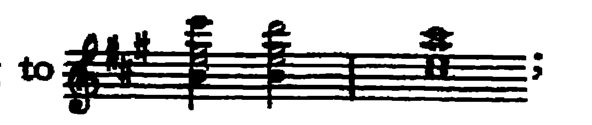
this is the highest pomt where this fingering can be The following arpeggios on the guitar are of excellent effect:
This applies equally to series of sixtts and octaves.
Repeating the same tone two, three, four and even six or eight times is easy; prolonged repetitions ‘(rolls), however, are appropriate only on the highest string or possibly on the three high strings:




The tones marked T are played with the thumb, the others alternatingly with the first and second fingers.
In rolls the thumb alternates with the first and second fingers on the same string:

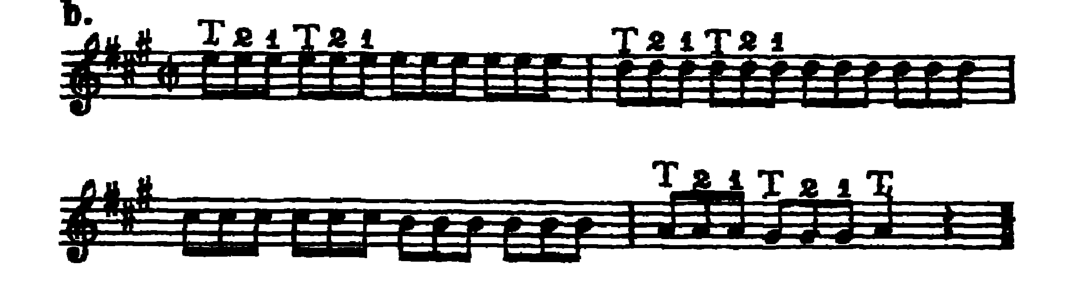
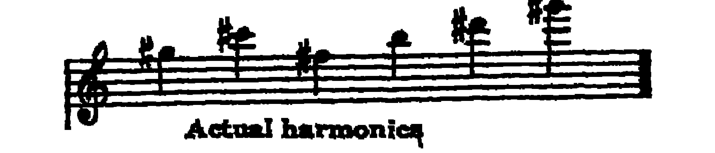
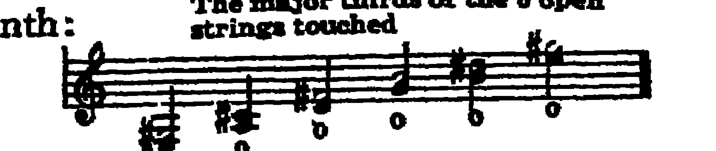
Harmonics are easily produced on the guitar and may be excellently employed in many cases. The best are those produced on open strings—by lightly touching the octave, fifth, fourth or major third.
As we have explained in the chapters on the stringed instruments, the octave, lightly touched, produces that same octave:
?. saeeieemiaeneaemnsnmemnanemeiees

The minor third [© ~) cost harmonics produces e The minor thirds of the 6 open

The last-mentioned harmonics are the least sonorous and are difficult to produce. It should be understood that the expression actual harmonics in the preceding list refers only to the pitch of the guitar, not to absolute pitch; for in absolute pitch these harmonics, like all other tones on the guitar, are an octave lower than the written notes.
Chromatic and diatonic scales in artificial harmonics can also be produced on each string. For this purpose the fingers of the left hand are pressed on the tones whose higher octave is to be produced; the forefinger of the right hand then touches the center of the vibrating part of the string, and the thumb of the same hand plucks the string behind the forefinger.


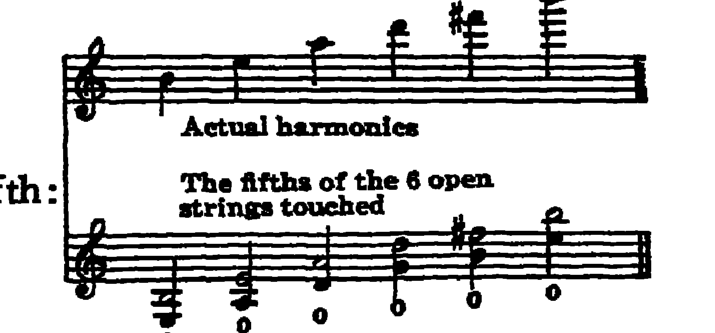
produces the twelfth: Se e pen a
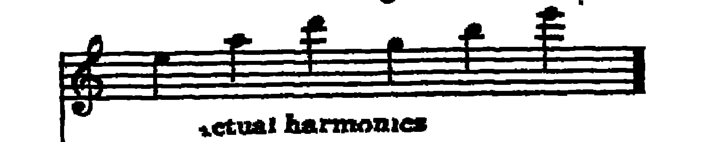
The fourth produces},,. vethe tthe b open the double octave: strings touched
ee ote
The major third pro-
Unless one can play the guitar oneself, I repeat, it is impossible to write for it pieces in several voices, containing passages that require all the resources of the instrument. If one wants to get an idea what virtuosos are able to achieve in this respect, the compositions of such famous guitar players as Zanni de Ferranti, Huerta, Sor, ete. should be studied.
Since the introduction of the piano into all homes where there is any interest in music the guitar has been gradually disappearing, except in Spain and Italy. Some virtuosos have cultivated and are still cultivating it as a solo instrument; they are able to create pleasant and original effects on it. Otherwise composers employ the guitar neither in the church nor in the theater or the concert hall. Its weak tone, which prevents its combination with other instruments or with several singing voices of normal tone volume, is doubtless the cause of this. Its melancholy, dreamy character might nevertheless be used more frequently.
‘Its charm is undeniable, and it is not impossible to
write for it so as to make this manifest. The guitar —in contrast to other instruments—loses when reinforced in number. The sound of twelve guitars playing unisono is almost ridiculous.
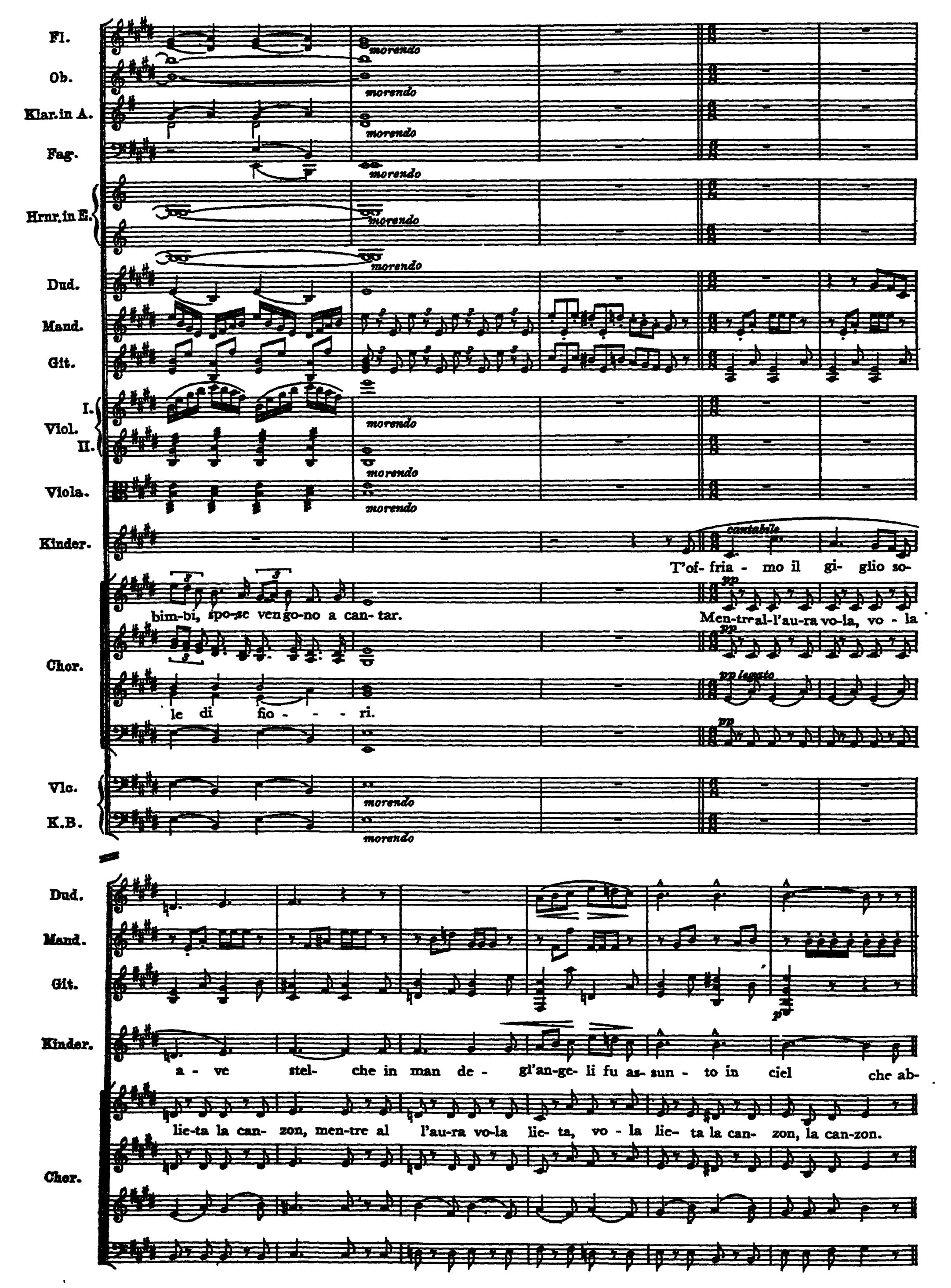
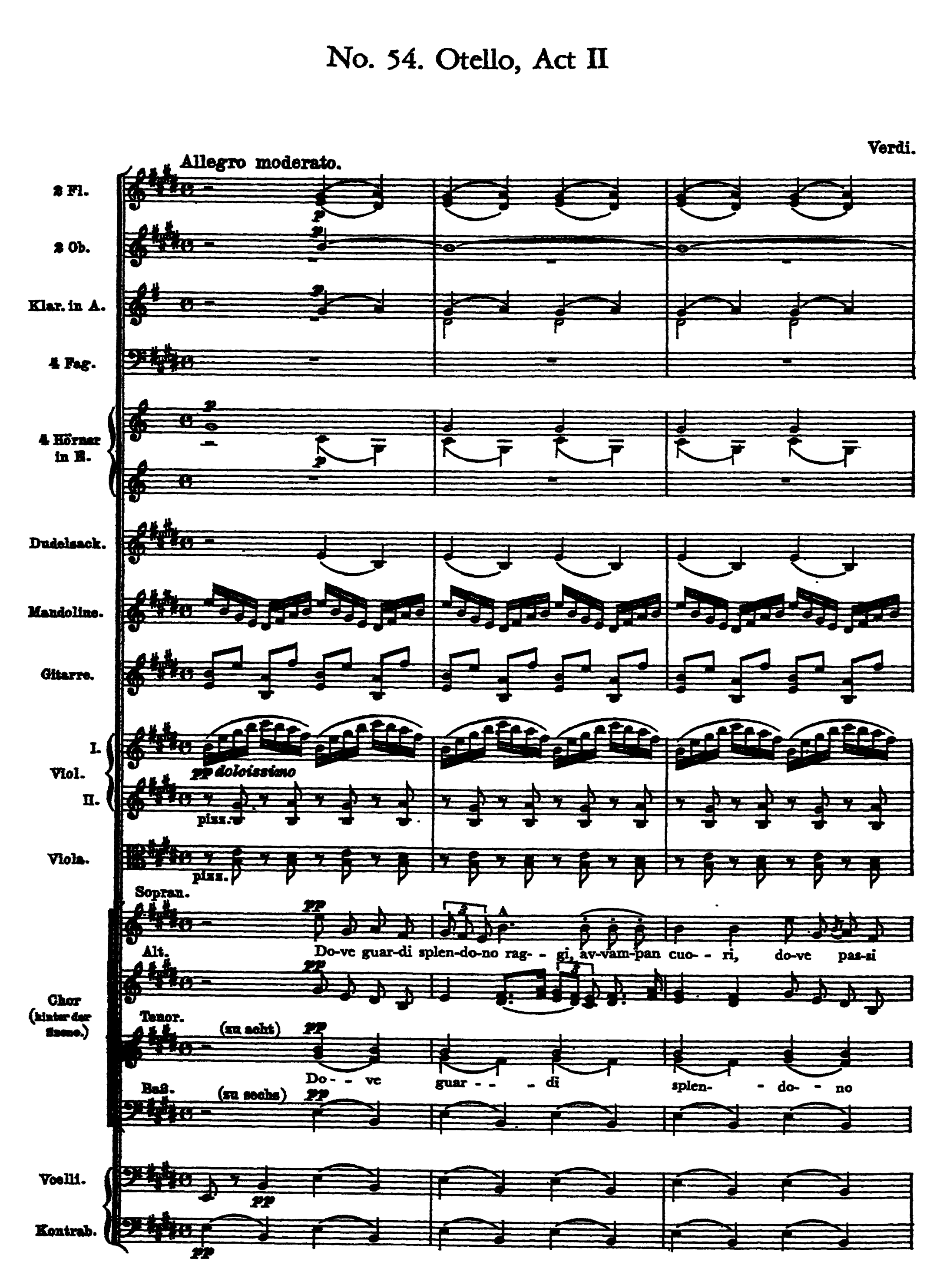
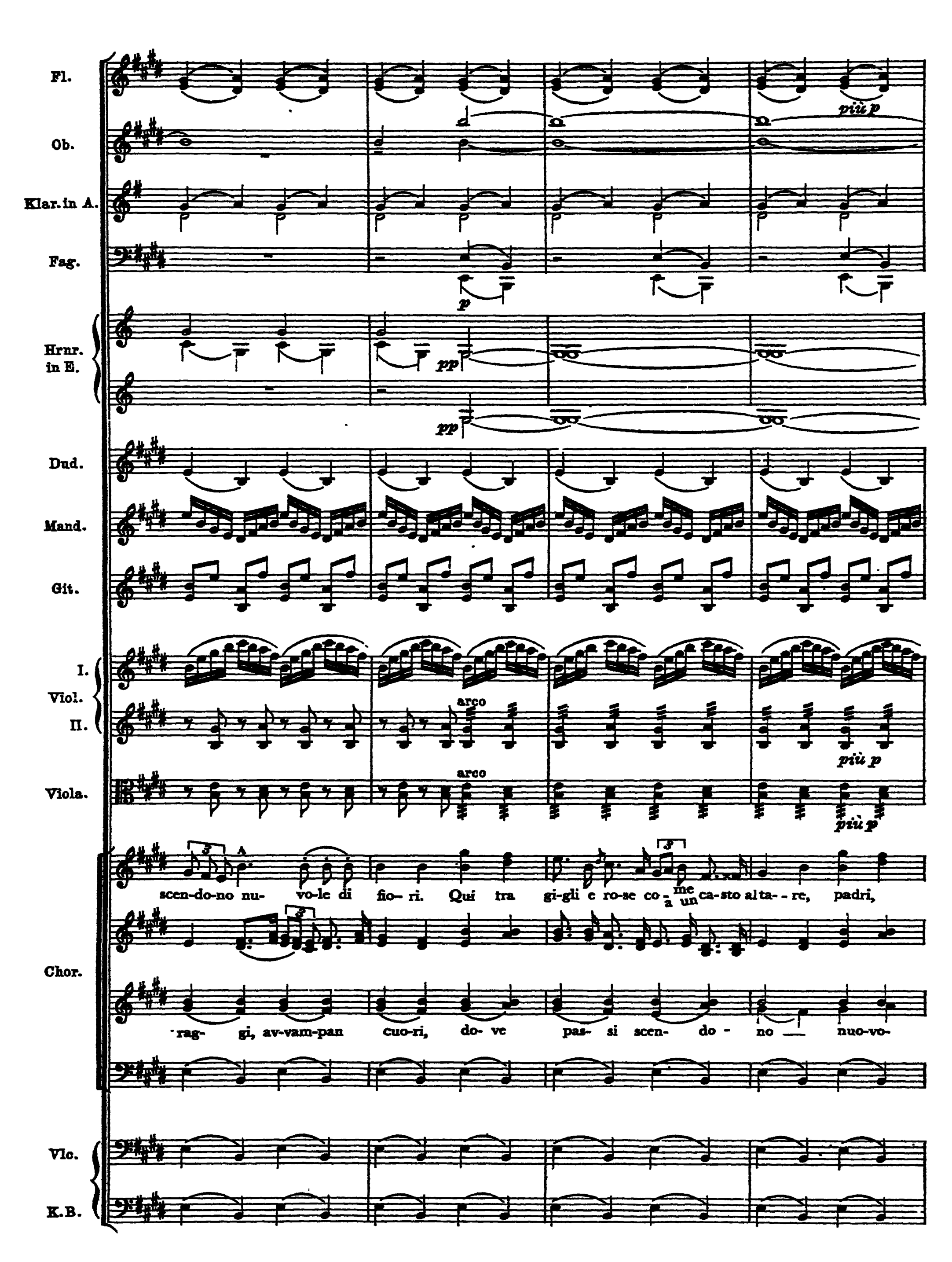
In Verdi's “Otello” the guitar is employed very felicitotisly ‘in combination with a mandolin and bagpipe as an accompaniment of the chorus:
a- ve stel- che in man de - glan-ge- li fu as-sun - to in ciel che ab-
lie-ta la can- zon, men-tre al = l’au-ra vo-la_ lie- ta, vo - la Jie- tale can- zon, la can-zon.