Playable Books
Hector Berlioz · section 17 of 67
The Bassoon
Read and hear this section in the playable edition →

The bassoon is the bass of the oboe*; it has a range of more than three octaves and is written in two clefs, the F-clef and tenor-clef:
including the chromatie intervals
It is not advisable to go above the last B>.
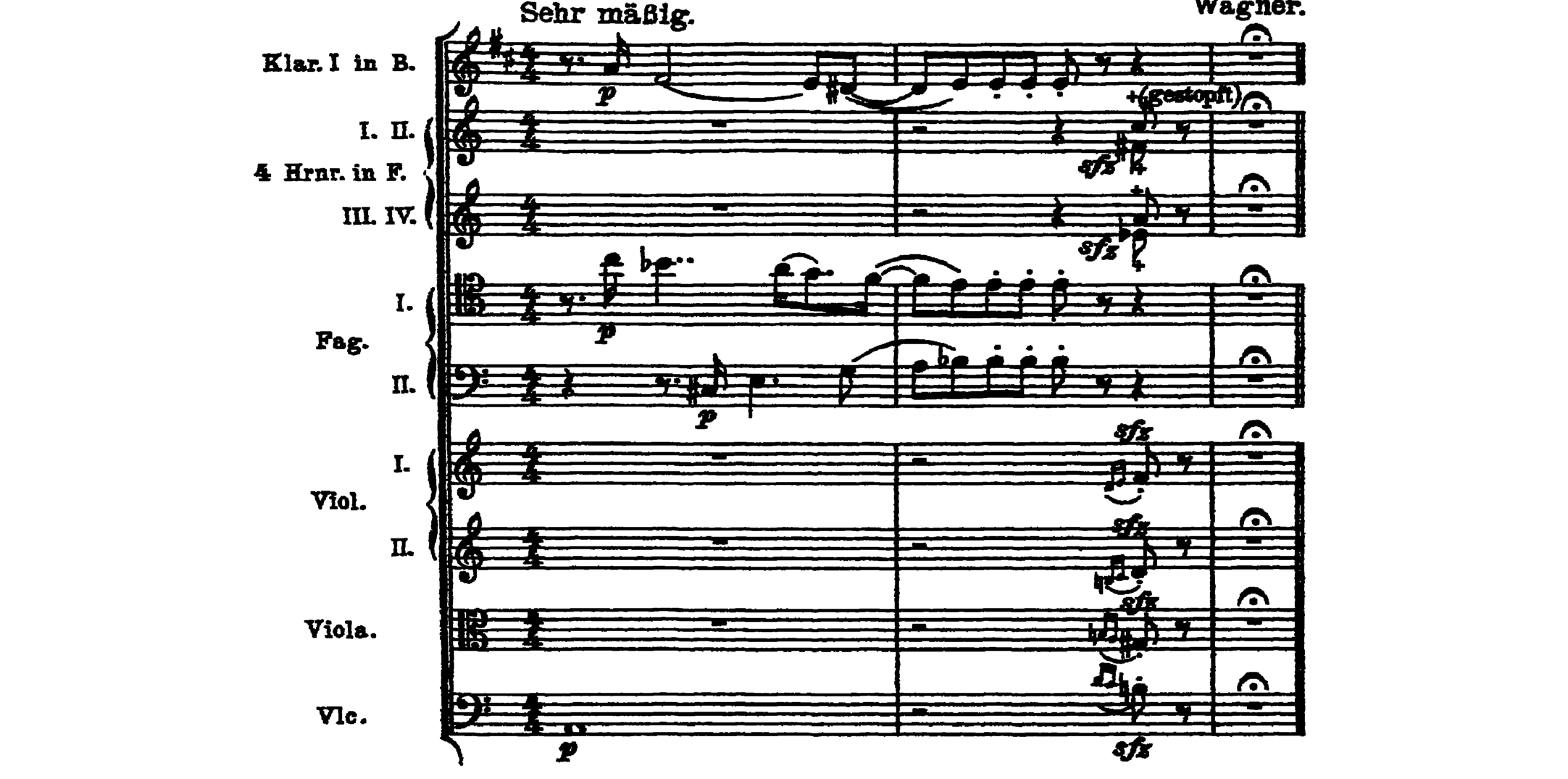
No. 72. Meistersinger, Act III
Wagner carries the bassoon up to the high C in his “Meistersinger” where he depicts the pitiable condition of Beckmesser after his thrashing. (Ex-
can now be quite
The high E>
but its production
easily produced,
embouchure of the
is harmful to the
*Through the courtesy of M. Gevaert, I heard in the.. Brussels Conservatory a double-bass oboe, whose tone had 1 clarinet in Ab not the slightest similarity with the low tones of the 2 clarinets a a bassoon. It was, down to the extreme depth, the typi clarinets :. shawm timbre of the oboe. If, in the near future, our 4 or 6 clarinets in Bb clarinet family ears should demand even finer differentiations of sound 2 basset-horns and a still greater wealth of tonal colors, we might re- 1 bass, clavin lari
introduce this instrument into the orchestra; thus, each individual timbre would be represented by a whole family group instead of the one or two members we have at present.
What wealth of contrasts is to be found in a combination of :
2 small flutes } 4 large flutes flute family 1 or 2 alto fintes {
2 oboes d'amore
4 1 double-bass oboe
first occurred to me to develop this idea when one of Feet oat en cba Conservatory had ozart’s G-minor Symphony p! to me in an arrangement for 22 clarinets, namely:
The wealth of tone colors emanating from the various combinations of the clarinet family drew my attention to the many treasures still hidden in the waiting to be raised by a dramatist and tone- able to interpret them as the sensitive expression new color symbols and as the characterization of new and subtler emotions and nervous vibrations.
The keys with which the bassoon is now furnished permit the production of the two low notes
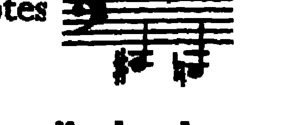
which were formerly out of its reach.
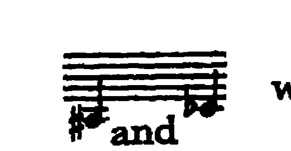
For the low A in “Tristan” the bassoon players have to attach a so-called double-beHl with an A-key. The low
tones ere are stopped with the
} The trills marked “) are easily playable today.
The fingering of the bassoon is the same as that of the flute. Many trills at the two extremes of its scale
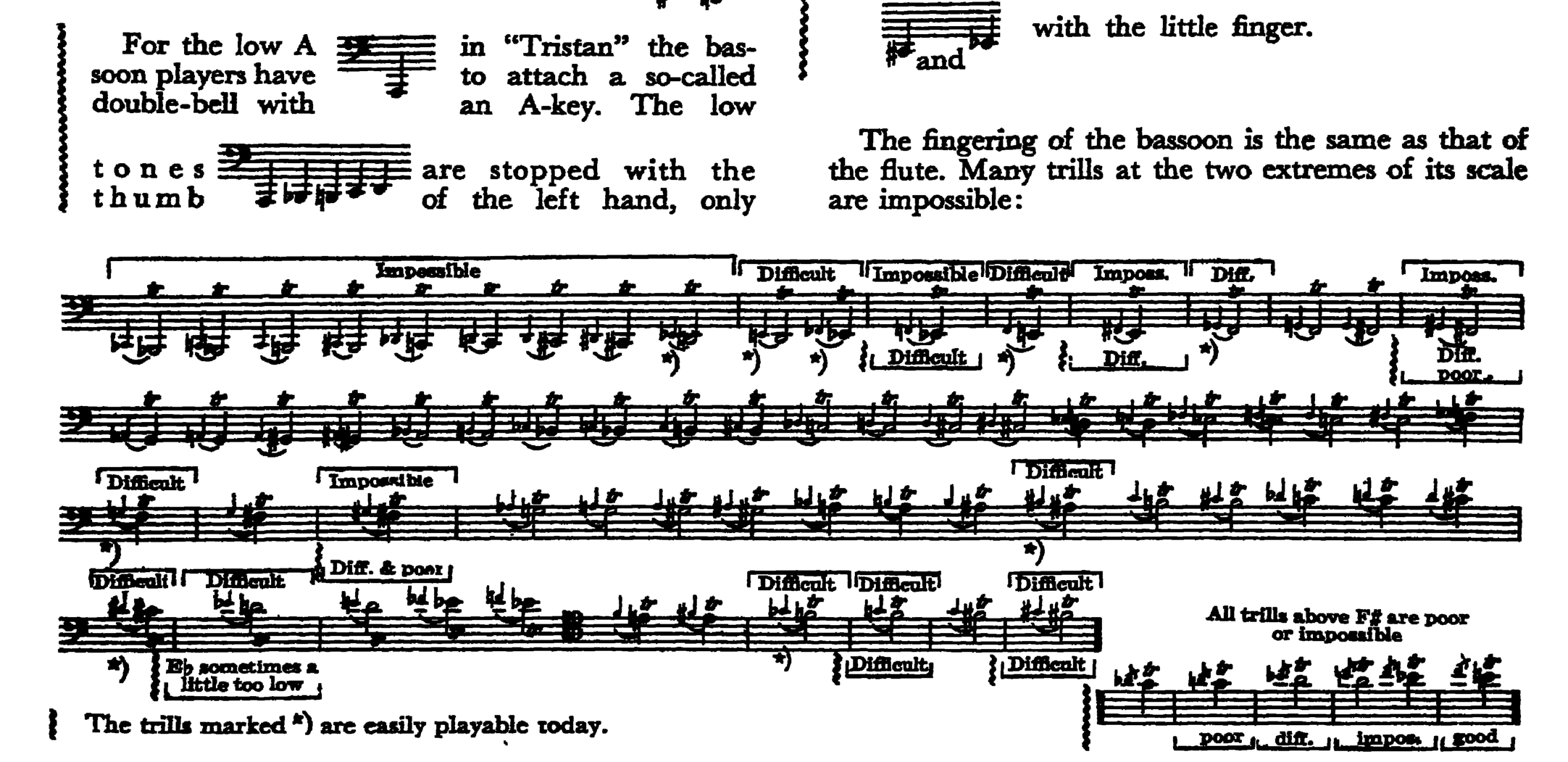
This instrument leaves much to be desired in the matter of purity of intonation. It would probably gain more than any other wind instrument if it were constructed according to Boehm’s system.
The bassoon is of great value in the orchestra on mumerous occasions. Its tone is not very strong and, being devoid of brilliance or nobility, has a tendency toward the grotesque. This should always be kept in mind when the instrument is used prominently. Its low tones furnish an excellent bass to the whole group of wood-wind instruments. The bassoon is ordinarily ‘written in two voices, but large orchestras being always
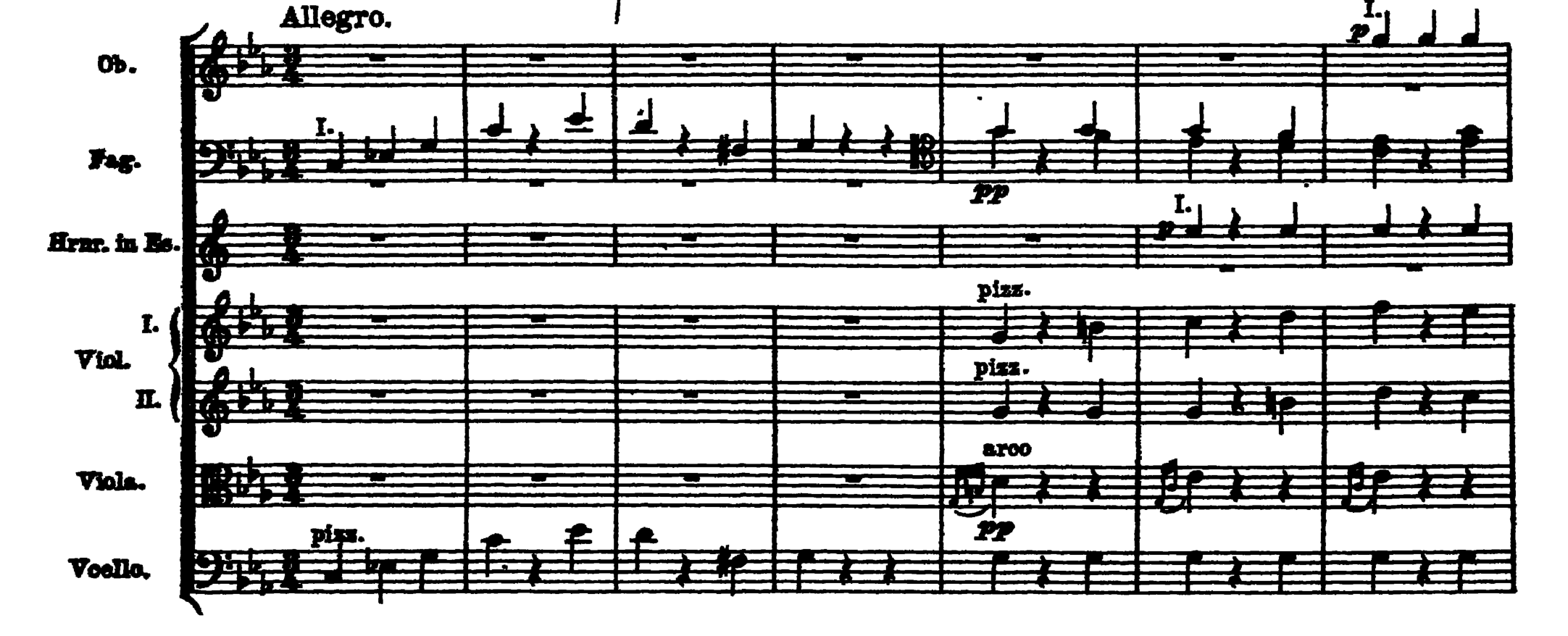
No. 73. Symphony in C minor, 3rd movement
provided with four bassoons, four real parts may be written or, still better, three, because the lowest part can then be doubled an octave below to reinforce the bass. The character of its high tones has something painful and suffering about it, I might even say, something miserable, which may be used occasionally with surprising effect in a slow melody or in an accompaniment. Thus the odd little clucking sounds heard in the Scherzo of Beethoven’s C-minor Symphony toward the end of the decrescendo are produced solel by the somewhat forced sound of the high tones (A and G) of the bassoons. (Example 73.)
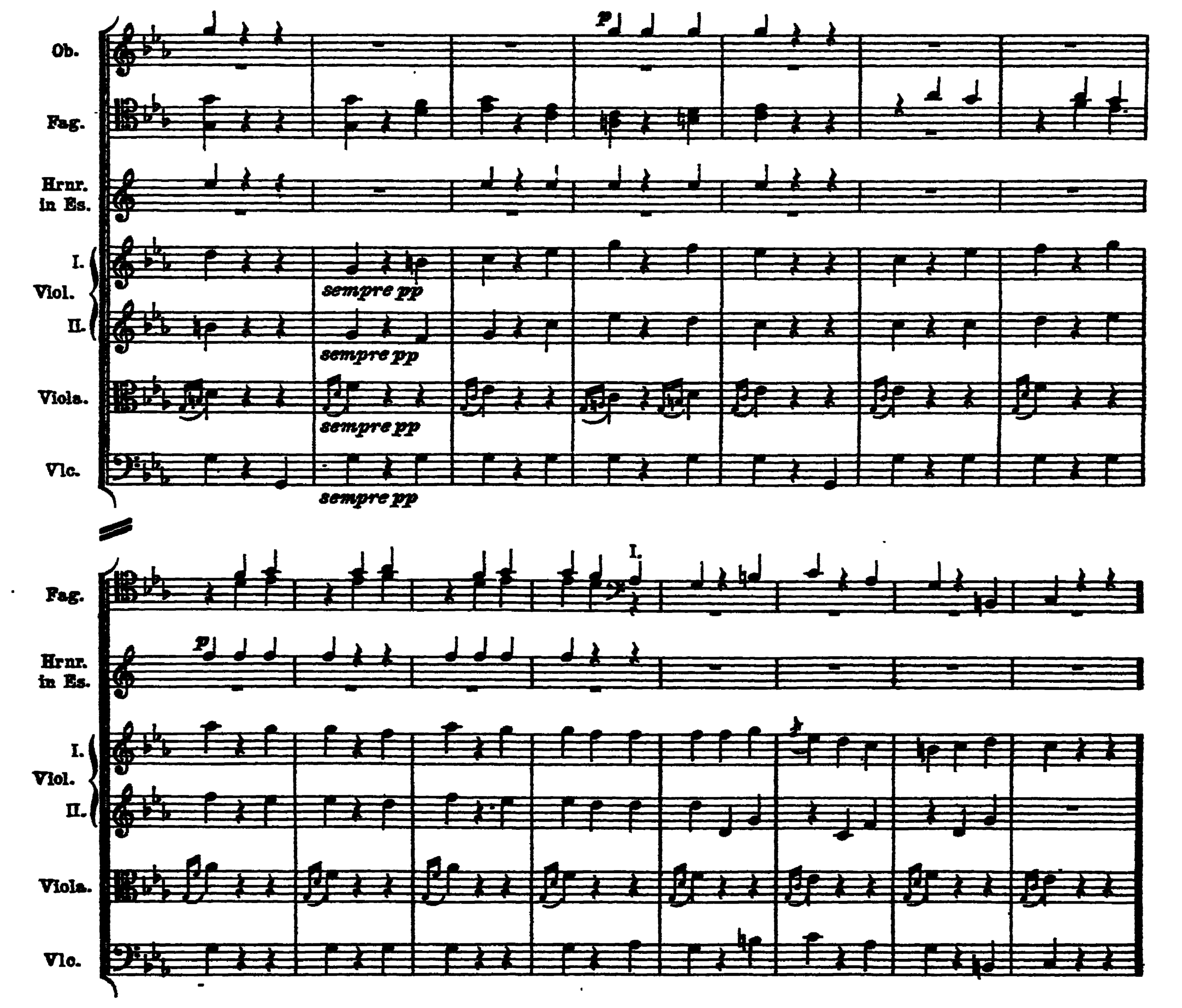
Meyerbeer, on the other hand, attained the pale, the nuns in “Robert le Diable” through the flaccid cold, cadaverous color desired for the resurrection of tones in the medium range of the bassoon. (Ex. 74.)
No. 74. Robert le Diable, Act If
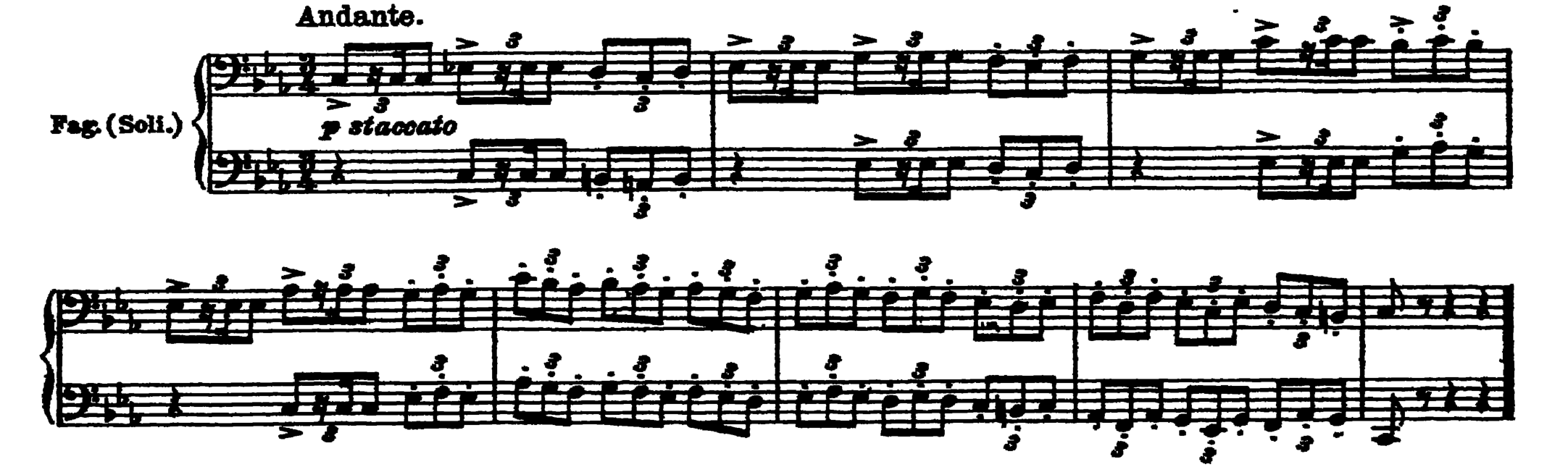
Rapid passages of slurred notes may be successfully soon passages in the bathing scene of the second act employed; they sound well if written in the favorite of “Les Huguenots” produce an excellent effect. (Exkeys of the instrument, i.e. in D, G, C, F, Bb, Eb, A, ample 75.)
and their relative minor keys. For instance, the bas-
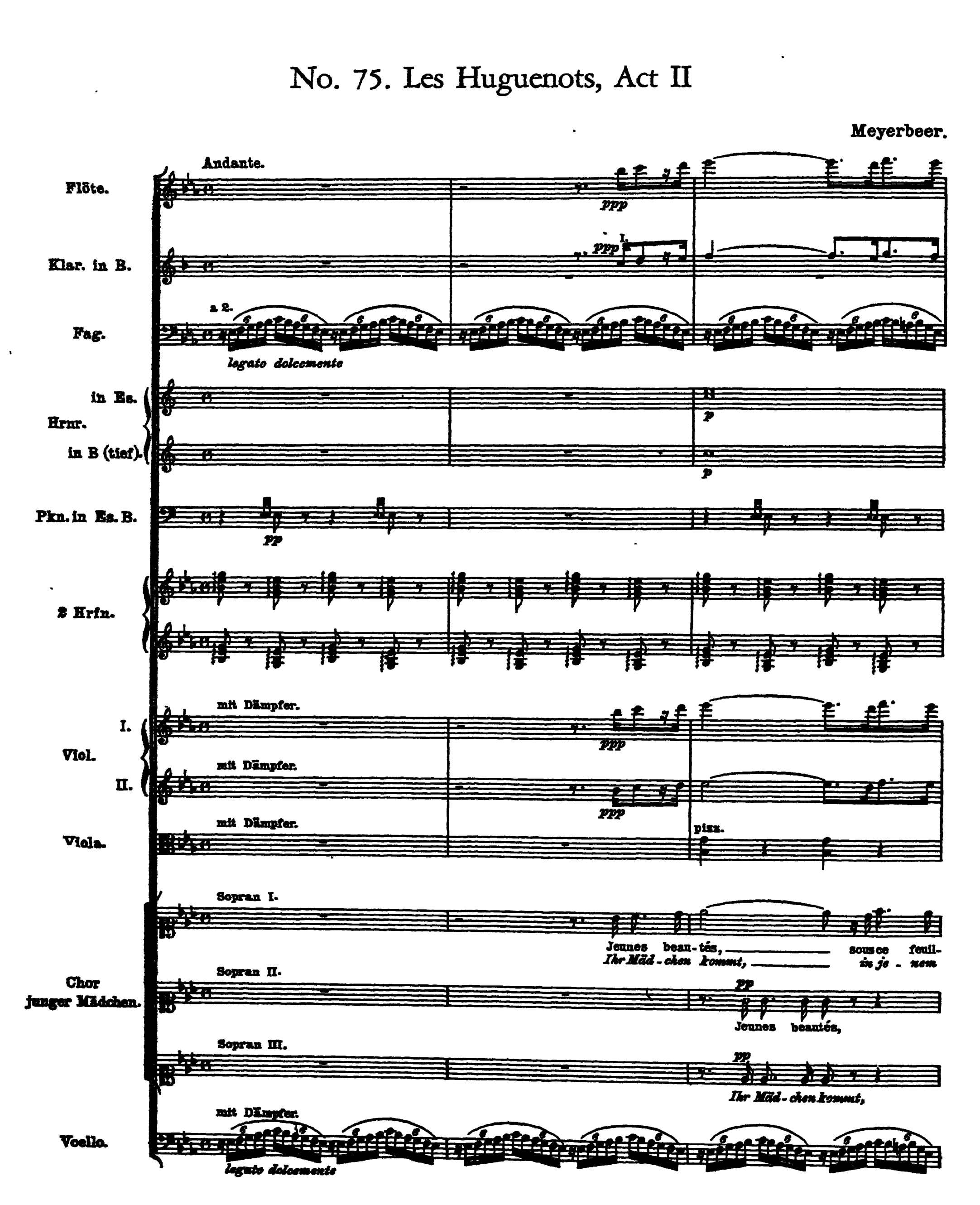
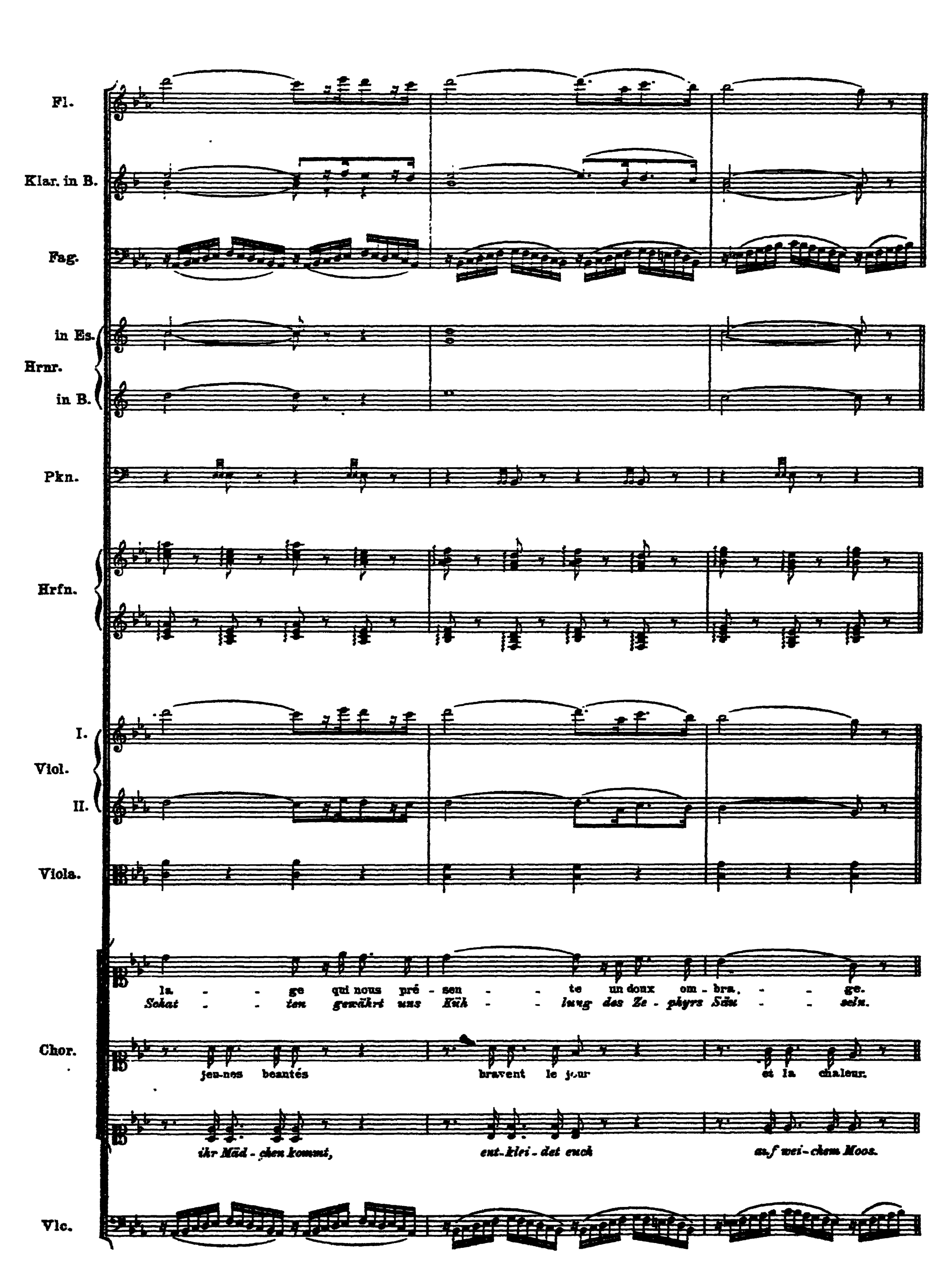
Mozart has expressed wonderfully the character of tender shyness, so peculiar to the upper and medium range of the bassoon in piano, in the duet in “Don.Giovanni”’, “La ci darem la mano”, at Zerlina’s words, ““Vorrei e non vorrei”. A peculiarity in the scores of Haydn, Mozart and Beethoven is the bassoons’ joining in the melody of the treble in one or two octaves. They frequently sound like the voice of an old man humming the favorite
melodies of his youth—for instance in “Le Nozze di Figaro”.
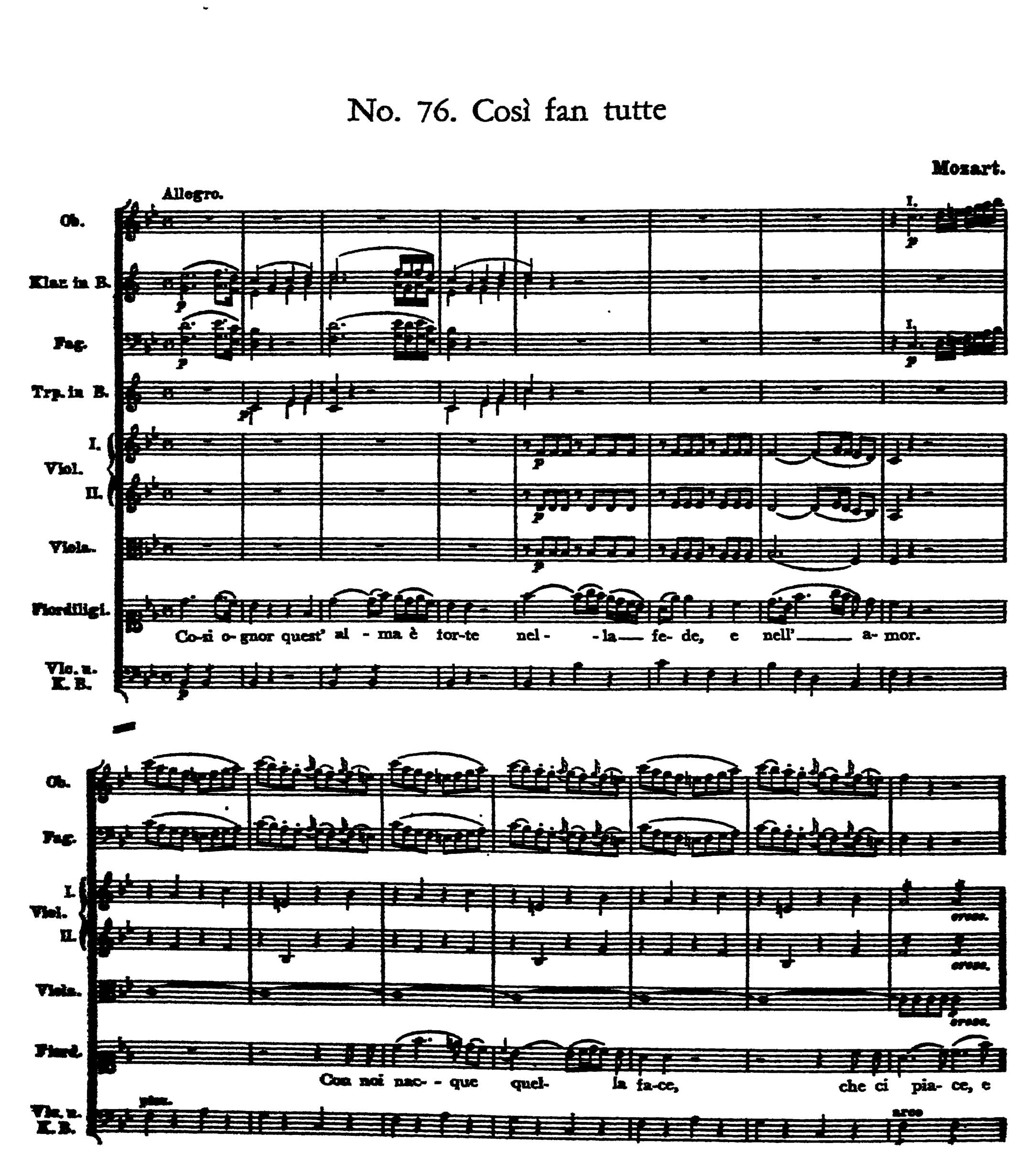
Another example by Mozart is to be mentioned where he employs the bassoon with the oboe, two octaves below the latter, to express an affected coyness: in the scene in “Cosi fan tutte” where Fiordiligi tries to hide her weakness in high-sounding retorts to the wooings of her disguised suitors. (Example 76.)
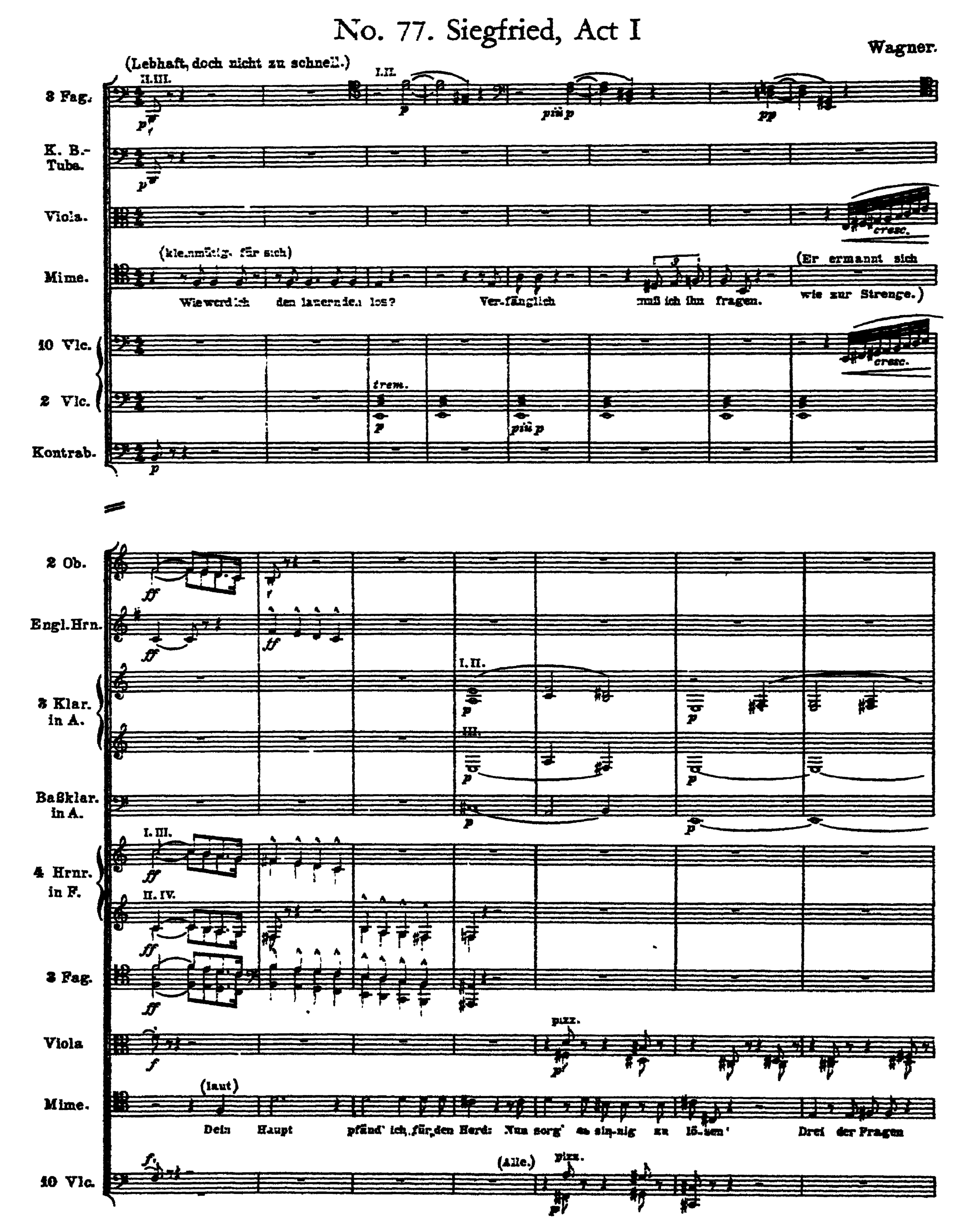
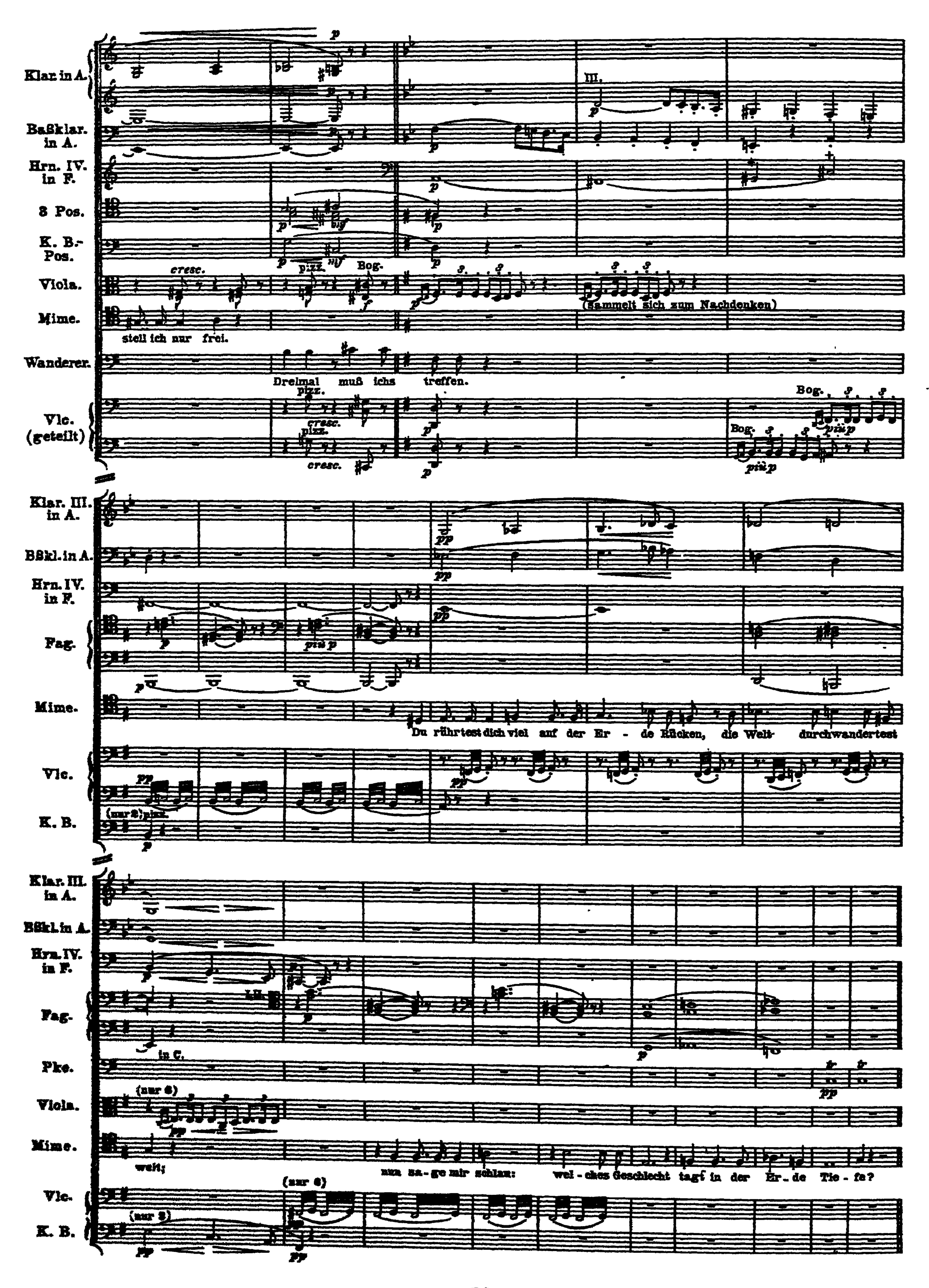
See also the expression of embarrassed slyness in Mime’s deliberative thirds in the first act of
f Wagner's “Siegfried” ‘Example 77;
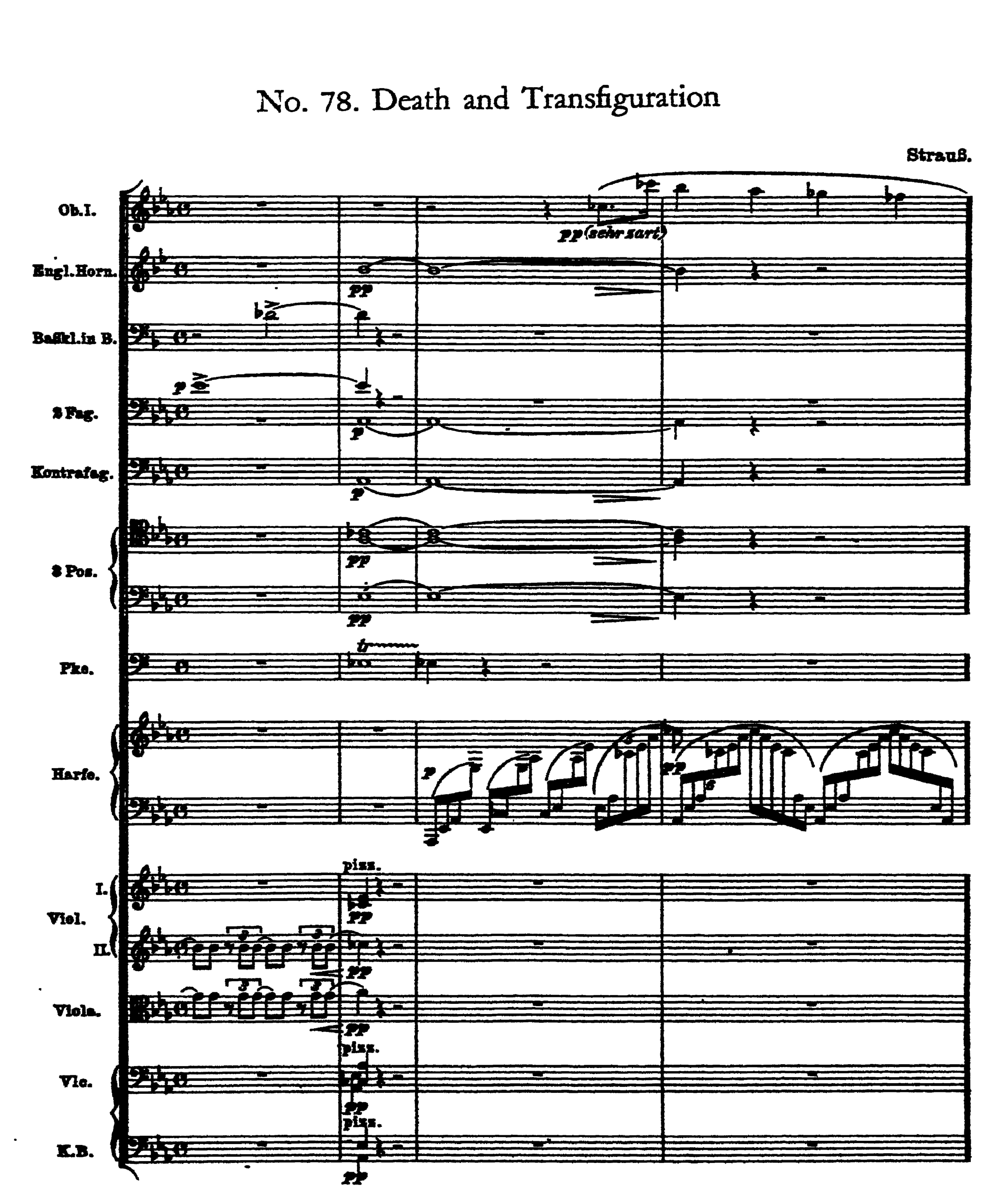
Weber draws from the bassoon heart-rending the A>-minor chord in my tone-poem “Death and tones of suffering innocence — in the cavatina Transfiguration” ‘played by trombones, the English {third act; of Euryanthe languishing alone in horn. bassoon and double-bassoon) a Ch was frethe forest. The overtones of the bassoon are par- quently audible. apparently as an overtone of the ticularly strong. It once occurred to me that in bassoon or doubie-bassoon. ‘Example 78.)