 Playable Books
Hector Berlioz · section 16 of 67
The English Horn
Read and hear this section in the playable edition →

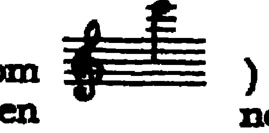
This instrument is, so to speak, the alto of the oboe. It has almost the same range; some English horns also have the low Bb. It is written in the Gclef like an oboe in low F; consequently, its real sound is a fifth lower than written. Its scale
it is necessary, its forte can be penetrating and also much more resonant.
This applies particularly to the English horn. Observe its admirable application and combination with flutes, oboes, clarinets, bassoons in the first and second acts o “Lohengrin.” Their effect would be completely changed, against the author's intentions, if the English horn were to stand out as an independent part, as it often happens when the German method is used, instead of acting as a discrete mediator between the timbres of the wood-wind
f Its timbre is milder and of a more subdued character; its agility in the sharp keys is greater than that of the oboe.
It was frequently employed by J. S. Bach and his contemporaries, mostly as a concertante instrument, preferably two oboes d’amore together.
At the beginning of the second part of his + Christmas Oratorio, Bach introduces two of them in combination with English horns—a delightful representation of the peaceful pastoral music.
As an example of the employment of this instrument in modern times, I should like to mention my “Sinfonia Domestica”, where the oboe serves as a symbol of the child, dreaming innocently as
well as playing gaily. (Full score, p. 13—‘III. * Thema”, and p. 15—Scherzo.)
Including the chromatic intervals
sounds as follows to the listener:

If the orchestra plays in C, the English horn must be written in G; if it plays in D, the English horn is written in A, etc.
Everything that has been said in connection with the oboe concerning difficulties in the fingering for certain groups of sharped or flatted tones applies
equally to the English horn*; rapid passages have an even poorer effect on the latter instrument. Its tone, less piercing, more veiled and heavy than that
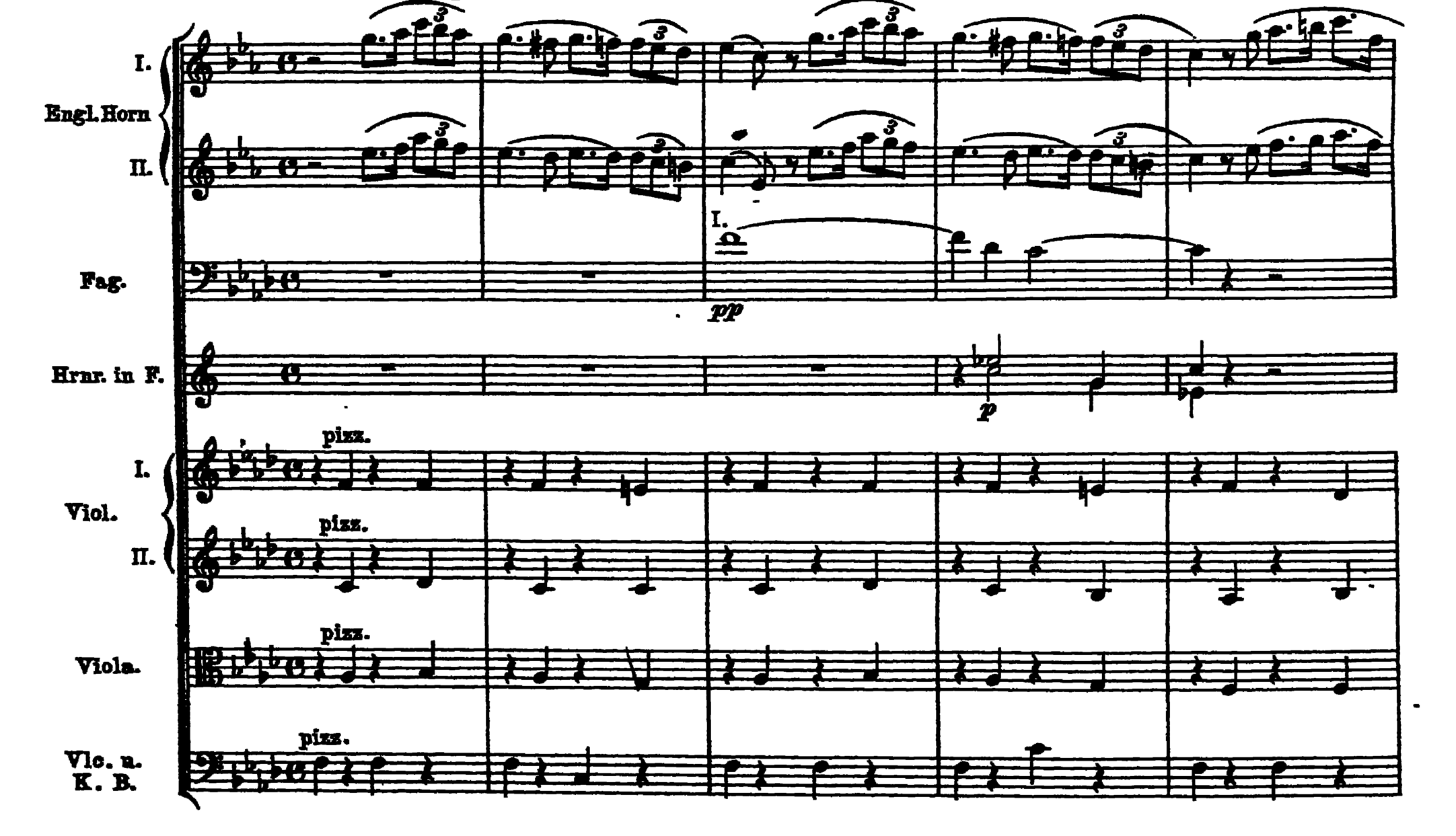
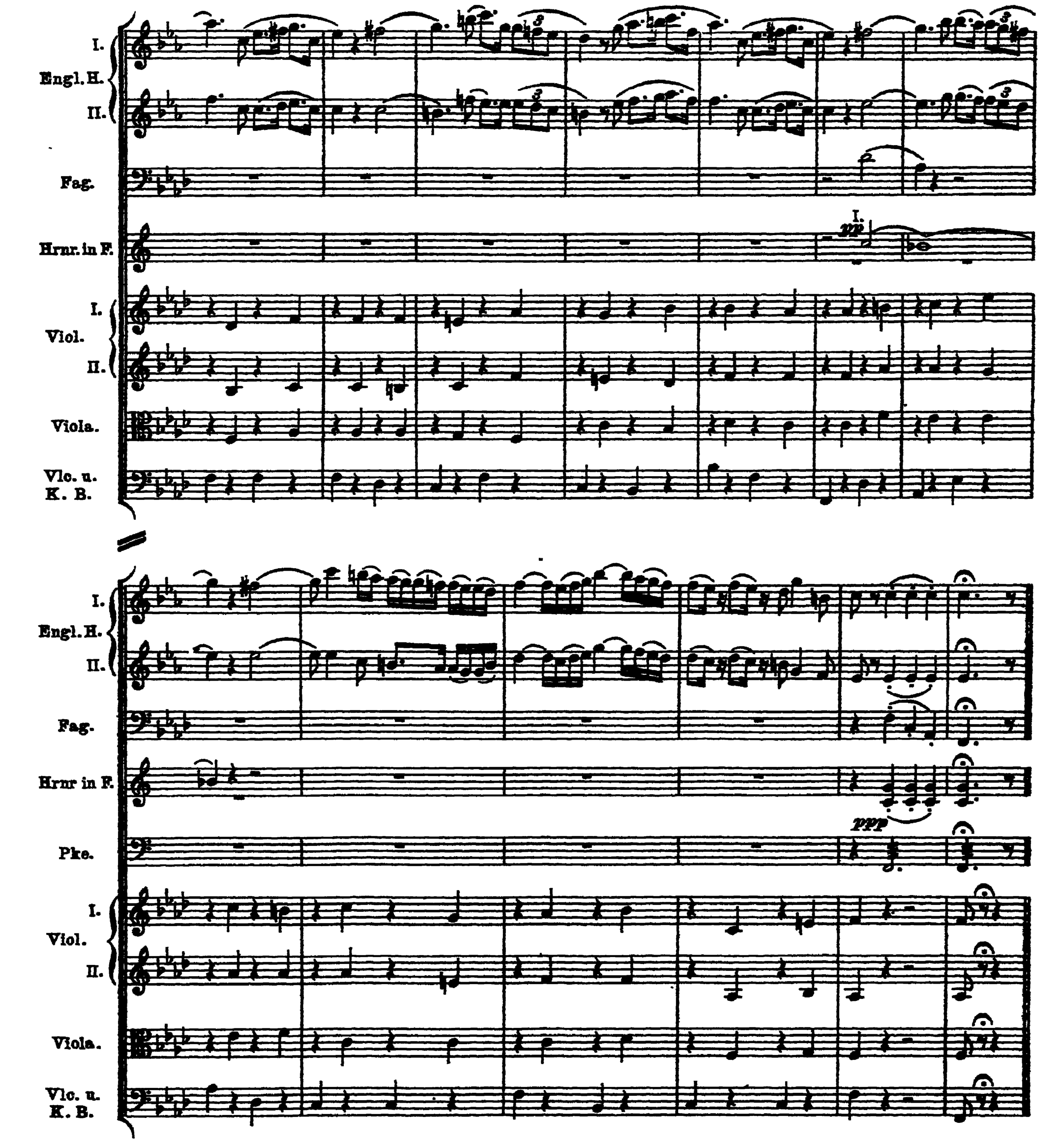
No. 69. La Juive, Act IV
Andantino espressivo. Halévy.
of the oboe, does not lend itself so well to the gaiety of rustic melodies. Nor can it express passionate laments; tones of keen grief are scarcely within its range. Its tones are melancholy, dreamy, noble, somewhat veiled—as if played in the distance. It has no equal among the instruments for reviving images and sentiments of ihe past if the composer intends to touch the hidden chords of tender memories.
Thus, Halévy has very felicitously employed two English horns in the ritornelle of Eleazar’s aria in the fourth act of “La Juive” (Example 69).
A most marvellous example is the sad strain of the shepherd in the third act of Wagner’s “Tristan”
ar of the oboe. longer today, present technical qualities of the English horn being about *Similarly to the oboc, this is no true the i iti i i
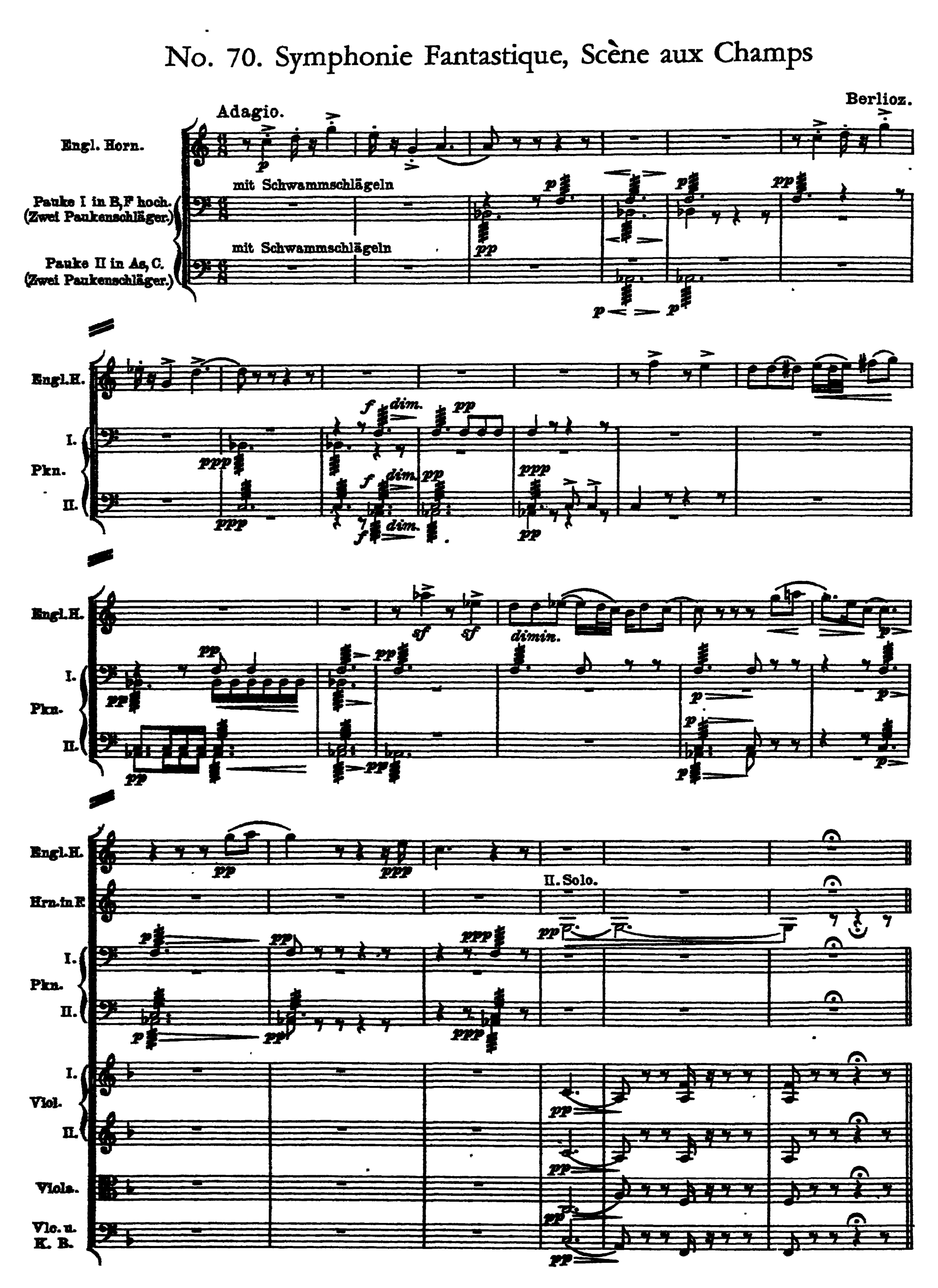
In the Adagio of one of my symphonies the English horn repeats the phrases of the oboe in the lower octave, like the voice of a youth replying to a girl in a pastoral dialogue. Then, at the end of the piece, it reiterates fragments of these phrases with a hollow accompaniment of four kettledrums, while the rest of the orchestra remains silent. The mood of absence and oblivion, of sorrowful loneliness, which arises in the soul of many a listener at the recurrence of this melancholy tune, would be far less poignant if it were played by another instrument. (Example 70.)
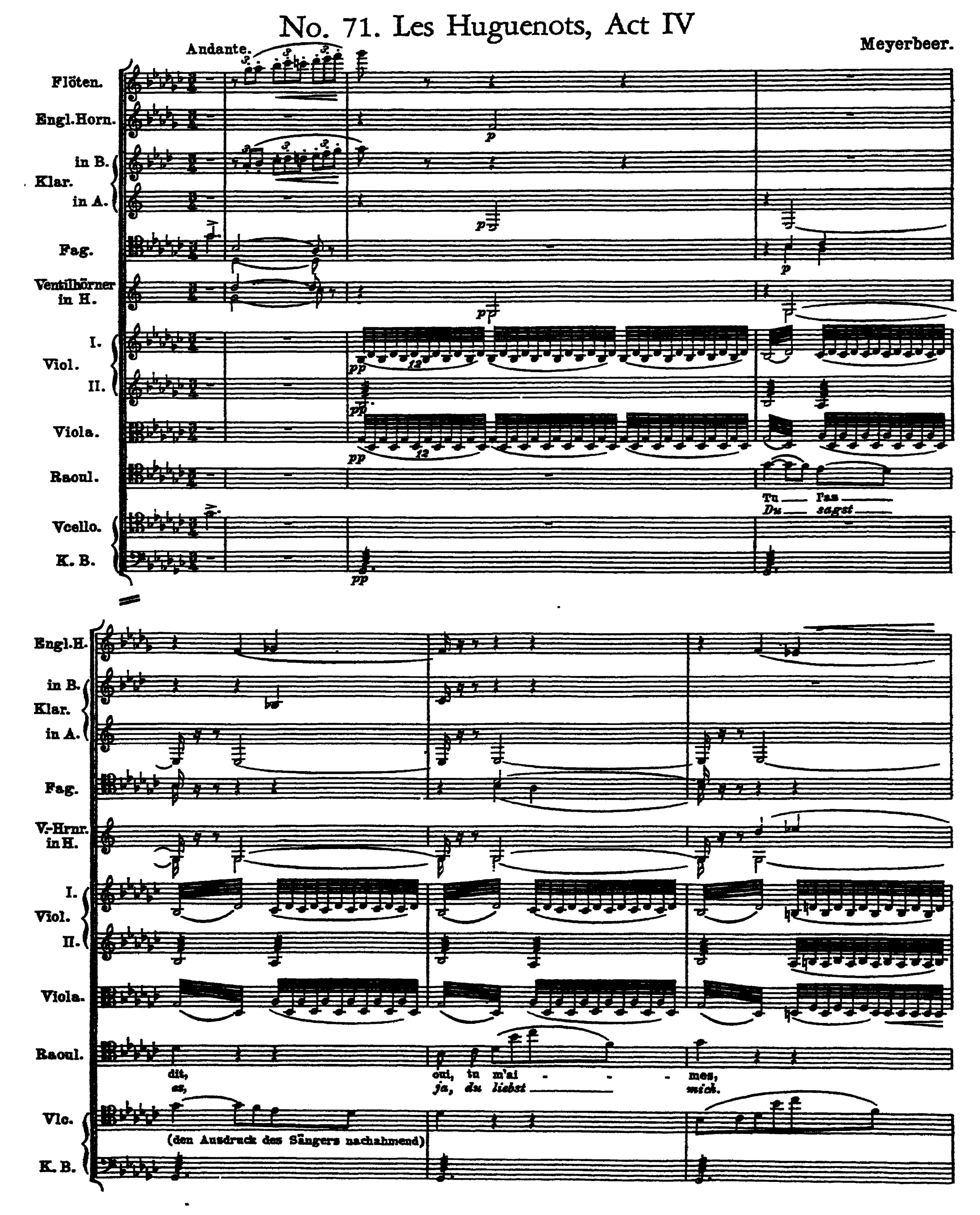
The combination of the low tones of the English effect was known neither to Mozart nor to Weber horn with those of the clarinets and French horns or Beethoven. A magnificent example is to be found during a tremolo of the double-basses produces an in the duet in the fourth act of “Les Huguenots”; effect as characteristic as it is novel; it is particularly I think Meyerbeer was the first to have used it m well suited to cast a menacing color upon musical the theater. (Example 71.)
ideas in which fear and anguish predominate. This
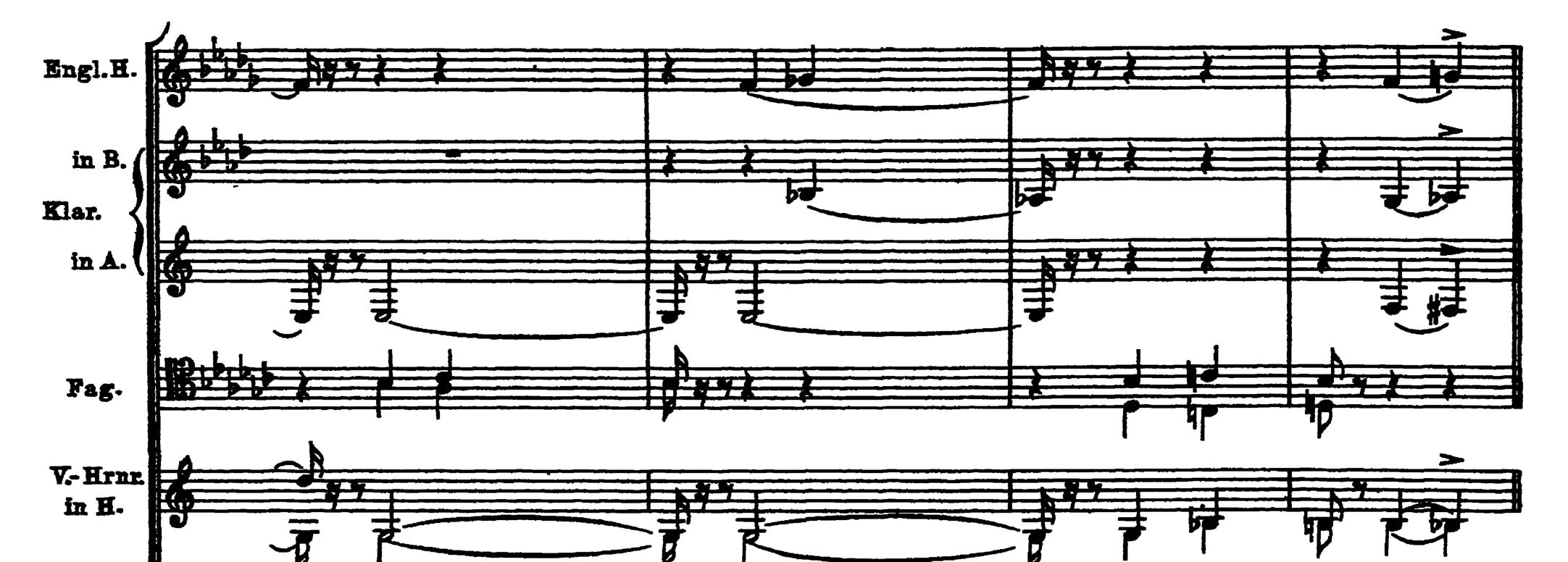
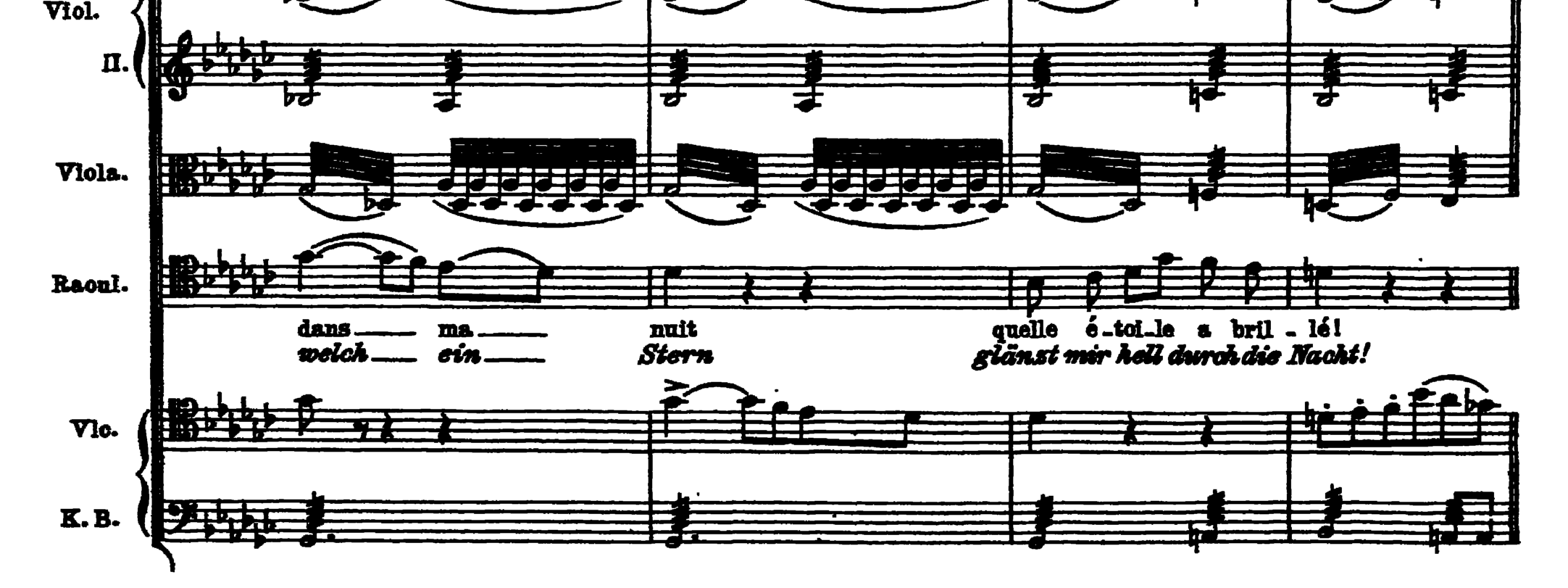
I recommend the study of the combinations of the English horn with flutes and clarimets in the first and second acts of “ in”. The Heckel-
clarina, invented by Heckel, may be mentioned — manifest p and without much effect; he never here. It is tuned in Bb and has the following range: introduced it in his French operas. Mozart, Beethoven § Including the chromatic intervals and Weber did not use it at all—I do not know why.
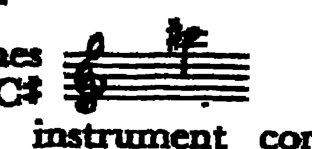
starting from C# =
alphorn and is more appropriate English horn or the trumpet, which is inadmissible here, for rendering the merry tune in the third act x ““Tristan”’. wh
compositions where the general character is one of melancholy, the frequent use of thé English horn,
hidden in the mass of instruments, is perfectly suitable. In this case only one oboe part need be writ-
ten; the second one is assigned to the English horn. Gluck has employed this instrument in his Italian operas “Telemaco” and “Orfeo”, but without any
The baritone oboe, constructed by F. Lorée in. Paris, is a new accession to the orchestra. It has - trecently found a rival in Wilhelm Hetckel’s Heckelphon. The latter has this range:
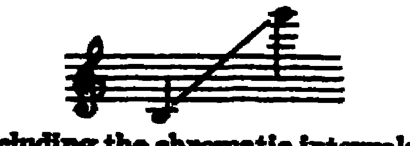
It sounds an octave lower than the oboe and has a rich, harmonious timbre. The four highest tones
% (starting from
) can be used only in
forte, and then
not without some risk.