 Playable Books
Cecil Forsyth · section 42 of 60
No. 37. The Bassoon
Read and hear this section in the playable edition →

Fr. Basson; It. Fagotto; Ger. Fagott.
The family history of the Bassoon begins in the sixteenth century. Its general outline and its more important details are pertectly well known. Unfortunately the honourable ancestry of the instrument has been besmirehed by an event which took place in Italy somewhere before the year 1539,—the invention of the Phagotus by Afranio, Canon of Ferrara.
This instrument had no connection whatever either technical or historical with the Bassoon. However, a continental historian and
1 Or Clarina-Heckel.
2 The Heckelclarind is also made in Eb. This instrument has the same written compass, but it sounds a minor third higher.
theorist of last century, misled by the name and by an imperfect acquaintance with its mechanism, hailed it as the first attempt to cut up the long pipe of the old Bass-Pommer into two parts, in fact as the original Bassoon. Naturally this claim has been repeated over and over again by subsequent writers until it has almost acquired the sanetity of truth. It may be found, mechanically copied with the original theorist's orthographical mistakes even in our most recent musical works of reference.
claim. It is not a conically- but a cylindrically-bored pipupports the No known fact in connection with the Phagotus a double-reed instrument at all, but an instrument of free metal tongues. It is not even blown by the player's breath, but by means of two pairs of bellows. In every essential it differs from the Bassoon; though it must be allowed that there is some slight difficulty in explaining the resemblance between the two names fagotto and phagotus. However this is not of great importance. The Phagotus itself was, without a shadow of doubt, a development ot the ancient utricular family of instruments. It was an unsuccessful attempt to elaborate and combine the Organ and the Bagpipes. In fact, if a descriptive name was needed for this unholy hybrid, Valdrighi's expression quasi-organo would be more suitable than any other.
Illustrations of the front-and back-view of the Phagotus are to be found at page 488, plate XII. On these the student can exercise his ingenuity and discretion in endeavouring to reconstitute the instrument and its tone. A comparison can also be made with the frontand back-view of the modern Bassoon shown at page 232, plate IX.; for the latter instrument is in essentials just the same as it was in the sixteenth century. In a book of this general character it is not possible to go at all closely into the details of the Phagotus, but for the benefit of those interested in the question a few remarks are added in an Appendix, page 487.
The Bassoon is historically a development of the old Bass-Pommer which in the sixteenth century was the true bass of the Schalmeyfamily. As we have already mentioned, the Discant or Treble- Schalmey became changed into our modern Oboe, and this change was ettected without any strong-y marked alteration of tone-quality. ine bass-fommer, on the other hand, was so completely transformed between 1550 and 1600 that we are now left with an instrument, the modern Bassoon, which is only a bass to the Oboe-family in technical sense that it is played with a double-reed. In tone-colour it bears no resemblance at all to either the Oboe, the Oboe d'Amore, or the English-Horn.
The transition-instrument between the Pommer and the modern Bassoon appears to have been the Curtal ' or Dulcian (Fr. Douçaine).
1 This instrument seems to have enjoyed a certain amount of popularity in the last Occasional literary references to its employment may be found, e.g. " The common bleting musicke is ye Drone, Hobius, and Curtoll." Bartholome (1582). The word Bombarde, with its collateral forms Bumbarde, Pommard, and Pommer, is of course found much more frequently. It occurs as early
This instrument, as originally manufactured, was an adaptation of the Tenor-rommer-in-u. The main alteration consisted in cutting the whole pipe out of a double-bore block of wood, much in the same way Hence came its same Curtal oiat of the Bassoon is now piereed. which simply means "Shortened Pommer." Later on the Double-Curtal was introduced. • This instrument was pitched an octave below the (single) Curta, and, In appearance at any rate, bore some resemblance to the modern Bassoon. Owing to their large size and solid "make," specimens of Pommers, Curtals, and Dulcians are, as such things go, by no means rare. Most museums possess wellpreserved examples of these instruments, and there are many in the hands oi private collectors.
It will be seen that the alterations which were made in the Pommer towards the end of the sixteenth century were chiefly directed towards a reduction of bore and a greater convenience of shape. The older instrument was of comparatively wide bore and was made in one straight piece over six feet long. The difficulties of "stopping" an instrument of this huge length must have been very great. They were only partially overeome by cutting the pipe into two unequal Ushaped piercing. "In the sew instrument thus made the tone was and joining the two in a wooden block provided with a sweeter and more adaptable to modern needs, but the intonation, depending on a casual, empirical distribution of the holes, was imperfect. And imperfect it remains to the present day. This, however, 1s no drawback to the instrument. Un the contrary, it has thrown on the instrumentalist the same responsibilities in the way of intonation as those incurred by the String-player. The consequence is that a good Bassoon-player is continually on the watch to overcome the natural deficiencies of his instrument, and however uncomfortable this mode of life may be to him, the artistic results are good beyond question.
As we have it now, the Bassoon is a conically-bored pipe doubled back upon itselt so as to reduce its length to about four feet. The whole pipe is divided into five pieces which are, in their order from the player's lips, as follows:
(1) The crook, a narrow, curved tube of metal to which the doublereed is attached
(2) The wing
(3) The double-joint, at the lower end of which the pipes meet and reverse their direction. The junction is etected, as stated above, by means of a U-shaped piercing in a solid "butt" of wood
as the end of the fourteenth century, "Such a soune Of bombarde and of clarioune.' Gower, Cont. (1393). Besides the Curtal there was another internediate type of Bassoon called trom its fat, clumsy appearance the Sausage-Bassoon (Fr. Cervelat). A second English name for this instrument was the Racket. The word appears to be unknown to Murray in this connection, but, if it ever were used, it is probably= " rocket " in its old sense of "bobbin." Engravings of the instrument certainly make the name appear appropriate, but I contess not to have seen an actual specimen. In one published engraving (French) it has an undoubted cup-mouthpiece. Either this is wrong or it was not a Bassoon.
(4) The long or bass joint, which lies next to and extends upwards beyond the wing.
(5) The bell.
These five pieces together with the double-reed can all be seen in the two views of the Bassoon given on Plate Is. It should also be noted how peculiarly serviceable is the modern system of keys trackers, and finger-pieces, when applied to an instrument of such great length. Not only does it provide the player with a complete chromatic compass, but it enables the controlling finger-pieces to be arranged conveniently round the two groups of finger-holes in the Wing and the Double-joint. Thus the key-holes can be placed accurately without depriving the player of his technical command over the natural scale of the pipe.
The instrument is held diagonally by the player. The bell points upwards to his left hand, and the double-joint rests against his knee.
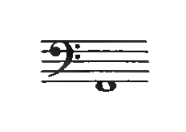
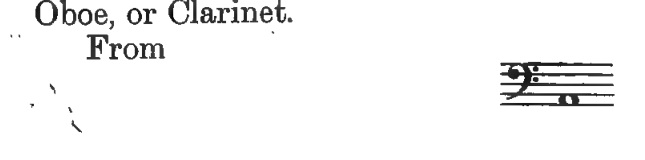
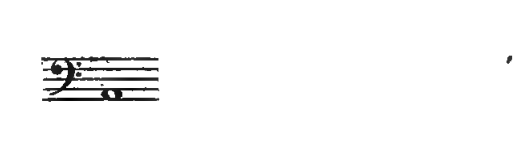
The original scale of the Bassoon begins at
but this has always been extended downwards for a perfect fifth to
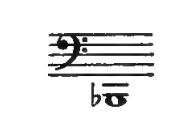
Uriginally, however, this extension was not wholly chromatic. This will explain to the student the curious omissions which he is bound to meet in old Scores. As late as 1821 we find Weber writing, in the Freischütz Overture:
Example 145

where in the 4th bar the 2nd Bassoon Bt is omitted simply because that note was not on the player's instrument. This bottom fifth is of course now, like the rest of the instrument, wholly chromatic. Above the first natural octave of the Bassoon (F to F) the second octave to
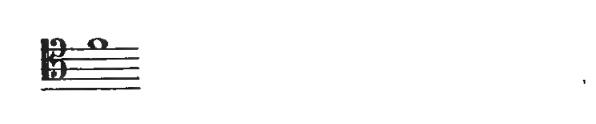
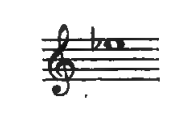
is produced in the usual manner by overblowing the lower octave. Above that again a complete minor seventh to
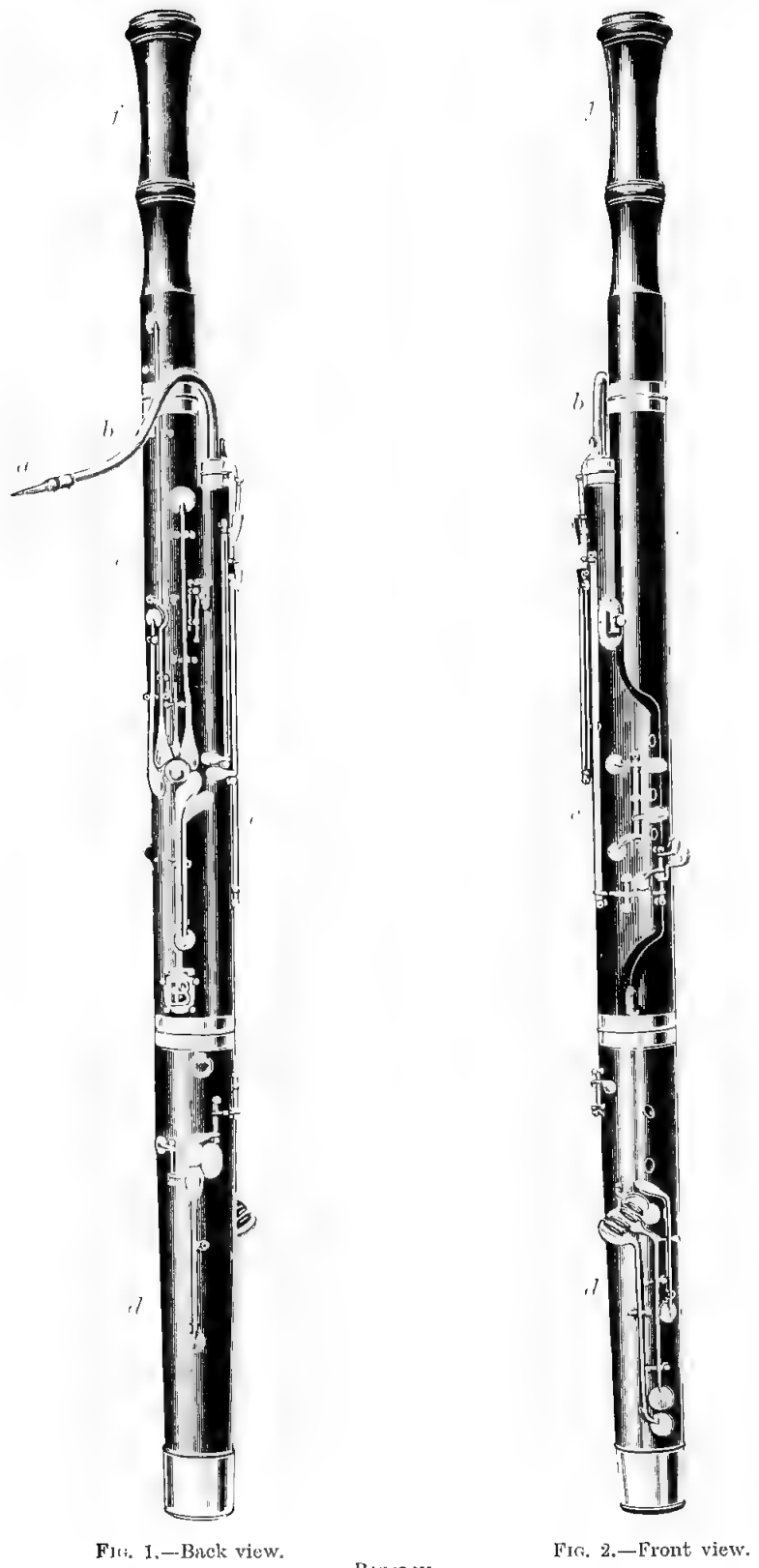
BASSOON. «. Rood. D. Crook, e Wing. d. Double-juint. •. Ba-or Long-joint. J. Bell.
Facing p. 232.
By kind permission of Maris, Bouscy a Co.
is producible by means of overblowing the fundamental octave at the twelfth.
As will be seen, the complete chromatic compass of the Bassoon
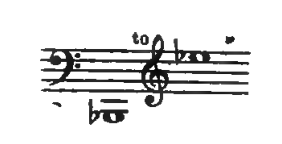
is of great length. It must, however, be pointed out that, though it
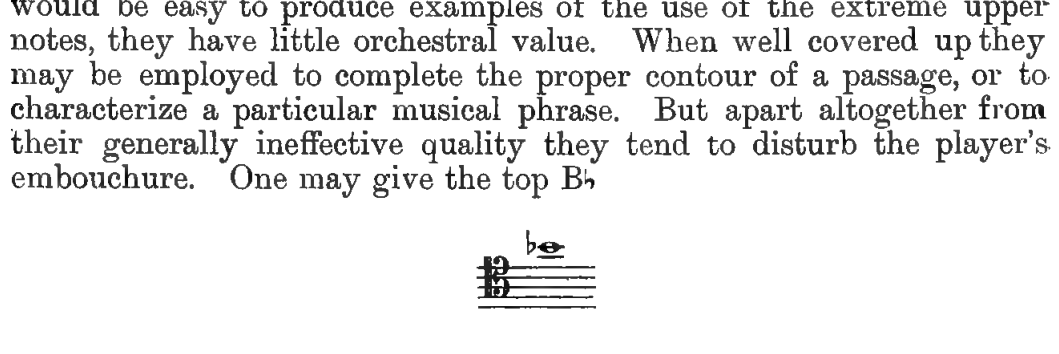
as a good working upper compass for the instrument.' At the lower end of the compass Wagner, both in Iristan and the Ring, writes down to low AH.
A passage like this from Die Walküre (Act I., Scene III.)
Example 146
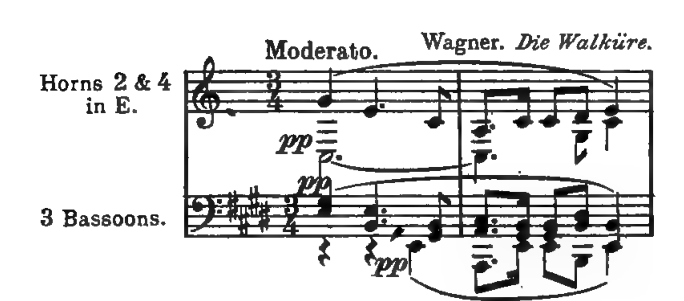
Moderato. Wagner. Die Walküre.
cannot be circumvented by the mere addition of a key to the instrue has to be inted on. this is, pe aps, it, or he illogs de ment. rechange," has to be fitted on. which it is better not to imitate Wagner.
The Bassoon shakes are more restricted than those of the Flute,
1 This limit cannot, of course, always be observed. It is merely given as a rough the studenter mi Base opte fros gecent cone this note see Exs. 149, 166,
upwards for two octaves all shakes are possible; but avoid whole-tone shakes on the following notes:
→ has to be photo be ka
Note that for purposes of memory these seven bad whole-tone shakes may be reduced to four by the statement that they are:
(1) The high Al shake, and
(2) The shakes on Db, Eb, Gb, in each of the two octaves.
is the Bassoon is constructed at present, the combination of Et an Jt (or of Gb and Ab) in any rapid legato passage is very difficult This applies to all three octaves.
Below
whole-tone shakes are only possible on the following notes
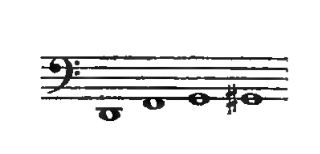
and half-tone shakes on
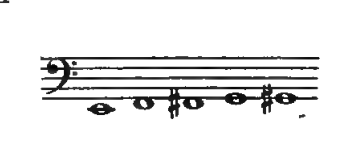
One need scarcely add that the bottom shakes, even when technically possible, are far too strongly marked in character to
Tremolos are rarely needed on the Bassoon. The advice with regard to them may be put in a nutshell. As far as possible use only major and minor thirds of which the lower note is any note chromatically upwards from
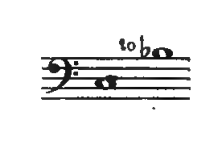
These limits are occasionally exceeded, but it is better for everyone concerned when they are observed.
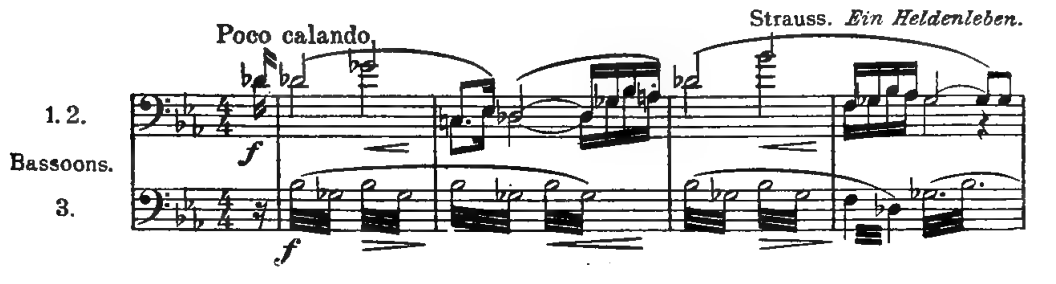
Strauss employs Bassoon tremolos with considerable freedom in the orchestral forte and mezzo-forte. As a rule, however, he uses them in such a way that there is very little chance of them being heard. The
' An awkward instance can be found in the opening notes of Example 168.

following example of a simple tremolo is from his Ein Heldenleben (page 41 of the Full Score):
Example 147
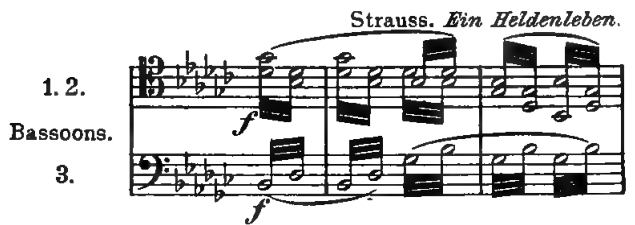
A few pages later on in the same work there are two-part tremolos tor Bassoons, and even (on page 49) a three-part tremolo in a very awkward key. The passage is, however, well covered up.
Example 148
A great deal of nonsense has been written about the Bassoon registers. Some authors divide up the whole compass of the instrument into three, others into five distinct parts. There is no necessity for this. From its bottom note upwards for two octaves and a fifth to
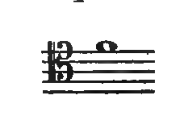
thd instrument, he bottom fith is of course thier ad reedly then and regular. the middle and upper portions, but this is common to all Wood-Wind instruments. The low Bb, in especial when taken piano, has a beautiful velvety quality unapproachable by any other orchestral instrument.
The middle-register always tigures in instrumentation-books as "weak," "pale," "thin," "cold," "cadaverous," and all the rest of it. I'his has its origin in Berloz's remarks with regard to the "Resurrection of the Nuns" in Meyerbeer's Robert le Diable. As a matter of fact, the octave upwards from
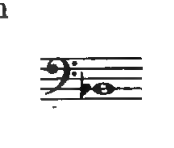
is the very best part of the instrument, capable of a beautiful solemn sonority in slow legato melodies, and quite easy to produce and control in quick passages. One must not forget that no other Wind instrument can even faintly suggest the illusion of a Baritone voice in this octave. The Clarinets are too smooth and overcharged with colour in the portion of the octave which they cover; while the Bass-Clarinet is too hollow, windy, and inexpressive.
The real state of the matter is that the Bassoon has a preternatural power of playing staccato, and, if it is forced to play passages of a humorous, grotesque, or macabre sort, it easily endows them with a dry spiccato quality that is almost toneless. But this is one of the instrument's many virtues. No one would suggest that because the English- Horn can play the stinging semitones at the beginning of the "Critics" section of the Heldenleben that, therefore, it cannot play the Largo of the New World Symphony. The less said about Meyerbeer and his rubbishy thirds the better. So much for the middle-register of the Bassoon.
It is only necessary to add that, as the scale progresses above the top tenor F, the absence of the characteristic Harmonics of the lower octaves becomes increasingly noticeable. The result is a somewhat pinched tone-quality as of someone complaining about his poverty. These notes, to be properly effective, must be doubled. If used without doubling they must either be accompanied in the lightest manner possible, or, in harmonic combinations, only pitted against single Wood- Wind "voices." In this connection the student should look at the quotation already given trom 'Ischalkowsky's Hamlet (Ex. 133) and the one printed below from the same composer's Pathetic Symphony (Ex. 149).
As the double-reed of the Bassoon is between the player's lips he is, of course, precluded from using either double- or triple-tonguing. For all that the executive powers of the instrument are remarkable. Anything in the way of arpeggro tigures (Hixs. 166 and 168), wide staccato skips up to and even beyond the limits of a sixteenth (Exs 163 ana 164), diatonic and chromatic scales (Exs. 158, 159, and 165), rapid successions of repeated notes (Ex. 160), of detached and staccato notes (Lixs. 161 and 162), and passages tounded on any combination of these technical methods, are performed with ease and certainty. In the legato quick scale passages, it written in any key south of I major or north of Ao major, are pretty sure to come off and souno well. Like the Oboe, its best slurred skips_that is to say, slurs merely between two notes as opposed to extended legutos—are those taken upwards. This point, however, is not of great importance unless the skips are very wide.
A word may be added with regard to the danger of allotting any subject of a serious or poetical nature to the Bassoon if it involves repeated, detached, or staccato notes. Such a subject, especially if first heard on the Strings, will appear ludicrously commonplace when heard on the bassoon. Une has only to remember the repeated notes in the slow movement of Mozart's G Minor Symphony. On the Bassoon the subject sounds tame, awkward, and mechanical, however good the player. The Bassoon is by no means deficient in seriousness or even 1 See the caution given above with regard to the notes F♯and G♯

in poetry, but, in order to realize these qualities, it needs a certain spacious and somewhat solemn type of legato melody.
No instrument is at once so easy and so difficult to illustrate by means of examples as the Bassoon: easy, because any Full Score from Haydn to Strauss has only to be opened at random to provide effective passages for the instrument; difficult, because its uses for melodie purposes, for "flling-up," for figures of accompaniment, and for basswork are so manitold that tiity pages would not exhaust the possibilities of the subject.
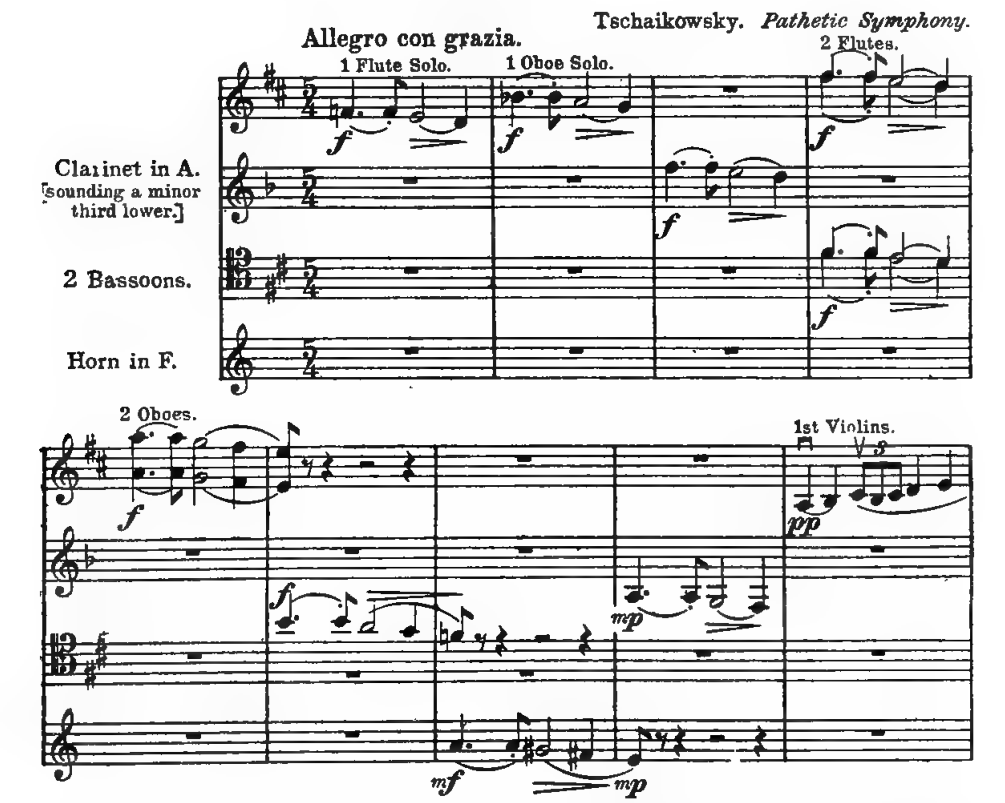
The following skeleton outline from the second Movement of Tschaikowsky's Pathetic Symphony contains a good example of a few solo notes for Bassoon at the top of its compass. The melodic phrases are allotted in turn to each of the Wood-Wind instruments and the Horn. The String-accompaniment, omitted here for reasons of space, is throughout marked down to a lower dynamic level than that of the Solo Instruments. It begins p, reaches mf in bar 4, and then diminuendoes to pp in bar 8.
Example 149
Beethoven's wonderfully effective phrase for Solo Bassoon in the Più Mosso of the Fifth Symphony (2nd Movement), is accompanied in the lightest manner possible by the Strings. The Basses and Cellos play the low Ab, three pranussimo semiquavers on the quaver-beats of each bar, while the Violins and Violas play three pianissimo semiquavers " off the beat."
Example 150

The following passage is from the Waltz Movement of Tschaikowsky's Fifth Symphony:
Example 151
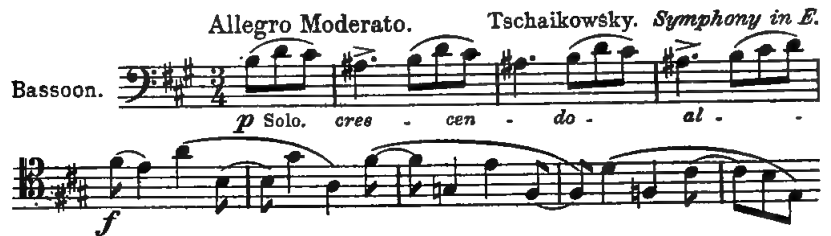
It affords a very good example of what not to write for the Bassoon. The opening bars present no difficulties, but the big up-and-down legato "swoops," of which the last bars consist, need a good deal of nice adjustment in the tempo unless they are to sound merely an awkward seramble. Even with a first-class Bassoonist, and with a sympathetic Conductor waiting on him, this passage is liable to sound somewhat unsatistactory.
Here is another Tschaikowsky passage in the upper register of the occurs in that composer's Marche Slave. The two Bassoon. Bassoons playing in unison with the Violas give exactly the plaintive funereal character which the subject demands.
Example 152
Ischaikowsky. Marche Slave.
Moderato. In modo di Marcia Funebre.

Occasionally in harmonies of Wood-Wind and of Wood-Wind and Horns the composer abandons the normal arrangement in which the Ist Bassoon plays a part lower than that of the Clarinets. This is done with the double object of securing the thick reedy tone of the Clarinets in their "chalumeau" 1 register and of giving greater prominence to the nasal quality of the upper Bassoon notes. An instance of this modern procedure has already been quoted from Ischaikowsky's Hamlet (Ex. 133), and a second example in which the accompaniment consists of thick reedy chords and soft Horn notes is quoted in the "String" section of this book from Bridge's Isabella? Both these examples are well worth the student's attention from the point of view of the vertical arrangement of the Wind-parts.
2 Ex. 248. See also Ex. 192.
' See page 361.
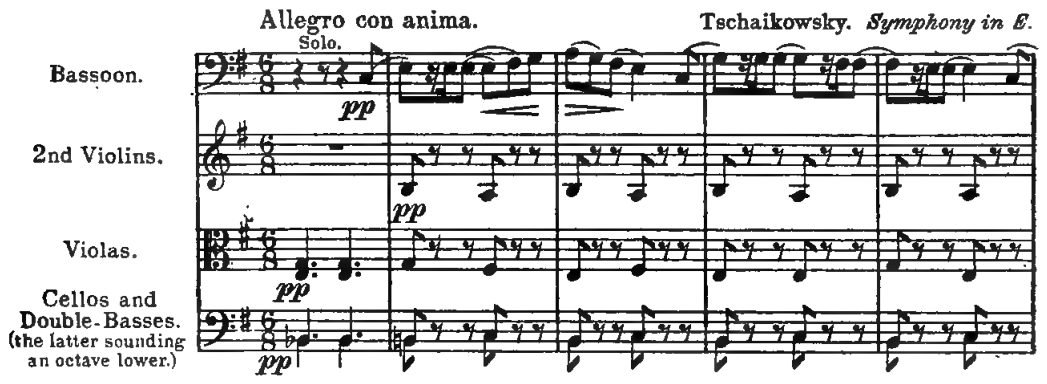
As an instance of the use of the middle register of the Bassoon no better example can be quoted than the subject in the Ist Movement of Ischalkowsky's Fafth Symphony as it appears on that instrument "Solo." The effect is sombre and melancholy in the extreme. are the first few bars of the passage:
Example 153
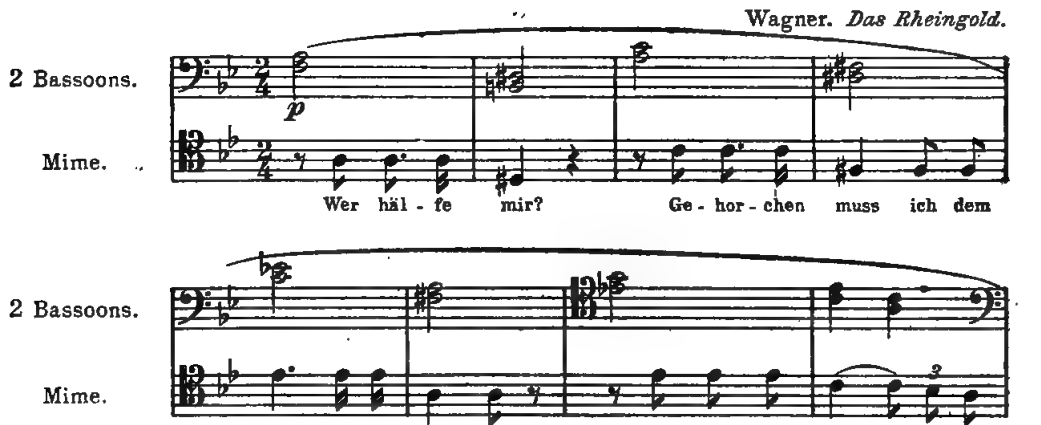
Wagner occasionally gets an effect of extraordinary desolation and sadness by employing his bassoons quite alone. No one can forget this little bit of accompanying in Das Rheingold.
Example 154
der mich in Ban de ge-

bin-den, Was gab ihm die Macht?
Cellos and
Double-Basses.
(the latter sounding
an octave lower.)
Wagner's territe slurs that stretch magniticently across his pages like the Rainbow-Bridge of his own imagining are a sheer impossibility except to a race of giants.
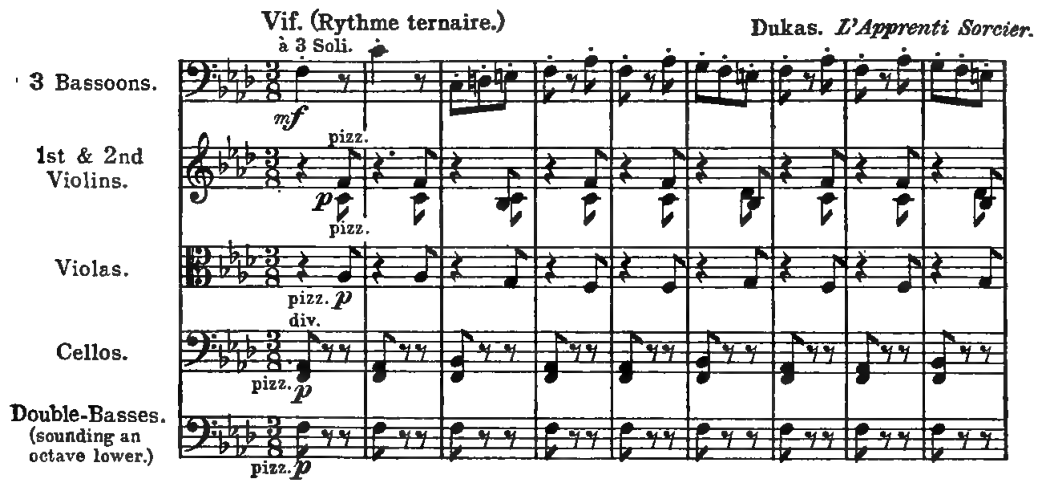
The old-fashioned "fun" of making the Bassoon play unexpected, low notes is not in much demand nowadays. On the other hand, the instrument is often called upon to characterize baroque tunes, and this it does very successfully. One has only to imagine the subject of Dukas's L'Apprenti Sorcier on any other tone-colour to see how invaluable the Bassoon is in this direction.
Example 155
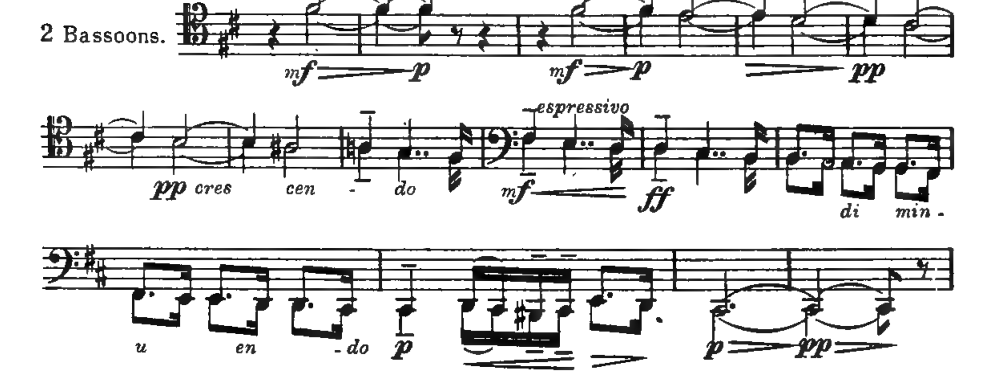
The most telling examples of the bottom notes of the Bassoon are perhaps to be found on the first page of the Pathetic Symphony and in thè Adagio near the beginning of the last Movement. In the latter of these two examples, both given below, the composer takes the high F♯, which is so striking a feature of the opening, and brings it gradually down in the same tone-colour through two octaves and a fourth. The student should look carefully at the dynamic marks and differentiate in his mind those which apply only to the performance of separate short phrases from those which are integral to the passage as a whole. • This whole Symphony is a model in the not unimportant art ot phrasing, dynamic marks, balance of expression, and so on.
Example 156
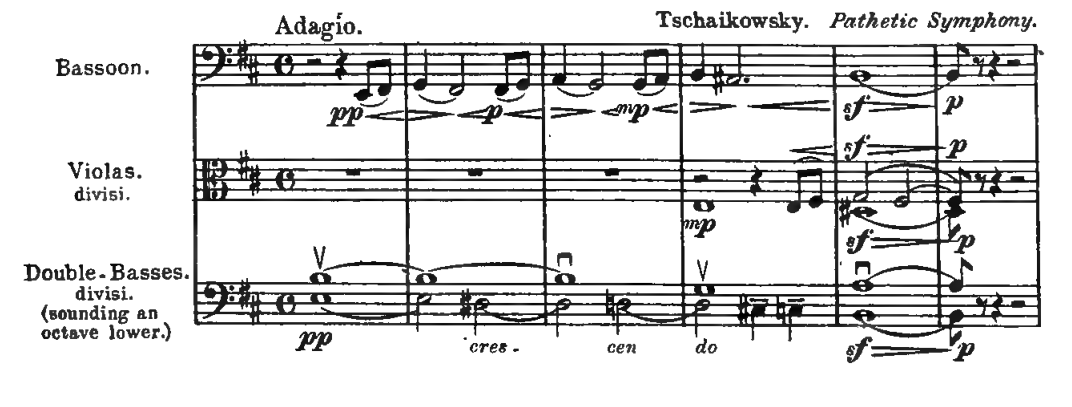
Example 157
Ischaikowsky, Pathetio Symphony. Adagio poco meno che prima. (d = 60.)
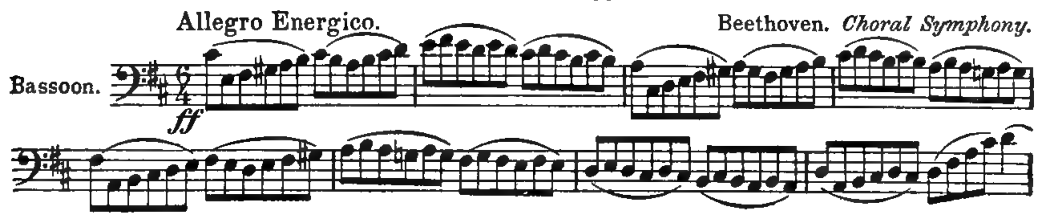
The following short extracts will give the student some idea of the legato and staccato technique of the Bassoon. They have already been referred to above (page 236). It must not be supposed that they are she sal sht may assages. Opet hit prode aim viah si siare wrases of about the same degree of difficulty.

Example 158

Example 159
Repeated, detached, and staccato notes in quick tempos.
Example 160
Molto Allegro.
Mozart. Don Giovanni.
2 Bassoons.
EXAMPLE 161. Beethoven. Symphony No.4 in Bb. Allegro ma non troppo.

Example 162
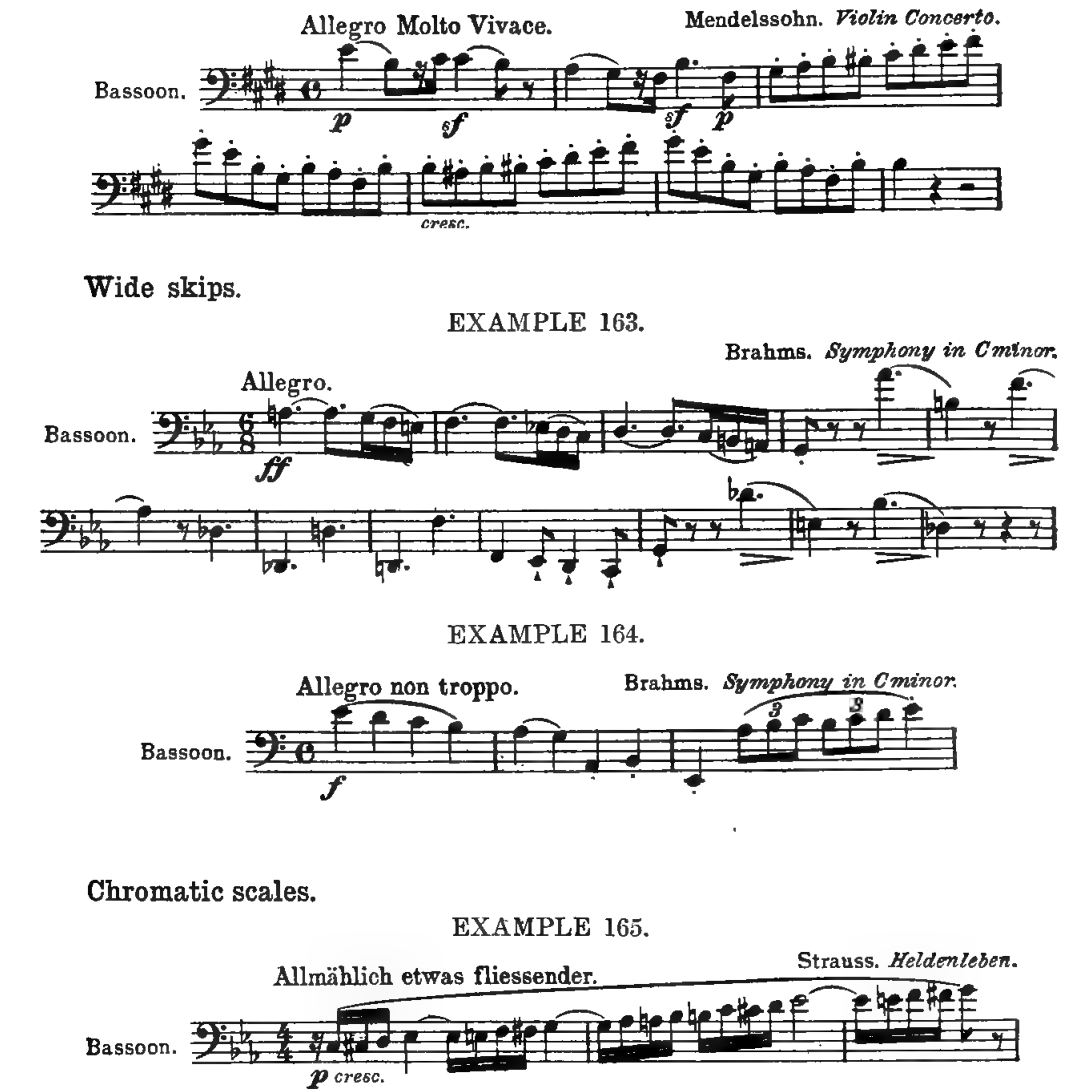
Florid passages of wide range.
Example 166
Baron By Forder preet fee Sehr ruhig:
Strauss. HeldenZeben.
1910 zart ausdrucksuoll
Example 167

Example 168

A good deal of the work which the Bassoon is called on to do in the orchestra consists only of holding-notes in the middle-register, of quietly moving passages in the middle of the harmony, and of unobtrusive figures. In dealing with the last-named, its great range otten gives it the power of playing a complete figure which, in the Stringparts, is split up between two or three groups of instruments. For all these tunctions the Bassoon is admirably fitted.Its quiet seli-effacing tone makes it, like the Clarinet, an ideal "background-instrument" on which to paint the brighter colours of the orchestral palette.
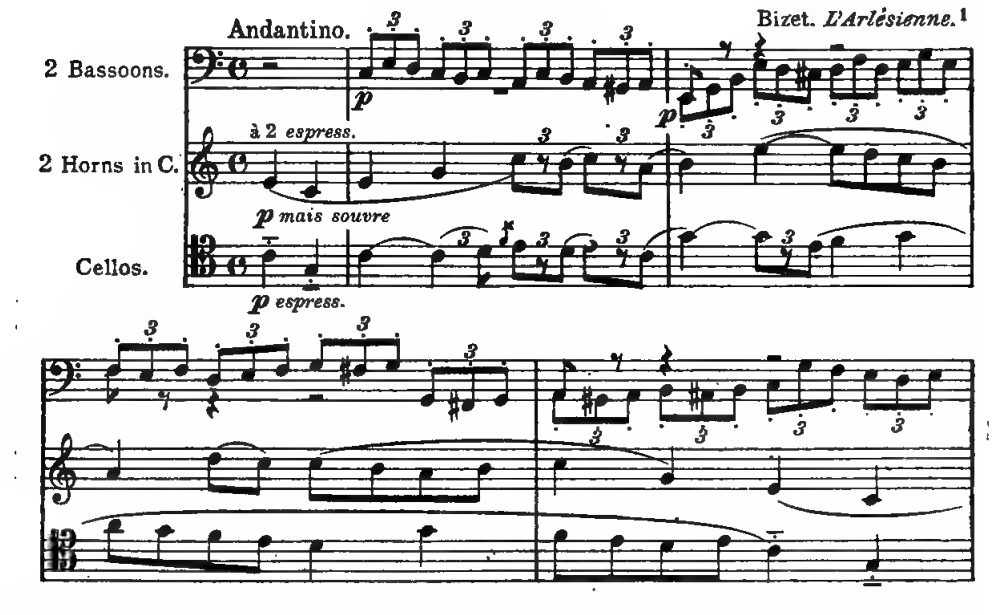
This comparative over-sympathy in its quality sometimes leads to a certain want of distinction. "Unless well uncovered the tone-colour is apt to be lost in the surrounding instrumental haze. This is much more often the case when it is compelled to play light staccato notes. It is easily " outwitted," so to speak. For instance, in the Andantino of Bizet's Ist L'Arlésienne Suite (Ist Movement, page 8 of the Full Score) the Cellos play the subject ("p espress."), while two Horns in C play a second part ("p mais sonore, espress."). The Bassoon plays a thıra contrapuntal part in triplets staccato ("p"). The orchestral result generally is that the Bassoon-part is almost inaudible. The first bars of the passage are as follows:
Example 169
‹ For a somewhat similar but quite eflective passage, see the Ist Entr' Acte to Carmen. The two Bassoons begin Solo in unison, and a little later the Clarinet has a tune against a clesoending chromatic passage for Bassoon.
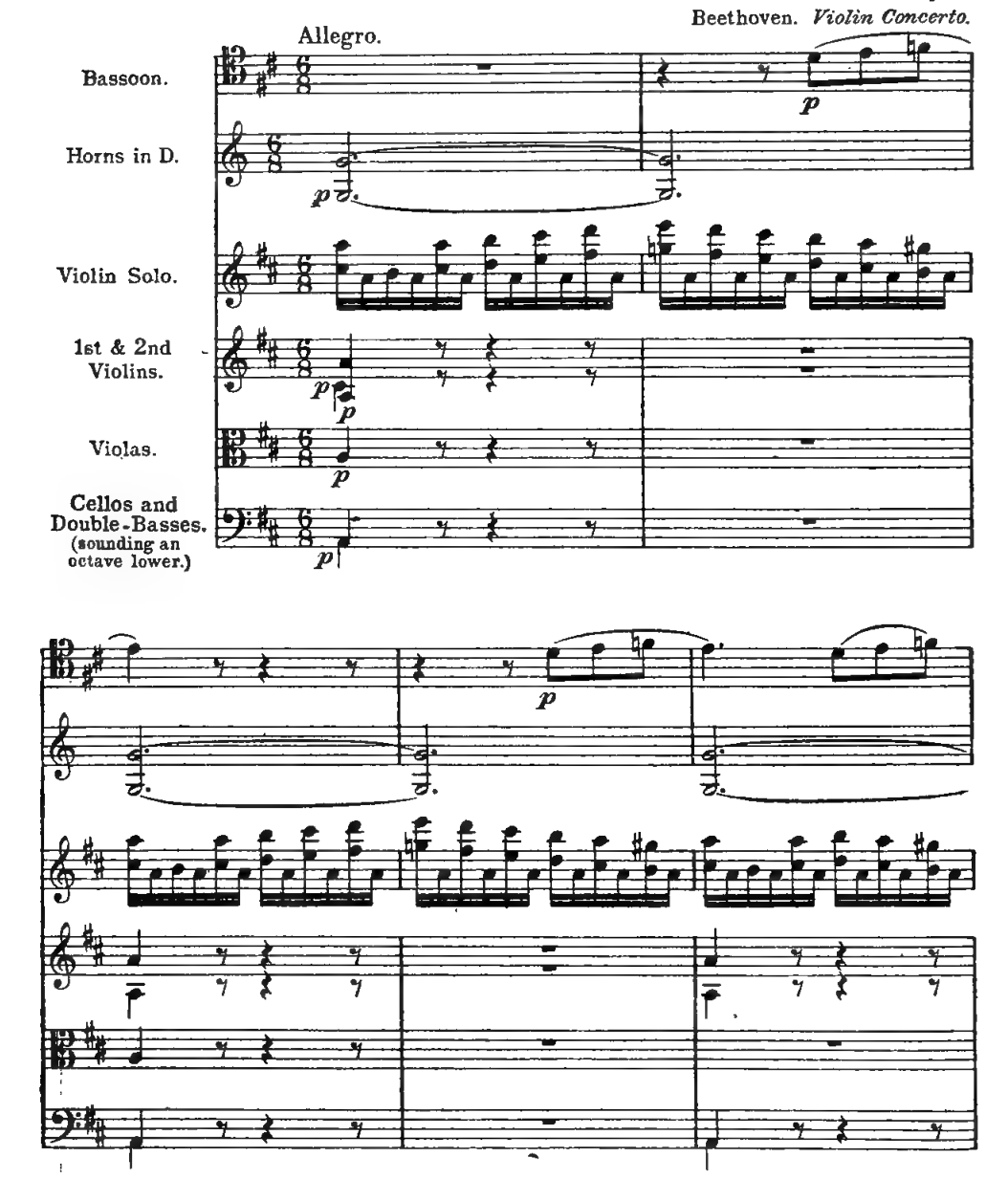
Beethoven, who loved to put in tiny passages for the Bassoon in its middle and top registers, always took care to give the instrument its Here is one such example from the Rondo of his Violin Concerto:
Example 170
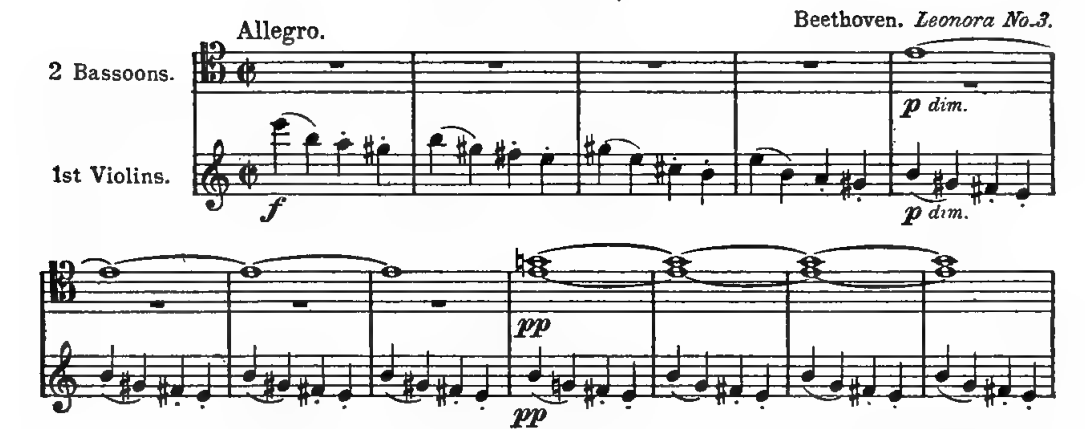
The El in Leonora No. 3, which everybody looks for and nobody nas ever missed in pertormance, is about the best illustration possible of the saying that "you can always hear anything in the orchestra it the composer doesn't prevent you."
Example 171
It has oiten been pointed out that the Bassoon is continually compelled by its nature to act as the ordinary bass of the Wood-Wind-Horn ensemble. This, in the old scoring, was one of its stereotyped functions.

delssohn's Midsummer Night's Dream, and of the prelude to Hänsel und Gretel will furnish examples.
The student can make an interesting and instructive study merely of the harmonic and melodie "doublings" in which the two Bassoons continually take part. Beginning with a simple "Oboe and Bassoon" octave-unison like this
Example 172
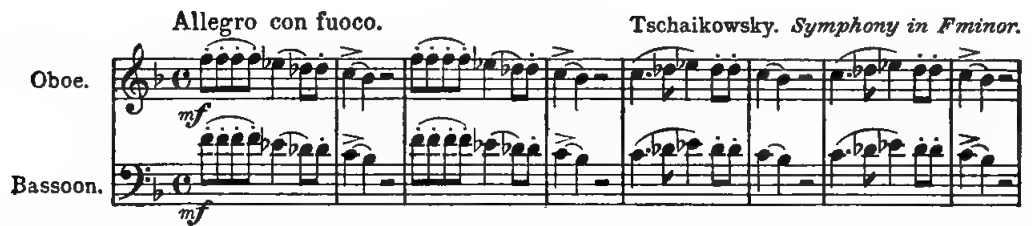
he can note all the single octave-combinations, then go on to the doubleoctave combinations of this sort,
Example 173
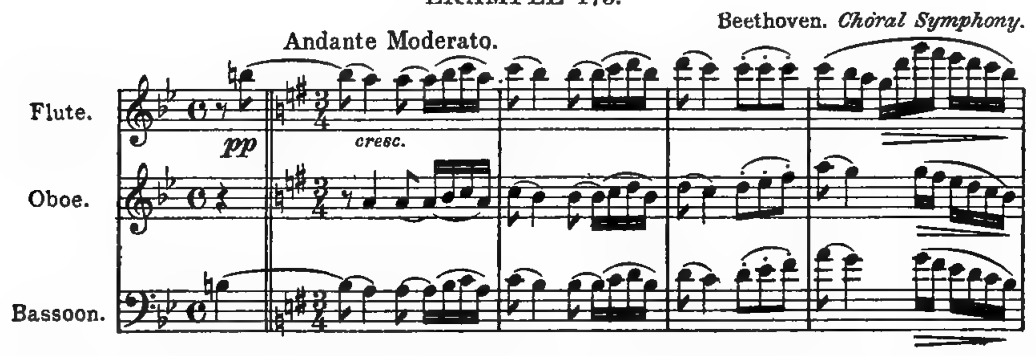
and so with the triple-octave combinations. He can then apply the same process to the harmonic combinations, doublings of thirds, of sixths, of fragmentary figures, of held notes, and so forth. The man who either invented or fixed the type of all these combinations was Wolfgang Amadeus Mozart, and if the student will merely write down on a sheet of paper every Bassoon-combination which he can find in the first seven Numbers of Don Grovanni, noting each only once on its first appearance, he will probably be considerably astonished.
The Bassoon has been regularly used in the orchestra since the time of Händel. Till Mozart's time, however, it was little else than an instrument for doubling the String-bass. After him Beethoven. He not only understood its possibilities, but brought it sufficiently forward in his orchestral ensemble to compel the Bassoon-players to extend and refine their technique. In the 5th and Ith symphones especially there are fine Bassoon parts, but, indeed, there are very few of his orchestral works in which at some moment or other the varied capabilities of the instrument are not turned to artistic account. Beethoven wrote for two Bassoons regularly, and this has remained the standard for orchestral music till quite recently.
At the present day there are three Bassoonists in all Symphony orchestras. Of these the 3rd is generally prepared to take either Bassoon or Double-Bassoon as required. In modern times the introduction of the Bass-Clarinet and the Tuba, as well as the perfection of the Valve-Horn mechanism, has contributed to set the Bassoon free from its drudgery as a purely bass-instrument. Hence comes a greater polyphonie independence in the Bassoon parts as well as an undoubtedly increased plasticity in the whole Wood-Wind mass. composers Strauss and Elgar seem to have lavished the greatest attention on their Bassoon parts. With the latter composer his Bassoon parts, if one may be permitted to say so, always appear to be peculiarly present to his consciousness?. The student cannot do better than examine any of his Scores to which he may have access.