 Playable Books
Johann Joseph Fux · section 22 of 32
Double counterpoint
Read and hear this section in the playable edition →
Fifth lesson
On double counterpoint
By double counterpoint is understood an artful composition constructed so that its parts can exchange places with one another, and the part that was just now upper becomes lower through inversion. In my view it is so called because, apart from the inversion of the parts, with nothing else changed, it presents a twofold melody differing in height and depth. You will shortly discover by experience how excellent and elegant is the use of this counterpoint, both in every kind of composition and especially in fugues combining several subjects; for this reason it must also be illustrated with fuller explanation. Some establish various species of this kind: double counterpoint at the third, fourth, fifth, sixth, octave, tenth, twelfth, and so forth. We, however, setting aside those whose narrow constraints make them of little use or which almost coincide with others, shall pursue only those species that are both more usual and of greater importance in composition: for example, counterpoint at the octave, tenth, and twelfth. In these, either part, by avoiding certain consonances and dissonances according to the nature of each kind, can be transferred from its own position to another interval. Before I begin to discuss the species of this counterpoint, some general matters must be stated. First, care must be taken that the subjects have different motions by which they may easily be distinguished. This is achieved by differing note forms, assigning smaller values to one subject and larger values to the other; their distinction will thus be clear and confusion avoided. Second, the subjects must be arranged so that they do not begin together at the same time; one must enter later through the placing of a rest. Third, the bounds to be prescribed below for each species of counterpoint must not be exceeded. With these things assumed, let us begin with counterpoint at the octave, as superior both in ease and usefulness.
Counterpoint at the octave, then, is a composition arranged so that, when either part is inverted an octave upward or downward, it produces varied harmony that nevertheless agrees correctly with the rules. Joseph, so that you may have no doubt how this can be achieved: first, the fifth must be avoided; second, one must not proceed to the octave by leap; third, one must remain within the bounds of the octave. For a clearer understanding of this matter, the following numbers placed opposite one another will show into which consonances and dissonances the original ones are changed by inversion.
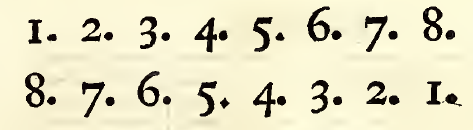
It is therefore clear that a unison becomes an octave by inversion; a second inverts to a seventh; an inverted third produces a sixth; a fifth produces a fourth; and so with the rest. Hence the reason why the fifth is forbidden in this counterpoint is plain: inverted, it produces a dissonance, namely a fourth. For example:
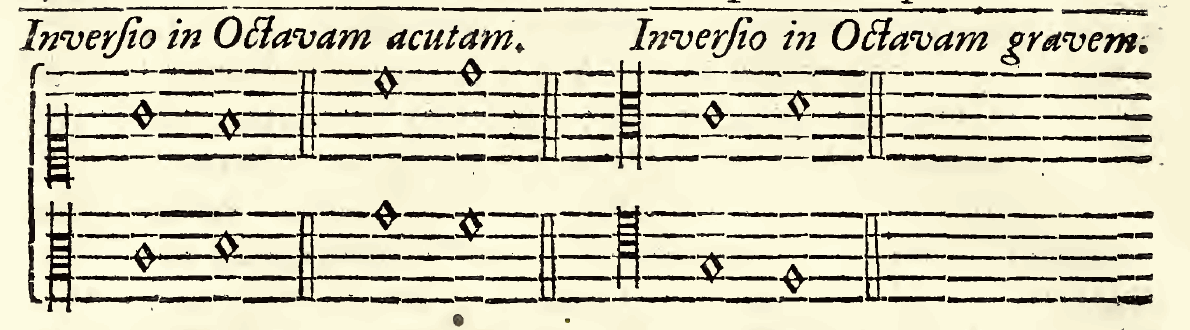
Used with a ligature, however, it has a place. For example:
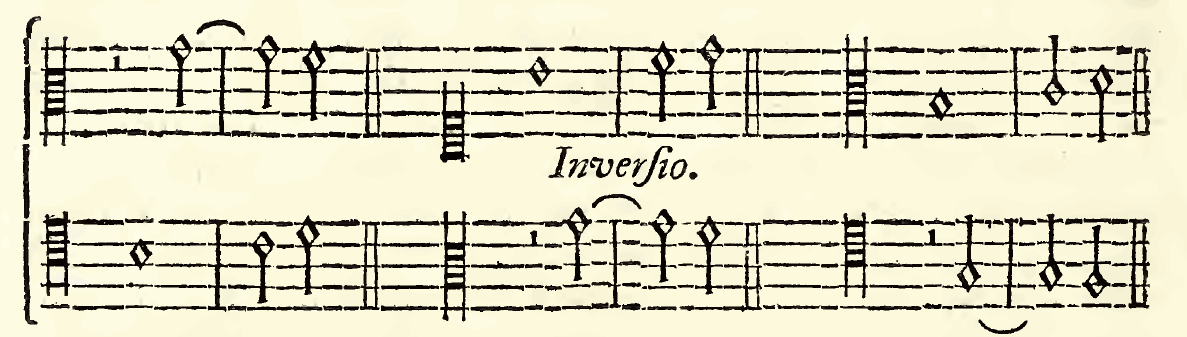
Joseph. Having understood what has been said thus far, it remains to explain why progression to the octave by leap is forbidden and why one may not exceed the bounds of the octave. I beg you again and again, revered Master, to do so quickly, for every delay tries my patience. I have often heard this kind of counterpoint extolled with very great praise, and the desire to see examples has long since entered my mind.
Aloysius. I shall do so without delay. The numbers placed opposite one another above show plainly that an octave becomes a unison by inversion. It has already often been said that one does not correctly proceed to a unison by leap except in the manner of a cadence. In the example:
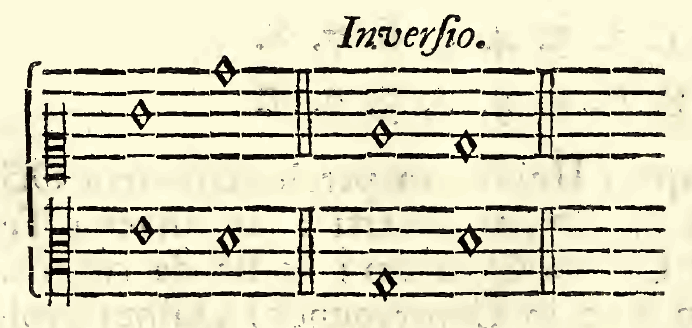
You will have done better to avoid the octave on the thesis altogether, for by inversion it becomes a unison, which, as already said, is less properly used except through syncopation. The reason for not exceeding the bounds of the octave is that the function of double counterpoint is to produce varied and different harmony through inversion. But if you pass beyond the bounds of the octave, although compound consonances are changed into simple ones, the same harmony results, differing not so much in nature as only in position, as the following example demonstrates. For example:
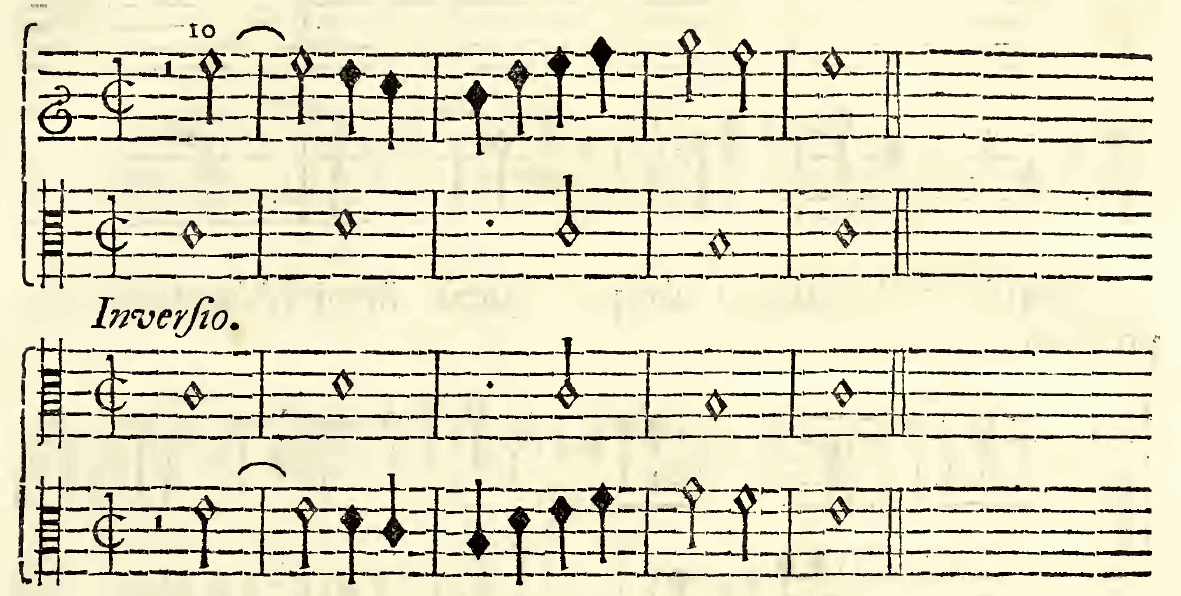
Here you see that a tenth, being a compound third, becomes a simple third by inversion; from a ninth, a compound second, arises a simple second; and so with the rest. For between compound and simple consonances there is no difference other than position.
Joseph. Now that I have grasped everything in my mind, at least as it seems to me, I implore you again and again not to delay any longer in placing examples before my eyes.

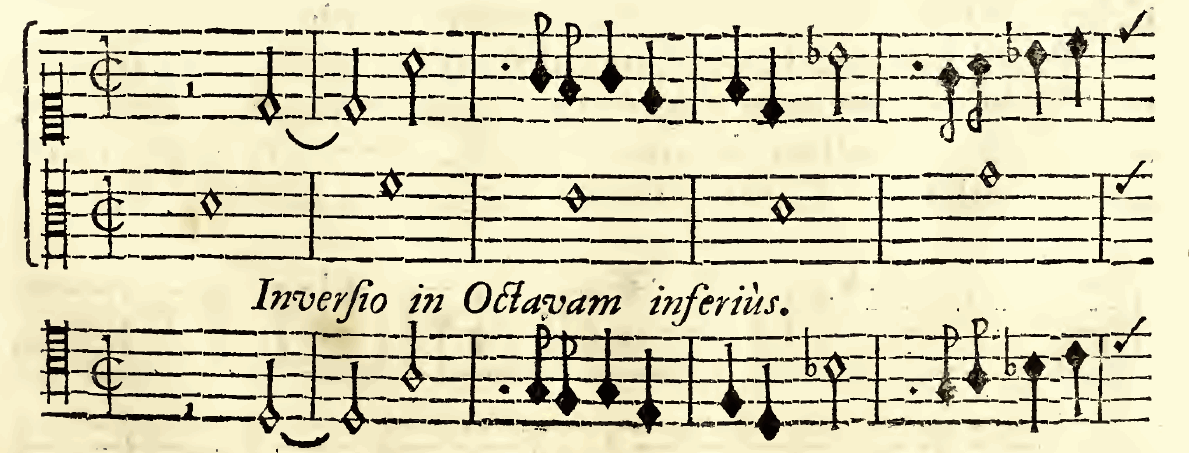
Aloysius. Here is the first example, bound by the requirement of a cantus firmus:
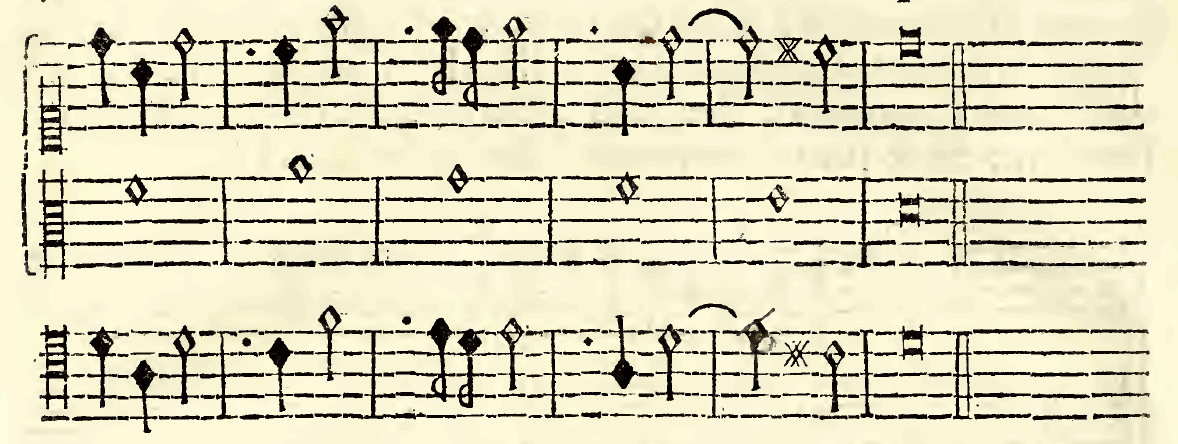
There follows an example written without the obligation of a cantus firmus:
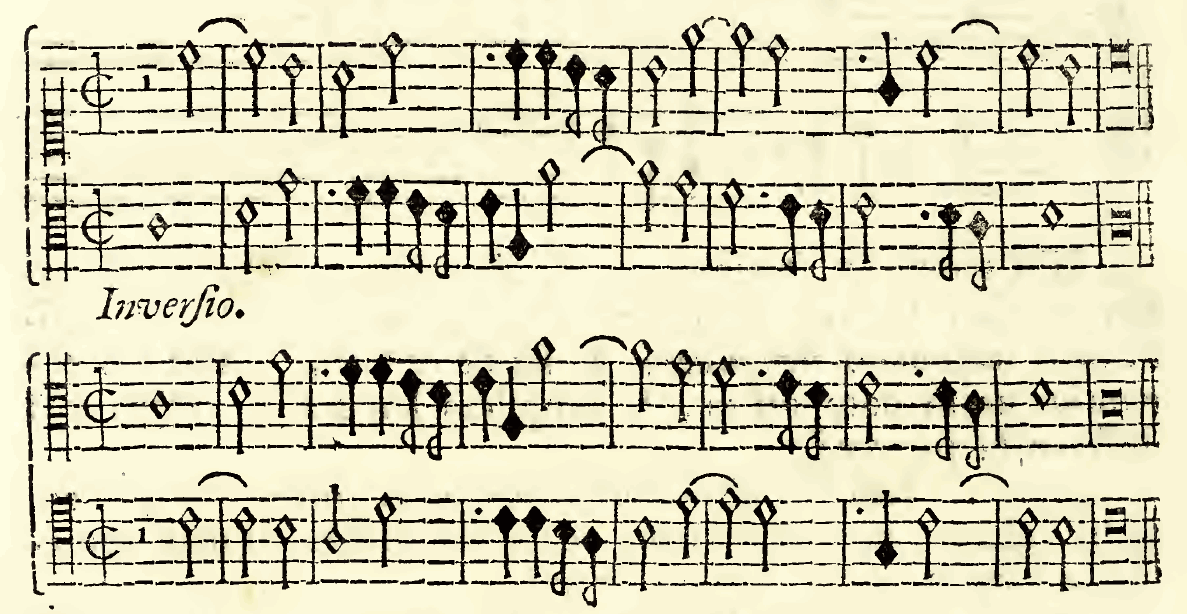
From these examples it is clear that, if what has been said thus far is observed, inversion is unfailing and necessarily accords with the precepts of correct composition.
The counterpoint of the first example, if arranged so that every thesis has either contrary or oblique motion, can also be sung by three voices, with a third part added by transposing the counterpoint a tenth downward. For example:
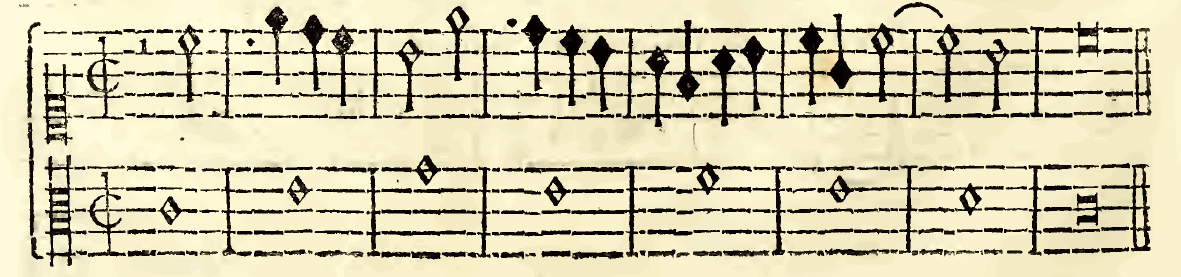
In this example of counterpoint, every thesis, or beginning of a measure, has either contrary or oblique motion. It can therefore be turned into three voices by copying the counterpoint note for note and placing it a tenth lower.
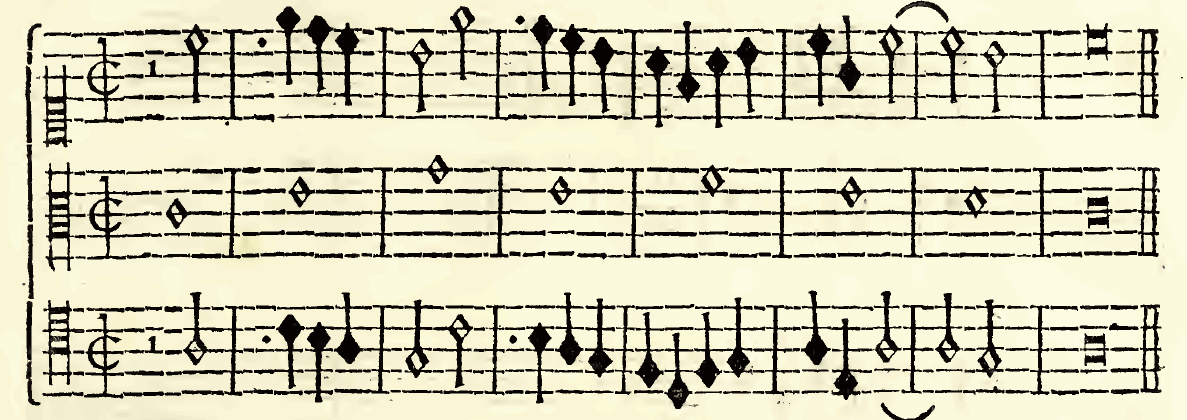
Joseph. I am wonderfully delighted by the artifice of this counterpoint and, driven by a very great desire to know that I have long felt, I ask you how these examples are to be put into practical use.
Aloysius. Although I intended first to deal with the remaining species of this kind, to comply with your desire I shall take the subject of the first fugue used in the first mode and, weaving a countersubject into it, demonstrate how it is to be arranged and carried through the whole course of the fugue.
Fugue for four voices, worked out with the artifice of a countersubject, founded on double counterpoint with inversion at the octave
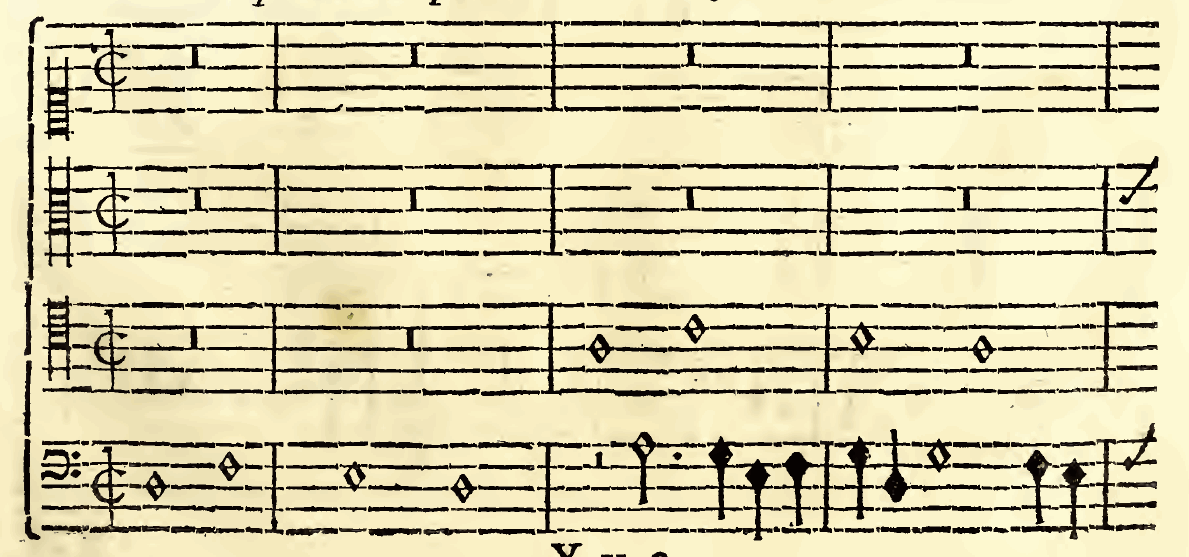
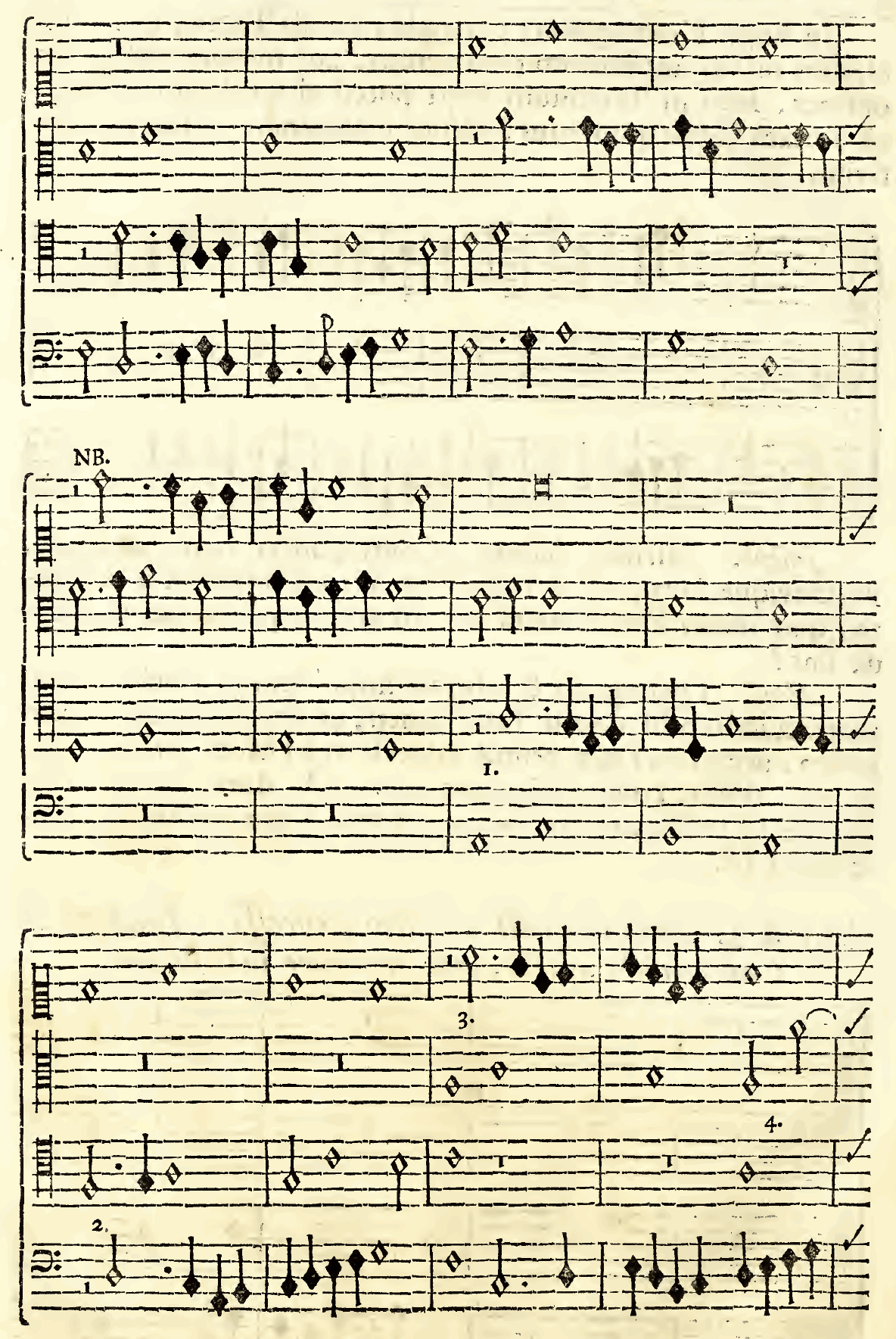
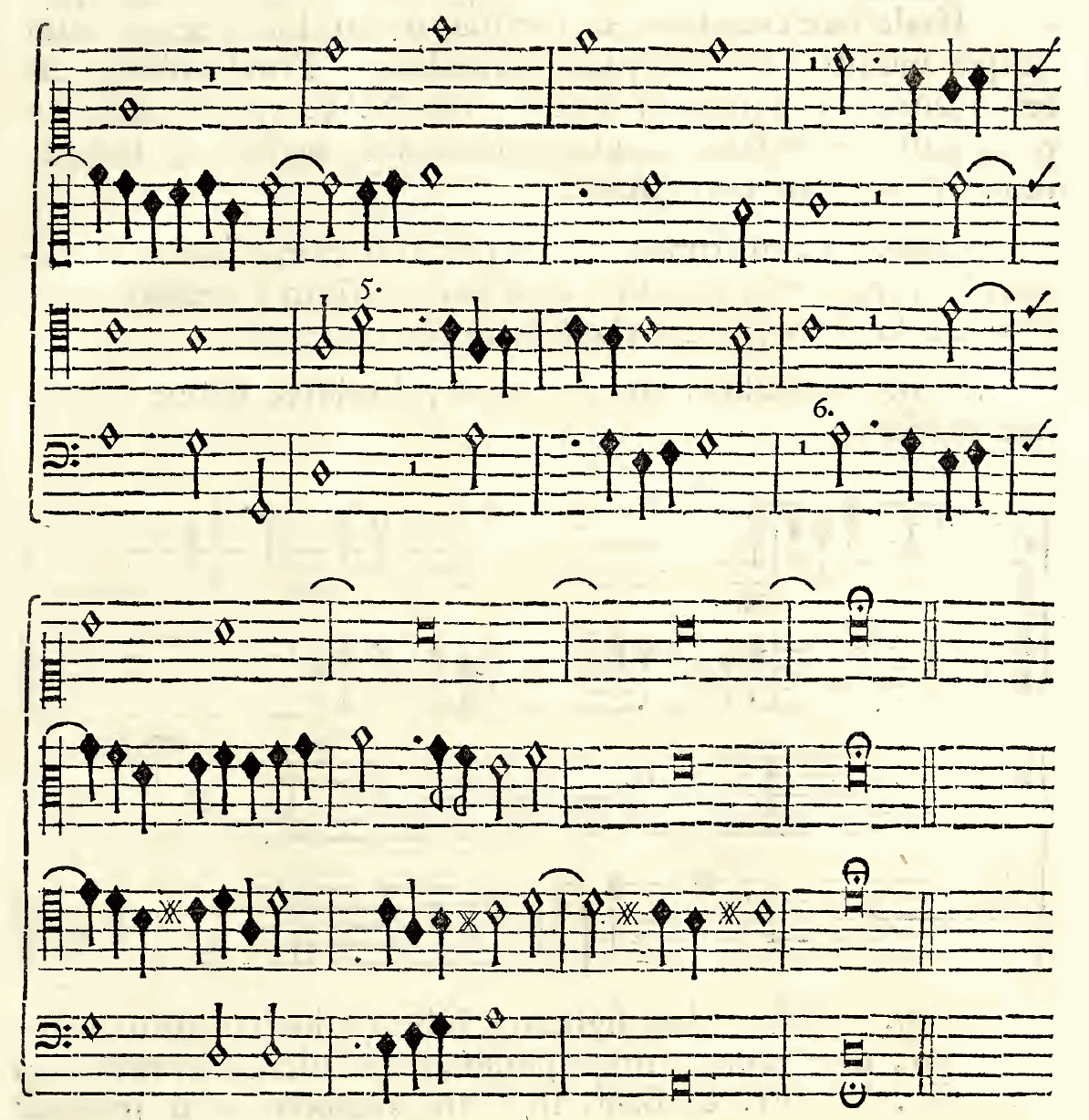
Aloysius. Here is the use of this double counterpoint, and the example extracted by your impatience. Observe first that the countersubject is constructed at the unison after a rest of half a measure and is transformed into the octave through inversion of the subjects, as may be seen at numbers 1, 2, 3, 4, and 5. There the countersubject, found now in the outer parts and now in a middle part, always answers its principal subject at the octave; from this interchange a different harmony continually arises.
Joseph. Here, at NB, the unison appears to invert not to an octave but to a fifteenth.
Aloysius. It has already been said that compound intervals have the same principle of use as simple intervals. Hence, in order to provide room for the middle parts, this transposition is sometimes allowed, and not without artifice. Observe further how, for the sake of variety, at number 6 the parts leave the principal subject and play artfully with the countersubject alone, drawing it into close overlap.
Joseph. I admire this combination of parts with astonishment. But could this close joining of the parts not have been made with both subjects and then concluded with a final cadence?
Aloysius. It could, by changing the value of one or another note form, in this way:
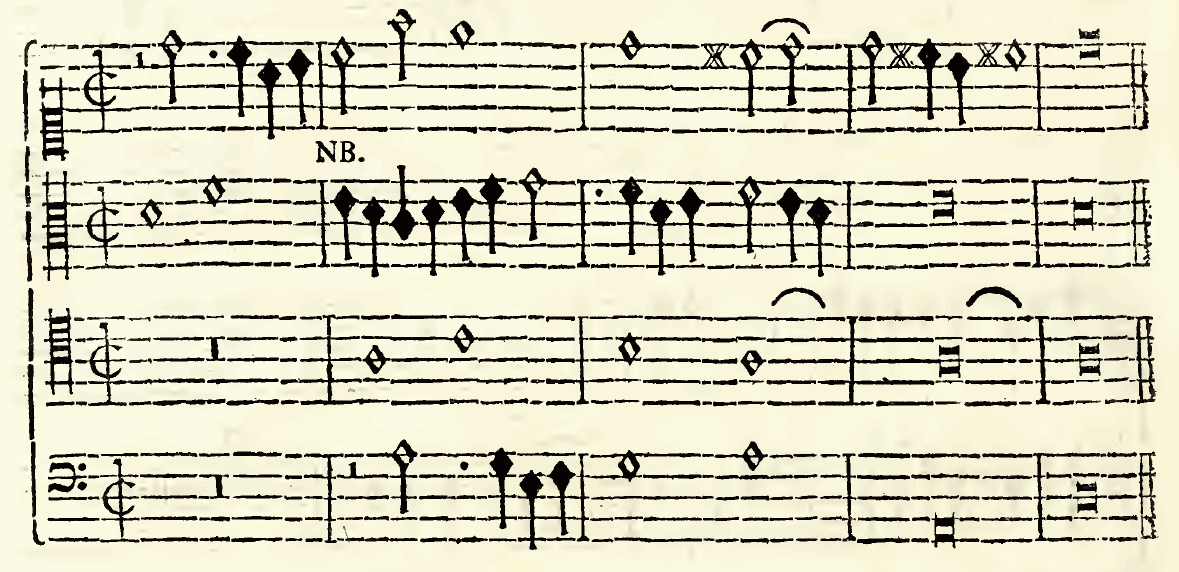
Aloysius. Observe this sign, NB, where two semiminims placed instead of two semibreves give the tenor and bass the opportunity to enter in the third measure of the subject, which could not otherwise have happened. A similar breaking up of note forms, used for this reason, is therefore not only permitted but will also win the composer no small reputation for ingenuity. This interchangeability of subjects must thus be credited to the benefit of double counterpoint, by whose aid, if the subjects are properly constructed, a fugue can easily be built and extended at length. It is now your task, Joseph, to pursue the other fugues in the order of the modes, treating them in the same way. But to provide variety, the countersubject should not always be introduced in the same manner, that is, in the first measure of the subject. Depending on the character of the principal subject, the countersubject may enter in the second or third measure, as the following beginning of a fugue in the second mode, which you are to carry to its conclusion, will demonstrate.
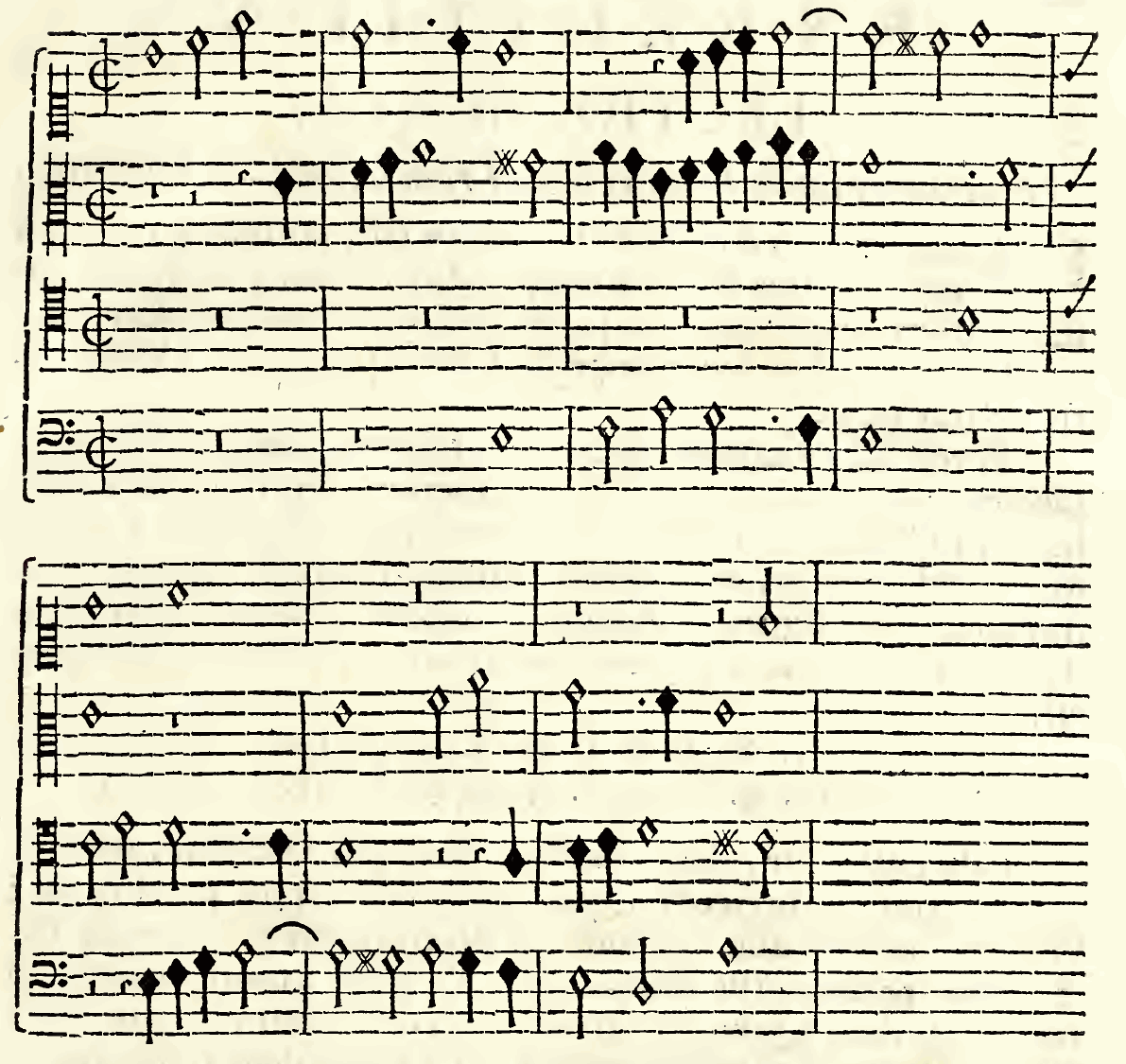
You will therefore bring me this fugue, and the others worked out with countersubjects of your own invention, for correction.
Joseph. Is there nothing else particular to observe in this kind of composition?
Aloysius. The rest is to be sought in what has been said about simple fugues and the common rules of counterpoint. I suppose it is clear to you from what has often been said that each mode has its own manner of melodic continuation and development because of the different position of the semitone. Now, leaving this counterpoint for the present, for you to practice in the remaining modes at home, let us proceed to double counterpoint with transposition at the tenth.