 Playable Books
Johann Joseph Fux · section 21 of 32
Fugue in four parts
Read and hear this section in the playable edition →

Fourth lesson
On fugues for four parts
I trust that the function of the fourth part and the place it should occupy to fill out the harmony have been amply explained throughout Exercise III above and are sufficiently known to you. It therefore remains to say which of the three parts the fourth should follow when entering in fugues. Although this seems a matter to be left to the composer’s prudent judgment, whose task it is to discover how more harmony, grace, or variety may be added to the composition, common practice generally has the tenor follow the soprano in entering, and the bass the alto. As the number of parts increases, take no small care lest, with the parts too densely packed and drawn into a narrow space, one deprive another of freedom to move. Just as someone passing through a crowded throng bumps into others on the right, left, and in front, so that passage is impossible or difficult, so it happens in composition when one part obstructs another and has no free field in which to proceed, and the ability to sing gracefully is taken away. Therefore strive most carefully to avoid this obstacle.
Joseph. But what remedy is there if such a thing should occur unexpectedly?
Aloysius. Either the plan of the melodic continuation must be changed, or you must silence, by means of a rest, the part for which there is no room except by forcing it in, until space opens for it to reenter with the subject. It is better, however, through foresight and reflection, to arrange the parts so that you do not soon regret the plan you have adopted; for it is better to leave one’s rights intact than to seek a remedy after the case has been damaged. Thus, while attending to one part, you must not forget the others, nor give so much to some parts that the remaining one has neither room to move nor grace in singing. I shall provide an example for you to consider and imitate, retaining the theme of the first fugue for three voices and the other material up to the entrance of the fourth part.
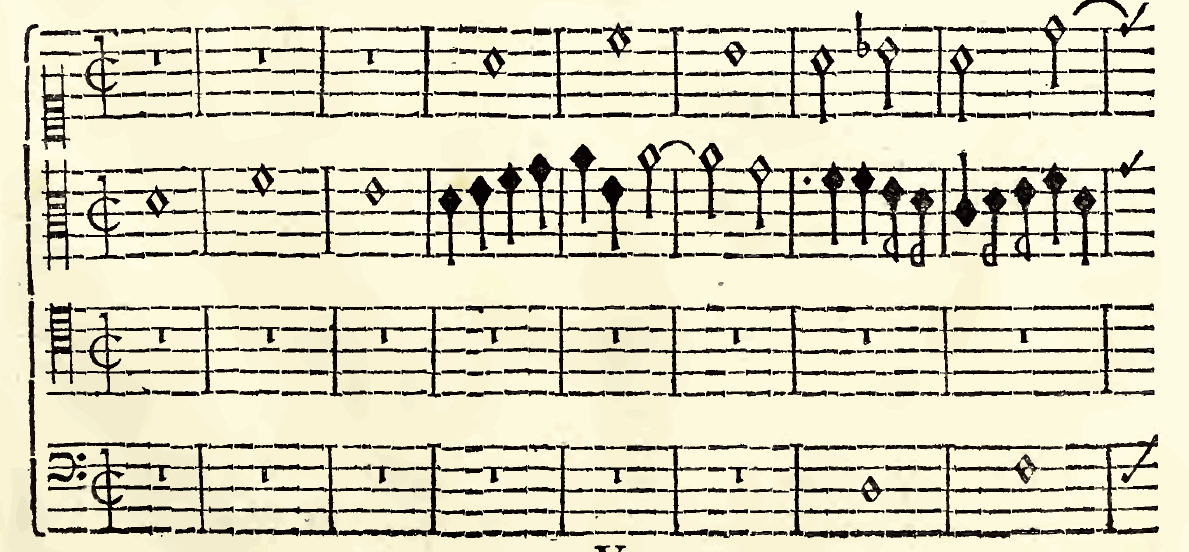
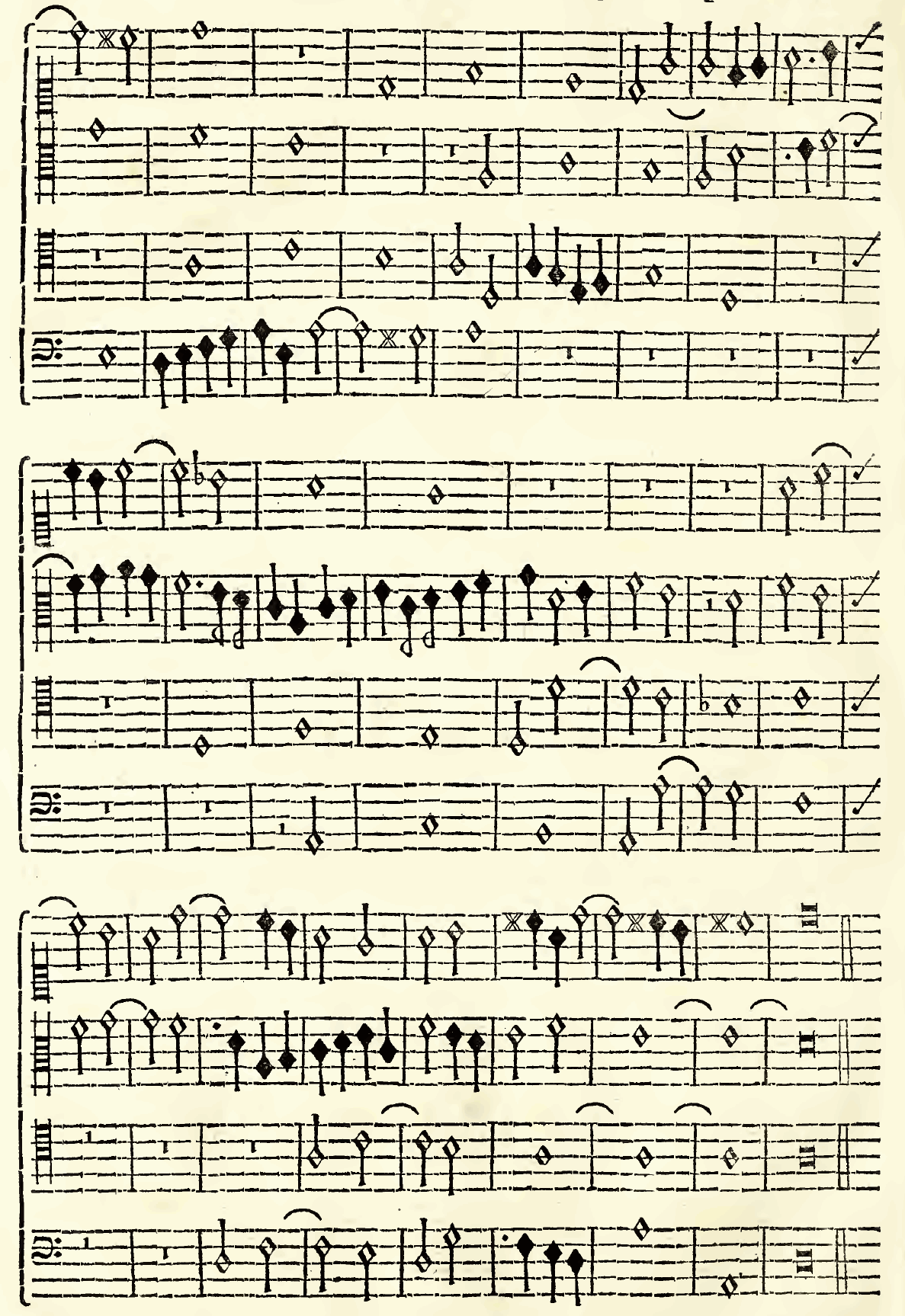
Joseph. There seems to be no great difference between this fugue and the one for three parts, for I rarely see all four parts sounding together except at the end; one or another is immediately cut off when the fourth part enters.
Aloysius. The similarity you mention plainly results from the same subject. Understand that the subject in this four-part fugue has been treated almost as in the three-voice one in order to make four-voice composition easier for you. For this reason I so strongly recommended the study of three voices a little earlier. Nor be surprised that all four parts join only rarely. Besides my warning not long ago to refrain from forcing parts in at unsuitable moments, four-voice composition does not require that it always be filled with the harmony of four parts. It is enough if, while the other parts are active, one or another resting meanwhile can take up the subject again and, attaching a few additional notes to its end, prolong the filling out of the harmony. I entrust to you the treatment of the subjects in the other modes in this manner.
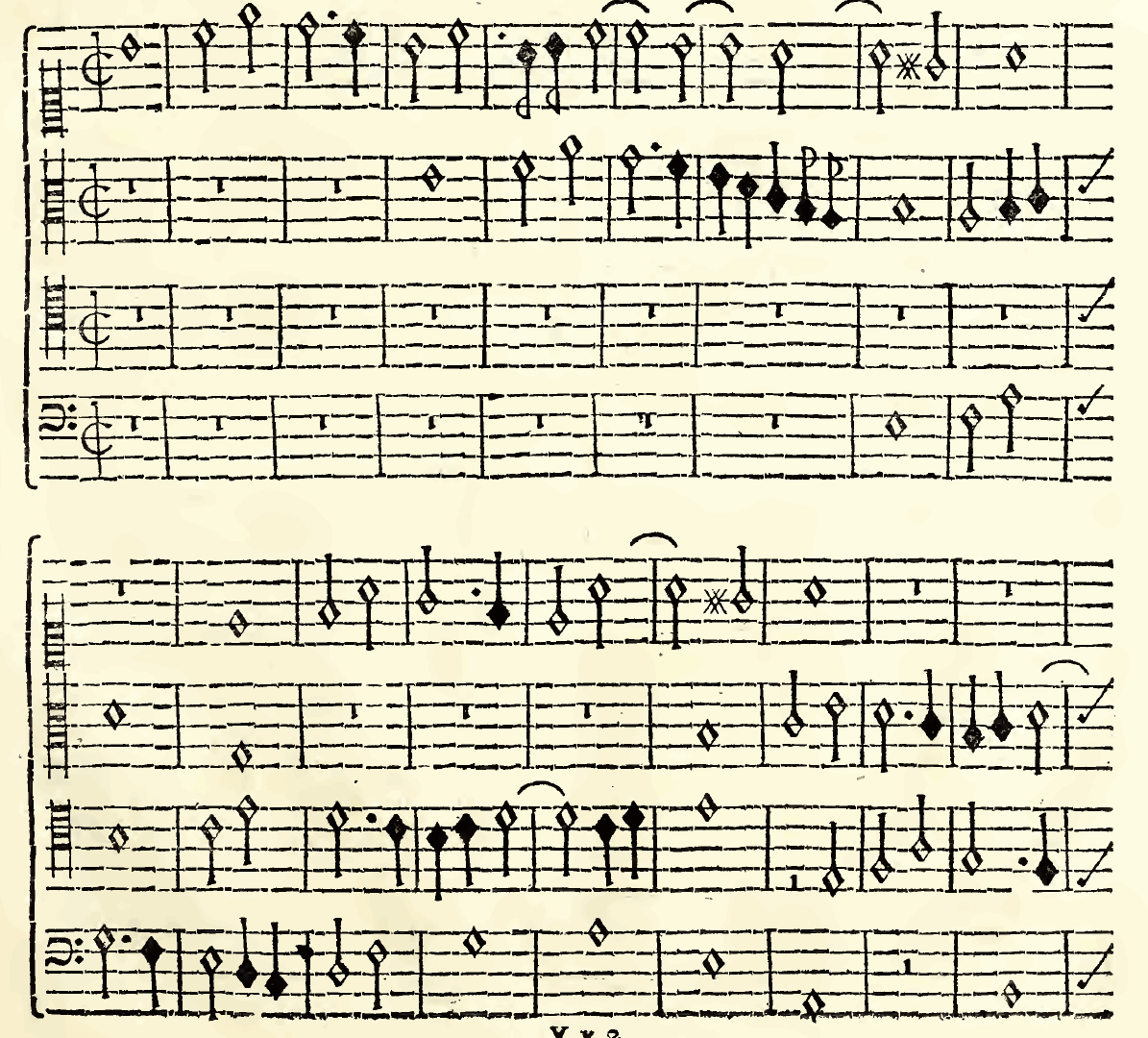
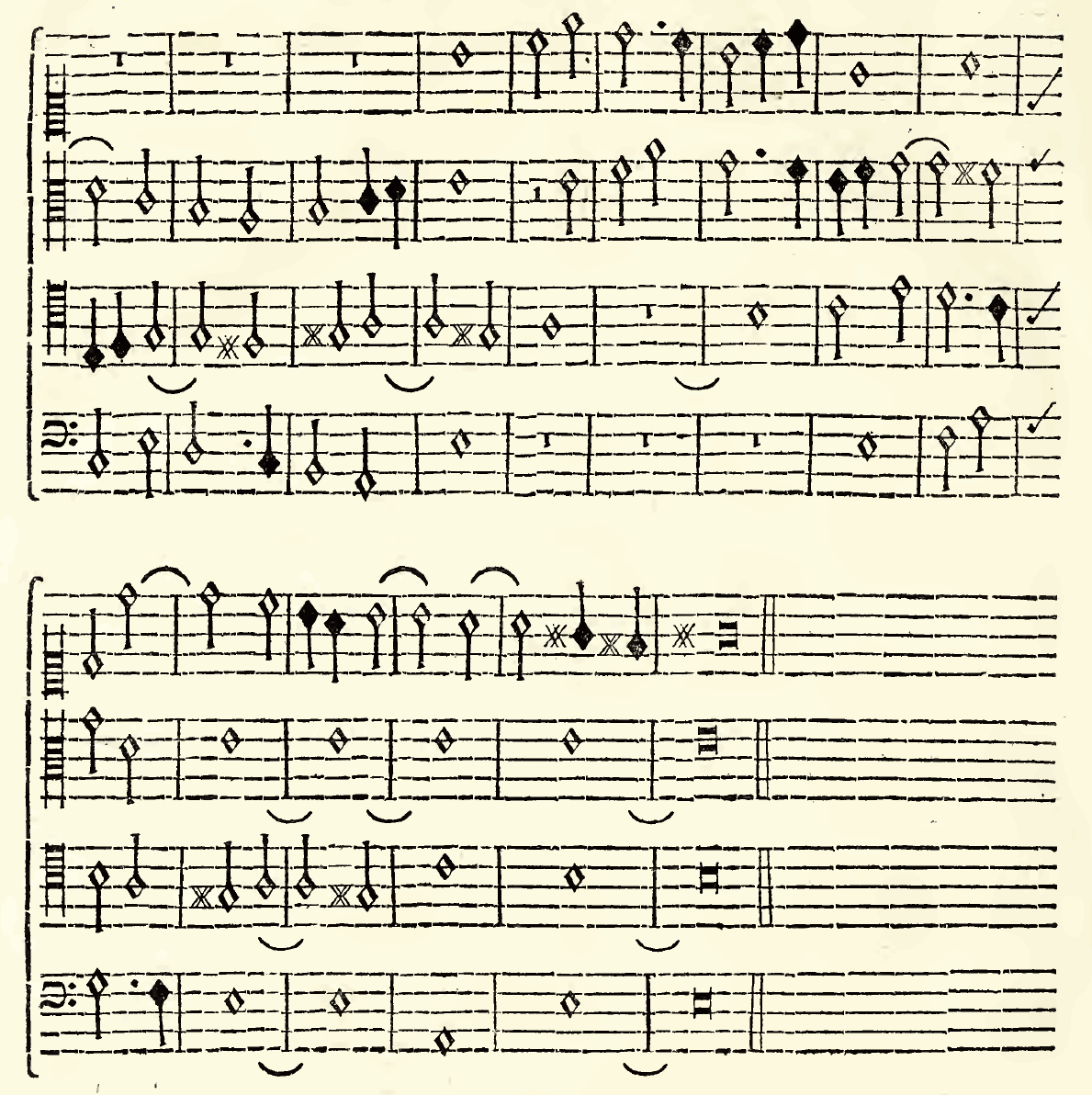
Fugue for four voices in mode F
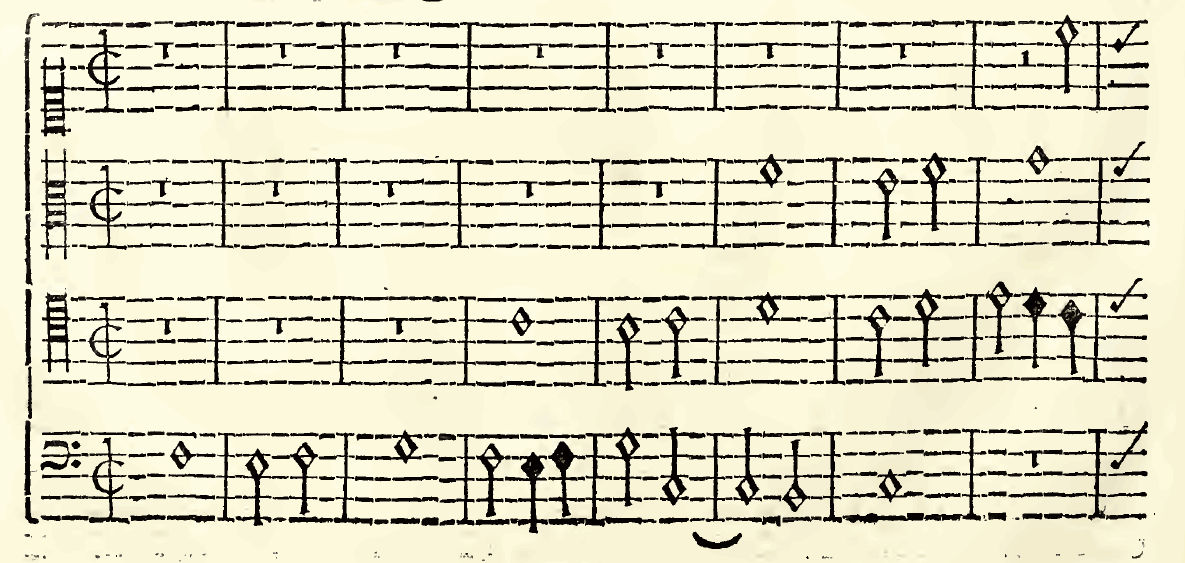
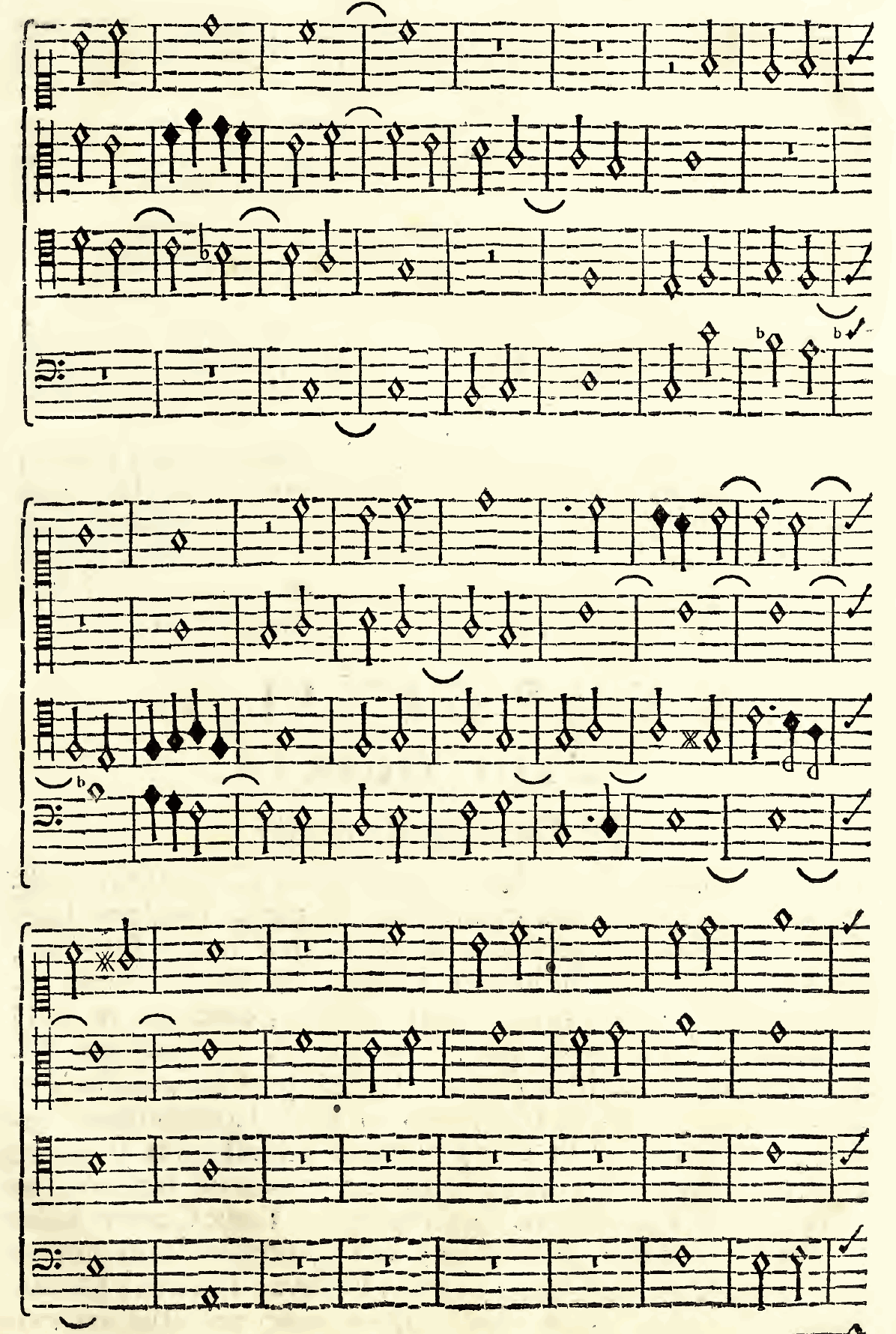
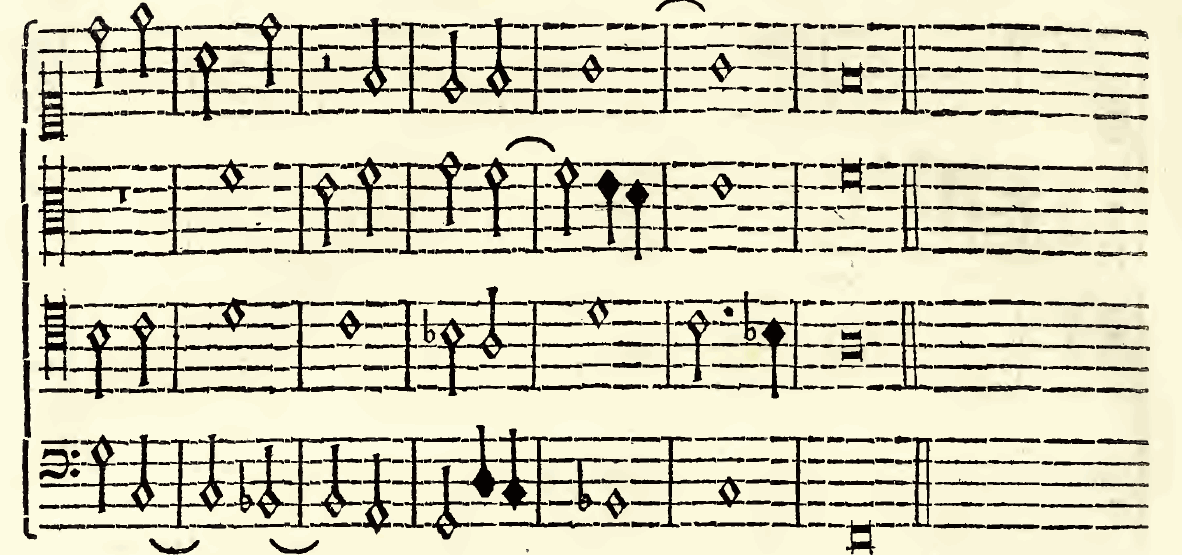
Aloysius. You seem to me sufficiently instructed in this simple method, as the well-made examples show. Leaving the other modes to your private study, then, to save time let us proceed to fugue distinguished by the ornament of several subjects. Since this cannot be done without knowledge of double counterpoint, we must first discuss it.