 Playable Books
Johann Joseph Fux · section 24 of 32
Double counterpoint at the twelfth
Read and hear this section in the playable edition →Seventh lesson
On double counterpoint at the twelfth
Counterpoint at the twelfth is a composition in which one of two or more parts may be transferred a twelfth upward or downward. The following series of numbers shows which intervals may be used and which must be avoided.

This table therefore shows that all intervals except the sixth and a seventh resolved to a sixth are usable in this counterpoint. Furthermore, one must not go beyond the twelfth.
Furthermore, since this counterpoint can be sung in two, three, and even four parts, and in various ways, particular precepts must also be given for each.
Counterpoint at the twelfth for two parts
Nothing particular arises concerning this counterpoint beyond what has already been said: namely, that the sixth and a seventh resolved to a sixth are not to be used. Otherwise all motions, that is, similar, contrary, and oblique, may be employed. Let us examine an example with the obligation of a cantus firmus.
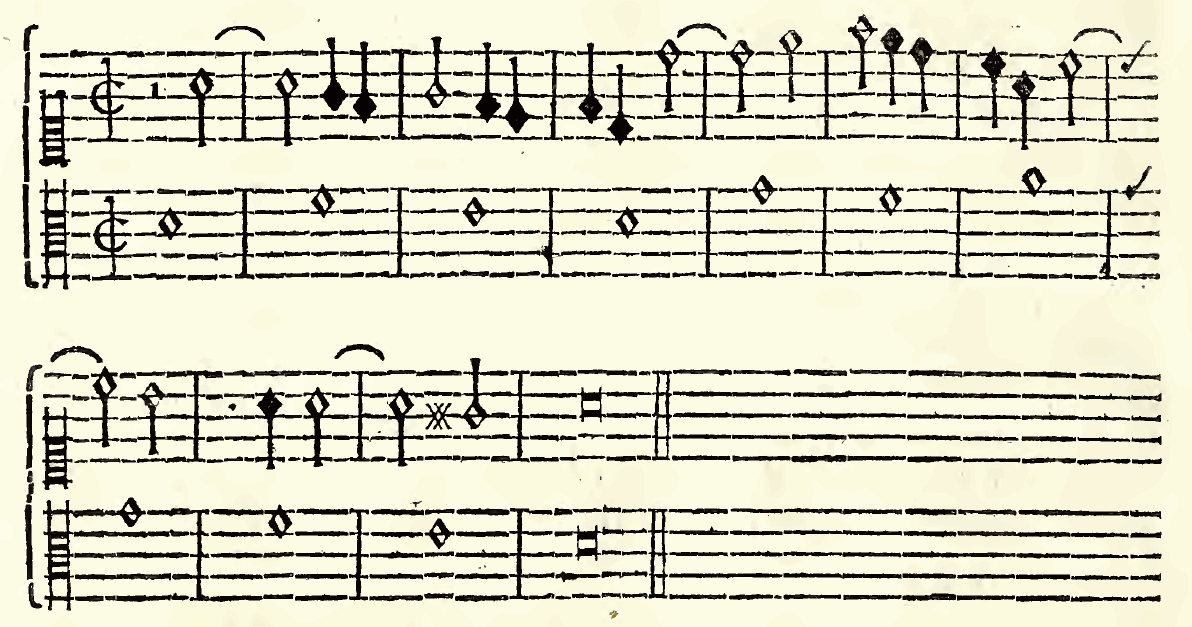
Joseph. Why did you end the soprano part on a fifth rather than an octave?
Aloysius. Understand that this was done so that the transposition of the counterpoint at the twelfth may end more suitably in its mode, although it does not harm double counterpoint for the transposed part to stray outside the mode. Now, without moving the cantus firmus, transpose the counterpoint, that is, the soprano part, a twelfth downward, sometimes placing a flat so that the intervals correspond throughout correctly to the first counterpoint.
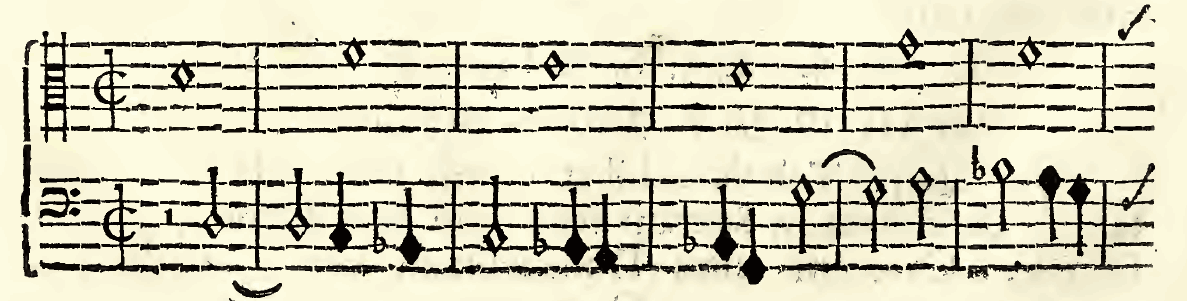
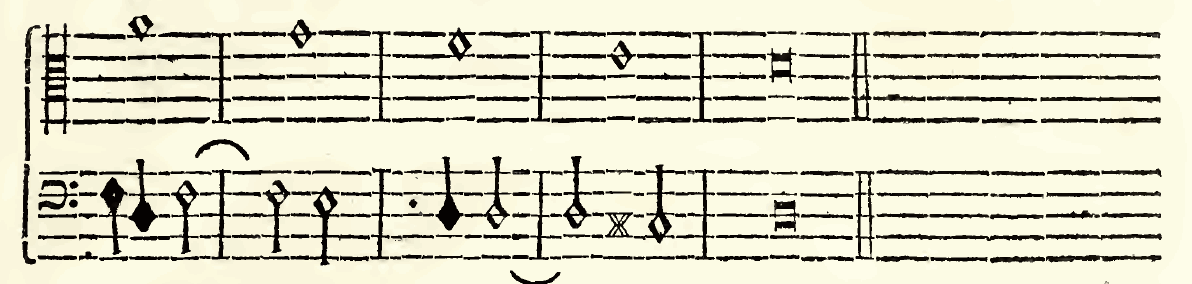
This transposition has been correctly made. But it can also be done in another way, by transposing the counterpoint an octave downward and the cantus firmus a fifth upward, in the following manner.
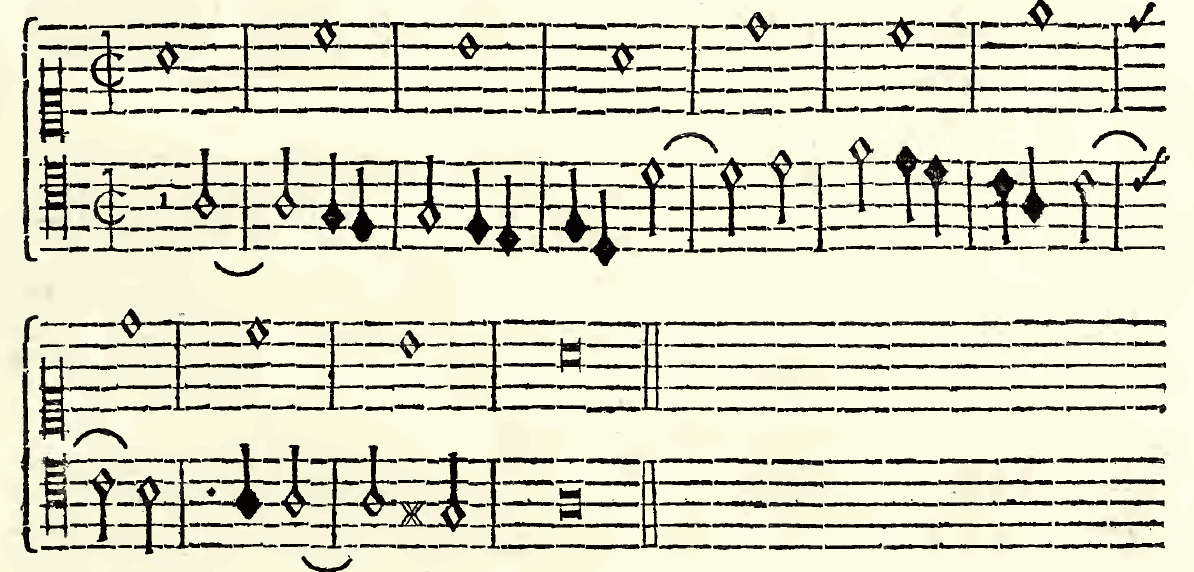
Joseph. It appears that this transposition changes the composition into an entirely different mode.
Aloysius. Besides what I said a little earlier, that this counterpoint claims this privilege, and that the pitch A is not foreign to mode D, I say that in the subsequent practical composition for several parts a formal cadence may be formed suitably to its mode by adding some melodic continuation after the cantus firmus has finished and carrying it to the end. For example:
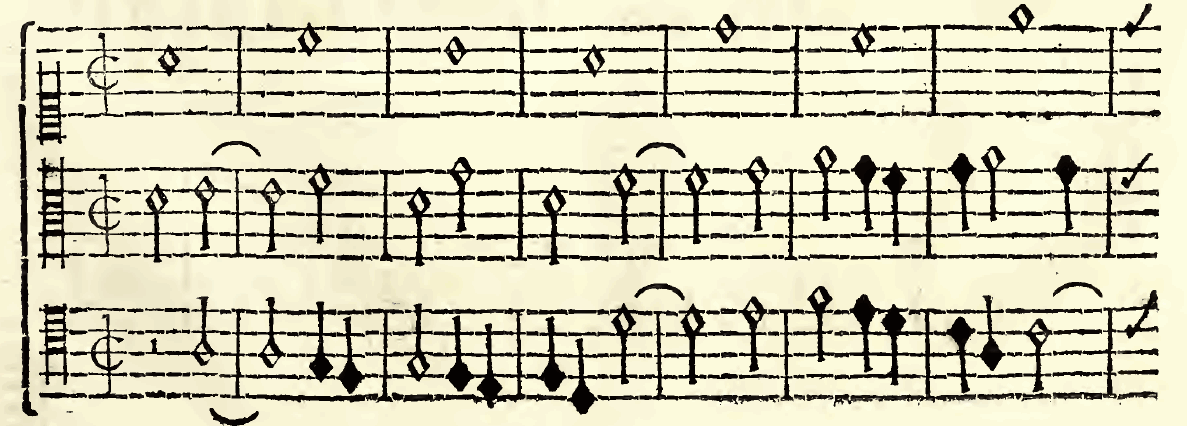
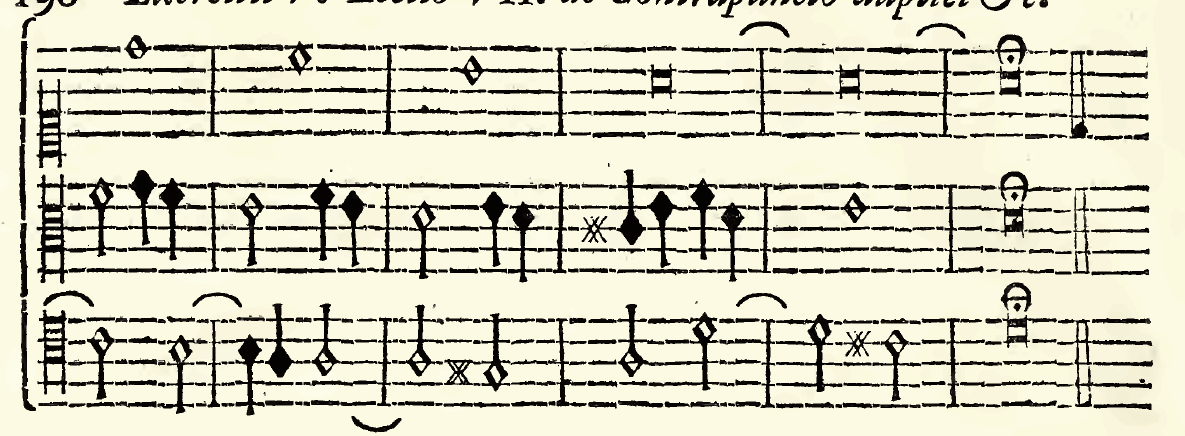
Example of counterpoint at the twelfth, convertible into three voices by adding counterpoint at the tenth
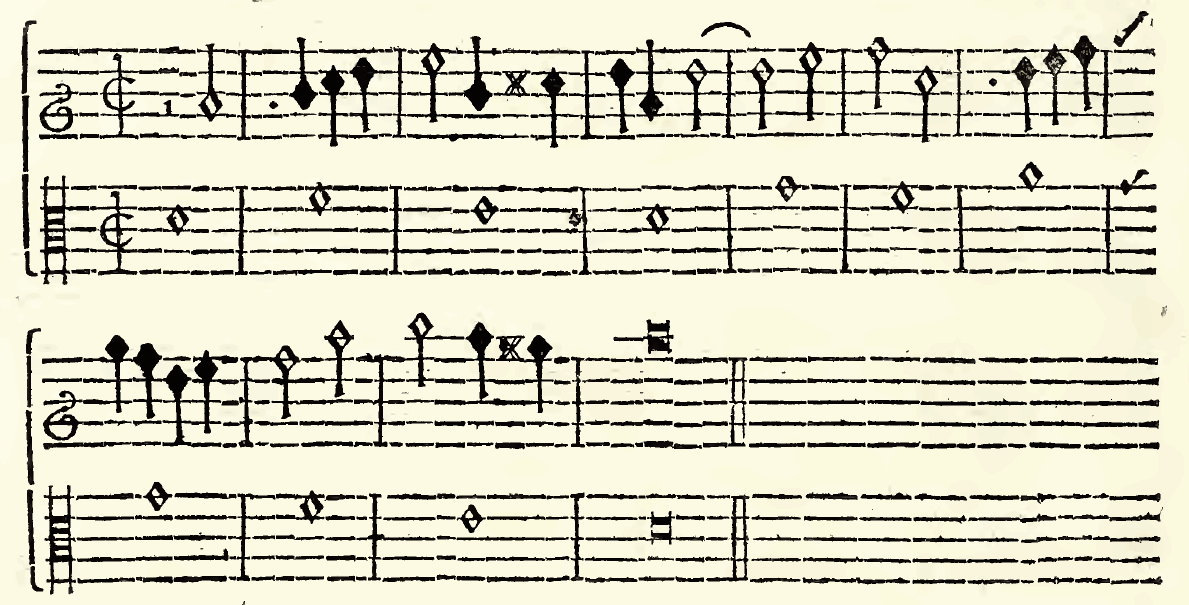
Now, with the cantus firmus remaining in place, transpose the counterpoint a twelfth downward; and by transferring the same counterpoint a tenth upward, you will have three voices. For example:
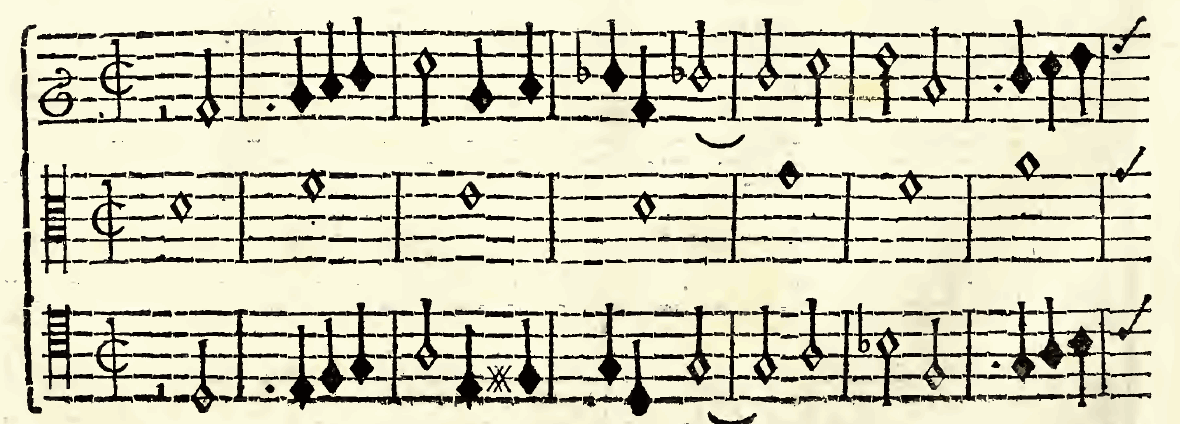
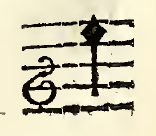
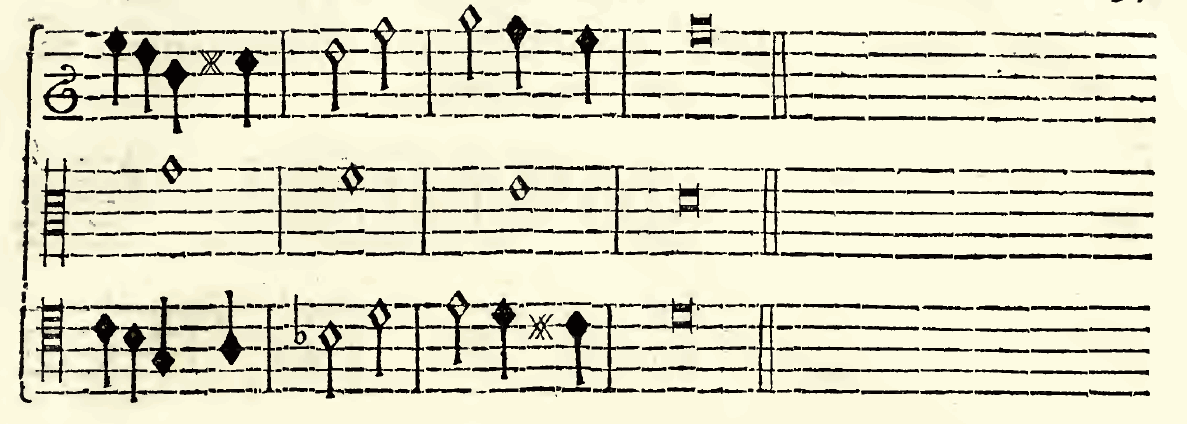
Joseph. What must be observed in this two-part counterpoint so that three voices may be made from it?
Aloysius. Besides the other rules of this counterpoint, so that the part transposed at the twelfth may remain within the bounds of the mode, let the beginning and end be on a fifth. Proceed by contrary or oblique motion. Avoid ligatures of dissonances. In this way you will have three voices.
Joseph. The melodic course of the present examples seems to have something harsh about it.
Aloysius. You judge rightly. But this generally happens in modes containing a minor third, where transposition of the parts and the strict constraint of the cantus firmus produce a less agreeable melodic course because of the harsh relation of mi against fa. This must be tolerated because of the nature of the cantus firmus and the mode. Matters are different in free composition, with the cantus firmus removed, as can be seen in the following example.
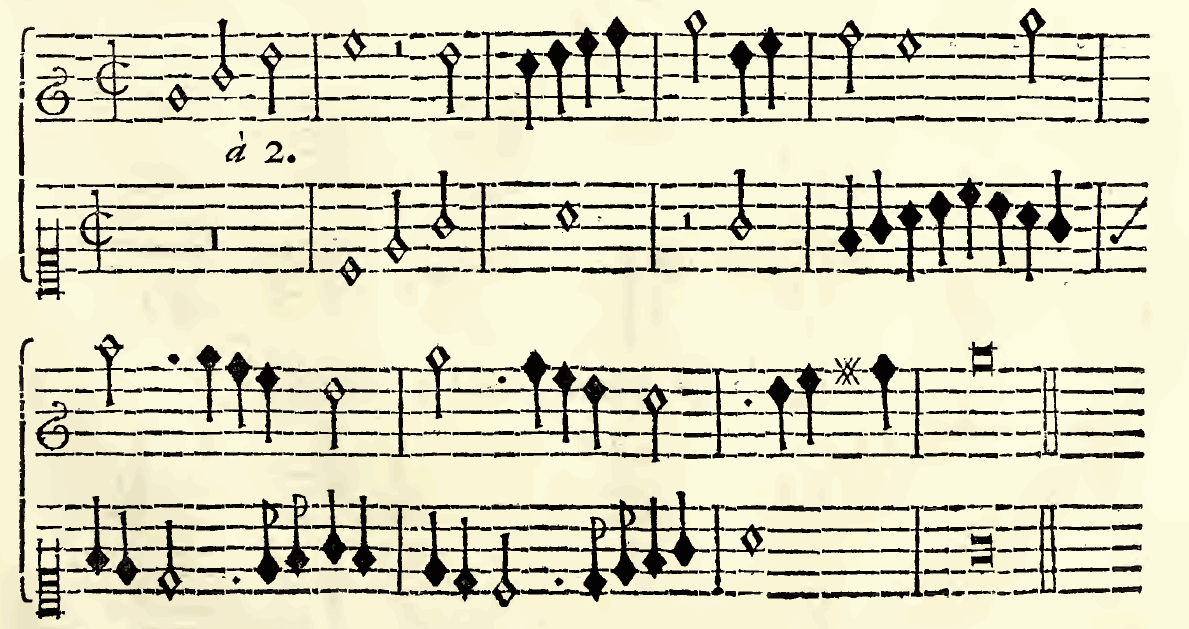
By transposing the parts in the manner demonstrated in the preceding example, it is converted into three voices.
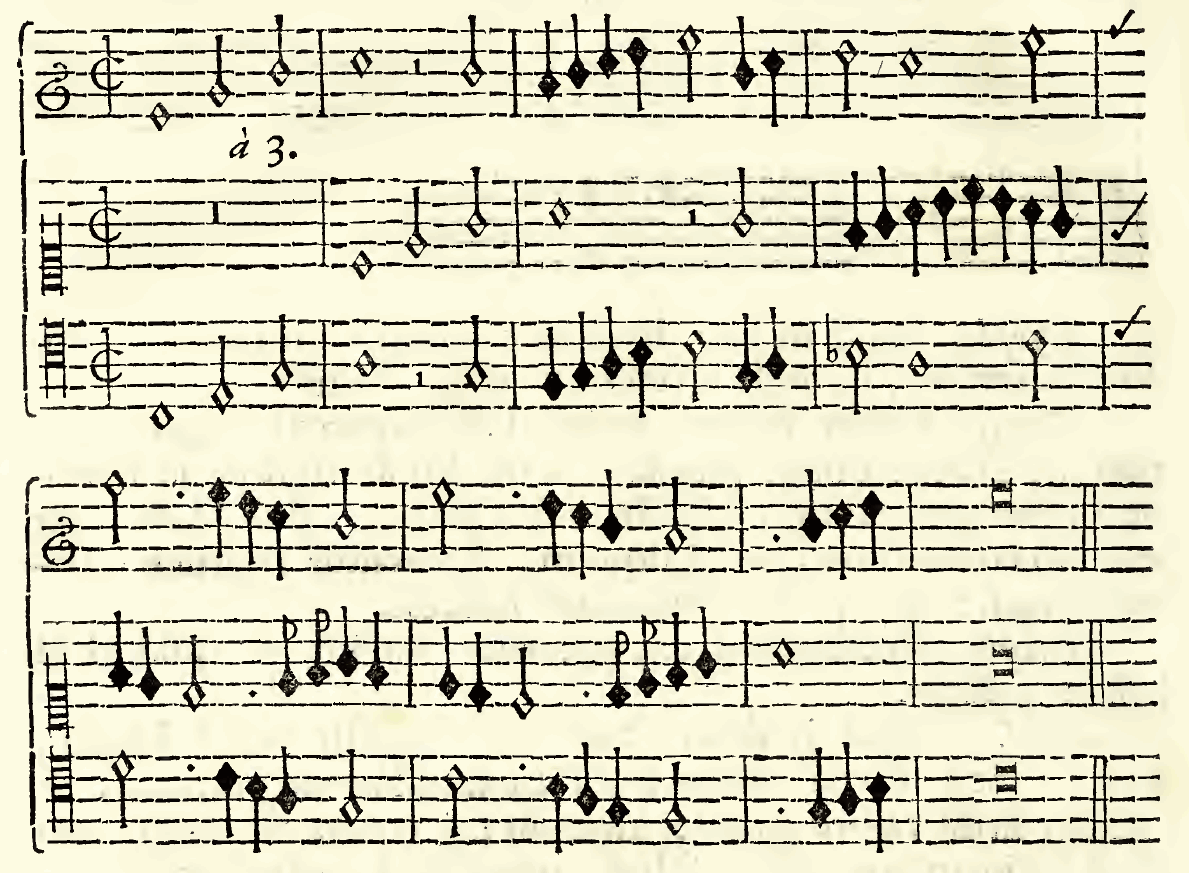
It now comes to mind that at the beginning of this counterpoint it was said that it cannot be made unless the sixth is excluded. Understand this of an untied sixth. For the following example makes clear that a syncopated sixth may be used. For example:
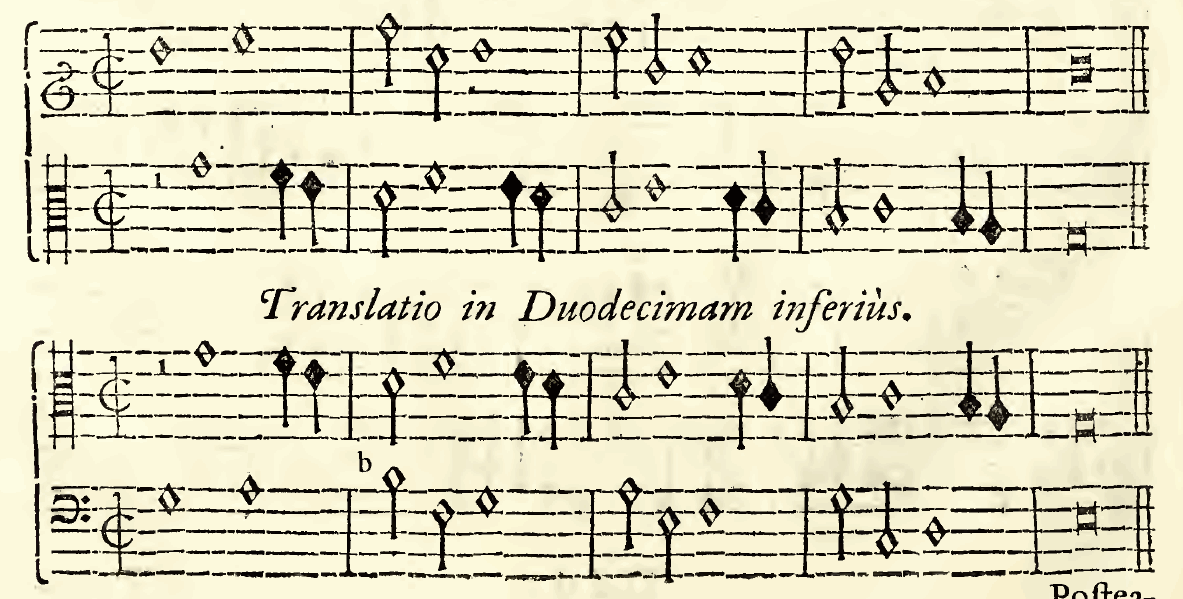
After treating the three species of double counterpoint separately, I shall show by an uncommon example how these species united can produce a conception for two, three, and four parts, and harmony of the greatest variety.
First, at the twelfth, for two voices
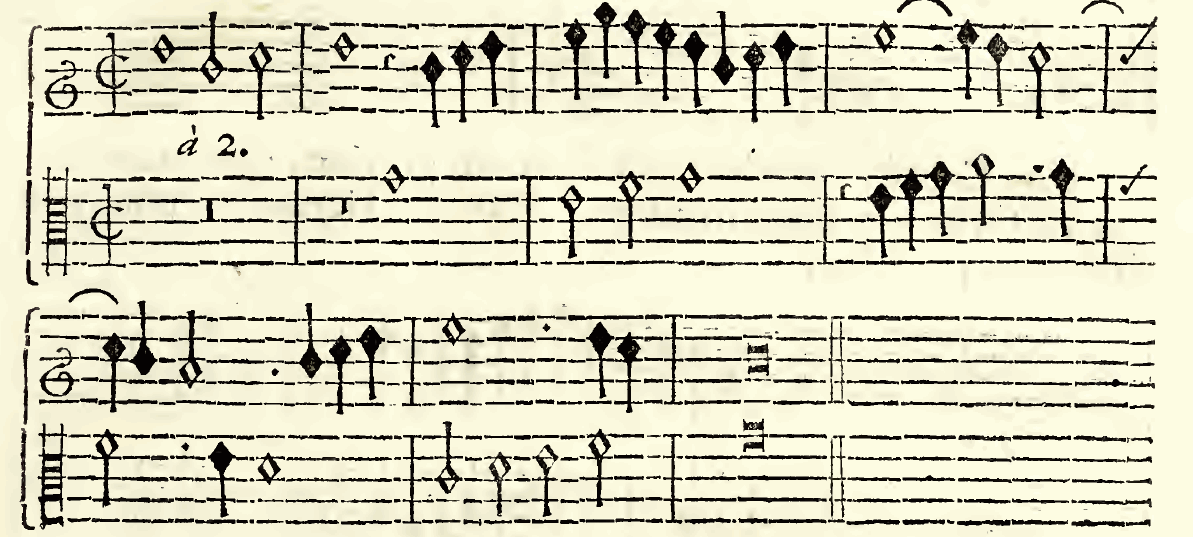
The soprano part transposed a twelfth downward.
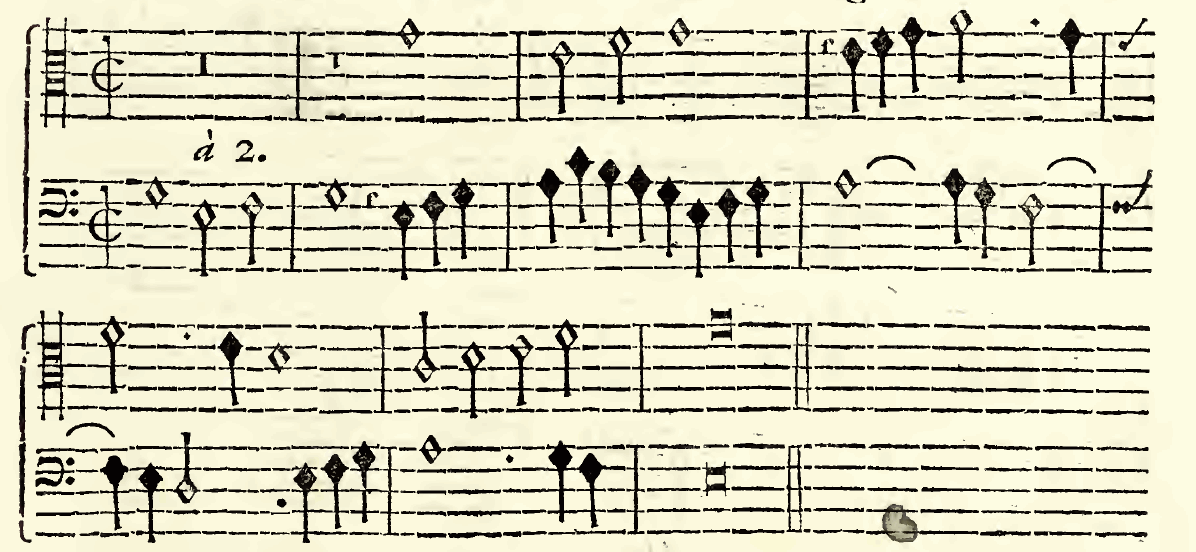
The soprano part transposed a tenth downward.
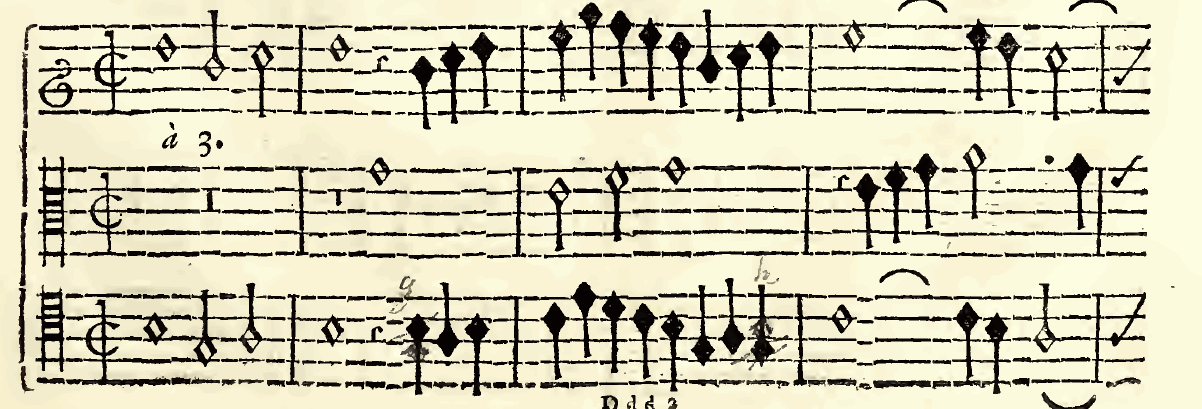
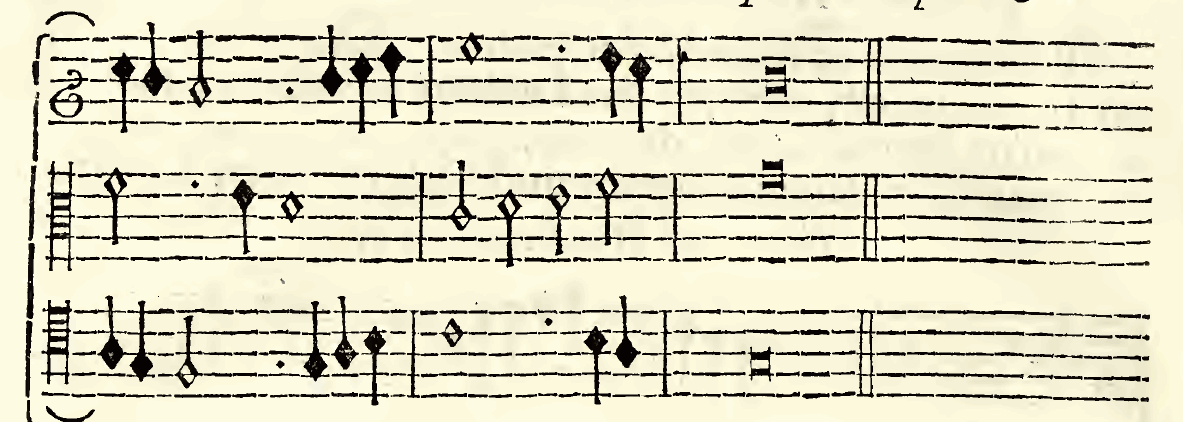
The soprano part is transposed a tenth downward; when transported an octave upward, it produces the same three-voice composition with somewhat different harmony.
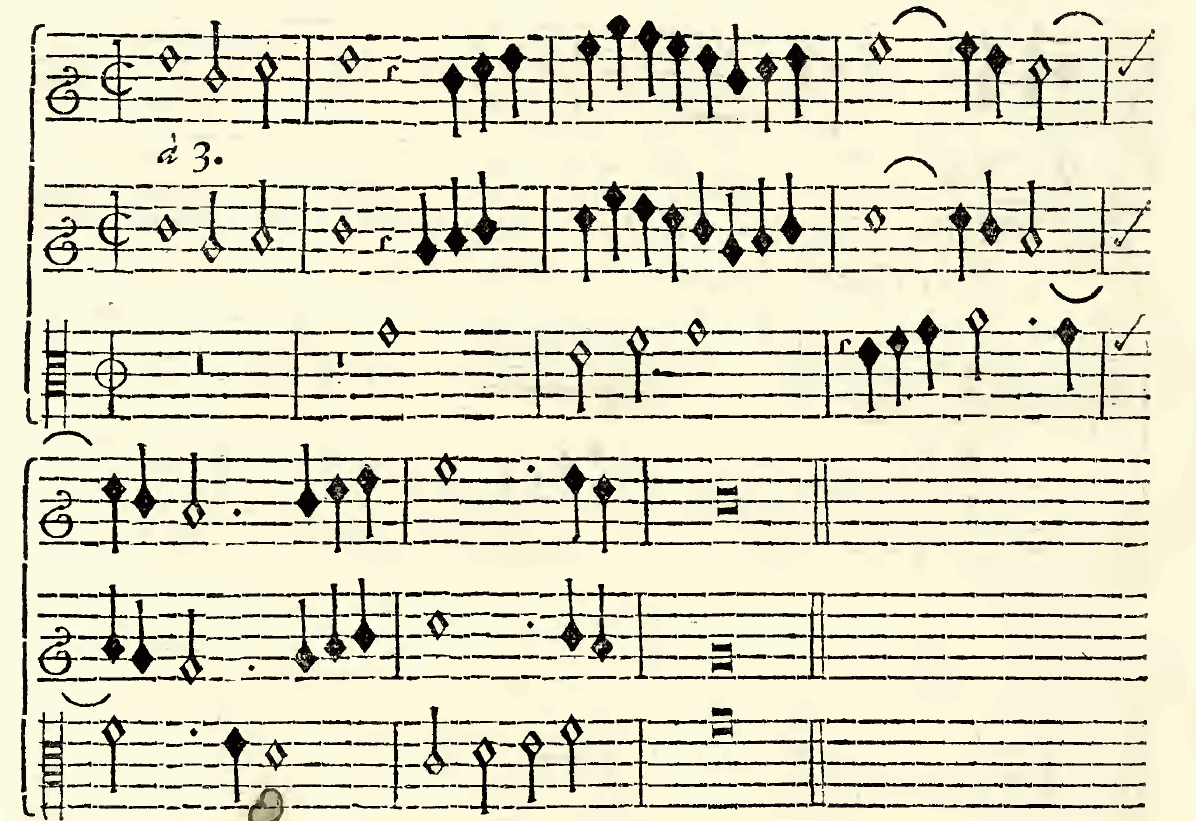
In another way.
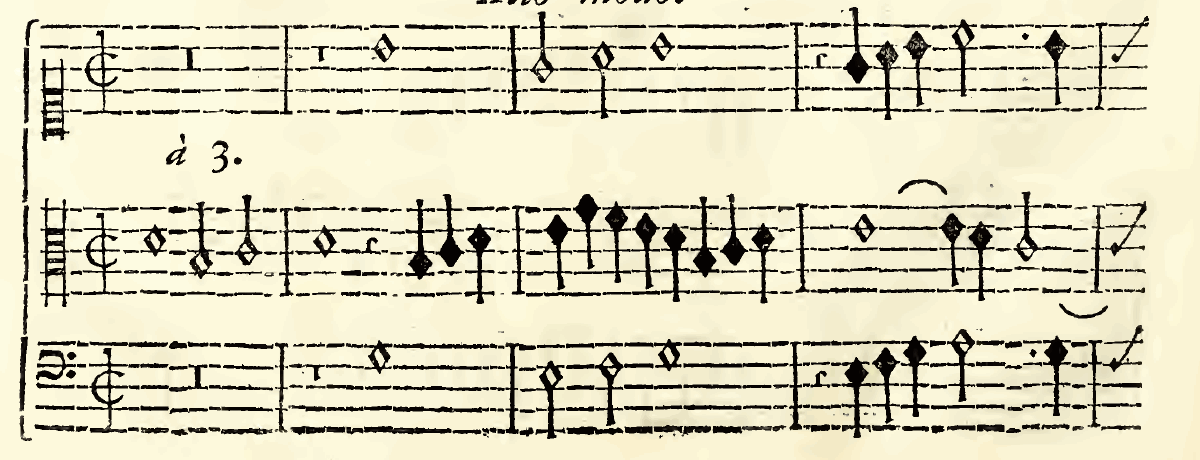
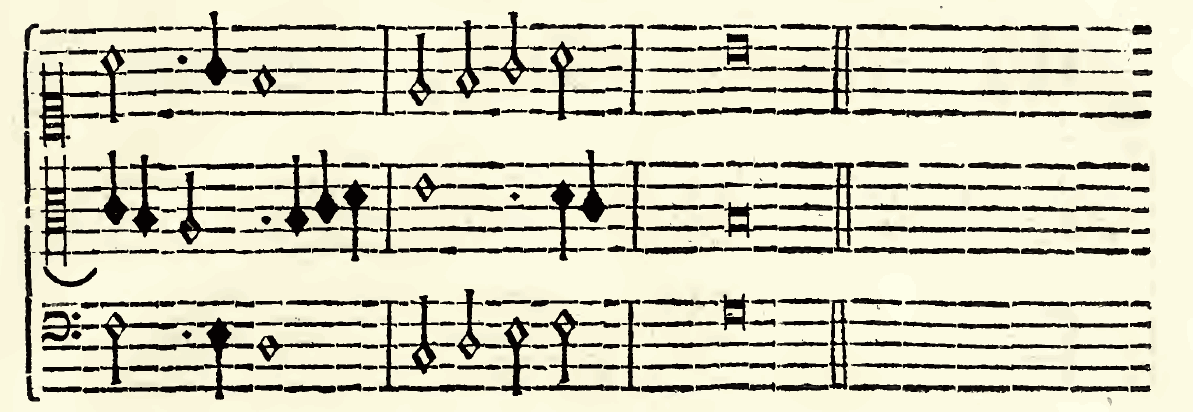
In another way.
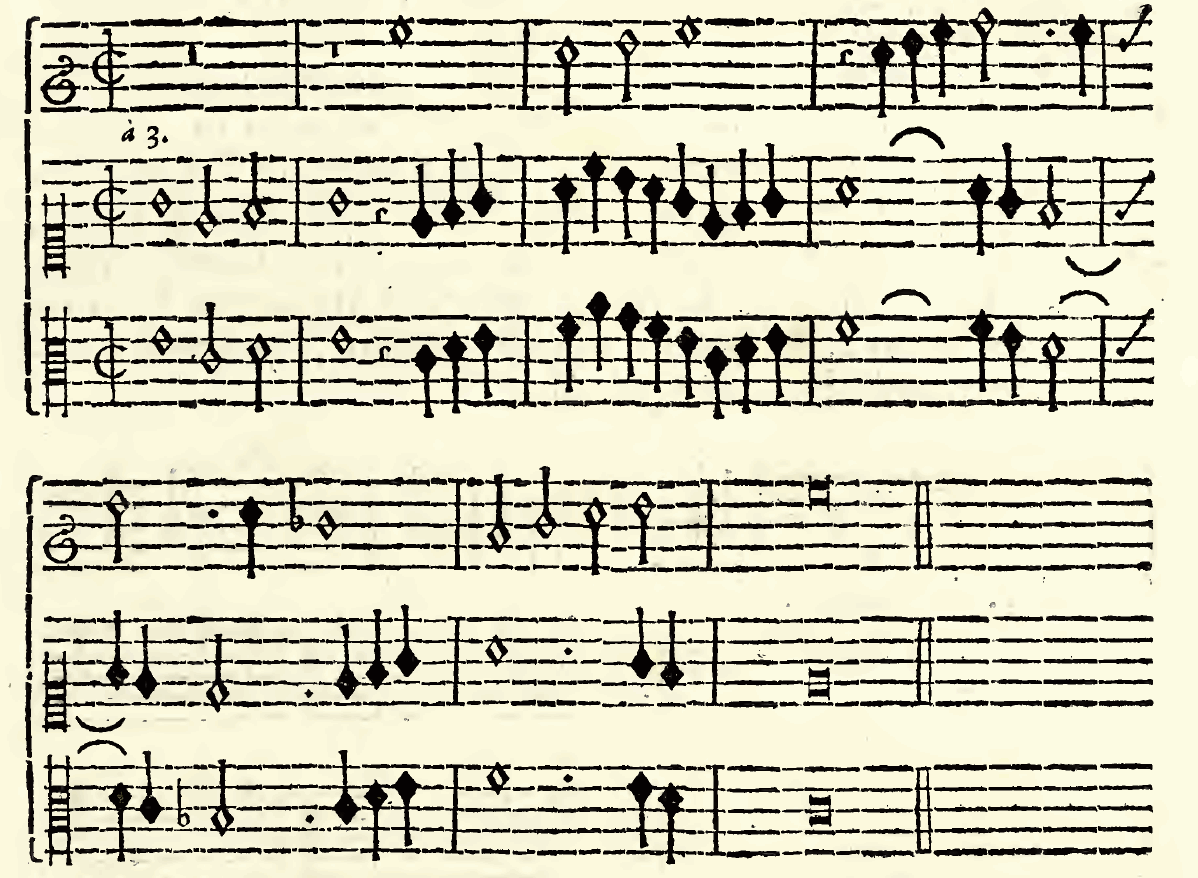
In another way.
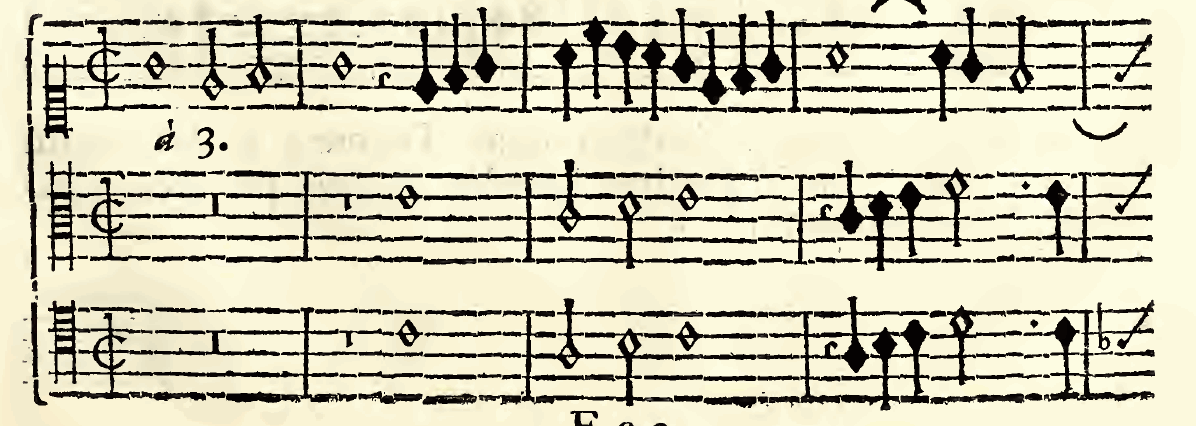
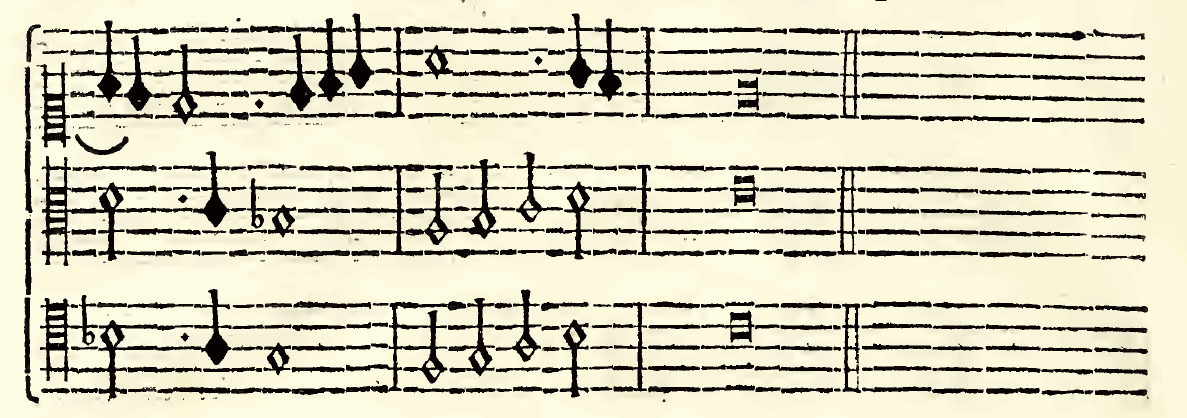
Joseph. How far will you go, I pray you, revered Master, with your manifold variation?
Aloysius. To show you how great and excellent is the usefulness of double counterpoint, to which this wonderful variety must be credited. This occurs if counterpoint at the twelfth is given almost no consonance other than a fifth and octave, and those by contrary motion, and a third by oblique motion. When this is done, counterpoint at the octave and tenth can be drawn from counterpoint at the twelfth, with the benefit of such splendid variation. For example:
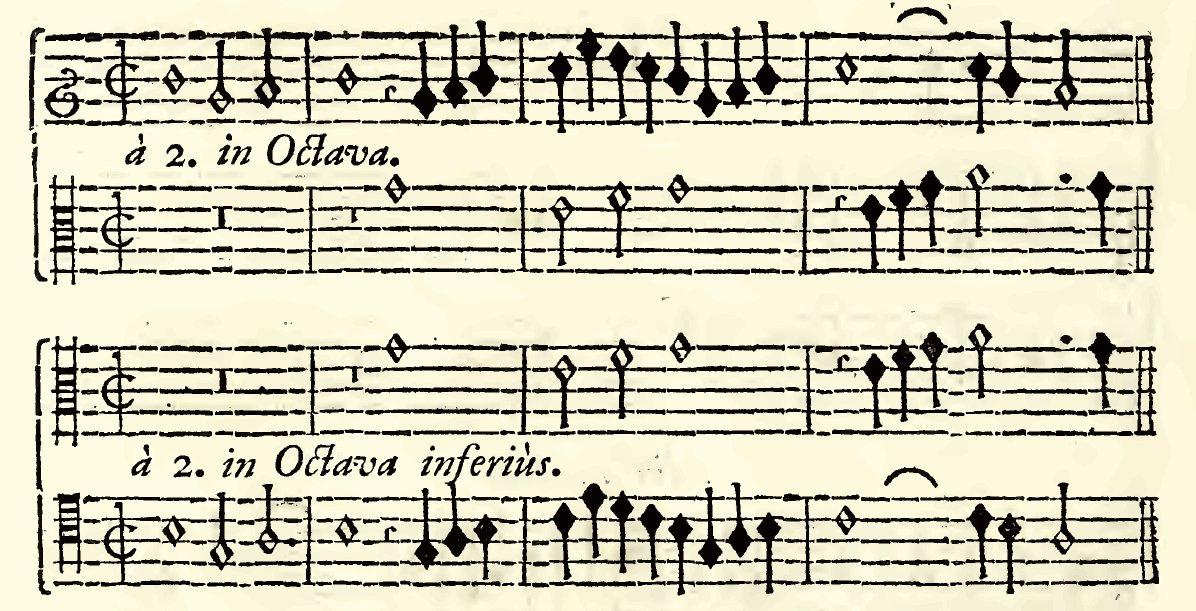
Furthermore, if you make the first soprano proceed with the tenor at a tenth and the second soprano with the bass at a tenth, you will have a complete four-voice composition. For example:
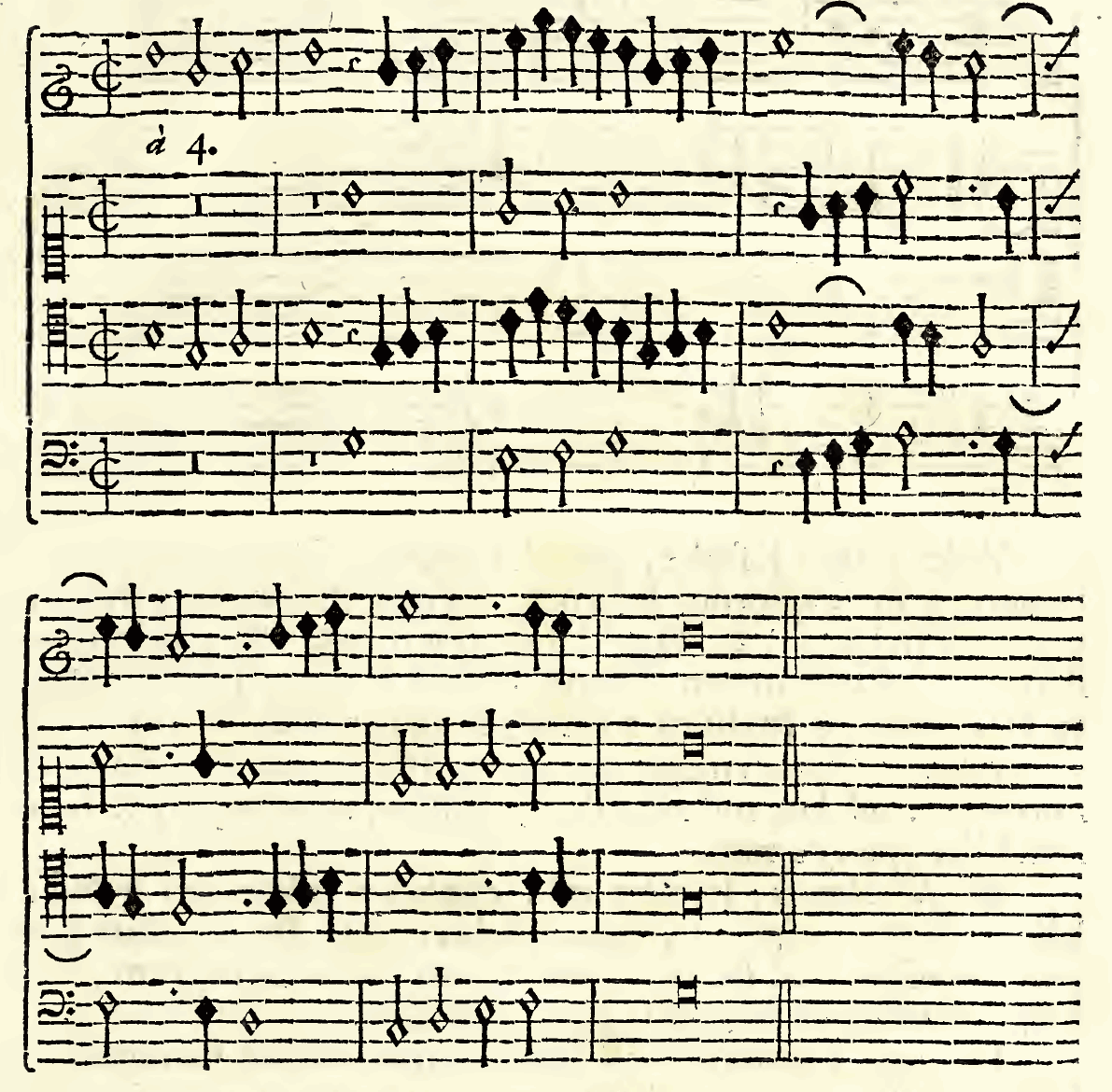
In another way.
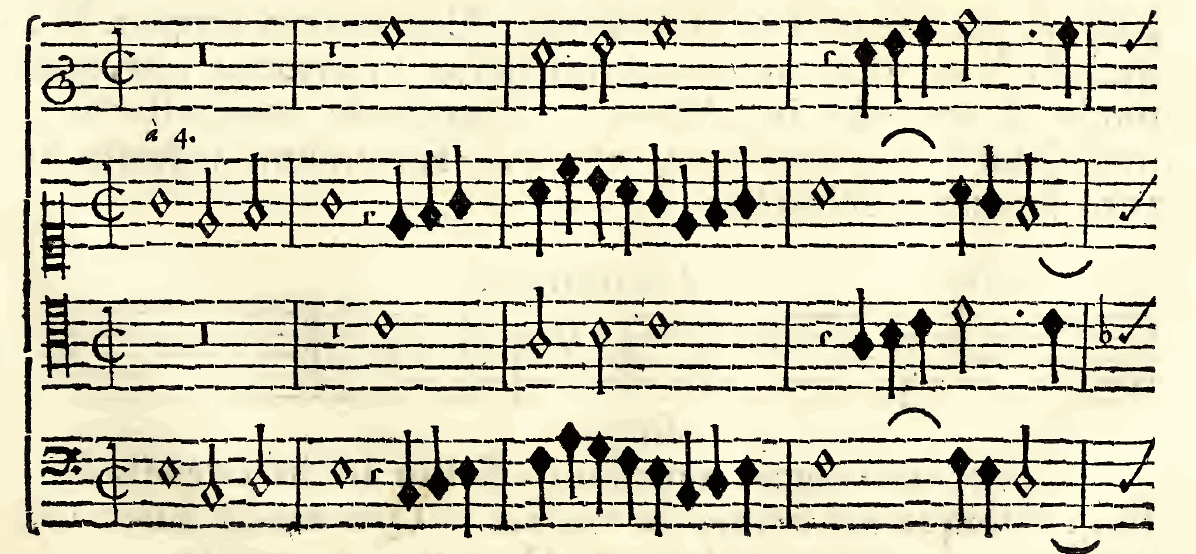
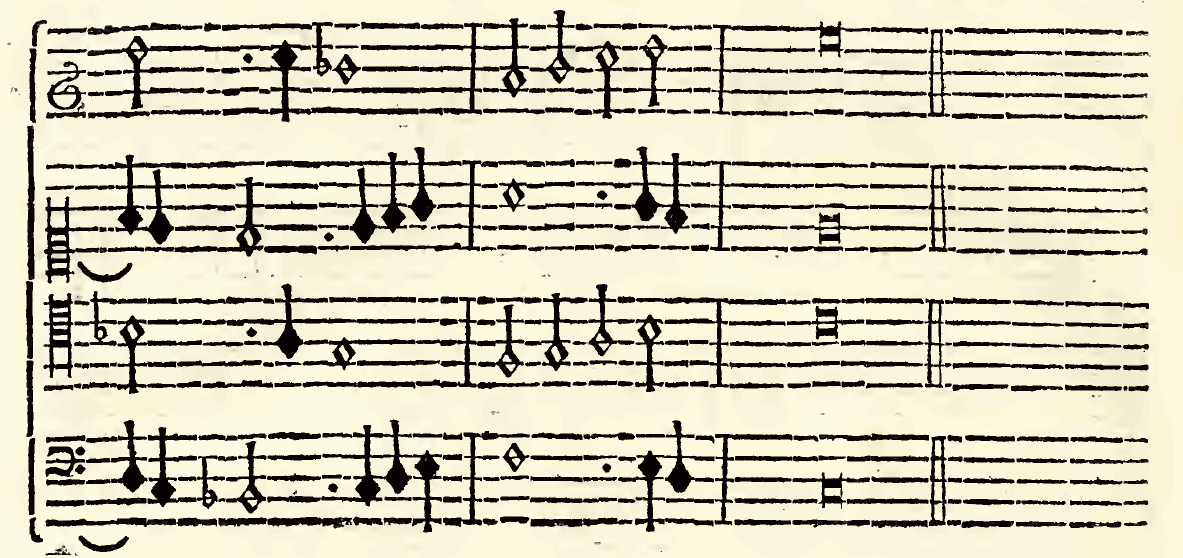
You see, then, Joseph, how important counterpoints of this kind are, by whose benefit three- and four-voice compositions arise from two properly constructed parts. If their excellence fills you with admiration, infer from this how worthwhile it is to apply yourself to their study with great effort.
Joseph. I shall devote all my strength to acquiring so wonderful an artifice. Its usefulness and variety, and love of so marvelous a work, spur me to this.
Aloysius. Love alone, my Joseph, can be the spur to undertaking and overcoming this labor. For I have already warned you elsewhere that one drawn by a desire for honor and hope of riches will either be overcome by weariness or frustrated by the labor.
Here I must not pass over how a composition without ligatures of dissonances may be inverted by contrary motion. This inversion can be made in two ways: by simple contrary motion and by reversed contrary motion. Simple contrary motion occurs when the notes are simply inverted, so that those which previously moved upward proceed downward, without regard to semitones. Let us examine an example in the subject familiar thus far:

Reversed contrary motion, however, is produced by inverting the notes so that mi everywhere corresponds to fa. The following diagram of notes will teach you how it is to be arranged.

Match the notes ascending from the left with those descending from the right, and you will find that D nevertheless remains D through inversion, E inverts to C, F to B mi, and G to A, as may be seen in the same subject.

To make this inversion by reversed contrary motion clearer to you, leaving aside simple contrary motion, which is of less importance and difficulty, I shall invert the three-voice composition given above as the third example, in the following way:
Reversed contrary motion
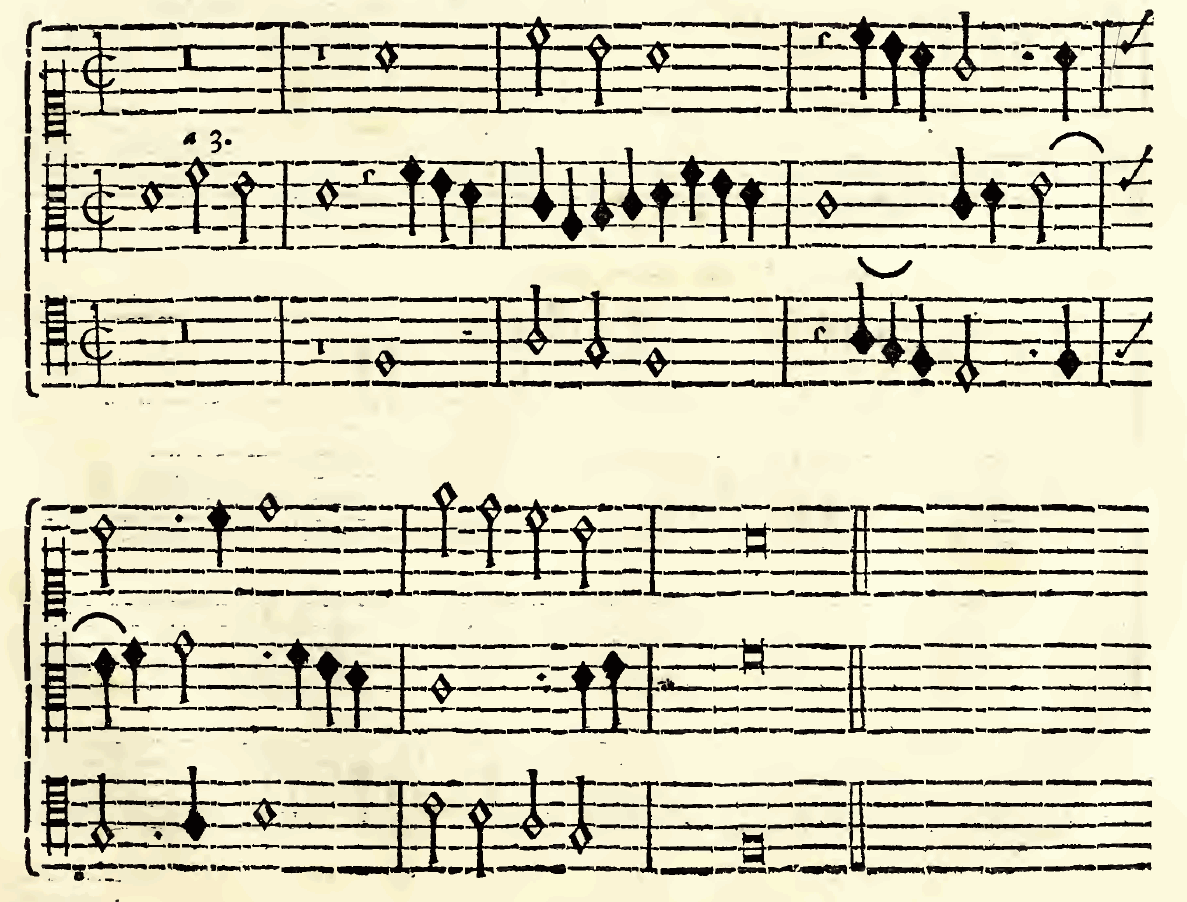
Joseph. This inversion is truly remarkable. Can any composition without distinction be inverted in this way?
Aloysius. Only one which, as I have already said, contains no ligature consisting of a dissonance. But since, according to the nature of the modes and subjects, some transpositions and inversions turn out well and others badly, great caution and judgment are needed in using them, lest a composition suffer a loss of its expected pleasantness through the pursuit of grand artifice. This happens in the following fugue, offered more for the sake of counterpoint at the twelfth than as an example of agreeable melodic writing.
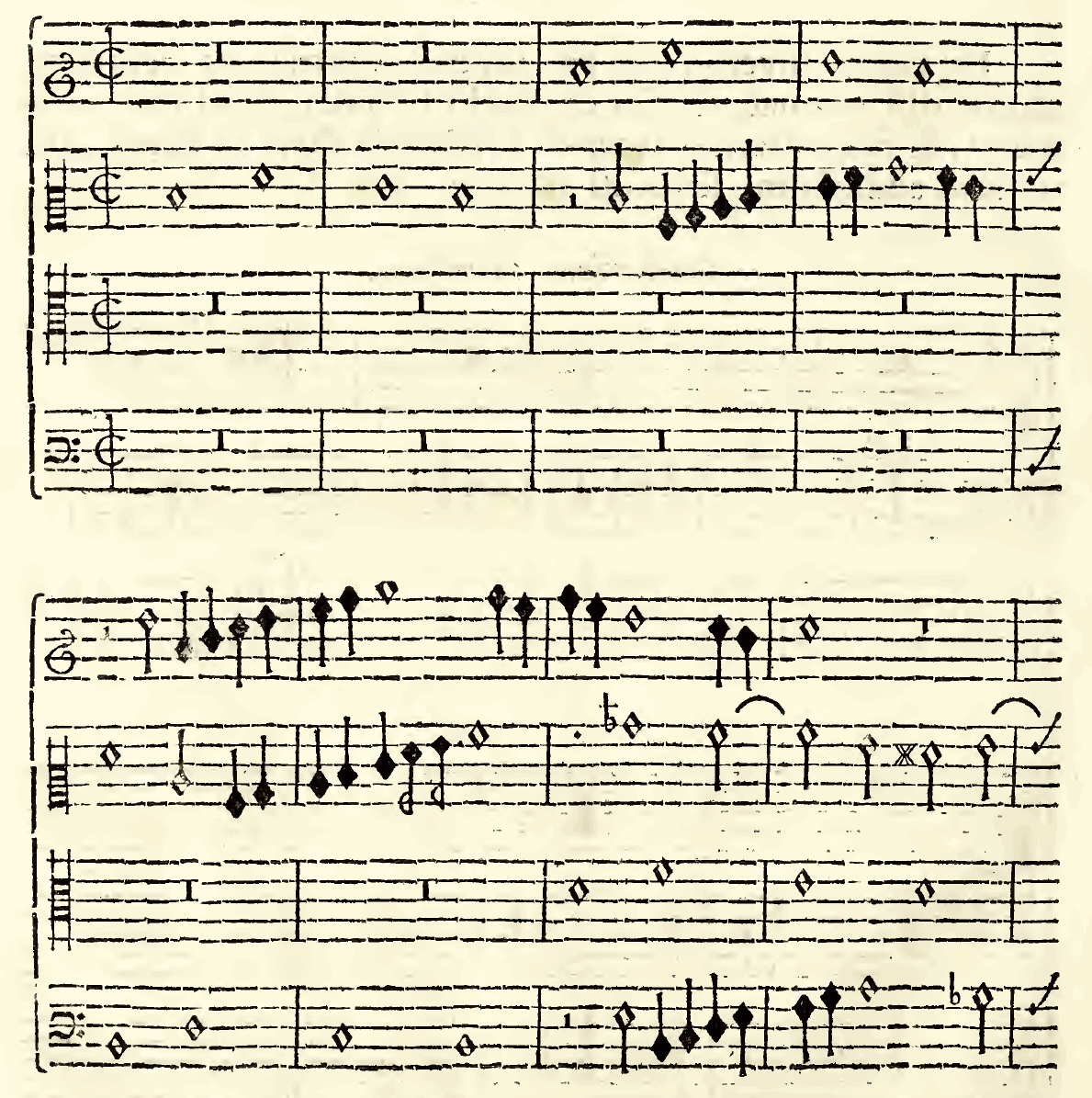
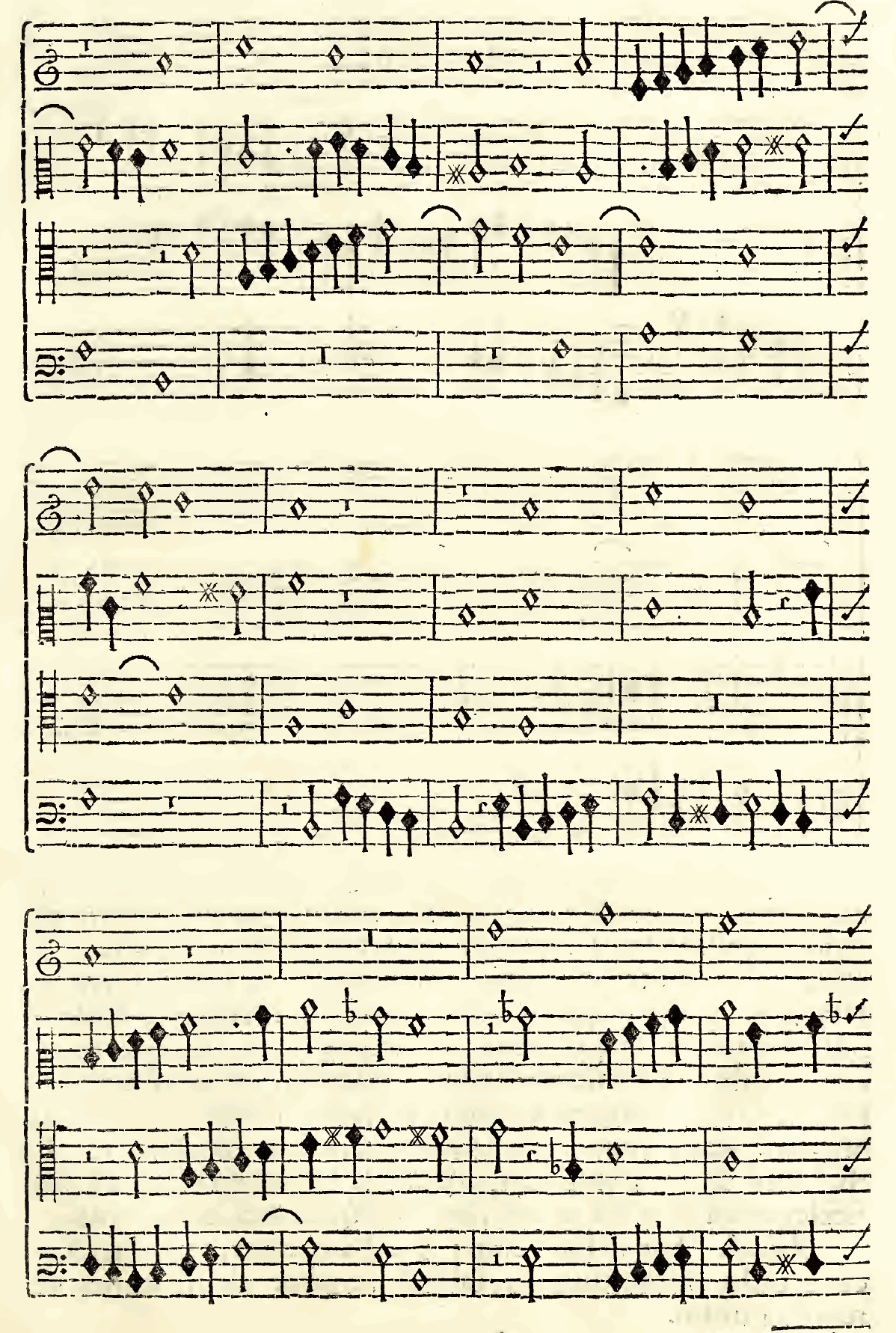
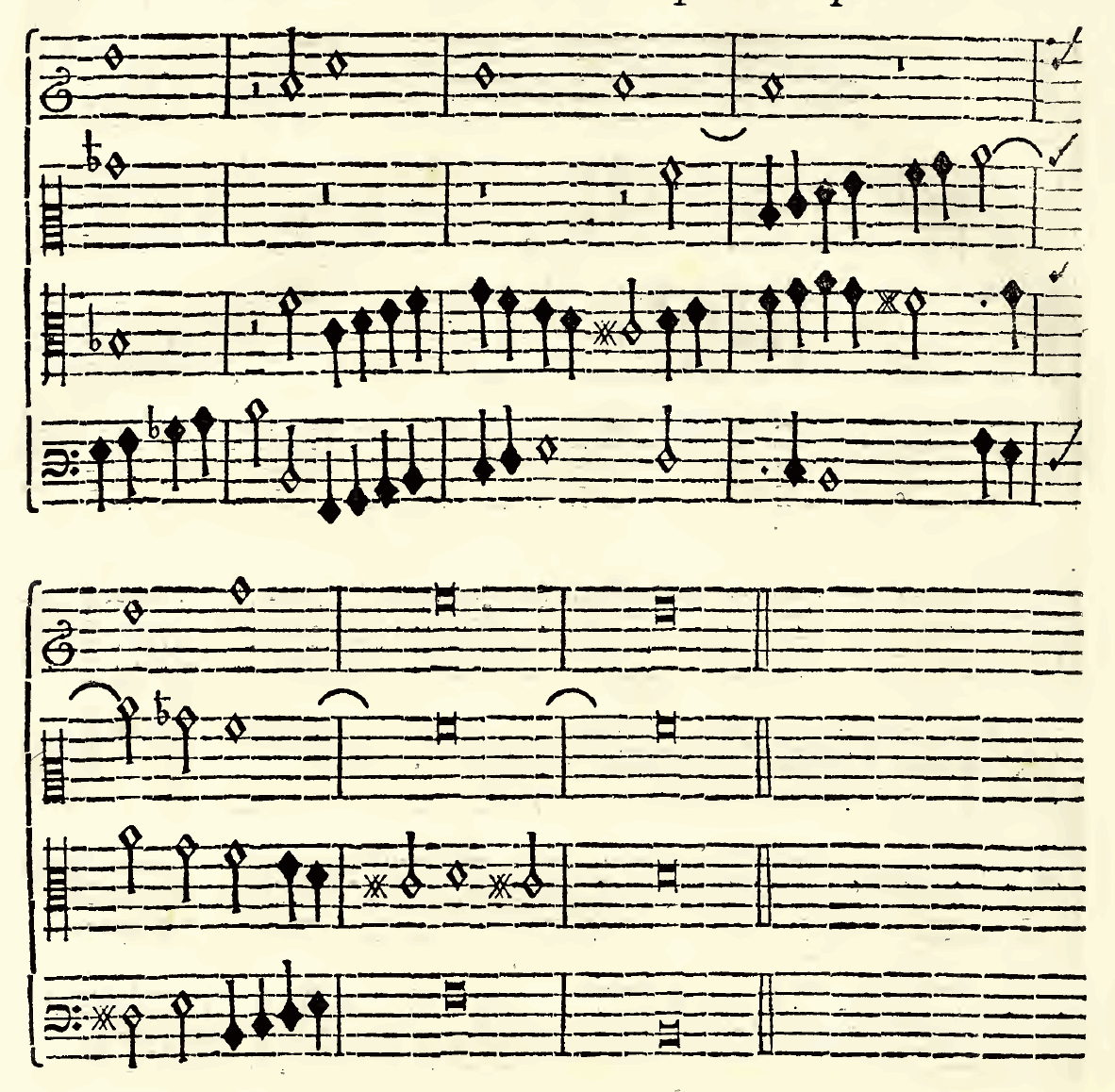
I do not think further explanation is needed of how the transpositions of the parts and interchanges of subjects were made in this fugue, since, from the preceding extensive explanations and abundant examples, I suppose none of these things remains unknown to you. These, then, are the things I have thought fit to teach about this kind of counterpoint, whose usefulness I consider it superfluous to extol and commend to you again. For what other path will you take if you wish to distinguish a composition with several interchangeable subjects and depart from the use of double counterpoint? Without such a mixture of subjects, a composition, especially an ecclesiastical one, becomes simple and lacks its greatest ornament.
Joseph. I am disappointed in my hope, for I expected you to mix contrary motion with direct motion and demonstrate the interchanges of the subjects.
Aloysius. I certainly would have done so if the suitability of the subject had allowed it and some grace could thereby have been added to the composition. This should be done when one has the freedom to invent a subject by one’s own design. In that case it must be prepared so that its contrary form can be used with a certain charm. I shall give an example of this shortly, after first demonstrating how fugue or imitation may be mixed with a cantus firmus and continued throughout its course. For example:
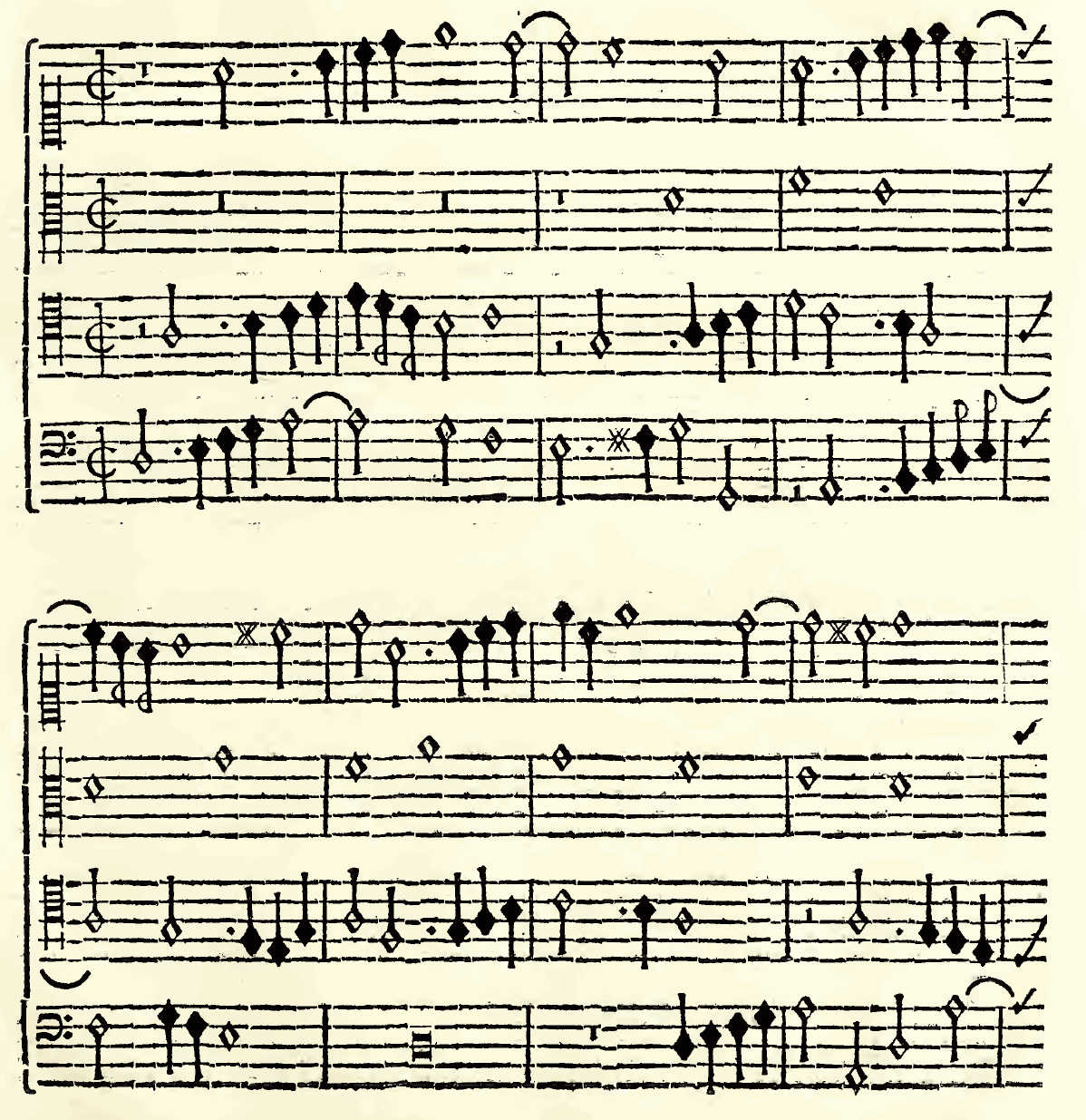
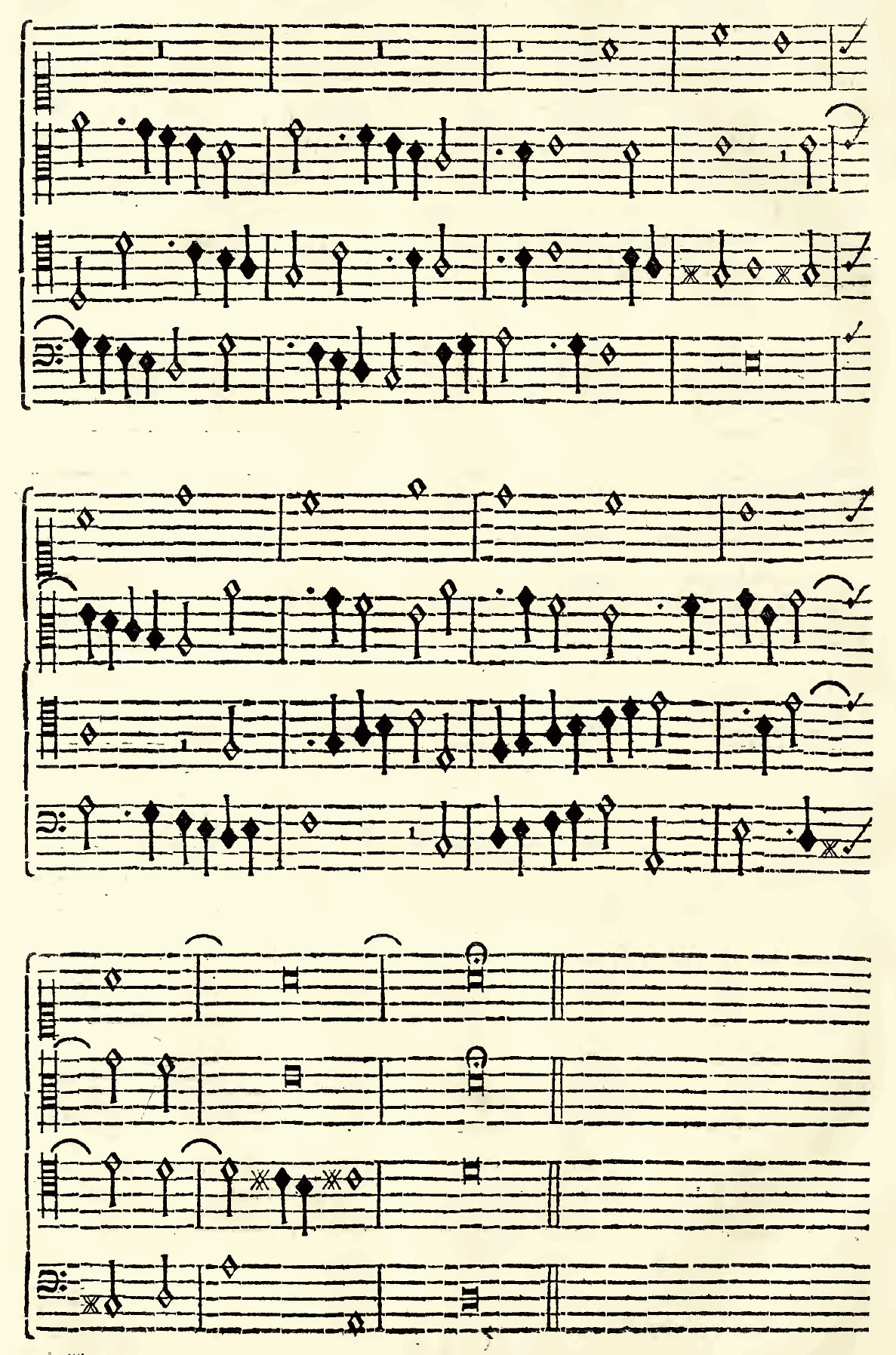
Joseph. By the immortal God! How I marvel at this harmony woven with such admirable ingenuity! Considering the greatness of this artifice, I almost lose heart at ever achieving anything like it. By what plan, I pray, did you arrange it so that the first subject has the opportunity to enter everywhere throughout the course of the cantus firmus?
Aloysius. Your astonishment is not without reason, Joseph. This matter is indeed of some difficulty, but not as much as it seems to you. For anyone who keeps what has been said and understood thus far firmly impressed on the mind and works through all the lessons with diligent practice will not labor so greatly in making something similar. But before conceiving a subject to be woven into a cantus firmus, one must examine every measure of the cantus firmus with both eye and mind, to see whether that subject, either direct or contrary, can be fitted to it, if not in every measure, at least in as many as possible, while also observing the laws of counterpoint and the pleasantness of the melodic course. There is another way of choosing a subject: take it from the cantus firmus itself, note for note, or in its likeness, changing or syncopating some note form, as appears in the following example:
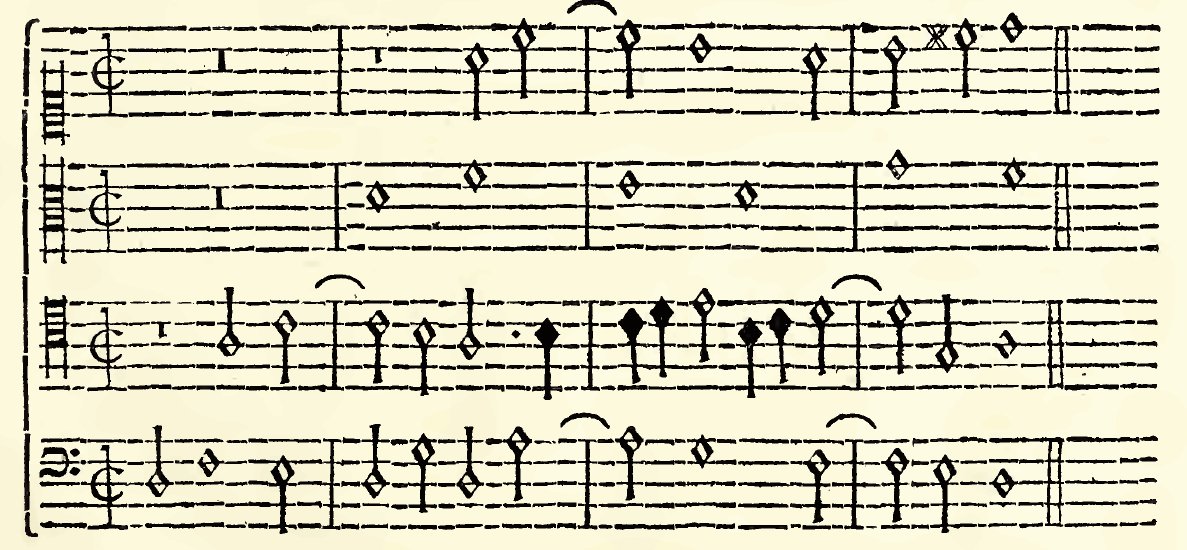
In these ways, then, and others according to the character of the cantus firmus, the subject must be introduced, after first considering in the mind, as I said, when, where, and in which portion of the cantus firmus an entrance can suitably be made. Thus far I have kept you entangled either in the tedium of the cantus firmus or in the bond of a prescribed subject and the narrow bounds of the impoverished diatonic genus, and have bidden you travel through rough and rugged places. Yet without this path you would never have arrived at a complete understanding of this art. It is now time to let you range from the thorny labor of this genus into a more pleasant field of study abounding in flowers; to leave you to yourself and allow you to choose subjects at your discretion, form ideas, and range through the mixed genus, not circumscribed by such narrow bounds. Henceforth you will also be free to use time of every kind, triple and quadruple in a more relaxed measure, smaller note forms, irregular subjects, and transposed modes.
Joseph. I am wonderfully glad that at last I shall be released from bonds, so that I may be permitted to test myself and my own ingenuity. But before I proceed, I remember that you promised a little earlier to demonstrate how a direct subject is to be maintained in combination with its reversed contrary form. I ask you again and again to do this as soon as possible.
Aloysius. You remind me at the right time. I shall not only comply with your request but freely provide more, by showing that outside the diatonic genus there is another way of inverting subjects than the one proposed in an example not long ago. I shall also explain how three different subjects are to be combined in a composition, and how far customary practice in the common style permits departure from the ordinary laws of counterpoint through variation of note forms. I say, then, that to form reversed contrary motion in the mixed genus it is enough for mi everywhere to correspond to fa and, conversely, fa to mi, without regard to the rule prescribed above for the diatonic genus. Examples will make the matter plain.

By the rule given above for the diatonic genus, the present theme would have to be inverted into reversed contrary motion in the following way:

But the following manner of inversion is far more suited to the mode to which this subject belongs. For example:

The beginning and end of this reversed contrary form lie within the bounds of the mode. I shall place before your eyes a sketch of a fugue following this model. For example:
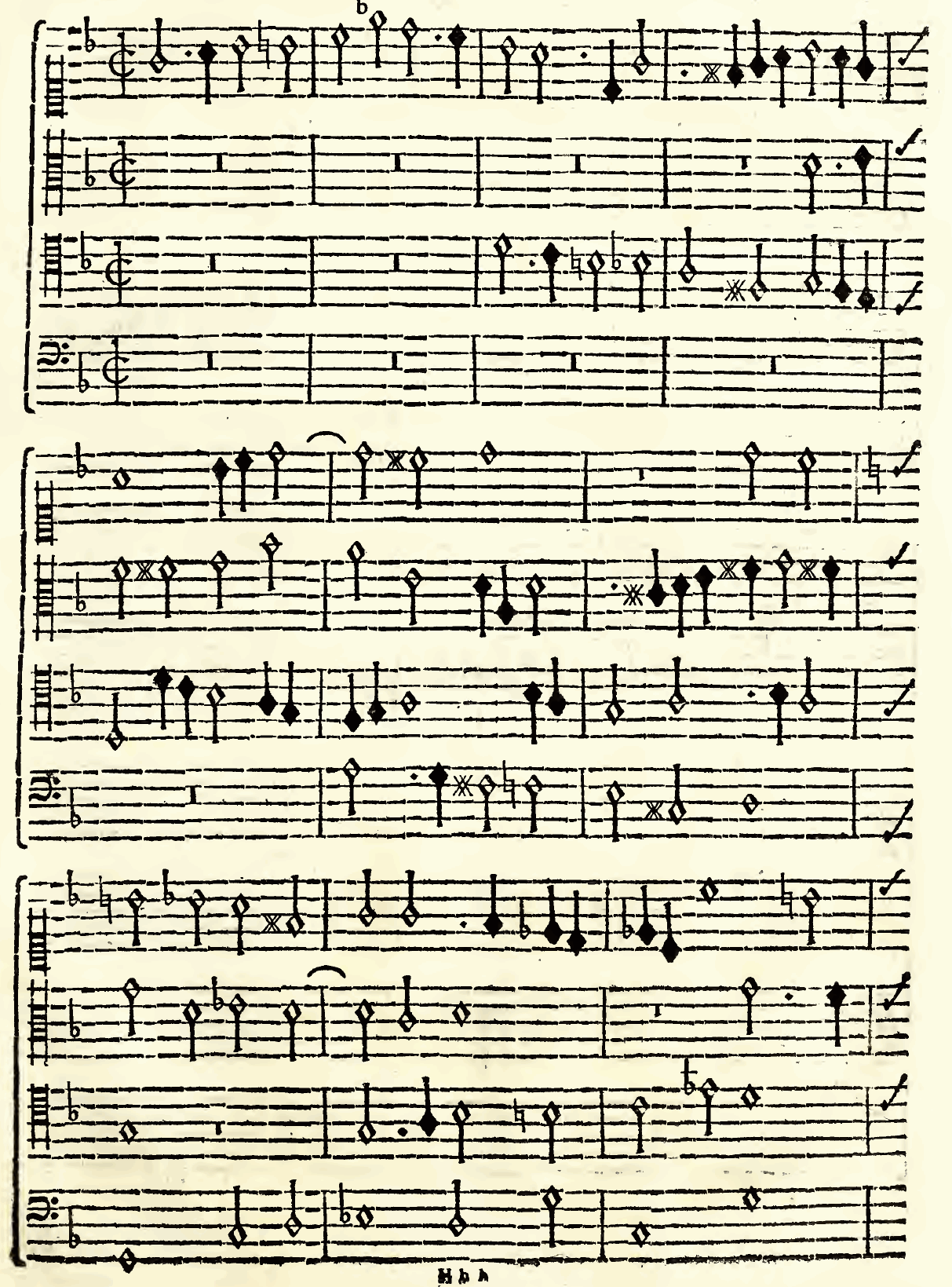
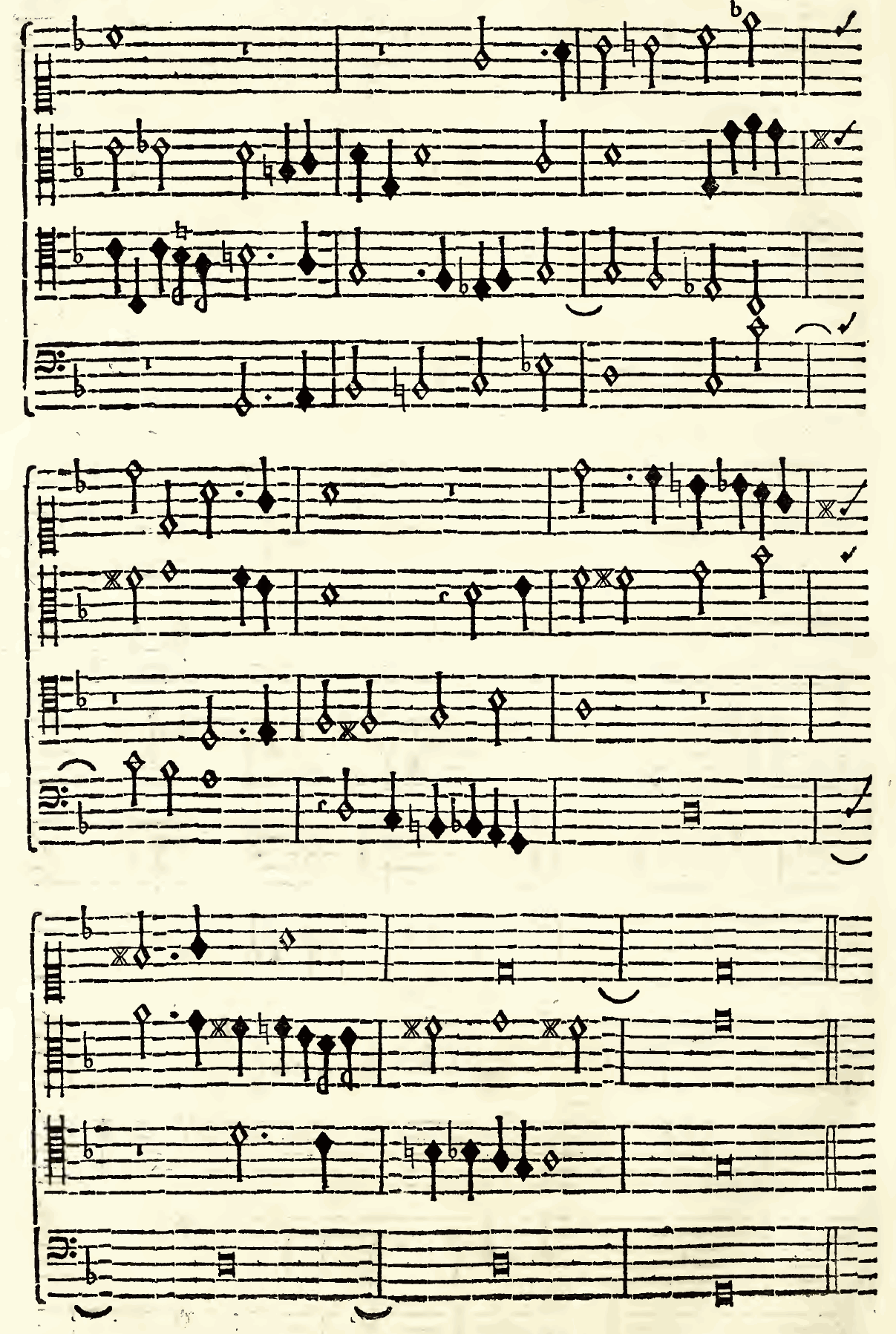
By alternating the subjects in this way—that is, the direct and contrary forms—you will make a composition not lacking the variety so necessary to harmony. Observe also the device by which shortening some note values makes it possible for the direct and contrary forms to proceed together. Sometimes composers leave aside the contrary form and proceed with the direct form alone almost to the middle, introducing the contrary form only there. This is left to each person’s discretion.
Joseph. The present fugue does not appear to be founded on double counterpoint.
Aloysius. By no means, for I think we have treated that material quite fully and abundantly. Here I intended only to demonstrate how a direct form is to be combined with its contrary. But if someone wishes to adorn a composition with several subjects distinct in character and note value, this cannot be achieved except through the aid of double counterpoint, as may be seen in the following example:
Fugue furnished with three subjects
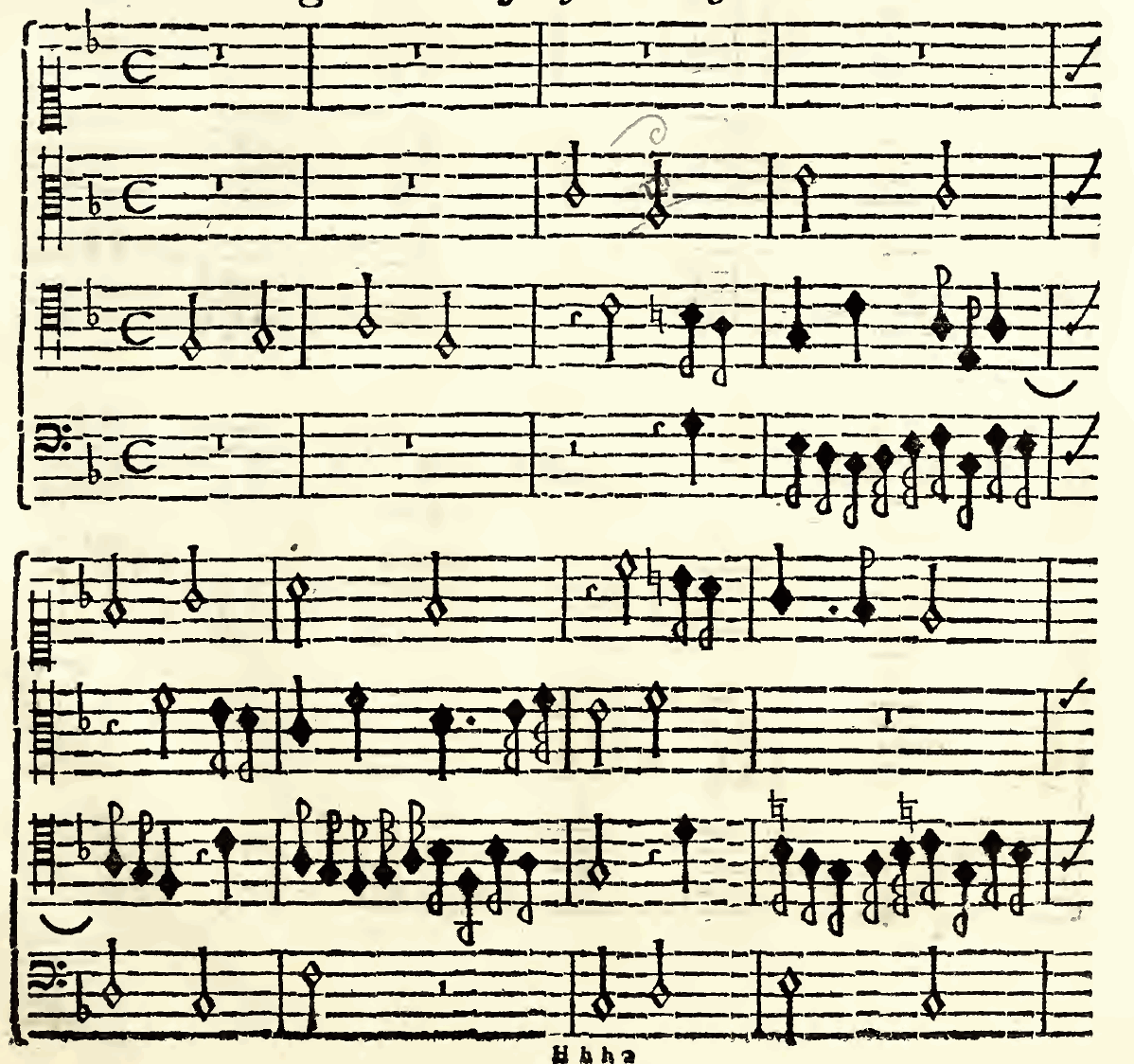
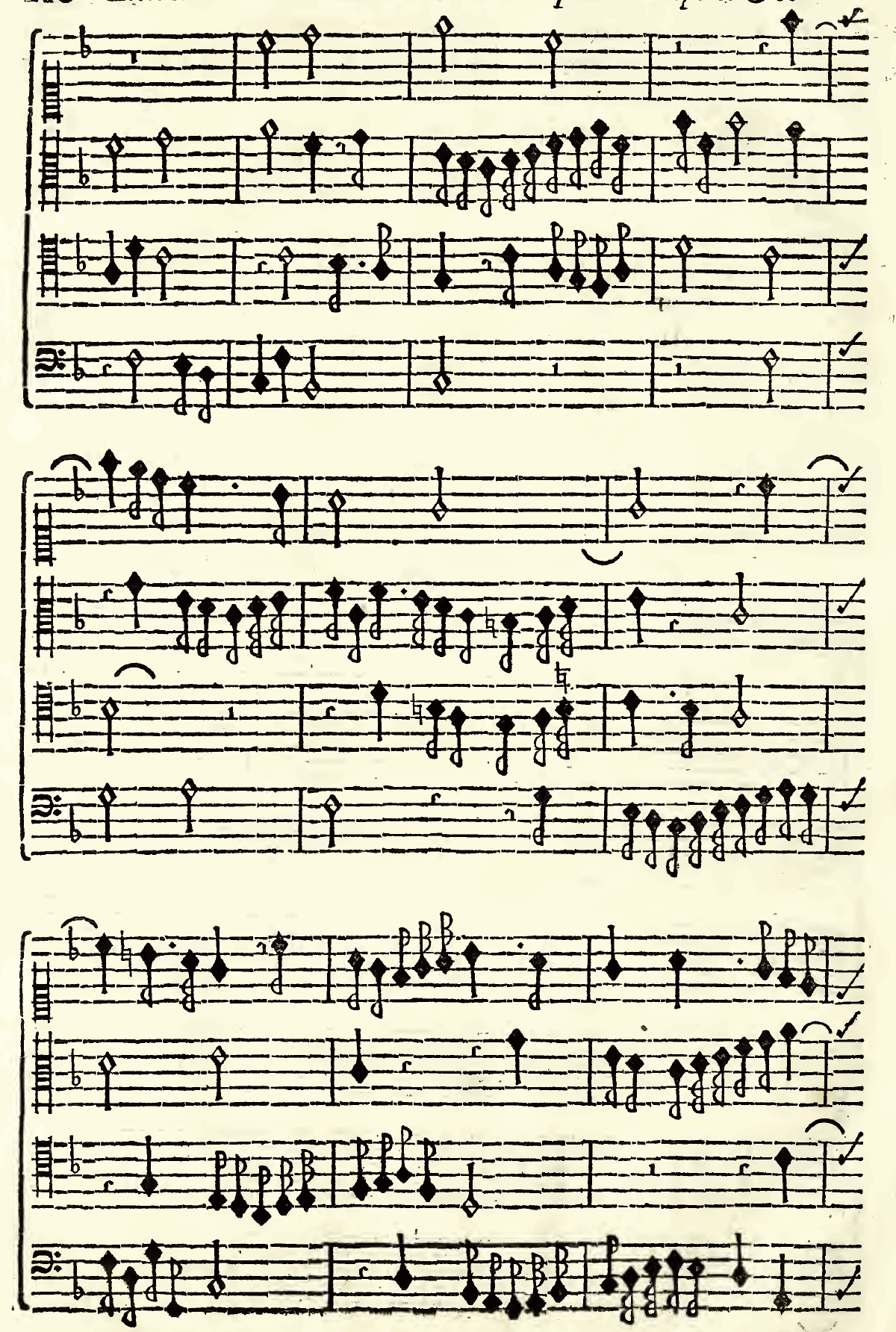
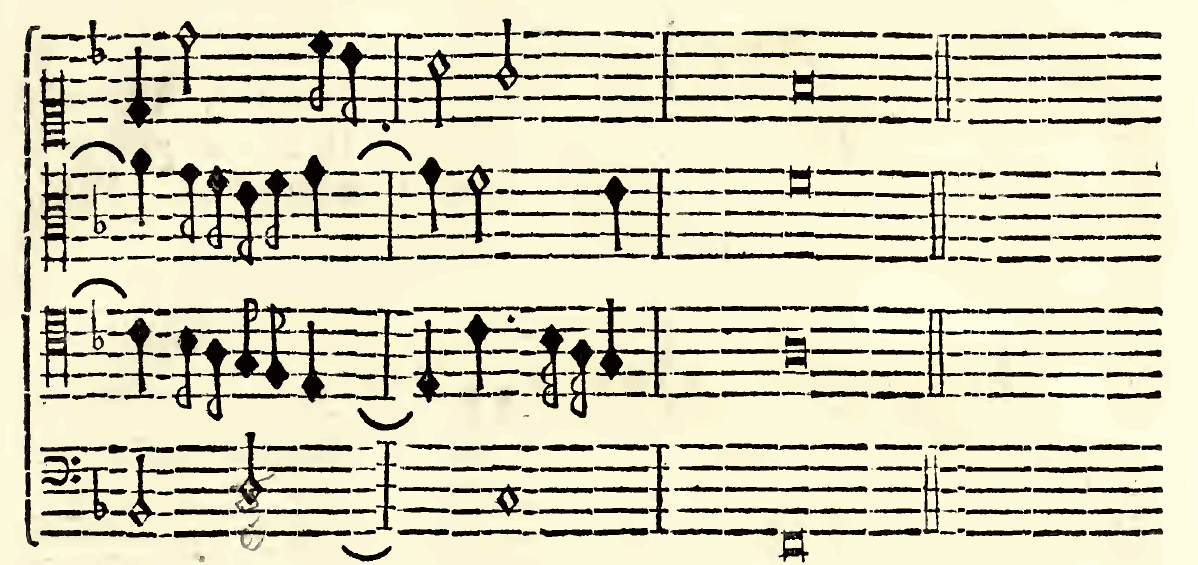
This, then, is the manner of furnishing a fugue with three subjects, the second of which is founded on counterpoint at the octave and the third at the twelfth. First, observe that each subject is distinguished by note value so that the different motions make them easier to perceive. Second, where the subject at the twelfth has entered, care must be taken that the other parts do not also form a sixth with one another, for otherwise the transposition would not hold. Third, observe that, either because of another subject’s entrance or for the excellence of the melodic course, the entire subject is not always preserved and carried to its end everywhere. This is to be tolerated for the reason given. A composition of this kind with three subjects, however, generally requires a fifth part. In that way alternation becomes easier, because not every part is always occupied, and the parts gain more time to rest.
Joseph. I observe and admire the artifice. But more time is needed to carry it out well, which I shall do at home, so as not to weary you at present. Meanwhile, Master, allow me to remind you that you mentioned above the figure of variation, irregular fugues, and transposed modes. Now, if it does not conflict with the order of instruction, please explain what they are.
Aloysius. I shall not delay. And first,