 Playable Books
Johann Joseph Fux · section 25 of 32
On the figures of variation and anticipation
Read and hear this section in the playable edition →

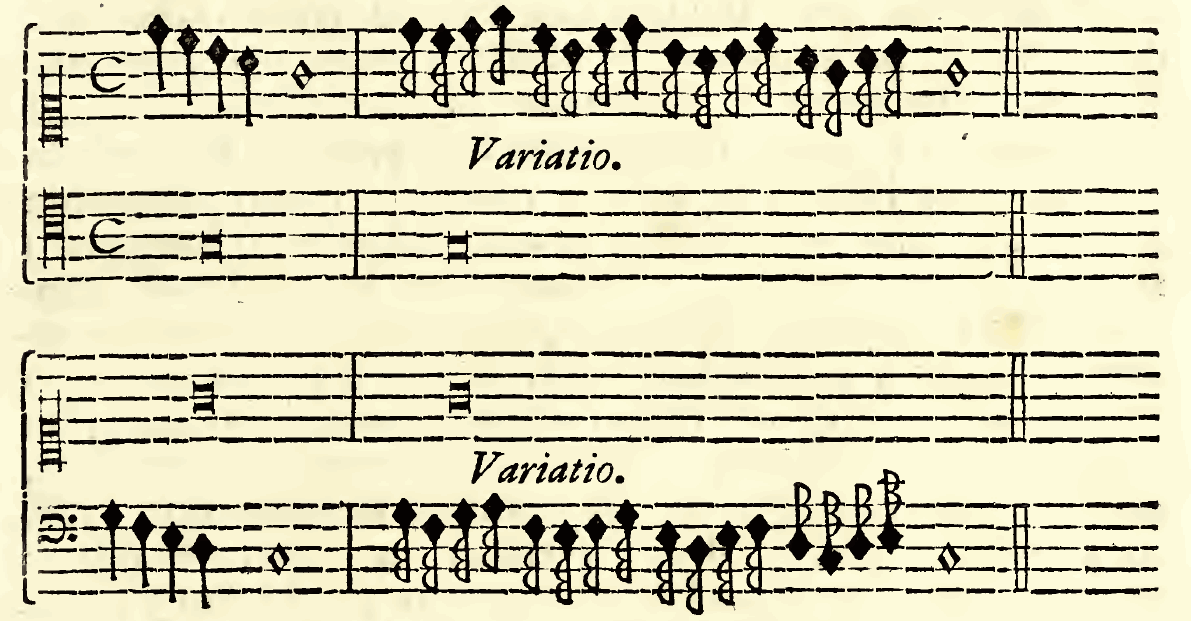
Variation is nothing other than irregular diminution. It is distinguished from regular diminution in that the latter has a place only in notes proceeding by the leap of a third. For example:
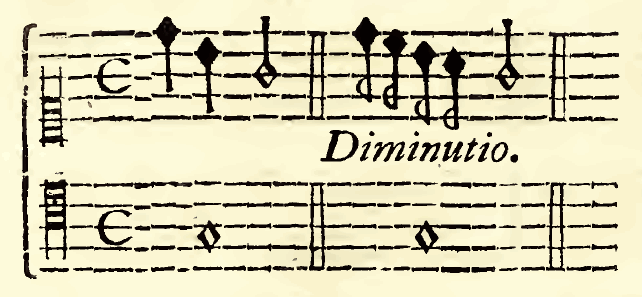
The former, namely variation, occurs in notes proceeding by step. For example:
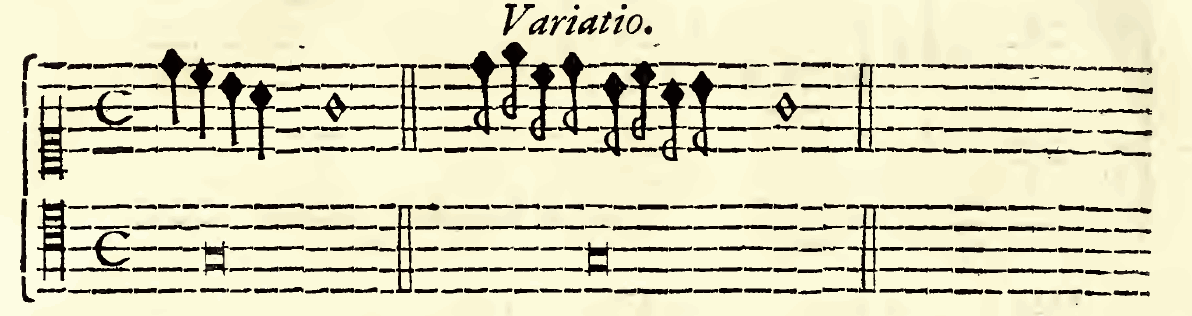
This example clearly demonstrates that variation departs from the common rules of counterpoint, because one proceeds by leap from a consonance to a dissonance and again from a dissonance to a dissonance. This is certainly not admitted in counterpoint, but is allowed in common composition. Here are further examples of variation.
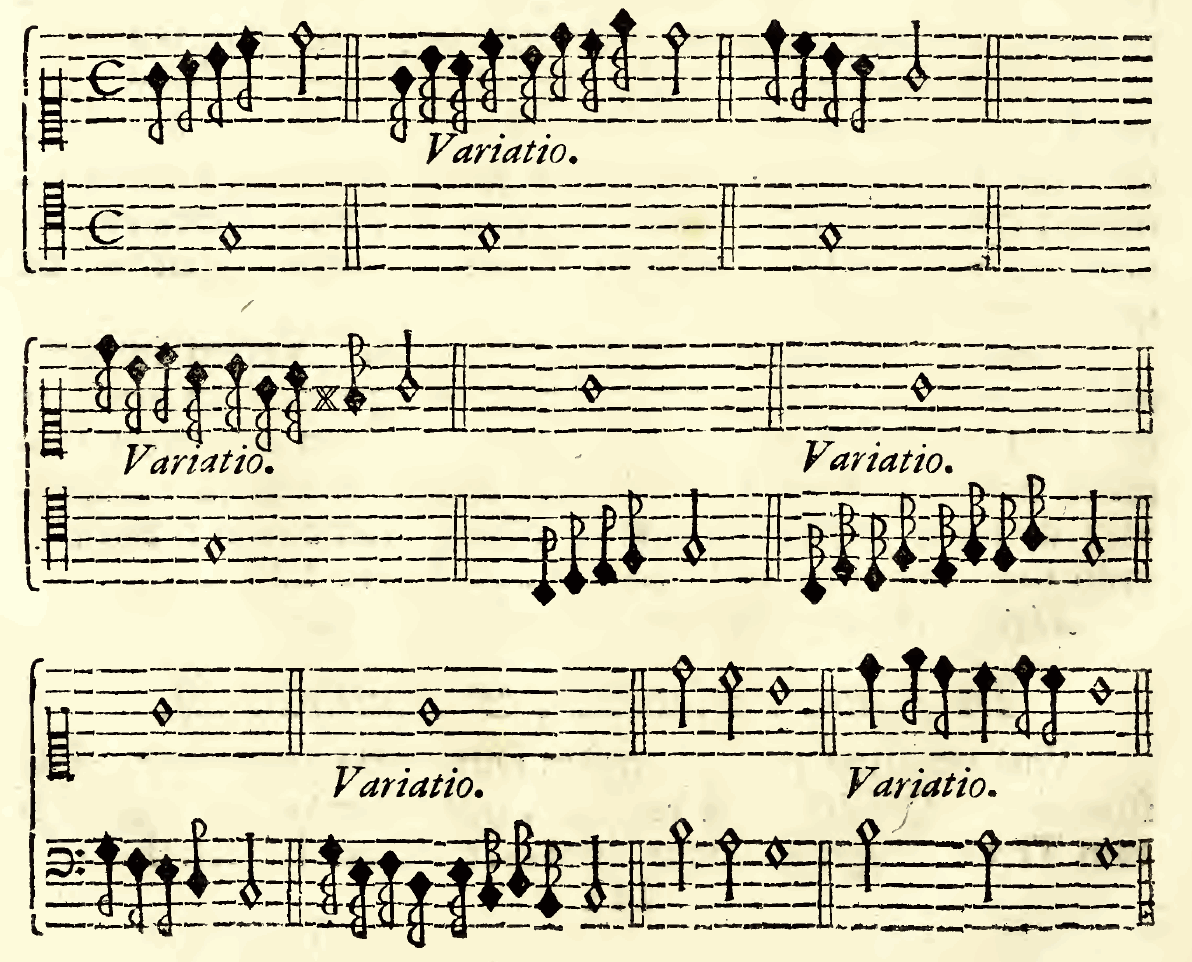
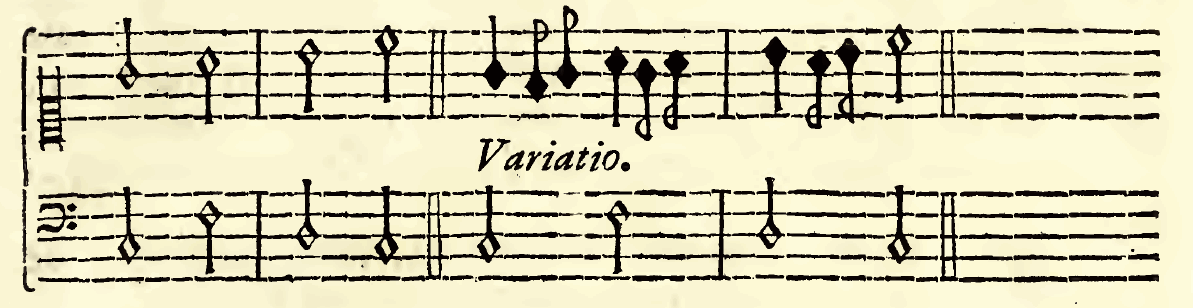
Variations of this kind, and others not very dissimilar, which do not alter the substance, may be valid in common composition. The following are also of this kind. For example:
The figure of anticipation occurs when half the value of the preceding note is taken away and added to the following one. For example:
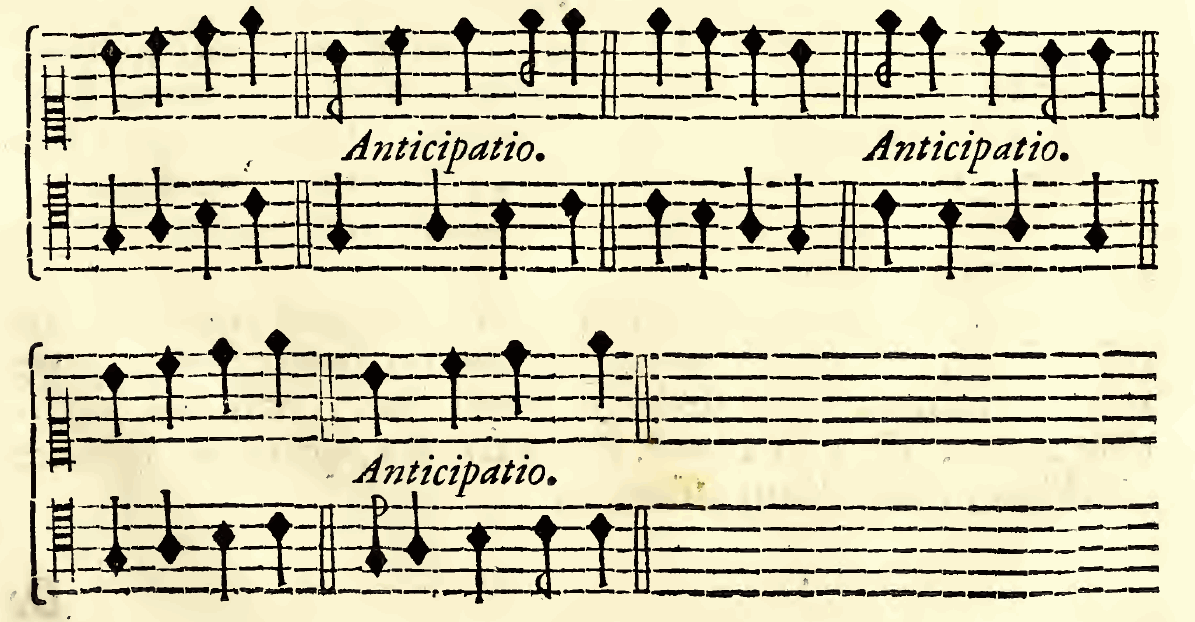
Let these few examples suffice. Nor is there any need today for a composer to insert variations, for performers already supply far more than enough of them, until one hears them to the point of nausea, so that they seem more like people gargling than singing.
Joseph. From where did such variations and departures from the rules of counterpoint take their origin?
Aloysius. It is clear from what has just been said that singers were their originators. Dissatisfied with regular diminutions and eager to display the flexibility of their voices, they invented such variations. Would that this desire to vary had remained within the bounds of moderation, so that musicians might indeed vary things without altering their substance! How fortunate composers would be! But alas, this insatiable appetite and boldness for variation has gone so far that not only is the substance of the harmony, so carefully and laboriously considered, turned upside down, but the composer himself has difficulty recognizing his own composition. Still more deserving of censure or ridicule are those musicians who, though endowed with no talent, are nevertheless driven by the same extravagance of variation to twist their mouths into a thousand shapes, so that not even the gestures of Roscius are so varied, and the sounds of five vowels are heard together instead of one. Indeed, this perversity has gone to such excess that they take pride in competing to see who can win the palm by rolling the notes so that neither the music nor the text can be understood. But who can stand against the torrent? It is the fault of the times and customs that everything well established at the beginning slides into something worse with the passage of time.
Joseph. Although, still being an apprentice, I am not entitled to judge this matter, I would nevertheless dare affirm that such destruction of harmony has never pleased me. Meanwhile, I think I have sufficiently understood what variations are and how they should be made. It remains now to speak of transposed modes and irregular fugues.
Aloysius. A complete understanding of natural modes must first precede knowledge of transposed modes. Since I touched only briefly on this subject above when discussing simple fugues, I shall now undertake to treat it more fully, as far as seems sufficient.