 Playable Books
C. H. Kitson · section 5 of 10
Chapter III. Third Species
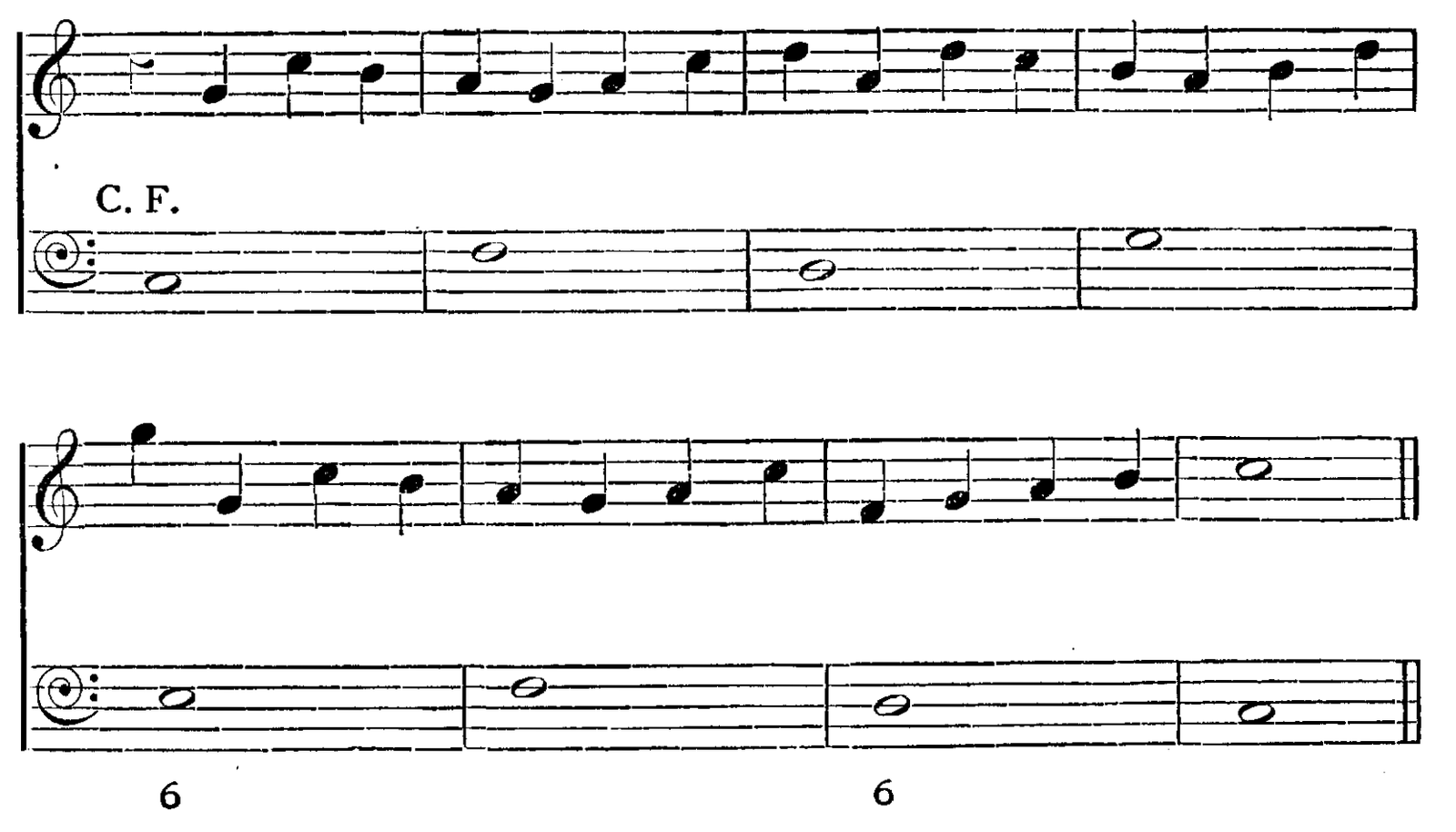
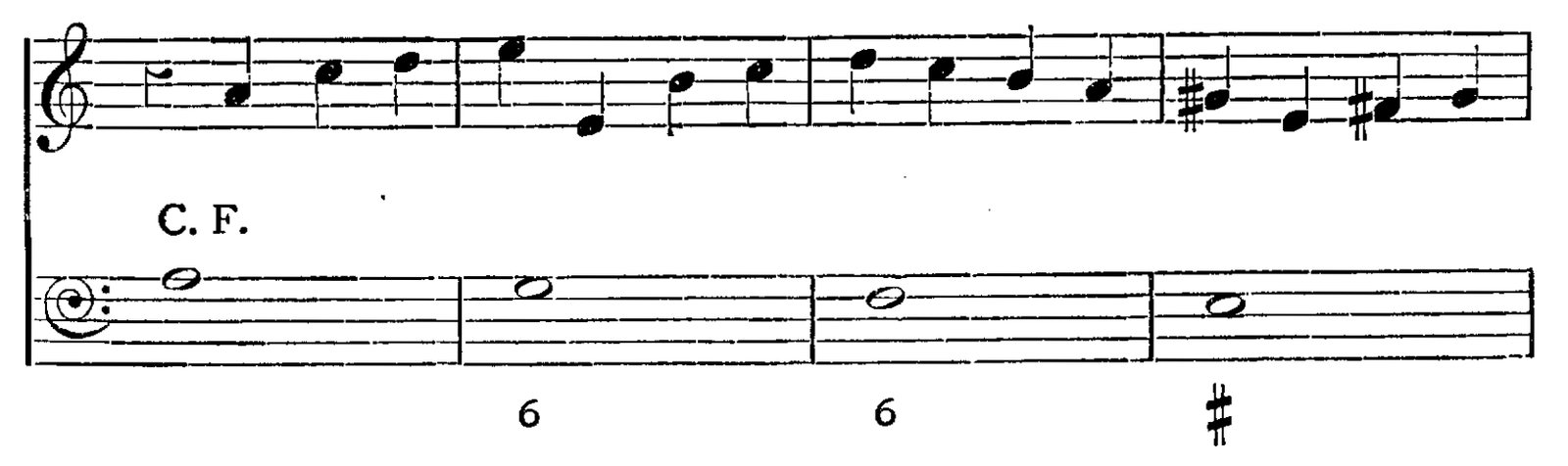
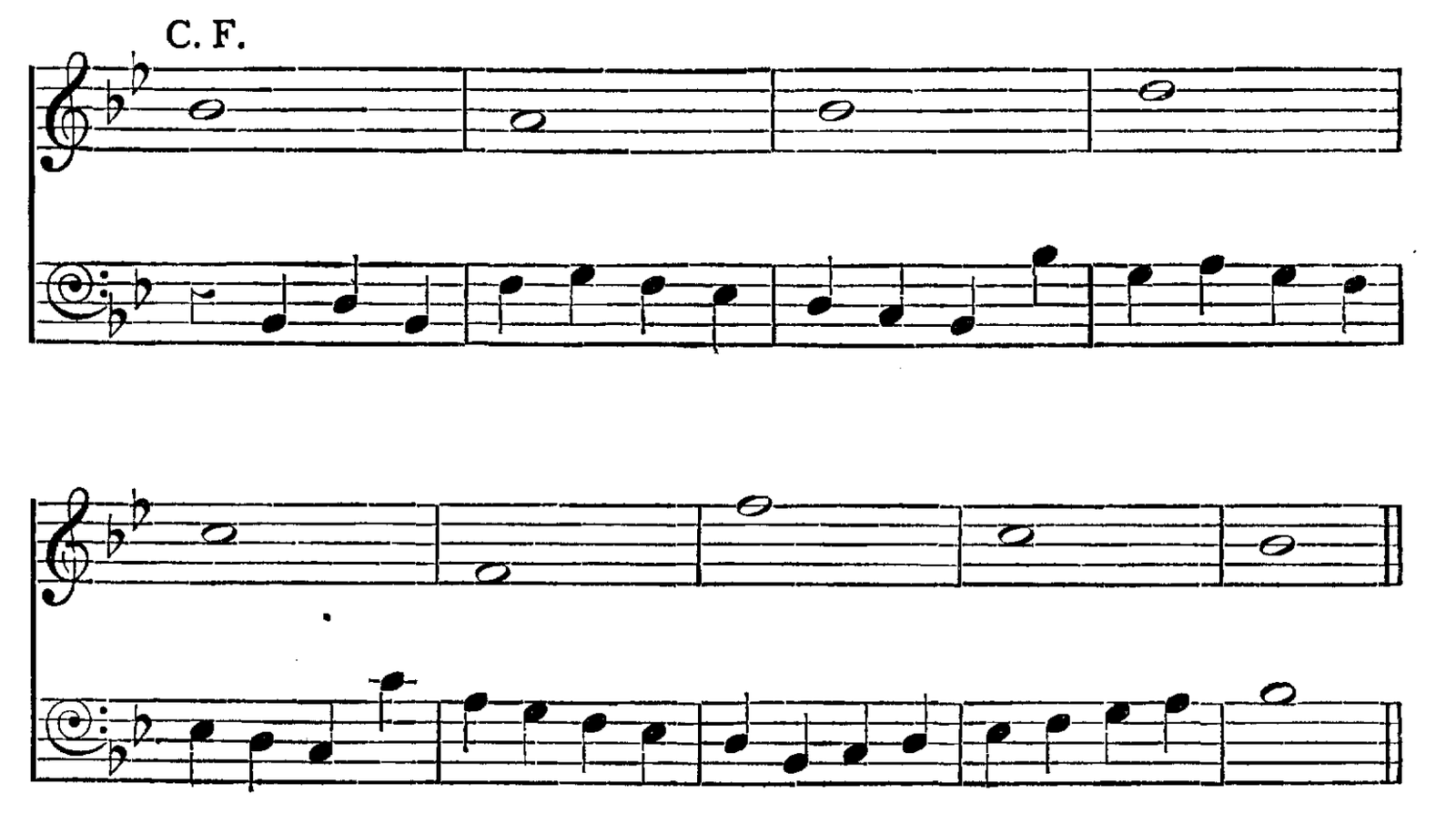
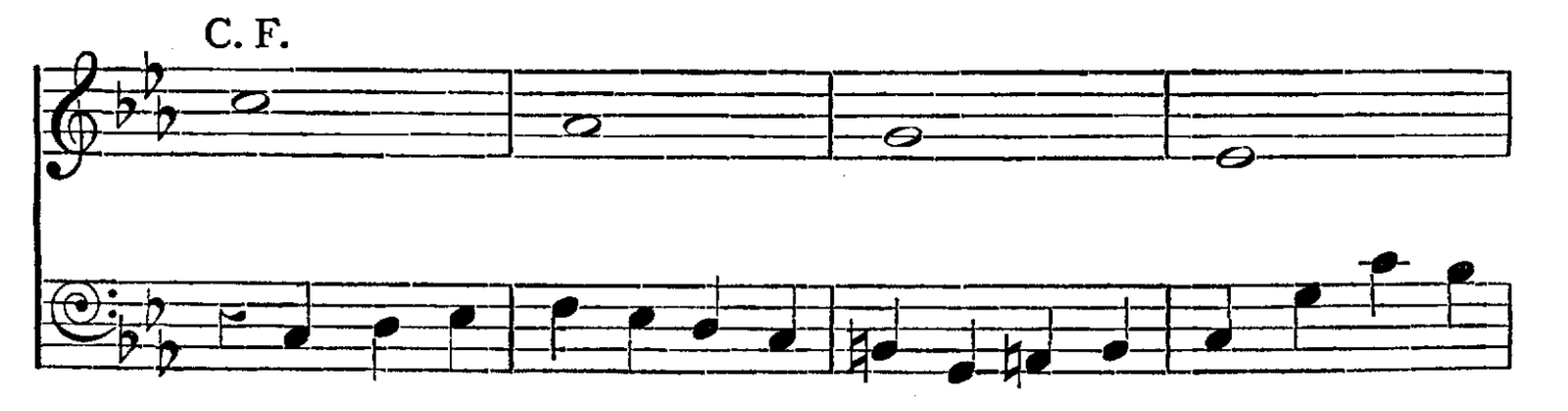
Read and hear this section in the playable edition →1. Except in the first and last bars, four notes are written in the Counterpoint to one in the C. F.

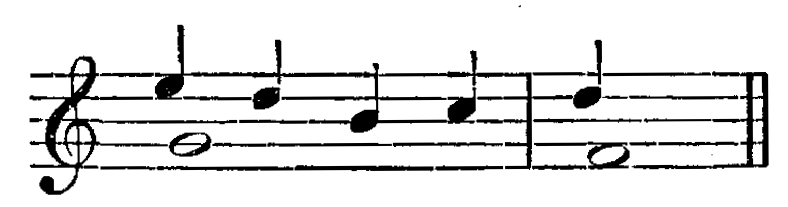
The first note of the Counterpoint must form a perfect concord with the C. F. (a), and the last two notes at the Cadence must be Leading Note, Tonic (b). Regard the semibreve as representing 2/2.
(2) The first note of each bar must be concordant with the C. F.; the remaining notes will be concords and discords, e.g. essential notes and diatonic passing or auxiliary notes. But the following limitations must be observed:
(a) A whole bar of leaps is weak.
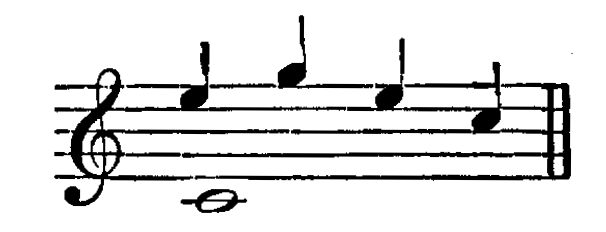
(b) An auxiliary discord should not be used on the third crotchet.
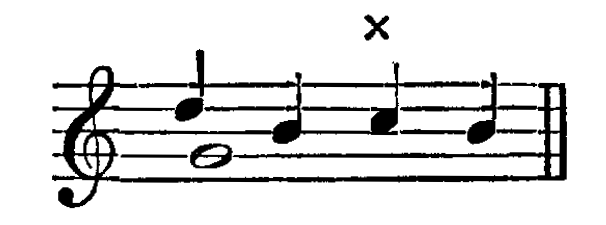
(c) All discords must be approached and quitted by step.
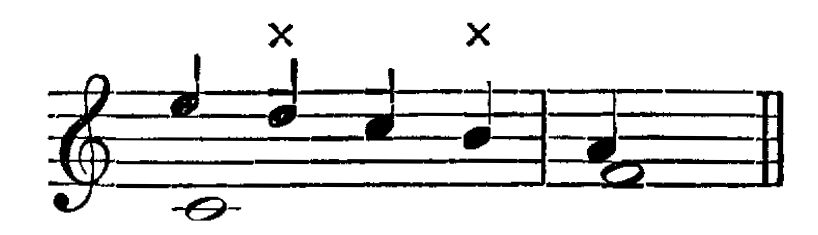
Two exceptions to this will be considered in the next paragraph.
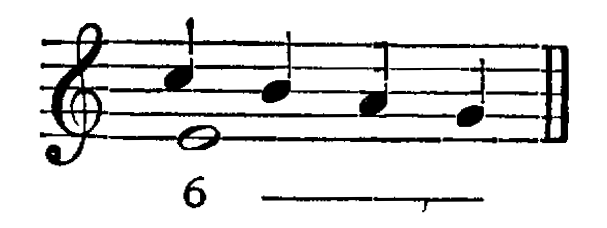
(d) If two passing notes be used in succession, the second must proceed in the same direction till it reaches a harmony note.
3. There are two exceptional uses of discords:
(a) When the first and fourth crotchets are concords, the first being a third higher than the fourth, the second crotchet after coming down one step to a discord may leap a third down and then proceed a step up to the fourth crotchet. And it is a further convention that the fourth crotchet proceed one step upwards to the first crotchet of the next bar.

This idiom is also used beginning with the sixth:
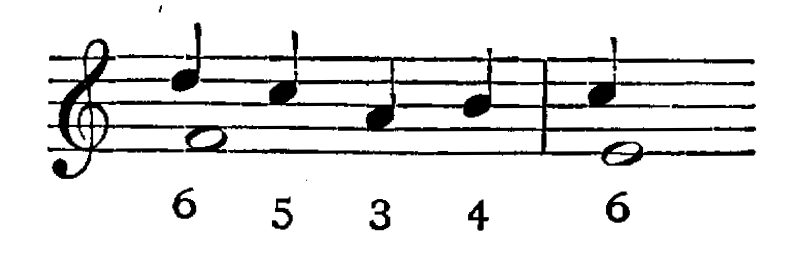
Note in this case only the fourth crotchet is a discord. The idiom is termed the Nota Cambiata.
(b) When the first and fourth crotchets are the same note, the second crotchet may move one step up, and then leap a third down, and proceed a step up to the fourth crotchet. And this last will again ascend by step.

This should be very sparingly used, and is best reserved for the penultimate bar. It has been described as the refuge of the destitute.
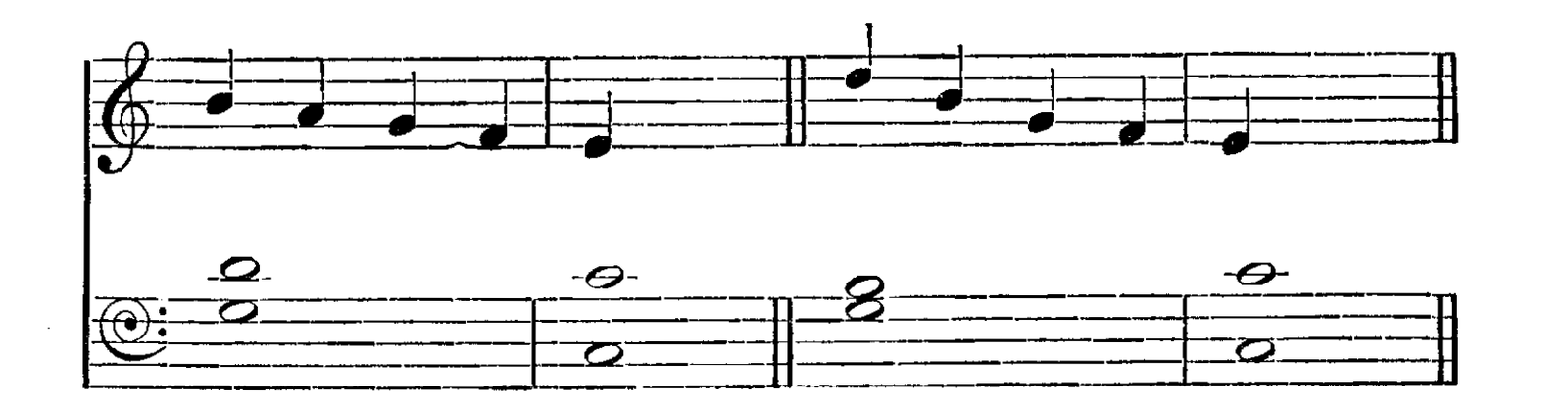
4. After a scale passage, do not leap in the same direction to an accented note:
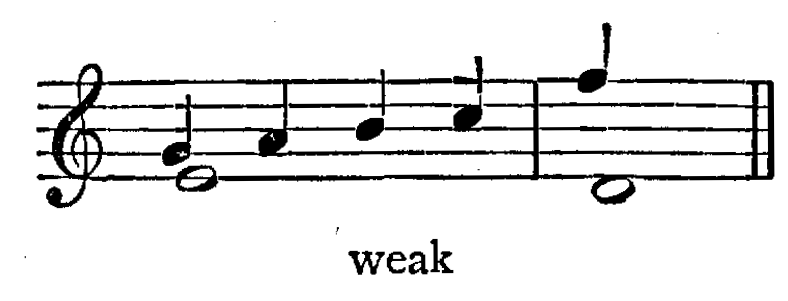
5. Changes of harmony
As a rule, one chord in a bar will be used.
But the harmony may often be changed in the bar with good effect—once.
(a) The best place for a change is the third crotchet.
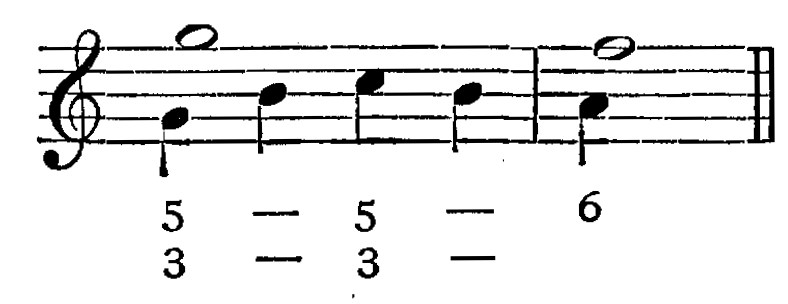
(b) Sometimes a change on the fourth crotchet is good, especially in the following idiom:
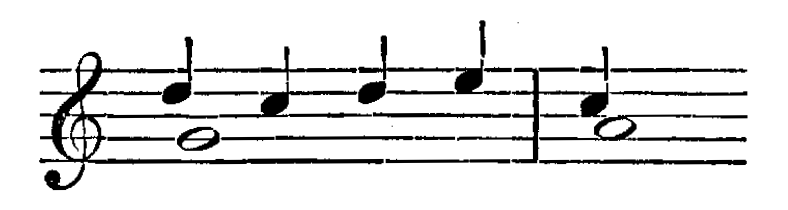
The fact is the ear accepts the E as an auxiliary note.
(c) A change on the second crotchet is only good when the mental effect is that the first crotchet is an appoggiatura.
6. Consecutives
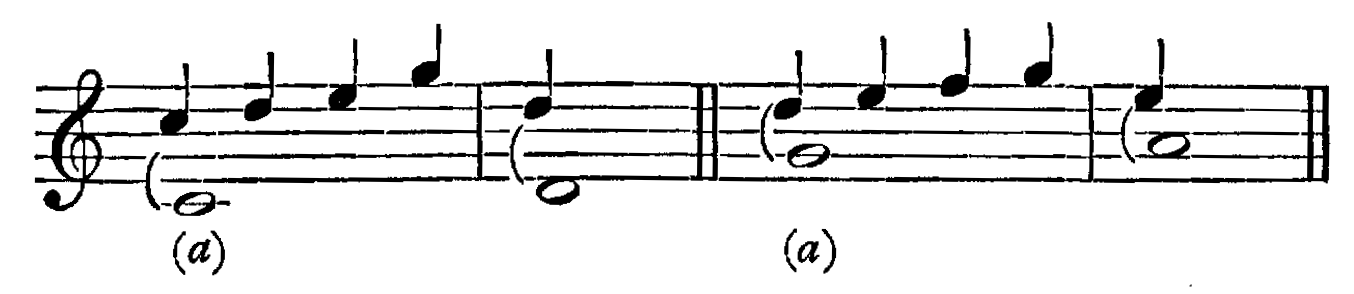
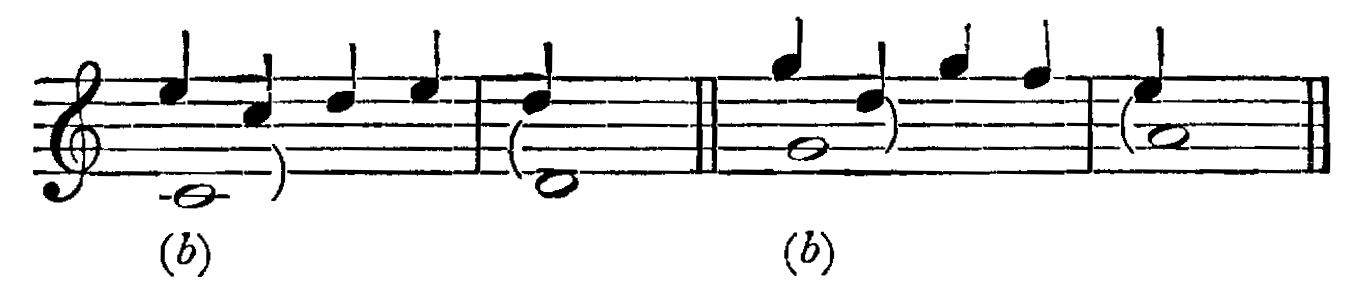
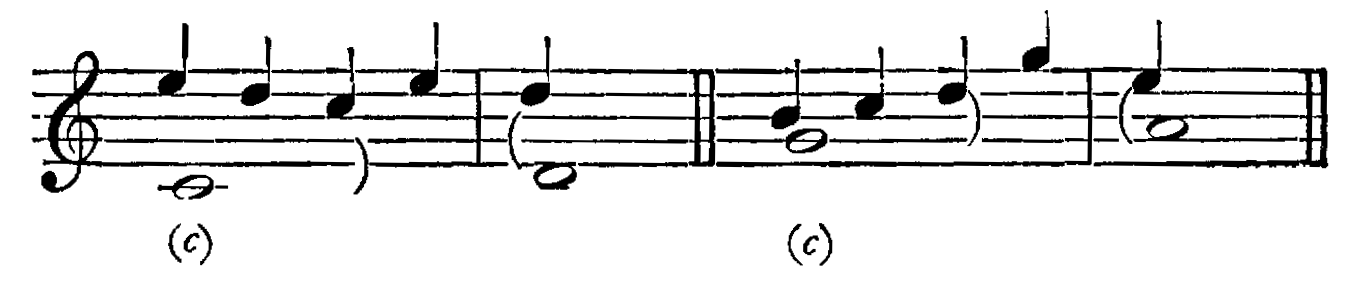
Consecutive octaves and fifths (both notes of the latter being essential) should not occur between the C. F. and the counterpoint as from:
(a) The first crotchet of one bar and the first of the next;
(b) The second crotchet of one bar and the first of the next;
(c) The third crotchet of one bar and the first of the next;
(d) The fourth crotchet of one bar and the first of the next.
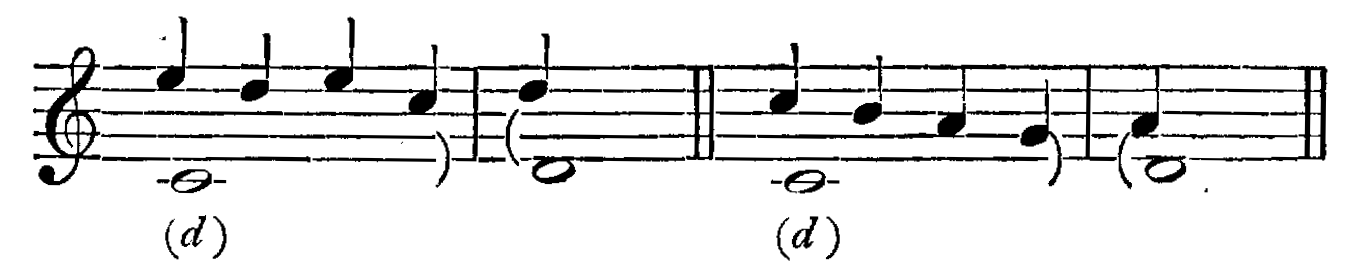
In the following cases the first fifth is unessential, and the writing is correct:
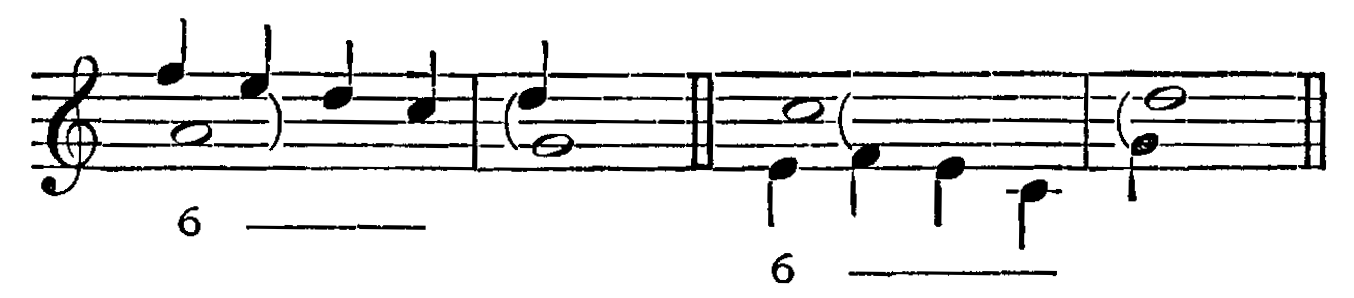
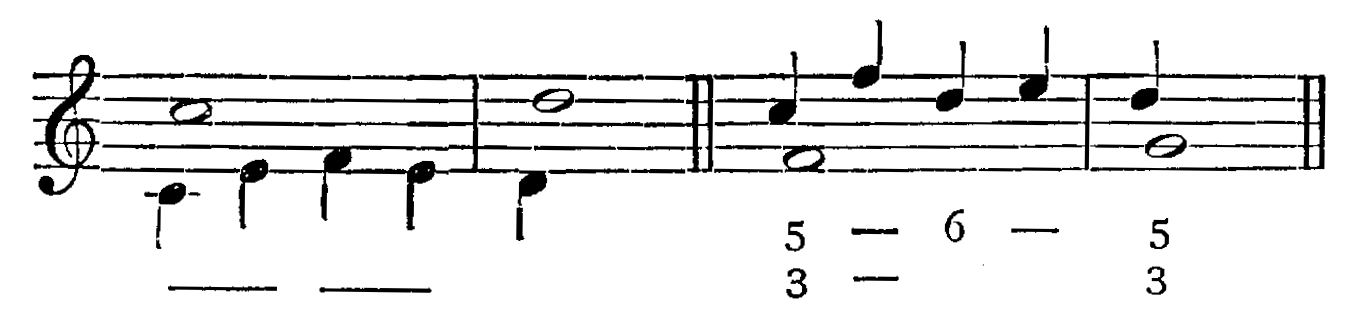
Consecutive octaves or fifths can, of course, only occur between consecutive different chords. Thus the following are correct:
7. Only proceed into the unison by step if crossing through it.

8. Beware of a mechanical use of unessential notes.
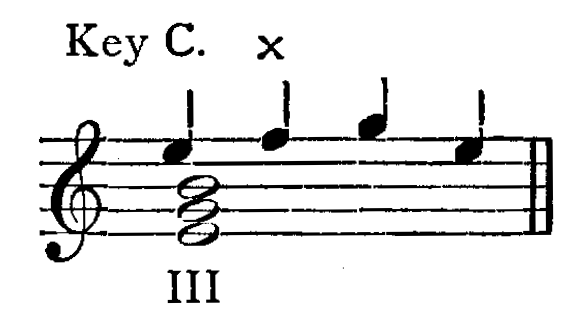
(a) Avoid the second from the root of the mediant chord as a passing or auxiliary note:
(b) Passing notes between the fifth of the chord and the root ascending require care:
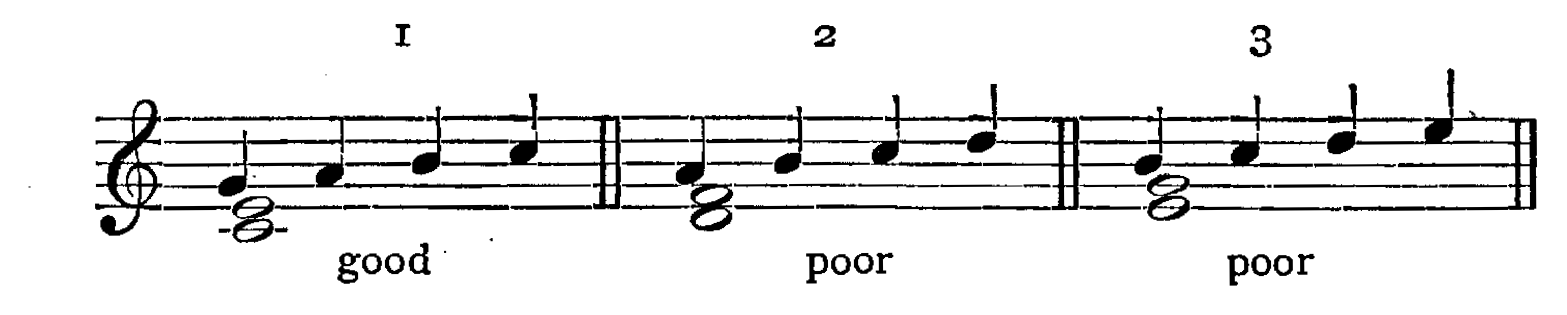
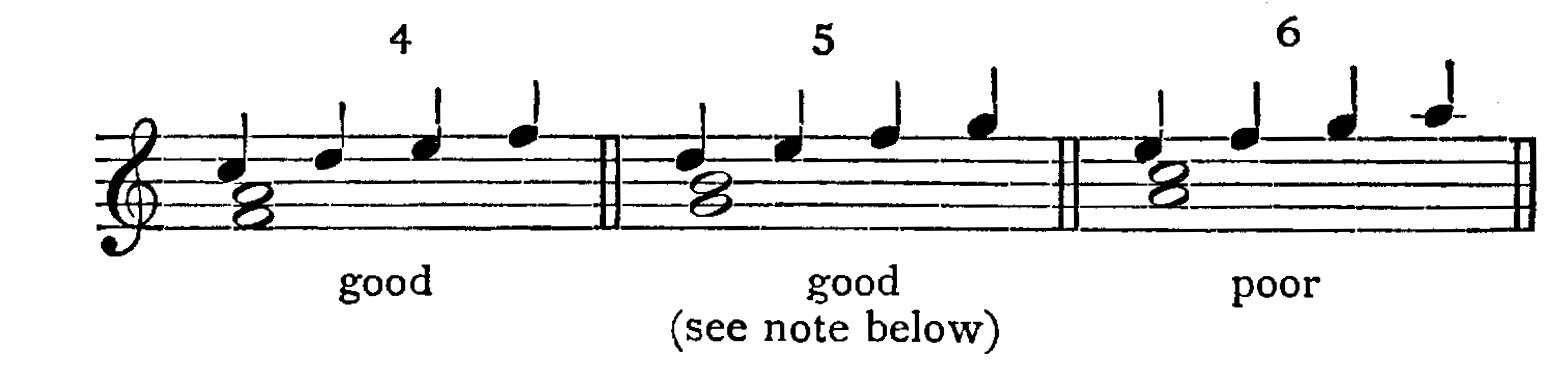
(2), (3), and (6) sound poor because the ear is influenced by the chord as a temporary tonic. In such cases if the passing notes are not common to the scale of the tonic, and that of the chord regarded as a temporary tonic, remove them. In (5) F is really the dominant seventh, and can only stand if coming down to E on the first beat of the next bar:
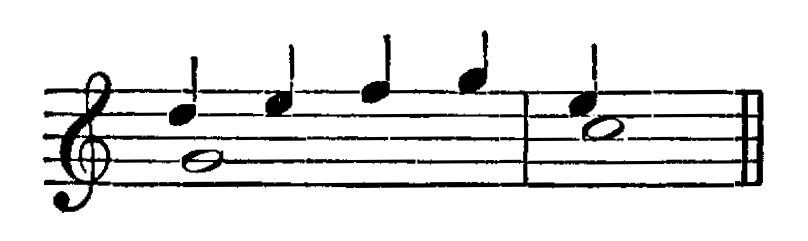
The above ruling only applies when two passing notes are used in succession. The following are good:

The reason is that the combination on the fourth crotchet is really a 6/3.
9. Do not leap a sixth in crotchets.
10. The unison may be used in moderation except on the first crotchet of any bar but the last.
11. The following is quite common:
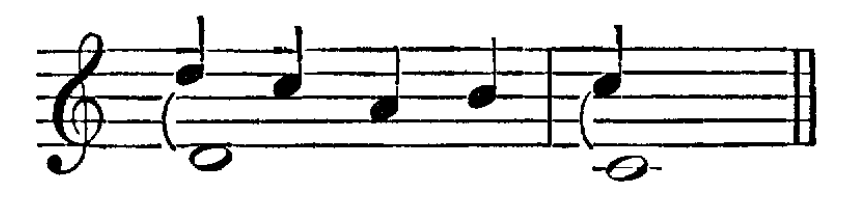
An intermediate concord was held to save consecutives. But the beginner should adhere to the recommendations of paragraph (6).
12. A Third Species in the lower part in the first inversion of the diminished triad is awkward to manipulate. Note:
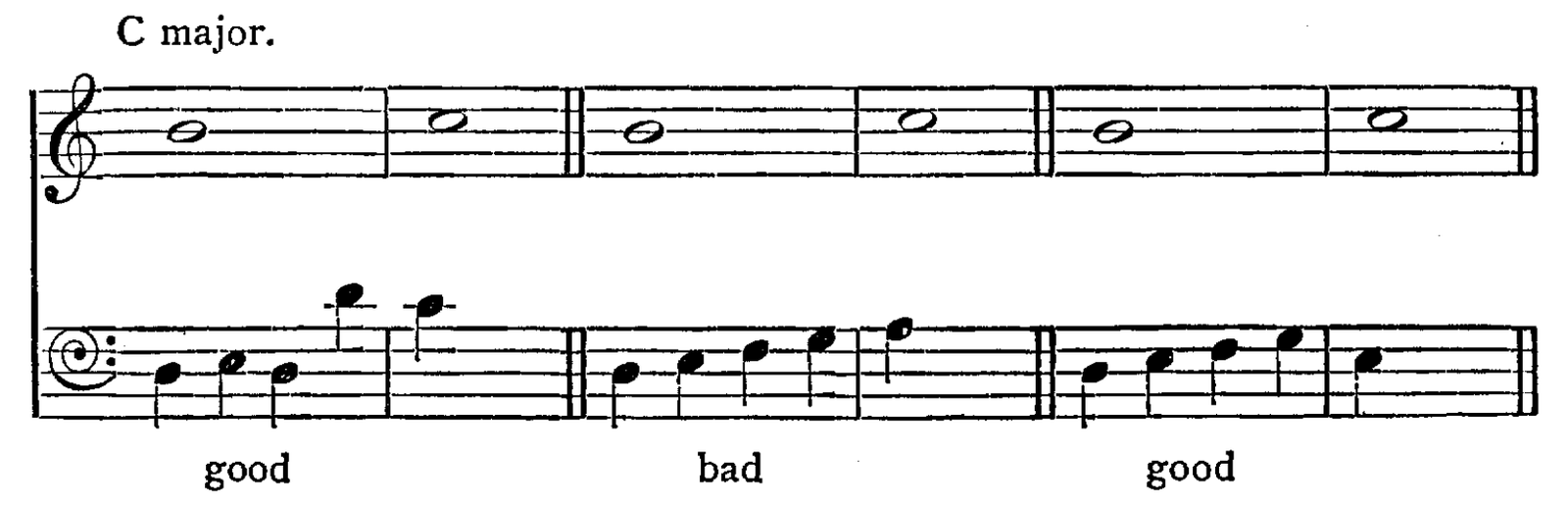
In the above any B in the Third Species would be a bad doubled leading note; any F is in effect the dominant seventh, and requires resolution.
In the key of A minor the following is useful:
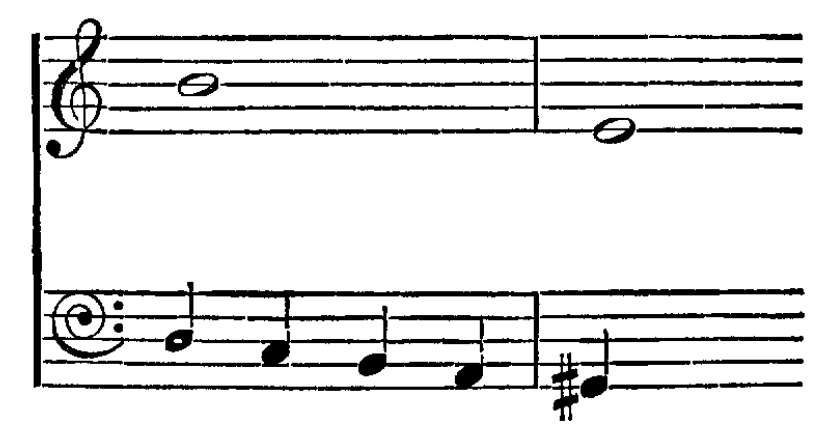
13. Note the fourth from the bass is a discord:
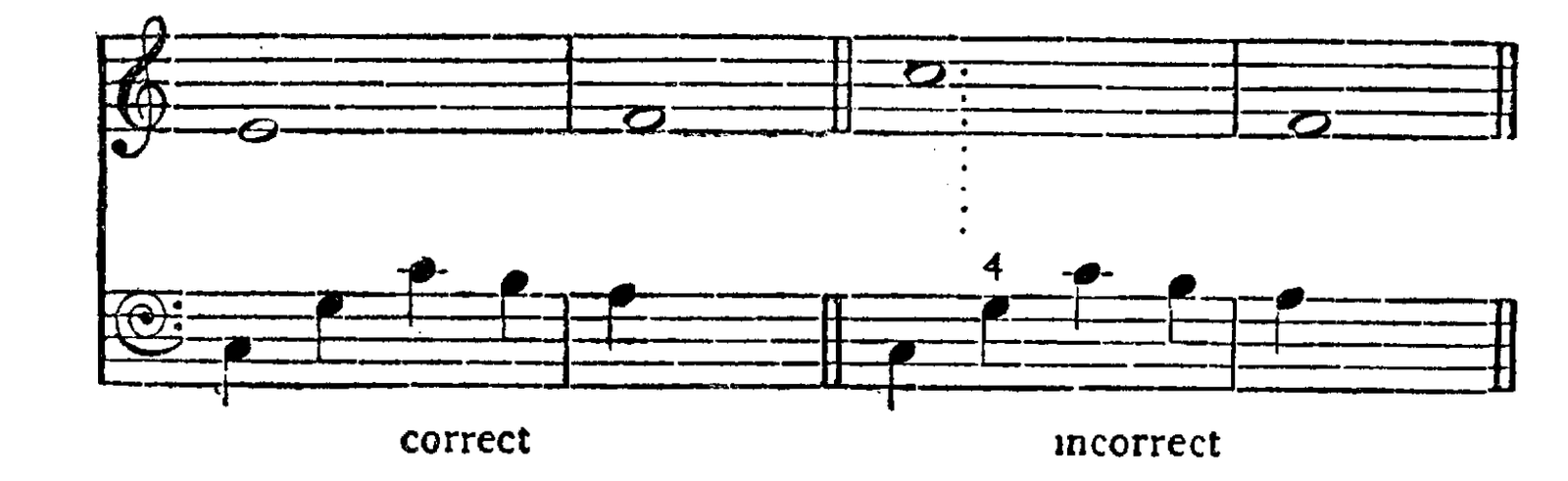
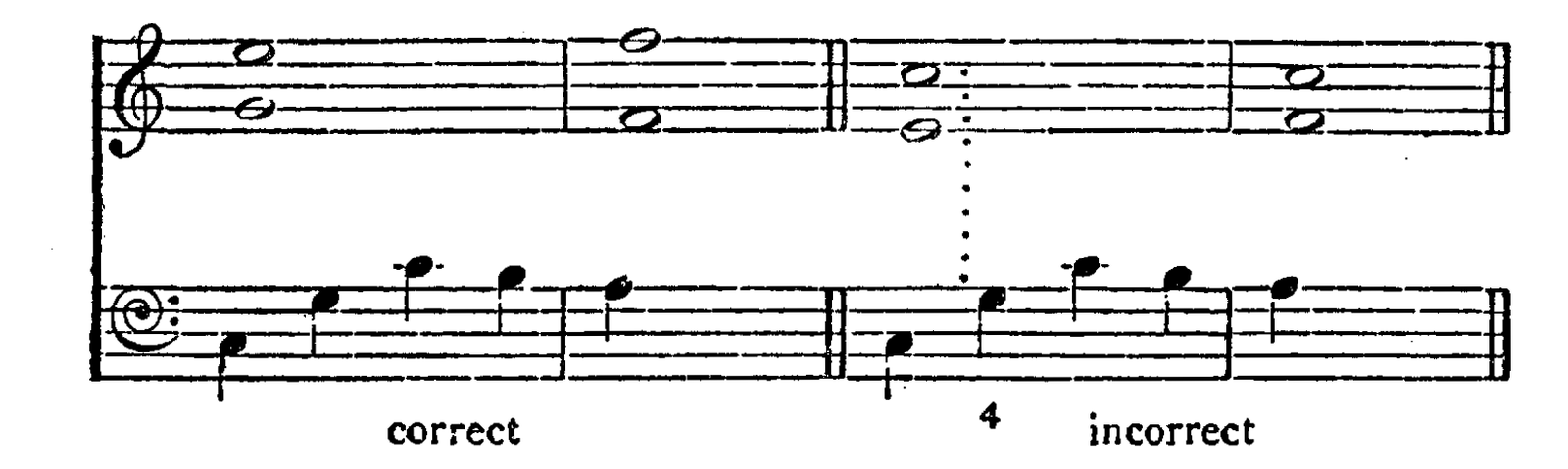
The procedure may be thus stated:
(a) An implied arpeggio 6/4 may be used off the beat (fourth from the bass not being present). For harmonic reasons this implied fifth from the root should only leap to the third or root of the same chord. It is good quitted by step.
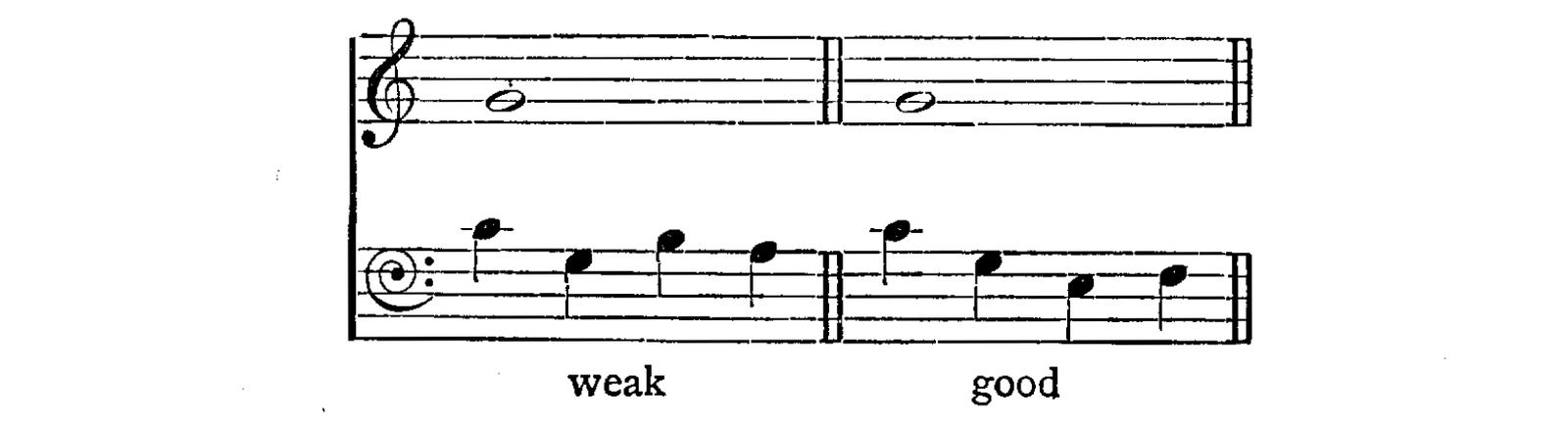
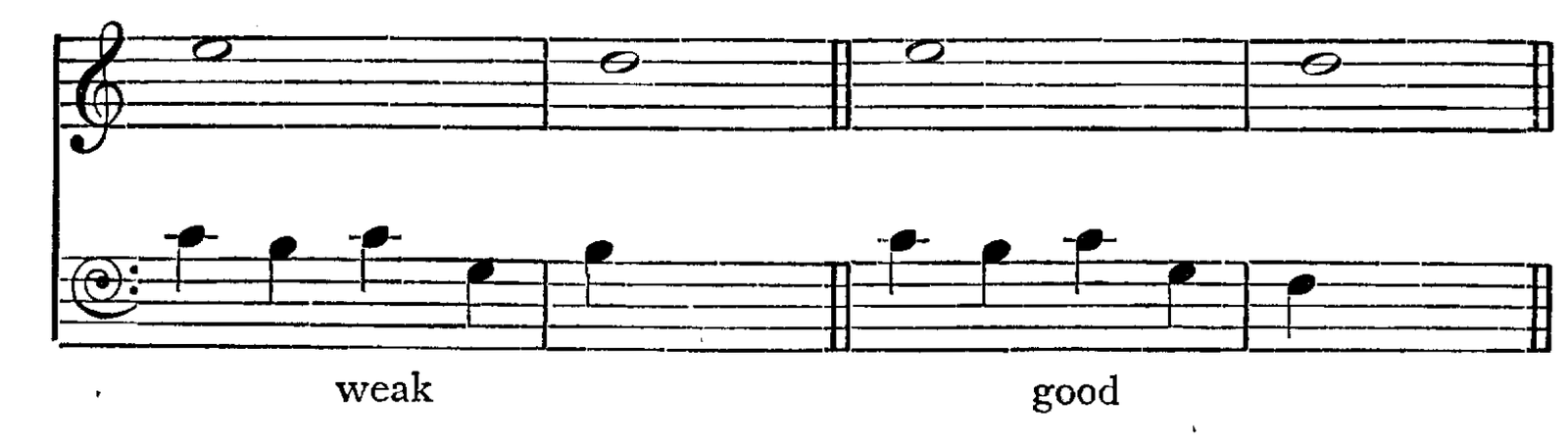
All these are technically correct according to sixteenth-century principles, but they are not all harmonically sound.
(b) An actual 6/4 may be used off the beat if the bass note be approached and quitted by step.
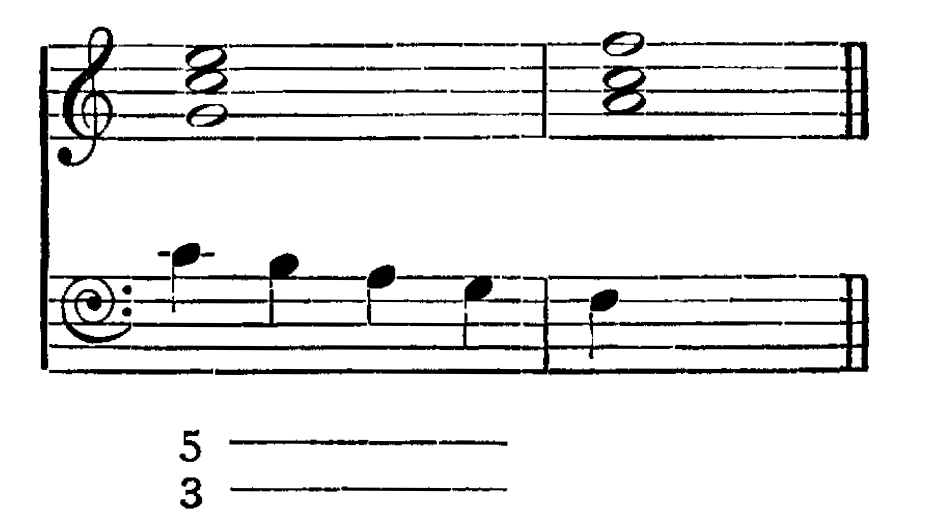
14. Third Species work should be regarded as being in 2/2 time.
15. The Cadence
(a) In two parts:



1 Only as the completion of the ascending scale as here, and only available in two parts.
(b) In three parts:
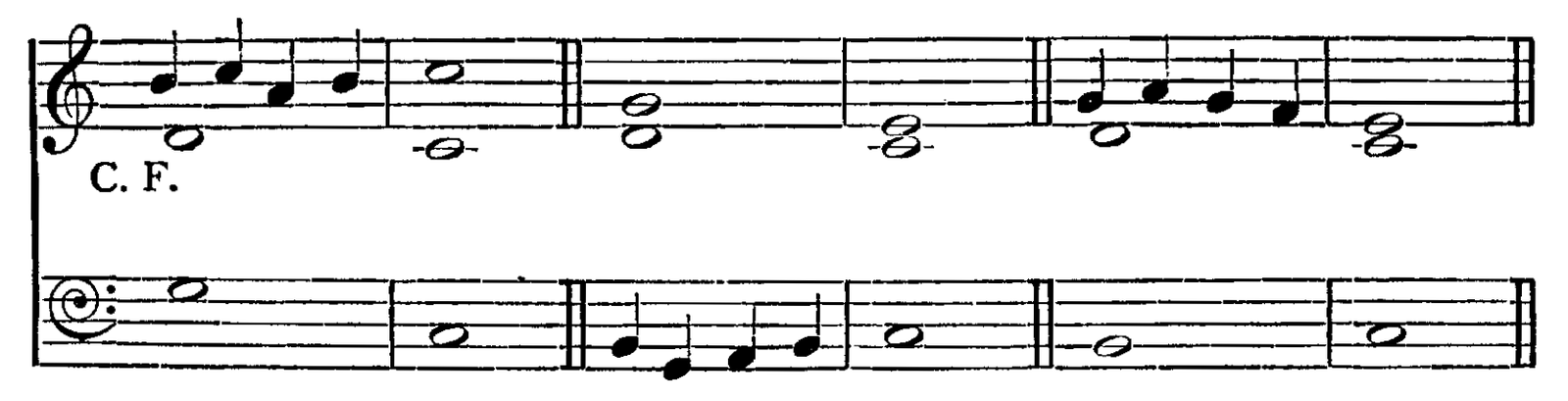
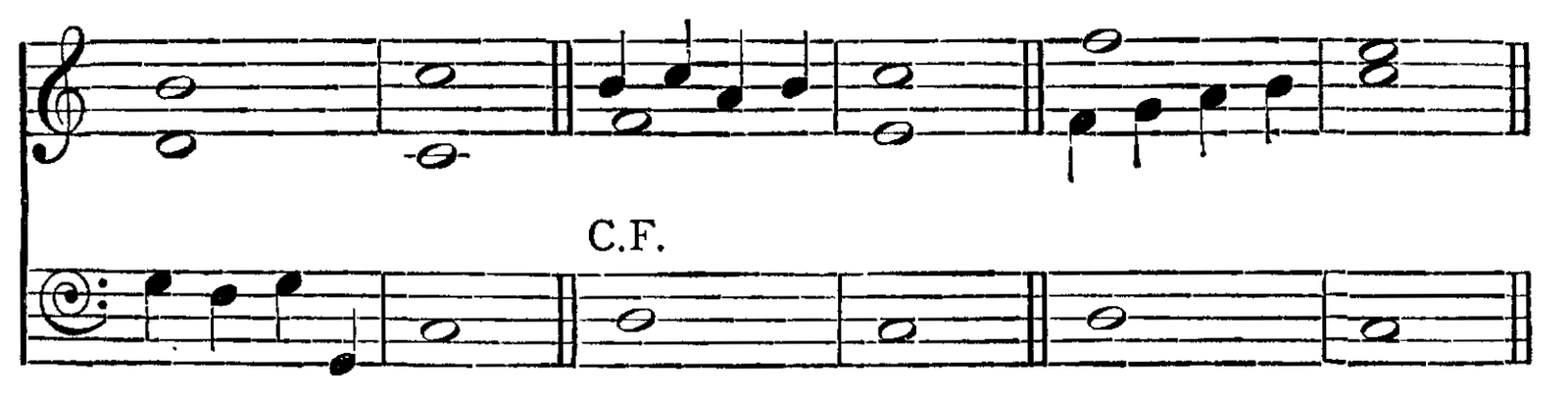
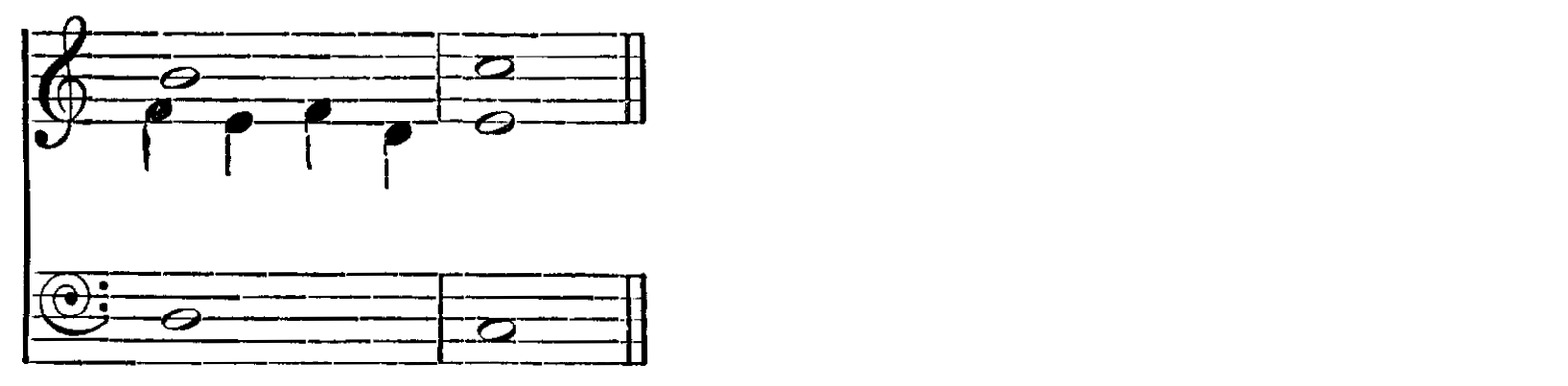
Either the Third or added First Species must have the last two notes Leading Note, Tonic.
16. Three Parts
The extra part in First Species serves to complete the harmony as far as possible. As the First Species in bar 1 will form a perfect concord with the C. F., the Third Species need not start with a perfect concord. This applies to all three-part work. The first note added to the C. F. must form a perfect concord with it, not the first note of each part added.
17. In writing Third Species:
(a) Let the part undulate.
(b) Avoid a preponderance of disjunct or conjunct movement.
(c) Avoid a succession of bars with auxiliary notes on the second crotchet of the bar.
(d) Aim at variety of range, variety of curve, and some good scale passages. A sequence with a pattern of two bars is useful.
(e) Do not double the Leading Note on the accents; do not double it at all in two parts.
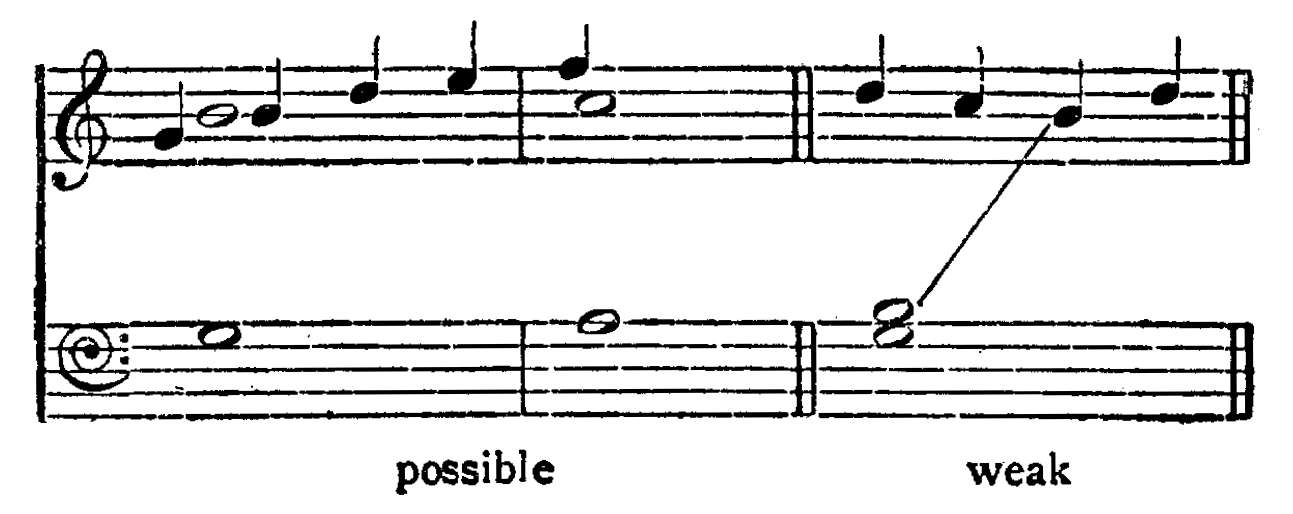
(f) The Leading Note may fall in a scale passage or in arpeggio.
Examples
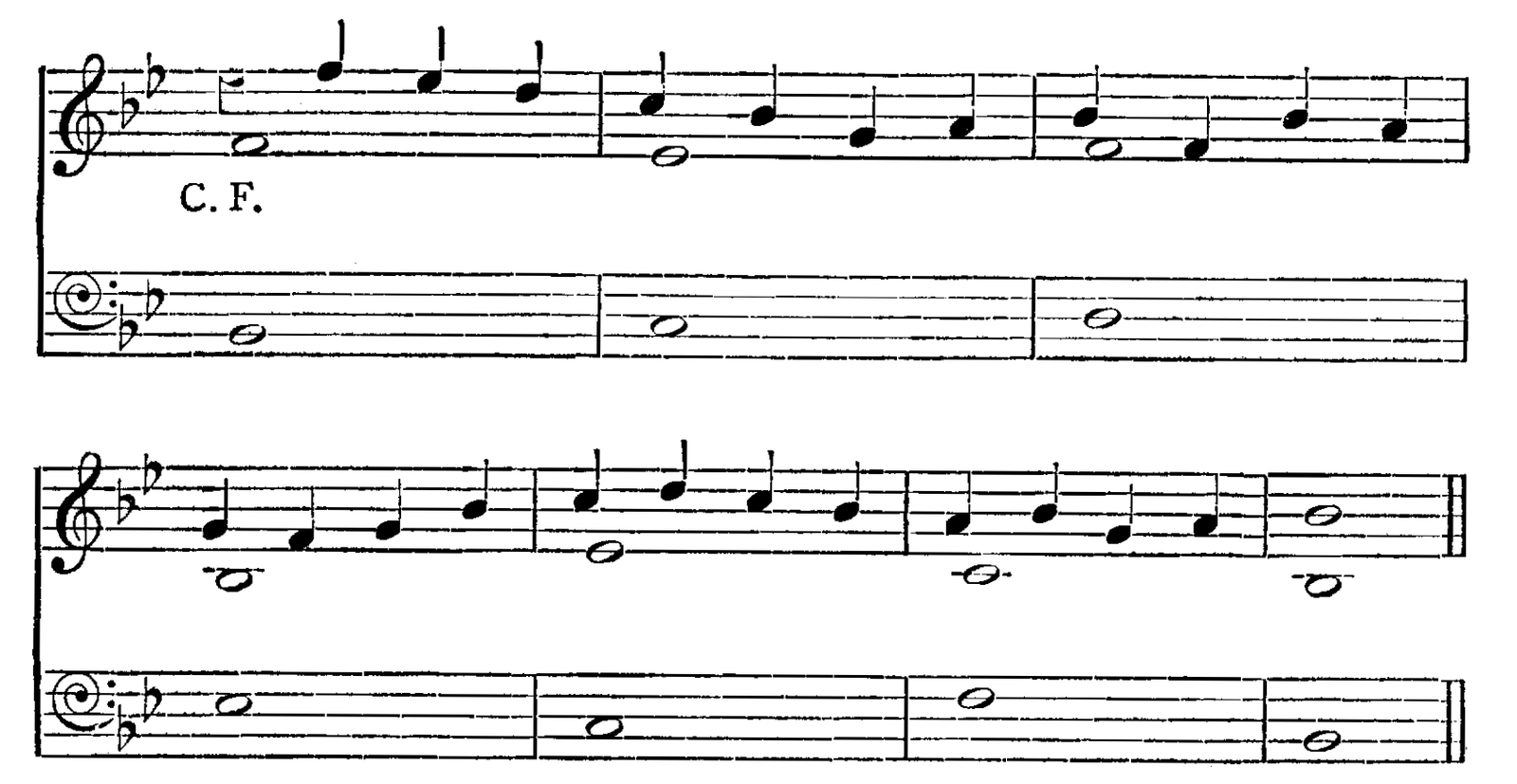
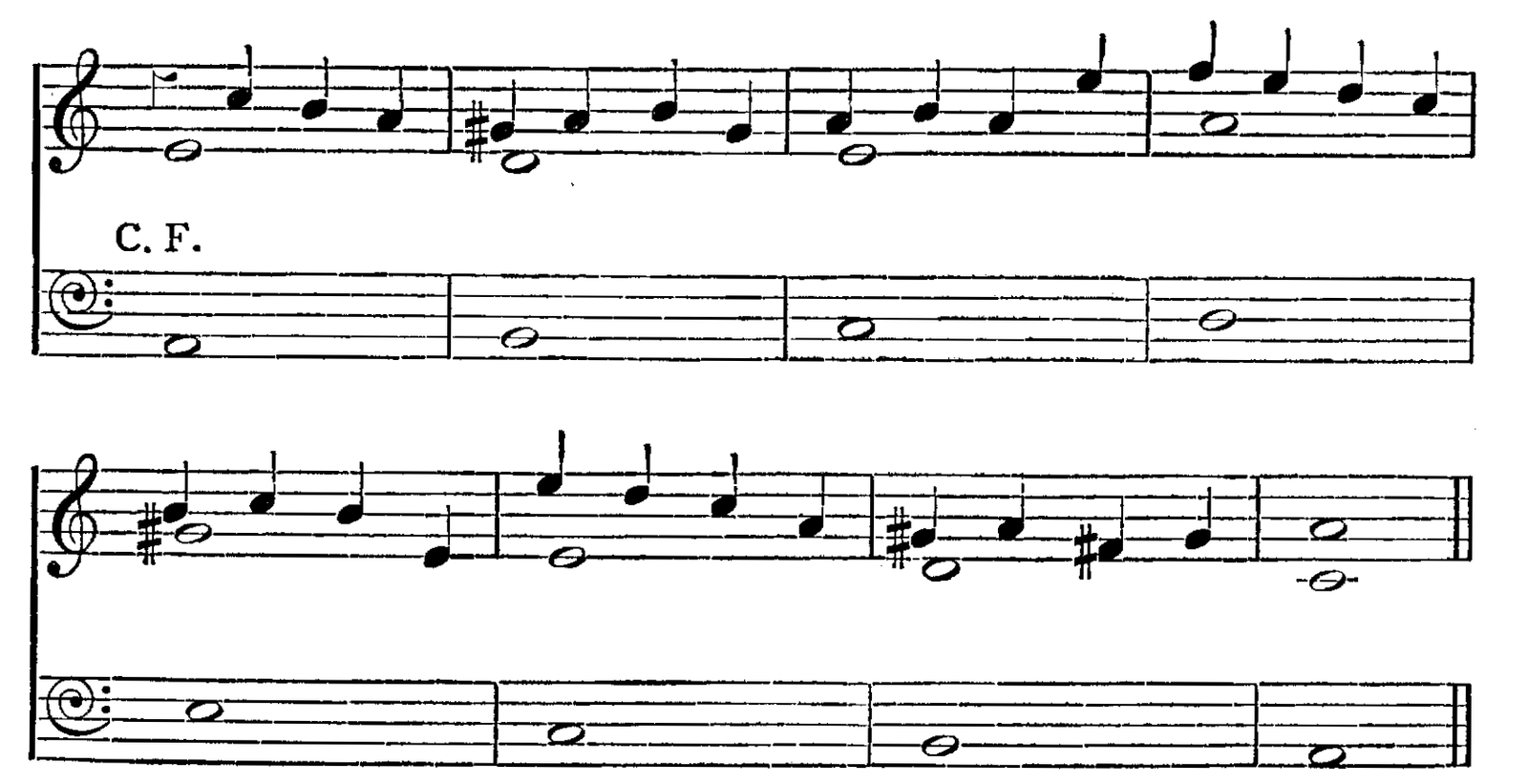
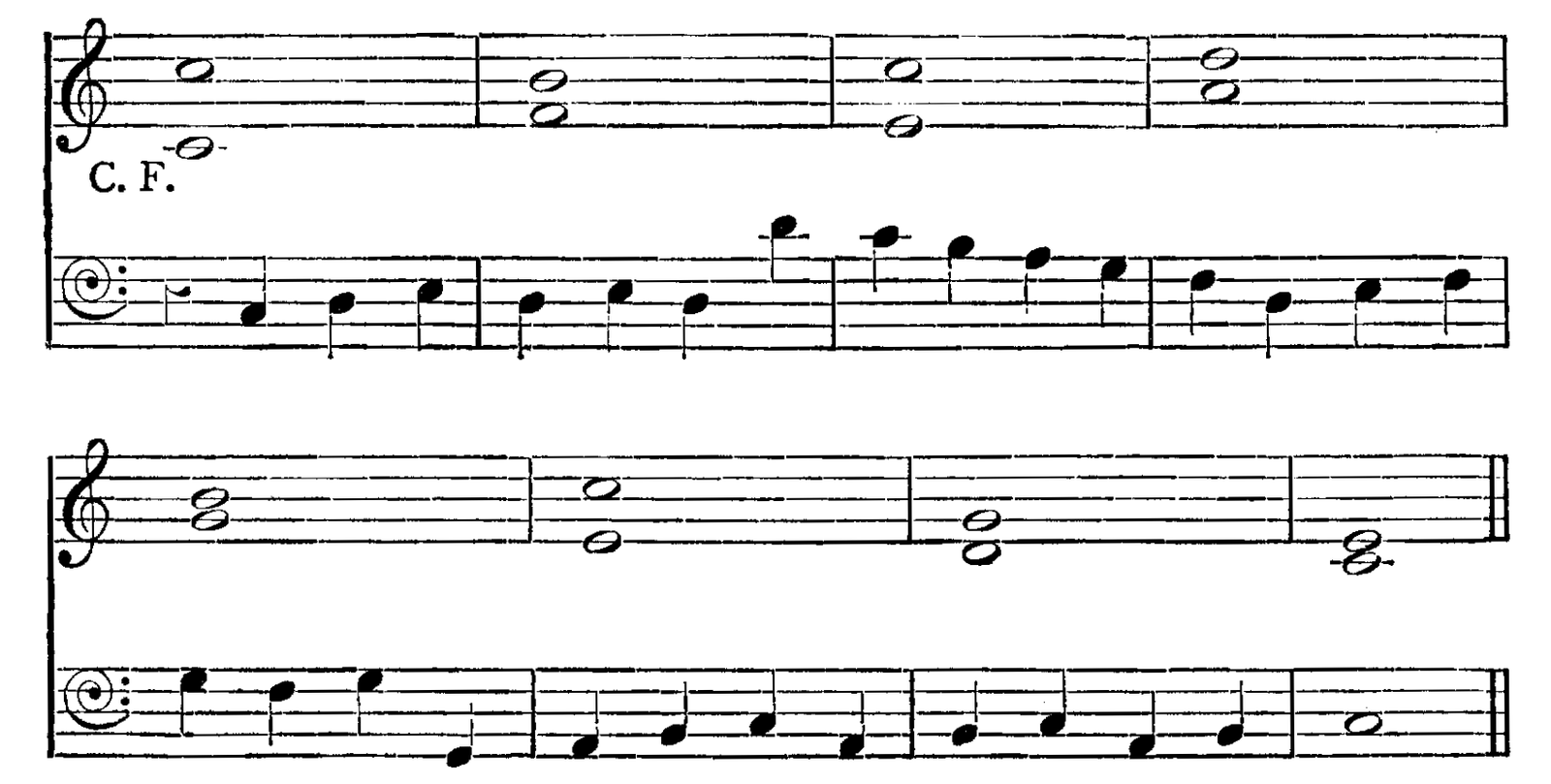
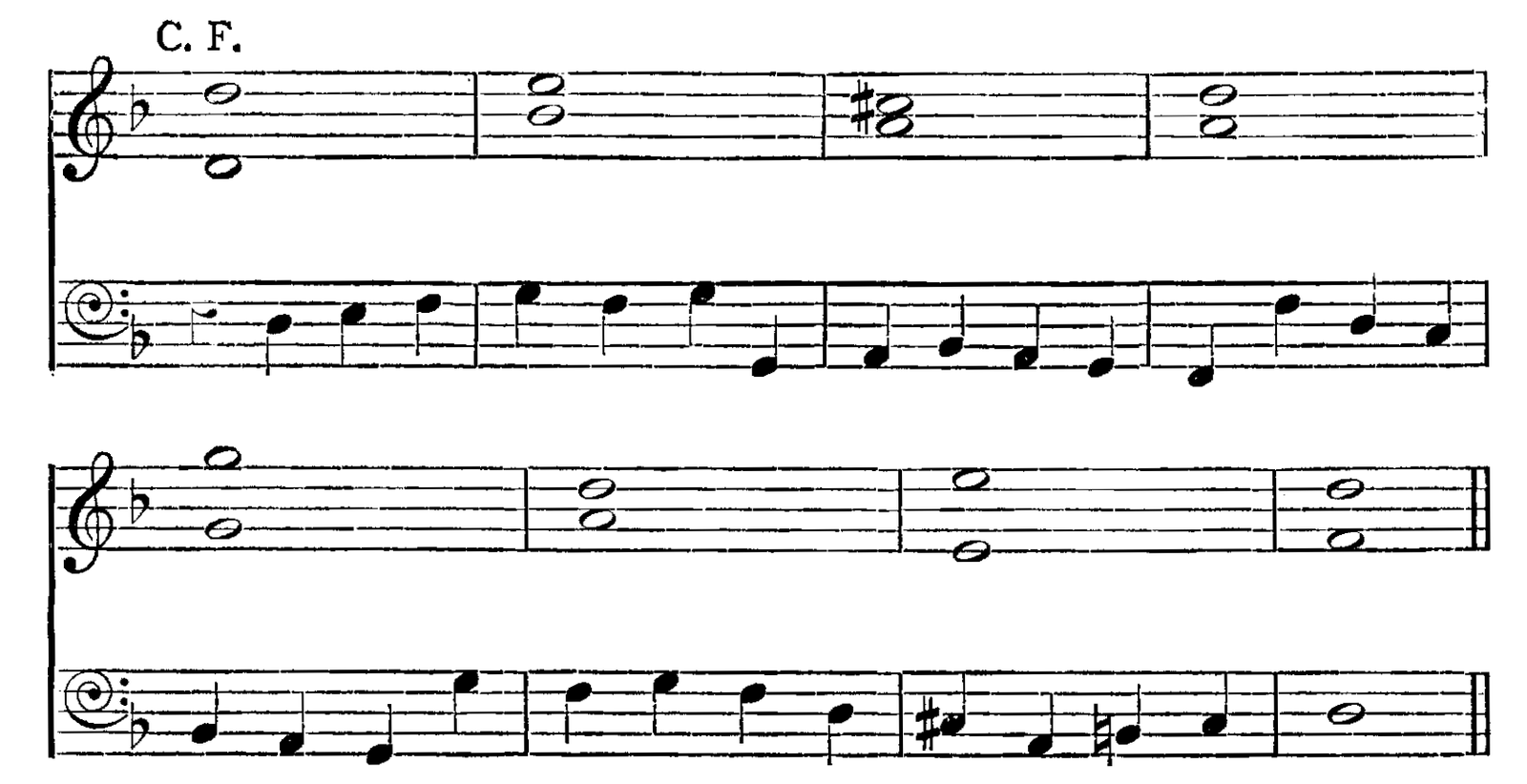
Exercises
(1) Fill in the score with crotchets.
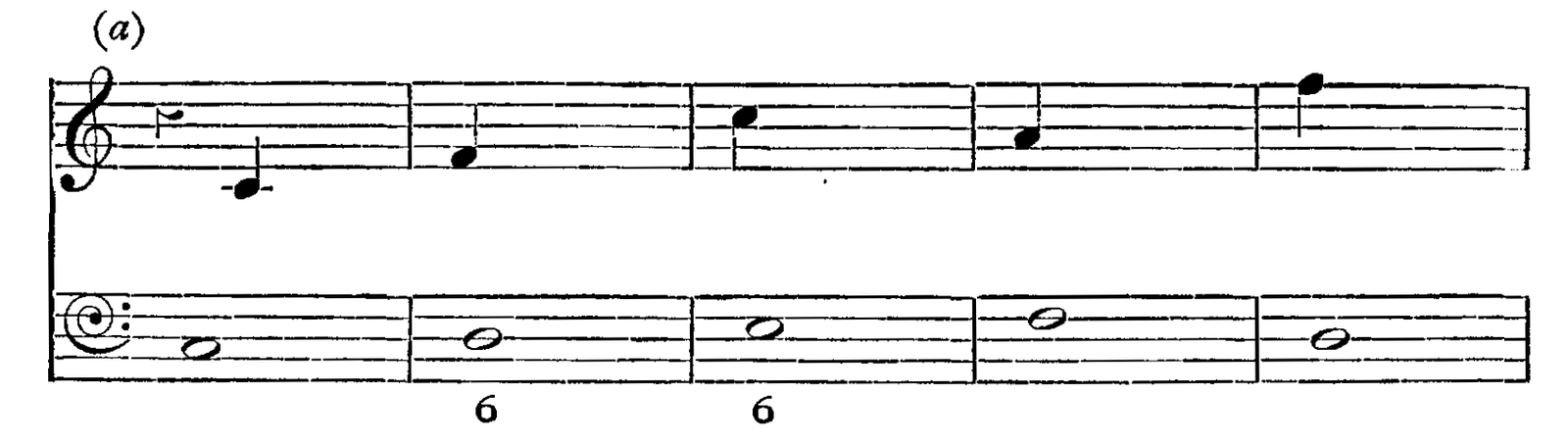
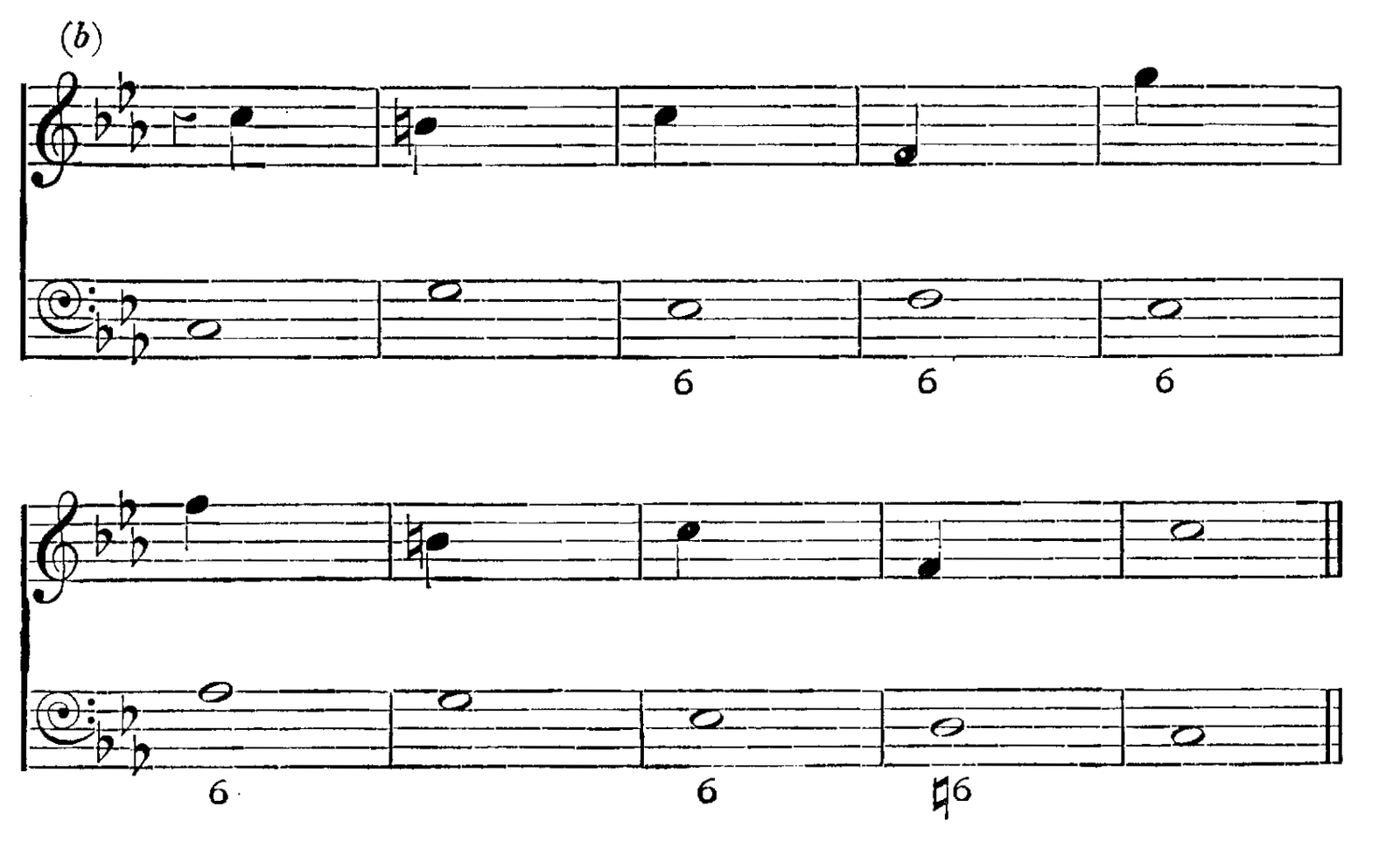
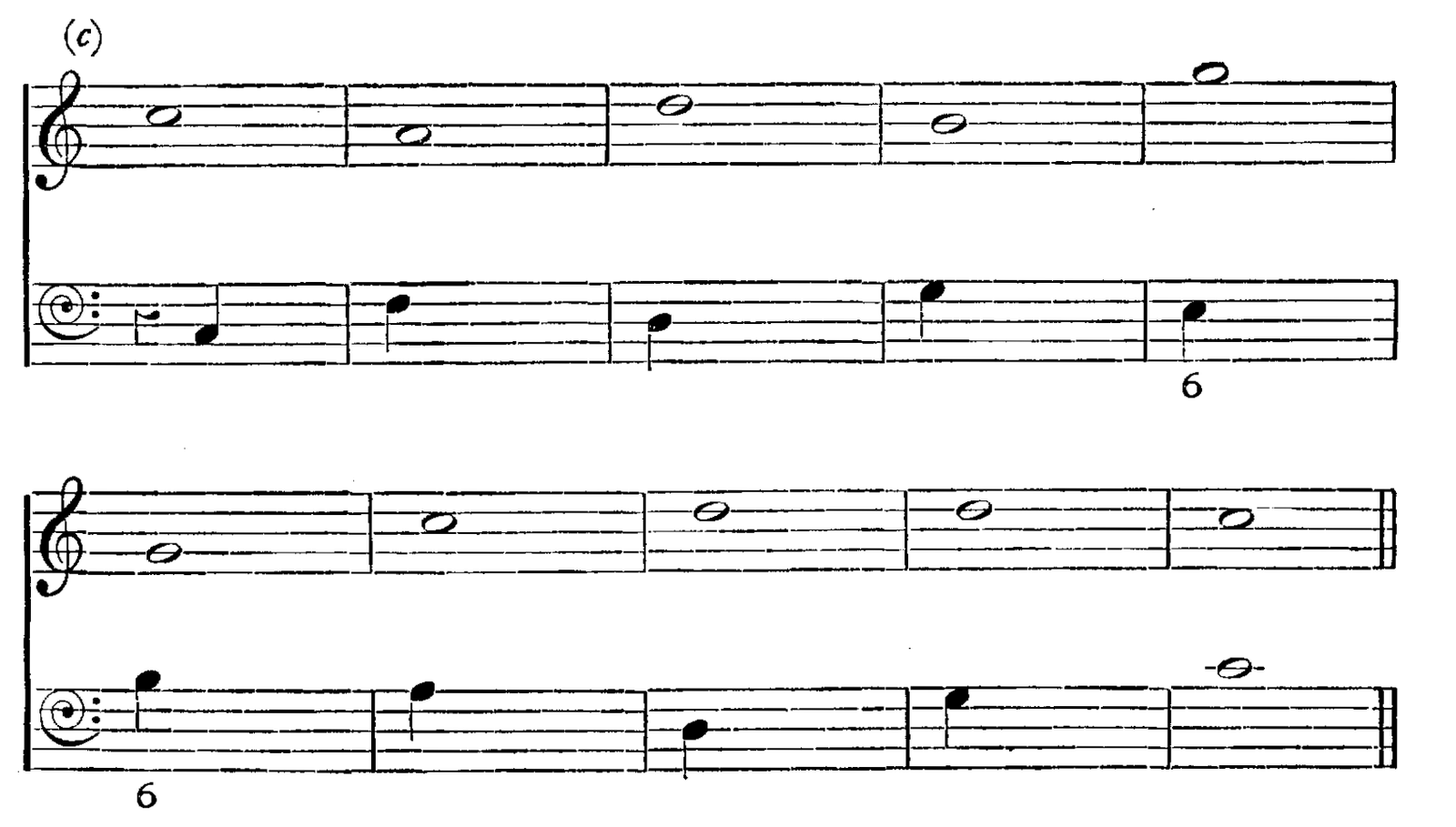
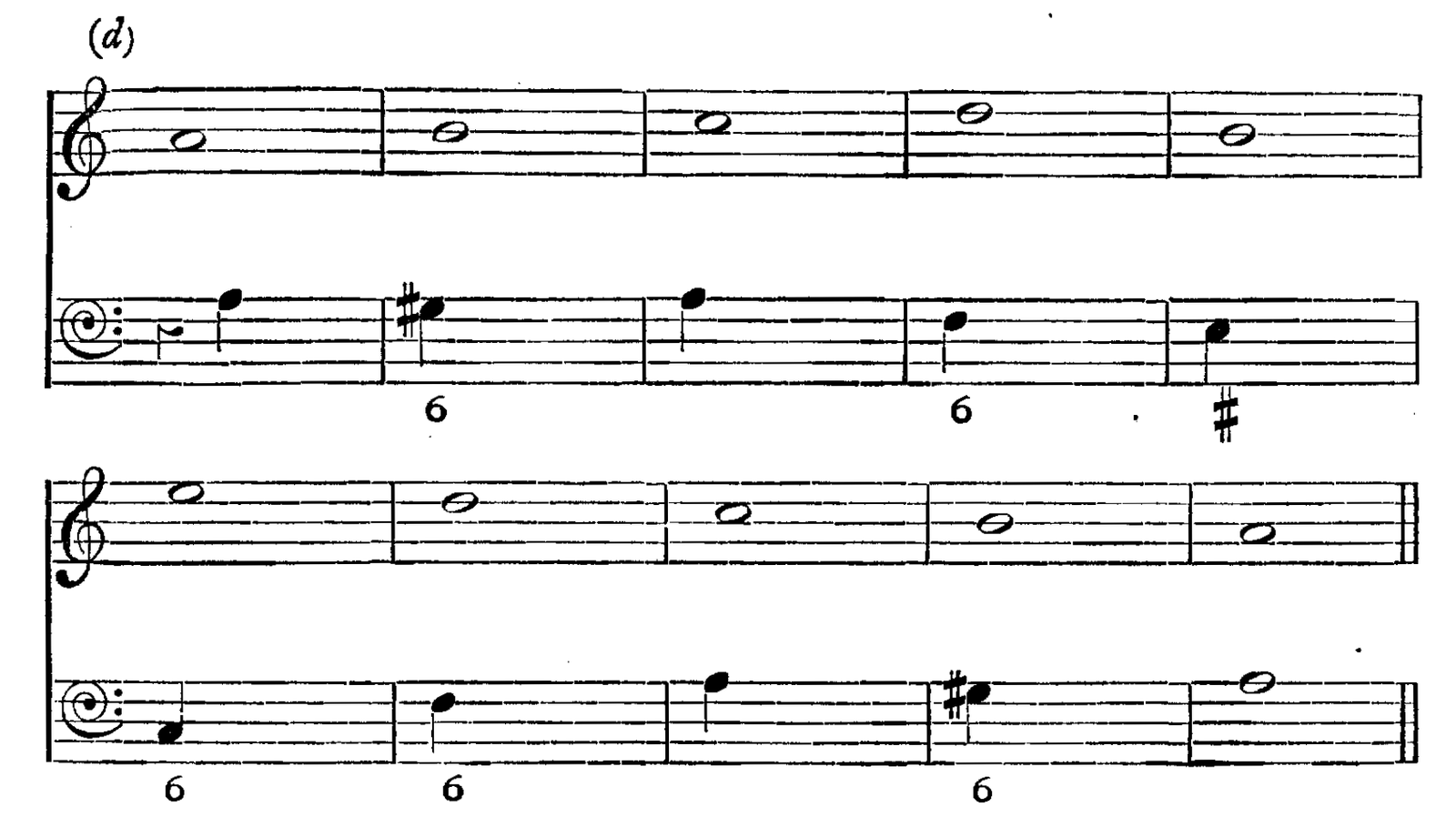
(2) Figure the following basses, and add Soprano in Third Species:
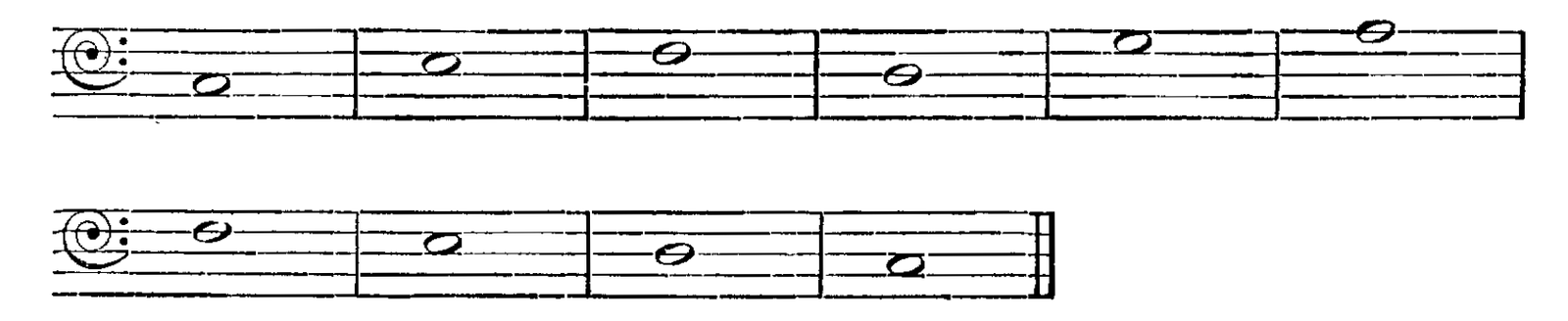
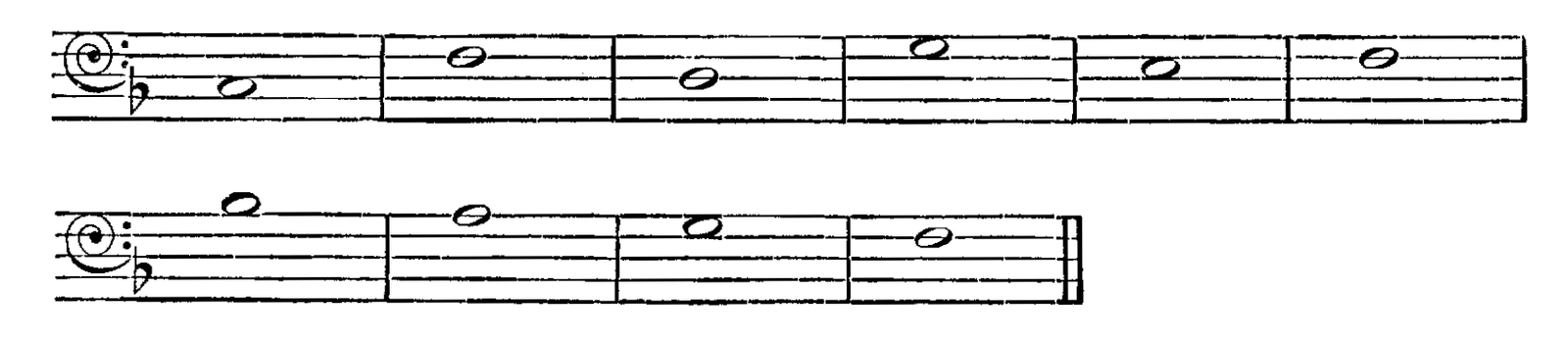
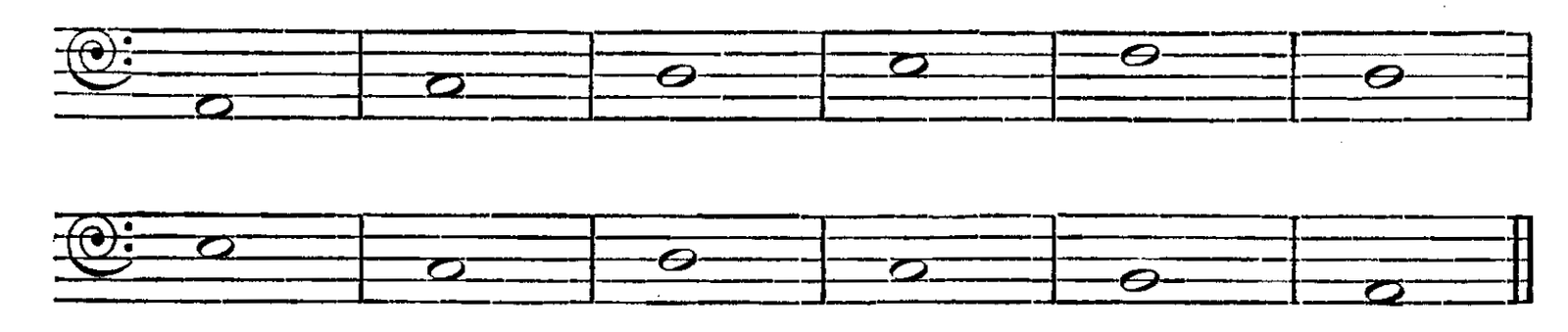
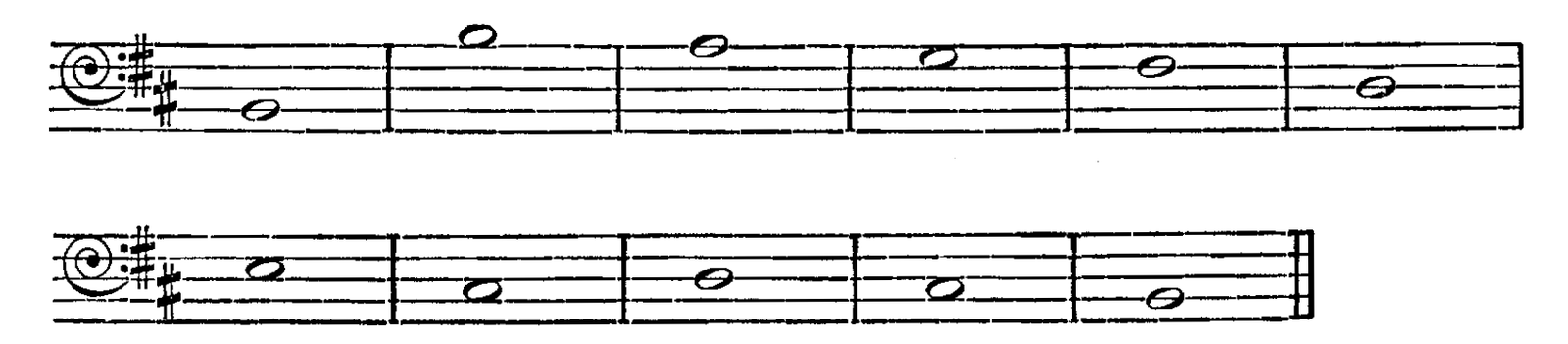
(3) To the above add two upper parts in two ways: (a) Soprano First Species, Alto Third; (b) Soprano Third Species, Alto First.
(4) To the following add Bass in Third Species:
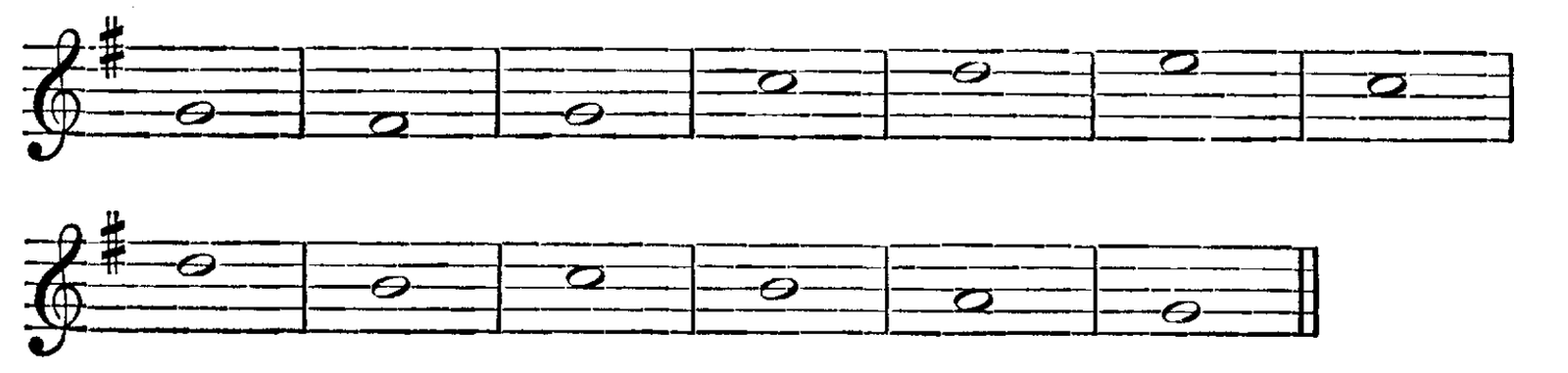
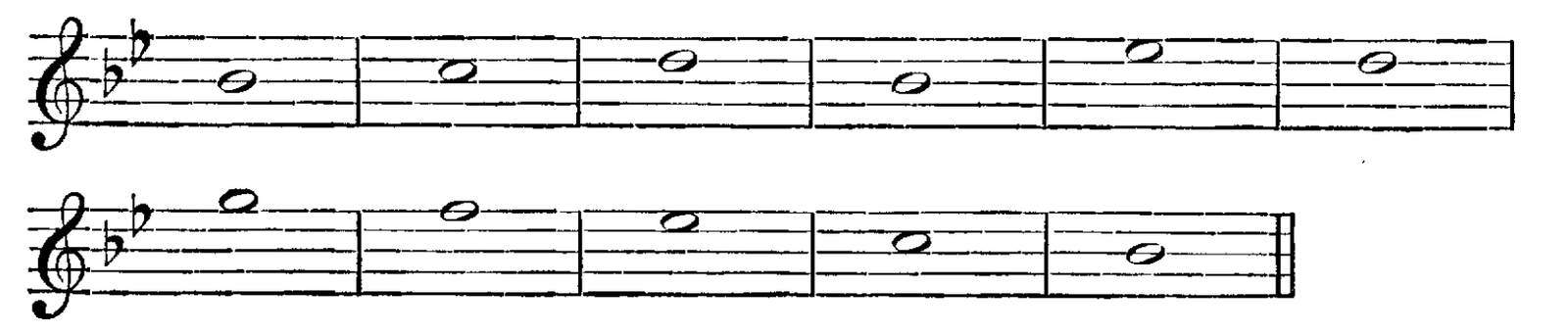
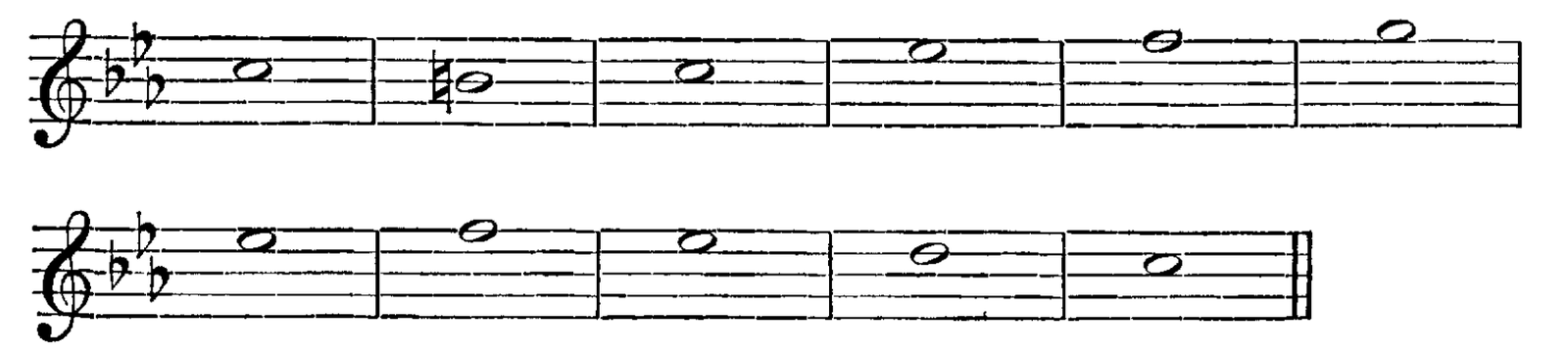
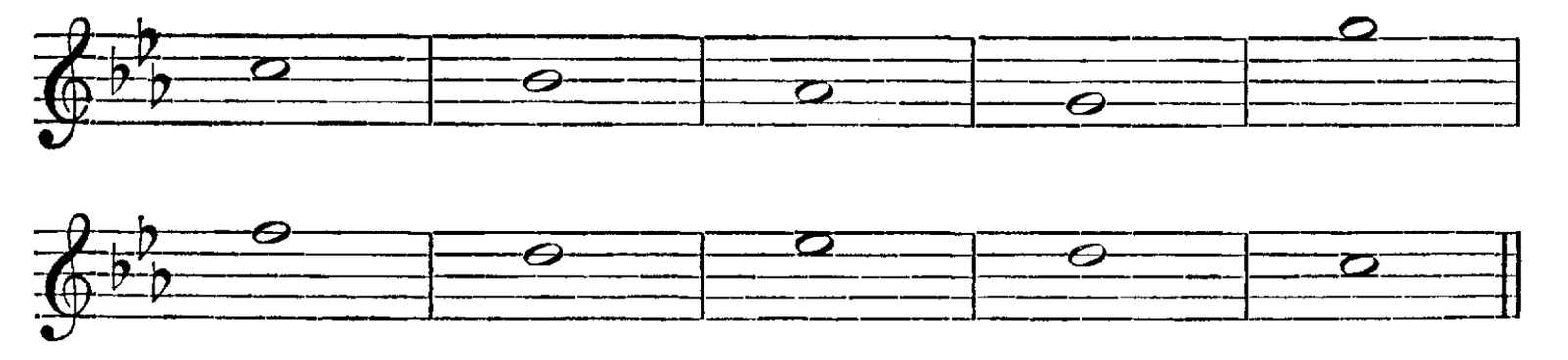
(5) To the above add Alto and Bass in two ways: (a) Alto Third Species, Bass First; (b) Alto First Species, Bass Third.