 Playable Books
Johann Joseph Fux · section 4 of 32
Third species counterpoint: four notes against one
Read and hear this section in the playable edition →Try it yourself: write four semiminims against each note, and Aloysius marks your line →

Third lesson
On the third species of counterpoint
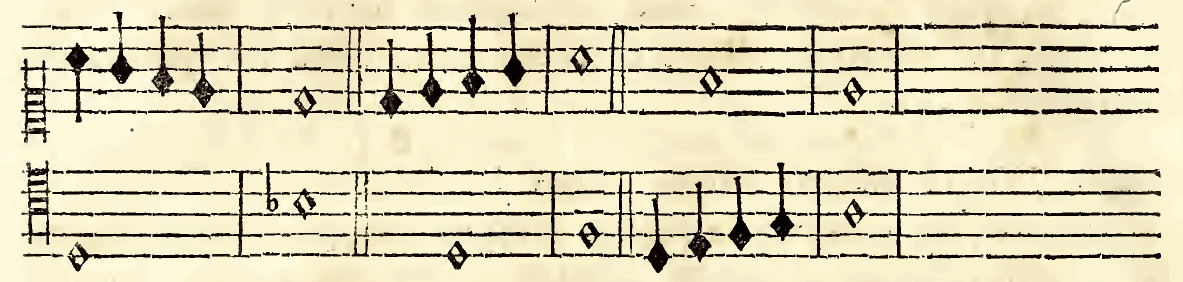
The third species of counterpoint is a composition of four semiminims against one semibreve. First, note that if five semiminims follow one another continuously by step, either ascending or descending, the first must be consonant, and the second may be dissonant. The third must again be consonant. The fourth may be dissonant if the fifth is consonant, as in the examples:
There is, however, a first exception in the case where the second and fourth notes happen to be consonances; in that case the third note may be a dissonance, as in the following examples:
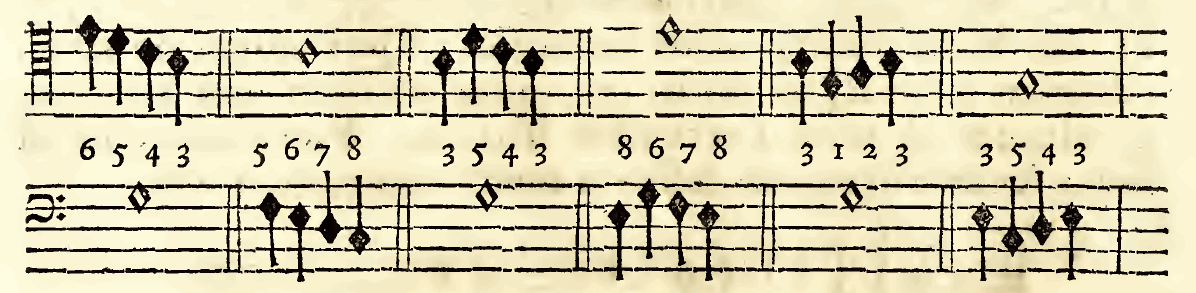
Here the third note of all the examples is consonant, and this is called diminution of the leap of a third. To make the truth of this matter clear, these examples must be reduced to their substance in the following way:
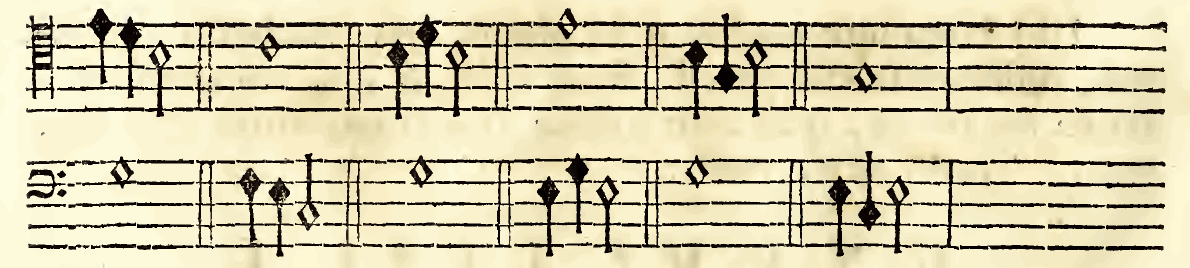
From these it is clearly seen that the third note, namely the dissonance, is nothing other than a diminution of the leap of a third, by which the intervening space between the second note and the third is filled. Such a space never refuses diminution, or being filled by an intervening note.
A second case in which the common rule is departed from is the changed note, called Cambiata by the Italians, where from the second, dissonant note the progression is made by leap into a consonance, as may be seen in the following examples.
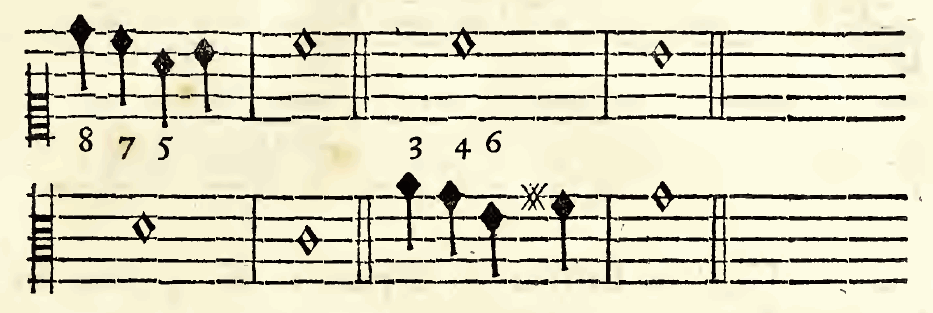
Strictly speaking, that leap of a third from the second note to the third ought to occur from the first note to the second; in that case the second note would form the consonance of a sixth, in this way:
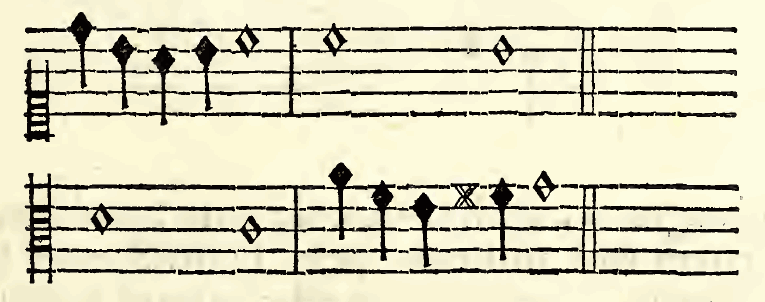
In that case, if diminution were made from the first note to the second, the result would be as follows:
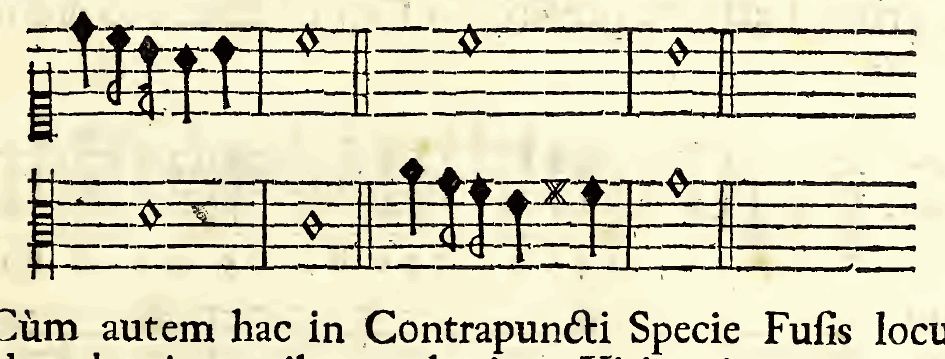
But since there is no place for fusae in this species of counterpoint, men of weighty authority have chosen to accept the first example, in which the second note has a seventh, perhaps because of the greater grace of the melody.
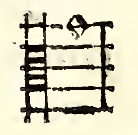
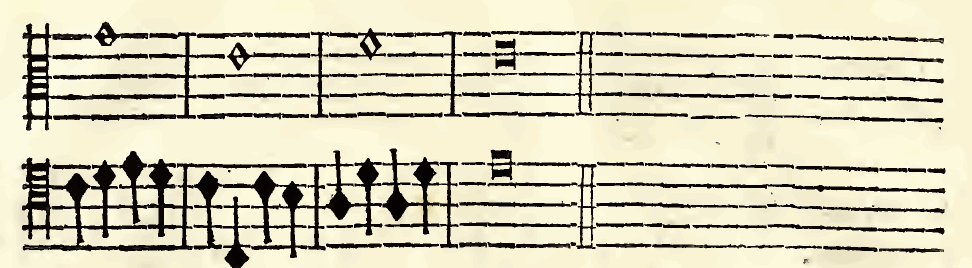
It remains finally to show how the penultimate measure, which usually presents more difficulty than the others, is to be constructed. If the cantus firmus is in the lower part, it must be arranged in the following way.
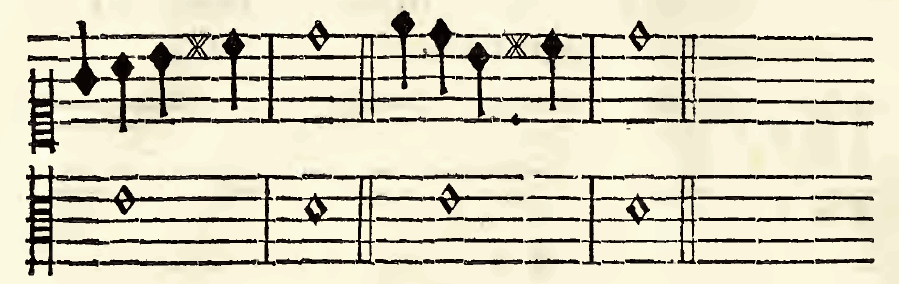
But if the cantus firmus is in the upper part, it is to be constructed in the following way.
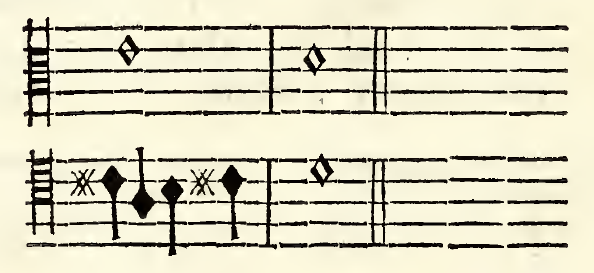
Knowing these things, then, and what has already been said about the other species, I hope that composition in this species will be easy for you. But I wish to warn you again and again to take particular account of the following measure if you wish to encounter no obstacle as you proceed. Set to work, then, taking all the cantus firmi prescribed in the first lesson in that order.
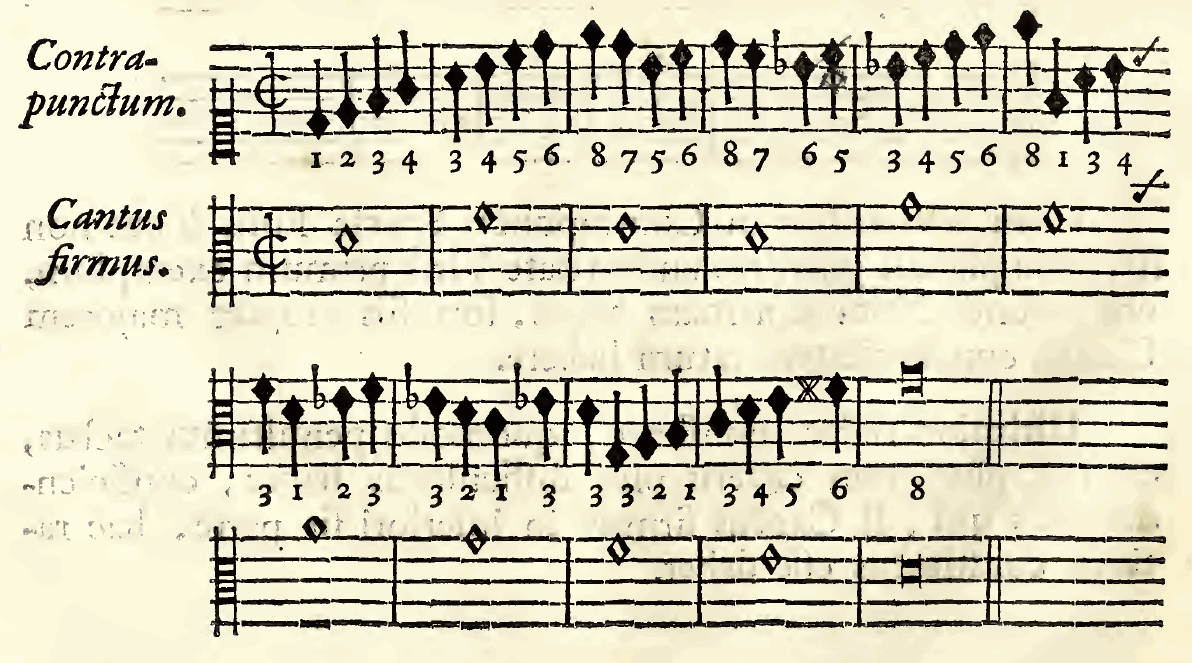
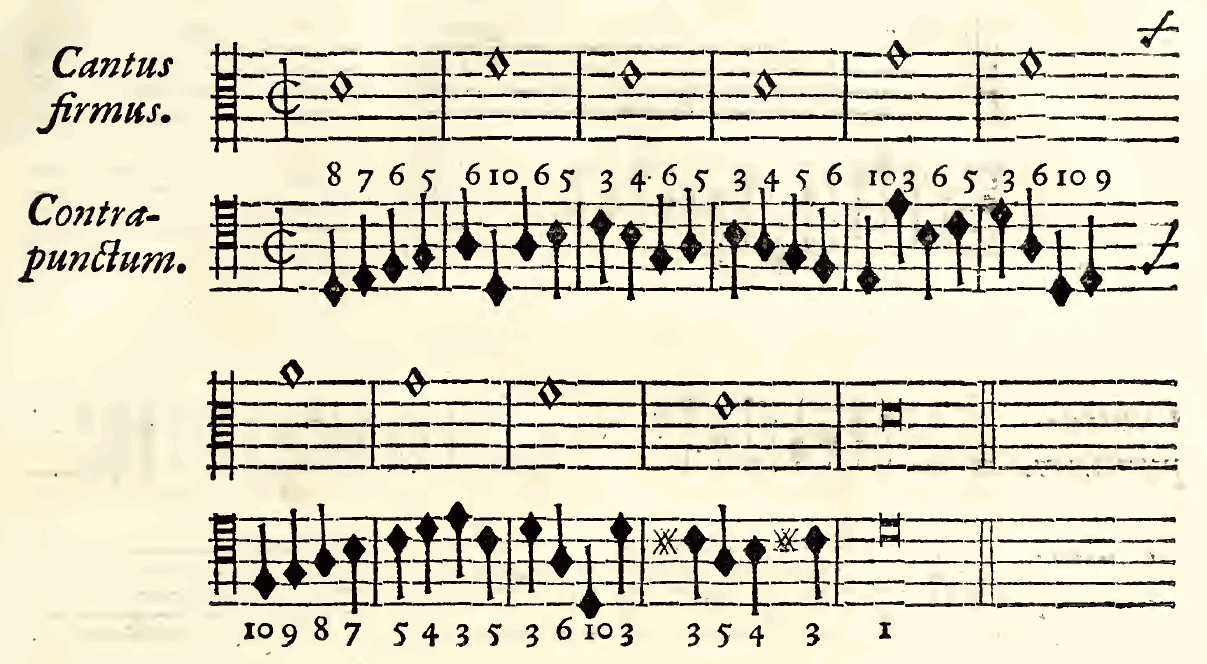
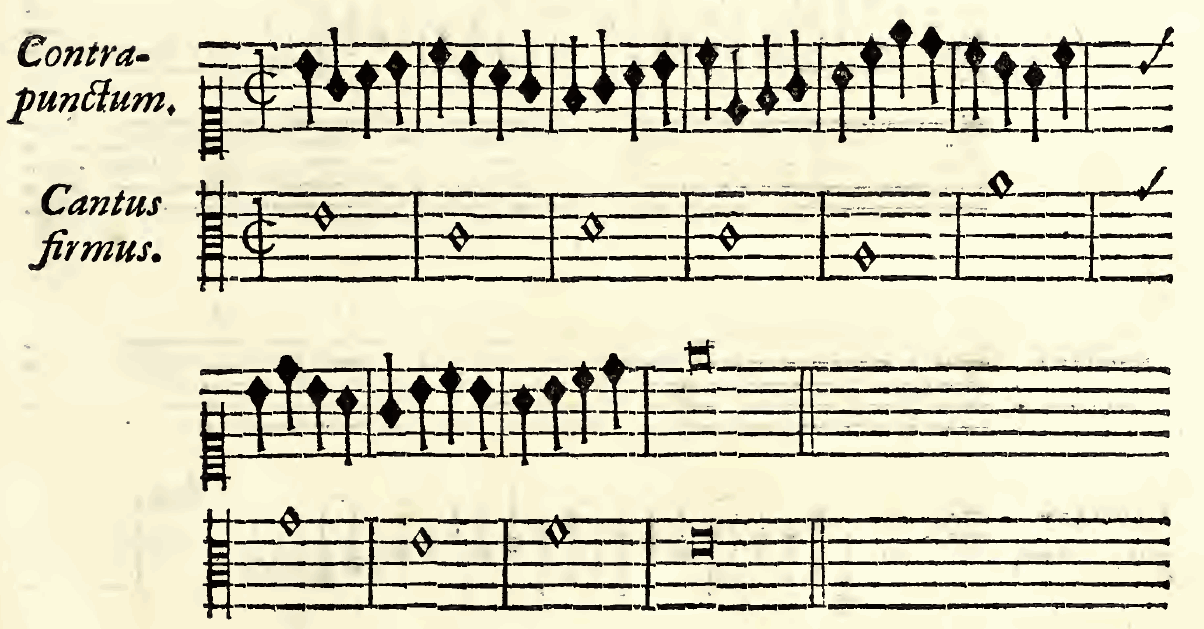
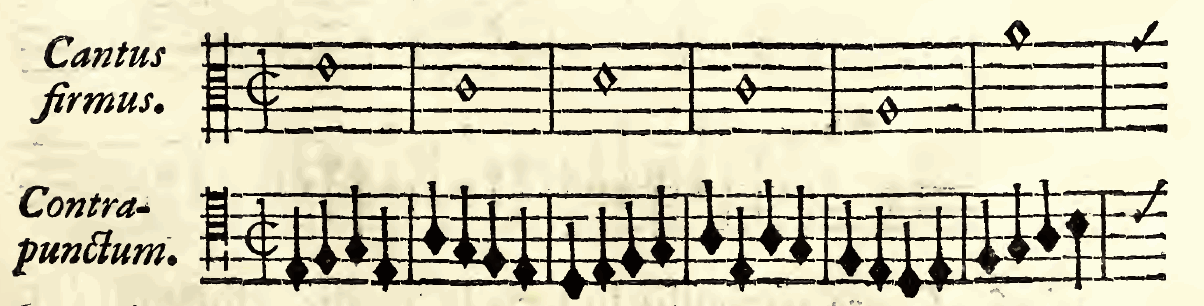
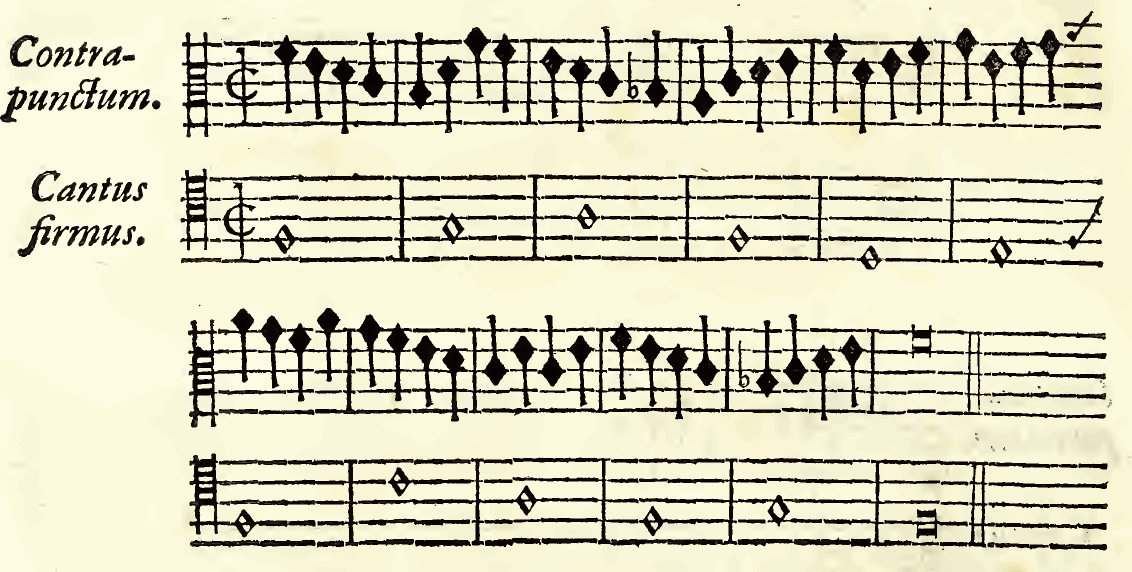
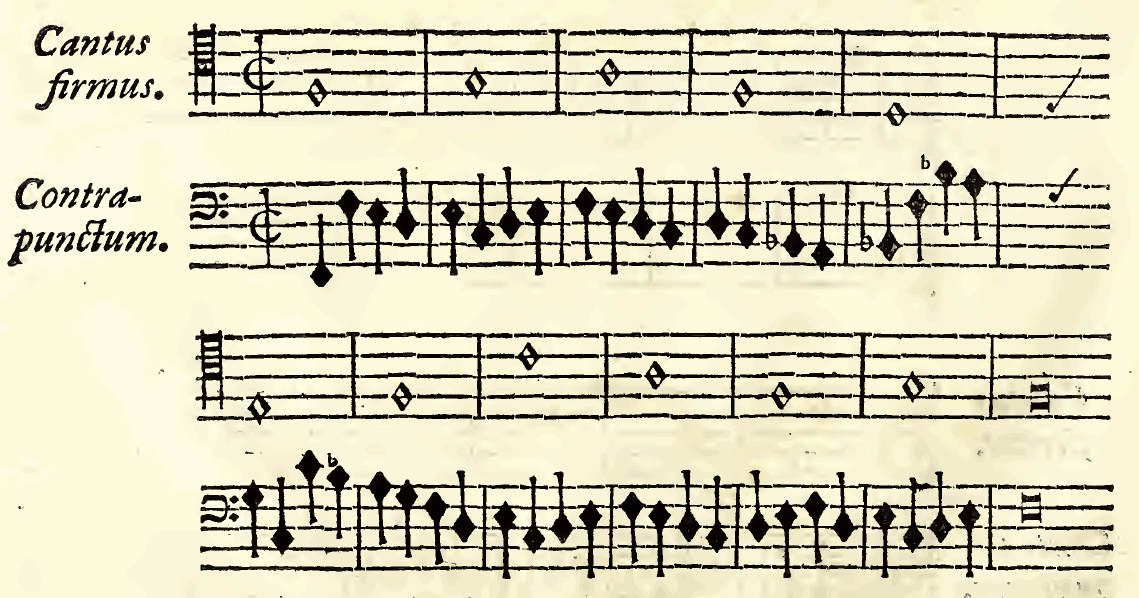
Aloysius. Why did you use flats in some places, a sign not customary in the diatonic genus in which we are working?
Joseph. It seemed to me that otherwise a harsh relation would arise from mi against fa. Nor do I think that they harm the diatonic genus, since it is clear that those flats have been introduced out of necessity, accidentally rather than substantially.
Aloysius. You have observed very well; for the same reason sharps must sometimes also be used. But where and when must be weighed with discerning judgment. From the preceding examples you seem to retain sufficiently what is required for this species. To avoid being too lengthy, I leave the three remaining modes, G, A, and C, for you to pursue in private study. Let there be, then,