 Playable Books
C. H. Kitson · section 4 of 10
Chapter II. Second Species
Read and hear this section in the playable edition →1. In this Species, except over the first and last chords, two notes are written in the Counterpoint to one in the C. F.
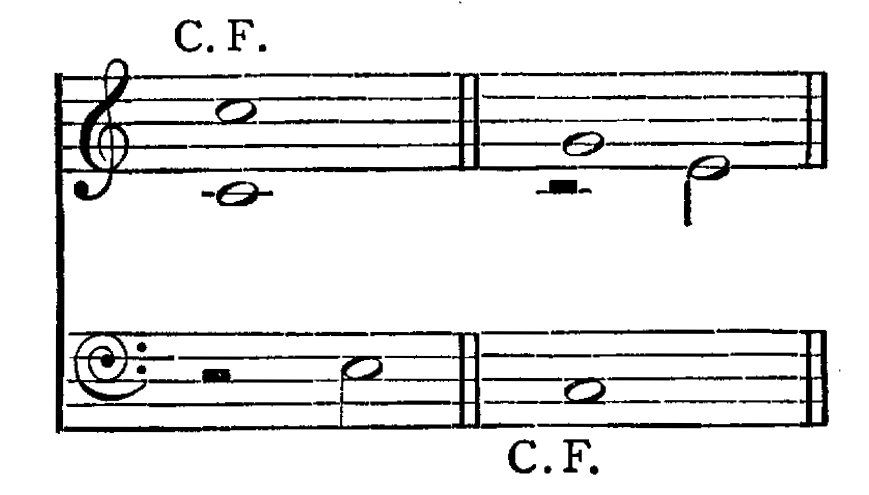
2. The Counterpoint, after a minim rest, begins with a note forming a perfect concord with the C. F.:
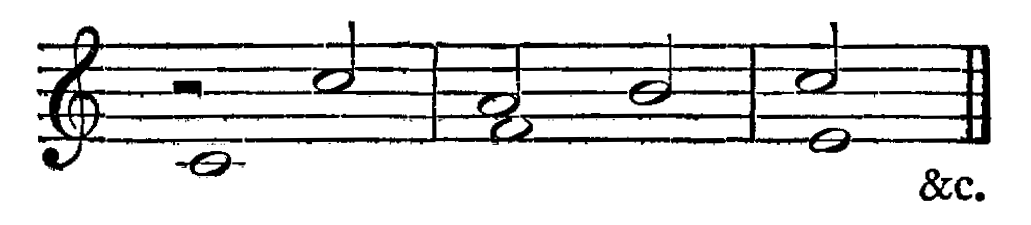
3. In the Cadence, as in First Species, the last two notes of the Counterpoint must be Leading Note, Tonic. The Cadences are therefore as follows:

4. In all other bars the first minim of the bar must form either a perfect or imperfect concord with the C. F.
The second minim may be:
(a) Another concord which may be approached and quitted by step or leap:

When two conjunct concords are used in the bar, and a leap is made to the first minim of the next bar, the leap should be in the opposite direction to the conjunct move (see 3 and 4):
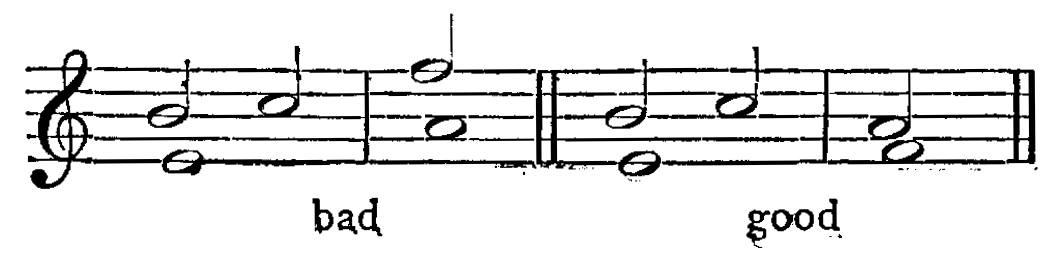
(b) A discord, which must be approached and quitted by step. In other words, a diatonic passing or auxiliary note (unaccented):

5. When the second minim of a progression 5–6, or 6–5, is quitted by step, it may be regarded either as a new harmony note, or as an unessential note:
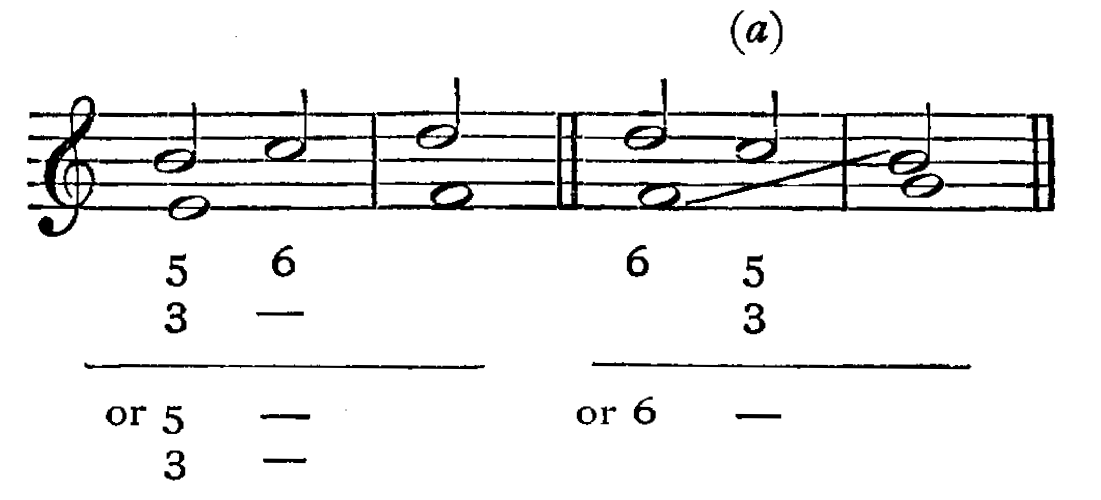
The tritone caused by a note which can be regarded as being unessential is of no account (see (a)).
6. Greater latitude may be exercised in using the mediant chord when it precedes or follows tonic or dominant harmony in the same bar:

All these are good.
7. Consecutives
In the music from which the technique and grammar of Strict Counterpoint is derived, an intermediate concord was held to prevent the bad effect of consecutive octaves or fifths.
But when using uniform rhythm, as in these exercises, that is a dangerous principle:
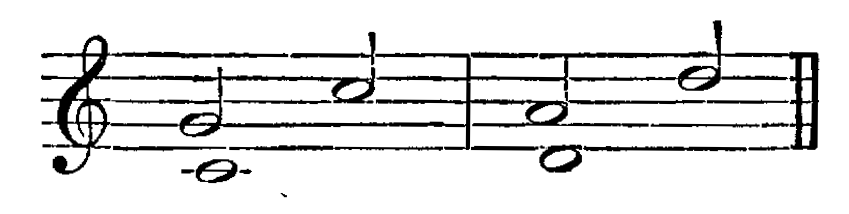
The beginner should keep the following rules:
(a) Consecutive octaves or fifths must never be direct:
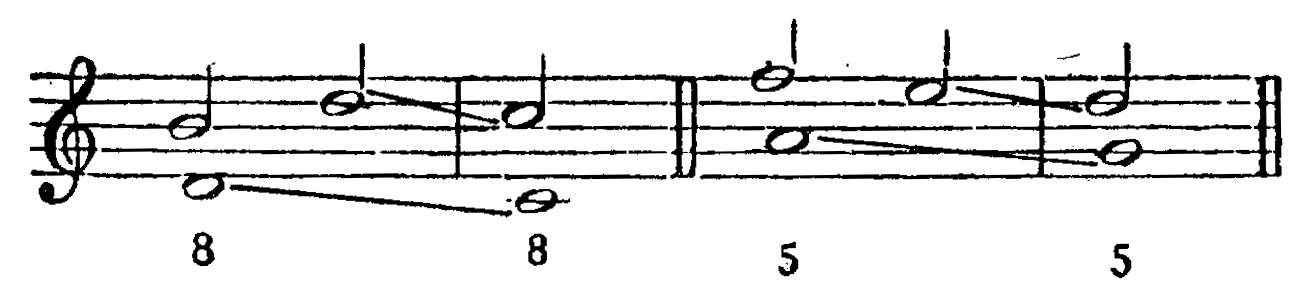
(b) They should not occur between the C. F. and the first minims of two consecutive bars:
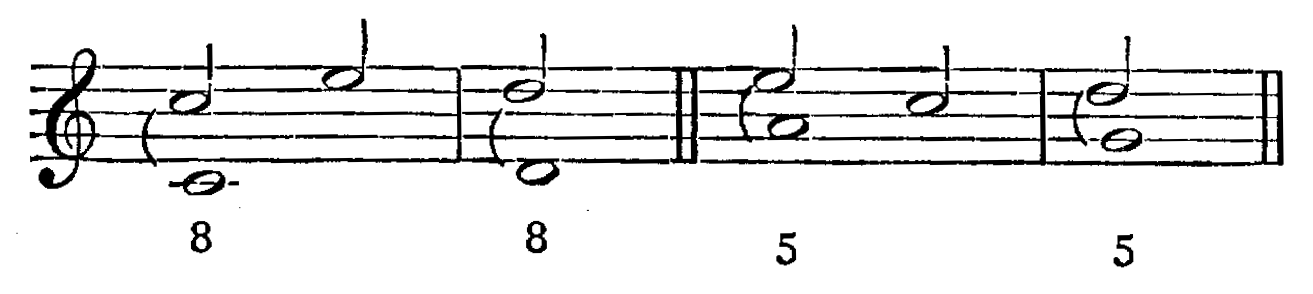
(c) Consecutive octaves and fifths may occur between the C. F. and second minims of consecutive bars if both minims are not the highest or lowest in each bar:


The above are equivalent to:

(d) When either of the fifths occurring on the second minim may be regarded as an unessential combination, the writing is good:

or it may be argued that (1) and (2) form different harmonies from 3 and 4. In other words, as the fifths involved do not occur in consecutive chords, there cannot be consecutives.
8. In technical exercises no note may be repeated in minims. The following is merely First Species:

This does not, of course, preclude the leap of an octave:
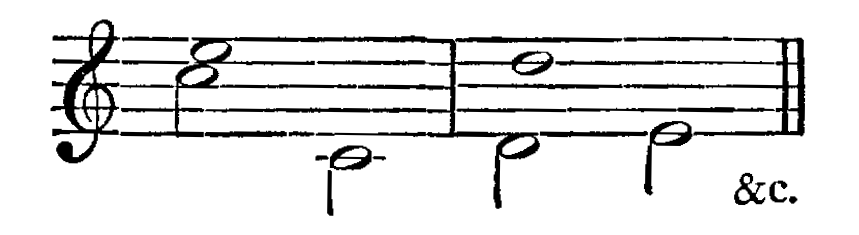
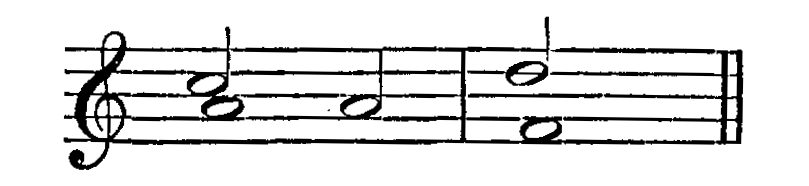
The unison may be used as in First Species, and as the second minim of the bar:
9. No note may be chromatically altered:
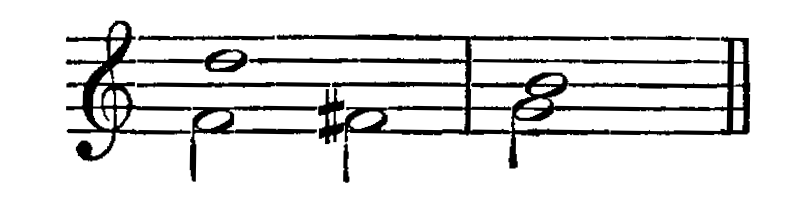
10. For harmonic reasons avoid:
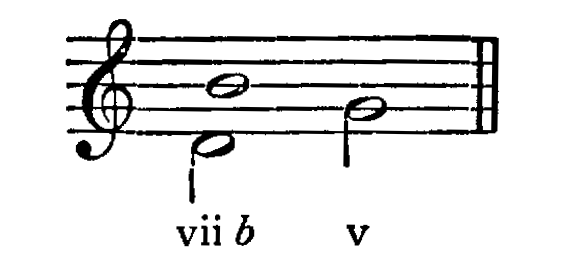
and also similar procedures where the first minim of the bass is the fifth of the chord on the second minim. The reverse procedure is good, if the second minim be quitted by step, again for harmonic reasons:

11. Note
(a) When accented minims in consecutive bars are a third apart the second minim can use a passing note:

(b) When accented minims in consecutive bars are the same note, the second minim can use an auxiliary note:

(c) Do not quit a second in similar motion:
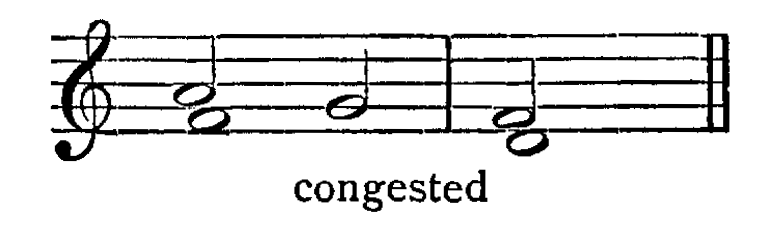
(d) The minor seventh of a root has a natural tendency to fall one degree:

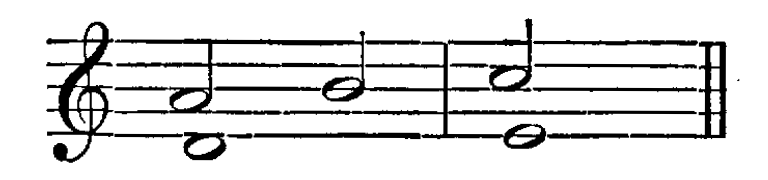
(e) Avoid:
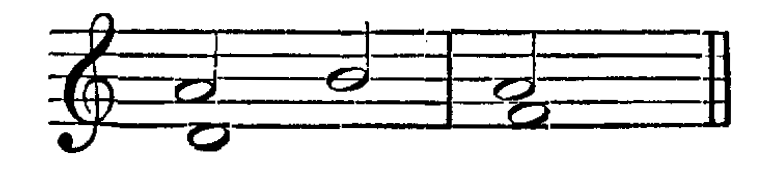
Regard D–B as a new chord, and follow it properly:
12. The Minor Key
(a) The minor seventh of the scale can only be used as a harmony note if proceeding to the minor sixth as a harmony note:

The following is a modulation to C major, and should only be used in the middle of an exercise:

(b) The major sixth of the scale can only be used as a harmony note if proceeding to the major seventh as a harmony note:
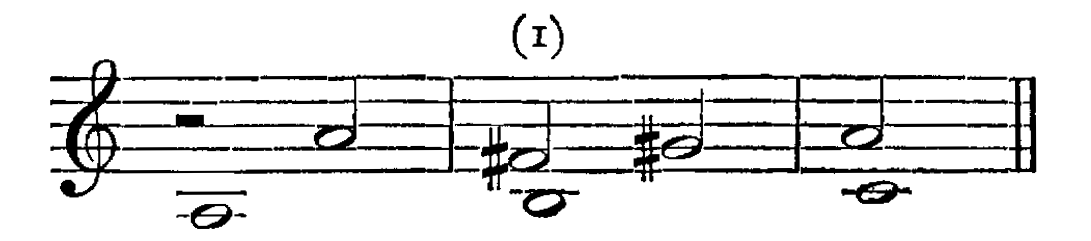

(2) is good music, for to our ears G♯ is essential. But (3) is more logical. There is no need for an F♯ at (2), because the minor seventh of the scale can be freely used as a passing or auxiliary note, ascending or descending:

The major sixth of the minor scale can be used not only as an ascending passing note, but also as a descending one, but in the latter case only between two statements of the dominant chord or between VIIb and Vb.

13. Three parts
(a) The third part will be in First Species.
(b) The Second Species may now start with an imperfect concord, as the added First Species must fulfil the convention as to starting with a perfect concord:
(c) The Cadence.
When the C. F. is in the bass, the following are the usual procedures:
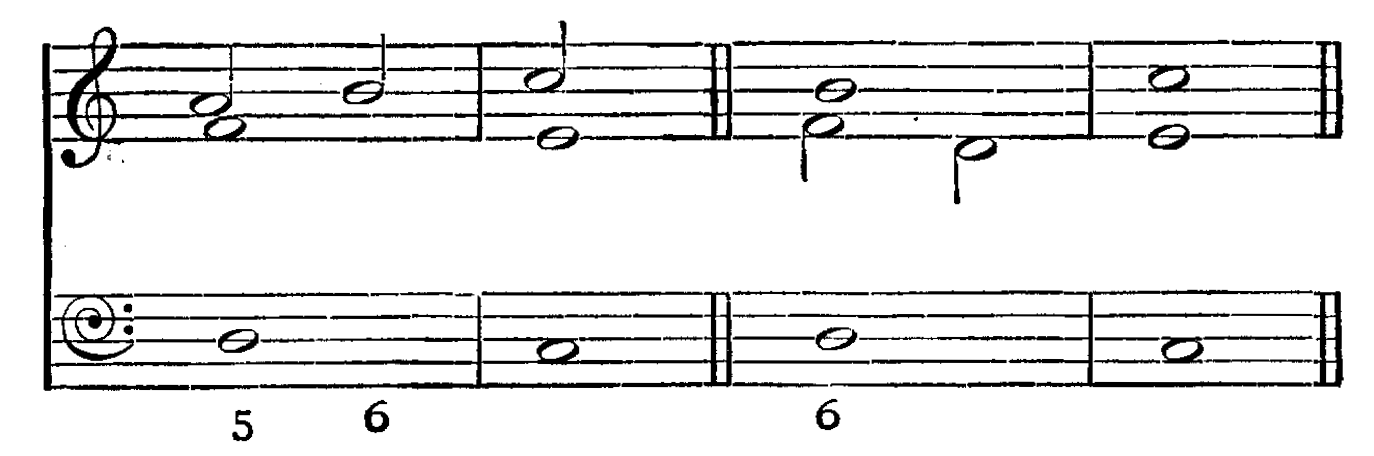
When the C. F. is in a higher part, the penultimate chord must be the dominant. The Second Species may here substitute the Fourth Species (see Chapter IV).
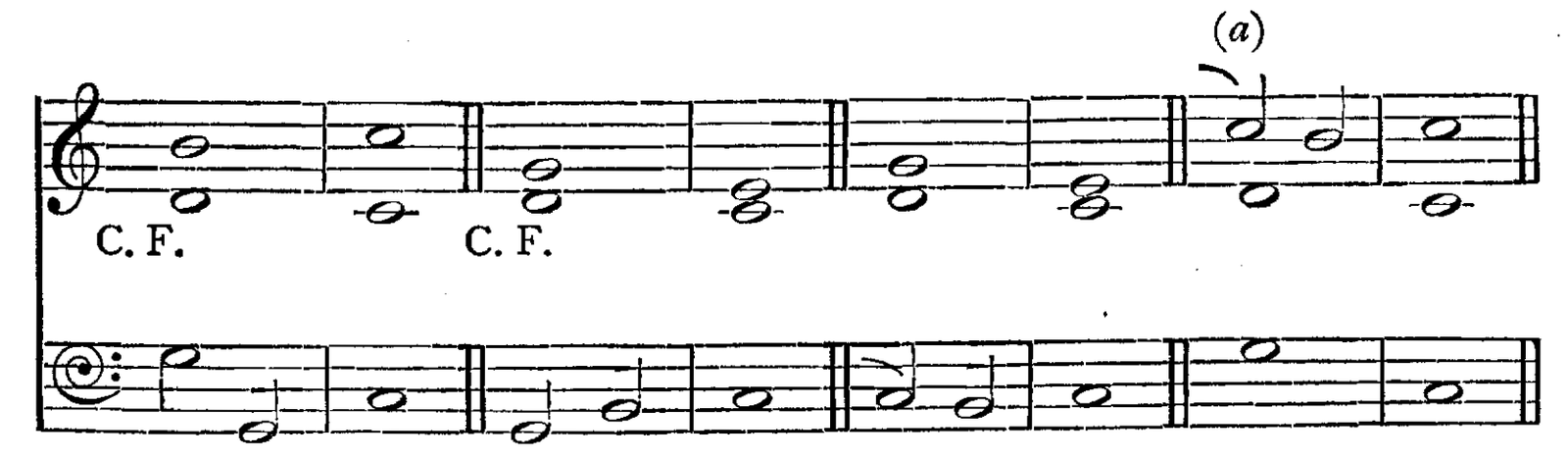
(a) This substitution of Fourth Species is allowed in order to avoid consecutive octaves:
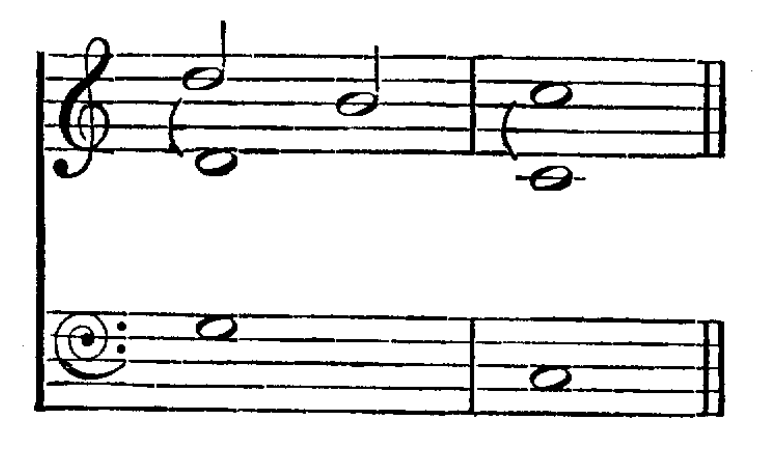
The following can also be used:
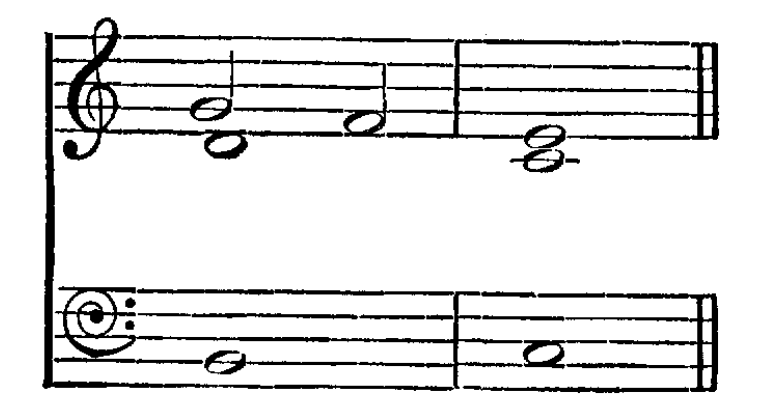
The last two notes in some part must be Leading Note, Tonic, and the Leading Note may not leap an octave.
14. The Second Species should be neither too conjunct nor too disjunct. The same is true of every melodic line, in whatever species it may be written. The part should be varied in range, and should have at least one climax. A sequence of two bars pattern is useful. The examples will serve to illustrate this.
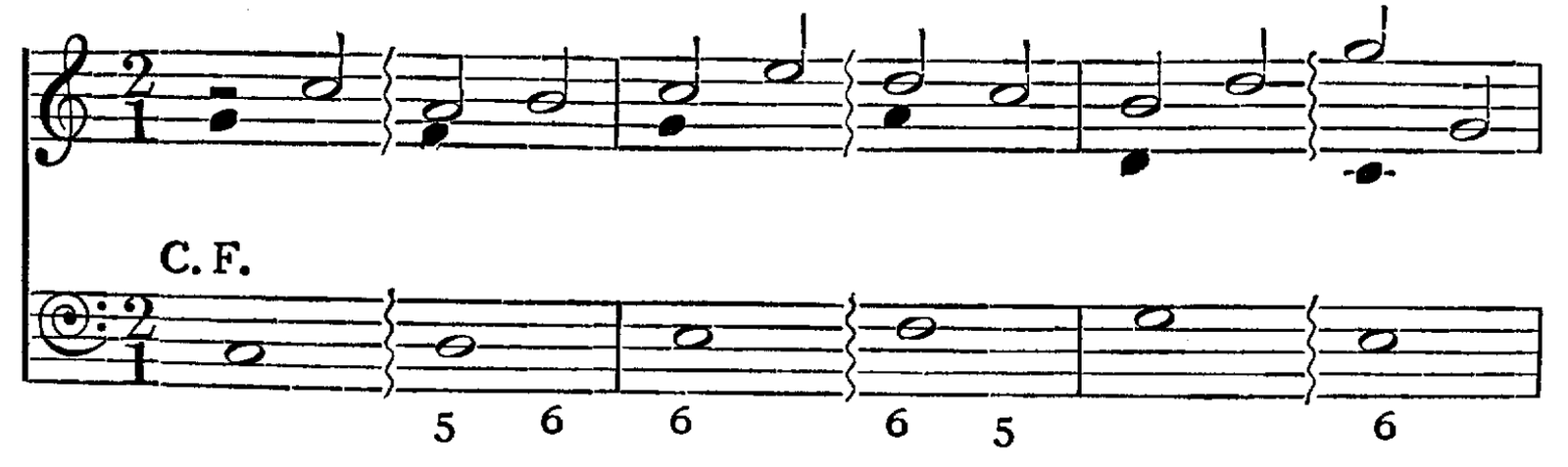
15. Again, as in First Species, semibreves should be grouped either in duple or triple time, each semibreve representing a beat. But in florid Counterpoint (see Chapter V) the minim represents the beat. In order to help the student wavy lines mark what are referred to as bars in this chapter (beyond the ordinary bar-lines).
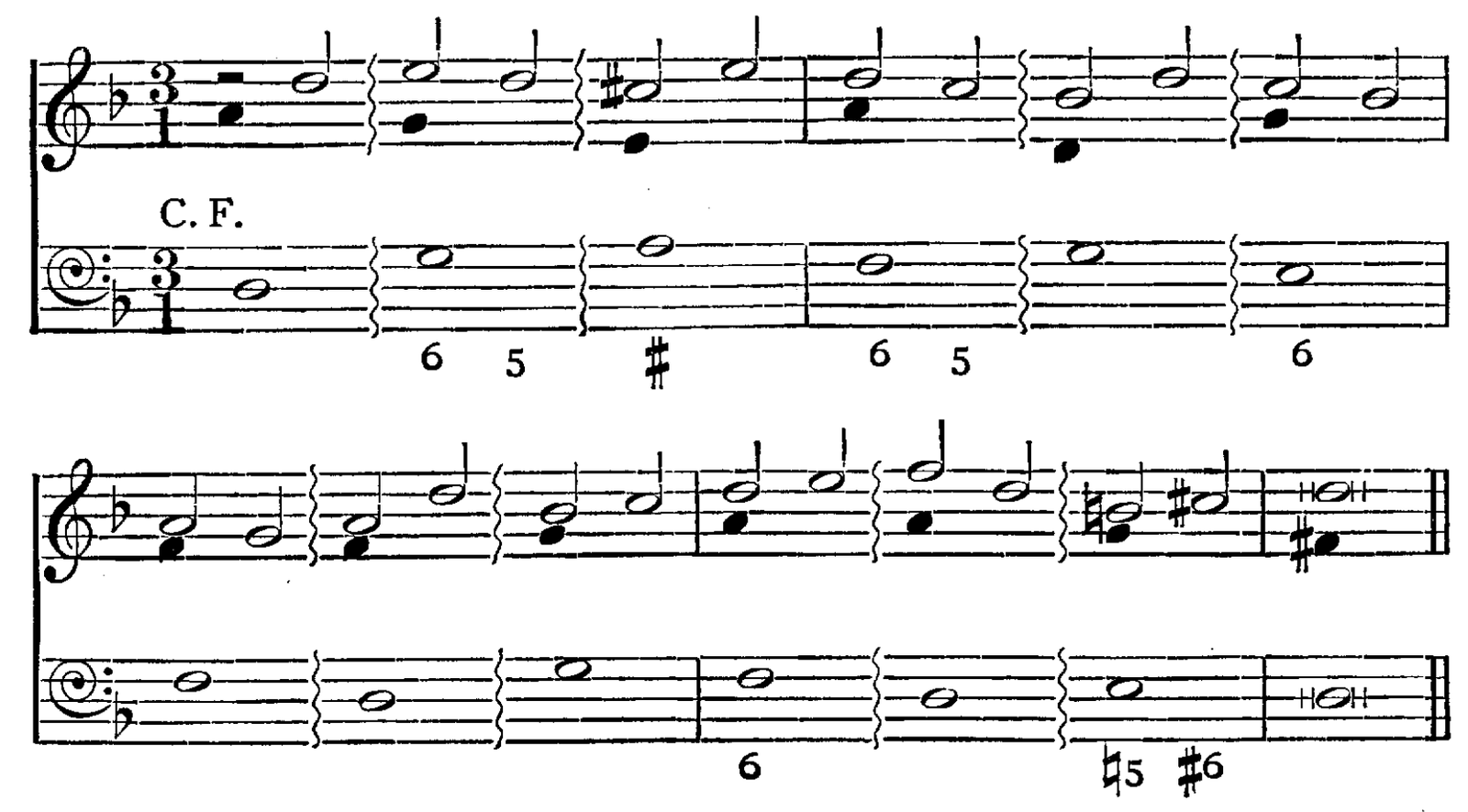
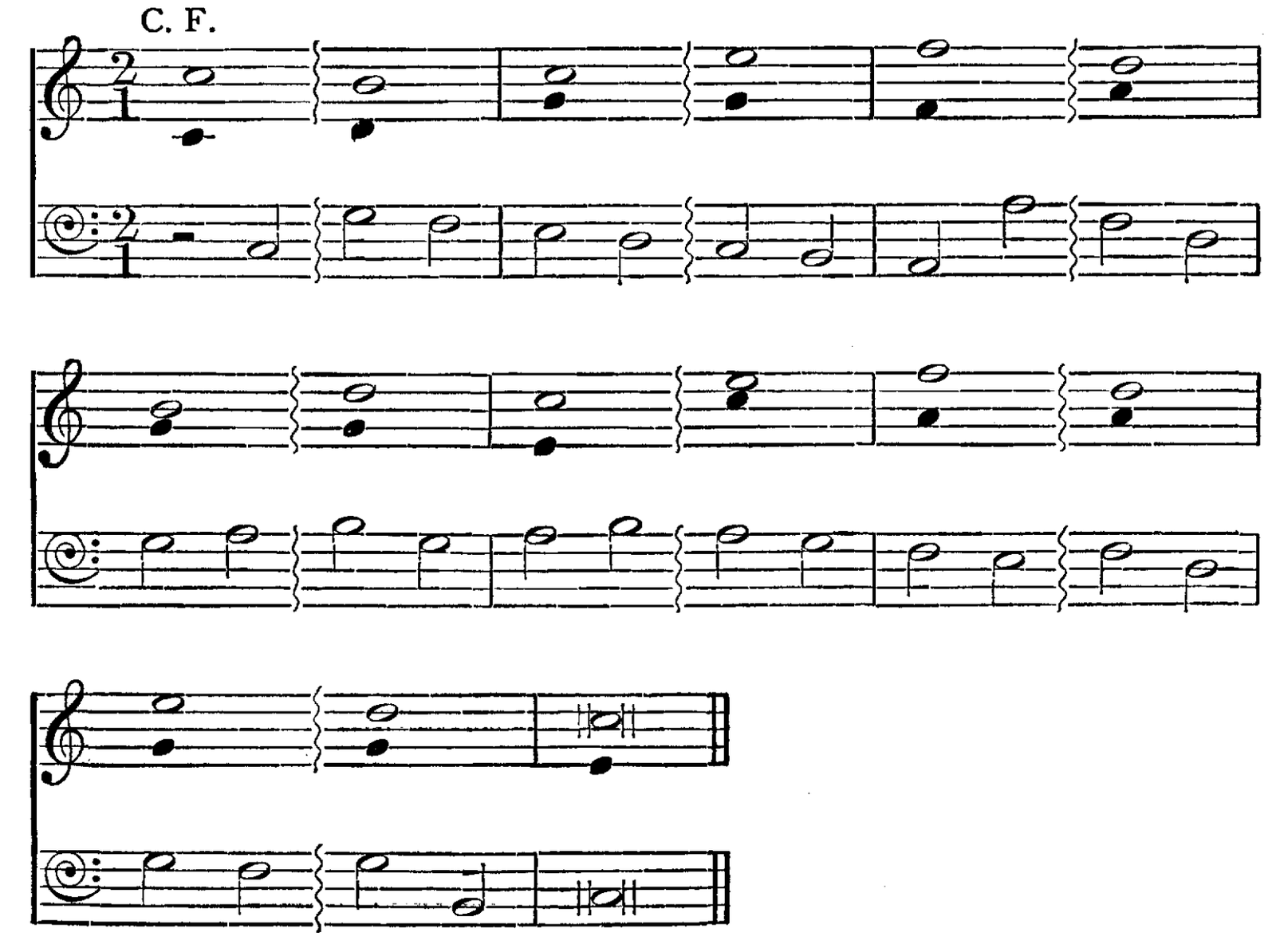
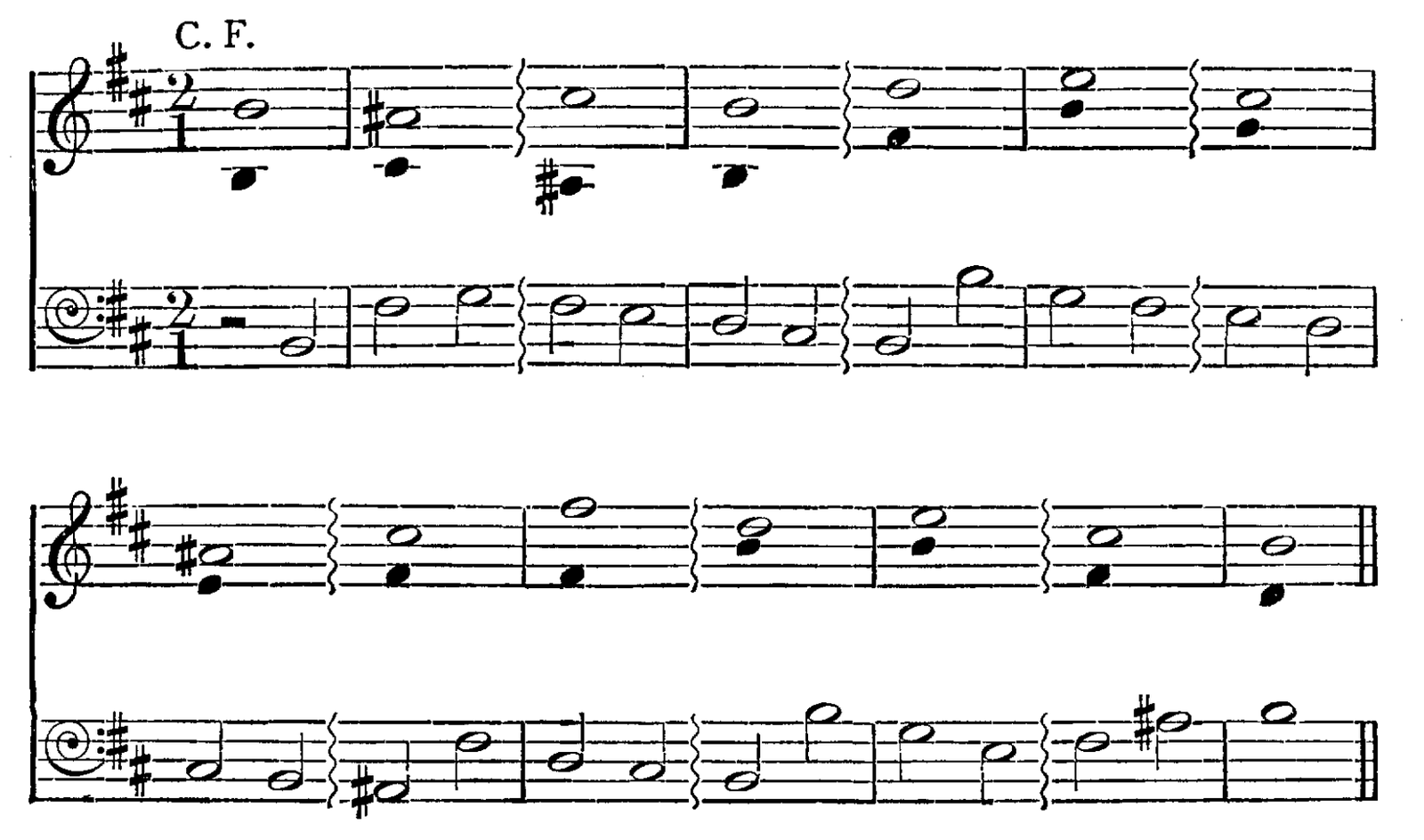
Examples
(Extra third part in black notes).
Exercises
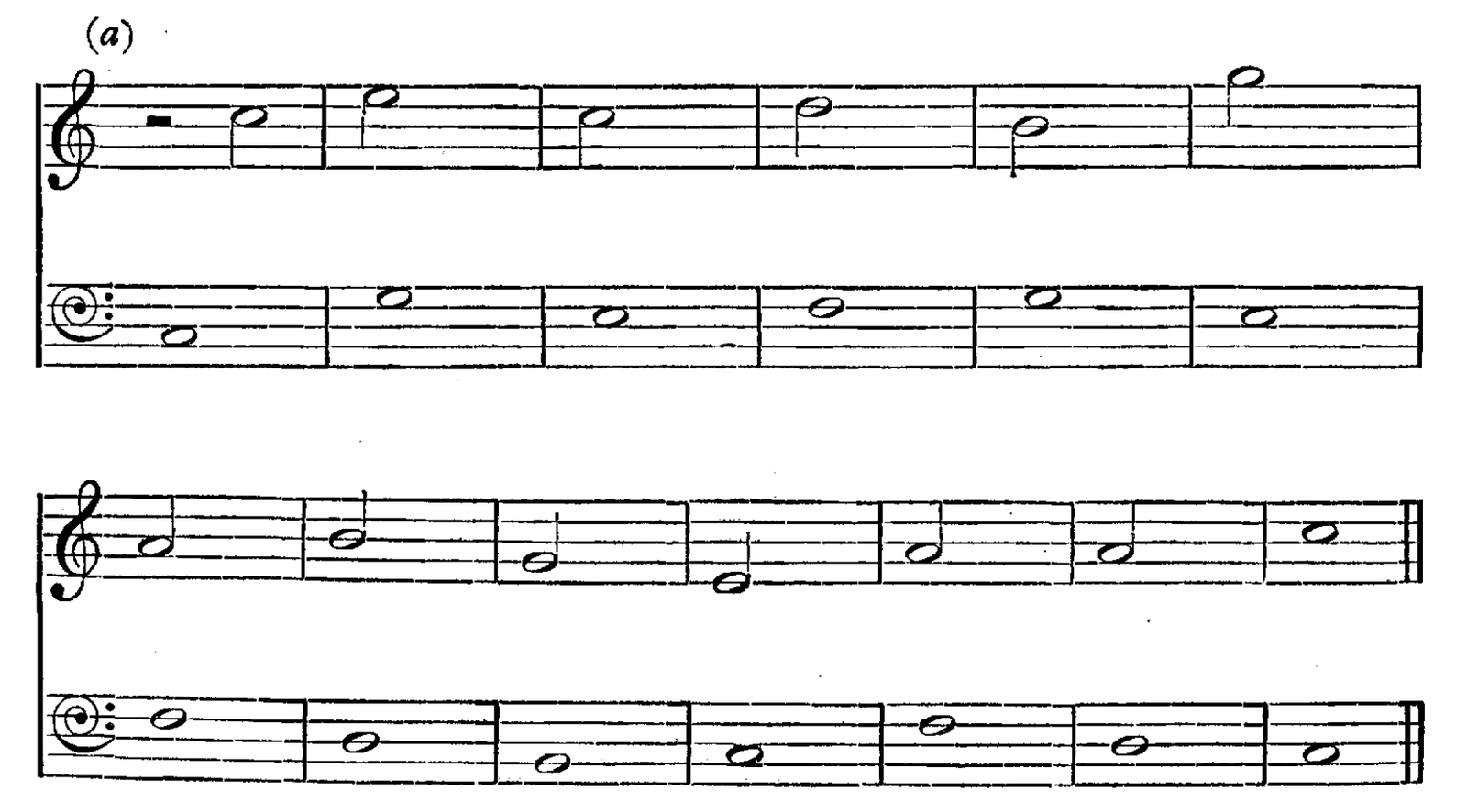
(1) Fill in appropriate second minims in the following bars: mark the accentuation you choose by substituting the necessary wavy lines.
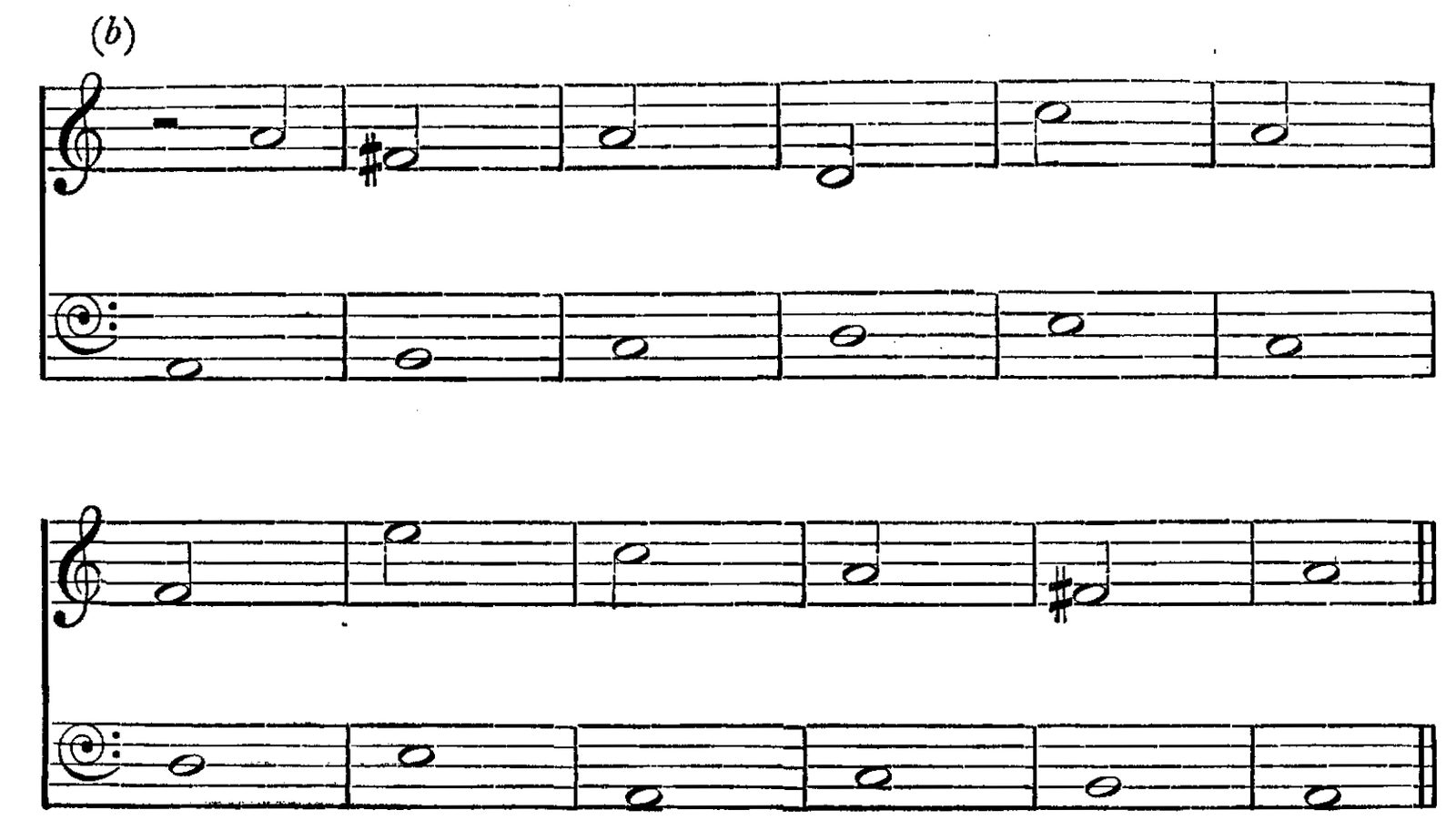
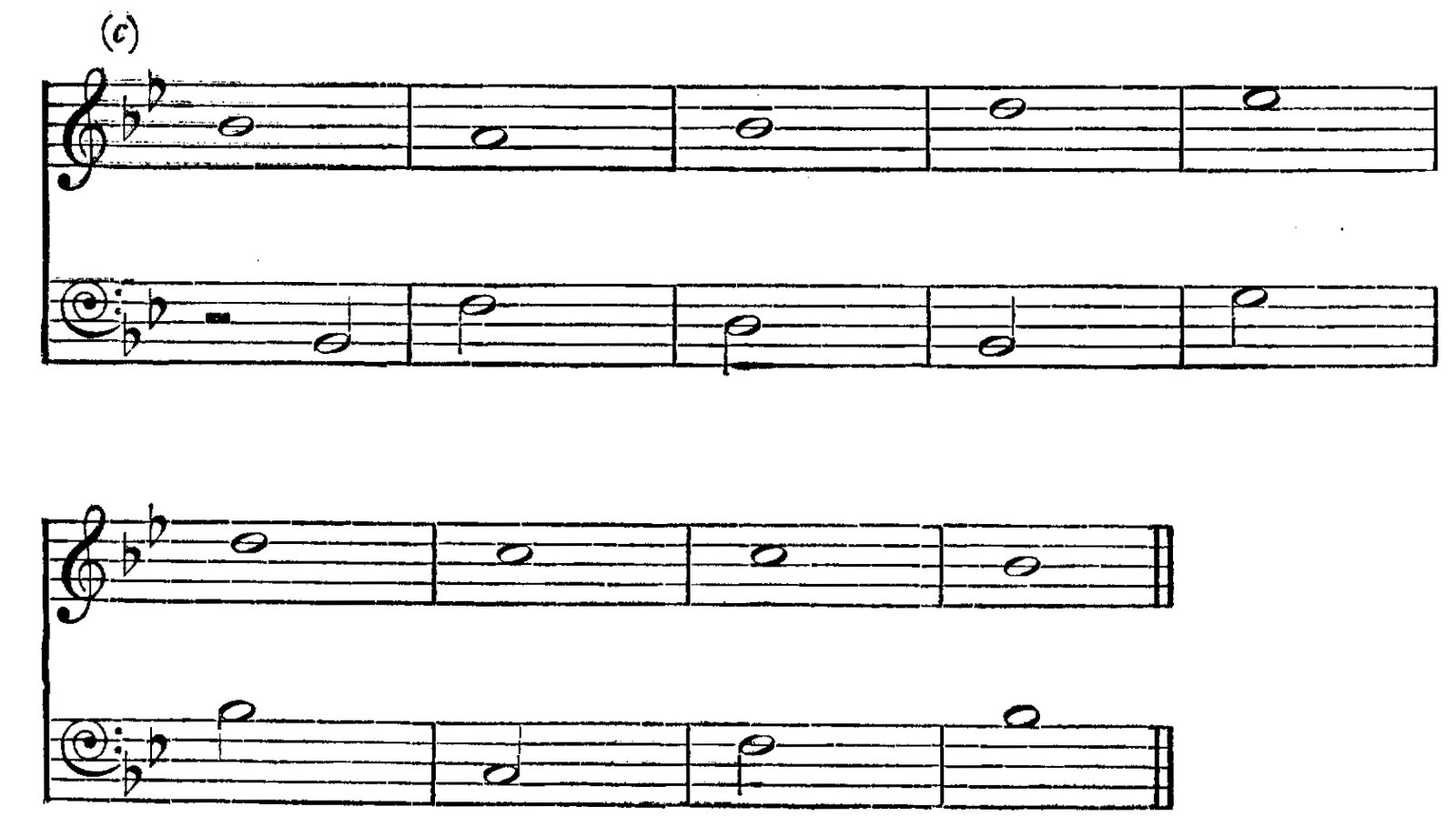
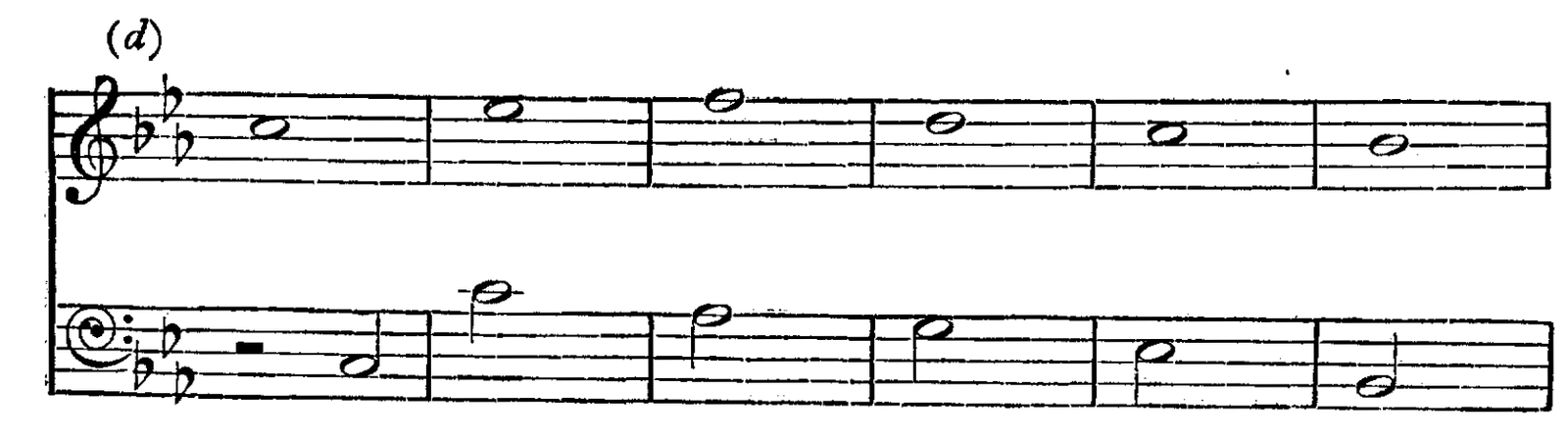
2. Use the Canti Fermi given in Chapter I as follows:
(a) To the basses given under heading A add a Soprano in Second Species.
(b) To the same basses add (i) a Soprano in Second Species, and Alto in First Species; (ii) a Soprano in First Species, and Alto or Tenor in Second Species.
(c) To the Soprano Canti Fermi given under heading B add a Bass in Second Species.
(d) To the same Soprano Canti Fermi add (i) Alto in First Species, Bass in Second Species, (ii) Alto in Second Species, Bass in First Species.