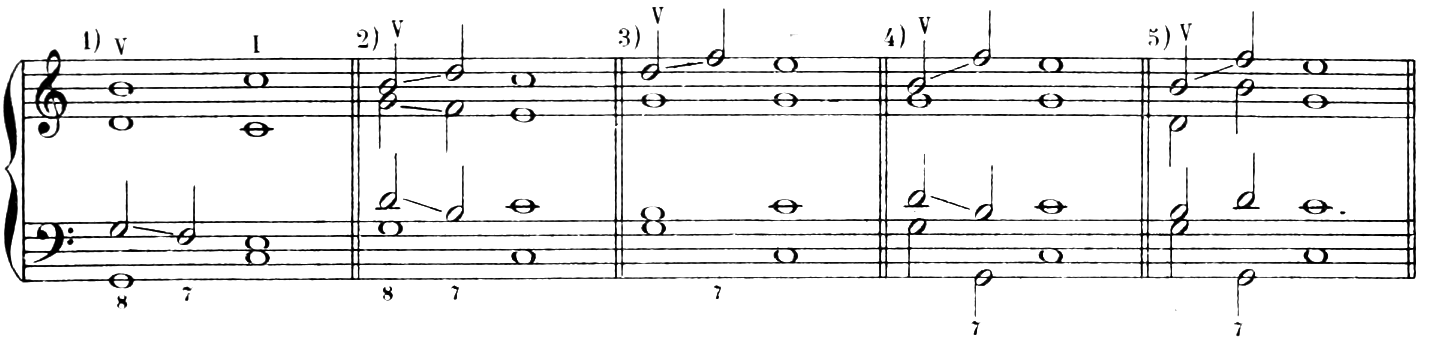
§ 36. — 1) The dominant seventh chord in root position resolves to the tonic triad.
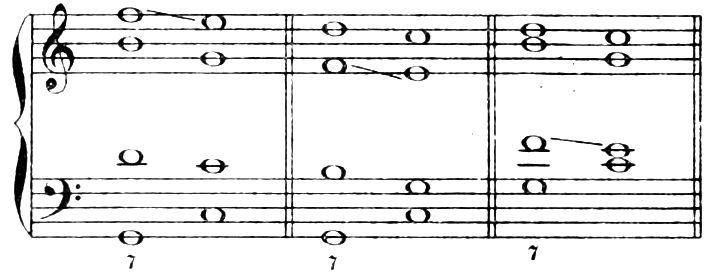
2) The seventh moves downward to the third of the tonic triad; the other parts, being notes of the dominant triad, move according to the rules of melodic connection:
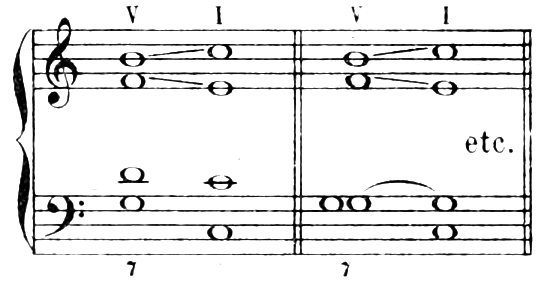
3) The dominant seventh chord may be complete or incomplete; in the latter case it lacks the fifth and doubles the root.
4) Because of the rule that the leading note must rise to the tonic, the complete dominant seventh chord resolves to an incomplete tonic chord, and the incomplete dominant seventh chord resolves to a complete tonic chord:
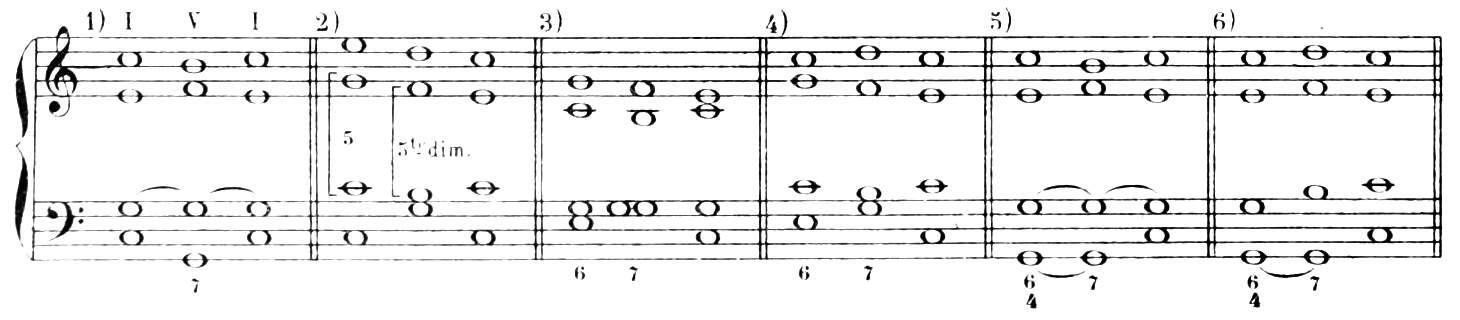
REMARK. — Parallel fifths (ex. 2), of which the second is diminished, are tolerated.
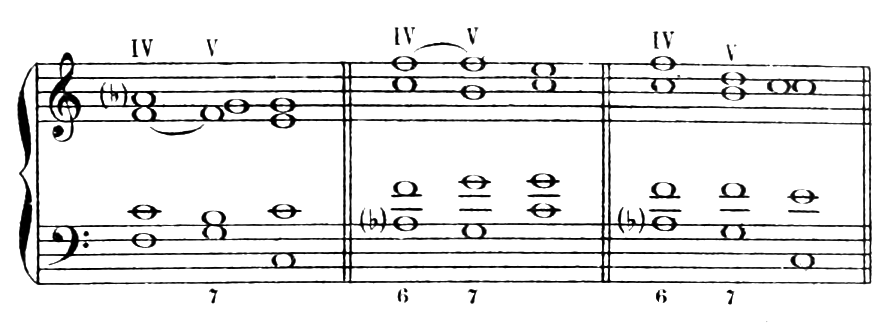
b) After the triad of the fourth degree, with which the dominant seventh chord is connected harmonically, the seventh is a common note and is called a prepared seventh; the other parts move according to the rule of melodic connection:
REMARK. — After the triad of the fourth degree the dominant seventh chord must be incomplete; after the sixth chord of the fourth degree it may be complete.
c) After the triad of the fifth degree, the dominant seventh chord is formed by the passing seventh, or by the seventh that results from a leap of any note of the fifth-degree triad; the other parts may stay where they are or change position.
REMARK. — Ascending motion by a diminished fifth or a minor seventh is tolerated.
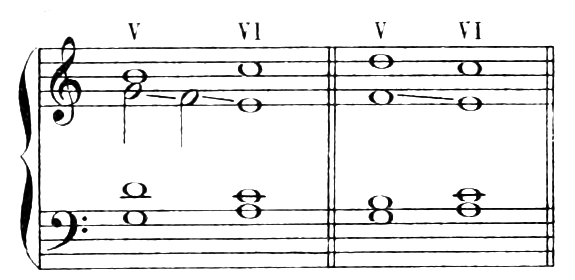
b) The dominant seventh chord, like the triad on the same degree, also resolves onto the chord of the sixth degree, with the third doubled, in the deceptive cadence. (See § 32.)
 Playable Books